
Zhong Guo Qi Che Bao Wang

Search documents
观车 · 论势 || 告别被动应对 走向主动治“燃”
Zhong Guo Qi Che Bao Wang· 2025-11-07 01:05
Core Viewpoint - Recent incidents of electric vehicle fires have raised public concern, leading to a perception that electric vehicles are more dangerous than traditional gasoline vehicles. However, experts indicate that the fire risk of electric vehicles is comparable to that of gasoline vehicles, although the intensity of fires in electric vehicles can be significantly higher [1][2]. Group 1: Regulatory Developments - The National Market Supervision Administration announced plans to innovate the recall regulatory system and implement a reporting system for fire incidents involving electric vehicles. This includes mandatory reporting of incidents within specified timeframes [2]. - A new national standard for electric vehicle battery safety (GB38031-2025) will take effect on July 1, 2026, introducing stricter testing requirements and emphasizing the importance of safety in battery design and management [3]. Group 2: Industry Response and Safety Measures - The industry is shifting from a reactive approach to a proactive one in managing fire incidents, viewing each incident as an opportunity for product improvement and deeper investigation [5]. - There is a growing emphasis on the need for companies to balance investments in advanced technologies like smart cabins and autonomous driving with core safety technologies such as battery and electric drive systems [3][4]. Group 3: Technological Advancements and Challenges - The energy density of power batteries has increased to over 300Wh/kg, but safety risks such as thermal runaway remain significant, especially in high-temperature environments [4]. - Companies are encouraged to validate new technologies thoroughly and consider long-term safety implications while enhancing battery performance [4].
预售价16.98万元起,锚定价值高地,锐胜 M8 搅动 MPV 市场格局
Zhong Guo Qi Che Bao Wang· 2025-11-06 04:19
Core Insights - The launch of the RuiSheng M8 marks a significant entry into the MPV market, targeting the price-sensitive segment with a starting price of 169,800 yuan, while emphasizing a "business class" experience across all three rows of seating [2][21][22] - The MPV market in China is projected to see a total sales volume of 1.092 million units in 2024, with a slight year-on-year decline of 0.3%, yet the 150,000 to 250,000 yuan price segment is growing rapidly, now accounting for 42.7% of the market [2][17] - The RuiSheng M8 aims to redefine the value benchmark for large MPVs by offering competitive pricing and superior configurations, potentially disrupting the existing competition between domestic and joint venture brands [2][21] Pricing Strategy - The RuiSheng M8's pricing strategy effectively addresses the market's demand for high-end features at a reasonable price, with its starting price of 169,800 yuan being significantly lower than competitors like the Buick GL8 and Tengshi D9 [5][21] - The model fills a gap in the 150,000 to 200,000 yuan market segment, which has been underserved, particularly in terms of offering "large MPV + business-level configuration" combinations [5][17] Market Demand - Data from 2023-2024 indicates that balancing price and product capability is crucial for success in the MPV market, with the RuiSheng M8's pricing strategy appealing to families and small business owners looking for value [7][19] - The demand for family-oriented and business-capable MPVs is on the rise, with family users contributing over 50% of MPV sales, and the RuiSheng M8's design caters to both needs effectively [19][21] Product Innovation - The M8's unique selling proposition of "all three rows are business class" addresses a common consumer pain point regarding third-row comfort, which is often neglected in other models [10][12] - The vehicle features a spacious interior with a 2+2+3 seating layout, allowing for versatile use cases, from family outings to business meetings, enhancing its appeal [12][19] Powertrain and Technology - The RuiSheng M8 is equipped with a 1.5T hybrid system, achieving a fuel consumption of 5.8L/100km and a range exceeding 1,000 km, aligning with the market trend favoring hybrid vehicles [14][21] - Advanced technology features include a 15.6-inch central display and L2-level intelligent driving assistance, catering to the tech-savvy younger consumer demographic [14][16] Safety Features - The M8 includes comprehensive safety features, such as seven airbags and vehicle stability control, with higher trims offering additional active safety technologies, positioning it competitively within the 200,000 yuan MPV segment [16][21] Market Positioning - The RuiSheng M8's entry coincides with a critical adjustment in the MPV market structure, where the 150,000 to 250,000 yuan segment is experiencing significant demand, while higher-end models dominate the market [17][22] - The model's launch is expected to invigorate competition in the large MPV market, pushing for improvements in pricing, features, and technology across the board [22]


肖政三:2025年是汽车流通行业全面进入转型深水区和攻坚期的一年
Zhong Guo Qi Che Bao Wang· 2025-11-06 04:18
Core Insights - The 2025 China Automotive Circulation Industry Annual Conference and Expo will be held in Haikou, focusing on various sectors including new cars, used cars, new energy vehicles, marketing, financial services, digitalization, and after-sales services, with nearly 3,000 attendees expected [1] Industry Overview - The automotive market in China is experiencing a recovery supported by national consumption policies, with retail sales of passenger cars continuing to grow and new energy vehicle penetration rates reaching new highs [3] - However, the industry faces significant challenges, including a mismatch between supply and demand, leading to price inversions and widespread losses among dealers, with a profit margin of only 4.5% for the automotive manufacturing sector, below the industrial average of 6% [3][5] Government Initiatives - The Chinese government is actively implementing measures to stabilize and expand automotive consumption, including policies like "trade-in" programs and addressing issues of low-price disorder in competition [4] - The introduction of the Private Economy Promotion Law aims to provide a legal environment for fair competition and market access for private enterprises, including automotive dealers [4] Dealer Challenges - In the first half of 2025, the proportion of loss-making automotive dealers rose to 52.6%, with only 30% meeting sales targets, highlighting the severe financial strain on dealers due to market imbalances [5] - The automotive circulation industry is urged to unite and adapt to the changing market landscape, emphasizing the need for transformation and innovation in operations [5][6] Strategic Focus Areas - The industry is focusing on reshaping channel value and enhancing the role of dealers in the automotive supply chain, with an emphasis on integrating new energy vehicle services and leveraging technology [6] - There is a need to improve relationships between manufacturers and dealers to foster a resilient and healthy automotive industry, addressing issues like excessive network density and high inventory levels [7][8] Growth Drivers - The used car market is projected to see significant growth, with transaction volumes and values expected to exceed 20 million units and 1 trillion yuan, respectively, driven by policy support and market demand [10] - Automotive finance is becoming increasingly important, with the government promoting financing mechanisms to support private enterprises and enhance the availability of credit for dealers [11] Industry Standards and Initiatives - The association is launching initiatives to standardize industry practices and improve the quality of used cars, while also establishing platforms for better data sharing and collaboration among industry players [12]

引人深思!国外车企之间如何避免专利纠纷?
Zhong Guo Qi Che Bao Wang· 2025-11-06 03:19
Core Viewpoint - The article discusses the increasing patent and trademark disputes faced by Chinese automotive companies in overseas markets, contrasting this with the relatively few disputes among foreign multinational automotive companies, highlighting the strategies they employ to avoid such conflicts [4][7]. Group 1: Patent Cross-Licensing Agreements - Audi and Hyundai signed a long-term patent cross-licensing agreement for hydrogen fuel cell technology, allowing both companies to share patents and components, which significantly reduced disputes between them [5]. - Ford and Toyota also engaged in a patent cross-licensing agreement in the hybrid technology sector, which saved both companies over 1 billion yuan in R&D costs and facilitated differentiated competition in the market [5]. Group 2: Government and Industry Coordination - Some countries, like Japan, have implemented mechanisms to guide automotive companies in negotiating patent disputes, such as a four-step method for negotiating standard essential patent fees [6]. - Germany has introduced a rapid adjudication mechanism for patent courts, encouraging companies to disclose cross-licensing intentions to resolve disputes through cooperation rather than litigation [6]. Group 3: Strategic Patent Management - Foreign automotive companies often begin patent layout in target markets 1-2 years prior to entry, focusing on core technologies to create barriers and prepare for cross-licensing negotiations [8]. - Companies monitor patent dynamics in target markets to identify potential "patent traps" and adjust their technology strategies accordingly [8]. Group 4: Shifting Competitive Dynamics - The traditional patent environment often leads to zero-sum games, but patent cross-licensing fosters a new competitive ecosystem, allowing companies to collaborate rather than compete destructively [9]. - Tesla's open electric vehicle patents have attracted numerous companies, promoting technological advancement and reducing individual R&D costs through shared technology [9]. Group 5: Innovation and Market Order - Patent cross-licensing is seen as a key "lubricant" for maintaining market order and facilitating innovation in the global automotive industry [10]. - Companies are advised to adopt a proactive approach to patent management, establishing a robust intellectual property management system that includes both defensive and offensive strategies [10][11]. Group 6: Cross-Departmental Collaboration - Automotive companies should form cross-departmental teams comprising technical experts, lawyers, and patent analysts to better navigate the complexities of global patent laws and regulations [11]. - The integration of intellectual property protection with technological innovation is essential for companies aiming to expand in international markets [11].

标准先行、搭台唱戏,机动车拍卖走上特色快车道
Zhong Guo Qi Che Bao Wang· 2025-11-06 03:13
Core Insights - The Chinese motor vehicle auction industry has achieved record-breaking performance, with approximately 1.25 million vehicles auctioned and a transaction value nearing 50 billion yuan in 2024, marking the seventh consecutive year of historical highs [2][3] - The industry is experiencing significant growth due to policy benefits, increasing consumer demand for efficient and transparent transaction methods, and advancements in technology such as big data and artificial intelligence [2][3][5] Market Performance - The auction transaction volume increased from 478,500 vehicles in 2021 to 1,235,200 vehicles in 2024, representing a growth of 158% [3] - The transaction value rose from 23 billion yuan to 49.36 billion yuan during the same period, reflecting a growth of 115% [3] - In 2024, the auction volume and value grew by 75.83% and 55.21% respectively compared to the previous year, with both metrics maintaining over 40% growth in the first nine months of the year [3] Industry Characteristics - The auction market in China is still in its early stages compared to developed countries, with only 5%-10% of used car transactions conducted through auctions, compared to 35%-40% in the U.S. and 60%-70% in Japan [5] - The market is witnessing a shift towards the auctioning of electric vehicles, with a notable increase in the auction demand for used electric vehicles and old power batteries [5][8] - The establishment of standards and regulations is crucial for the industry's sustainable development, as highlighted by the introduction of national standards for auction terminology and electric vehicle assessment [7][8] Technological Advancements - The integration of technologies such as AI and big data into the auction process is enhancing efficiency, reducing costs, and improving competitiveness within the industry [6][8] - The introduction of a standardized assessment system for electric vehicles aims to address the challenges of information asymmetry and improve market confidence in transactions [9] Future Outlook - The industry is expected to continue its high-quality development, focusing on marketization, specialization, standardization, technological advancement, and internationalization [6][10] - A new platform for used car export auctions is being established to create a standardized service system and facilitate international trade in used vehicles [10]

11月13日比亚迪轿卡T4将于武汉商用车展正式发布!
Zhong Guo Qi Che Bao Wang· 2025-11-06 02:53
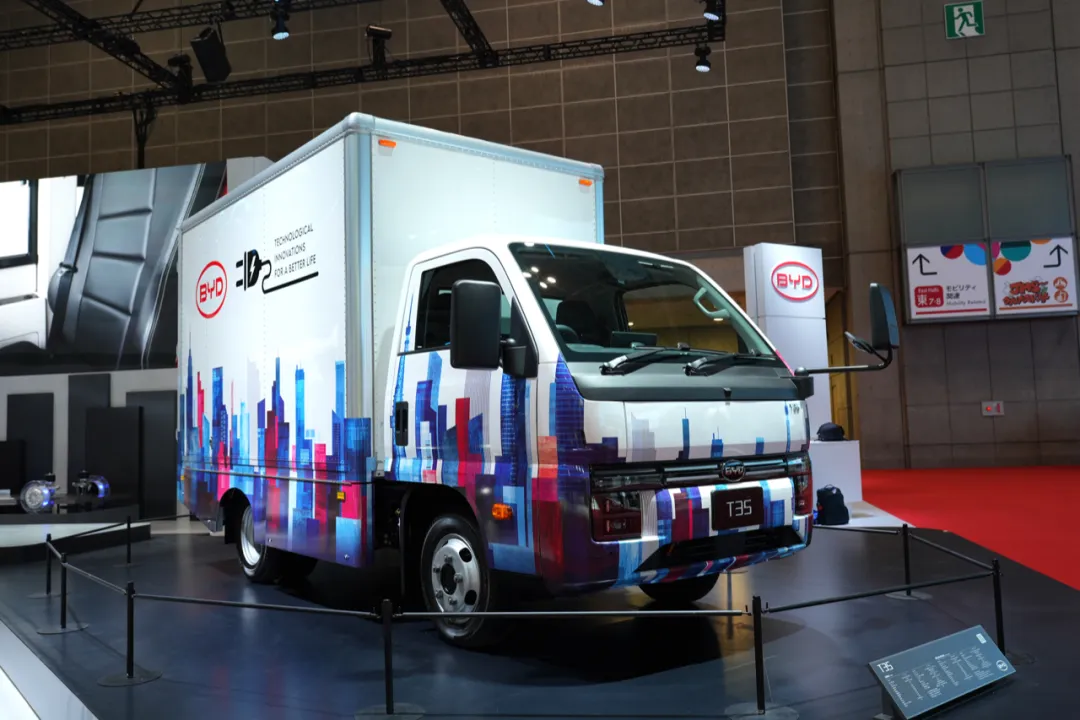
Core Insights - BYD's pure electric truck, the T4, made its global debut at the Tokyo Motor Show, targeting individual merchants and logistics companies with its "flexible handling and reliable range" [1] - The T4 is specifically designed for China's urban distribution scene and will be launched at the China International Commercial Vehicle Exhibition on November 13, providing a new choice for millions in logistics [1] Group 1 - The T4 truck is tailored to meet the practical and performance needs of urban distribution workers, addressing their pain points with its design [2] - The T4 features three body styles: flatbed, box truck, and warehouse fence, making it suitable for various delivery scenarios such as fresh produce, building materials, and supermarket restocking [2] - The vehicle is equipped with a 150 kW flat wire motor and a 62.3 kWh BYD blade battery, offering a CLTC range of up to 330 km, which is ideal for daily short-distance deliveries without frequent recharging [2] Group 2 - The pre-sale for the BYD T4 has begun across major dealerships nationwide, inviting potential customers to experience the "urban distribution tool" at the Wuhan Commercial Vehicle Exhibition [5]

危险!美国汽车贷款违约率“狂飙”
Zhong Guo Qi Che Bao Wang· 2025-11-06 02:26
Core Insights - The rising auto loan default rates in the U.S. signal deteriorating consumer financial conditions, which may negatively impact overall consumption and the economy [3][9][11] Group 1: Auto Loan Default Rates - Fitch Ratings reports that by August 2025, the percentage of subprime auto loans overdue by more than 60 days is projected to reach 6.43%, the highest since 1993, surpassing the peak of 5.04% during the financial crisis [3] - J.D. Power indicates that nearly 14% of new car buyers in September had credit scores below 650, marking the highest level since 2016 [3] Group 2: Consumer Financial Pressure - The increase in auto loan defaults reflects growing financial pressure on consumers, leading to reduced discretionary spending and potential economic slowdown [3][9] - VantageScore's research shows that auto loan default rates have surged over 50% in the past 15 years, transforming auto loans from a safe credit product to one of the riskiest [4] Group 3: Loan Characteristics and Trends - Many consumers are extending loan terms to reduce monthly payments, with some loans stretching to 7 years or more, resulting in a situation where the loan amount exceeds the vehicle's current value [5][6] - The average new car price has risen over 25% since 2019, with the average monthly payment reaching $767, and about 20% of borrowers paying over $1,000 monthly [6][7] Group 4: Economic Implications - The increase in auto loan defaults is expected to lead to stricter lending standards, making it harder for consumers to obtain loans, which could further suppress auto market demand [9][11] - The overall consumer auto debt in the U.S. has surpassed $1.66 trillion, with a significant rise in long-term loans, including 7-year and even 8-year terms [8] Group 5: Future Outlook - The trend of rising auto loan default rates is likely to continue, with potential to exceed 7% due to persistent economic pressures and rising vehicle prices [11] - The health of auto loans is viewed as a barometer for the U.S. economy, particularly for low-income households, indicating broader economic challenges [11]

今日开幕!多图直击进博会汽车馆
Zhong Guo Qi Che Bao Wang· 2025-11-06 02:26
Core Insights - The 8th China International Import Expo (CIIE) took place from November 5 to 10, showcasing a record scale with participation from 155 countries and regions, featuring 4,108 overseas enterprises and an exhibition area exceeding 430,000 square meters [2] Group 1: Automotive and Smart Mobility - The "Automotive and Smart Mobility Exhibition Area" focused on the theme "Mobility, Infinite Possibilities," highlighting advancements in electrification, intelligence, and low-carbon technologies across the global automotive industry [2] - Major automakers like Volkswagen showcased five electric models tailored for the Chinese market, indicating a strategic shift from planning to full delivery in the electrification sector [3] - Hyundai presented the world's first mass-produced hydrogen-powered heavy-duty truck, equipped with an L4 autonomous driving system, emphasizing zero-emission operations and innovative long-haul freight solutions [5] - Toyota highlighted its multi-pathway new energy technology solutions, including hydrogen fuel cell heavy trucks developed in collaboration with Chinese partners, showcasing a commitment to localized R&D [7] - Tesla created a "Future Neighborhood" exhibit, demonstrating a complete energy ecosystem from solar power generation to home energy storage and charging stations [9] Group 2: Intelligent Connectivity and AI - The trend of intelligent and connected vehicles was evident, with Tesla's Cybercab making its Asia-Pacific debut, featuring a fully digital control system and no traditional driving controls [10] - Tesla also showcased its humanoid robot, Optimus, which is expected to start mass production by the end of 2026, aiming for an annual production target of 1 million units by 2030 [12] - Various companies presented low-altitude flying vehicles, with Tianling Technology's eVTOL aircraft attracting attention for its vertical takeoff and landing capabilities and a maximum range of 600 kilometers [14] - BMW introduced its new generation technology, collaborating with Chinese tech firms to enhance AI capabilities and create a seamless digital experience for users [16] Group 3: Localization and Global Cooperation - The participation of 12 multinational automotive groups, with 9 being long-term exhibitors, reflects a trend of deepening localization strategies and integrating R&D, production, and innovation into the Chinese market [17] - Volkswagen's local R&D achievements were highlighted, showcasing innovations in intelligent connectivity and electrification, marking a shift from product introduction to deep local innovation [19] - Qualcomm's presence at the expo demonstrated its expanding partnerships in China, showcasing advancements in connectivity, computing, and AI across multiple sectors [21] - The expo also featured a unique international automotive culture experience area, illustrating the evolution of the automotive industry from traditional fuel vehicles to new energy solutions and technological collaboration [23]


从测试验证到嵌入公交网络 中国Robobus“出海”的破局与立局
Zhong Guo Qi Che Bao Wang· 2025-11-06 02:17
Core Insights - Singapore's Land Transport Authority (LTA) has awarded a pilot project for autonomous bus services (Robobus) to a consortium including MKX Technologies, MoGo, and BYD, marking Singapore's first official L4 Robobus project [2] - The Robobus by WeRide has achieved regular operations and fully unmanned operation in Singapore, becoming Southeast Asia's first autonomous vehicle without a safety operator [2] - Chinese Robobus is rapidly gaining traction globally, leveraging strong scene adaptability, policy certainty, and clear profit models to become a key player in the international smart driving market [2] Project Launch and Global Expansion - The LTA initiated the Robobus service pilot project in January, aiming for Robobus to operate alongside regular buses within three years, with trial operations set for key routes in late 2026 [3] - Robobus is being integrated into public transport systems in Singapore, California, and Paris, addressing challenges like driver shortages and rising costs in global public transport systems [3][6] - The global demand for Robobus is driven by the need for efficient public transport solutions, with significant market opportunities in regions with favorable policies [3][5] Competitive Advantages - Chinese Robobus companies possess three core competitive advantages: a mature supply chain with controllable costs, proven technology through extensive road testing, and flexible business models [7][8] - The cost structure of Robobus is more manageable compared to Robotaxi, with projected annual revenue of approximately 700,000 yuan and a gross profit margin of 25% [9] - The collaborative business model among Chinese companies enhances their competitive edge, allowing for a combination of technology, manufacturing, and local operations [10] Future Trends and Market Integration - The trend of Robobus "going global" is clear, transitioning from pilot projects to large-scale, localized commercial operations, with a focus on integrating into local public transport systems [5][13] - The next 3-5 years are expected to see significant advancements in Robobus deployment, with a shift towards deeper market integration and collaboration with local governments and transport companies [13][14] - Chinese Robobus companies are likely to evolve from merely exporting products to influencing global standards and regulations in smart transportation [14]

算力赛道“奇兵”:模拟计算芯片破壁而来
Zhong Guo Qi Che Bao Wang· 2025-11-06 02:17
Core Insights - A research team from Peking University has developed a high-precision, scalable analog matrix computing chip based on resistive random-access memory (ReRAM), achieving analog computing precision comparable to digital systems [2][4] - The chip significantly enhances computational throughput and energy efficiency, reportedly improving performance by 100 to 1000 times compared to current top digital processors (GPUs) when solving large-scale MIMO signal detection problems [2][4] - This technological breakthrough addresses global challenges of slowing digital computing power growth and rising energy consumption, offering a new solution for critical fields such as AI and autonomous driving [2][6] Analog vs. Digital Computing - Analog computing was once the dominant form of computation but was replaced by digital computing due to precision and scalability limitations [4] - The new chip aims to resolve the precision issues of analog computing, achieving a relative error as low as 10^-7 after 10 iterations for a 16x16 matrix inversion, which meets the needs of most scientific calculations and AI training [4][9] - The chip's performance surpasses high-end GPU single-core performance when solving 32x32 matrix inversion problems, and achieves over 1000 times the throughput of top digital processors for 128x128 matrices [4][7] Advantages of the New Chip - The chip utilizes a "compute-storage integration" approach, eliminating the need for data to be converted into binary streams, thus reducing energy consumption associated with data transfer [5][6] - The low power consumption and high energy efficiency of the analog computing chip align well with the energy management needs of electric vehicles, potentially enhancing their driving range [7][9] - The chip is expected to significantly reduce the training time for AI models, particularly in autonomous driving, where traditional GPUs may take hours to complete tasks that the new chip could finish in minutes [7][10] Industry Perspectives - While the research results are promising, industry experts express caution regarding the practical application of the technology, particularly in the automotive sector, where reliability and durability under harsh conditions are critical [9][10] - The transition from laboratory to industrial application faces challenges such as cost, supply chain maturity, and the need for robust manufacturing processes for the new chip technology [9][10] - The current state of resistive memory technology is still in the experimental phase, with material consistency and reliability needing further development to meet automotive standards [10]
