
Zhong Guo Qi Che Bao Wang

Search documents
透视网约车“切单”乱象
Zhong Guo Qi Che Bao Wang· 2025-10-30 09:36
Core Viewpoint - The article discusses the issue of "order cutting" in the ride-hailing industry, where platforms reassign orders to other drivers, often leading to lower earnings for the original drivers and raising concerns about fairness and transparency in the industry [2][3][4]. Group 1: Order Cutting Phenomenon - "Order cutting" refers to the practice where platforms reassign orders to nearby drivers, even if the original driver is close to picking up the passenger, under the guise of optimizing service efficiency [2][3]. - Drivers have reported that after being cut from an order, the platform often resells the order at a lower price to other platforms, increasing the platform's commission while not benefiting the drivers [3][4]. - The prevalence of "order cutting" has led to widespread dissatisfaction among drivers, who feel that their chances of receiving lucrative orders are diminished [3][4]. Group 2: Legal and Regulatory Implications - Legal experts suggest that platforms may be in breach of contract if they enforce "order cutting" through automated systems, and passengers have the right to seek explanations for order cancellations [6]. - Various regions are exploring regulatory measures to address "order cutting," including blockchain technology for order tracking and requiring platforms to disclose their order assignment logic [6][7]. - The success rate of lawsuits initiated by drivers against "order cutting" practices stands at 38%, indicating some legal support for drivers' rights, although the process can be resource-intensive [5][6]. Group 3: Market Dynamics and Industry Challenges - The ride-hailing industry in China is projected to reach a market size of approximately 317.6 billion yuan by the end of 2024, reflecting a year-on-year growth of 24.5% [7]. - Despite the growth in market size, the oversupply of drivers has led to decreased earnings, with average hourly income for drivers dropping by 12.9% in 2024 compared to 2023 [7][8]. - The competitive landscape has driven platforms to adopt low-price strategies, resulting in a cycle of low quality and low earnings, which further complicates the industry's economic viability [8][9]. Group 4: Future Directions and Recommendations - The future of the ride-hailing industry hinges on achieving a balance between market scale and industry value, with a focus on service quality rather than price competition [9]. - Platforms are encouraged to enhance operational efficiency through intelligent dispatching and to consider driver welfare in their business models [9]. - Regulatory bodies are urged to create long-term mechanisms that adapt to market changes, ensuring fair practices and protecting the rights of both drivers and passengers [9].


聚焦汽车数智生态新机遇, 共探可信数据空间建设新路径!2025中国汽车数智生态峰会11月天津启幕
Zhong Guo Qi Che Bao Wang· 2025-10-30 07:32
Core Viewpoint - The automotive industry is accelerating its transformation towards intelligence, connectivity, and electrification, with data being a core element for innovation and high-quality development. The "2025 China Automotive Digital Intelligence Ecosystem Summit" aims to build a trusted data ecosystem in the automotive sector, focusing on key issues such as trusted data space construction and cross-industry collaborative innovation [2][3]. Group 1: Summit Structure and Focus - The summit will feature a "main forum + thematic forums" structure, covering core industry topics and specific needs [3]. - The main forum will include authoritative voices from government leaders and the release of the "Overall Planning and Practical Path for the Construction of Trusted Data Space in the Automotive Industry" by China Automotive Data Co., which will provide specific directions for data security and collaboration [2]. - The thematic forums will address core pain points in the industry chain's digital transformation, focusing on user, insurance, battery, and refueling themes to facilitate deep exchanges and resource connections [3]. Group 2: Key Achievements and Initiatives - The summit will mark the launch of the "Trusted Data Space Platform for the Automotive Industry," which aims to address long-standing data sharing challenges and strengthen the data foundation for digital transformation [4]. - The "Battery ID International Digital Ecosystem Co-construction Achievements" will be released, along with the initiation of the "Battery ID Data Cross-border Pilot," focusing on core applications of power batteries and facilitating international collaboration and cross-border data flow [4]. Group 3: Engagement and Collaboration - The summit will provide a multi-perspective approach to industry pain points, combining theory and practice to deliver value, with industry research institutions analyzing the essence of data elements and trends in trusted data space development [5]. - Cross-industry leaders will share practical cases of cross-domain integration, exploring data value in scenarios such as "automotive + energy" and "automotive + communication" [5]. - Registration for the summit is open until November 25, 2025, inviting industry representatives to participate in discussions on new data value and the construction of a trusted ecosystem [5].

新能源汽车失速难题何解?
Zhong Guo Qi Che Bao Wang· 2025-10-30 07:17
Core Insights - The increasing incidents of sudden power loss in electric vehicles (EVs) are raising safety concerns among consumers and becoming a focal point in the market [2][3][4] - Multiple brands are facing quality crises, with reports of power loss linked to core component failures and inadequate quality control [3][4] - The root causes of power loss are attributed to imbalances in power supply and demand, particularly related to the three electric systems (battery, motor, and controller) [5][6][7] Group 1: Incident Reports - A recent case involved a vehicle that lost power after only 147 kilometers of driving, leading to a dangerous situation on the highway [2] - Another brand's vehicle experienced power loss after just 612 kilometers, with failures in both the motor assembly and safety systems [4] - Complaints from consumers highlight concerns over the reliability of the brands' quality control systems and the handling of these incidents [3][4] Group 2: Technical Analysis - Power loss in pure electric vehicles is often linked to abnormal states in the three electric systems, with battery depletion being a common cause [5][6] - Temperature anomalies during high-load operations can trigger power reduction protections, leading to power loss [6] - For range-extended and plug-in hybrid vehicles, power loss is often due to the limitations of the small power generator when the battery is depleted [7][8] Group 3: Systemic Issues - Software flaws in battery management systems (BMS) can lead to incorrect power cut-offs, contributing to power loss incidents [8][9] - The design of power systems must balance power redundancy with cost control to avoid performance issues under extreme conditions [9][10] - The industry is currently focused on cost reduction, which may compromise the robustness of power components, leading to insufficient power reserves [10] Group 4: Future Outlook - Regulatory policies and technological advancements are expected to gradually alleviate power loss issues, with new standards mandating improved stability in power systems [11] - Innovations in battery technology and motor efficiency are anticipated to enhance the redundancy of power systems while maintaining cost-effectiveness [11]

“半固态电池”或将更名“固液电池”,还将带来哪些新变化?
Zhong Guo Qi Che Bao Wang· 2025-10-30 02:45
Core Viewpoint - The potential renaming of "semi-solid battery" to "solid-liquid battery" has sparked significant interest in the industry, highlighting long-standing concerns about terminology confusion and its implications for market clarity and development [2][3]. Industry Terminology and Clarity - The term "semi-solid battery" has been criticized for being vague and easily confused with "solid-state battery," leading to misconceptions among consumers and manufacturers [3]. - The proposed term "solid-liquid battery" more accurately describes the technology, as it retains some liquid electrolyte while incorporating solid electrolyte materials to enhance performance [3]. - Industry experts emphasize the need for clearer terminology to facilitate communication, collaboration, and standardization within the battery sector [5]. Technological Advancements - Solid-liquid batteries theoretically offer improved energy density and charging speed compared to traditional lithium batteries, although they still carry some risks associated with liquid components [3][9]. - In contrast, solid-state batteries utilize entirely solid electrolytes, providing higher energy density, faster charging, and enhanced safety due to the absence of liquid components [4]. Industry Development and Collaboration - The renaming initiative aims to standardize battery classifications, which could foster better communication and cooperation among industry players, including material suppliers, battery manufacturers, and automotive producers [5][6]. - Enhanced clarity in terminology is expected to lead to more precise alignment of development goals across the supply chain, promoting collaborative research and production efforts [6][7]. Market Implications - Solid-liquid batteries are anticipated to play a crucial transitional role in the battery market until solid-state technology matures, addressing consumer demands for higher energy density, faster charging, and improved safety [9]. - The introduction of solid-liquid batteries is expected to alleviate consumer concerns regarding range anxiety in electric vehicles by extending driving range and reducing charging times [9]. Future Prospects - The technological advancements and industry experience gained from solid-liquid batteries are likely to benefit the future development of solid-state batteries, facilitating faster industrialization and scaling of production [10].

观车 · 论势 || 京东汽车或是流通领域下一条“鲶鱼”
Zhong Guo Qi Che Bao Wang· 2025-10-30 01:21
Core Insights - JD.com, in collaboration with CATL and GAC Group, is not entering the car manufacturing sector but is instead redefining the automotive distribution model through a service-oriented approach [1][4] - The partnership aims to create a triangular collaboration model that integrates user insights, manufacturing capabilities, and energy support, positioning JD.com as a "demand translator" and "service integrator" [2][3] Industry Transformation - The automotive distribution sector is undergoing significant changes, with traditional dealership models facing unprecedented challenges, including a reported 52.6% loss rate among dealers due to price discrepancies and reduced manufacturer incentives [2][3] - JD.com's entry provides a new reference for channel transformation, addressing high customer acquisition costs and fragmented service standards in the automotive market [3] Innovative Business Model - JD.com employs a "three horizontal and three vertical" collaboration model, integrating manufacturing, energy, and sales while streamlining the entire vehicle lifecycle from selection to maintenance [3] - This model shifts the focus from traditional manufacturing profits to high-value user services and channel integration, creating a decentralized automotive service ecosystem [3][4] Challenges Ahead - JD.com must cultivate consumer trust in purchasing vehicles through third-party platforms, as high-value items like cars face skepticism from buyers [4] - The efficiency of cross-company collaboration among GAC, CATL, and JD.com is crucial for aligning manufacturing schedules, energy network development, and traffic operations [4] - Regulatory and standardization issues related to battery specifications and infrastructure must be addressed in collaboration with local governments and industry associations [4] Significance of the Attempt - JD.com's cross-industry initiative is timely, as the penetration rate of new energy vehicles exceeds 50%, indicating a shift in the automotive landscape [4] - This "platform integration" model offers a fresh perspective for the struggling automotive distribution sector, suggesting that e-commerce platforms can play a pivotal role in reshaping industry ecosystems [4] - Regardless of the outcome, JD.com's exploration will provide valuable insights for the digital transformation of the automotive industry, potentially positioning it as a disruptive force similar to its impact in the 3C sector [4]

三季度汽车维修行业景气指数先升后降
Zhong Guo Qi Che Bao Wang· 2025-10-30 01:17
Core Insights - The automotive repair industry in China is experiencing fluctuations in its prosperity index, with values of 58.5%, 51.8%, and 43.4% for July, August, and September 2025 respectively [1] - The index is composed of five dimensions: business, efficiency, effectiveness, workforce, and expectations, with a diffusion index method used for calculation [1] Group 1: Overall Industry Trends - The prosperity index showed significant volatility in Q3 2025, initially rising by 14.6 percentage points in July, followed by declines of 6.7 and 8.4 percentage points in August and September respectively [3] - Compared to the same period in 2024, the index in July increased by 9.1 percentage points, while August and September saw declines of 4.1 and 2.9 percentage points respectively [3] Group 2: New Energy Vehicle Repair Sector - The prosperity index for the new energy vehicle repair sector was 55.6%, 50.8%, and 45.3% for July, August, and September, showing a similar trend to the overall industry index but with structural differences [5] - Factors affecting the new energy vehicle repair sector include lower maintenance frequency compared to traditional vehicles, extended warranty periods from manufacturers, and high technical barriers for battery repairs [5] Group 3: Different Categories of Repair Enterprises - The prosperity index for different categories of automotive repair enterprises indicated a significant increase in July due to higher travel during the summer vacation, with the index for category three enterprises at 52.7%, significantly higher than categories one and two [7] - In August, the index for category three enterprises remained in the expansion zone, while the indices for categories one and two were lower, reflecting a return to normal commuting patterns post-summer [7] - The automotive repair industry association plans to enhance the prosperity index research as a long-term focus to support the industry's transformation and high-quality development [7]

东京车展开锣:日系车霸屏,中国车企叩门
Zhong Guo Qi Che Bao Wang· 2025-10-29 12:47
Core Insights - The 2025 Japan Mobility Show, previously known as the Tokyo Motor Show, commenced on October 29, showcasing both domestic and international automotive companies, including Toyota, Honda, Nissan, BYD, and Zeekr [1][3][4] Group 1: Japanese Automakers - Japanese automakers continue to dominate the show, with Toyota, Honda, and Nissan presenting multiple new models [4] - Toyota introduced the new Corolla concept car and a model aimed at rural markets in Africa, the IMV Origin, along with other vehicles like the Land Cruiser FJ and mobility tools for disabled individuals [6] - Nissan showcased the new Elgrand MPV, a revamped Leaf electric vehicle, and the updated Ariya, with the Elgrand featuring advanced e-Power hybrid technology [8] - Honda presented several new vehicles, including the Honda 0 Saloon and the entry-level SUV Honda 0 α, which is set for global release in 2027 [10] - Mazda displayed the new CX-5 and two concept cars, emphasizing its dual strategy in traditional vehicle upgrades and electrification [12] Group 2: Chinese Automakers - BYD made a significant presence with the introduction of the Racco, a pure electric K-Car tailored for the Japanese market, set to launch in summer 2026 [15][18] - The Racco features a 20 kWh battery, offering a range of 180 kilometers under WLTC conditions and supports 100 kW fast charging, catering to urban commuting needs [18] - BYD has established a strategic partnership with Aeon to set up sales points across Japan, facilitating the purchase of its vehicles at competitive prices [18] - Zeekr also made its debut at the show, planning to start order acceptance in Japan by the end of the year and official deliveries in 2026 [19] Group 3: Market Trends - The K-Car segment, unique to Japan, is characterized by compact dimensions and low engine displacement, making it popular for urban use [18] - Nissan is testing the market acceptance of its electric sedan N7, developed for the Chinese market, by introducing it to Japanese consumers [21]
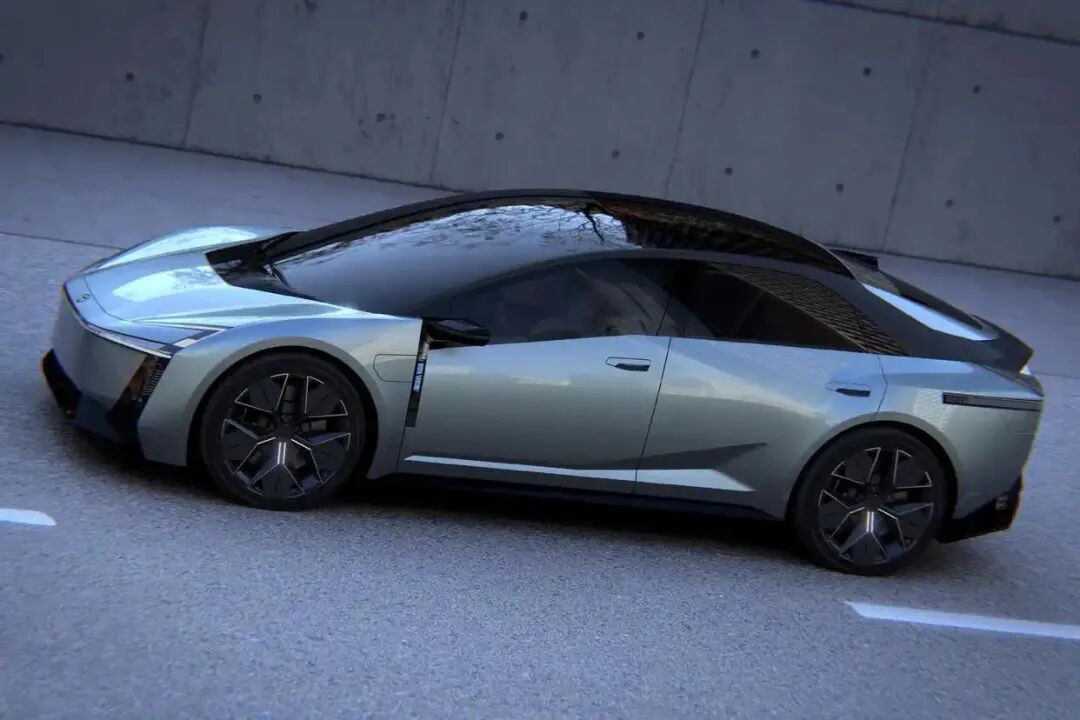
福达股份:拟1亿设全资子公司,承载新能源电驱动齿轮与机器人传动部件项目
Zhong Guo Qi Che Bao Wang· 2025-10-29 10:15
Core Insights - The company plans to establish a wholly-owned subsidiary named Pinghu Fuda Drive Co., Ltd. with an investment of 100 million yuan [1] - The new subsidiary will focus on the implementation of two key projects: the "Ultra-Precision Gear Project for New Energy Vehicle Drive Systems" and the "Robot Transmission Joint Components Project" [2] - This strategic move is expected to enhance the company's competitiveness in the new energy vehicle core components and robot transmission sectors, thereby improving overall market competitiveness and profitability [2] Business Strategy - The establishment of the subsidiary will facilitate the execution of investment projects in the Pinghu Economic and Technological Development Zone, transitioning plans from concept to reality [2] - By concentrating on the two specified fields, the company aims to strengthen its position and fill gaps in these niche markets [2]

“四个轮子上的超级计算机”!量子科技如何支撑汽车智能化狂飙?
Zhong Guo Qi Che Bao Wang· 2025-10-29 03:36
Core Insights - The automotive industry is undergoing a transformation, evolving from mere transportation to becoming "supercomputers on wheels," with quantum technology as a crucial pillar [4][6] Group 1: Demand for Computational Power - The demand for computational power in vehicles has surged dramatically, with single-vehicle requirements escalating from tens of TOPS to thousands of TOPS [5] - Tesla's FSD chip can process up to 2.5 billion frames of images per second, highlighting the immense data processing capabilities required [5] - Traditional silicon-based chips are showing limitations in handling the high computational demands of smart vehicles [5] Group 2: Quantum Technology Advantages - Quantum technology offers revolutionary solutions to automotive computational challenges through quantum superposition and entanglement [6] - Quantum superposition allows quantum bits to exist in multiple states simultaneously, providing significant parallel computing capabilities [6] - Quantum entanglement enables secure and rapid communication between vehicles and infrastructure, enhancing data security and resource sharing [6] Group 3: Real-time Decision Making - Quantum computing's instantaneous response capability is critical for real-time adjustments in driving strategies during unexpected situations [7] - Quantum algorithms can drastically reduce path planning computation time from minutes to milliseconds, significantly improving decision-making speed and efficiency [8][9] Group 4: Data Management and Compression - Quantum machine learning can compress large datasets, reducing the data volume generated by vehicles, such as 800GB from LIDAR systems, to less than 5% of the original size [10] - This compression alleviates storage and transmission burdens, allowing for faster data processing and improved decision-making in complex driving scenarios [10] Group 5: Navigation and Positioning - Quantum inertial navigation technology can achieve centimeter-level positioning accuracy, unaffected by external environmental factors, addressing limitations of traditional IMU sensors [10] Group 6: Industry Investment and Challenges - Major tech companies are investing heavily in quantum computing for automotive applications, leading to a competitive arms race for computational power [11] - Challenges include the need for quantum devices to operate at extremely low temperatures and the complexity of integrating multiple quantum bits on a single chip [11][12] Group 7: Future Outlook - By 2027, high-end vehicles equipped with quantum communication modules are expected to achieve "zero latency" in vehicle-to-infrastructure communication [12] - By 2030, quantum computing chips may become standard in smart vehicles, enabling true "full-scene unmanned driving" with over 1 billion quantum bits [12] - Quantum technology is poised to revolutionize the automotive industry, akin to the impact of electricity on industrial civilization, driving a new era of intelligent transportation [13]

离谱!欧美充电桩电缆失窃频发
Zhong Guo Qi Che Bao Wang· 2025-10-29 02:39
Core Insights - The surge in electric vehicle (EV) adoption has led to a significant increase in cable theft from charging stations, driven primarily by the rising copper prices, which have made these cables attractive targets for thieves [2][3][4] - The theft of charging cables not only disrupts the operations of charging network operators but also poses a threat to the overall transition to electric vehicles, as it undermines public confidence in charging infrastructure [6][7][8] Summary by Sections Cable Theft Incidents - In the U.S., cable theft incidents have escalated from one every six months to an average of ten per month for Electrify America [2] - In the UK, over 600 charging cables have been stolen in the past year, while in Germany, up to 70 charging stations can be rendered inoperable in a single day due to cable theft [2] Economic Drivers - The rising international copper prices, which reached nearly $5.2 per pound in May 2024, have been a significant catalyst for the increase in cable theft [3][4] - The demand for copper in electric vehicles is substantial, with each electric vehicle consuming about 60 kg of copper, which is 3-4 times more than traditional gasoline vehicles [3] Impact on Charging Network Operators - The average repair cost for a stolen cable in Germany is around €3,500, and the thefts have led to significant operational disruptions for charging network operators [6] - In the U.S., replacing a stolen cable can cost about $1,000, which is significantly higher than the resale value of the copper [7] Security Challenges - Many charging cables are made of pure copper and lack adequate physical protection, making them easy targets for thieves [5] - The open design of charging stations and the lack of effective monitoring in many areas exacerbate the problem [5] Response Strategies - Charging network operators are exploring various solutions, including the introduction of "anti-cut cables" and smart alarm systems to deter theft [8][9] - Legislative measures are being considered to classify charging cables as critical infrastructure, which would impose stricter penalties for theft [9]
