
Zhong Guo Qi Che Bao Wang

Search documents
观车 · 论势 || 给高速发展的新能源重卡泼点冷水
Zhong Guo Qi Che Bao Wang· 2025-09-18 02:12
Core Insights - The new energy heavy truck market in China has seen significant growth, with sales exceeding 79,000 units in the first half of the year, representing a year-on-year increase of 186% and a market penetration rate of over 26% [1] - Despite this rapid growth, the industry faces challenges such as technological bottlenecks, limited application scenarios, and the need for ecological restructuring, which could hinder the sustainability of this growth [1] Technological Challenges - Range anxiety remains a key constraint on the development of new energy heavy trucks, as their driving range still does not meet the demands of long-distance transportation compared to fuel heavy trucks [2] - Product homogeneity is a significant issue, with many manufacturers focusing on a few conventional electric models and lacking customized solutions for different market segments [2] - The absence of unified technical standards is a major barrier to industry development, leading to increased R&D costs and operational inefficiencies due to incompatible charging and battery swapping systems [2] Market Competition Issues - The industry is experiencing chaotic competition, with a focus on low pricing rather than technological innovation, which undermines product quality and user experience [3] - Many companies are resorting to price-cutting strategies, leading to a decline in the technical content of products and potentially creating a vicious cycle of low-price competition [3] Development Model Transformation - The new energy heavy truck industry needs to transition from a "policy-driven, market-assisted" model to a "market-driven, technology-led" approach to ensure sustainable growth [4] - Companies must focus on achieving economic, reliable, and applicable vehicles that can compete with fuel heavy trucks, moving beyond merely increasing battery capacity [4] Ecosystem Development - Companies should adopt an ecological mindset to build a new development framework for the new energy heavy truck industry, moving beyond the traditional "production and sales" model [5] - There is a need for collaboration among energy operators, vehicle manufacturers, and financial institutions to address core challenges such as costs, standards, and infrastructure [5] - Users should recognize the long-term operational value of new energy heavy trucks, understanding that despite higher initial costs, lower energy consumption and maintenance costs can enhance overall lifecycle cost-effectiveness [5]
福特德国裁员启动,首次1000人
Zhong Guo Qi Che Bao Wang· 2025-09-18 01:12
此次科隆工厂的裁员,是福特2024年11月官宣的欧洲大规模裁员计划的一部分。当时福特宣布,由于经济逆风、欧洲地区电动汽车需求疲软、政府对 电动汽车转型支持不力,以及来自中国对手的竞争激烈等因素,福特计划到2027年底在欧洲裁员4000人,包括在德国裁员2900人,在英国裁员800人,在 其他欧洲国家裁员300人。其中,在德国的裁员,主要集中在科隆工厂。 9月16日,福特汽车宣布,由于欧洲电动汽车市场需求疲软,该公司的德国科隆工厂将于2026年初裁员1000人。科隆工厂自2026年1月起,将从每日两 班制调整为一班制。 事实上,很长一段时间以来,福特欧洲业务一直处于亏损状态。高昂的成本结构,特别是德国的劳动力和能源成本,以及电动汽车研发所需的大量投 入,给福特带来了巨大的财务压力。当然,不止是福特,迄今为止,电动汽车业务实现盈利的车企少之又少。福特不得不通过裁员等措施来削减运营开 支,以期实现欧洲业务的扭亏为盈。相比之下,美国同行通用汽车多年前就抛弃了欧洲业务,将旗下欧洲品牌欧宝和沃克斯豪尔出售给了Stellantis。 欧洲业务低迷,叠加美国特朗普政府关税政策影响,以及高额召回成本,今年第二季度,福特录得净亏 ...


机器人卖车还要迈过几道坎
Zhong Guo Qi Che Bao Wang· 2025-09-17 13:54
Group 1 - The core idea of the article revolves around the introduction of humanoid robots in car sales, showcasing their capabilities in customer interaction and sales processes [2][3][10] - Xiaopeng Motors' humanoid robot IRON made its debut at the 2025 Munich Auto Show, demonstrating skills such as making hand-brewed coffee and engaging with customers [2][3] - Chery's humanoid robot Mornine has been deployed in various countries, enhancing customer service and sales efficiency through advanced interaction capabilities [3][4] Group 2 - The use of humanoid robots in car dealerships is primarily a marketing strategy to attract customers and showcase technological advancements [6][7] - Despite their novelty, humanoid robots currently face challenges in effectively addressing complex customer inquiries, leading to skepticism about their ability to replace human sales staff [6][8] - The cost of humanoid robots is a significant barrier to widespread adoption, with prices exceeding $100,000 for mainstream models [8][10] Group 3 - AI technology is increasingly being integrated into automotive marketing and sales, with companies like Autohome leveraging AI for personalized product recommendations and customer engagement [10][11] - The introduction of AI-driven tools aims to enhance the efficiency of sales processes and improve customer satisfaction through better resource matching [11][12] - The future of car sales may see a shift towards automation and AI-driven interactions, potentially leading to a more seamless purchasing experience for consumers [11][12]


豆包深度思考大模型与荣威M7 DMH的故事刚刚开始
Zhong Guo Qi Che Bao Wang· 2025-09-17 12:45
Core Insights - The launch of the SAIC Roewe M7 DMH featuring the Doubao Deep Thinking Model marks a significant advancement in human-vehicle interaction, transitioning from command-based to natural interaction [1][3][4] - The integration of AI technology is driving a transformation in the automotive industry, with intelligent cockpits becoming a core competitive area [3][6] Group 1: Product Features - The Roewe M7 DMH utilizes the Doubao Deep Thinking Model, enabling the vehicle to understand vague commands and user intentions, thus enhancing the interaction experience [3][4] - The vehicle's advanced memory capabilities allow it to remember user preferences and historical interactions, making it a more personalized companion [4][5] - The M7 DMH can execute complex vehicle control tasks with a single command, significantly improving user convenience and experience [5][6] Group 2: Industry Collaboration - SAIC Roewe has partnered with Volcano Engine to leverage AI models in the automotive sector, aiming to create a more intelligent and user-friendly driving experience [6] - The collaboration focuses on integrating advanced AI capabilities with the vehicle's underlying systems, enhancing the overall functionality and user interaction [6] - The shift in user expectations from merely functional vehicles to those that understand their needs reflects a broader trend in the automotive industry [6]


首搭豆包深度思考大模型,荣威M7 DMH上市,限时8.58万元起
Zhong Guo Qi Che Bao Wang· 2025-09-17 12:37
Core Insights - The launch of the Roewe M7 DMH, a long-range mid-to-large luxury sedan, is positioned to redefine family travel with advanced features and competitive pricing [1][12] - The vehicle offers a unique combination of comfort, intelligent technology, and hybrid capabilities, aiming to meet the evolving needs of family users [12] Pricing and Promotions - The Roewe M7 DMH is available in three versions with official prices ranging from 97,800 to 114,800 yuan, with promotional prices between 85,800 and 102,800 yuan for early orders [1] - Customers can also enjoy additional benefits worth up to 18,000 yuan, including lifetime warranties on key components [1] Product Features - The M7 DMH features a unique panoramic sofa chair and mCDC dynamic suspension system, enhancing passenger comfort and experience [3][6] - The vehicle is equipped with advanced AI technology, enabling natural interaction and improved understanding of user commands, with a 14-fold increase in accuracy compared to traditional models [7][9] Hybrid Technology - The M7 DMH is powered by the DMH 6.0 super hybrid system, offering a pure electric range of 160 km and a combined range of 2050 km, with fuel consumption as low as 2L per 100 km [10] - The vehicle includes a lifetime warranty on critical components, addressing user concerns about maintenance and reliability [10] Design and Space - Designed by former Rolls-Royce chief designer Joseph Kaban, the M7 DMH combines modern aesthetics with practical features, including a spacious interior and extensive storage options [11] - The vehicle's dimensions provide ample space for passengers, with a trunk capacity of 527 liters and 31 storage compartments [11] Market Positioning - The Roewe M7 DMH aims to become a leading choice for families seeking a high-quality plug-in hybrid sedan under 100,000 yuan, showcasing strong potential for market success [12]

赛事门票全面开启发售,2025GT世界挑战赛北京亦庄站筹备进入冲刺阶段
Zhong Guo Qi Che Bao Wang· 2025-09-17 09:15
Group 1 - The 2025 GT World Challenge will take place in Beijing from October 17 to 19, marking the first time this international top-tier event is held in a street race format in the city [5][9]. - The event aims to fill a decade-long gap in international automotive competitions in Beijing and aligns with the city's goal of becoming an "international event city" [9]. - The event will feature a deep integration of "sports + technology + industry," showcasing Beijing's strengths in innovation and smart automotive technology [9][22]. Group 2 - The event will include a comprehensive traffic management plan, with nearly 20 parking lots providing over 10,000 parking spaces during peak times, and shuttle services to facilitate audience access [13]. - A 5,000 square meter "theme carnival" will be set up around Tongming Lake, featuring diverse activities to engage citizens of all ages in automotive culture [13]. - Ticket sales for the event have begun, with prices ranging from 158 to 678 yuan, and VIP tickets set to be available from September 20 [14][18]. Group 3 - The event will serve as the final race of the Asian Cup, featuring top drivers competing in GT3 and GT4 class vehicles on a 4.9-kilometer FIA-standard temporary street circuit [22]. - Major automotive brands such as Lamborghini, Ferrari, and Porsche will participate, enhancing the event's prestige and appeal [22]. - The event is expected to contribute significantly to Beijing's image as a hub for international events, combining speed, technology, and industry exchange [22].

芯旺微电子:车规级MCU出货超1.6亿颗,全链条布局筑牢车规芯片供应链安全
Zhong Guo Qi Che Bao Wang· 2025-09-17 09:12
Core Insights - The "2025 China Automotive Chip Supply Handbook" has been officially released, led by the China Automotive Chip Industry Innovation Strategic Alliance, with participation from nearly a hundred chip design companies, providing support for chip selection, promotion of domestic chips, and industry standard formulation [1] Group 1: Chip Categories - ChipWang Microelectronics has developed a diverse chip matrix covering three core categories: control chips, driver chips, and communication chips, with nearly a hundred product models based on the self-developed KungFu core [2] - Control chips have been applied in over 200 vehicle models, providing computational support for core automotive control scenarios [2] - Driver chips focus on chassis braking, air suspension, and valve control, featuring high integration and reliability, and have already been mass-produced for vehicles [2] - Communication chips excel in RF performance for scenarios like keyless entry and tire pressure monitoring, designed for low power consumption and flexible communication protocol configuration [2] Group 2: System Coverage - ChipWang's chips penetrate four major automotive systems: chassis power, body systems, cockpit systems, and intelligent driving systems, facilitating technological transformation in the industry [4] - Recommended chips for chassis power include KF32A136 and KF32A158 MCUs, along with the SMC6008AF dedicated braking chip [4] - For body systems, recommended chips include KF8A100 and KF32A136 MCUs, as well as the SRT1200 RF chip [4] - Cockpit systems also utilize KF8A100 and KF32A136 MCUs, while intelligent driving systems recommend KF32A136 and KF32A151 MCUs [4] Group 3: Market Performance - ChipWang has achieved significant market performance with over 160 million automotive-grade MCUs shipped, and the self-developed KungFu MCU has surpassed 1 billion units shipped [6] - The application of KungFu MCUs in high-safety systems like steering and braking exceeds 10 million units, demonstrating the product's penetration and reliability in the automotive sector [6] Group 4: Supply Chain Security - ChipWang has implemented four key measures to ensure supply chain security, including self-developed core technology, domestic industrial chain coverage, and self-developed toolchains for MCU development [7] - The company has adopted a "virtual IDM model" to enhance its capabilities in chip design, wafer manufacturing, and testing, thereby strengthening its autonomous capabilities [8] - Through a comprehensive layout, ChipWang aims to inject momentum into the domestic automotive chip industry, supporting the transition of the automotive sector towards high-end and intelligent development [8]

“金九银十”:下沉市场的“信任投资期”
Zhong Guo Qi Che Bao Wang· 2025-09-17 09:10
Core Viewpoint - The automotive industry in China is entering a critical sales period known as "Golden September and Silver October," with a surge in new car releases and government support for consumer incentives aimed at boosting sales [1][2]. Group 1: Government Policies and Support - The National Development and Reform Commission and the Ministry of Finance have allocated 69 billion yuan in special bonds to support the "old-for-new" vehicle replacement program, effective from September 1 [1]. - A new personal consumption loan subsidy policy has been introduced, allowing for fiscal subsidies on loans for household vehicle purchases from September 1, 2025, to August 31, 2026, covering amounts of 50,000 yuan and above [1]. Group 2: New Energy Vehicle (NEV) Initiatives - The government is promoting NEVs in rural areas through initiatives like the "2025 NEV Down to the Countryside" campaign, targeting counties with low NEV penetration and high market potential [2][4]. - The "Thousand Counties and Ten Thousand Towns" NEV consumption season, running from July to December 2025, aims to stimulate NEV sales in traditional peak seasons [2]. Group 3: Market Dynamics and Consumer Behavior - The county-level market represents a significant opportunity, with approximately 748 million residents and a consumption market share of 38% [4]. - NEV sales in rural areas are projected to exceed 2 million units in 2024, reflecting a 45% year-on-year growth and accounting for 22% of total NEV sales [4]. Group 4: Challenges in the County Market - Companies face unique challenges in the county market, including high price sensitivity, a strong demand for practical models, and the need for tailored marketing strategies [4][5]. - Successful penetration into the county market requires a shift in mindset, focusing on developing products that meet local needs and building a reliable service network [5][6].
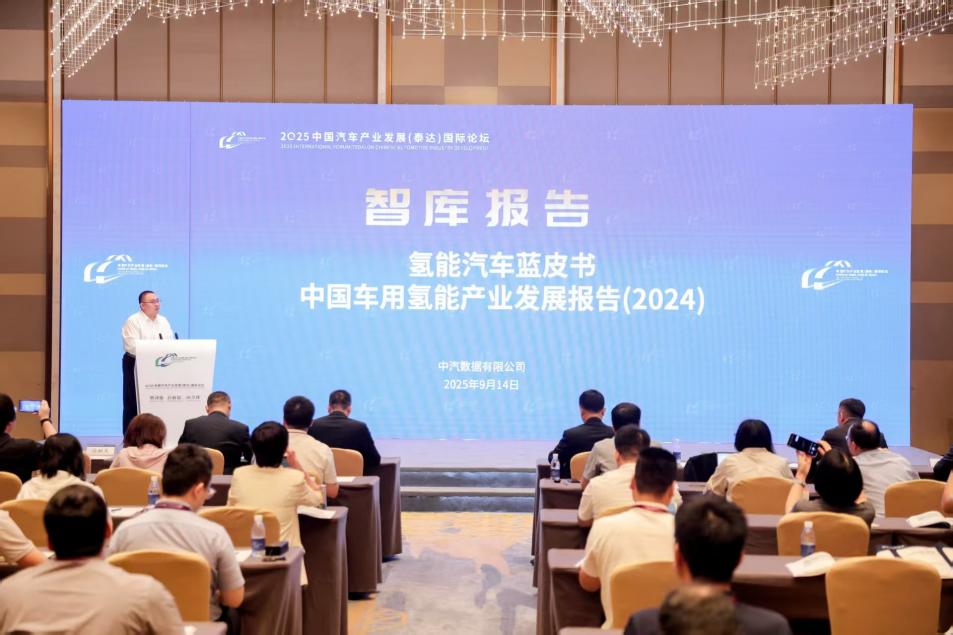
《氢能汽车蓝皮书:中国车用氢能产业发展报告 (2024)》正式发布
Zhong Guo Qi Che Bao Wang· 2025-09-17 06:53
Core Viewpoint - The "Hydrogen Energy Vehicle Blue Book: China Hydrogen Energy Industry Development Report (2024)" emphasizes accelerating the development of hydrogen fuel cell vehicle industry to inject hydrogen energy into new productive forces [3] Group 1: Industry Progress - National top-level design is being further improved, with local supportive policies being introduced intensively, indicating a clear trend towards large-scale application of hydrogen energy [3] - The fuel cell vehicle industry chain in China is gradually maturing, with over 80% localization rate of key components and significant cost reductions [3] - By 2024, a total of 28,000 hydrogen fuel cell vehicles are expected to be promoted in China, with heavy trucks becoming a demonstration hotspot [4] Group 2: Market Dynamics - In 2024, the market sales of fuel cell vehicles are projected to be 7,131 units, a slight decrease of 5% year-on-year, while the system installation capacity is expected to increase by 10.7% to 820 MW [4] - The market faces challenges such as supply-demand imbalance and the need for a stable hydrogen supply capability [4] Group 3: Recommendations - Strengthening top-level design and management innovation is essential to eliminate institutional barriers and promote green hydrogen projects [5] - Encouraging the establishment of cross-regional industrial clusters to enhance coordination and avoid homogeneous competition [10] - Expanding the range of demonstration vehicle types and accelerating the scale of hydrogen energy applications in industrial and transportation sectors [11] Group 4: Future Outlook - The report anticipates that by 2025, sales will exceed 10,000 units, and by 2030, the cost of commercial vehicles will be comparable to that of fuel vehicles [4] - The "Hydrogen Energy Vehicle Blue Book" aims to continue serving as a recorder, researcher, advisor, and promoter for the industry, addressing core challenges and providing actionable solutions [12]
2025国际汽车智能座舱大会苏州召开
Zhong Guo Qi Che Bao Wang· 2025-09-17 05:56
Core Insights - The 2025 International Automotive Intelligent Cockpit Conference was held in Suzhou, focusing on AI-enabled cockpit innovation and the future ecosystem of human-vehicle interaction [1] - The conference featured discussions on key technologies, international standards, and talent cultivation in the intelligent cockpit sector, with participation from 800 experts and representatives [1][3] Industry Development - The global automotive industry is undergoing a historic transformation driven by technology and innovation, with China's intelligent cockpit sector leading due to its technological and market advantages [3] - The future development of intelligent cockpits requires a strong foundation in core technologies like cockpit models and high-performance chips, emphasizing user-centric design and international collaboration [3] Regional Insights - Jiangsu Province, as a major automotive industry cluster, has established a complete innovation system in areas like vehicle-mounted chips and intelligent cockpit solutions, positioning Suzhou as a key player in the intelligent connected vehicle sector [3] - The establishment of the Yangtze River Delta Technology Exchange Center is a result of strategic cooperation between the China Automotive Engineering Society and the Suzhou government, aimed at enhancing regional automotive industry development [4] Research Findings - The average score for intelligent cockpit evaluations reached 6.78, with most models scoring above 6, indicating significant advancements in technology and consumer experience [5] - The report on the intelligent cockpit standard system aims to establish a framework by 2026 and to lead global standards by 2035, filling gaps in key technology standards [5] Technological Innovations - The integration of technologies like Tesla's FSD and China's "vehicle-road-cloud" model is highlighted, with a focus on cost-effective solutions and the need for clearer business models in the intelligent connected vehicle sector [6] - New network security solutions, such as the Multi-Identification Network (MIN), are proposed to enhance data security and privacy in intelligent cockpits [7] User Experience and Interaction - The concept of "happy space" is introduced by Li Auto, emphasizing the role of intelligent cockpits in differentiating automotive brands through advanced interaction systems [8] - Companies like Zebra Zhixing are focusing on user value-driven transformations in intelligent cockpits, leveraging AI to create personalized user experiences [8] Future Directions - Unity's advancements in 3D real-time rendering technology are set to enhance intelligent cockpit functionalities, including music visualization and interactive navigation [9] - The industry is moving towards a more human-centered approach in cockpit design, exploring new applications like in-car gaming and meditation spaces [9]
