Qi Huo Ri Bao Wang

Search documents
企业收购不积极 价格低开低走
Qi Huo Ri Bao Wang· 2025-10-17 01:15
Core Viewpoint - The soybean production in Heilongjiang is experiencing an increase in planting area and stable yield, while the market faces challenges with low opening prices and trade dynamics affecting pricing strategies [4][7][9]. Group 1: Planting Area and Yield - The soybean planting area in Heilongjiang has increased significantly due to factors such as planting profitability, policy subsidies, and crop rotation requirements, with eastern regions seeing a 10% increase and western regions a 7% increase compared to last year [3][4]. - The overall soybean yield is expected to remain stable compared to last year, with reports indicating yields of 400 to 560 jin/mu in various regions [3][4]. Group 2: Cost and Subsidies - The cost of soybean cultivation has decreased, primarily due to a drop in land rental prices, which are now around 11,000 yuan/hectare, a 10% decrease from last year [5][6]. - After subsidies, the effective cost of soybean cultivation in Heilongjiang ranges from 5,500 to 9,239 yuan/hectare, translating to approximately 1.5 to 1.7 yuan/jin for production costs [6]. Group 3: Market Dynamics - The opening price for the new season's soybeans in Heilongjiang has shown a downward trend, with current purchase prices ranging from 1.8 to 2.0 yuan/jin, influenced by low protein content and expectations of increased production [7][9]. - Domestic soybean consumption is stable, with food processing and oil extraction being the primary sectors, while the increase in domestic soybean production is mainly absorbed by the oil extraction sector [8][9]. Group 4: Trade and Pricing - Trade tensions have led to increased tariffs on U.S. soybeans, prompting China to source more soybeans from South America, particularly Brazil, where prices are competitive but do not offer a significant advantage over domestic soybeans [8][9]. - The pricing dynamics for domestic soybeans are influenced by the balance between production increases and market demand, with potential upward pressure on prices if South American imports decrease [9]. Group 5: Industry Operations - The soybean processing industry in China is characterized by a preference for non-GMO soybeans, with processing operations heavily reliant on profit margins, leading to sporadic operational schedules based on market conditions [10][11]. - The trading sector exhibits flexibility in purchasing strategies, with smaller traders facing challenges in adapting to market fluctuations and traditional trading models [11][12].


“反内卷”政策对钢铁产业影响几何?
Qi Huo Ri Bao Wang· 2025-10-17 01:13
Industry Policy and Effects - The supply-side reform in the steel industry began in February 2016 with the State Council's release of opinions on resolving excess capacity and promoting development [2] - From 2016 to 2018, over 150 million tons of capacity were eliminated, including more than 140 million tons of "ground steel," achieving the capacity reduction target two years ahead of schedule [2] - The focus of industrial policy varied over the years: 2016 targeted the elimination of small furnaces, 2017 focused on clearing "ground steel," and 2018 continued to push for capacity reduction and environmental limits [2] Supply and Demand Dynamics - Crude steel production increased annually from 2016 to 2018, despite a decrease in the iron-to-steel ratio, primarily due to policy constraints on blast furnace production [3] - The increase in production during the capacity elimination phase was driven by the transition of off-balance-sheet production to on-balance-sheet and high profits encouraging blast furnace steel mills to increase output [3] Profitability Trends - The profit per ton of steel saw significant growth from 2016 to 2018, with profits rising from 250 yuan in 2016 to 818 yuan in 2018, after a period of overall losses in 2015 [6][7] - There was an inverse relationship between operating rates and profitability, with a decrease in operating rates leading to increased profitability [8] Demand Recovery - The consumption of crude steel showed a rebound from 2016 to 2018, with growth rates of 1%, 8%, and 15% respectively, largely driven by the real estate sector's monetary compensation for shantytown renovations [9] - Real estate investment growth rates were 6.9%, 7%, and 9.5% from 2016 to 2018, following a government push for shantytown renovations [9] Inventory and Price Trends - Steel inventory levels decreased in 2016, while from 2017 to 2018, rebar winter storage inventories increased, aligning with price increases [12] - The price of rebar rose nearly 3000 yuan per ton from 2015 to 2018, reaching a peak of 4400 yuan per ton, driven by supply constraints and increased demand [13] Structural Adjustments and Future Outlook - The steel industry has seen a reduction in overcapacity compared to previous cycles, with improved capacity utilization rates [24] - The "anti-involution" policy is expected to influence the industry, focusing on structured adjustments and the orderly exit of outdated capacities [23] - The outlook for the steel industry remains cautious, with ongoing supply pressures and the need for further industrial policies to support price stability and demand recovery [26]
近期贵金属市场波动大上期所提示做好风控
Qi Huo Ri Bao Wang· 2025-10-16 17:49
Core Viewpoint - The Shanghai Futures Exchange has issued a notice regarding market risk control, emphasizing the need for measures to manage volatility in the precious metals market due to complex international conditions [1] Group 1 - The notice highlights significant fluctuations in the precious metals market recently [1] - It calls for relevant entities to take appropriate actions to alert investors about risk prevention [1] - The exchange encourages rational investment practices to collectively maintain market stability [1]
上期所调整部分期权品种手续费
Qi Huo Ri Bao Wang· 2025-10-16 17:49
Core Points - The Shanghai Futures Exchange announced adjustments to trading fees and position limits for various options starting from November 10, 2025 [1] Group 1: Trading Fee Adjustments - Trading fees for natural rubber options, rebar options, and lead options will be set at 1.5 yuan per contract, with no changes to the existing exemption for day trading fees [1] - The exemption for post-exercise futures hedging and market maker options hedging fees will remain unchanged [1] Group 2: Position Limit Adjustments - The position limit for zinc options, lead options, tin options, and butadiene rubber options will be adjusted to a single-sided limit of 5,000 contracts [1] - The position limit for crude oil options will also be set to a single-sided limit of 5,000 contracts [1]
前三季度全国安全生产形势总体稳定
Qi Huo Ri Bao Wang· 2025-10-16 17:44
Core Insights - The overall safety production situation in China is stable, with a significant decrease in the number of accidents and fatalities in the first three quarters of the year compared to the previous year [1] Group 1: Accident Statistics - A total of 13,442 production safety accidents occurred, resulting in 12,804 deaths, representing a year-on-year decrease of 20.8% and 16.2% respectively [1] - There were 6 major accidents with 96 fatalities, showing a year-on-year decline of 14.3% in the number of major accidents and 20.7% in fatalities [1] - The number of significant accidents was 277, with 1,030 deaths, reflecting a year-on-year decrease of 8.3% and 9.6% respectively [1] Group 2: Risk Management - The fourth quarter is historically a period with a higher incidence of major accidents, particularly as companies may rush to meet year-end deadlines, increasing accident risks [1] - The onset of the autumn and winter fire prevention season necessitates strict implementation of safety responsibilities to prevent major production safety accidents [1] - Continuous efforts are required to mitigate disaster risks and protect the safety of people's lives and property [1]
吴清会见英国驻华大使魏磊
Qi Huo Ri Bao Wang· 2025-10-16 17:44
(文章来源:期货日报网) 据证监会消息,10月14日,中国证监会主席吴清在京会见了英国驻华大使魏磊(Peter Wilson)。双方 就国际宏观经济金融形势、加强中英资本市场务实合作等议题交换了意见。 ...
我国发现一处大型金矿
Qi Huo Ri Bao Wang· 2025-10-16 17:42
(文章来源:期货日报网) 据甘肃省自然资源厅日前消息,甘肃省玉门市前红泉—黑山北滩地区新发现一处大型金矿,新增金资源 量超40吨,规模相当于两个大型金矿的资源量。 ...
商务部:全球供应链安全稳定需要世界各国共同维护
Qi Huo Ri Bao Wang· 2025-10-16 17:42
Core Viewpoint - The Chinese government has expressed strong dissatisfaction with the recent unilateral trade measures imposed by the United States, particularly the "301" investigation and related restrictions, which are seen as detrimental to both Chinese industries and global supply chain stability [1][2]. Group 1: Trade Relations and Measures - The Chinese side has actively engaged in discussions with the U.S. regarding the "301" investigation, maintaining a constructive stance and proposing cooperation suggestions, but the U.S. has remained uncooperative [1]. - The U.S. has implemented 20 measures against China in a short span of 20 days, severely harming Chinese interests and disrupting the atmosphere of economic talks [2]. - The U.S. has extended its export control entity list to include thousands of Chinese companies, which has further escalated tensions [2]. Group 2: Impact on Industries - The U.S. claims that China's recent measures will broadly affect multiple industries, including semiconductors, AI, smartphones, and defense [3]. - China's export control measures on rare earths are aimed at preventing illegal use in weapons and maintaining national security, rather than targeting specific countries [4]. Group 3: Response and Future Actions - China emphasizes that its export control measures are lawful and necessary for national security, and it is willing to facilitate compliant trade through optimized licensing processes [4]. - The Chinese government has communicated its policy objectives to various countries to reduce misunderstandings and is open to dialogue to address mutual concerns [2][3].
保障金融权益 助力美好生活——南华期货联合南华基金举办视障群体金融宣传教育暨健康陪跑公益活动
Qi Huo Ri Bao Wang· 2025-10-16 15:26
Core Viewpoint - The event organized by Nanhua Futures and Nanhua Fund on International Blind Day aims to enhance financial literacy and security awareness among the visually impaired community, demonstrating corporate social responsibility and humanistic care for special groups [2][4]. Group 1: Event Overview - The event titled "Safeguarding Financial Rights · Supporting a Better Life" included financial education and a health running activity in collaboration with the Hangzhou Blind Association [2]. - A financial education session was held at Nanhua Futures' investor education base prior to the running event [2]. Group 2: Financial Education - Qian Jun, the chairman of the Hangzhou Blind Association, emphasized the vulnerability of the visually impaired to scams due to limited access to information, highlighting the importance of financial knowledge and fraud awareness [4]. - Zhou Yufeng, chief economist of Nanhua Fund, conducted a training session on fund investment, covering types of public funds, asset allocation strategies, and key points for selecting funds, stressing the need for appropriate product matching based on risk tolerance [6]. Group 3: Employee Engagement and Social Responsibility - Nanhua Fund's assistant general manager, Song Changwei, expressed the company's commitment to corporate social responsibility, aiming to deeply disseminate financial knowledge to special groups and help them avoid scams while safeguarding their retirement funds [11]. - Employees of Nanhua participated in the event, experiencing the challenges faced by visually impaired individuals and fostering empathy and understanding through shared activities [8][11]. Group 4: Call to Action - The company encourages everyone to contribute to the inclusion of disabled individuals in society, ensuring they share in the benefits of economic development and financial rights protection [13].

材料创新与工艺升级双轮驱动 铸造铝合金为铝产业高质量发展“强链固基”
Qi Huo Ri Bao Wang· 2025-10-16 11:28
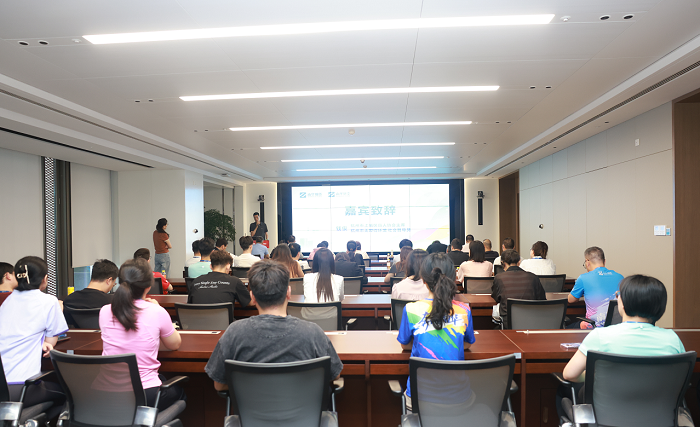
Core Insights - The conference focused on the innovation and development of the aluminum industry chain, emphasizing the role of casting aluminum alloys in achieving high-quality growth [1] Industry Overview - The aluminum casting alloy industry in China is facing a "three high" demand: high performance, high efficiency, and high environmental standards, particularly in sectors like new energy vehicles, 5G communication, and rail transportation [1] - In 2024, China's aluminum casting alloy production is expected to reach 10.05 million tons, with recycled aluminum accounting for over 70%, highlighting the industry's shift towards green recycling and material upgrades [1] Material Innovation - Key advancements in material innovation include the development of high-strength and high-toughness die-casting aluminum alloys, high thermal conductivity die-casting aluminum alloys, anodizable die-casting aluminum alloys, and ultra-high-strength casting aluminum alloys [1] - The ZL-HT3 high thermal conductivity alloy, developed by China Aluminum, has a thermal conductivity of 173 W/m·K, an 8% improvement over conventional alloys, making it suitable for applications like 5G base station heat dissipation [1] Process Upgrades - Advanced processes such as integrated vacuum die-casting, semi-solid forming, low-pressure casting, and extrusion casting are analyzed for their technical advantages and application scenarios [2] - Integrated die-casting technology can reduce the production time of traditional vehicle body components from 1-2 hours to 2-3 minutes, significantly enhancing production efficiency and integration, which is crucial for lightweighting in new energy vehicles [2] Collaborative Innovation - The synergy between process and material innovation is identified as the core driver for high-quality development in the industry [2] - Digital simulation, intelligent transformation, and remote monitoring are methods that enable companies to transition from "experience-based casting" to "precise intelligent manufacturing," improving product consistency, qualification rates, and energy utilization efficiency [2] Green Transition - The accelerated transition of the aluminum industry towards green and low-carbon practices has brought attention to the efficient use of recycled aluminum and iron impurity control technologies [2] - New iron removal technologies and alloy design concepts are gradually addressing the quality bottlenecks of recycled aluminum, supporting the establishment of a comprehensive green recycling system from bauxite to alumina, electrolytic aluminum, and recycled aluminum [2]