
Zhong Guo Huan Jing Bao

Search documents
苏州不断丰富生态环境损害赔偿履责的“工具箱”
Zhong Guo Huan Jing Bao· 2025-10-09 00:20
Core Viewpoint - The article discusses the innovative approaches taken by Suzhou Industrial Park to transform environmental responsibility into an intrinsic motivation for green development, addressing the challenges of traditional ecological damage compensation models [1][4]. Group 1: Innovative Compensation Models - The traditional ecological damage compensation model often faces difficulties such as small compensation amounts and challenges in project implementation, leading to a passive approach by companies [1]. - Suzhou Industrial Park has developed a closed-loop system of "compensation—restoration—enhancement" through institutional innovation, which includes three main pillars: "labor compensation," "clean production substitution," and "judicial linkage" [1][4]. - The park encourages companies to invest compensation funds into clean production upgrades, effectively turning compensation into an investment for improvement [2]. Group 2: Encouraging Active Responsibility - Companies are motivated to engage in clean production as a form of compensation, exemplified by a specialized equipment manufacturer that invested 115,000 yuan to upgrade its cooling water system, resulting in significant resource savings and carbon reduction [2]. - Small compensation companies are encouraged to adopt "labor compensation," allowing them to fulfill responsibilities through environmental education services, thus lowering the barriers to compliance [3]. - These practices have transformed employees into advocates for environmental awareness, significantly enhancing corporate participation in environmental governance [3]. Group 3: Practical Implications - The innovative paths have effectively addressed the long restoration cycles and project matching difficulties, accelerating the fulfillment of responsibilities [4]. - By fulfilling their responsibilities, companies not only build a responsible green image but also optimize management, reduce costs, and enhance competitiveness, achieving a deep integration of environmental and economic benefits [4]. - The core value lies in shifting companies from passive recipients of environmental responsibility to active participants and value creators in green development [4].
“十五五”时期,碳排放双控制度体系建设如何推进?
Zhong Guo Huan Jing Bao· 2025-10-08 23:14
Core Viewpoint - The transition to a dual control system for carbon emissions is essential for achieving high-quality development and is a key task in the new round of ecological civilization reform in China [1] Challenges in Carbon Emission Dual Control System - The carbon emission accounting system is not yet fully developed, facing issues such as unclear statistical bases, inadequate methods, and a lack of timely data [2] - The evaluation and assessment mechanisms for carbon emissions are still underdeveloped, with insufficient accountability at local and industry levels [3] Strategies and Countermeasures for Carbon Emission Dual Control System - At the regional level, a dual control system for total carbon emissions and intensity should be implemented, focusing on accurate statistical accounting and dynamic updates of greenhouse gas emission factors [4] - At the industry level, there should be a focus on controlling fossil energy consumption and enhancing carbon emission monitoring in key sectors such as electricity, steel, and cement [5] - At the enterprise level, improving the quality of carbon emission data management and integrating it into a multi-tiered regulatory framework is crucial [6] - At the project level, establishing performance standards for carbon emissions and ensuring new projects meet advanced value levels is necessary [7] - At the product level, developing a carbon footprint labeling system and promoting low-carbon products through policy incentives and consumer education is essential [7]
如何更好释放生态环境分区管控制度效能?
Zhong Guo Huan Jing Bao· 2025-09-30 03:09
Core Viewpoint - The implementation of the ecological environment zoning control system relies on effective governance methods, emphasizing the need for scientific regulation, service-oriented supervision, and real-time monitoring to enhance the efficiency of ecological and environmental protection work [1][2]. Group 1: Regulatory Approach - The zoning control system focuses on "centralized management and intensive development," addressing the challenges of decentralized governance by promoting shared pollution control facilities among small and medium-sized enterprises in the same industry [1]. - This centralized management model reduces individual enterprises' ecological investment costs while ensuring centralized treatment and compliance with emission standards, thus facilitating efficient resource utilization [1]. - The approach transforms scattered pollution sources into larger, more efficient management units, enhancing the scale and effectiveness of pollution control through unified standards and operations [1]. Group 2: Service-Oriented Supervision - The ecological environment governance requires both rigid constraints and flexible services, with the zoning control system balancing enforcement and guidance through a service-oriented law enforcement model [2]. - Online platforms provide precise ecological governance guidelines for enterprises, while offline training helps address practical pollution control challenges, fostering a proactive approach to compliance [2]. - This "enforcement plus service" model creates a virtuous cycle of government support, enterprise benefits, and ecological improvement, reducing compliance costs for businesses [2]. Group 3: Monitoring and Risk Management - Ecological monitoring is crucial for environmental protection, with the zoning control system advancing monitoring from project initiation to ensure comprehensive coverage throughout the project lifecycle [2]. - Enhanced monitoring during the trial operation phase allows for real-time tracking of pollutant emissions, providing essential data for future governance [2]. - This proactive monitoring approach enables early detection and timely resolution of environmental risks, establishing a robust safety net for regional ecological health [2].
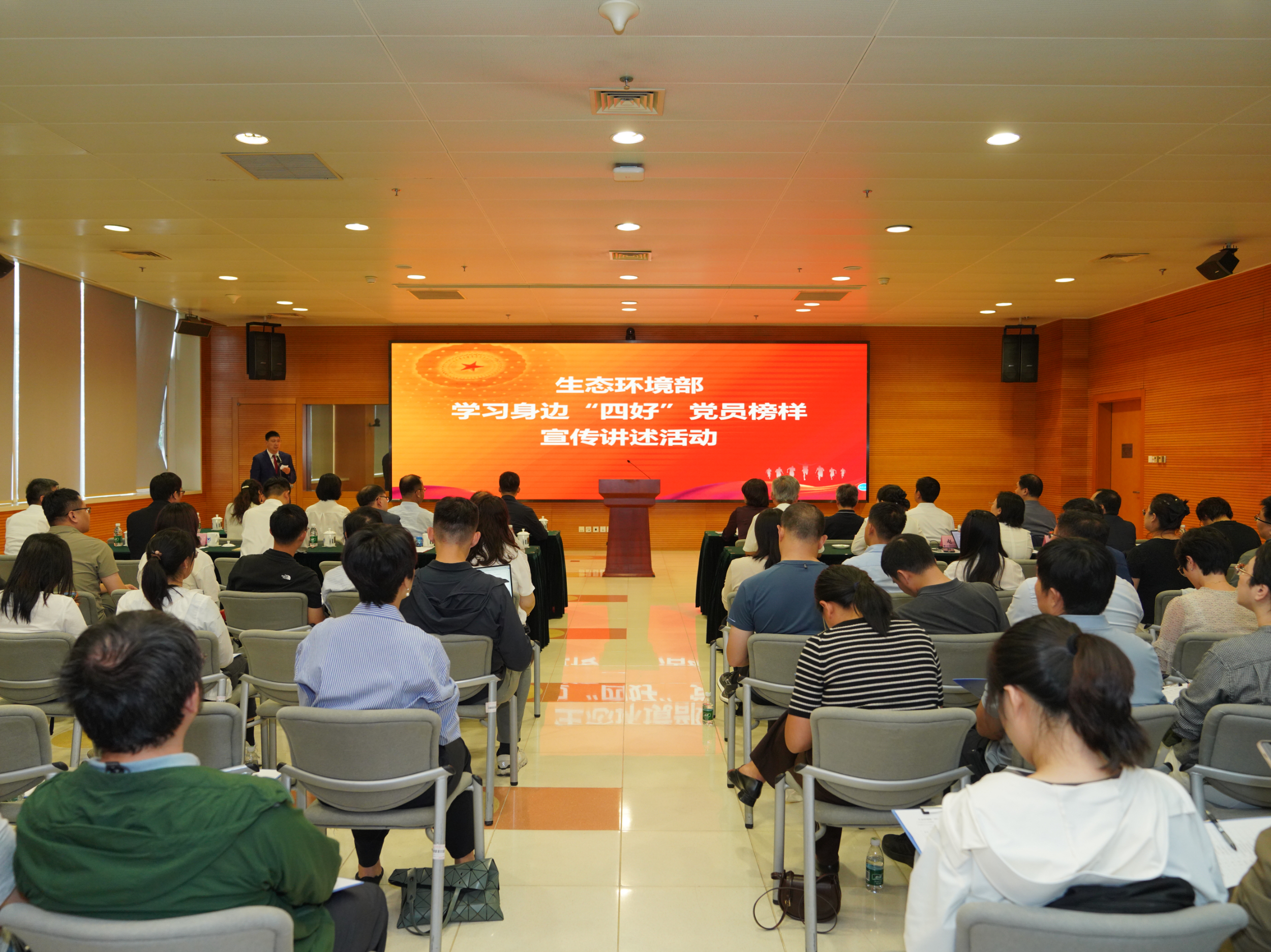
生态环境部举行“四好”党员先进代表事迹宣讲会
Zhong Guo Huan Jing Bao· 2025-09-30 03:07
Core Viewpoint - The event organized by the Ministry of Ecology and Environment aims to promote exemplary behavior among party members and enhance their roles in ecological protection efforts [1][4]. Group 1: Event Overview - The Ministry of Ecology and Environment held a concentrated presentation meeting themed "Striving to be a Pioneer in Reform" on September 29 [1]. - The meeting focused on implementing Xi Jinping's important instructions and the related directives from the Central and State Organs Work Committee [1]. Group 2: Participation and Representation - Various departments and units within the Ministry organized discussions and learning sessions based on the "Three Meetings and One Class" approach [4]. - From 32 nominated candidates, 9 exemplary representatives were selected to participate in the presentation [4]. Group 3: Contributions and Impact - The 9 representatives shared their experiences and responsibilities in ecological protection, showcasing the strong commitment and professionalism of the party members in the ecological environment system [4]. - The event was attended by over 80 participants, including members of the Ministry's Party Committee and representatives from various departments [4].

生态“高颜值”转化为经济“高价值”
Zhong Guo Huan Jing Bao· 2025-09-30 02:28
Core Viewpoint - The Kunshan Development Zone is integrating ecological protection with regional economic development, emphasizing the transformation of high-quality ecological environments into economic value and enhancing the well-being of the local population [1][4][9]. Group 1: Ecological Initiatives - The Kunshan Development Zone has implemented an ecological wetland recycling system, enhancing the natural landscape and promoting biodiversity [1]. - A new industrial wastewater treatment plant is under construction, designed to handle 28,000 cubic meters per day, including a pre-treatment capacity for fluorine-containing wastewater of 8,000 cubic meters per day [4]. - The development zone aims to achieve a 25% reduction in COD emissions per unit of industrial added value by 2027, alongside increasing the number of days with good air quality to over 86% [8]. Group 2: Economic Development - The total investment of 5 billion yuan in the Kunshan Global New Display Industry Innovation Center signifies a commitment to integrating technological and industrial innovation [5]. - The development zone is attracting high-quality projects, including advanced semiconductor materials and components manufacturing bases, which are expected to strengthen the industrial chain [5]. - By 2024, the Kunshan Development Zone is projected to contribute nearly 40% of the regional GDP and 50% of industrial output, despite occupying only one-ninth of the city's land [9]. Group 3: Governance and Collaboration - The introduction of a "bundled approval" policy for environmental assessments has streamlined processes for multiple projects, enhancing efficiency and accountability [6]. - The development zone promotes a collaborative governance model, where government and enterprises work together to achieve ecological and economic goals [7]. - The establishment of the ESG (Environmental, Social, and Governance) development white paper and alliance reflects a commitment to sustainable practices and international standards [8][11]. Group 4: Innovation and Future Plans - The development zone is focusing on innovative solutions to integrate green development across the entire industrial chain, including establishing a green development empowerment center [9]. - Future plans include the "2025-2027 Ecological Environment Construction Action Plan," which outlines 28 key tasks aimed at enhancing ecological benefits and attracting quality projects [9].

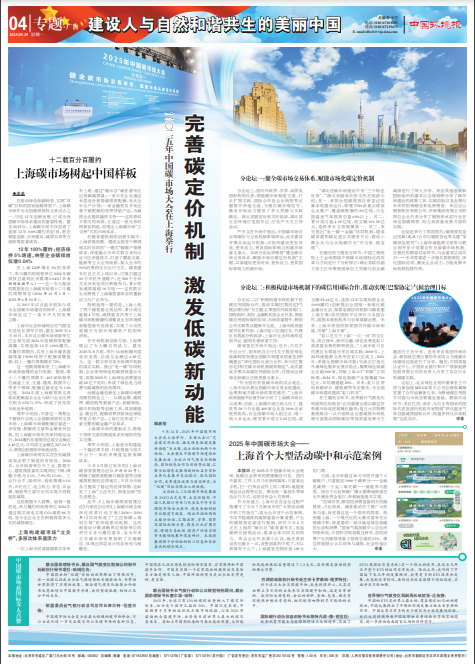
2025年中国碳市场大会在上海举行——完善碳定价机制 激发低碳新动能
Zhong Guo Huan Jing Bao· 2025-09-29 01:40
Core Viewpoint - The 2025 China Carbon Market Conference held in Shanghai focuses on enhancing carbon pricing mechanisms to stimulate green and low-carbon development, featuring discussions on China's carbon market construction, global climate change responses, and international cooperation in green innovation [2] Group 1: Main Forum Insights - The "National Carbon Market Development Report 2025" was released, with contributions from representatives of the Ministry of Ecology and Environment and the People's Bank of China, discussing market vitality and green finance innovation [2] - The conference aims to inject new momentum into achieving the "dual carbon" goals through the release of construction achievements and cutting-edge research [2] Group 2: Sub-Forum One Highlights - The first sub-forum emphasized improving the carbon market trading system and enabling market-based carbon pricing mechanisms, with diverse perspectives from government, academia, and business representatives [4][6] - Hubei Province's advantages in carbon market construction include managing accounts for 3,700 key emission enterprises, covering carbon quotas of approximately 8 billion tons, and achieving a cumulative transaction volume of 418 million tons with a transaction value of 10.328 billion yuan [6][7] Group 3: Sub-Forum Two Highlights - The second sub-forum focused on building international cooperation in carbon credits under market mechanisms to achieve the goals of the Paris Agreement, with participation from various stakeholders including government departments and international organizations [8][10] - Shanghai's carbon market has included over 400 enterprises across 28 industries, with a cumulative transaction of 265 million tons and a transaction value of 5.544 billion yuan, showcasing its role as a pilot region for carbon market development [11][12]

2025年中国碳市场大会——上海首个大型活动碳中和示范案例
Zhong Guo Huan Jing Bao· 2025-09-29 01:40
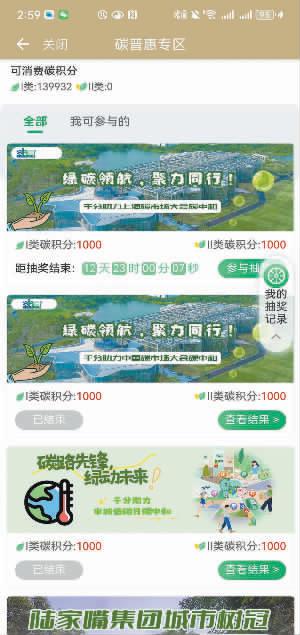
Core Points - The 2025 China Carbon Market Conference showcased the convenience brought by the low-carbon office, with attendees able to access information via QR codes on their badges [1] - Shanghai strictly adhered to the new "Carbon Neutrality Guidelines for Large Events" released in July, becoming the first demonstration case in the city [1] - Over 200,000 citizens in Shanghai have opened personal carbon accounts, allowing them to participate in a lottery by redeeming carbon credits [1] Group 1 - The conference emphasized the importance of green and low-carbon living and consumption in achieving carbon neutrality in modern cities like Shanghai [2] - Research from the Chinese Academy of Sciences indicates that carbon emissions from residential consumption account for 53% of total emissions, highlighting the significance of public participation in emission reduction [2] Group 2 - The carbon credit lottery encourages public engagement in carbon reduction efforts, demonstrating a successful exploration of community involvement [2] - The carbon credit system allows citizens to redeem points for rewards, such as tickets to local attractions, promoting awareness and participation in carbon neutrality initiatives [1][4]
什么是噪声地图?能发挥什么作用?
Zhong Guo Huan Jing Bao· 2025-09-29 01:35
Core Viewpoint - Noise pollution prevention is a significant issue affecting people's livelihoods, and the development of noise mapping technology is expected to provide effective solutions for managing noise pollution [1][2]. Group 1: Current Situation of Noise Pollution - The newly revised Noise Pollution Prevention Law and the "14th Five-Year" Action Plan lay a legal foundation for noise pollution control, but challenges remain in achieving the goal of "quiet cities" [2]. - Noise pollution has become increasingly prominent, especially in densely populated urban areas, with a reported 5.706 million noise complaints in 2023, an increase of 1.203 million from the previous year [2]. - Noise complaints accounted for 61.3% of all ecological environment complaints, making it the most significant environmental issue reported [2]. Group 2: Challenges in Noise Pollution Management - Monitoring and assessment of noise pollution are difficult due to its transient and mobile nature, leading to low coverage and poor timeliness in monitoring [3]. - The sources of noise pollution are diverse, including industrial, traffic, construction, and social activities, complicating regulatory efforts [3]. - Public awareness regarding noise pollution is low, with many individuals unaware of their noise contributions and lacking motivation to report issues [3]. Group 3: Application of Noise Mapping Technology - Noise mapping utilizes geographic information systems to visualize noise levels and distributions, aiding in identifying major sources of noise pollution [4]. - In Suzhou, Jiangsu Province, noise mapping has been implemented to create a comprehensive noise monitoring network, enabling minute-level tracking of noise pollution [4]. - The establishment of a sound fingerprint database has facilitated efficient inter-departmental collaboration in noise regulation [4]. Group 4: Promoting a Collaborative Noise Management Framework - A noise map application for residents allows the public to view noise distributions and report issues, transforming them from bystanders to active participants in noise management [5]. - The "14th Five-Year" Action Plan encourages cities to leverage noise mapping and information technology for precise noise pollution control [6]. Group 5: Recommendations for Noise Mapping Implementation - The promotion of noise mapping should be tailored to local needs, focusing on areas with significant noise issues [7]. - Expanding the application of noise maps in urban planning can help preemptively assess noise impacts before approving new developments [7]. - Financial support and incentives should be provided to local governments and businesses that actively engage in noise mapping initiatives [7]. - Investment in technological innovation is essential to develop cost-effective noise monitoring solutions suitable for smaller cities [7].
钟寰平:坚定信心 担当尽责
Zhong Guo Huan Jing Bao· 2025-09-29 01:35
Group 1 - China's new round of Nationally Determined Contributions (NDCs) aims for a 7%-10% reduction in total greenhouse gas emissions by 2035 compared to peak levels, with a target for non-fossil energy consumption to exceed 30% of total energy consumption [1] - The total installed capacity of wind and solar power is expected to reach over 360 million kilowatts, which is more than six times the capacity in 2020 [1] - The announcement marks a significant strategic decision for China's green and low-carbon development, aligning with the goals of the Paris Agreement and reflecting China's commitment to sustainable development [1][2] Group 2 - Over the past five years, China has made substantial efforts to achieve its "dual carbon" goals, focusing on industrial restructuring, pollution control, and ecological protection [2] - China aims to achieve the largest reduction in carbon intensity globally and to transition from peak carbon emissions to carbon neutrality in the shortest historical timeframe [2] - The country emphasizes the need for both domestic efforts and a favorable international environment to meet its NDC targets [2] Group 3 - The implementation of a national strategy to actively address climate change includes promoting energy and industrial transformation, as well as the large-scale deployment of renewable energy technologies [3] - The carbon market will be expanded in terms of industry coverage and trading entities, enhancing its effectiveness and international influence [3] - There is a focus on fostering a green and low-carbon lifestyle among the public, encouraging widespread participation in sustainable practices [3] Group 4 - China remains committed to actively participating in and leading global climate governance, regardless of international circumstances [4] - The country will continue to uphold the principle of common but differentiated responsibilities and work collaboratively with other nations to build a clean, beautiful, and sustainable world [4]
如何打造高质量的生态环境志愿服务?
Zhong Guo Huan Jing Bao· 2025-09-29 00:10
Core Viewpoint - The article emphasizes the importance of promoting ecological and environmental volunteer services to enhance public awareness and participation in ecological protection, while addressing existing challenges such as organizational fragmentation and lack of professionalism [1] Group 1: Strengthening Organizational Mobilization - The key to ecological volunteer services lies in team building, which requires a well-structured organization and participation mechanism [2] - Integration of party organization leadership, social organization participation, and corporate resource support is essential for effective service delivery [2] - A strong organizational mobilization will help establish ecological volunteer services as a systematic social governance force, ensuring broad participation and sustainable development [2] Group 2: Optimizing Supply Structure - Ecological volunteer services should shift from merely increasing quantity to enhancing quality, focusing on problem-oriented and project-supported approaches [3] - Establishing a project library with clear tasks and responsibilities will help in managing ecological issues effectively [3] - Implementing standardized management and training will ensure that volunteer services are efficient and accountable [3] Group 3: Building Service Platforms - Transitioning from scattered service points to a networked collaborative model is necessary to meet the diverse needs of ecological volunteer services [4] - Optimizing the layout of service platforms and enhancing online systems will improve service accessibility and transparency [4] - A digital platform will facilitate project management and performance evaluation, leading to more efficient and sustainable service delivery [4] Group 4: Ensuring Service Support - Stable policy support, legal guarantees, and effective incentives are crucial for the sustainability of ecological volunteer services [6] - Financial support mechanisms and legal frameworks should be established to reduce risks and encourage participation [6] - Creating a system of recognition and rewards will enhance volunteer engagement and service quality [6] Group 5: Cultivating Service Culture - The long-term success of ecological volunteer services depends on fostering a culture of participation and shared values [7] - Integrating core socialist values into ecological education will help build a community of practice [7] - Rituals and recognition practices can solidify volunteer behavior and enhance community engagement [7]