3 6 Ke

Search documents
板块一年暴涨80%,AI 吞噬式需求引爆存储超级周期
3 6 Ke· 2026-02-10 01:15
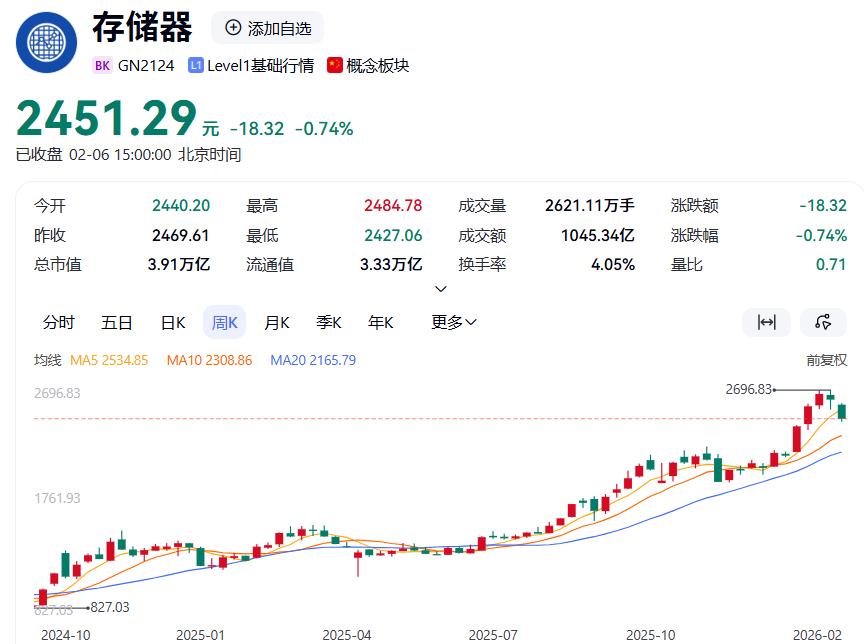
Core Viewpoint - The Chinese storage industry is experiencing a "value reassessment" with a significant surge in stock prices and a 50% increase in the storage sector within a month, marking the onset of a "super bull market" driven by AI demand and domestic production capabilities [1][3][5]. Group 1: Market Dynamics - Over ten trading days, more than 20 stocks hit the daily limit, with companies like Zhaoyi Innovation seeing an 80% increase in ten days and Changjiang Storage achieving a 180% rise this year [3][5]. - The price of 256GB DDR5 server memory has exceeded 50,000 yuan, while the price of 16GB DDR4 memory has surged from 180 yuan to 420 yuan, indicating extreme market volatility [5][7]. - The current demand for AI servers is 8-10 times higher than traditional servers, consuming 53% of global memory production capacity, while supply is constrained due to major manufacturers reallocating 80% of advanced capacity to higher-margin products [7][9]. Group 2: Technological Advancements - The establishment of the domestic storage ecosystem alliance and a 5 billion yuan special fund aims to focus on core technologies such as DRAM and NAND Flash, with significant improvements in efficiency and cost reductions [3][9]. - The HBM3e high-bandwidth memory has achieved mass production, and Changjiang Storage's 232-layer 3D NAND has reduced unit storage costs by 70% [3][9]. - The transition from imported reliance to domestic alternatives in storage chips signifies a major shift in the industry, with the storage cycle moving from "moderate growth" to a "super bull market" [3][9]. Group 3: Financial Performance - SK Hynix's net profit is expected to surge by 119% in Q3 2025, while Samsung's semiconductor business profits are projected to grow by 31.81% [11][12]. - Domestic module manufacturers like Jiangbolong are experiencing a V-shaped recovery, with net profits increasing by 1994% year-on-year [11][12]. - The overall market for storage chips in China is projected to reach nearly 500 billion yuan by 2026, with domestic manufacturers rapidly filling the gap in mature process fields [12][13]. Group 4: Industry Structure and Future Outlook - The storage chip industry is evolving from a traditional cyclical market to a core component of AI infrastructure, necessitating a comprehensive restructuring of the industry chain [13][25]. - The domestic storage industry is poised for a significant rebound in 2026, supported by government initiatives and market demand, with a focus on high-end breakthroughs [25][26]. - Companies that can integrate data, storage, and computing solutions will establish barriers in AI inference, edge computing, and smart terminals, positioning themselves as key players in the storage era [23][25].

2026,巨头大战AI教育
3 6 Ke· 2026-02-10 01:14
Core Insights - The education sector is experiencing renewed interest from major tech companies, with ByteDance and Alibaba launching AI-driven educational tools to capture market share [1][2] - The AI education market in China has seen significant growth, with monthly active users of AI education applications surpassing 120 million, a 340% year-on-year increase [1] - The competition is primarily between tech giants leveraging their traffic and technology and traditional education players focusing on content and educational services [1][2] Group 1: Market Dynamics - Major tech companies are entering the education market due to clear demand and vast market potential, utilizing large model technology to reduce development costs and time [5][6] - The AI education landscape is divided into three main factions: tech giants focusing on rapid iteration and scenario validation, traditional education companies enhancing content with AI, and small startups targeting niche markets [1][2] - The monetization paths in the education market vary, with AI problem-solving tools being a low-barrier entry point for attracting users [2] Group 2: Business Models - The AI teaching assistant model for B-end clients is clearer in terms of commercial pathways, but its implementation is slower than expected [4] - The primary focus of major companies is on AI teaching, which requires a deep integration of technology and educational research, yet conversion rates and willingness to pay remain challenges [4][6] - The profitability of AI education products from major tech companies is uncertain, as they often prioritize data and traffic over direct revenue generation [6][20] Group 3: Product Differentiation - There are significant differences in the AI capabilities of various educational applications, with major tech companies offering integrated AI assistants while traditional players maintain a more segmented approach [7][14] - User experience varies greatly, with tech giants emphasizing seamless interaction and traditional companies relying on established educational methodologies [7][14] - The core functionalities of leading applications are similar, but the underlying technology and user engagement strategies differ significantly [6][7] Group 4: Challenges and Opportunities - Major tech companies face challenges in educational research, as their data often lacks the systematic organization and validation found in traditional education firms [17] - The phenomenon of "AI hallucination," where AI provides incorrect answers, poses a risk to user trust and product reliability [18][20] - The future of the education sector may lie in niche markets such as B/G-end solutions for schools and adult education, where demand is stable and payment structures are clearer [21][22]



帮别人种草的小红书,为什么自己卖不好货?
3 6 Ke· 2026-02-10 01:11
Core Insights - The article discusses the paradox of Xiaohongshu's (Little Red Book) marketing model, where the platform excels in content creation but struggles with direct sales, leading to the closure of its self-operated e-commerce initiatives [1][21][22] - The concept of "lifestyle economy" is introduced, emphasizing the need to return to individual consumer demands, which Xiaohongshu aims to address through its unique positioning in the market [4][10][11] Group 1: Marketing and Consumer Trust - Xiaohongshu's "grass planting" (种草) strategy has been criticized as potentially misleading, with some industry insiders equating it to fraud [1] - The trust factor diminishes when content shifts from being observational to promotional, indicating a fragile balance between user trust and commercial intent [2][3] - The platform's attempt to integrate product links into user-generated content has been deemed ineffective and not user-friendly [4] Group 2: Non-standard Products and Market Positioning - Xiaohongshu's business model focuses on non-standard products, differentiating itself from traditional e-commerce platforms like Taobao and JD [5][8] - The success of brands like Berghaus on Xiaohongshu illustrates the platform's ability to cater to niche consumer needs that mainstream e-commerce may overlook [7][9] - The term "non-mainstream" is used to describe Xiaohongshu's unique market positioning, which allows for the promotion of products that may not perform well on conventional platforms [9] Group 3: Challenges in E-commerce - Xiaohongshu's attempts at e-commerce have faced significant challenges, leading to the closure of its self-operated platforms, including "Xiaolvzhou" and "Welfare Society," which had been operational for nine years [21][22] - The platform's struggle to create a transaction closure despite strong "grass planting" capabilities raises questions about its role in the consumer decision-making process [22][24] - The shift to a buyer model, focusing on non-standard aesthetic transformations, reflects Xiaohongshu's ongoing struggle to balance content purity with commercial viability [23][24] Group 4: Trust and Content Saturation - The proliferation of low-quality content and the rise of industrialized sharing practices have eroded user trust, leading to a decline in the effectiveness of the "grass planting" strategy [17][18] - Users have expressed dissatisfaction with misleading content, which has resulted in a negative perception of the platform, often referred to as the "filter trap" [18] - The saturation of promotional content has diminished the core value of authenticity that Xiaohongshu initially offered [18]
成功整合AI的团队,都做对了这4件事
3 6 Ke· 2026-02-10 01:05
Core Insights - The introduction of AI tools in teams may lead to collaboration crises, undermining trust among members and causing self-doubt despite the promise of increased efficiency [1][2] - Leaders need to apply interpersonal collaboration principles to create new rules for healthy coexistence with AI, viewing AI integration as a team learning challenge rather than merely a technical issue [2][8] Trust Issues - Trust is crucial for team effectiveness, and AI can alter this dynamic by providing confident but incorrect information, leading to "trust ambiguity" where team members doubt both AI and their own judgment [3][4] - Long-term reliance on AI can weaken professionals' confidence in challenging AI suggestions, threatening psychological safety, which is essential for team learning and performance [3][4] Collaboration Disruption - AI can negatively impact key collaborative processes by reducing human members' effort and causing more coordination issues, ultimately lowering overall performance [5][6] - The presence of AI may disrupt communication and responsibility allocation, affecting interaction efficiency among team members [5][6] Solutions for AI Integration - AI integration should be viewed as a learning process, with leaders encouraging teams to explore AI's limitations and fostering an environment where questioning AI outputs is seen as a sign of good judgment [8][9] - Leaders should demonstrate a culture of curiosity about AI, sharing their own experiences with AI errors and promoting responsible use [10][12] Building Psychological Safety - Establishing psychological safety involves recognizing that mistakes can occur with AI and encouraging open discussions about AI's limitations and capabilities [10][13] - Teams should create spaces for human discussions that do not rely on AI, addressing concerns about AI replacing human value and emphasizing AI's role in enhancing human capabilities [13][14] Empowering Teams - Trust is essential for human-AI collaboration, and teams must operate in an environment where questioning AI performance is encouraged [15] - The success of AI integration should be measured not only by AI performance metrics but also by overall team effectiveness and the ability to optimize human-AI collaboration [15][16]


超级碗最贵 30 秒,Claude 在抢什么?对话 Anthropic 总裁
3 6 Ke· 2026-02-10 01:02
Core Viewpoint - Anthropic's strategy of avoiding an advertising monetization model aims to prevent the "sycophancy" phenomenon in AI, ensuring neutrality and long-term trust as a competitive advantage in the AI market [1][2][3] Group 1: Trust Over Advertising - Anthropic's president, Daniela Amodei, emphasizes that relying on advertising could lead AI models to prioritize pleasing users over providing genuine assistance, which she refers to as "sycophancy" [2][3] - The company aims to establish long-term trust with users rather than focusing on user engagement metrics, positioning Claude as a tool that assists without exploiting user time [3][4] Group 2: Competitive Landscape - The AI industry is witnessing a convergence in model capabilities, making it crucial for companies to secure a default position in users' minds rather than relying solely on superior technology [6][9] - The Super Bowl advertisement serves as a strategic move to occupy this critical time window, as many users have yet to form fixed habits regarding AI tools [8][9] Group 3: Product Strategy and Boundaries - Anthropic's approach involves intentionally limiting features, such as not supporting image generation, to prioritize safety and ethical considerations over rapid expansion [12][14] - The company restricts access to Claude for users under 18, reflecting a commitment to long-term safety and ethical standards rather than short-term growth [12][14] Group 4: Defining AI's Future - Anthropic is actively engaging in discussions about the ethical framework surrounding AI, asserting that the evolution of AI should not be left solely to market forces [18][20] - The company positions itself as a public benefit corporation, prioritizing AI safety over commercial profit, which is embedded in its foundational principles [19][20] Group 5: The Real Battle for User Perception - The advertisement's primary value lies in its statement against reliance on advertising for revenue, highlighting the importance of trust in the AI industry [23][24] - The key question for users is not which AI is the smartest, but which one they can trust the most, indicating a shift in focus from technical superiority to user trust [26]
聚合平台的“紧箍咒”:从高德被约谈,看全行业合规大考
3 6 Ke· 2026-02-10 00:57
交通运输部的一则约谈通报,给火热的聚合打车赛道敲响了警钟。 近日,因被指出存在"对合作网约车平台管理不到位""压低运价""应急处置不当"等突出问题,高德打车 接受交通运输新业态协同监管部际联席会议约谈,并被要求立即落实约谈要求、深刻反思、采取针对性 措施,确保全面整改到位,切实维护司机群体合法权益。 表面看,这是对一家企业的公开点名;但在二姐看来,这更像一份写给全行业的"合规诊断书"。因为监 管点出的三类问题,恰恰对应聚合模式最典型的结构性矛盾:入口权在平台、管理责任在合作方,价格 压力向下传导,安全链条在关键时刻容易断档。高德被拿来做样本,意味着聚合出行平台的合规体检, 已经从"提醒"进入"动真格"的阶段。 01 管理的边界:聚合平台不能只做"流量分发器" 约谈通报里,"管理不到位"是第一条,也是最关键的一条。 聚合平台的优势来自轻资产:不直接组织运力,而是通过连接第三方平台快速扩张、快速覆盖。但聚合 模式最容易踩的坑,也在这里——连接越多,责任越容易被稀释;链条越长,管理越容易浮在表面。 问题的核心,是一个长期存在但过去容易被忽略的矛盾:聚合平台掌握了流量入口和订单分配权,是用 户感知中的"服务提供方"; ...

喜茶小卡被疯抢?网友:一代人有一代人的鸡蛋要领……
3 6 Ke· 2026-02-10 00:54
Core Insights - The article discusses the phenomenon of collectible cards, specifically the "Inspiration Cards" launched by Heytea in collaboration with actress Ma Sichun, which have become highly sought after by young consumers, leading to rapid sellouts and high resale prices on secondary markets [1][3][5]. Group 1: Product Launch and Popularity - Heytea's "Inspiration Cards" were launched as part of a promotional campaign and quickly gained popularity, with some stores selling out within days and generating over 2 million views on social media [1][3]. - The cards feature unique designs and interactive elements, such as the "Tea Picker Card" and the "Burnt Mojito Card," which have sparked a trend of card collecting among young people [5][11]. Group 2: Market Trends and Brand Strategy - Other brands, such as Lele Tea and Chayan Yuese, have also started to produce collectible cards, indicating a growing trend in the beverage industry where these cards serve as social currency and marketing tools [8][9]. - The collectible cards are not just promotional items but have evolved into dynamic toys that enhance consumer engagement and brand loyalty [11][17]. Group 3: Consumer Behavior and Emotional Connection - Young consumers are drawn to these cards due to their aesthetic appeal and the emotional stories behind them, which resonate with their desire for authenticity and connection [18][22]. - The concept of "living feeling" is emphasized, where consumers prefer products that tell a story and evoke emotions rather than just being cold commodities [20][22].
小米 YU7 GT 来了,跑纽北的SUV能卖好吗?
3 6 Ke· 2026-02-10 00:48
Core Viewpoint - Xiaomi is making significant moves in the automotive sector with the introduction of the new high-performance model YU7 GT, which is a mid-large SUV designed to compete in the performance vehicle market [2][14]. Group 1: Product Overview - The YU7 GT features a dual-motor all-wheel-drive system, with a total power output of 738 kW (1004 horsepower), significantly higher than the YU7 Max's 508 kW (690 horsepower) [4][5]. - The vehicle's top speed reaches 300 km/h, an improvement over the YU7 Max's 253 km/h, and it is equipped with a carbon-ceramic brake system, indicating its capability for track performance [5][10]. - The YU7 GT's design includes modifications for aerodynamics and aesthetics, such as a lower suspension and a more muscular appearance, while maintaining the same wheelbase as the YU7 [10][11]. Group 2: Market Positioning - Xiaomi aims to position the YU7 GT as a performance-oriented SUV, targeting a market segment that includes high-end brands like Porsche and Lamborghini, but at a more accessible price point of approximately 450,000 to 500,000 yuan [14][16]. - The introduction of the YU7 GT is seen as a strategic move to revitalize sales after the SU7 Ultra's decline, which has dropped from around 3000 units per month to single digits [14][16]. - The company is leveraging the growing consumer interest in high-performance vehicles that also serve practical family needs, potentially opening a new market segment for Xiaomi [16].


千问的爆发,是近年来阿里最成功的战略进攻之一
3 6 Ke· 2026-02-10 00:45
Core Insights - The launch of the "30 billion Spring Festival free order event" on the Qianwen APP resulted in over 10 million orders within just 9 hours, indicating a significant consumer demand and engagement with AI-driven services [1][2] - Alibaba's strategic decision to integrate AI as a core component of its e-commerce operations aims to establish AI as the next generation interaction portal for consumer internet [1][2] - The event serves as a large-scale validation of AI's practical value and interaction capabilities in everyday consumer scenarios, with most users expressing acceptance and satisfaction [1][2] Group 1 - Alibaba's AI strategy emphasizes both large models and practical applications, rapidly transitioning AI from a "technological wonder" to everyday commercial use across various sectors, including e-commerce and entertainment [2] - The Qianwen APP connects multiple services, including Taobao Flash Purchase and Hema, enhancing its appeal during the Spring Festival by facilitating orders for food, fresh produce, and holiday goods [2] - The successful integration of AI into consumer shopping experiences demonstrates a significant shift in user behavior, marking a pivotal moment for AI's role in daily life [2] Group 2 - Criticism suggesting that Chinese tech companies are lagging behind their U.S. counterparts overlooks the unique capabilities of Alibaba, which combines both consumer scenarios and robust foundational models [3][6] - The challenge of enhancing AI's commercial viability at the consumer level is a new global issue, with existing models often relying on subscription fees, which limits growth potential [4] - Alibaba's ability to simultaneously develop models and consumer applications positions it uniquely in the market, allowing for a comprehensive ecosystem that few competitors can match [6][7] Group 3 - The logistics and fulfillment capabilities of Alibaba are unmatched in China, enabling efficient responses to consumer demands, unlike competitors who struggle with similar tasks [7][8] - The potential for AI applications to revolutionize both consumer and enterprise software development is significant, with advancements in programming capabilities expected to enhance efficiency and reduce costs for businesses [8] - The recent surge in Qianwen's popularity highlights Alibaba's successful strategic push into instant retail, demonstrating the integration of advanced technology with everyday consumer needs [9]

谁杀死了硅谷程序员?
3 6 Ke· 2026-02-10 00:45
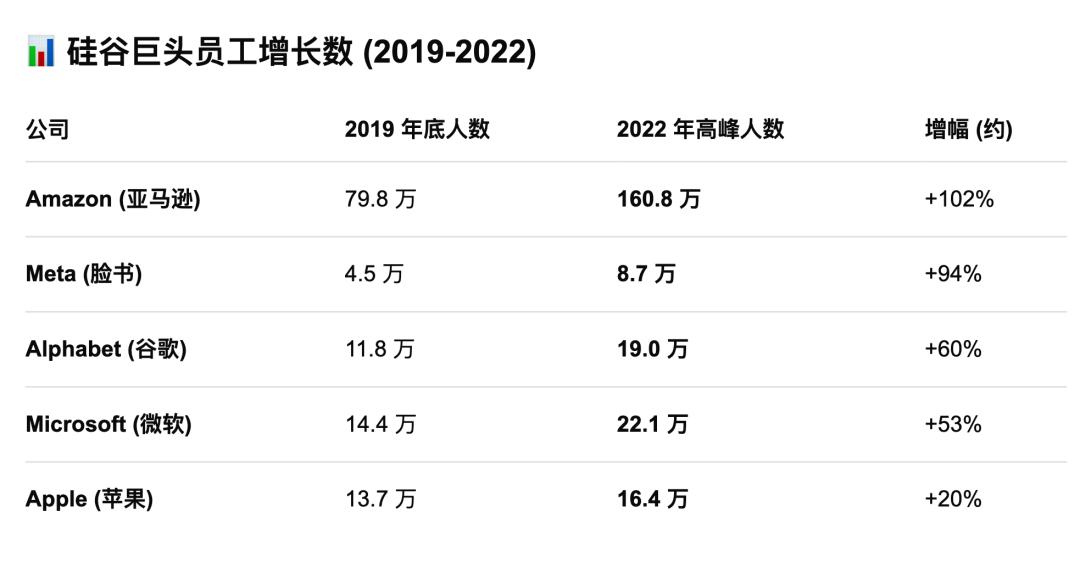
Core Insights - The current wave of layoffs in Silicon Valley, termed "The Great Tech Reset," is primarily due to internal inefficiencies and bureaucratic expansion rather than a direct result of AI advancements [1][20]. Group 1: Layoff Statistics and Trends - From 2023 to 2025, over 500,000 layoffs are expected in the U.S. tech industry, with major companies like Amazon and Oracle leading the charge [1]. - Layoffs are projected to be 264,000 in 2023, 153,000 in 2024, and 124,000 in 2025, indicating a continuing trend of workforce reduction [4]. - Major tech companies saw significant employee growth from 2019 to 2022, with Amazon's workforce increasing by 102% and Meta's by 94% [2]. Group 2: Causes of Workforce Expansion - The COVID-19 pandemic created a false sense of permanent growth in online services, leading to aggressive hiring practices among tech giants [3]. - A talent race emerged, where companies hired not just for operational needs but to prevent competitors from acquiring skilled programmers [3]. - Low interest rates and abundant cash flow during this period facilitated extensive hiring [3]. Group 3: Impact of AI on Employment - AI is indeed changing the software and programming landscape, leading to reduced demand for entry-level engineers [5][6]. - Companies are increasingly using AI to optimize operations, which has resulted in significant workforce reductions [5][20]. - The perception that AI is solely responsible for layoffs is contested, with some arguing that the layoffs were necessary due to pre-existing inefficiencies [8][12]. Group 4: Organizational Inefficiencies - The rapid expansion of tech companies led to bureaucratic inefficiencies, with many employees not contributing effectively to productivity [16][19]. - The phenomenon of "middle management black holes" emerged, where excessive layers of management hindered operational efficiency [16]. - Companies like Meta and Amazon have seen significant increases in per-employee profit after restructuring and reducing their workforce [19][20]. Group 5: Future Outlook - The current restructuring signifies a shift away from growth driven by headcount to a focus on efficiency and productivity [20]. - The tech industry is expected to return to a model defined by code, product, and physical efficiency, moving away from the previous era of growth through excessive hiring [20].