3 6 Ke

Search documents
海外短剧市场揭秘:成本攀升10%-20%,30%产能回流国内,拉美、中东成新增长极
3 6 Ke· 2026-02-10 02:14
Core Insights - The overseas micro-drama market is projected to exceed $4 billion by 2025, with the U.S. maintaining its top revenue position while emerging markets like India, Latin America, and the Middle East show rapid growth [1][2] - Chinese companies currently dominate the market, holding 94% of revenue and 80% of downloads, but this position may be challenged by the entry of major overseas players [1][5] Market Trends - The overseas short drama market is experiencing a reshaping, with three main thematic directions emerging: female-centric narratives targeting middle-aged audiences, emotionally resonant stories, and male-centric revenge themes [2][16] - Production costs for individual dramas have increased by 10%-20% compared to 2024, driven by longer shooting days and rising actor salaries [2][14] Competitive Landscape - Indian companies leverage Bollywood's dramatic storytelling to gain market share but are currently focused on domestic competition, while Western companies are still exploring new creative approaches [4][5] - Major platforms like Netflix, Amazon, and YouTube are currently observing the market without making significant moves, which may change in the future [5][6] Investment Dynamics - Capital is increasingly focused on North America as a core market due to high user payment willingness, while Latin America and the Middle East are seen as potential growth areas due to their large user bases and cultural compatibility with drama content [7][10] - The investment landscape is shifting, with a notable increase in interest towards AI-driven content production, as exemplified by My Drama's recent $22 million funding round [7][8] Industry Challenges - The industry is entering a significant reshaping phase, with many small platforms exiting due to challenges such as content homogeneity, financial pressures, and rising production costs [2][18] - Issues like delayed payments, malicious competition, and content plagiarism are becoming more prevalent during this reshaping process [18] Future Outlook - By 2026, the industry is expected to see a shift towards high-quality vertical screen films, continued market consolidation, and the emergence of Latin America and the Middle East as new growth drivers [19][21] - Companies are planning to enhance content quality and localize productions to better cater to regional audiences, particularly in Latin America [21]
2026年AI的40个狂热风口
3 6 Ke· 2026-02-10 02:05
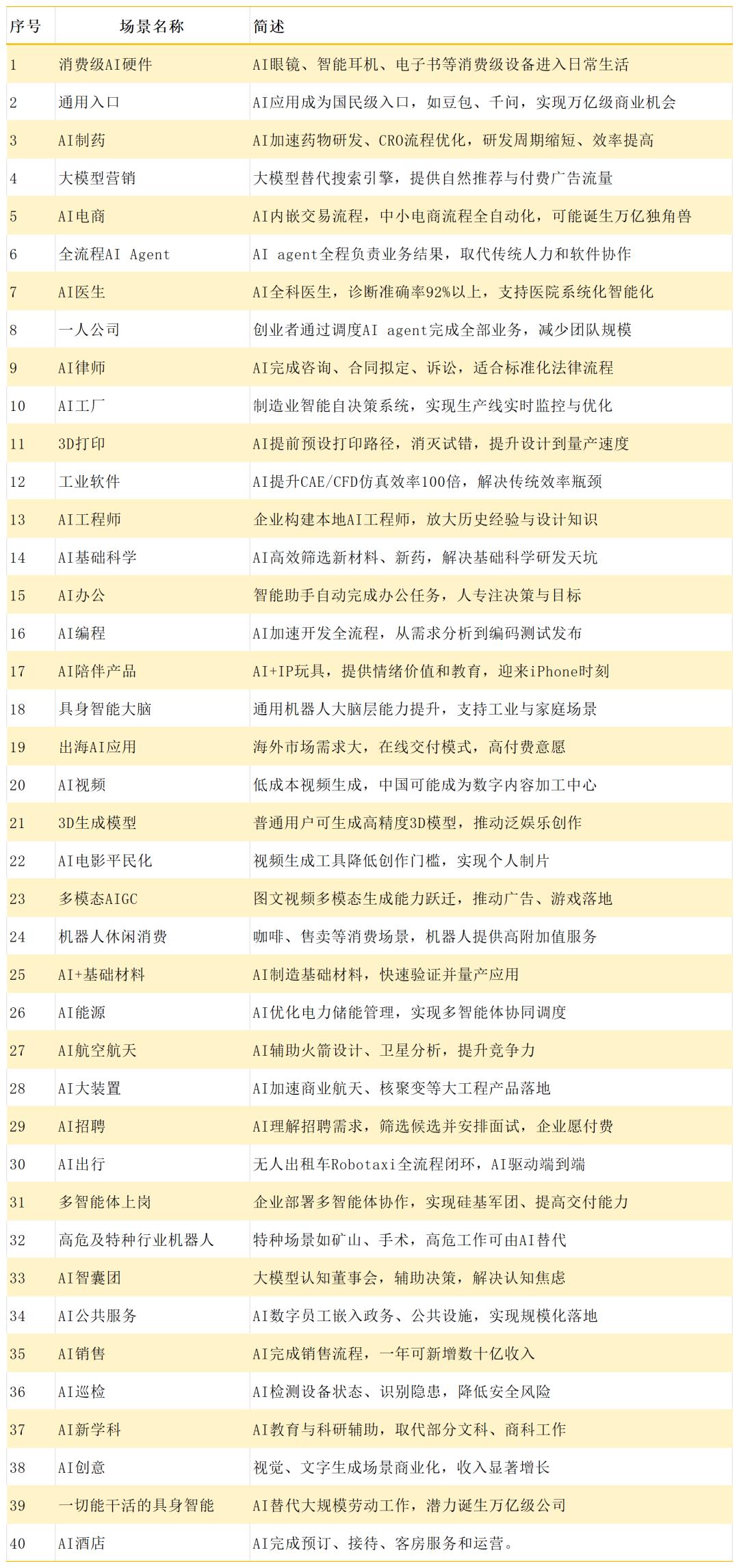
2026年开年,全球最重要的经济年会达沃斯论坛上,参会者只关心两件事:AI和美国总统川普。 关心川普,是因为担心他会不会真的吞并格陵兰,从而彻底改变战后建立的西方秩序。 对AI的讨论则聚焦在一个点:投入能否转化为绩效,也就是有没有落地场景。 最近,为了找出2026年最佳AI场景,铅笔道访谈了100投资人、创业者,一些共识正在浮现—— AI 的落地,会优先出现在那些需求刚性、流程清晰、价值可量化的地方。 基于这些一线判断,本文系统梳理了2026 年最有可能跑出来的40个AI应用场景——它们有的已经开始产生收入,有的正在跨过关键拐点,也有的正在重 塑一个行业的底层逻辑。 本文场景目录如下: | 序号 | 场景名称 | 简述 | | --- | --- | --- | | 1 | 消费级AI硬件 | AI眼镜、智能耳机、电子书等消费级设备进入日常生活 | | 2 | 通用入口 | AI应用成为国民级入口,如豆包、千问,实现万亿级商业机会 | | 3 | AI制药 | AI加速药物研发、CRO流程优化,研发周期缩短、效率提高 | | 4 | 大模型营销 | 大模型替代搜索引擎,提供自然推荐与付费广告流量 | | 5 ...

汉堡王、麦当劳找“中国合伙人”,背后可能有同一个关键人物
3 6 Ke· 2026-02-10 02:03
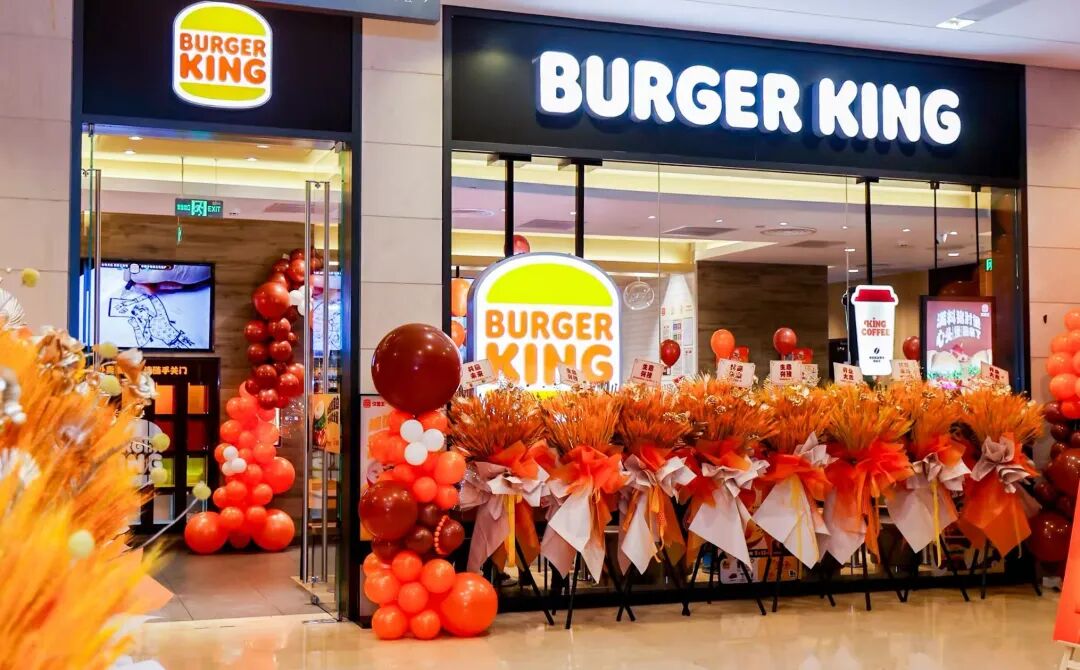
2026年2月2日,RBI与CPE源峰共同宣布,合资交易已顺利完成,"汉堡王品牌将在中国市场进入新的快速发展阶段"。[1] 增长是合资之后明确的目标。CPE源峰和RBI共同计划,将汉堡王在中国市场的门店规模从目前的约1250家,拓展至2035年的4000家以上,并实现可持续 的同店销售增长。 汉堡王中国拿到了与当年麦当劳中国相似的剧本。2017年引入中信和凯雷后,麦当劳中国提出"愿景2022",计划五年内实现每年两位数的销售增长,门店 从2500家增加到4500家。[2] 从和本土资本达成战略合作,到完成既定合资交易,汉堡王只用了不到3个月的时间。 图片来源:汉堡王官网 2025年11月10日,CPE源峰宣布,将与汉堡王母公司RBI集团(Restaurant Brands International)成立合资企业"汉堡王中国"。 两者的共同点不止于此,汉堡王和麦当劳找到"中国合伙人",背后可能有同一位参与者:Patrick Siewert。2017年,他领导凯雷集团收购了麦当劳中国 28%的股份。2025年,汉堡王与源峰官宣时,他担任RBI亚洲区董事长。 01 汉堡王找"中国合伙人",或许2024年就埋下了伏 ...

从原型到代码:AI如何重塑产品经理工作流
3 6 Ke· 2026-02-10 01:45
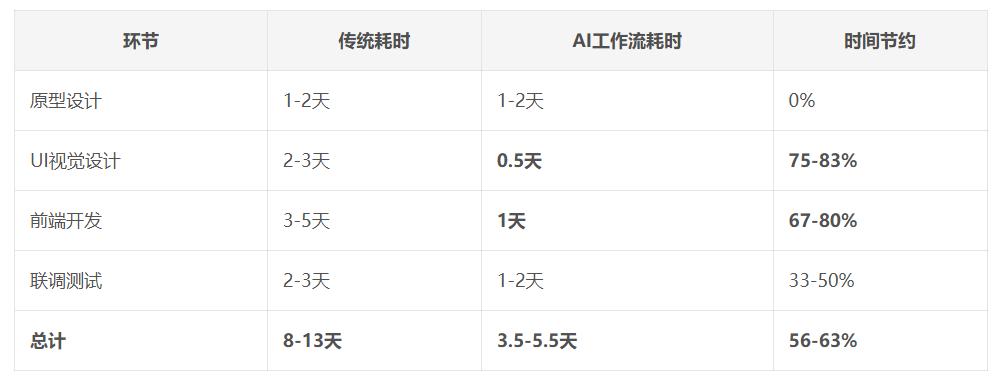
当传统开发流程在紧迫工期前崩溃时,AI工作流如何成为产品经理的救命稻草?本文揭秘从原型到代码的AI全链路实践,通过Pixso、Stitch、 AI Studio工具组合,将原本需要数周的前端开发压缩到1小时完成。 "这个功能下周五要上线,原型什么时候能给?" 上周一早上9:07,领导的这条消息让我的咖啡瞬间不香了。 按照传统流程,这个中等复杂度的用户管理后台,从原型到UI再到前端开发,最少需要一个月。但现在,截止日期被硬生生砍到了两周——而此刻,原 型还没开始画,UI设计师排期已满,前端开发手上还有三个优先级更高的任务。 那一刻的恐慌是真实的。我看着屏幕上空白的原型文件,大脑飞速计算:就算我今晚通宵出原型,UI设计师最快也要3天,前端开发至少1-2周…数学告诉 我,按传统路径根本不可能完成。 正是在这种绝望的倒计时中,我第一次认真考虑之前只偶尔听说的"AI工作流"。当常规路径被堵死,唯一的选择就是寻找非常规路径。如果AI真能像传言 中那样从原型直接生成代码,也许还有一线生机。 于是,一场与时间的赛跑开始了——不是通过熬夜加班,而是通过彻底重构工作流程。从那个周一开始,我踏上了从传统产品经理到"AI辅助产品构建 ...
中科院系创业项目成立半年融资数千万,做CPO、OIO光引擎|36氪首发
3 6 Ke· 2026-02-10 01:39
硬氪了解到,随着AI大模型持续发展,算力集群对Scale-up(纵向扩展)与Scale-out(横向扩展)能力的需求日益迫切。传统铜缆 受限于传输距离,而可插拔光模块则面临功耗高、信号完整性受限等瓶颈。在此背景下,共封装光学(CPO)与光输入输出 (OIO)技术正成为下一代高密度光互连的关键方向。 作者丨欧雪 编辑丨袁斯来 硬氪获悉,CPO、OIO光引擎企业北京灵熹光子科技有限公司(下称"灵熹光子")近日完成数千万元天使轮融资。本轮融资由顺禧 基金、普华资本、水木创投、鹏晨资本、中科创星、励石创投等六家机构联合投资,投资机构涵盖知名的国资及市场化机构,所募 资金将主要用于3.2T/6.4T光引擎原型开发及早期团队搭建。 灵熹光子成立于2025年9月,脱胎于中国科学院西安光学精密机械研究所(以下简称"中科院西光所"),公司创始人王斌浩本硕毕 业于浙江大学、博⼠毕业于美国德州农工大学,担任中国科学院西安光学精密机械研究所研究员、中国科学院大学博士生导师,曾 任美国惠普实验室研究科学家。公司的核心团队来自于中科院西光所、其他国内一流的科研院所以及全球科技巨头的主任科学家。 公司专注于基于微环调制器的硅光芯片与CMO ...

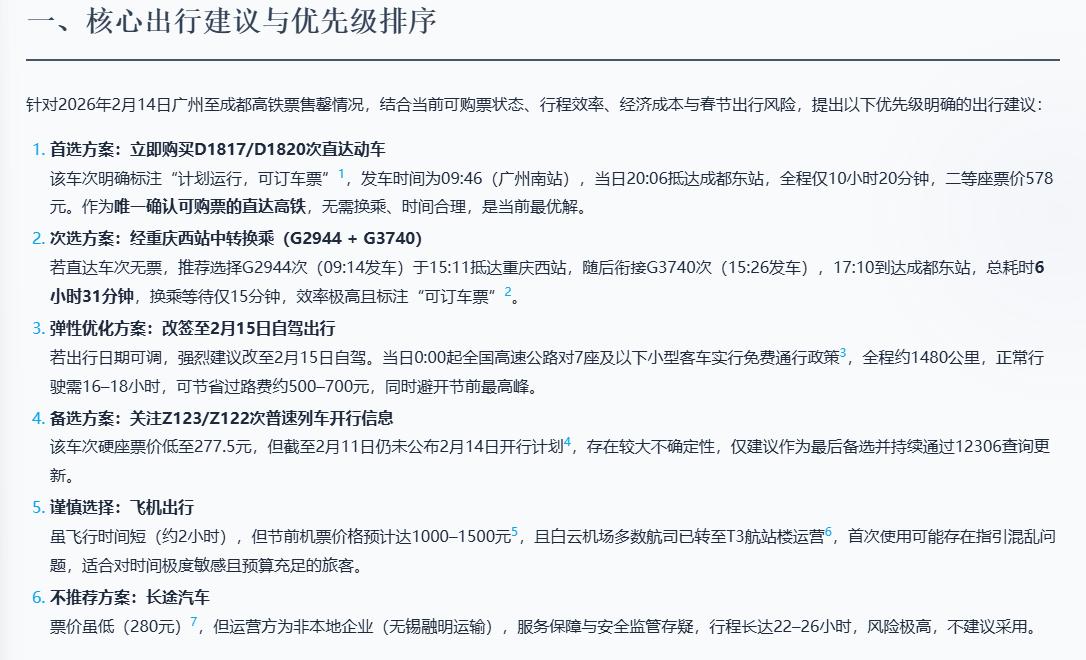
春节出行“外挂”已上线:实测用豆包、千问规划行程,结果比自己查的靠谱10倍
3 6 Ke· 2026-02-10 01:39
Core Insights - The article discusses the capabilities of Qianwen, an AI tool, particularly in assisting users with travel planning and ticket purchasing during the busy Spring Festival period in China. It highlights the efficiency and user-friendly experience of Qianwen compared to other AI models like Doubao. Group 1: Qianwen's Features - Qianwen provides a comprehensive travel planning experience, including ticket purchasing options and detailed itineraries, which significantly reduces the time users spend on planning [1][16][33] - The AI tool offers multiple travel options, including high-speed trains, flights, and driving routes, along with cost and time estimates for each option [3][4][6] - Qianwen's integration with various Alibaba services allows it to provide real-time data and direct links for ticket purchases, enhancing user convenience [33][38] Group 2: Comparison with Doubao - Doubao, another popular AI model, offers detailed travel information but lacks the seamless integration and user-friendly interface that Qianwen provides [8][10][33] - While Doubao lists multiple train and flight options, it does not offer direct purchasing links, requiring users to manually check prices on other platforms [10][24] - Qianwen's ability to provide a visually appealing and organized travel plan, including maps and detailed itineraries, sets it apart from Doubao's more data-centric approach [19][27][33] Group 3: User Experience and Market Position - The article emphasizes that Qianwen's user experience is superior due to its ability to simplify complex travel planning tasks, making it a preferred choice for users [1][39] - The competition in the AI space is shifting from purely technical capabilities to the ability to integrate services and enhance user experience, with Qianwen positioned advantageously due to its ecosystem [38][39] - The article suggests that as AI tools evolve, their effectiveness will be measured by their ability to save users time and effort in everyday tasks, highlighting Qianwen's role as a "super concierge" [38][39]
国内AI大战正酣,它在海外悄然突围,Kimi的全球化布局如何展开?
3 6 Ke· 2026-02-10 01:37
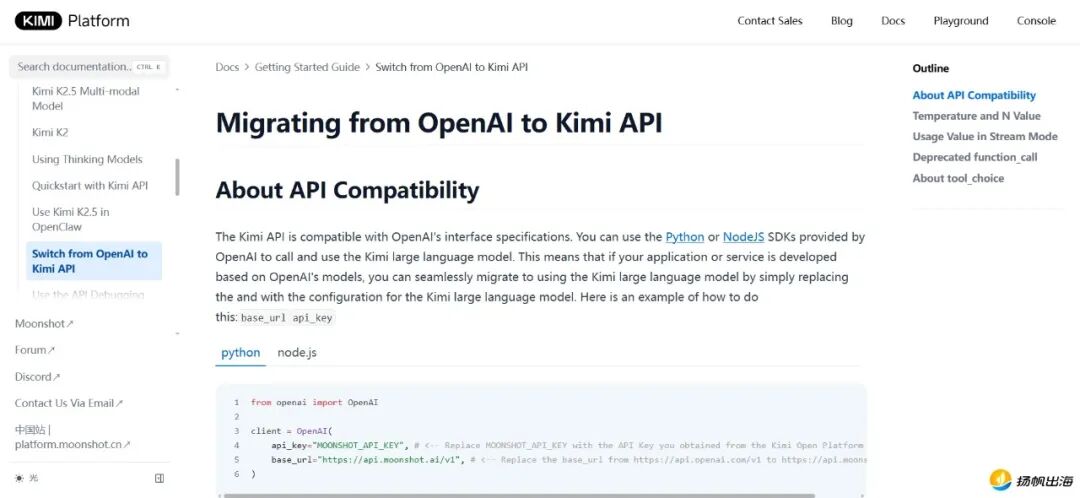
Core Insights - The competition in the AI sector in China is intensifying, with major players like Tencent and Alibaba investing heavily in AI initiatives, leading to a consumer-driven frenzy [1][2] - Kimi, a Chinese AI model company, has seen its overseas revenue surpass domestic income, indicating a strategic shift towards global markets [1][2] - The success of Kimi's new model K2.5, which has achieved a fourfold increase in global paid users, reflects a significant structural change in the company's resource allocation and organizational focus [1][2] Group 1: Kimi's Global Strategy - Kimi has prioritized global expansion, launching its full-stack intelligent assistant OK Computer in overseas markets before domestic ones, indicating a clear overseas focus [3] - The company transitioned from a closed-source to an open-source model with Kimi K2, adopting an MIT license to lower costs for overseas developers [3][5] - Kimi's recruitment strategy has shifted to focus on overseas markets, with new positions targeting specific regions like South Korea and Brazil, emphasizing local language capabilities [6] Group 2: Product Development and Market Position - Kimi's K2.5 model has achieved significant market traction, ranking first in multiple categories on OpenRouter, with a total usage of 1.16 trillion tokens, surpassing competitors [11][12] - The company's market share increased from 4.4% to 16.3% within a few weeks, indicating rapid growth and acceptance in the AI market [12][15] - Kimi's dual pricing strategy, which includes tiered subscriptions for individual users and API services for enterprises, aligns with overseas user preferences and needs [8] Group 3: Financial Position and Future Outlook - Kimi completed a $500 million Series C funding round, raising its post-money valuation to approximately $4.3 billion, with a cash reserve exceeding 10 billion yuan [10] - The company is not in a rush to go public, focusing instead on long-term investments in product development and global expansion [10] - Kimi's strategic goals for 2026 include enhancing AI productivity tools and deepening its global presence, particularly in overseas markets [10][11]
忽略“春节AI大战”吧,AI的入口之争胜负早已明了
3 6 Ke· 2026-02-10 01:34
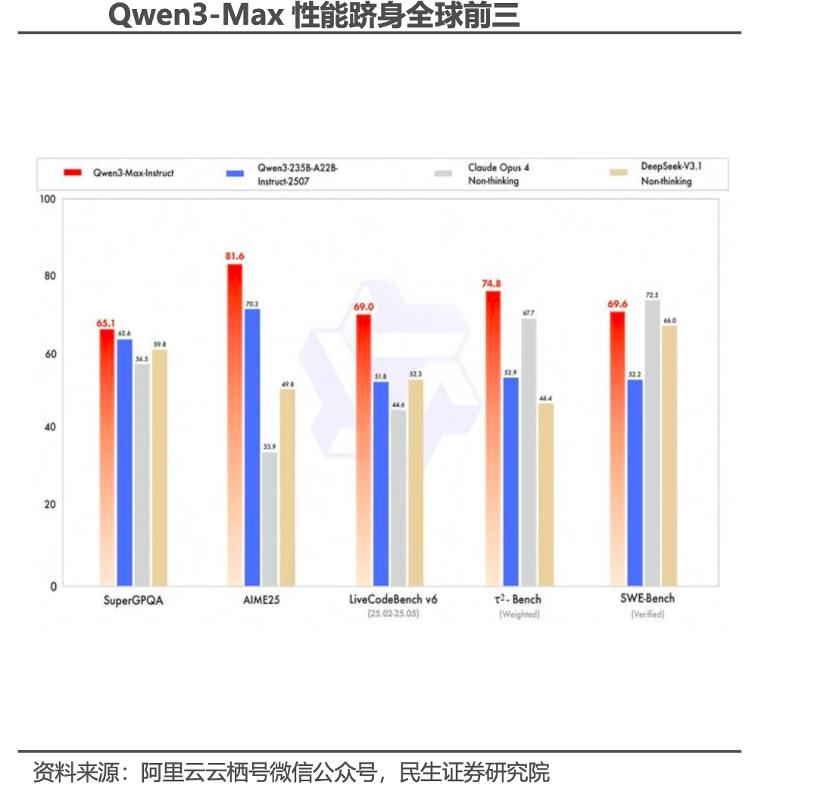
Core Viewpoint - The article discusses the competition in the AI market, particularly focusing on the contrasting strategies of Alibaba and Google, highlighting Alibaba's unique approach with its Qianwen App and its implications for the AI landscape [1][4]. Group 1: AI Market Competition - The AI market is increasingly viewed as a contest of marketing expenditures, particularly illustrated by the recent "red envelope war" during the Spring Festival, where companies compete for user engagement through financial incentives [1]. - Alibaba's Qianwen App launched a significant promotional campaign, achieving over 10 million orders within 9 hours, indicating a successful marketing strategy that diverges from traditional competition [1][13]. - The article posits that the success of Alibaba's Qianwen App is a result of long-term strategic investments made years prior, rather than just a short-term marketing victory [1][9]. Group 2: Strategic Comparisons - Google has adopted a full-stack self-research strategy, investing heavily in various aspects of AI, including hardware and software, while Microsoft has taken a dual approach, relying on partnerships and third-party resources [2][3]. - As of Q4 2025, Microsoft's market value has decreased by over 30%, contrasting with Google's market value, which has approached $4 trillion, highlighting the effectiveness of Google's strategy [2]. - Alibaba is positioned as the closest competitor to Google in the full-stack AI space, with significant investments planned for AI infrastructure and capabilities [4][5]. Group 3: Future Projections - Alibaba plans to invest 380 billion yuan in AI capital expenditures over the next three years, with an additional 100 billion yuan recently announced, indicating a strong commitment to AI development [5]. - The company aims to redefine the AI landscape by creating a new operating system based on large models, which will facilitate the development of numerous applications through natural language [4]. - The competitive landscape is expected to shift from performance and customer acquisition to a broader ecosystem competition, encompassing computing power, cloud services, and user engagement [9][14].



头部具身大脑公司获数亿元融资,多家海外基金加注、曾获阿里投资|硬氪首发
3 6 Ke· 2026-02-10 01:32
硬氪获悉,具身智能企业穹彻智能近日已完成数亿元A轮融资。本轮由C资本领投,Sea Limited(Shopee母公司)、普华资本等多家海外产业方和国内头部 财投跟投,老股东Prosperity7 Ventures亦超额追加投资。 作者|黄楠 编辑|袁斯来 此次融资,距离公司2025年10月获得阿里巴巴集团投资仅相隔数月。 其中,C资本在亚洲、欧洲、澳洲拥有丰富的产业与渠道资源,,而Sea Limited作为东南亚头部互联网平台,其电商、物流与数字支付生态与具身智能落地 场景高度契合。两家投资方的加入,有助于为穹彻智能拓展全球市场提供战略入口与本地化协同能力,加快"数据-模型-场景"闭环在海外多样化环境中落地 应用。 成立于2023年11月,穹彻智能是国内最早专注在具身智能领域的创业公司之一。 公司联合创始人卢策吾现任上海交通大学人工智能学院副院长、长江学者特聘教授,IROS、ICRA最佳论文获得者,两次获得RSS最佳论文提名,在 Nature、T-RO、IJRR、RSS等国际顶会/期刊发表论文200余篇。联合创始人王世全为斯坦福大学博士,长期从事仿生灵巧操作与人工智能研究,于2016年创 办了通用机器人公司非 ...
2026格局与趋势 |(上):天黑请睁眼
3 6 Ke· 2026-02-10 01:20
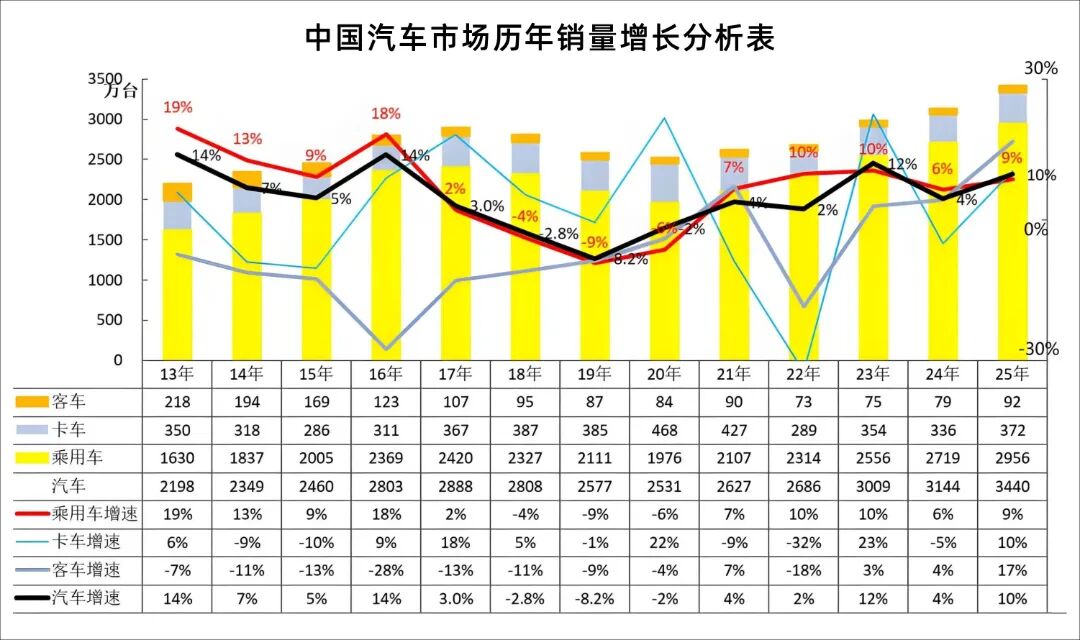
Core Viewpoint - The Chinese automotive market is facing significant challenges in 2026, with predictions of a decline in sales due to economic pressures and changing consumer behavior, despite some optimistic forecasts for growth in exports and specific segments like new energy vehicles [1][3][4]. Group 1: Market Trends and Predictions - In 2026, the overall automotive sales in China are expected to range between 34.5 million to 35 million units, with a potential decline in domestic retail sales by over 5% if no significant policy changes occur [3][7]. - January 2026 data shows a dramatic decline in retail sales, with a 28% year-on-year drop, indicating a challenging start to the year [6]. - Various institutions predict a range of outcomes for 2026, with the most pessimistic forecasts suggesting a 7% decline in sales, while the most optimistic predict only a 1% increase [4][7][8]. Group 2: Policy and Economic Influences - Key factors affecting the market include adjustments to subsidy policies for new energy vehicles, which have shifted from full exemptions to partial reductions, impacting consumer purchasing behavior [6][9]. - The decline in consumer confidence and shrinking middle-class income due to economic downturns are expected to further suppress automotive sales [6][9]. Group 3: Competitive Landscape - The automotive industry is experiencing intense competition, with a shift from price wars to a focus on technological advancements and value creation as companies seek to stabilize their market positions [12][16]. - Major players are adjusting their sales targets, with some aiming for significant growth while others adopt more conservative strategies in response to market conditions [18][19]. Group 4: Export Opportunities - Exports are projected to be a key growth area, with expectations of a 12-15% increase, potentially reaching 8 million units, which could help offset domestic market declines [22][26]. - The global supply chain dynamics are pushing Chinese automotive companies to enhance their international presence, with a focus on building global production and R&D capabilities [26][28]. Group 5: Segment-Specific Insights - The new energy vehicle segment is anticipated to grow, with retail sales expected to increase by 12-15%, driven by favorable policies for mid-range models [9][10]. - The large six-seat SUV market is projected to maintain strong growth, with expectations of a 30-50% increase in sales, despite overall market challenges [31][32].