
3 6 Ke

Search documents
硅谷向左,腾讯向右:AI社交的沉浸致幻vs在场博弈
3 6 Ke· 2026-02-05 10:23
Core Insights - The article discusses the evolving landscape of AI social interactions, highlighting Tencent's aggressive investment in AI agents as a new form of social engagement, contrasting it with past mobile payment battles [1][12] - It identifies three distinct forms of AI social interaction: escapist socializing, present socializing, and automated socializing, with Tencent's approach leaning towards enhancing real human relationships [1][6] Group 1: Tencent's Strategy - Tencent is investing 1 billion yuan in cash red envelopes to promote its AI agent, marking a significant shift in its social strategy [1] - The AI agent, known as Yuanbao, aims to integrate into real social interactions, acting as a facilitator in group chats and enhancing user engagement [6][12] - This approach contrasts with Silicon Valley's focus on one-on-one interactions, as Tencent seeks to create a more complex N-to-N social dynamic [4][5] Group 2: Comparison with Silicon Valley - Silicon Valley's AI social platforms, like Character.ai, focus on escapist interactions, providing emotional support without real social engagement [4][3] - Major players like Meta and Google lack the integrated social ecosystem that Tencent offers, focusing instead on isolated functionalities [3][4] - The article suggests that while Silicon Valley's models prioritize individual interactions, Tencent's model aims to embed AI within existing social frameworks [5][6] Group 3: Future of AI Social Interaction - The emergence of platforms like Moltbook, which operate without human input, represents a shift towards AI-driven social networks, where humans are mere observers [7][8] - The article raises questions about the future of social interactions, suggesting that AI may redefine how humans connect, potentially leading to a dilution of genuine emotional connections [11][12] - Tencent's efforts with Yuanbao could serve as a testing ground for AI's role in social dynamics, with the potential to learn from real-world feedback [12]

江南最后的秘境,藏在这座浙江的县城里
3 6 Ke· 2026-02-05 10:18
Group 1 - The article highlights Lishui Songyang as "the last secret realm of Jiangnan," emphasizing its blend of nature and daily life, where tradition and modernity coexist harmoniously [1][36] - The architectural heritage of Songyang, including the Huang Family Courtyard and the Yanqing Temple Tower, showcases the region's rich history and cultural significance, with intricate carvings and traditional designs that reflect local aesthetics [2][4][5] - The preservation of nearly a hundred traditional villages in Songyang, each with unique characteristics, allows for an authentic experience of rural life, contrasting with the commercialization seen in other tourist areas [8][10][12] Group 2 - The vibrant local life in Songyang's old streets, characterized by traditional shops and local cuisine, offers a genuine glimpse into the community's daily rhythms, devoid of modern commercial pressures [14][17][20] - The integration of art into everyday spaces, as seen in various installations by contemporary artists, enriches the cultural landscape and fosters a dialogue between tradition and modernity [24][26][30][34] - The recent cultural events and community gatherings, such as the "Zheba" competition, reflect the local pride and engagement, reinforcing Songyang's identity as a living cultural hub rather than just a scenic destination [36]


中国电建地产冠领北京 | 泷悦玖宸书写院子传奇
3 6 Ke· 2026-02-05 10:18
Core Insights - The Beijing real estate market faced challenges in 2025, with new home sales dropping to approximately 35,000 units, a year-on-year decline of 4.55%, and nearly a 50% decrease from the peak of 62,800 units in 2021, marking a six-year low [1] - Despite the overall market downturn, certain projects, particularly those by China Power Construction Real Estate, experienced significant success, igniting market confidence [1][3] - The luxury villa market, previously quiet, saw a resurgence with the launch of the Longyue Jiucheng project, which achieved remarkable sales figures, becoming the top performer in the Beijing villa market for the latter half of the year [3][5] Market Performance - The overall transaction volume for new homes in Beijing in 2025 was about 35,000 units, down 4.55% year-on-year, and nearly 50% lower than the peak in 2021 [1] - Longyue Jiucheng sold 28 units in September, totaling 3.09 billion yuan, and continued to perform well in October with 44 units sold, achieving a total of 4.4 billion yuan [3] - The villa market's supply has drastically decreased, with new villa land supply in Beijing dropping to nearly zero after 2023, leading to a significant scarcity of new offerings [7][9] Product and Brand Strategy - Longyue Jiucheng is positioned as a unique offering in the Beijing villa market, emphasizing its exceptional product quality and strategic location in the prestigious Xishan area [5][11] - China Power Construction Real Estate has established a strong brand presence, with its projects consistently recognized for quality and service, contributing to its reputation as a market leader [20][24] - The company has developed a comprehensive strategy that includes product strength, cost efficiency, delivery capability, service quality, and brand power, which has enabled it to create a series of successful projects [22][26] Consumer Trends - There is a growing trend among high-knowledge consumers in Beijing, shifting focus from traditional housing needs to lifestyle aspirations, with a preference for properties that offer a blend of nature and urban convenience [6][7] - The demand for villas is driven by a desire for a serene living environment, with Longyue Jiucheng catering to this need by providing a unique living experience that integrates natural beauty and cultural heritage [9][12] Future Outlook - As China Power Construction Real Estate moves into 2026, it aims to continue leading the high-end living market in Beijing with Longyue Jiucheng, contributing to the city's evolving lifestyle landscape [30]

韩国自动驾驶的突围之路:借道中韩合作,冲刺 2027
3 6 Ke· 2026-02-05 10:18
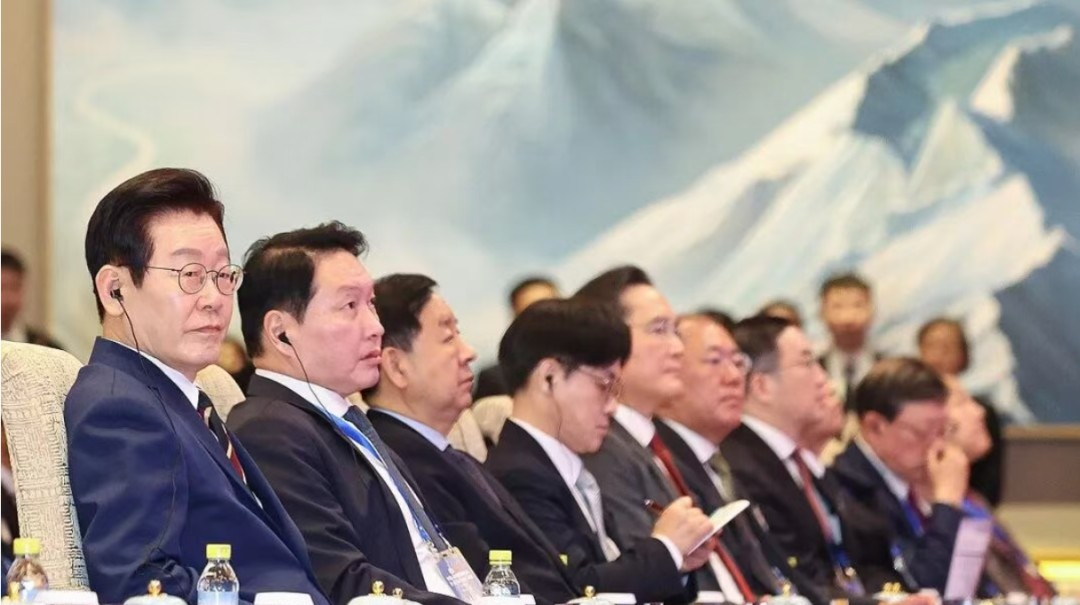
Core Insights - The article highlights the significant collaboration between South Korea and China in the autonomous driving sector, marked by the signing of 32 cooperation agreements during a business forum in Beijing [1][13]. - South Korea aims to achieve Level 4 (L4) autonomous driving commercialization by 2027, positioning itself among the top three global players in the industry [4][16]. Group 1: South Korea's Strategic Framework - South Korea has developed a comprehensive strategy for autonomous driving that includes top-level design, roadmaps, and pilot implementations since 2013 [4]. - Recent policies include the "Plan to Enhance the Competitiveness of the Autonomous Vehicle Industry," which aims for L4 commercialization by 2027, and the designation of Gwangju as the first "city-wide" autonomous driving test city [4][5]. - The government has introduced a regulatory framework that allows for relaxed regulations for Level 3 (L3) and L4 vehicles, empowering local governments to designate pilot areas [5]. Group 2: Commercialization and Application Scenarios - South Korea has seen rapid advancements in autonomous driving applications across various sectors, including public transport and logistics [6][10]. - Seoul is set to launch a daytime autonomous bus route by September 2025, featuring fully automated vehicles without drivers [6]. - The logistics sector has expanded significantly, with autonomous freight trucks now covering 5,224 kilometers of highways, and plans for robot and drone deliveries by 2026 and 2027, respectively [10]. Group 3: Technological Advancements and Infrastructure - South Korea's strength in autonomous driving is supported by its robust capabilities in semiconductors, communications, and automotive manufacturing [9]. - The country is embracing "Physical AI," integrating sensors, vehicle control, and road infrastructure with AI to minimize discrepancies between simulation and real-world conditions [11]. - The establishment of cooperative intelligent transport systems (C-ITS) has been a key focus, with extensive infrastructure already in place to enhance safety and efficiency [12]. Group 4: Sino-Korean Collaboration - The collaboration between Chinese and South Korean companies marks a shift from isolated technical exchanges to a more integrated ecosystem [13]. - Notable partnerships include Lenovo's collaboration with SWM for L4 Robotaxi development and the strategic alliance between Mushroom Carlink and LG Electronics for autonomous vehicle deployment [13]. - This partnership leverages China's data accumulation and cost control expertise alongside South Korea's regulatory framework and supply chain advantages [14]. Group 5: Challenges and Strategic Responses - Despite rapid progress, South Korea faces challenges in transitioning from experimental technologies to large-scale industrial applications [15]. - Issues such as accident liability, data privacy, and public acceptance of autonomous vehicles remain critical hurdles [15]. - South Korea's dual strategy of "open cooperation and technological breakthroughs" aims to address these challenges while enhancing its competitive position in the global market [16]. Group 6: Future Outlook - The collaboration between South Korea and China is seen as a pivotal moment in the global autonomous driving landscape, potentially reshaping industry dynamics [17]. - The next two years are expected to be a "harvest period" for Sino-Korean cooperation in autonomous driving, with the potential emergence of a new global leader in the sector [17].
业绩爆表+扩产加码,这个赛道的机会藏不住了
3 6 Ke· 2026-02-05 10:12
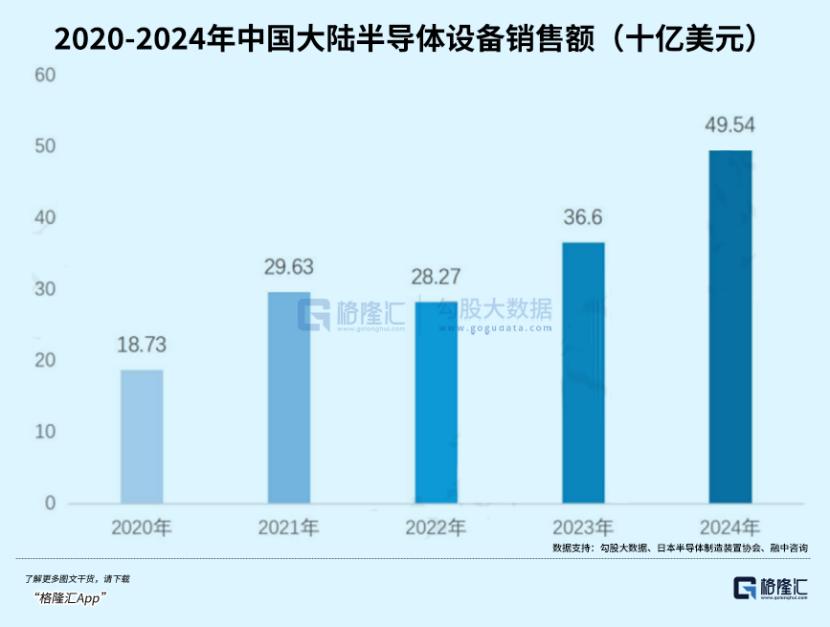
Core Insights - The semiconductor equipment industry is experiencing significant growth driven by AI computing power, domestic substitution, and global capacity expansion, marking a definitive growth cycle for the sector [1][14]. Group 1: Industry Performance - ASML reported a net sales of €32.7 billion in 2025, a 16% year-on-year increase, with a backlog of orders reaching €38.8 billion, of which €25.5 billion is from EUV [1]. - Samsung's semiconductor business saw an operating profit increase of 33%, while SK Hynix's Q4 operating profit surged by 137% [1]. - Domestic semiconductor equipment companies like Jinhaitong and Changchuan Technology also reported significant performance improvements [1]. Group 2: Demand Drivers - The scale application of generative AI has drastically reshaped storage demand, with AI servers requiring 8 times more DRAM and 3 times more NAND than regular servers, and each AI server needing up to 2TB of storage [2]. - HBM (High Bandwidth Memory) is emerging as a key growth driver, with a projected CAGR of 33% from 2024 to 2030, potentially capturing 50% of the DRAM market by 2030 [2]. - Major global storage manufacturers are ramping up production, with Samsung's capital expenditure for 2025 expected to increase by 89% and SK Hynix raising its capital expenditure to $20.3 billion [2]. Group 3: Domestic Market Dynamics - The domestic semiconductor equipment localization rate is projected to reach 35% in 2024, up from 16.4% in 2022, with etching equipment localization at 23% and CMP equipment at 30%-40% [3]. - China has maintained its position as the largest semiconductor equipment market globally for five consecutive years, with sales expected to reach $49.54 billion in 2024, accounting for 42.34% of the global market [3]. Group 4: Future Outlook - The global DRAM industry capital expenditure is forecasted to reach $61.3 billion in 2026, a 14% increase year-on-year, while NAND Flash capital expenditure is expected to be $22.2 billion, a 5% increase [5]. - ASML's order situation reflects high industry prosperity, with €13.2 billion in new orders in 2025, and a backlog extending to 2027, supporting future capacity releases [5]. - The global semiconductor equipment market is projected to reach $117 billion in 2024, with a CAGR of 8.4% from 2025 to 2033, potentially growing to $224.93 billion by 2033 [5]. Group 5: Key Trends - The competition in advanced processes is intensifying, with global semiconductor giants focusing on 2nm and below, driving demand for high-end semiconductor equipment [10][11]. - Policy and capital support are crucial for the advancement of domestic substitution, with significant investments in key technologies and local government subsidies for R&D [12]. - The demand structure is diversifying, with emerging fields like AI computing centers and electric vehicles driving growth, while domestic companies are expanding into overseas markets [13].




氪星晚报|美团:拟7.17亿美元收购叮咚;米兰冬奥基于阿里千问打造官方大模型;小米汽车将辅助驾驶安全里程门槛降至300公里
3 6 Ke· 2026-02-05 10:12
大公司: 日发精机:聘任李永龙为公司副总裁 36氪获悉,日发精机公告,公司董事会同意聘任李永龙为公司副总裁,任期自本次董事会审议通过之日 起至第九届董事会任期届满之日止。 投融资: 美团:拟7.17亿美元收购叮咚 36氪获悉,美团公告,于2026年2月5日(非交易时段),收购方、转让方及梁昌霖订立股份转让协议, 据此(其中包括)收购方同意收购,而转让方同意出售转让方所持有目标公司Dingdong Fresh Holding Limited全部已发行股份,初始代价为7.17亿美元(可予调整),惟转让方可从目标集团(目标公司及其 附属公司)提取不超过2.80亿美元的资金后,仍需确保目标集团净现金不低于1.50亿美元。 小米汽车将辅助驾驶安全里程门槛降至300公里 36氪获悉,小米汽车宣布,最新版本OTA已陆续推送,辅助驾驶安全里程门槛降低。小米汽车介绍,辅 助驾驶安全里程门槛从1000km降至300km,设定这样的门槛,是为了让大家可以先逐步熟悉辅助驾驶 功能,培养充分的安全意识。小米汽车提醒,辅助驾驶不是自动驾驶,请时刻关注路况,及时控制车 辆。 吉利及雷诺合资公司浩思动力首次亮相印度ACMA展,开拓新兴市场 ...



MeetBrands 出海向新 | 当“带电”成为共识:中国消费电子的全球突围路径
3 6 Ke· 2026-02-05 10:00
Core Insights - The CES 2026 event highlights the global competitiveness of Chinese consumer electronics brands, marking a shift from "scale expansion" to "quality selection" in overseas markets [1][2] - The consumer electronics category is identified as a key area for Chinese brands to expand internationally, with a significant presence in the 2025 MeetBrands list [2][3] Group 1: Consumer Electronics as a Key Category - Consumer electronics remains the largest category in the 2025 MeetBrands list, reflecting its rapid iteration and ability to quickly validate products in various markets [2] - A mature and centralized supply chain in China provides a competitive advantage in cost, efficiency, and delivery stability, facilitating large-scale international expansion [3] - Nearly one-third of the new brands on the 2025 MeetBrands list are from the consumer electronics category, indicating a significant turnover and renewal within this sector [4] Group 2: Trends in Consumer Electronics - "Portability" is emerging as a dominant trend among new brands, with products like portable projectors and energy storage devices designed for on-the-go use [7] - The rise of personal manufacturing, including laser engraving machines and 3D printers, is becoming mainstream as these devices evolve to meet the needs of ordinary users [9] Group 3: Challenges in International Expansion - Despite the popularity of consumer electronics, companies face challenges in establishing a foothold in overseas markets, including intense competition and the need for clear product differentiation [11][12] - Increasing compliance requirements across different countries add complexity to market entry, necessitating ongoing adaptation to local regulations [13] - Localization challenges extend beyond language translation, requiring a deep understanding of local consumer behavior and preferences [15] Group 4: Case Study of AR Glasses - The AR glasses market is highly competitive, with both international giants and emerging Chinese brands vying for market share [16] - BeyondClick's strategies for assisting brands like Rokid include restructuring their online presence to focus on user scenarios rather than technical specifications, significantly improving conversion rates [17][18] - The use of AI to enhance creative production and optimize marketing strategies has led to increased efficiency and higher conversion rates for brands entering international markets [19][21]

叮咚买菜被美团收购, 即时零售进入巨头争战期
3 6 Ke· 2026-02-05 10:00
作者 | 任彩茹 李小霞 编辑 | 乔芊 36氪获悉,美团已就全资收购叮咚买菜达成最终协议。2月5日,美团于香港联交所发布公告,将以约 7.17亿美元的初始对价,完成对叮咚买菜中国业务100%股权的收购。公告显示,叮咚买菜海外业务不 在本次交易范围内,将在交割前完成剥离。交易过渡期内,叮咚买菜将按照交易前的模式继续经营。截 至发稿,叮咚买菜市值6.94亿美元。 交易落定后,这不仅是本年度本地生活领域最重磅的整合,更意味着生鲜电商以独立平台形式"烧钱换 规模"的时代告一段落。 叮咚买菜的被收购传闻已经有一段时间,此前市场多次流传京东集团有意收购,以强化其即时零售业务 的链路。彼时,市场分析认为,京东的仓配物流体系与叮咚买菜的前置仓网络结合,能在生鲜品类上形 成协同,也能配合七鲜前置仓的加速扩张。 "此前的确是京东在谈,美团没有参与,但后期美团突然参与进来。京东对叮咚表示,'美团是来搅局 的',老梁(叮咚买菜创始人梁昌霖)一开始也比较踟蹰美团的真实意图。"一位接近交易人士称。"美 团的出发点也有防御意味,假如叮咚被对手吃掉,价格战又在所难免。" 一位叮咚买菜的投资人表示,"它哪怕今天市值不高,但我依然对老梁(梁昌 ...

全栈即王道?百度AI的入口战略拆解
3 6 Ke· 2026-02-05 09:54
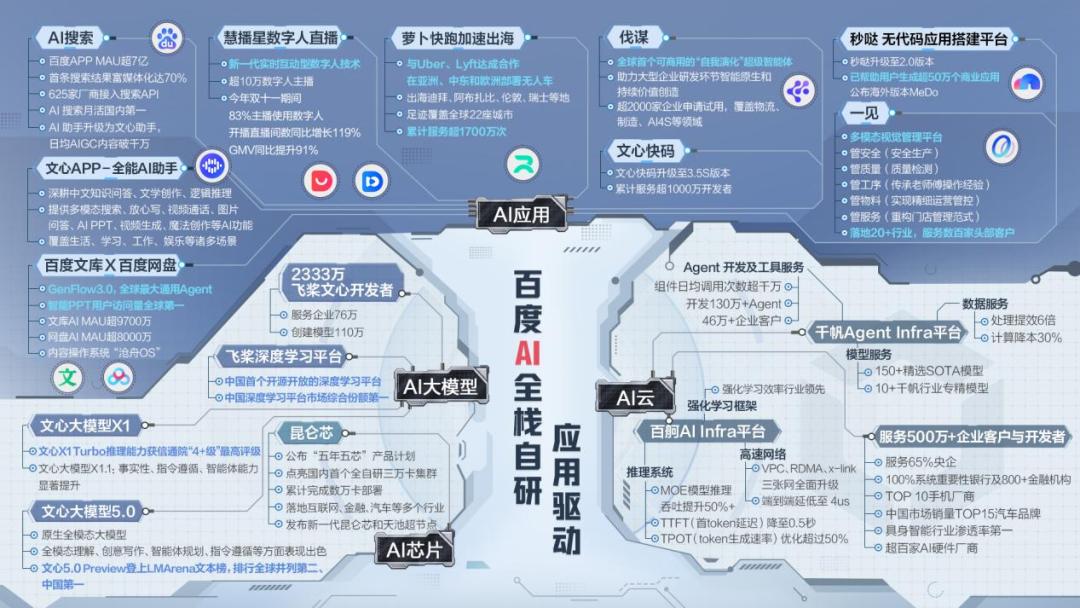
Group 1 - Baidu's CEO emphasized the importance of applications in the AI era, defining "AI applications as intelligent agents" and identifying four types of intelligent agents: search agents, digital human agents, code agents, and evolutionary agents [1] - The company has adjusted its structural framework to focus on a "chip-cloud-model-agent" strategy, highlighting the advantages of a full-stack capability in AI competition [1][10] - Baidu clarified the relationship between its search engine and the Wenxin assistant, indicating a shift from traditional search to AI-driven intelligent agents [1] Group 2 - The return of founders from major tech companies (BAT) signifies the onset of a competitive AI landscape in 2026, with each company adopting unique strategies to capture the AI market [3] - Alibaba's founder is focusing on a triad of AI narratives involving large models, cloud computing, and chips, while Tencent is reviving its "red envelope strategy" to engage users [3] - The competition for AI entry points has intensified, with major players like Baidu, Alibaba, and ByteDance vying for dominance in the AI space [5] Group 3 - The AI entry battle has evolved into a "three-legged race" among Doubao, Wenxin, and Qianwen, with a significant financial commitment of 6 billion in cash incentives [5] - Baidu's strategy involves integrating AI seamlessly into its existing app ecosystem, aiming to reduce user friction and enhance engagement [6][8] - The company is leveraging its existing user base of over 700 million monthly active users to promote AI adoption without requiring additional downloads [8][9] Group 4 - Baidu's full-stack approach, encompassing chip, cloud, model, and agent capabilities, positions it favorably in the AI competition, focusing on efficiency and cost reduction [10][14] - The launch of Wenxin 5.0, with advanced capabilities in multimodal understanding, showcases Baidu's technological leadership in the AI space [13] - Baidu's self-developed infrastructure allows for optimized performance and cost efficiency, crucial for meeting the demands of its large user base [14][15]

真正的人才,到底靠选拔,还是靠培养
3 6 Ke· 2026-02-05 09:43
Core Viewpoint - The article discusses the debate on whether talent is primarily acquired through selection or can be cultivated through training, emphasizing the importance of both aspects in talent development [1][14]. Definition of Talent - Talent can be defined as individuals who are capable of performing specific job roles within an organization, possessing certain "competency characteristics" [2]. - The "onion model" is introduced as a framework for understanding these competency characteristics, which include traits, motivations, self-concept, attitudes, values, knowledge, and skills [2][3]. Onion Model Structure - The onion model consists of three layers: - The core layer includes "traits and motivations," which are innate and stable psychological characteristics [3]. - The middle layer encompasses "self-concept, attitudes, and values," which influence behavior and performance [3]. - The outer layer consists of "knowledge and skills," which are observable and can be acquired through training [3][4]. Selection vs. Cultivation - The article argues that the core competencies of talent lie in the inner and middle layers of the onion model, which are difficult to cultivate after birth, suggesting that organizations should focus on selecting individuals with these deep characteristics [4][5]. - However, it also highlights the logical flaw in separating deep and surface characteristics, as many individuals with strong deep characteristics may still fail to perform effectively in their roles [5][6]. Reliability and Validity - The concepts of "reliability" and "validity" are discussed as essential for understanding talent effectiveness, where reliability refers to the alignment of deep characteristics with job requirements, and validity pertains to the ability to translate these characteristics into actual performance [7][9]. Importance of Skills - The article emphasizes that deep characteristics alone are not sufficient for success; individuals must also possess relevant skills and knowledge to perform effectively [9][11]. - Examples from sales roles illustrate that while deep characteristics are crucial, they must be complemented by skills that can only be developed through training [10][11]. Performance Management System - A comprehensive performance management system is necessary to support talent cultivation, which includes elements such as empowerment, guidance, support, assurance, and fair evaluation [12][13]. - This system ensures that both deep and surface characteristics are effectively utilized to achieve high performance [12][13]. Conclusion - The article concludes that talent development requires a combination of both selection and cultivation, as they are complementary processes that together form a complete talent growth system [14][15].