
Hu Xiu

Search documents
160万人一夜爆仓,比特币“史诗级大跌”背后的高杠杆惨案
Hu Xiu· 2025-10-12 06:55
Core Insights - The cryptocurrency market experienced a significant crash on October 11, with Bitcoin plummeting over 13% in 24 hours, reaching a low of approximately $105,930, marking a 20% drop from its recent peak of $126,250 [2][5] - The crash led to over 1.6 million investors being liquidated, resulting in a total liquidation amount of approximately $19.36 billion, the largest single-day liquidation in cryptocurrency history [8][12] - The volatility and high leverage in the market have raised concerns about Bitcoin's suitability as a reserve asset, as it lacks the stability required for such a role [3][21] Market Reaction - The crash was likened to previous significant downturns in the cryptocurrency market, with analysts noting that high leverage and speculative capital contributed to the rapid sell-off [7][14] - Ethereum and other major cryptocurrencies experienced even steeper declines, with Ethereum dropping over 20% and smaller altcoins facing drastic price reductions [6][12] - The market's reaction was characterized by a swift transition from greed to fear, as leveraged positions were forcibly liquidated, exacerbating the downward pressure on prices [17][19] Impact on Stablecoins - The crash also affected stablecoins, particularly the synthetic stablecoin USDe, which saw its price drop to as low as $0.62, a 38% de-pegging from the dollar [4][9] - The de-pegging was attributed to panic selling, insufficient liquidity, and the collapse of leveraged positions that relied on USDe for borrowing [10][11] - Ethena Labs, the issuer of USDe, confirmed that the protocol's minting and redemption functions remained operational despite the market volatility [13] Historical Context - The recent Bitcoin crash has drawn parallels to past market crashes, highlighting a recurring pattern where high leverage leads to rapid liquidations and market instability [14][17] - Historical events such as the "312" crash in March 2020 and the "519" crash in May 2021 demonstrate similar market dynamics, where external factors triggered significant sell-offs [15][16] Future Outlook - Despite the recent downturn, there are indications of a potential recovery, with Bitcoin's price rebounding to around $112,000 shortly after the crash [18] - However, the overall sentiment in the market has shifted to a more cautious stance, with investors reassessing the risk associated with Bitcoin as a high-risk asset rather than a safe haven [19][20] - The possibility of Bitcoin being recognized as a reserve asset by central banks remains distant, as it continues to be viewed as a speculative investment rather than a stable store of value [21][24]

掏空了的娃哈哈回传国资,谁能接得住这个球?
Hu Xiu· 2025-10-12 06:36
Core Viewpoint - The resignation of Zong Fuli as the chairman and general manager of Wahaha Group marks a significant shift in the company's leadership, with the younger generation taking over amidst a backdrop of internal family conflicts and brand challenges [1][2][6]. Group 1: Leadership Changes - Zong Fuli has stepped down to focus on her own brand "Wah Xiaozong," while Xu Simin, born in 1994, has been appointed as the new general manager, leaving the chairman position vacant [1]. - The control of Wahaha has effectively returned to its largest shareholder, the Hangzhou State-owned Chengdu Cultural Tourism Group [1]. Group 2: Brand and Market Position - The brand "Wah Xiaozong" is seen as a forced choice for Zong Fuli, indicating a complete separation from Wahaha [2][3]. - The brand value of Wahaha, previously estimated at 90 billion, is now in jeopardy due to negative public perception and the collapse of the personal brands associated with the Zong family [12][13]. Group 3: Asset and Investment Considerations - Wahaha Group's actual assets are limited, with the Zong family retaining control over the production and sales, making it unattractive for potential investors [8][9]. - The complexity of separating the brand from the Zong family's operational control poses significant challenges for any prospective buyer, especially given the brand's tarnished reputation [10][19]. Group 4: Governance and Future Prospects - The governance structure requires unanimous consent from all shareholders for brand licensing, complicating any potential transition to new ownership [15]. - The current situation presents a challenging environment for any investor, with the risk of further brand devaluation and operational difficulties looming [17][20].
宗馥莉辞职,恰恰宣告了“家族接班”范式的终结
Hu Xiu· 2025-10-12 06:16
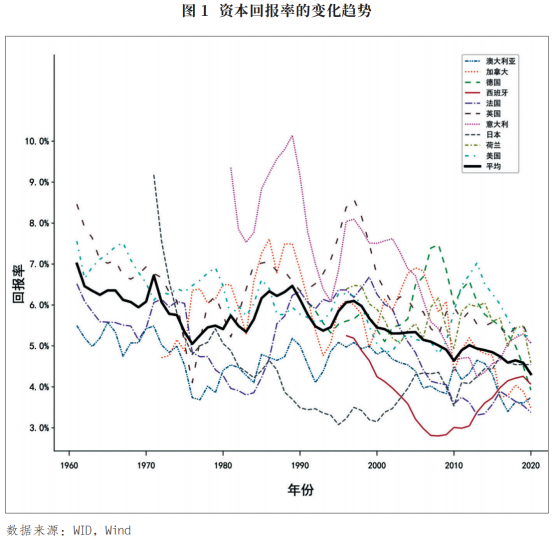
Core Viewpoint - The resignation of Zong Fuli from Wahaha Group's leadership has sparked discussions about the internal family conflict and the future of this iconic Chinese enterprise, highlighting issues related to offshore trusts, equity arrangements, and the transition of mixed-ownership enterprises in China [1] Group 1: "National Stock Private" Model - The ideal "National Stock Private" model involves the state allocating funds based on asset management plans' historical performance, decentralizing investment decisions to competing market institutions [2][3] - Implementing the "National Stock Private" model can potentially break the bottleneck of economic growth, transcending family interests and impacting the trajectory of Chinese enterprises and the economy [3] Group 2: Economic Challenges and Demand Shortage - Demand shortage has been a persistent issue since the industrial era, with various economic theories attempting to address it, yet fiscal policies have often led to increased national debt without the expected economic recovery [4][5] - The current economic landscape in China shows signs of demand shortage, with declining investments and a lack of private sector confidence attributed to policy risks in sectors like real estate and education [5][6] Group 3: Capital Return Rates and Investment Dynamics - The return rate on physical assets in China has decreased from 7% in 2001 to 4.2% in 2023, indicating a weakening profitability of physical assets [6][7] - The overall capital return rate is influenced by the distribution of capital and the economic growth rate, with a historical trend showing that capital return rates tend to decline when capital growth outpaces economic growth [8][9] Group 4: Implications of Wealth Concentration - Wealth concentration among high-income groups leads to a mismatch in demand, where those with capital do not consume enough, resulting in unsold goods and economic stagnation [10][11] - Historical patterns suggest that when wealth becomes overly concentrated, it can lead to social unrest and economic crises, necessitating interventions to redistribute wealth [13][14] Group 5: Future of Corporate Governance - As the founding generation of companies ages, the next generation may lack the management skills needed, leading to a shift from management to mere ownership, which could necessitate changes in governance structures to protect minority shareholders [24][25] - The "National Stock Private" model aims to create a more equitable management structure that aligns the interests of large shareholders, small shareholders, and public shareholders, ultimately benefiting all investors [25][26]
女装没救了,退货率冲破天花板?
Hu Xiu· 2025-10-12 06:03
退货率快要冲破天花板,几年前10%~30%,如今涨到80%多,就像一个填不满的无底洞。电商女装真 的要没救了吗? ...
格蕾塔救不了加沙,也救不了欧洲人的良心
Hu Xiu· 2025-10-12 05:50
Core Points - The article discusses the absurdity of recent humanitarian efforts to aid Gaza, led by a coalition of European countries, which faced a predictable response from Israel, including the interception and detention of participants [1][3][5] - The scale of the current humanitarian fleet is significantly larger than previous attempts, receiving considerable political support in Europe, yet the outcome remains ineffective [3][5] - The article highlights the political dynamics within Israel, particularly Netanyahu's use of war to divert attention from internal pressures, suggesting that the ongoing conflict is more about political survival than military strategy [8][9] - The perception of Israel as a civilized nation defending against barbarism is critiqued, emphasizing that such narratives do not lead to civilized outcomes and can result in greater disasters [10][11] - The article argues that the current international order, which promotes a two-state solution, is unrealistic given the deep-rooted cultural, religious, and geopolitical conflicts that cannot be resolved through negotiation alone [17][18] - It points out the contradictions in Western leftist perspectives on the Israeli-Palestinian conflict, noting that their actions have not significantly changed the situation for the people of Gaza [20][21] - The article concludes that a realistic approach is necessary to address the complexities of the conflict, rather than relying on idealistic or simplistic solutions [22][23]
真正的决定因素是预期
Hu Xiu· 2025-10-12 04:38
Group 1 - The article discusses the historical context of China's competition with the United States, positioning China as the third major competitor after the Soviet Union and Japan since World War II [1][4]. - It highlights that the competition with the Soviet Union was primarily military and ideological, while the competition with Japan was mainly economic [2][3]. - The article asserts that China represents a comprehensive competitor to the U.S., encompassing military, economic, and technological challenges, combining elements of both previous competitors [4][5]. Group 2 - The article notes that since 2014, the power dynamics between the U.S. and China have been shifting, with China's economy surpassing the U.S. in purchasing power parity (PPP) terms [6]. - It references former President Obama's approach to countering China's rise through initiatives like the Trans-Pacific Partnership (TPP), aimed at excluding China from shaping global economic rules [7][8]. - The article contrasts the differing approaches of Obama and Trump towards China, indicating a significant shift in U.S. strategy under Trump, who viewed China as a strategic competitor [9][16]. Group 3 - The article details the timeline of U.S.-China relations, noting Trump's state visit to China in 2017 and the subsequent shift in U.S. policy towards viewing China as a strategic competitor [10][14]. - It discusses the escalation of trade conflicts starting in 2018, with the U.S. invoking Section 301 of its Trade Act to investigate China, leading to a series of tariffs and negotiations [20][21]. - The article emphasizes that the context of U.S.-China relations has evolved, with increasing pessimism from China regarding future economic ties due to rising tensions and geopolitical competition [33][34]. Group 4 - The article argues that the fundamental issue in U.S.-China relations is not merely economic factors like tariffs or trade agreements, but rather the long-term perception of the relationship's trajectory [35][36]. - It suggests that any future agreements must address both economic and geopolitical issues simultaneously, as avoiding these discussions is no longer feasible [40].
在马来西亚“狙击”日系的三种姿势
Hu Xiu· 2025-10-12 04:19
Group 1 - The core point of the article is that Malaysia has overtaken Indonesia to become the largest automotive market in Southeast Asia, with sales reaching 396,800 units compared to Indonesia's 390,500 units in the first half of the year [1] - Malaysia is actively promoting the development of electric vehicles, with government plans to increase the sales proportion of electric vehicles to 15% by 2030 and 38% by 2040, along with the establishment of 10,000 public charging facilities by 2025 [2] - The favorable automotive market, attractive new energy policies, and geographical advantages for exports have drawn several Chinese car manufacturers to Malaysia, including Chery, BYD, and Great Wall [3] Group 2 - Malaysia's unique characteristics include a friendly environment for the Chinese community, where 20% of the population creates 80% of the wealth, and it is the only country outside China with a complete Chinese education system [6][7] - The low fuel prices in Malaysia, due to government subsidies, make fuel vehicles the dominant choice, with 92% market share expected in the first half of 2025 [12][13] - Malaysia is the only ASEAN country with domestic automotive brands, Perodua and Proton, which hold nearly 60% of the market share, posing challenges for foreign brands [14] Group 3 - Great Wall Motors has become the fastest-growing automotive brand in Malaysia, with sales in the first half of the year surpassing the total for the previous year [18] - Great Wall's strategy includes a multi-energy approach and a focus on high-end products, targeting affluent Chinese consumers who are willing to pay premium prices for features and performance [21][22] - Chery aims to establish itself as a local brand in Malaysia, with a goal to become the third "national brand" by increasing market share and competing with established brands like Toyota and Honda [30][32] Group 4 - Proton, Malaysia's first domestic automotive brand, has successfully integrated with Geely's global strategy, launching models based on Geely's technology [41][42] - The launch of Proton's first electric vehicle, the e.MAS 7, has been well-received, significantly outperforming BYD's sales in the region [43][45] - Proton's competitive edge lies in its ability to leverage existing channel resources and supply chains to offer lower prices for its vehicles [48] Group 5 - The article highlights the importance of quality and durability for vehicles in the Malaysian market, where consumers have higher expectations compared to the Chinese market [59][63] - Historical lessons from the 1990s regarding the failure of Chinese motorcycle brands in Southeast Asia emphasize the need for car manufacturers to avoid price wars and maintain product quality [56][57]

全球都在抢的三哥,为何老美往外赶了?
Hu Xiu· 2025-10-12 04:00
Core Viewpoint - The U.S. has significantly increased the application fee for H-1B visas to $100,000, causing a strong reaction from Indian tech workers and raising concerns about the impact on the tech industry [1] Group 1 - The H-1B visa application fee has surged to $100,000, which is a substantial increase from previous levels [1] - Indian tech workers are particularly affected by this change, leading to widespread discontent and frustration within the community [1] - The increase in fees is seen as a direct challenge to the tech workforce, prompting strong reactions from those reliant on these visas [1]
突然偷袭,特朗普这次是有备而来
Hu Xiu· 2025-10-12 01:11
纳指里的科技股自然充满了跌味:英伟达跌了4.89%,苹果跌了3.45%,特斯拉跌了5.06%…… 收盘后,特朗普意犹未尽,又发文说,自11月1日起,美国将在现有关税的基础上对华额外加征100%的 关税,还要对中国采取"所有关键软件的出口管控"。 至于大A,10月10日特朗普还没发话,就先跌为敬,下周的大跌也可以预见了——比照四月初特朗普今 年第一次大幅对华加关税,之后的第一个A股交易日是4月7日,当天盘中跌停个股超过3200只,刷新历 史纪录。 特朗普怎么又突然加关税了?他真的是破防了、崩溃了、发神经了吗? 特朗普几句话,就让美国大科技公司市值蒸发7700亿美元。 10月10日原本是个平常的日子,美股三大股指开盘走高,一切风平浪静。 美东时间还不到中午,特朗普突然发文称,考虑大幅提高对华关税,来"反击"中国对稀土出口管制措 施。 一嘴炮下去,美股立刻跳水。 道指收跌1.90%,标普500指数重挫2.71%。最惨的是纳斯达克指数,盘中原本好好的,一度还创下历史 新高,特朗普一发话,收盘大跌3.56%。 特朗普加关税,有备而来 有些人看到特朗普社交媒体愤怒的行文风格,认为特朗普肝颤了、心态崩了,才嚷嚷着要给中国加 ...


走向荒野:三个女人的命运
Hu Xiu· 2025-10-12 01:05
当埃莱娜·格里莫的指尖落在巴赫《恰空舞曲》的琴键上,低音区的厚重琴音里,总掺着一丝若有若无 的野性——那是纽约郊外林地的晨雾气息,是母狼阿拉瓦的鼻尖蹭过她手背时,带着草木清香的温度。 1991年的那个深秋,她刚结束一场爆满的独奏会,却驱车三小时赶到动物救助站。当时才22岁的格里 莫,与野外的一只母狼邂逅,在好奇心的驱使下,格里莫大胆地迎了上去。 她伸出双手与野狼无拘无束地亲近,由此开始了一段女人与野狼的传奇经历。 彼时,阿拉瓦刚从偷猎者的捕兽夹中获救,左前爪还缠着绷带,见到人就缩在铁笼角落,喉咙里发出低 沉的呜咽。格里莫没敢靠近,只是从琴盒里取出迷你键盘,坐在笼外轻轻弹奏。 当第一个C大调琶音响起时,原本焦躁的阿拉瓦突然静了下来,琥珀色的眼睛慢慢抬起来,与她的目光 撞个正着。那一瞬间,格里莫忽然想起,童年时被同学堵在走廊里叫"怪胎"的午后——同样孤独,同样 渴望被理解,在跨越物种的对视里,他们找到了共鸣。 她在自传中写道:"音乐改变了我的信仰,母狼解放了我的野性。"因为母狼,她还爱上了"行者"的生 活,四处游走,遍尝世间的风土人情,并且将这些感受寄于文字。 她说:"我格外享受探索未知世界的期待感,好奇是我的本 ...