
Jin Shi Shu Ju

Search documents
OpenAI“朋友圈”重创:软银跌40%,甲骨文承压,谷歌成最大赢家?
Jin Shi Shu Ju· 2025-11-27 05:53
Group 1 - SoftBank's stock has dropped 40% since late October, and Oracle has lost all gains since early September, raising concerns about their partnerships with OpenAI [2] - SoftBank's chairman Masayoshi Son has committed to invest $30 billion in OpenAI by the end of the year, but doubts about OpenAI's valuation could significantly impact SoftBank's net asset value [2][3] - SoftBank recorded its best quarterly performance in three years, partly due to a $12.8 billion fair value gain from its OpenAI stake, but this could be reversed if OpenAI fails to maintain its valuation [3] Group 2 - Oracle's $300 billion computing contract with OpenAI remains uncertain, with investor skepticism growing following the launch of Alphabet's Gemini 3 model [4] - Oracle has committed over $100 billion in capital expenditures for the Stargate project, which will impact its financial statements over the next three years [4] - Alphabet maintains a strong financial position with negative net debt and generates approximately $150 billion in operating cash flow annually, contrasting with OpenAI's reliance on venture capital [5][6]

油市观望俄乌和谈前景,高盛:若达成协议,油价或跌5美元!
Jin Shi Shu Ju· 2025-11-27 03:08
Core Insights - Oil traders and analysts are cautious about the immediate impact of a potential peace plan in Ukraine on global Russian oil supplies, with many not expecting a deal or believing that any increase in Russian oil exports would take time to materialize [1][4] - Despite U.S. President Trump's push for a process that could release some Russian oil supplies, oil prices have not experienced significant fluctuations, remaining above $60 per barrel since the sanctions were announced [1][4] - The flow of Russian crude and refined products has changed since the onset of the Ukraine conflict, with shipments now taking weeks to reach new buyers in India, and supply reductions have occurred, particularly after attacks on Russian refineries [4] Market Reactions - Brent crude oil prices have remained relatively stable, fluctuating around $60 per barrel since early October, indicating sensitivity to news related to negotiations but without significant directional movement [4] - Goldman Sachs noted that while the likelihood of a peace agreement is low, if one were to occur, it could lead to a $5 drop in oil prices due to potential easing of sanctions [5] Supply Chain Dynamics - The complexity of sanction removal and the hesitance of former major European buyers to resume purchases contribute to the cautious outlook among traders [1] - The potential for reduced attacks on Russian refineries could alleviate some pressure on Russian fuel exports, impacting overall supply dynamics [4]


美联储褐皮书:美国经济冷暖并存,消费市场“K型分化”加剧
Jin Shi Shu Ju· 2025-11-27 02:36
Economic Overview - The Federal Reserve's Beige Book indicates that U.S. economic activity has shown little change in recent weeks, with overall consumer spending declining except for high-income groups [1] - Employment levels have slightly decreased, while prices have risen moderately [1] - There is a growing risk of economic activity slowing in the coming months, although some optimism exists in the manufacturing sector [1] Consumer Spending - High-income consumers are maintaining spending levels, while middle and low-income households are tightening their budgets [1][10] - Retailers are experiencing a decline in sales for previously increased-priced items, indicating a shift in consumer behavior towards seeking discounts [6] Employment Trends - Companies are increasingly opting for hiring freezes and natural attrition instead of direct layoffs to manage labor costs [2][9] - There is a notable wage pressure in manufacturing, construction, and healthcare sectors due to a decrease in new immigrant labor [3] Impact of Government Shutdown - The recent government shutdown negatively affected consumer spending, with increased demand for food assistance noted during the interruption of SNAP benefits [4] - The shutdown has disrupted the collection and release of key economic data, complicating the Federal Reserve's decision-making process regarding interest rates [4] Interest Rate Outlook - The probability of a rate cut in December has risen to approximately 80% following supportive statements from key policymakers [5] Regional Economic Insights - In Boston, restaurant menu prices remain stable, but there are expectations of future price increases due to rising beef costs [6] - New York's financial and tech sectors continue to see strong demand for skilled labor, particularly in artificial intelligence [6] - In Philadelphia, consumer-facing businesses are struggling to raise prices as customers increasingly seek discounts [6] - In Cleveland, while AI data center demand remains strong, other sectors are experiencing weakness, leading to a cautious market outlook [6] - In Richmond, concerns about declining consumer confidence are affecting large purchases [7] - In Atlanta, businesses are planning to raise prices on in-demand products to mitigate the impact of overall price increases on consumption [7] - In San Francisco, low-income groups are cutting back on non-essential spending, while high-income consumers' demand remains stable [10]
美联储“分裂”推高政策不确定性,投资者严防利率“黑天鹅”!
Jin Shi Shu Ju· 2025-11-27 02:36
Core Viewpoint - The Federal Reserve's mixed signals regarding the timing and extent of interest rate cuts have accelerated the inflow of hedge funds into swap options and derivatives linked to overnight rates, as investors seek to hedge against increasing policy uncertainty [1][2]. Group 1: Market Reactions - The short-term volatility of long-term interest rate swap options (10-year and 30-year) has begun to rise, particularly for maturities of three months or less [1]. - The volume of U.S. interest rate swap options surged to $887 billion in the week ending November 7, marking an 18% increase from the previous week, indicating heightened investor willingness to hedge against significant volatility [3]. - The implied volatility of three-month swap options linked to the 10-year swap rate reached a one-month high of 22.23 basis points on November 18, before retreating to 20.79 basis points [3]. Group 2: Federal Reserve's Position - Some Federal Reserve officials, including New York Fed President John Williams and Governor Christopher Waller, suggest that a rate cut may be necessary in December due to a weak labor market, which has put downward pressure on U.S. Treasury yields [2]. - In contrast, several regional Fed presidents advocate for pausing rate cuts until inflation shows a more convincing decline towards the 2% target [2][3]. - The CME FedWatch Tool indicates an 85% probability of a rate cut in December, up from 50% a week prior [2]. Group 3: Investor Sentiment - Analysts note that the hedging activity remains balanced to cover two potential outcomes from the Fed's December meeting: another rate cut or a pause in easing to await clearer economic signals [2]. - The trading structure of swap options does not show a clear inclination towards whether the Fed will cut rates or pause, with the one-year U.S. swap curve area primarily reflecting bets on falling rates [4]. - The surge in open interest for three-month SOFR options expiring in March 2026 suggests that investors anticipate a slight increase in rates while also factoring in the possibility of the Fed maintaining stable rates in the first quarter [5].
欧洲央行警告:美国科技股估值“过高”,回调风险不容忽视
Jin Shi Shu Ju· 2025-11-27 02:29
"市场正在消化一种非常乐观的情景——AI将在全球范围内得到全面应用和普及,"德金多斯表示,并补 充称投资者相信人工智能相关商业计划将如预期般奏效。 "如果这一情景未能实现,如果近期出现意外状况,或许估值将面临大幅回调,"他补充道。 报告承认,当前的科技热潮与2000年的互联网泡沫不同——如今的企业拥有"高利润率、强劲的盈利增 长、低负债以及除AI外多元化的核心业务"。 欧洲央行周三表示,受"错失恐惧"(FOMO)情绪驱动,英伟达(NVDA)、Alphabet(GOOGL)、微 软(MSFT)和Meta(META)等美国科技股的估值已变得"过高"。 这一警告出自该央行最新的《金融稳定评估报告》(Financial Stability Review),此前国际货币基金组 织(IMF)和英国央行等机构已就AI股的高估值发出过类似警示。 "当前市场定价似乎未反映持续存在的脆弱性和不确定性,"欧洲央行表示。 欧洲央行在报告中称,自4月美国总统特朗普的贸易关税引发短暂抛售以来,市场一直受"新一轮风险偏 好情绪"推动,这使得"本已居高的估值进一步攀升"。报告补充道,投资者要么寄望"尾部风险不会成 真",要么受"担心错失持续 ...
高盛预言黄金将冲击4900美元:央行与散户共筑“黄金时代”
Jin Shi Shu Ju· 2025-11-27 02:15
Core Viewpoint - Goldman Sachs predicts gold prices will reach $4,900 per ounce by 2026, driven by central bank demand and ETF purchases, with a potential for significant price increases if retail investors diversify into gold [1][2] Group 1: Price Predictions - Goldman Sachs has raised its gold price forecast for 2026 from $4,300 to $4,900 per ounce, citing strong inflows into Western ETFs and ongoing central bank purchases as key drivers [1][3] - The firm expects gold prices to increase by nearly 20% by the end of 2026, although this growth rate is lower than the nearly 60% increase observed in 2023 [1] Group 2: Drivers of Demand - The primary driver of gold demand is the structural increase in central bank purchases, particularly from emerging markets, which are diversifying their reserves into gold following the freezing of Russian central bank assets [1][3] - The second key driver is the anticipated interest rate cuts by the Federal Reserve, which are expected to lead to increased investments in gold ETFs as gold is a non-yielding asset [1][2] Group 3: Market Dynamics - The current gold market is relatively small compared to the U.S. bond market, with global gold ETF holdings being only one-seventieth of the U.S. bond market, indicating that even a small shift in investment could significantly impact gold prices [1] - The ongoing trend of central banks shifting reserves from U.S. dollars to gold is expected to continue, with central bank gold purchases projected to reach 80 tons in 2025 and maintain at 70 tons in 2026 [3]

俄罗斯又“泼冷水”:关键立场绝不妥协,达成协议还为时尚早!
Jin Shi Shu Ju· 2025-11-27 00:26
Core Points - The article discusses the potential progress towards a peace plan between Ukraine and Russia, with Ukraine seemingly willing to advance a U.S.-supported framework for peace [1][2] - U.S. envoy Steve Witkoff is expected to meet with Russian President Putin to discuss the peace plan, although Russia has not formally received the draft [1][2] - Ukrainian President Zelensky has indicated readiness to move forward with the peace plan framework, despite some key details remaining unresolved [2][3] Group 1 - Ukraine's delegation appears to have initially supported the U.S.-led peace plan framework after talks in Abu Dhabi, although key details are still pending [2] - Russian officials have expressed a willingness to discuss the U.S. peace proposal but have stated they will not compromise on key issues regarding the resolution of the Ukraine conflict [1][2] - The original 28-point peace plan has been significantly revised based on additional feedback from both sides, now reportedly reduced to 19 points [3][4] Group 2 - The Kremlin has been cautious about the ongoing negotiations, with spokesperson Peskov stating that it is too early to conclude that a peace agreement is imminent [2][4] - The initial peace plan included controversial terms, such as territorial concessions from Ukraine and a significant reduction in its military size, which have raised concerns [4][5] - There is uncertainty regarding which terms from the original agreement will remain in the latest version of the potential peace agreement [5]
金十数据全球财经早餐 | 2025年11月27日
Jin Shi Shu Ju· 2025-11-26 23:06
Market Overview - The U.S. initial jobless claims unexpectedly fell to 216,000, the lowest level since April 2025, below the expected 225,000 and the revised previous value of 222,000 [14] - The U.S. dollar index showed a downward trend, closing at 99.57, down 0.237% [3][7] - Gold prices increased by 0.8%, closing at $4,163.76 per ounce, while silver rose by 3.63%, closing at $53.36 per ounce [7] Stock Market Performance - U.S. stock indices collectively rose, with the Dow Jones up 0.67%, S&P 500 up 0.69%, and Nasdaq up 0.8% [4] - In the Hong Kong market, the Hang Seng Index rose by 0.13%, with a total market turnover of HKD 207.08 billion [5] - A-share indices showed mixed results, with the Shanghai Composite Index down 0.15%, while the Shenzhen Component Index rose by 1.02% and the ChiNext Index increased by 2.14% [6] Sector Highlights - In the U.S. market, Nvidia shares rose by 1%, while Oracle increased by 4%, and Beyond Meat surged by 19% [4] - In Hong Kong, aerospace stocks led the gains, with China Eastern Airlines up nearly 7% and Air China up over 4% [5] - The CPO sector in A-shares saw significant gains, with Long光华芯 hitting the daily limit up [6] Economic Indicators - The UK budget report revealed a fiscal buffer of £22 billion, exceeding market expectations [14] - The U.S. Federal Reserve's Beige Book indicated that economic activity has remained stable, with increasing consumer polarization [14]

史诗级乌龙!英国预算报告提前泄露,220亿英镑财政缓冲引发震荡
Jin Shi Shu Ju· 2025-11-26 12:48
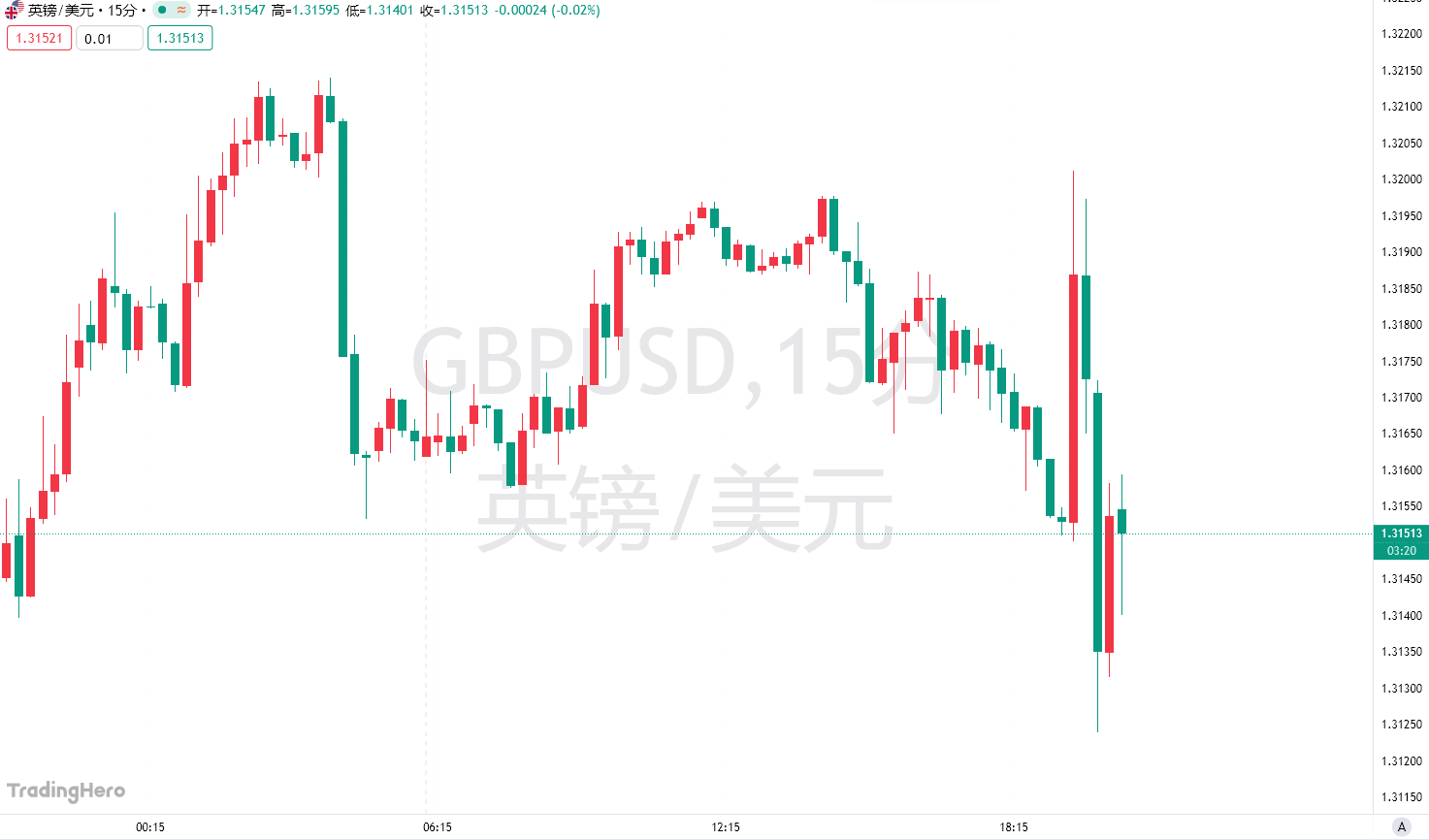
Core Insights - The UK Office for Budget Responsibility (OBR) mistakenly released a report revealing a significant increase in the fiscal buffer from £9.9 billion to £22 billion (approximately $29 billion) before the Chancellor's speech [1][3] - The report indicates that the fiscal space available for additional spending or tax cuts is the largest since March 2022, exceeding the median estimate of £15 billion [1] - The Chancellor's strategy includes raising £29.8 billion through new taxes on gambling and high-end real estate to expand the fiscal buffer [1] Group 1 - The OBR confirmed the authenticity of the leaked report and apologized for the premature release, stating an investigation has been initiated [3] - Following the report's release, the British pound fell 30 points against the dollar before slightly recovering, ending the day down 0.1% [1][3] - UK government bonds experienced volatility as traders processed the mixed information from the report, with the fiscal buffer being higher than expected but overall growth forecasts being downgraded due to lower productivity [3] Group 2 - Additional measures in the leaked document include imposing extra taxes on properties valued at £2 million or more and increasing tax rates on property and savings income by 2 percentage points [3] - Pension contributions exceeding £20,000 will no longer be exempt from National Insurance Contributions (NIC), and the employer NIC threshold will be frozen for three years starting in 2028-29 [3] - The government plans to introduce mileage-based charges for electric vehicles starting in 2028, while the freeze on fuel tax will be extended until September 2026 [3]
AI热潮未完?汇丰预测美股明年将冲上7500点!
Jin Shi Shu Ju· 2025-11-26 12:15
Group 1 - HSBC predicts that the S&P 500 index will reach 7500 points by December 2024, driven by a surge in AI investments, indicating a potential for double-digit growth in U.S. stocks for another year [1] - The report emphasizes that AI capital expenditure will continue to dominate through 2026, reflecting a strong bullish sentiment despite concerns about a potential bubble [1][2] - The forecast suggests that the current AI investment wave will persist, encouraging investors to broaden their AI trading strategies [1] Group 2 - Analysts note that while the AI investment boom is expected to support the economy, consumer behavior is becoming increasingly unstable due to persistent inflation and a fluctuating labor market [2] - HSBC anticipates a "dual-speed economy" in 2026, where high-income consumers will spend more confidently, while low-income consumers will cut back on spending [2] - The report highlights a trend of high-end product focus among major travel and hospitality companies, contrasting with retail executives reporting pressure from consumers seeking discounts [2] Group 3 - Deutsche Bank sets a target of 8000 points for the S&P 500 by the end of 2026, reflecting strong excitement around AI investments [3] - The report indicates that the market will expand beyond a few dominant companies, with expectations for broader participation from downstream players in the AI ecosystem [3] - The ongoing AI arms race is expected to drive the expansion of AI trading from large-scale providers to adopters and enablers of AI technology [3]