Jin Shi Shu Ju

Search documents
比特币反弹后劲不足?分析师警告:小心“死猫跳”!
Jin Shi Shu Ju· 2025-11-12 00:31
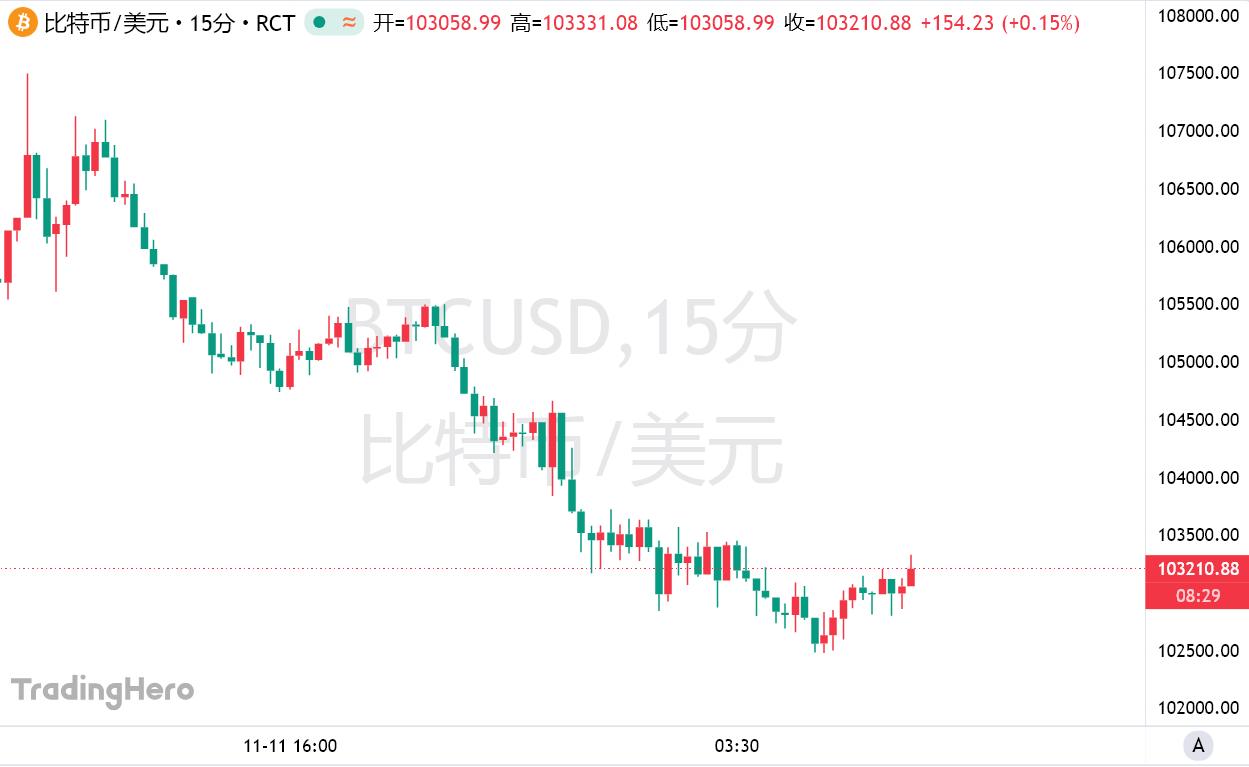
Core Insights - Bitcoin's price has shown difficulty in rebounding after a significant drop, with market sentiment remaining fragile following a large-scale sell-off that resulted in the evaporation of billions in market value [1][4] - The total open interest in Bitcoin perpetual contracts is approximately $68 billion, down from a peak of $94 billion last month, indicating a lack of market momentum [4] - Bitcoin's market capitalization has decreased by about $340 billion since the unexpected announcement of tariff policies by former President Trump on October 10 [4] Market Dynamics - The inflow of funds into Bitcoin ETFs has been low, with only $1 million recorded on a day when broader markets rebounded, reflecting a lack of enthusiasm in the crypto market [4] - Technical analysis suggests that Bitcoin's price is currently constrained below the 200-day moving average, which is around $110,000, and this level is seen as a critical threshold for potential upward movement [4][5] - Analysts express caution, noting that despite a recent uptick, the market may be forming a new lower local high, continuing a downward trend that began over a month ago [5] Investor Sentiment - There is a prevailing sentiment that early Bitcoin whales are selling off their holdings, contributing to supply pressure and affecting market risk sentiment [4] - Some analysts view the recent price increase as a typical short-covering rebound, mixed with institutional fear of missing out (FOMO) [6] - Key support levels are identified at $103,000, with potential further declines if this level is breached, which could lead to prices dropping to $86,000 or lower [6]

金十数据全球财经早餐 | 2025年11月12日
Jin Shi Shu Ju· 2025-11-11 23:03
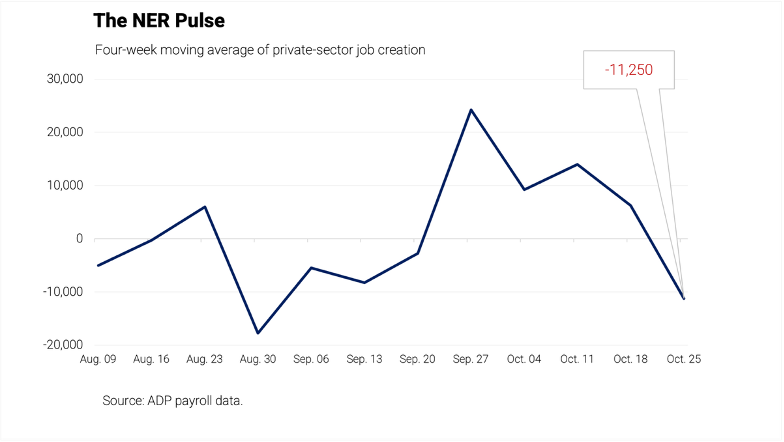
Group 1: Economic Indicators - ADP reports that the U.S. private sector has seen an average weekly job loss of 11,250 positions, with Goldman Sachs estimating a total reduction of approximately 50,000 non-farm jobs in October, marking the largest decline since 2020 [10][12]. - The People's Bank of China released its monetary policy execution report for Q3 2025, indicating ongoing adjustments in monetary policy to support economic growth [12]. Group 2: Market Performance - U.S. stock indices showed mixed results, with the Dow Jones rising by 1.18% and the S&P 500 increasing by 0.21%, while the Nasdaq fell by 0.25%. Notable movements included Nvidia dropping by 2.96% and Apple rising by 2% [3]. - European stock indices rebounded, with the DAX30 up by 1.65%, the FTSE 100 rising by 1.08%, and the Euro Stoxx 50 increasing by 1.76% [3]. Group 3: Commodity Prices - Gold prices reached a near three-week high, closing at $4,126.36 per ounce, up by 0.26%. Silver also saw an increase of 1.4%, closing at $51.20 per ounce [7]. - WTI crude oil prices rose by 1.72% to $60.96 per barrel, while Brent crude oil increased by 1.79% to $64.89 per barrel [7]. Group 4: Corporate Developments - SoftBank's second-quarter net profit surged to $16.6 billion, driven by soaring valuations in AI, while the fund liquidated its holdings in Nvidia and invested $22.5 billion in OpenAI [12]. - Vanke received a loan of 1.666 billion yuan from its major shareholder, bringing the total loans from Shenzhen Metro Group to approximately 30.796 billion yuan this year [12].

黄金市场迎来重量级玩家!稳定币巨头Tether挖走汇丰顶级交易员
Jin Shi Shu Ju· 2025-11-11 15:02
Core Insights - Tether is hiring two top global precious metals traders from HSBC to build a significant gold reserve and challenge existing market leaders [1] - Tether has accumulated one of the largest gold reserves globally, which is part of its over $180 billion in reserve assets [1][2] - The company has become one of the largest buyers of gold in the market, with its latest report indicating over $12 billion in gold holdings as of September [2] Group 1 - Tether's flagship stablecoin, USDT, is backed by various reserve assets, including gold and U.S. Treasury securities, with a 1:1 exchange rate to the dollar [2] - The company reported a profit of $13 billion from its reserve assets last year and expects to earn around $15 billion this year [2] - Tether's growth is attributed to the rising gold prices driven by central bank purchases and concerns over sovereign debt and currency devaluation [3] Group 2 - The departure of the two traders from HSBC is a setback for the bank's precious metals business amid increasing competition for talent in the sector [2] - Tether's gold reserve growth has been significant, averaging over 1 ton of gold added weekly over the past year [2] - Tether has also invested in other segments of the gold supply chain, including royalty companies [2]
ADP数据再度拉响警报:美企周裁1.1万岗位
Jin Shi Shu Ju· 2025-11-11 14:23
布月度报告当周发布) 。 这些数字是初步的,可能会随着新数据的添加而改变。ADP上周发布的最新月度报告显示,美国私人部门就业人数在 连续两个月下滑后,10月新增4.2万人。 尽管这一增长受到欢迎,但它并非基础广泛。教育和医疗保健以及贸易、运输和公用事业引领了增长。在专业商业服 务、信息以及休闲和酒店业,雇主连续第三个月裁员。 近期几家知名企业宣布大规模裁员,引发市场对劳动力市场可能进一步疲软的担忧,而今日发布的ADP新周度就业报 告证实了这一担忧。 ADP周二发布的数据显示,在截至10月25日的四周内,美国企业平均每周裁员11250人。该数据表明,与10月上半月 相比,劳动力市场在当月下半月出现放缓。 这些数据出炉之际,多家企业在最近几周公布了裁员计划。再就业服务公司挑战者集团(Challenger, Gray & Christmas Inc.)的一份报告显示,雇主宣布的10月裁员人数创下20多年来同期最高纪录,引发市场对劳动力市场健康 状况的担忧。 美国史上最长时间的政府停摆,导致9月和10月就业报告等关键经济数据延迟发布。投资者一直依赖ADP等其他指标 填补数据空白。ADP上月宣布,今后将发布私人部门总就 ...
AI股已脆弱到一触即溃?富国喊话:减仓!
Jin Shi Shu Ju· 2025-11-11 13:40
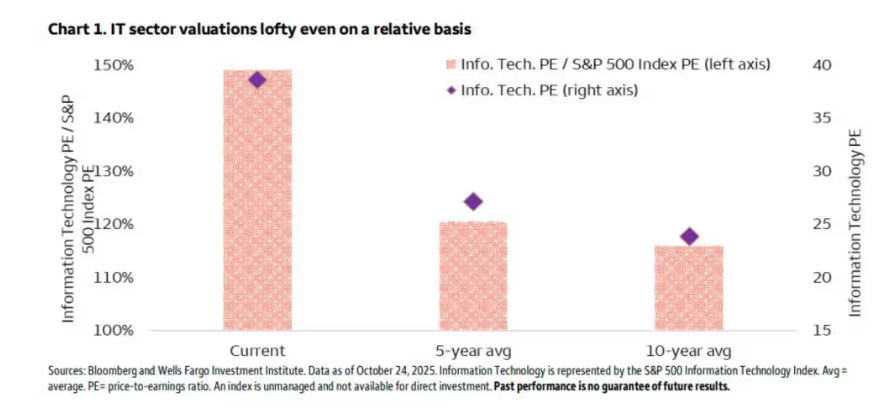
Core Viewpoint - AI stocks, led by Nvidia (NVDA), have shown signs of recovery after a recent pullback, but pressure signals from CoreWeave (CRWV) have cast a shadow over market sentiment [1] - Investors are caught between the fear of missing out on AI gains and concerns about a potential market crash reminiscent of the internet bubble [1] Summary by Sections Market Sentiment and Ratings - Wells Fargo Investment Institute downgraded the rating of the S&P 500 Information Technology sector, which includes AI leaders like Nvidia, Microsoft (MSFT), and Broadcom (AVGO), from "overweight" to "neutral" due to high valuations [1] - The downgrade reverses a previous upgrade on April 4, which was influenced by market volatility following a "liberation day" tariff announcement; since then, the sector has risen 60%, outperforming the S&P 500 by over 25 percentage points [1] Growth and Valuation Concerns - Douglas Beath, a global investment strategist at Wells Fargo, acknowledges that the AI boom will continue to drive revenue and profit growth in the sector, highlighting its relatively low debt levels and strong free cash flow generation [1] - Despite the growth in AI-related capital expenditures, concerns about investment returns and debt financing may still lead to market volatility [2][4] Recommendations for Investors - Beath suggests that the current pullback could be temporary, but the sector remains vulnerable to negative surprises, even from slightly disappointing earnings reports [4] - The recommendation is to reduce exposure to the tech sector to align with its market weight to lock in profits, while reallocating funds to three sectors rated "overweight" by Wells Fargo: industrials, utilities, and financials [4] - The industrial and utility sectors allow investors to participate in AI gains through the growing trend of auxiliary data centers, with valuations lower than the tech sector; the financial sector is expected to benefit from a steepening yield curve and favorable regulatory environment, while also supporting AI development through M&A and debt financing [4]




印巴首都24小时内相继发生爆炸案!两个拥核国家又暗流涌动?
Jin Shi Shu Ju· 2025-11-11 12:33
周一晚间,印度总理纳伦德拉·莫迪(Narendra Modi)领导的政府仍在调查新德里爆炸事件的原因—— 当时一辆汽车在历史悠久的红堡(Red Fort)附近的红绿灯处减速后发生爆炸。而周二下午,伊斯兰堡 一座拥挤的法院外,一名自杀式袭击者在被拒绝进入院内后引爆了自身。 巴基斯坦总理办公室在一份声明中指控印度从阿富汗领土支持针对巴基斯坦的恐怖袭击,并将周二的事 件描述为"印度在该地区发起的国家支持恐怖主义的最恶劣例子之一"。声明未提供任何将爆炸与新德里 关联的证据,而伊斯兰堡此前也多次提出类似指控。 印度和巴基斯坦首都在24小时内接连发生致命爆炸,造成至少20人死亡、多人受伤,加剧了这两个核武 装邻国之间紧张局势重启的担忧。 当天早些时候,莫迪承诺将惩罚新德里爆炸案的"阴谋策划者",但未点名任何嫌疑人,也未将该爆炸定 性为恐怖袭击。 今年早些时候,两国曾爆发为期四天的军事冲突,双方使用导弹、无人机、火炮及其他武器相互打击。 此次爆炸事件发生后,双方的猜忌进一步加深。5月的冲突是自1971年全面战争以来两国间最致命的一 次,起因是有争议的克什米尔(Kashmir)地区发生针对印度游客的袭击,新德里指责该袭击由巴 ...
每日投行/机构观点梳理(2025-11-11)
Jin Shi Shu Ju· 2025-11-11 11:49
Group 1: Gold Market Insights - JPMorgan Private Bank predicts gold prices could reach $5200-$5300 by the end of 2026, driven by continued purchases from central banks in emerging markets, representing an increase of over 25% from current levels [1] - Gold prices have surged over 50% this year, reaching a historical high of over $4380 in October, primarily due to central banks seeking value storage and asset diversification [1] - Singapore's OCBC Bank suggests that the end of the U.S. government shutdown could benefit gold, as delayed economic data may indicate a slowing economy, potentially leading to a more accommodative monetary policy from the Fed [5] Group 2: U.S. Government Shutdown and Economic Impact - TD Securities anticipates the U.S. House will vote on a temporary funding bill, likely leading to the government reopening by Friday, which could result in a quick economic rebound post-shutdown [2] - Standard Chartered notes that the end of the government shutdown may challenge the recent strength of the U.S. dollar, as weak economic data could highlight negative impacts on the economy [3] - UBS forecasts that the Fed's potential rate cuts could lead to a decline in the 10-year U.S. Treasury yield to 3.50% [7] Group 3: Currency and Economic Forecasts - Rabobank's Jane Foley indicates that if delayed U.S. economic data is positive, the dollar may strengthen, improving perceptions of the U.S. economy [4] - Standard Chartered's Steve Englander reports that the dollar is returning to its historical normal relationship after a year of deviation, suggesting a positive outlook for the currency [3] Group 4: Chinese Economic Outlook - CITIC Securities projects China's GDP growth to be around 5.0% in 2025 and 4.9% in 2026, with fiscal spending expected to moderately expand [7] - The firm emphasizes a significant trend of household savings being converted into investments, indicating a potential increase in equity asset allocation [6] Group 5: Automotive Industry Trends - CITIC Jiantou outlines investment strategies for the automotive sector in 2026, focusing on cyclical growth, technological advancements in autonomous driving, and robotics [8] - The report suggests that the automotive industry will see a shift towards overseas expansion and growth, with commercial vehicles showing stable dividend attributes [8]
数据洪峰将至!美联储中间派转鹰,12月降息必要性存疑
Jin Shi Shu Ju· 2025-11-11 09:46
Core Viewpoint - The potential end of the longest government shutdown in U.S. history may lead to the release of delayed economic data, but Federal Reserve officials are increasingly skeptical that this data will show the necessary weakness for another rate cut this year [1] Group 1: Federal Reserve's Stance - Federal Reserve officials believe the labor market remains resilient, financial conditions are still accommodative, and inflation is trending in an unfavorable direction [1] - The likelihood of a third rate cut this year is rapidly diminishing unless the upcoming data shows significant surprises [1] - The futures market still prices in about a two-thirds chance of a rate cut in December, which may be overly optimistic [1] Group 2: FOMC Dynamics - Two moderate members of the Federal Open Market Committee (FOMC) appear inclined to pause rate cuts until at least January [2] - Upcoming personnel changes in the FOMC may not lean entirely dovish, as hawkish members will join the committee [2] - Evidence suggests that moderate members who previously supported rate cuts may shift to support a pause if there is no clear evidence of labor market deterioration [2] Group 3: Labor Market Analysis - Four key reasons support the case for pausing rate cuts in December: high inflation, the need for slightly restrictive policy, resilient labor market conditions, and the time gained from previous rate cuts [3] - There is a consensus among Fed analysts regarding the current inflation and financial conditions, but the labor market remains the biggest uncertainty [3] Group 4: Employment Data Insights - Despite a surge in layoffs reported by Challenger, Gray & Christmas, private sector job growth remains strong, indicating a stable labor market [6] - Weekly unemployment claims data shows only a slight increase, suggesting stability in the labor market despite recent layoffs and the government shutdown [7] - High-frequency employment data from Homebase indicates that net job creation is hovering near zero, reflecting a potential slowdown in employment growth [9][10]
三重利好共振!日股涨势还能再接再厉?
Jin Shi Shu Ju· 2025-11-11 09:13
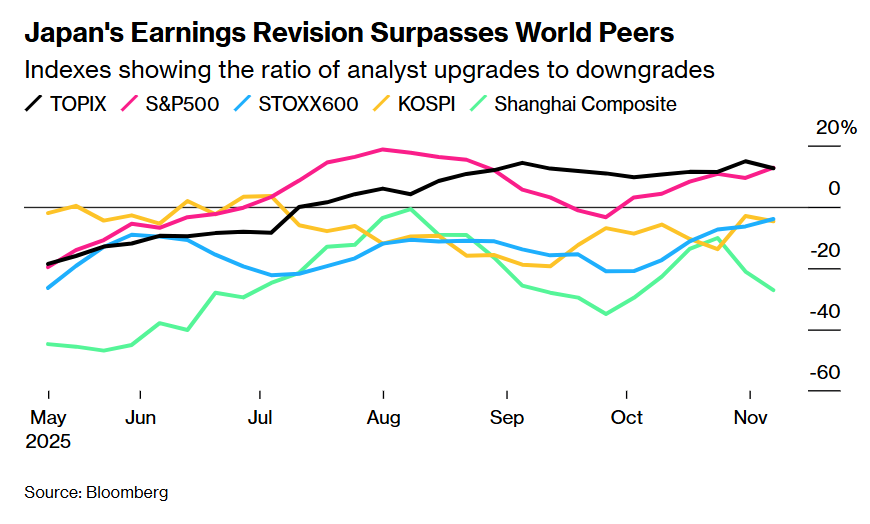
分析师上调日本企业盈利预期的比率超过世界其他国家 "当前国内外环境均对日本经济构成支撑,"日本新金资产管理公司高级基金经理藤原直树(Naoki Fujiwara)表示,"企业盈利稳 步提升,下财年前景改善,我认为市场估值已不再过度昂贵。" 这一数据凸显市场的乐观情绪。根据彭博社11月10日的盈利修正数据,分析师上调东证指数成分股盈利预期的速度,超过全球多 数主要股指。 日本企业财报季捷报频传,越来越多公司凭借人工智能(AI)需求激增、关税影响小于预期及日元贬值三重利好,业绩远超市场 预期,显示股市涨势仍有空间。 彭博社数据显示,在已公布季度财报的东证指数(Topix)成分股中,近60%的公司盈利超过至少两名分析师的平均预期。冈三证 券11月7日的分析显示,这是自2020年第二季度以来已公布财报公司中,超预期比例最高的一次。 关税对盈利的影响减弱,也提振了超预期财报的表现。部分企业已成功将成本转嫁给客户。例如,日立建机(Hitachi Construction Machinery)上月末在财报电话会议上表示,公司正通过提价覆盖关税成本。 不过,部分分析师警告,盈利预期上调数量增加是指数创新高的关键因素,尤其是日 ...
美联储“印钞机”待命,两位数通胀恐卷土重来?
Jin Shi Shu Ju· 2025-11-11 08:53
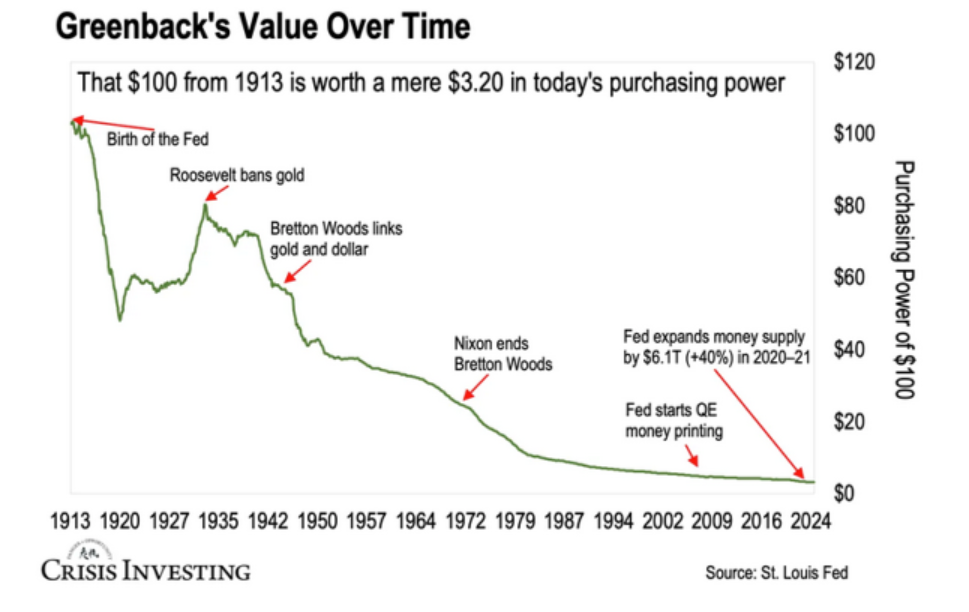
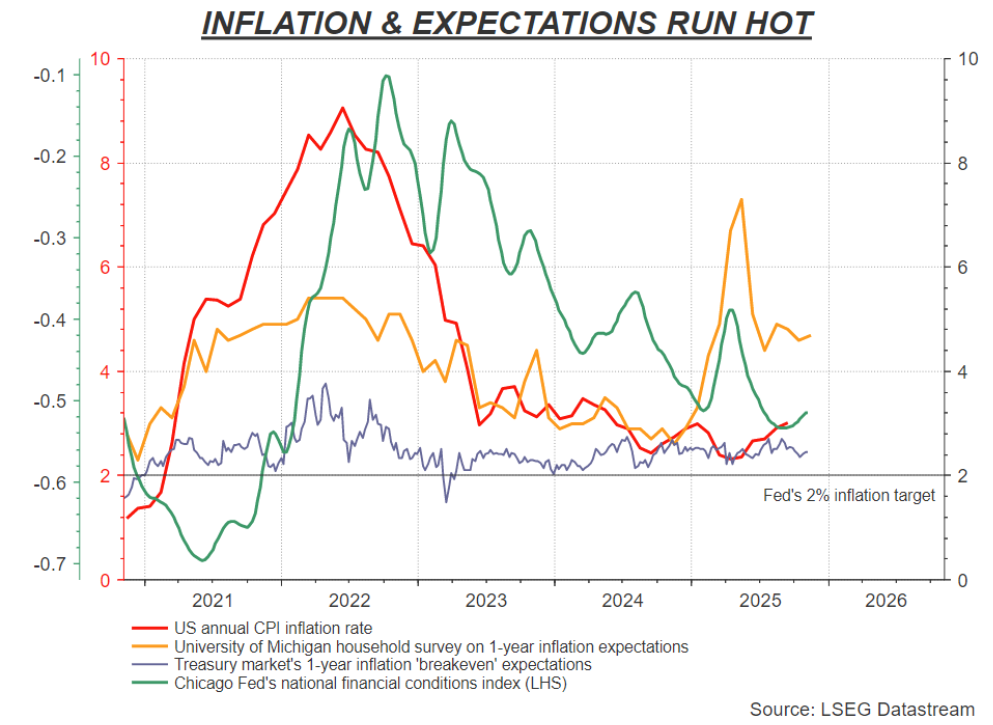
Group 1 - The Federal Reserve Chairman Jerome Powell announced a 25 basis point interest rate cut during the October FOMC meeting, bringing the total rate cut since June of last year to 150 basis points, indicating that more cuts are likely to come [1] - Powell hinted at the end of quantitative tightening (QT) during a meeting in Philadelphia, confirming that the Fed will officially end its balance sheet reduction on December 1 [1] - The historical context shows that since the establishment of the Fed in 1913, the dollar has lost 97% of its purchasing power, with $100 in 1913 now equivalent to $3.20 [1] Group 2 - The primary reason for the dollar's depreciation has been the severing of its link to gold, with the introduction of quantitative easing (QE) in the 21st century, which involves the Fed creating money to purchase government bonds, thus eroding the value of existing dollars [4] - Following the 2008 financial crisis, the Fed expanded its balance sheet from $900 billion to $4.5 trillion through multiple rounds of QE, creating approximately $3.6 trillion, resulting in a 20% decrease in dollar purchasing power by the end of the QE period [4] - During the COVID-19 pandemic, the Fed created $3.3 trillion in 2020 alone, which accounted for about 20% of the total circulating dollars at that time, leading to a significant increase in the balance sheet from $4.2 trillion to $8.9 trillion by April 2022, causing a 25% decline in dollar purchasing power from 2020 to 2025 [4] Group 3 - The Fed is expected to restart QE to lower long-term interest rates, likely starting early next year, with a balance sheet already inflated to approximately $6.6 trillion, which could lead to double-digit inflation [5] - The upcoming monetary policy could result in unprecedented large-scale and rapid currency devaluation in the U.S. economy [5]