Xin Lang Ji Jin

Search documents
红利风向标|A股继续温和修复,均衡配置红利板块或仍具备相对优势
Xin Lang Ji Jin· 2025-11-26 00:55
Core Viewpoint - The article discusses the performance of various low-volatility dividend indices and ETFs in the Hong Kong and Chinese markets, highlighting their returns compared to the Shanghai Composite Index. Group 1: Index Performance - The S&P Hong Kong Stock Connect Low Volatility Dividend Index has shown a return of 33.20% over the past year, outperforming the Shanghai Composite Index, which declined by 2.03% during the same period [3]. - The A500 Low Dividend Low Volatility ETF (159296) reported a return of 8.15% over the past year, while the Shanghai Composite Index had a return of -1.94% [3]. - The CSI 800 Low Dividend Low Volatility Index, tracked by the ETF (159355), achieved a return of 5.95% over the past year, again outperforming the Shanghai Composite Index [3]. Group 2: Volatility Metrics - The annualized volatility for the S&P Hong Kong Stock Connect Low Volatility Dividend Index is reported at 2.23%, indicating lower risk compared to the Shanghai Composite Index's annualized volatility of 12.03% [3]. - The A500 Low Dividend Low Volatility ETF has an annualized volatility of 9.89%, which is lower than the Shanghai Composite Index's volatility [3]. - The CSI 800 Low Dividend Low Volatility Index has an annualized volatility of 9.80%, also reflecting a lower risk profile compared to the Shanghai Composite Index [3].


大反攻!科技股狂欢日,“AI双子星”携手爆发,159363上探近6%领跑!港股芯片高能反转
Xin Lang Ji Jin· 2025-11-25 12:07
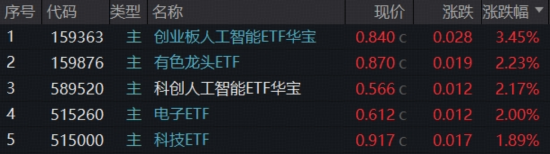
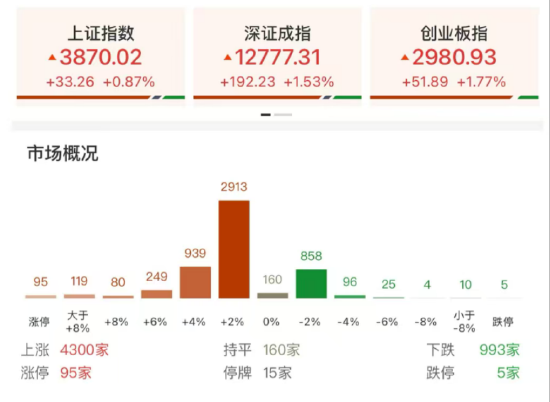
11月25日,AH携手走强,沪指盘中涨逾1%,为月内首次;创业板指一度收复3000点大关,收盘涨近 2%。市场热度迅速回升,全市场近4300股上涨,两市成交额1.81万亿元,环比放量。 | 序号 代码 类型 名称 | 现价 涨跌 涨跌幅 ▼ | | --- | --- | | 1 159363 主 创业板人工智能ETF华宝 0.840 c 0.028 3.45% | | | 2 159876 主 有色龙头ETF | 0.870 c 0.019 2.23% | | 3 589520 主 科创人工智能ETF华宝 0 0.566 c 0.012 2.17% | | | 4 515260 主 电子ETF | 0.612 c 0.012 2.00% | | 5 515000 主 科技ETF | 0.917 c 0.017 1.89% | AI主线高调回归,硬件和应用端齐发力!双线布局"算力+AI应用"的创业板人工智能ETF(159363)场 内价格一度涨近6%,领跑同类,收盘仍大涨3.45%;重仓国产AI产业链的科创人工智能ETF(589520) 场内价格收涨逾2%。 港股AI同步上攻,全市场首只聚焦"港股芯片"产业链 ...
固态电池催生新机遇,锂电产业链大涨!化工ETF(516020)上探1.43%,机构:化工供需格局有望进一步优化
Xin Lang Ji Jin· 2025-11-25 11:52
Core Viewpoint - The chemical sector has shown a significant rebound, with the chemical ETF (516020) experiencing a rise of 1.17% by the end of the trading day on November 25, 2025, following a brief dip at the opening [1][4]. Group 1: Market Performance - The chemical ETF (516020) reached a maximum intraday increase of 1.43%, with notable gains in sectors such as fluorine chemicals, lithium batteries, potassium fertilizers, and phosphorus chemicals [1]. - Key stocks in the sector included Multi-Fluorine, which surged by 7.26%, and Tianqi Lithium, which rose by 4.36%, with several others like Enjie and Cangge Mining also increasing by over 3% [1]. Group 2: Historical Performance - The chemical ETF's index has recorded a year-to-date increase of 25.08%, outperforming major A-share indices such as the Shanghai Composite Index (15.46%) and the CSI 300 Index (14.12%) [4]. - Over the past five years, the detailed chemical index has shown varied performance, with a peak increase of 51.68% in 2020 and a decline of 26.87% in 2022 [2]. Group 3: Industry Developments - The first large-capacity all-solid-state battery production line in China has been completed and is entering small-scale testing, with energy density expected to double compared to existing batteries, aiming for vehicle testing by 2026 [3]. - The capital expenditure in the basic chemical industry is nearing completion, and the supply-demand dynamics are improving under the "anti-involution" policy [3]. Group 4: Future Outlook - The chemical industry is anticipated to experience dual improvements in performance and valuation due to the "anti-involution" trend, with leading companies likely to gain market share through better management and energy control [5]. - The focus on high-end, intelligent, and green transformation in the chemical sector is supported by national policies aimed at enhancing competitiveness in strategic emerging industries [5].







拐点信号显现?国产AI再迎DeepSeek时刻!技术突破+业绩验证,科创人工智能ETF(589520)盘中上探3.6%!
Xin Lang Ji Jin· 2025-11-25 11:49
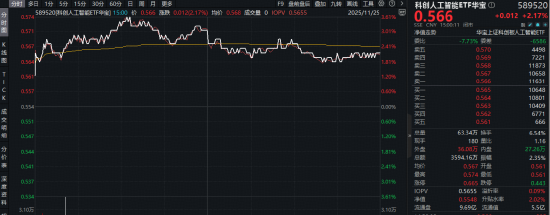
Core Insights - The AI concept stocks are actively performing, with the domestic AI industry chain-focused ETF (589520) showing a price increase of 3.61% intraday and closing up 2.17% on November 25, with a total trading volume of 35.94 million yuan, indicating a shift from a weak to a strong short-term trend [1][3] Group 1: ETF Performance - Over 80% of the 30 constituent stocks of the ETF closed in the green, with 40% of the stocks rising over 2%, led by Lingyun Technology with a gain of over 10% [3][4] - The top-performing stocks include: - Mikeling: 10.18% increase, total market value of 18.9 billion yuan, trading volume of 1.34 billion yuan - Haitai Ruisheng: 9.29% increase, total market value of 7.2 billion yuan, trading volume of 854 million yuan - Hengxuan Technology: 6.91% increase, total market value of 36.34 billion yuan, trading volume of 1.2014 billion yuan [4] Group 2: Market Dynamics - The launch of Ant Group's AI assistant "Lingguang" has garnered significant attention, achieving over 2 million downloads within six days, reflecting a rapid acceleration in domestic AI applications [5] - The AI computing power sector faced a downturn earlier this year due to concerns over low-cost models, but this has now become a pivotal point for domestic AI advancements, leading to a rebound in the market [5] Group 3: Strategic Opportunities - The current period is identified as a "golden window" for the domestic AI sector, driven by: 1. Policy support from the new five-year plan emphasizing technological self-reliance [5] 2. Strong earnings performance, with 20 out of 30 ETF constituent companies reporting profits and 22 showing year-on-year net profit growth [5] 3. External pressures necessitating self-sufficiency in AI technology amid geopolitical tensions [5][7] Group 4: Industry Focus - The ETF and its associated funds are heavily invested in the domestic AI industry chain, with over 70% of the top ten holdings concentrated in semiconductor and AI-related sectors, indicating a strong offensive strategy [7]


谷歌概念股20CM涨停创新高!创业板人工智能ETF(159363)放量涨超3%!基金经理:或到低吸击球点
Xin Lang Ji Jin· 2025-11-25 11:49
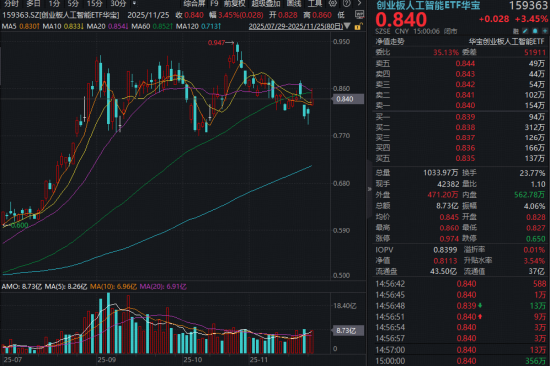
Group 1 - The core viewpoint of the news highlights the resurgence of the AI sector, with significant activity in both computing hardware and AI applications, leading to a rise of over 3% in the ChiNext AI index [1] - Google’s AI infrastructure head announced a plan to double AI computing power every six months and achieve a 1000-fold increase in the next 4 to 5 years, which is expected to drive demand in the optical communication supply chain [3] - Meta Platforms is reportedly considering a multi-billion dollar purchase of Google’s TPU for data center construction, further boosting hardware demand [3] Group 2 - The ChiNext AI ETF (159363) saw a strong increase of 3.45%, recovering key moving averages and achieving a trading volume of 873 million yuan in a single day [1] - The recent performance of the AI assistant app Qianwen from Alibaba, which surpassed 10 million downloads in just one week, indicates a strong growth trend in AI applications [4] - Analysts suggest that AI applications may experience a rebound in performance, with a focus on core opportunities in computing power and AI applications, particularly in light modules [4]


ETF日报:随着AI产业化的持续推进+IP商业化的不断落地,传媒板块有望迎来修复,可关注游戏ETF和影视ETF
Xin Lang Ji Jin· 2025-11-25 11:10
Market Overview - The market experienced a significant rebound today, with the ChiNext Index rising nearly 2% and the Shanghai Composite Index increasing by 0.87% [1] - The trading volume in the Shanghai and Shenzhen markets reached 1.81 trillion, an increase of 84.4 billion compared to the previous trading day [1] AI Sector - The AI hardware and application sectors saw a resurgence, while the breeding and military industries weakened [1] - The semiconductor chip sector performed well, likely influenced by the overnight rebound in US stocks [3] - Companies like Amazon, Google, Meta, and Oracle have issued a total of $90 billion in bonds since September, indicating a high demand for financing to support their computing infrastructure [3] - The discussion around AI investment returns is expected to persist, leading to increased volatility in the sector, but the overall industry trend remains positive [3] Investment Recommendations - Investors are advised to focus on the AI investment theme and consider products like communication ETFs (515880) and semiconductor equipment ETFs (159516) for exposure to the AI computing industry [3][6] - The gaming sector continues to show strength, with the gaming ETF (516010) rising by 4.14% [8] - The media sector is expected to recover due to ongoing AI industrialization and IP commercialization, with recommendations to consider gaming ETF (516010) and film ETF (516620) [9] Gold and Lithium Markets - The metal sector performed well, with various ETFs showing positive growth, particularly in gold and lithium [10] - The gold market is influenced by expectations of the December FOMC interest rate and the US economic fundamentals, with a long-term bullish outlook due to factors like the Fed's potential rate cuts [10] - The lithium market is experiencing a slight recovery after a previous surge, with supply constraints and high demand in the lithium battery sector [10]
华安基金:创业板50指数追“光”识“新”更掘“金”
Xin Lang Ji Jin· 2025-11-25 09:56
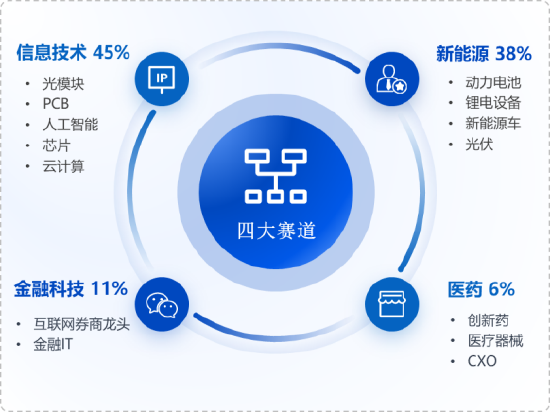
Market Overview - The A-share market experienced a downward trend last week, with major indices showing a general pullback: CSI 300 down 3.77%, CSI 500 down 5.78%, CSI 1000 down 5.80%, ChiNext 50 down 6.04%, and Sci-Tech 50 down 5.54% [1] - The average daily trading volume in the A-share market was around 1.87 trillion yuan, indicating active market participation [1] - Market hotspots showed rapid rotation, initially focusing on lithium batteries, AI applications, Fujian sector, and military industry, followed by semiconductors (photoresists), robotics, and aquaculture, with banks and photoresists gaining strength in the latter part of the week [1] ChiNext 50 Index Insights - The ChiNext 50 Index serves as a direct financing platform for growth-oriented innovative enterprises, focusing on four key sectors: information technology, new energy, financial technology, and pharmaceuticals [1] - The ChiNext 50 Index has a higher concentration of light modules, new energy, and financial technology compared to the ChiNext Index and mainstream broad-based indices [3] - The current valuation of the ChiNext 50 ETF is 37.44 times, placing it in the 32.83% percentile over the past decade [3] Sector Analysis Technology, AI, and Communication - The ChiNext 50 Index includes 45% of the information technology sector, with 19% weight in light modules, which experienced a slight pullback [3] - Google Cloud announced a plan to double computing power every six months, with the retail price of 1.6T light modules rising to $2,000 (up 67% from the listing price) [3] - Despite short-term funding divergence, the demand for 800G/1.6T iterations remains rigid, with LightCounting predicting a 48% growth in the global light module market by 2025 [3] New Energy and Power Equipment - The new energy photovoltaic sector saw a broad decline last week due to price wars and EU anti-dumping investigations, although cost pressures have eased [4] - The industry is experiencing multiple development opportunities, with domestic and international storage demand driving strong sales in lithium batteries and materials, leading to significant price increases for lithium hexafluorophosphate and lithium iron phosphate [4] - Policies in various countries emphasize integrating storage into grid planning, with the first green hydrogen coal chemical demonstration project in China now operational [4] Pharmaceuticals and Biotechnology - The pharmaceutical sector experienced a decline last week, with a focus on the rapid development of innovative drugs and medical devices [5] - The National Medical Products Administration approved several innovative drugs, including the world's first GCG/GLP-1 dual receptor agonist [5] - The first version of the "Commercial Insurance Innovative Drug Catalog" is set to be released, which will help broaden payment channels for innovative drug commercialization [5] ChiNext 50 ETF Performance - The ChiNext 50 ETF (code: 159949) tracks the ChiNext 50 Index and focuses on high-quality leading companies in five key technology sectors: new energy vehicles, biomedicine, electronics, photovoltaics, and internet finance [6] - The ETF has a substantial liquidity, with an average daily trading volume of 1.451 billion yuan over the past year, ranking among the top ETFs on the Shenzhen Stock Exchange [6] - As of November 21, 2025, the ETF's net value was 1.3811, with a total scale of 24.241 billion yuan and a trading volume of 7.909 billion yuan [7]
华安基金科创板ETF周报:创2025年A股发行价新高,摩尔线程正式登陆科创板
Xin Lang Ji Jin· 2025-11-25 09:52
Group 1: Core Insights - The IPO of Moer Thread, known as the "first domestic GPU stock," has set a new high for A-share IPO prices since 2025, with a price of 114.28 yuan per share and a subscription rate of 1572 times [1] - The funds raised from the IPO will primarily be used for the development of next-generation AI training and inference chips, graphics chips, and AI SoC chips, as well as to supplement working capital [1] - The global GPU market is projected to reach 3.62 trillion yuan by 2029, with China's market expected to grow significantly, reaching 1.36 trillion yuan and increasing its global market share from 15.6% in 2024 to 37.8% by 2029, with a compound annual growth rate of 51.1% [1] Group 2: Industry Trends - The Sci-Tech Innovation Board is increasingly welcoming "hard tech" companies, focusing on key industries such as integrated circuits, artificial intelligence, and biomedicine, which are essential for achieving high-level technological self-reliance [2] - The current trend of de-globalization has heightened the demand for self-sufficiency, with the Sci-Tech Innovation Board emphasizing sectors like electronic chips, emerging software, and intelligent manufacturing equipment [2] - The top five industries on the Sci-Tech Innovation Board include electronics, biomedicine, power equipment, computers, and machinery, collectively accounting for 88.4% of the board's total market capitalization [4] Group 3: Market Performance - The Sci-Tech Innovation Board experienced a pullback last week, with declines observed in sectors such as chips, biomedicine, and new materials [3] - The net inflow of funds into ETFs tracking the Sci-Tech Innovation Board indices was 8.32 billion yuan last week, while there has been a net outflow of 87.09 billion yuan since the beginning of the year [4] Group 4: Sector Analysis - The new generation information technology sector is primarily focused on the electronic chip industry, with the domestic GPU market accelerating due to the IPO of Moer Thread [5] - The high-end equipment manufacturing sector is seeing rapid commercialization of humanoid robots, with significant funding and order growth in core components [6] - The biomedicine sector is witnessing rapid advancements in innovative drugs and medical devices, with several new products recently approved for market entry [6]

华安基金:险资加大权益配置,持续增配港股红利
Xin Lang Ji Jin· 2025-11-25 09:52
Market Overview and Key Insights - The Hong Kong dividend sector experienced a decline last week, but with a smaller drop compared to the overall market: the Hang Seng Hong Kong Stock Connect China Central State-Owned Enterprises Dividend Total Return Index fell by 4.07%, while the Hang Seng Index dropped by 5.09% and the Hang Seng Tech Index decreased by 7.18% [1] - In Q3 2025, insurance capital continued to increase its allocation to equity assets, with the proportion of equity investments rising significantly to 15.5%, nearing the historical high of 16.1% recorded in mid-2015 [1] - The increase in equity allocation by insurance capital reflects the policy requirement for "long money, long investment," with an optimized assessment mechanism encouraging better alignment of asset-liability structures [1] Insurance Capital Trends - Insurance capital's funding characteristics align well with the low volatility and high dividend nature of the dividend sector, making it a primary focus for increased allocation [1] - In Q3 2025, insurance capital's net purchases in the banking sector amounted to approximately 57.35 billion [1] - The pace of insurance capital's stake acquisitions in listed companies has accelerated, with 30 instances this year, surpassing the total for 2020 and 2024, and 25 of these being in Hong Kong stocks [1] Future Outlook - Insurance capital is expected to be a significant source of incremental funds in the stock market, particularly favoring the dividend sector due to the low interest rate environment and weak economic recovery [2] - The dividend yield of the Hang Seng Hong Kong Stock Connect China Central State-Owned Enterprises Dividend Index stands at 5.81%, compared to 4.32% for the CSI Dividend Index, with a price-to-book ratio of 0.64 and a price-to-earnings ratio of 7.23 [2] - The total return index has achieved a cumulative return of 146% since early 2021, outperforming the Hang Seng Total Return Index by 136% [2] ETF Overview - The Huaan Hong Kong Stock Connect China Central State-Owned Enterprises Dividend ETF (code: 513920) tracks the Hang Seng Hong Kong Stock Connect China Central State-Owned Enterprises Dividend Index, reflecting the performance of high-dividend securities listed in Hong Kong with state-owned enterprises as the largest shareholders [3] - This ETF is the first in the market to combine the attributes of Hong Kong stocks, state-owned enterprises, and dividends [3] Recent ETF Performance - The Huaan Hong Kong Stock Connect China Central State-Owned Enterprises Dividend ETF had a net asset value of 1.6320 billion and a scale of 5.51 billion, with a weekly trading volume of 1.462 billion [4] - The top ten weighted stocks in the index have shown varying performance, with notable declines in several stocks over the past week [5]

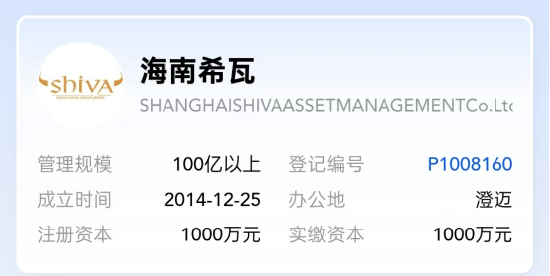
百亿私募希瓦资产创始人梁宏发布道歉长文,反思三大投资错误:创新药、硬件龙头与稳定币
Xin Lang Ji Jin· 2025-11-25 09:17
Core Viewpoint - The recent performance of Hainan Shiva Asset Management has raised concerns as the majority of its funds experienced an estimated net value decline of approximately 7%, with a cumulative drawdown of about 20% from their peak, significantly underperforming major indices [1][3]. Group 1: Performance Analysis - The founder and chief investment officer, Liang Hong, publicly apologized in the weekly report, acknowledging that the recent drawdown has deeply disappointed many investors [1][4]. - The cumulative drawdown of approximately 18% was attributed to three main investment mistakes, which were compounded by market index corrections, leading to a total loss of 20% [3][9]. - The report highlighted that the decline was primarily due to individual stock issues rather than broader market factors, with specific reference to the technology and internet sectors [6]. Group 2: Investment Mistakes - The first major mistake involved heavy investment in innovative pharmaceutical stocks without timely profit-taking at high valuations, resulting in a significant loss [7][9]. - The second mistake was maintaining a high position in a leading hardware company, which saw a decline of over 37%, despite the stock being in a reasonable valuation range [7][9]. - The third mistake was a substantial investment in U.S. stablecoin stocks, where the firm overlooked the risks associated with the cryptocurrency market, leading to significant losses [8][9]. Group 3: Future Outlook - Liang expressed a commitment to making adjustments by the end of the year and aims for a "good change" in the following year, indicating a shift in strategy to reduce drawdowns while maintaining value investment principles [5][9]. - The firm has a management scale exceeding 10 billion, and Liang has a substantial following, positioning him as a prominent figure in the private equity sector [5].