36氪未来消费

Search documents
刘强东回归一线,京东的新故事讲到哪了?
36氪未来消费· 2025-05-14 10:33
京东外卖日订单量来到2000万关口。 作者 | 任彩茹 编辑 | 乔芊 "在我们谈话的同时,京东外卖的订单量已接近2000万单,这又是一个里程碑。" 5月13日晚间的财报后电话会开始不久,京东CEO许冉谈起备受关注的外卖业务,主动释放出500万单、1000万单之后的最新数字。 刚过去的第一季度,京东经历了从略显沉默到高调登台、成为主角的过程。此前几季的业绩沟通会上,分析师们抛出的问题总是离不开"国补的可持续 性"、"高基数之后的增长动力"、"电商竞争格局"、"京东的中长期优势"等等,这一季的最大主角则变成"外卖"的当下与展望。 当然,一个基础条件在于,京东交出的是一份满目"双位数增长"的超预期成绩单。一季度,京东实现3011亿元总收入,同比增长15.8%,创下近三年来 的最高同比增速;调整后净利润128亿元,同比增长43.8%。同时,京东上调2025年的收入及盈利增长预期至双位数。 如今的京东在"双线作战"。最核心的零售业务受益于国补,增长态势仍在持续,但市场期待更多增长新动力。大力投入的新业务外卖,正处于投入资源 抢市场的阶段,未来则要承担起"即时零售心智培养"及"高频带低频"的责任,让用户在京东app产生 ...



最懂性价比的年轻人,半年只买五样东西
36氪未来消费· 2025-05-14 10:33
Core Viewpoint - Traditional consumption habits are undergoing profound changes, with consumers becoming increasingly sensitive to brand premiums and seeking value-driven alternatives [4][7]. Group 1: Changing Consumer Behavior - Consumers are moving away from blind brand loyalty and are more focused on practical value, user experience, and long-term satisfaction [11][12]. - The rise of "平替" (affordable alternatives) reflects a shift towards sourcing products directly from manufacturers, bypassing traditional retail markups [5][6]. - The complexity of the external environment, including economic pressures and tariff fluctuations, has led to increased consumer anxiety regarding pricing and a growing interest in domestic brands [7][8]. Group 2: Collective Wisdom in Consumption - A new initiative called "百万之选 BEST100" aims to gather consumer insights to identify the most trusted products through collective contributions [18][28]. - This initiative emphasizes a decentralized and transparent approach to discovering quality products, moving away from traditional marketing-driven recommendations [15][19]. - The project will culminate in two lists: a main list of 100 trusted products and a personalized list based on diverse consumer needs and scenarios [28][29]. Group 3: Engagement and Interaction - The initiative encourages active participation from consumers, allowing them to share their experiences and recommendations, thus creating a living database of trusted products [20][27]. - The platform is designed to break through algorithmic filters, providing a broader range of consumer experiences and insights [19][24]. - The collaborative effort aims to foster a community-driven approach to smart consumption, where every contribution adds value to the collective knowledge [27][32].

又一家茶饮公司上市了;斯凯奇宣布退市;海底捞开了一家面包店 | 品牌周报
36氪未来消费· 2025-05-11 07:59
Group 1: Company Listings and Performance - Hu Shang A Yi, a tea beverage company, went public in Hong Kong on May 8, raising approximately HKD 270 million with a final share price of HKD 158.4, giving it a market capitalization of HKD 16.6 billion [2] - As of the end of 2024, Hu Shang A Yi reported a revenue of CNY 3.285 billion, a year-on-year decline of 1.9%, and a net profit of CNY 329 million, down 15.2% [2] - Skechers announced its acquisition by 3G Capital for over USD 9 billion at USD 63 per share, with the deal expected to close in Q3 2023 [4] Group 2: Market Trends and Challenges - Hu Shang A Yi faces challenges with declining operational efficiency and saturation in store growth, with a 20.6% decrease in new franchise stores and a 178% increase in store closures in the first half of 2024 [2] - Skechers' strategic shift to privatization is seen as a move to escape the constraints of public financial disclosures amid uncertainties from U.S. tariff policies affecting its cost structure and profit margins [5] - The baking industry, which Hu Shang A Yi is entering, is characterized by high competition and the need for product innovation and operational capabilities to succeed [7] Group 3: Brand Developments and New Ventures - Haidilao launched a bakery brand "SCHWASUA" in Hangzhou, focusing on low-priced products, as part of its "Pomegranate Plan" to incubate new independent brands [6] - Aesop's first store in China closed after two and a half years, reflecting challenges in balancing brand positioning and local market operations [18] - Lucky Coffee has surpassed 5,400 stores nationwide, with significant sales performance during the May Day holiday, indicating strong growth in the coffee shop sector [19]

4家消费公司拿到新钱;小红书向天猫开通外链;果子熟了官宣全球代言人|创投大视野
36氪未来消费· 2025-05-10 11:13
Group 1 - Pet food new retail brand "Paitexiansheng" announced completion of $25 million angel round financing, funds will be used for big data customized product innovation, efficient supply chain system construction, and refined store operation and expansion [3] - AI coffee brand WinnCafe secured several million yuan in angel round financing, focusing on integrating AI robot technology with traditional coffee-making processes to ensure quality and stability [4][5] - Game marketing solution provider Sett completed $15 million Series A financing led by Bessemer Venture Partners, offering AI Agent solutions for game publishers to enhance user engagement [6] Group 2 - "Qianjue Robot" completed several million yuan in financing, funds will be used for technology research and product iteration, focusing on multi-modal tactile perception and operation technology [7] - Taobao Tmall and Xiaohongshu launched the "Red Cat Plan" to enhance advertising effectiveness and create a seamless e-commerce experience, indicating a strategic shift for Xiaohongshu [8][9] - Taobao Flash Sale launched nationwide, leading to a nearly 100% increase in orders for brands like Mi Village Mixed Rice during the May Day holiday, showcasing the competitive landscape in the food delivery sector [10] Group 3 - Beverage brand "Guozi Shule" announced actress Yang Zi as the global brand ambassador, with sales expected to exceed 400 million bottles from March 2024 to February 2025 [11][12] - During the May Day holiday, Hainan's offshore duty-free shopping reached 510 million yuan, with 79,100 shoppers participating, indicating strong consumer interest [13] - Douyin's consumption data report showed over 70% year-on-year growth in group buying orders for accommodation and family meals during the May Day holiday, reflecting diverse consumer demands [14] Group 4 - The national sports equipment market is projected to reach 602.1 billion yuan by 2025, with a year-on-year growth of 14.2%, driven by increased public interest in sports [15] - In the first quarter, China's clothing industry saw actual investment growth of nearly 23% year-on-year, outpacing several popular sectors [16]


Costco 「全城配」挑战会员耐心丨商业 Friday
36氪未来消费· 2025-05-09 03:27
Core Viewpoint - Costco's recent launch of its city-wide delivery service has led to disappointment among members due to issues such as missing ice packs and slow delivery times, raising concerns about member retention and service quality [3][4][8]. Group 1: Member Experience - Members have expressed dissatisfaction with the delivery service, citing issues like delayed delivery times and inadequate packaging for perishable items, which has led to food spoilage [3][5][6]. - A member, Alice, who has been with Costco for five years, is reconsidering her membership renewal due to the poor delivery experience compared to competitors like Sam's Club, which offers faster and more reliable service [4][8]. - Another member, Bob, reported a mix-up with his delivery timing, highlighting the inconsistency in service quality and communication [6]. Group 2: Competitive Landscape - Costco's entry into the Chinese market has been slower compared to competitors like Sam's Club, which has established a more robust e-commerce and delivery system since its entry in 1996 [7][8]. - Sam's Club has successfully implemented a "1-hour express delivery" service and has partnered with strong local logistics providers, giving it a competitive edge over Costco [7]. - Other competitors, such as Hema and Dingdong Maicai, have also leveraged superior delivery services to reshape consumer shopping habits, further intensifying competition for Costco [7][8]. Group 3: Delivery Service Challenges - Costco's delivery service relies heavily on third-party logistics, which has resulted in inconsistent service quality and customer dissatisfaction [5][8]. - The company offers various delivery options, but the lack of a dedicated customer service platform for e-commerce has led to confusion and frustration among members [5][6]. - The high delivery fees and limited store presence in China contribute to the overall dissatisfaction, as members feel they are not receiving value for their membership and delivery fees [8][9].

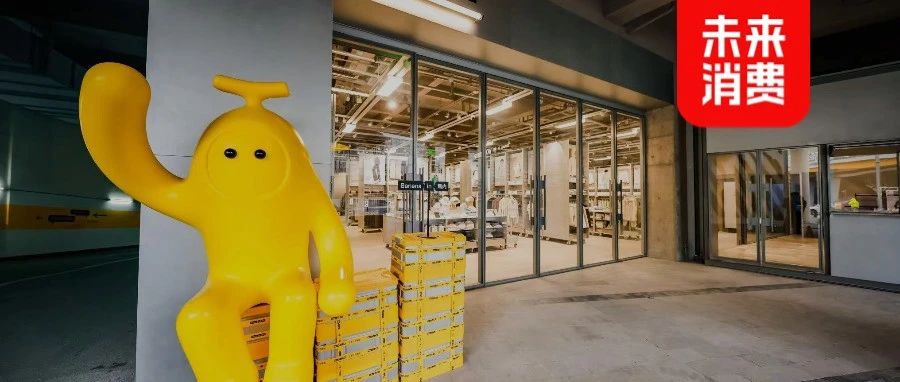
一年卖近70亿的蕉内,最大对手不是优衣库|厚雪专访
36氪未来消费· 2025-05-08 06:41
Core Viewpoint - The article discusses the growth and strategic positioning of the company Bananai, emphasizing its differentiation in the clothing market and the challenges it faces from competitors, particularly white-label brands, rather than established players like Uniqlo [2][5][8]. Group 1: Company Growth and Strategy - Bananai achieved a remarkable growth rate of 300% and became a top player in the underwear market, with a projected GMV of nearly 7 billion in 2024 [2][5]. - The company has expanded from being an underwear brand to a comprehensive clothing brand, aiming to establish itself as a significant player in the slow fashion segment rather than merely a competitor to Uniqlo [5][10]. - The founder, Zang Chongyu, emphasizes the importance of physical differentiation in products, such as the introduction of tagless underwear, which has helped the brand stand out in a crowded market [3][38]. Group 2: Market Positioning and Competition - Bananai's primary competition is not Uniqlo but rather white-label brands, which pose a significant threat due to market saturation and consumer downgrading [14][16]. - The brand aims to maintain its pricing strategy despite market changes, focusing on delivering quality and value to its customers [17][18]. - Zang Chongyu believes that the long-term survival of a brand is more critical than short-term explosive growth, advocating for a sustainable growth strategy [6][22]. Group 3: Brand Identity and Consumer Engagement - Bananai seeks to redefine comfort through its "body sensation science" approach, which has been a core concept since its inception [11][12]. - The company is focused on creating a unique brand identity that resonates with consumers, moving beyond the traditional associations of comfort to a more engaging and interesting brand narrative [25][27]. - The founder expresses a desire for the brand to be perceived as "cool," emphasizing the importance of being relevant and appealing to a broad audience [26][27]. Group 4: Future Outlook and Challenges - The company recognizes the need for a balanced online and offline presence, stating that "without offline, there is no future" and "without e-commerce, there is no growth" [44]. - Bananai is committed to enhancing its retail capabilities and expanding its physical store presence to better communicate its brand identity [39][42]. - The focus for the next few years will be on achieving synergy between online and offline channels while continuing to innovate in product development [43][44].
「店王」SKP的惊人流水为何换不来资本信心?
36氪未来消费· 2025-05-07 09:32
Core Viewpoint - The acquisition of a stake in Beijing SKP by Boyu Capital is seen as a strategic move amidst a cooling luxury market, with implications for both the seller, Beijing Hualian, and the buyer, Boyu Capital [3][4][12]. Group 1: Transaction Details - Boyu Capital, through its affiliates, plans to acquire 42%-45% of Beijing SKP's equity, previously held by Beijing Hualian and Radiance Investment Holdings [3]. - The overall value of Beijing SKP's management and operations is estimated between $4 billion to $5 billion, equivalent to approximately 290 billion to 364 billion RMB [3]. - The transaction is interpreted as Beijing Hualian's attempt to divest from a declining asset, as evidenced by a significant drop in its stock price following the announcement [3][4]. Group 2: Performance of Beijing SKP - Beijing SKP has achieved remarkable sales, with a record revenue of 26.5 billion RMB in 2023, maintaining its status as the top-performing single-store shopping mall in China for ten consecutive years [7][8]. - The mall's innovative approach, including the introduction of a buyer system and experiential retail, has contributed to its success, although a significant portion of its revenue still comes from rental income [9][10]. - Despite its past success, projections indicate a potential revenue decline of 17% in 2024, with expected earnings of 22 billion RMB [17]. Group 3: Market Context and Strategic Considerations - The luxury retail market in China is experiencing a contraction, with brands shifting focus to second-tier and new first-tier cities, indicating a strategic realignment in the industry [12]. - Beijing Hualian's decision to sell SKP aligns with its broader strategy to focus on core operations and optimize assets, as evidenced by its declining financial performance [13][14]. - Boyu Capital's interest in acquiring SKP is part of a larger strategy to create a comprehensive high-end consumer ecosystem, enhancing its investment portfolio across various sectors [15][16].

最早一批出海的短剧平台,年收入已超20亿元
36氪未来消费· 2025-05-06 05:19
Core Viewpoint - The article discusses the contrasting dynamics of the short drama market in China and overseas, highlighting the success of platforms like DramaBox and ReelShort in the international arena while domestic platforms struggle to monetize effectively [5][6][20]. Group 1: Domestic Short Drama Market - The domestic short drama market has seen a decline in profitability, with many industry players expressing frustration over the inability to earn money [5]. - Red Fruit Short Drama has emerged as a leading player, capturing a significant market share, with free short dramas now accounting for half of the domestic market [5][6]. - The article notes that the domestic market's "get rich quick" myth has been debunked, leading to a situation where platforms are the primary beneficiaries [5]. Group 2: Overseas Short Drama Market - The overseas short drama market presents a starkly different competitive landscape, with platforms like DramaBox and ReelShort thriving and generating substantial revenues [6][10]. - DramaBox reported over 2 billion yuan in revenue over the past year, nearly half of the income of leading domestic platforms, while Crazy Maple Studio's ReelShort projected revenues of 2.91 billion yuan for 2024 [6][10]. - The number of short drama apps launched overseas has surged, reaching 231 by February 2025, nearly four times the number from the previous year [7]. Group 3: Market Trends and Business Models - The average revenue per download (RPD) in North America is significantly higher than the global average, indicating a mature paid viewing habit among audiences [20]. - Production costs for short dramas in the U.S. have risen from $150,000 to around $200,000, driven by increased competition and demand [21]. - Southeast Asia has emerged as a key market for short dramas, surpassing Europe in size, with platforms like Melolo targeting this region despite initial challenges [22][23]. Group 4: Localization Challenges - Localization remains a critical challenge for overseas short drama production, with cultural differences and compliance issues impacting content success [15][17]. - The article emphasizes the importance of local content, noting that some teams have resorted to filming overseas dramas in China, which may lead to cultural mismatches [16]. - Pointing out the need for increased localization, the article mentions that DramaBox plans to enhance its local content production to better cater to regional audiences [17].

又一个「穷鬼超市」来中国了
36氪未来消费· 2025-05-06 05:19
Core Viewpoint - Iceland, a leading frozen food supermarket from the UK, is entering the Chinese market with its first physical store, emphasizing its commitment to maintaining high cost-performance and affordability despite previous challenges in the market [2][4][12]. Group 1: Store Launch and Strategy - Iceland's first store in China, named "Iceland lab," spans 6,800 square meters and combines retail, e-commerce, and dining services, aiming to create a comprehensive shopping experience [2][4]. - The store will feature 3,200 SKUs, primarily consisting of frozen food products sourced globally, including ready meals and some daily necessities [3][4]. - Iceland plans to leverage live streaming as a key sales channel, with the first store expected to host over 100 live broadcasts daily [8][9]. Group 2: Market Positioning and Challenges - Iceland is known for its low-cost offerings in the UK, with products like frozen pizzas priced around £1, but faces challenges in maintaining this pricing strategy in China due to higher import costs [4][9]. - The company has previously attempted to enter the Chinese market through e-commerce but faced limited success, leading to the current focus on physical stores [5][9]. - There is skepticism regarding Chinese consumers' acceptance of frozen foods, which have historically been viewed as less fresh or healthy [12][13]. Group 3: Supply Chain and Localization - Iceland has partnered with local company Shoulv Huike to enhance its supply chain and adapt to local tastes, integrating local products alongside its international offerings [10][11]. - The company aims to introduce a variety of products from different countries while also focusing on local sourcing to improve cost-effectiveness and appeal [10][11]. - The frozen food market in China is projected to grow significantly, with a forecasted market size of approximately 213 billion yuan by 2025, indicating potential for Iceland's offerings [12].

Miu Miu继续狂飙;雅诗兰黛中国实现增长;昂跑旗舰店落地成都太古里|品牌周报
36氪未来消费· 2025-05-04 07:47
Group 1: Estée Lauder - Estée Lauder's Q3 report shows a 10% decline in net sales to $3.55 billion, with an organic decline of 9%, but slightly better than expected, and a gross margin increase of 3.1% due to the Profit Recovery and Growth Plan [2] - The company's China operations achieved low single-digit growth, driven by brands like La Mer, Estée Lauder, and Tom Ford, marking three out of the last four quarters with market share growth [2] - Global skincare and travel retail segments saw double-digit declines, with skincare sales down 11%, and makeup category performance was negatively impacted by M·A·C's product launch timing [2][3] Group 2: Prada - Prada's Q1 report indicates a 60.2% year-on-year increase in retail revenue for Miu Miu, contributing €377 million in net sales and increasing its share within the group from 22% to 31% [4] - The overall revenue for Prada Group was €1.34 billion, slightly above expectations, while competitors like LVMH and Kering reported sales declines [6] - Prada's cautious outlook reflects the challenging market conditions, with a focus on expanding its distribution network through partnerships, such as with Mytheresa [6] Group 3: Aesop - Aesop launched its first "tea fragrance" Virēre in mainland China, priced at 1,250 yuan, marking a significant increase in the frequency of new fragrance releases since being acquired by L'Oréal [12][15] - The brand's strategy aligns with the growing potential of the fragrance category in the beauty market, contributing to L'Oréal's double-digit growth in this segment [15] Group 4: Adidas - Adidas reported Q1 2025 revenue of €6.153 billion, a 13% increase year-on-year, with operating profit rising 82% to €610 million, driven by continued growth in the Chinese market [18] - The company maintains its full-year growth forecast despite tariff pressures, having minimized exposure to U.S. market products manufactured in China [18] Group 5: LVMH - LVMH's wine and spirits division is set to cut over 10% of its workforce, approximately 1,200 employees, due to a 9% decline in organic sales, primarily from weak performance in the U.S. and China [20]