36氪

Search documents
叫板寿司郎,中国版「穷鬼寿司」来了
36氪· 2025-11-03 13:35
Core Insights - The article discusses the rising trend of affordable sushi restaurants in China, highlighting the entry of Haidilao's new sushi brand "Rushi Sushi" into a competitive market dominated by established players like Sushi Lang and Bin Sushi [4][12][14]. Market Overview - The affordable sushi segment is experiencing significant growth, with brands like Sushi Lang gaining popularity and achieving impressive sales figures, including a net sales of over 588 billion yen in the Chinese market, with a profit of 64 billion yen, marking a nearly 99% year-on-year increase [16]. - Sushi Lang's pricing strategy, with sushi priced between 10 to 28 yuan, has made it accessible to younger consumers, allowing for a dining experience under 100 yuan per person [10][11]. Haidilao's Strategy - Haidilao's "Rushi Sushi" aims to replicate the successful model of Sushi Lang, utilizing a conveyor belt sushi format and a similar pricing structure, with menu items priced at 8, 9.9, 15, 19.9, and 28 yuan [14][20]. - The brand has seen promising initial performance, with weekend customer traffic averaging 800 to 1000 people per day, indicating a strong market reception [15]. Competitive Landscape - The article notes that the sushi market is undergoing a "de-high-end" transformation, with high-priced sushi restaurants facing declining customer traffic, while affordable sushi options are becoming more popular [15]. - Both Sushi Lang and Bin Sushi have been in the Chinese market for several years but are now experiencing a surge in popularity, with plans for rapid expansion in the coming years [16][17]. Supply Chain and Quality Challenges - The success of sushi restaurants heavily relies on the quality of ingredients and supply chain efficiency. Rushi Sushi is leveraging Haidilao's supply chain advantages but faces challenges in maintaining consistent quality and sourcing fresh seafood [21][22]. - The article highlights the importance of established relationships with seafood suppliers, which Sushi Lang and Bin Sushi have developed over years, providing them with a competitive edge in sourcing high-quality ingredients [21]. Conclusion - The future of Rushi Sushi in the competitive landscape remains uncertain, as it attempts to carve out a niche amidst established brands. The effectiveness of its strategies and ability to maintain quality will be crucial for its success [23].



便宜的酒店,正在批量消失
36氪· 2025-11-03 13:35
Core Viewpoint - The economic hotel sector is experiencing a collective retreat, with major players like Jinjiang, Shoulv, and Huazhu shifting focus towards mid-to-high-end hotels, indicating a decline in the economic hotel segment's viability [7][9][40]. Group 1: Industry Trends - Economic hotels, represented by brands like Buding, are struggling, with key performance indicators such as RevPAR declining year-on-year [6][9]. - By the end of 2024, the proportion of economic hotel rooms is expected to drop to 54%, with major hotel chains adding significantly fewer economic hotels compared to mid-to-high-end options [7][38]. - The average room rates for major hotel chains have been rising, contrasting with the stagnant performance of economic hotels [8][38]. Group 2: Market Dynamics - The hotel industry operates on a model similar to airlines, where fixed costs are high, and revenue is highly dependent on occupancy rates [11]. - Economic hotels face inherent vulnerabilities due to limited pricing power and low elasticity of demand, making them less competitive against mid-to-high-end hotels [13][14]. - The trend towards consolidation in the hotel industry has led to increased market concentration, with the top three hotel groups controlling 75% of the market by 2016 [27][32]. Group 3: Consumer Behavior - There is a growing consumer preference for mid-to-high-end hotels, which offer more amenities and services, leading to higher occupancy rates compared to economic hotels [42][46]. - The rise of online travel agencies (OTAs) has created a complex relationship with hotels, but both parties benefit from the shift towards mid-to-high-end offerings [48]. - Economic hotels are increasingly losing market share as consumer spending shifts towards higher-quality accommodations, especially in a recovering economy [49][50]. Group 4: Future Outlook - The economic hotel segment is expected to continue facing challenges, with many operators struggling to adapt to changing market conditions and consumer preferences [20][40]. - Predictions suggest that mid-range hotels will dominate the market in the coming years, reshaping the competitive landscape of the hotel industry [52].




「医美茅台」市值蒸发千亿,中产女性不买单了?
36氪· 2025-11-03 09:34
Core Viewpoint - Aimeike, known as the "Maotai of the medical beauty industry," has reported disappointing financial results, with significant declines in both revenue and net profit for Q3 2025, raising concerns about its growth prospects and market confidence [2][6][20]. Financial Performance - In Q3 2025, Aimeike's revenue was 565 million, a year-on-year decline of 21.27%, and net profit was 304 million, down 34.61%. For the first three quarters of 2025, revenue totaled 1.865 billion, a decrease of 21.49%, with net profit at 1.09 billion, down 31.05% [2][6]. - The company's stock price fell sharply after the earnings report, reaching a low of 157.05 per share, a drop of 3.97%, and currently has a market capitalization of approximately 48.5 billion, down 73% from its peak of 180 billion in 2021 [2][6]. Product Overview - Aimeike, established in 2004 and listed in 2020, focuses on hyaluronic acid products, with its two main offerings being the injection solution "Haitai" and the gel filler "Ruhua Tianzi," both of which previously held market advantages [4][5]. - Despite maintaining high gross margins above 90%, revenue from these core products has significantly declined, with "Haitai" seeing a 23.79% drop in revenue and "Ruhua Tianzi" down 23.99% in the first half of 2025 [8][9]. Market Challenges - Aimeike's competitive edge is diminishing as new entrants, such as Huaxi Biological's "Runzhi·Gege," have entered the market, challenging the exclusivity of its products [13]. - The company faces increasing competition from alternative technologies, such as recombinant collagen, which are gaining traction and threatening Aimeike's market share in the hyaluronic acid segment [14]. Strategic Moves - To seek new growth avenues, Aimeike acquired 85% of South Korean company REGEN for 190 million USD in 2025, aiming to enhance its product portfolio and leverage REGEN's global sales network [16][17]. - This acquisition has led to a significant increase in goodwill, rising from 278 million at the end of 2024 to 1.65 billion by September 2025, marking a 493.44% increase [18]. Legal Issues - Aimeike is embroiled in a legal dispute with REGEN's former distributor, Datuo Medical, over the termination of an exclusive distribution agreement, which could impact the integration and future profitability of the acquisition [19][20].

2025年中国大模型行业发展研究报告 | 36氪研究院
36氪· 2025-11-03 09:34
Core Insights - The article emphasizes that the Chinese large model industry is undergoing a significant transformation driven by technological iteration and ecological restructuring, with the market expected to reach 29.416 billion yuan in 2024 and exceed 70 billion yuan by 2026 [4][41]. - The CBDG four-dimensional ecosystem (Consumer, Business, Device, Government) is identified as a new paradigm for the development of large models in China, shifting competition from single-point technology to comprehensive ecosystem building [3][9]. Industry Overview - The large model is positioned as a strategic core and key engine for the development of artificial intelligence, facilitating the transition from isolated algorithm innovations to a holistic intelligent ecosystem [28][30]. - The Chinese large model industry is characterized by a complex competitive landscape, with participants categorized into five main types: internet/technology giants, model-focused newcomers, vertical industry players, AI 1.0 transformers, and research institutions [13][14]. CBDG Four-Dimensional Ecosystem - The CBDG model reveals that the four dimensions (Consumer, Business, Device, Government) are deeply interconnected, forming an organic whole that drives the growth of the large model industry [59]. - Consumers are seen as the source of demand and innovation, providing vast data and feedback that accelerate the transition from usable technology to practical products [59]. - Businesses serve as the core of value creation and implementation, with strong market demand driving the integration of large model technology with industry-specific knowledge [59]. Competitive Landscape - The competitive dynamics in the large model sector are shifting towards a comprehensive capability contest, focusing on ecosystem building, technological research and development, industry empowerment, commercial monetization, and innovation expansion [9][12]. - The article outlines a framework for evaluating the competitiveness of large model enterprises, which includes ecological construction, technological research and development, industry empowerment, commercial monetization, and innovation expansion [11]. Future Trends - The article predicts that the future of large models will lead to advancements from multimodal cognition to embodied intelligence, becoming a crucial link between the virtual and physical worlds [20][36]. - The market for multimodal large models is expected to grow significantly, with applications in digital humans, gaming, and other scenarios showing strong growth potential [4][41]. Policy Framework - China's large model industry policies are evolving towards a four-pronged development framework: innovation-driven, foundational strengthening, scenario-driven, and safety governance [6][36]. - The article highlights the importance of a supportive policy environment that fosters continuous evolution and addresses the need for responsible governance alongside innovation [36][37].


固态电池为何迟迟无法上车
36氪· 2025-11-03 09:34
Core Viewpoint - Solid-state batteries are considered the ultimate form of power batteries due to their high thermal stability and potential for long-range and safety, but they face significant challenges in technology, manufacturing, and cost that hinder large-scale production in the short term [4][8][27]. Summary by Sections Recent Developments - Several second- and third-tier battery manufacturers, along with automakers like Chery, have announced advancements in solid-state battery research, indicating a potential for mass production [5][7]. - On October 23, XINWANDA unveiled its solid-state battery "XIN·BIXIAO" with an energy density of 400 Wh/kg, compared to 200-250 Wh/kg for mainstream lithium iron phosphate batteries and 250-300 Wh/kg for ternary lithium batteries [5][6]. - Chery showcased its self-developed "Rhino S" all-solid-state battery module with an energy density of 600 Wh/kg, promising a range of 1200-1300 km, with plans for mass production by 2027 [7]. Industry Challenges - Despite the excitement, industry leaders like CATL have stated that solid-state batteries will not achieve small-scale production until 2027 and large-scale production until 2030 [9]. - Technical challenges include poor ionic conductivity of solid electrolytes and high interfacial resistance, which complicate large-scale production [10][11]. Material and Manufacturing Issues - The choice of materials for solid-state batteries is contentious, with current trends favoring sulfide electrolytes due to their high ionic conductivity, despite their sensitivity to moisture and complex manufacturing processes [15][16][17]. - The negative electrode materials are also not mature, with silicon-carbon composites being used, which can lead to reduced cycle life due to expansion during lithium-ion intercalation [22]. Cost and Commercial Viability - The cost of solid-state batteries is currently 5-10 times higher than that of liquid batteries, making it difficult for both automakers and consumers to adopt them [24]. - The significant changes required in manufacturing processes and equipment for solid-state batteries pose additional barriers to entry for many companies [23]. Market Dynamics - The push for solid-state batteries is driven by second- and third-tier manufacturers seeking to disrupt the market dominated by CATL, while automakers hope to gain leverage in negotiations [26]. - Recent incidents of electric vehicle fires have heightened consumer interest in safer battery technologies, further fueling the demand for solid-state batteries [26].



我,22岁,用AI帮4万学生备考,拿到赵长鹏投资
36氪· 2025-11-03 09:34
Core Viewpoint - VideoTutor aims to become a leading educational application that surpasses Duolingo by leveraging AI technology to provide personalized learning experiences for students, particularly in solving mathematical problems [4][11]. Group 1: Company Overview - VideoTutor was founded by Zhao Kai, who secured initial funding from Binance founder Zhao Changpeng, highlighting a shared passion for education [4][5]. - The application allows students to input math problems via photo or text, generating animated solutions and step-by-step explanations within seconds, mimicking the experience of a skilled teacher [6][17]. - Within 20 days of launch, VideoTutor registered over 30,000 users and generated over 10 million video views, showcasing rapid user adoption [9][17]. Group 2: Product Features and Technology - VideoTutor incorporates advanced features such as a geometric parser and a custom animation rendering engine to ensure accuracy in problem-solving and visual representation [14][15]. - The application utilizes a dual-model approach for answer verification, enhancing the reliability of the solutions provided [15]. - The product's efficiency allows for video generation in 60-90 seconds, significantly reducing the time compared to traditional teaching methods [17]. Group 3: Market Position and Strategy - VideoTutor targets students preparing for standardized tests like SAT and AP, differentiating itself from competitors that focus on general homework assistance [23]. - The pricing model is significantly lower than traditional tutoring services, with a cost of $3.99 for four generated videos, making quality education more accessible [23]. - Future plans include expanding the application to cover more subjects and learning pathways, aiming to become a comprehensive educational tool for K12 students [24][25]. Group 4: Vision and Goals - The company's long-term vision is to achieve educational equity, providing quality resources to students who cannot afford expensive tutoring [26]. - VideoTutor is also exploring B2B partnerships, with initial agreements in place to integrate its services into educational institutions [25].

8点1氪:马斯克称五年后手机和App将消失;“药中茅台”片仔癀跌破官方指导价;马尔代夫正式实施“世代禁烟令”
36氪· 2025-11-03 00:06
Group 1 - Musk predicts that in the next five to six years, most content consumed by humans will be generated by AI, leading to the obsolescence of traditional smartphones and apps [3][4] - Devices will evolve into AI reasoning "edge nodes," retaining wireless communication capabilities while focusing on real-time interaction between server-side and device-side AI [4] - The concept of operating systems and apps will disappear, with devices primarily serving to display content and integrate AI capabilities deeply [4] Group 2 - The price of Pianzaihuang, known as "the Maotai of medicine," has dropped significantly from a peak of 1600 yuan per piece to around 700 yuan, reflecting a stark contrast to previous years of price surges [5][6] - Pianzaihuang's price history shows a rise from 325 yuan in 2004 to 590 yuan in 2020, with a notable increase to 760 yuan in May 2023, marking the largest increase in nearly two decades [5][6] Group 3 - In the first nine months of 2023, the number of micro-short drama crews received by Hengdian, Zhejiang, increased by 285.8%, indicating a growing market for this content type [10] - The user base for micro-short dramas in China is projected to exceed 576 million, accounting for 52.4% of the total internet users, with a market size reaching 504.4 billion yuan [10] Group 4 - In September 2023, China's industrial robot production reached 76,300 units, a year-on-year increase of 28.3%, driven by strong demand from key industries like automotive and electronics [11] - The cumulative production of industrial robots from January to September 2023 surpassed 595,000 units, exceeding the total production for the previous year [11] Group 5 - Berkshire Hathaway's cash reserves reached a record high of $381.7 billion in Q3 2023, with operating profit increasing by 34% to $13.5 billion [17] - Despite the growth in cash reserves, net investment income declined by 13% year-on-year to $3.2 billion due to falling short-term interest rates [17] Group 6 - In the first three quarters of 2023, listed companies in China achieved a total net profit of 4.7 trillion yuan, reflecting a year-on-year growth of 5.5% [18] - The total operating revenue for these companies reached 53.46 trillion yuan, with a growth rate of 1.36% compared to the previous year [18]
布局全栈式工业与机器人实时智控芯片,无锡芯片公司获近亿元A+轮融资|早起看早期
36氪· 2025-11-03 00:06
Core Viewpoint - The article discusses the recent A+ round financing of Wuxi Chip Field, a company specializing in real-time intelligent control chips for industrial and robotics applications, highlighting its growth potential and market positioning in the context of increasing demand for domestic chip solutions in China [6][10]. Company Overview - Wuxi Chip Field was established in 2019 and focuses on chip development in three main areas: industrial control, high-speed interconnection, and heterogeneous computing [6]. - The company has achieved mass production of over ten chip models, with projected sales revenue reaching tens of millions in 2024 [4][9]. Financing Details - The recent financing round raised nearly 100 million yuan, led by Woniu Capital, with participation from Chengtou Investment, Xiying Fund, and existing shareholder Guolian New Venture [6]. - The funds will be used to accelerate the R&D iteration of core chips, expand production capacity, and deepen market penetration in industrial and robotics sectors [6]. Market Demand and Challenges - The demand for real-time communication, high-precision control, and multi-modal data processing in industrial systems has significantly increased due to the Industrial 4.0 and AI trends [7]. - The domestic market for industrial Ethernet and related chips has been dominated by international firms, leading to low domestic production rates and vulnerabilities in supply chains amid rising international trade tensions [7]. Product Development - Wuxi Chip Field is developing three core product lines: PCIe switch chips, industrial Ethernet chips, and real-time intelligent computing chips [7]. - The company has successfully delivered PCIe 3.0 switch chips and is advancing the development of versions 4.0 and 5.0 [8]. - The industrial Ethernet chips utilize software-defined networking technology, supporting various mainstream industrial real-time Ethernet protocols [8]. Technical Innovations - The company has achieved batch customer imports for EtherCAT slave chips and has developed compatible products for the PROFINET protocol through fully autonomous design [8]. - Wuxi Chip Field's DSP chips, such as the XP6000 and XP6746 series, are designed to compete with TI's C2000 and C6000 series, showcasing differentiated performance in real-time signal processing and AI inference [8]. Market Position and Clientele - The company has established a client base that includes leading firms in industrial control and several innovative robotics companies, with its EtherCAT chips entering mass delivery stages [9]. - The team comprises experienced professionals with over 20 years in integrated circuit design, contributing to the company's strong R&D capabilities [9]. Investor Insights - Investors, including Woniu Capital, emphasize the importance of original design capabilities in breaking the monopoly of international giants and supporting domestic industrial upgrades [10]. - Guolian New Venture highlights the company's strong technical foundation and ability to find growth opportunities in a competitive market [11].

四大女掌门,拿捏中产的「吃喝」
36氪· 2025-11-03 00:06
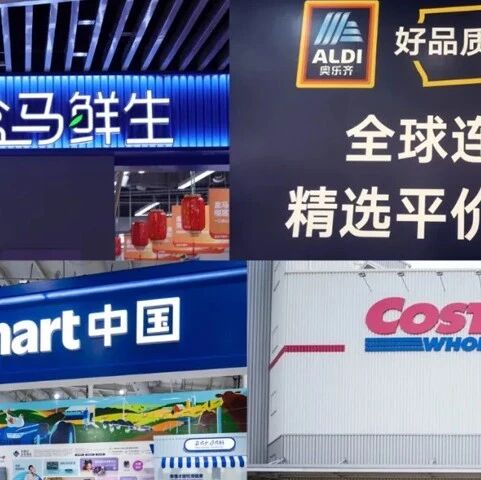
Core Viewpoint - The retail industry in China is witnessing a significant rise in female leadership, with several prominent women taking charge of major retail companies, indicating a shift in management dynamics and strategies in response to market challenges [3][11][13]. Group 1: Female Leadership in Retail - The article highlights the emergence of female CEOs in major retail companies in China, including Chen Jia at Aldi, Zhu Xiaojing at Walmart China, Zhang Shuyun at Costco, and Yan Xiaolei at Hema, showcasing a trend towards gender diversity in leadership roles [3][11][13]. - Chen Jia's leadership at Aldi has led to a strategic shift back to low-price offerings, resulting in increased brand recognition and expansion, with over 50 stores opened in Shanghai and plans for further growth in Jiangsu [6][7][26]. - Zhu Xiaojing, as the first Chinese CEO of Walmart China, faces challenges in revitalizing the brand amidst declining performance, particularly after setbacks with the Sam's Club membership model [10][16][21]. Group 2: Strategic Shifts and Market Dynamics - The retail landscape is characterized by intense competition, particularly in the Jiangsu and Shanghai regions, where companies like Aldi and Hema are vying for market share through aggressive expansion and pricing strategies [26][30]. - Hema, under Yan Xiaolei's leadership, is pivoting towards a community-focused model with its "Hema NB" stores, aiming to cater to price-sensitive consumers while competing directly with Aldi [29][30]. - The article discusses the concept of the "glass cliff," suggesting that women leaders are often appointed during challenging times, which may lead to greater scrutiny and pressure to perform [15][21]. Group 3: Consumer Behavior and Market Trends - The current consumer environment is marked by a shift towards value and price sensitivity, prompting retailers to adapt their strategies to attract customers back to physical stores [13][21][37]. - Aldi's approach of offering a limited selection of products at fixed low prices has resonated with consumers, while Hema's strategy of competitive pricing and community engagement aims to capture a broader audience [6][29][31]. - The competition among retailers is intensifying, particularly in urban areas where consumer expectations for shopping experiences are evolving, necessitating innovative approaches to meet these demands [13][30][32].


90后的白月光,被卖了
36氪· 2025-11-03 00:06
Core Viewpoint - EA is set to be privatized for $55 billion, led by Saudi Arabia's Public Investment Fund (PIF), making it the second most expensive acquisition in gaming history, following Microsoft's acquisition of Activision Blizzard for $68.7 billion. However, this comes with a significant debt burden of $20 billion [4][22]. Group 1: EA's Market Position and Financial Performance - EA is likened to Adidas and Nike in the gaming industry, being a defining presence in various game categories such as sports and simulation games [4][10]. - EA's fiscal year 2025 net revenue is projected at $7.463 billion, with a cash flow of $2.079 billion, and is expected to maintain similar revenue levels in fiscal year 2026 [12]. - The company has faced stagnation in growth, with its online gaming business only growing by 1% in fiscal year 2024, leading to a significant drop in stock price [17][18]. Group 2: Reasons for the Acquisition - The acquisition is driven by EA's struggles in a post-pandemic market, where consumer engagement has shifted away from gaming, leading to operational pressures and layoffs [17][18]. - EA's heavy reliance on its flagship product, the FIFA series, has created vulnerabilities, as it accounted for half of the company's net bookings over the past five years [18]. - The company has attempted to diversify through acquisitions of potential game studios, but this strategy has proven costly and has diminished its bargaining power in the market [19][20]. Group 3: The Acquisition Structure and Implications - The acquisition will be financed with $35 billion in cash from the consortium, while $20 billion will be debt financed through Morgan Stanley, significantly increasing EA's debt from $2.2 billion to $22 billion [22]. - This transaction sets a new record for leveraged buyouts, raising concerns about EA's future financial stability and operational flexibility [22][23]. - The gaming industry has reacted negatively to the acquisition, drawing parallels to other companies that suffered after similar leveraged buyouts, indicating potential risks for EA's future [24].