36氪

Search documents
迈向超级人工智能之路
36氪· 2025-09-29 10:23
Core Viewpoint - The article emphasizes that AI, particularly through the development of Agents, represents a new leap in technology that will enhance human intelligence and lead to the emergence of Artificial Superintelligence (ASI) [1][5][30] Group 1: AI Development and Applications - AI is increasingly being integrated into business operations, with 79% of surveyed companies already applying AI Agents, resulting in productivity improvements (66%), cost reductions (57%), faster decision-making (55%), and enhanced customer experience (54%) [1] - Major tech companies are focusing on Agents, with products like OpenAI's Agent Mode, Microsoft's Copilot, and Alibaba's Baichuan Agent, indicating a trend towards AI-driven automation [2][26] - Alibaba Cloud's Baichuan platform aims to provide a comprehensive environment for enterprises to develop AI Agents, integrating model invocation, framework construction, resource scheduling, and compliance operations [2][3] Group 2: Infrastructure and Model Development - Alibaba Cloud has upgraded to a "full-stack AI service provider," focusing on building foundational infrastructure and refining base models to support the next phase of AI development [5][11] - The strength of the foundational models, such as the Tongyi Qianwen series, is crucial for the performance of Agents, with recent evaluations showing competitive capabilities in various tasks [9][10] - The introduction of multiple new models at the Cloud Summit, including Qwen3-MAX and Qwen3-Omni, showcases Alibaba's commitment to advancing AI capabilities [10][11] Group 3: Agent Ecosystem and Business Integration - Alibaba Cloud's "1+2+7" enterprise-level Agent system allows for flexible development approaches, enabling companies to quickly prototype with low-code solutions and transition to high-code for deeper customization [17][18] - The platform addresses key operational challenges by providing essential capabilities such as memory management, tool integration, and dynamic reasoning, facilitating smoother implementation of AI Agents in business processes [19][20] - The effectiveness of the Baichuan platform is evidenced by successful case studies in various sectors, demonstrating significant efficiency gains and operational improvements [20][21] Group 4: Market Position and Future Outlook - Alibaba Cloud has established itself as a leader in the AI and cloud computing market, with a significant share that surpasses the combined total of its closest competitors [23][24] - The article posits that the development of Agents is a critical next step in AI's evolution, moving beyond simple tasks to becoming integral tools for business growth [26][30] - The strategic positioning of Alibaba Cloud in the global AI landscape is highlighted, emphasizing the importance of local solutions for Chinese enterprises to reduce reliance on foreign technologies [30][31]



71岁王健林与「老登时代」的终局
36氪· 2025-09-29 10:23
Core Viewpoint - The article discusses the decline of Wang Jianlin and Wanda Group, highlighting the company's debt crisis and the shift from the real estate era to the technology era, emphasizing the need for adaptation to new market conditions [4][25]. Wanda's Debt Crisis - Wang Jianlin was recently subjected to a high consumption restriction due to a court ruling related to a 186 million yuan enforcement case, revealing Wanda's ongoing debt issues [5][9]. - Wanda Group has 10 enforcement cases totaling 5.262 billion yuan, with 47 equity freeze cases affecting core subsidiaries, indicating severe financial distress [9][10]. - The company has been forced to sell over 30 Wanda Plazas to survive, with significant transactions planned for 2025, indicating a shift towards asset liquidation [10][12]. Historical Context - The turning point for Wanda began in 2017 when it faced regulatory scrutiny over its overseas investments, leading to a liquidity crisis and a reported debt exceeding 600 billion yuan [10][11]. - Despite attempts to pivot towards a lighter asset model, Wanda's debt continued to escalate, particularly in its real estate segment, which has become a liability rather than an asset [11][14]. Business Model Challenges - Wanda's diversified business model, which once thrived on real estate, is now under pressure as each segment faces its own challenges, leading to a systemic risk across the company [14][17]. - The cultural and investment arms of Wanda have struggled to generate returns, exacerbated by the pandemic and market downturns, further straining the company's financial health [17][18]. Market Dynamics - The article contrasts the decline of "old economy" stocks, like Wanda, with the rise of "new economy" stocks focused on technology and innovation, signaling a broader market shift [19][20]. - The real estate sector's decline has forced traditional companies to adapt or face obsolescence, as seen in Wanda's struggles compared to more agile firms like Wantong Development [22][23]. Conclusion - The narrative of Wang Jianlin's fall from grace serves as a cautionary tale about the importance of adapting to changing market conditions, particularly the transition from real estate to technology-driven growth [25][26].


广告被偷偷加长,平台正在悄悄偷走用户时间
36氪· 2025-09-29 00:17
Core Viewpoint - The article highlights the issue of video platforms extending advertisement durations beyond what is indicated, leading to consumer dissatisfaction and potential violations of consumer rights [11][27][39]. Group 1: Advertisement Duration Issues - The National Market Regulation Administration has responded to complaints about discrepancies between advertisement durations and their actual lengths on video platforms [7][11]. - Testing across major video apps like iQIYI, Mango TV, and Youku revealed significant instances of advertisement overrun, with some platforms exhibiting particularly severe issues [12][13]. - Various forms of advertisement overrun were identified, including initial ads not counting towards the countdown, forced continuation of ads after the countdown, and additional ads appearing post-countdown [16][20][24]. Group 2: Economic Implications - iQIYI reported an advertisement revenue of 1.27 billion yuan in Q2, while Mango TV's revenue for the first half of the year was 1.587 billion yuan, indicating the financial significance of advertisement durations for these platforms [24]. - The article suggests that the additional seconds gained from advertisement overruns can accumulate into substantial revenue when multiplied by millions of users and views [25]. Group 3: Consumer Rights and Trust - The misleading countdown practices by video platforms are seen as a violation of consumer rights, as they create a false expectation of advertisement duration [27][39]. - The platforms often use ambiguous language in their advertisements, implying that ads will end after the countdown, which can be interpreted as a deceptive practice [29][31]. - The article calls for video platforms to focus on improving content and service quality to regain consumer trust, rather than employing tactics that undermine it [40][41].




AI加速生物活性原料创新,「未名拾光」获数千万元B+轮融资 | 早起看早期
36氪· 2025-09-29 00:17
Core Viewpoint - The company "未名拾光" has recently secured a B+ round financing of several tens of millions of RMB, following a previous investment of nearly 100 million RMB from L'Oréal and Naive Group, aimed at enhancing its AI technology platform and expanding its global business footprint [3][4]. Group 1: Financing and Investment - "未名拾光" has received significant investments from both L'Oréal and Naive Group, totaling nearly 100 million RMB earlier this year, and has now attracted additional funding from industrial funds [4]. - The latest financing round will primarily focus on deepening AI technology platform development and expanding the application scenarios of biological materials [3]. Group 2: Technology and Product Development - The company has established a closed-loop system for the innovation of biological materials, integrating design, screening, efficacy evaluation, and large-scale production, empowered by AI [4]. - "未名拾光" is developing two main categories of biological raw materials: plant callus tissues and bioactive proteins, including recombinant collagen and peptides [4]. - The company has created a dual-cell factory system utilizing both microbial and plant cell factories to produce various products, including rare plant active molecules [6]. Group 3: AI Integration - The team recognized the value of AI early in the development of their synthetic biology technology platform, utilizing tools like AlphaFold and RFDiffusion to enhance research efficiency [7]. - AI has significantly improved research efficiency, reportedly increasing it by at least five times, with plans to allocate 50% of R&D spending towards AI development [8]. Group 4: Business Model and Market Strategy - "未名拾光" employs a CRDMO model (CRO + CDMO) to collaborate with downstream brand partners for the development of new biological raw materials and provide contract manufacturing services [4][10]. - The company has successfully validated its model in the plant metabolite category, expanding its client base to include numerous well-known domestic and international brands [11]. Group 5: Future Directions - The company plans to expand its business in bioactive raw materials from the beauty sector to food and daily chemical applications, while also seeking international market opportunities [13].

8点1氪:王健林被限制高消费;西贝创始人贾国龙清空多个账号内容;宗馥莉或无法使用“娃哈哈”商标
36氪· 2025-09-29 00:17
Group 1 - Dalian Wanda Group and its legal representative Wang Jianlin have been restricted from high consumption due to a forced execution of 186 million yuan [5] - Dalian Wanda Group has a total execution amount of approximately 14.293 billion yuan, with 57 instances of equity freezing [5] - The freezing of shares includes 145.33 billion yuan worth of equity since September, indicating significant financial distress [5] Group 2 - The founder of Xibei Catering, Jia Guolong, has cleared multiple social media accounts, with his Douyin account retaining only one video discussing the company's revenue of 6.2 billion yuan [5] - The founder of Leap Motor, Zhu Jiangming, responded to being restricted from high consumption, stating that the limitation has been lifted and highlighted the need for team improvement [8] - Leap Motor was listed as a dishonest executor by the Guangzhou Baiyun District People's Court due to business disputes [8] Group 3 - Wahaha Group is undergoing significant changes, with the sales rights of Zhejiang Wahaha Drinking Water Co., Ltd. being transferred to a subsidiary of Hongsheng Beverage [7] - The transfer of sales rights is set to be implemented by March 2025, indicating a strategic shift in operations [7] - Wahaha has faced public scrutiny over trademark transfer issues, complicating its brand management [7] Group 4 - GAC Fiat Chrysler's core assets are being auctioned off, with the starting price set at 800 million yuan after previous auctions failed to attract buyers [9] - The core assets include land and production equipment, with the total starting price being significantly lower than previous auction attempts [9] Group 5 - Xiaomi's new smartphone series, the Xiaomi 17 Pro Max, has seen demand exceed expectations, prompting the company to increase production [12] - The first batch of Xiaomi 17 series phones was launched at a starting price of 4,499 yuan, with positive user feedback on various features [12] Group 6 - The sales revenue of Pang Donglai has surpassed last year's total, reaching 17.12 billion yuan as of September 27, 2025 [12] - The supermarket segment leads in sales, contributing 9.42 billion yuan, followed by jewelry and department store sales [12]



在蔡国强「升龙」的雪山脚下,我和当地人一起捡垃圾
36氪· 2025-09-29 00:17
Core Viewpoint - The article discusses the environmental and social implications of a fireworks event organized by artist Cai Guoqiang and outdoor brand Arc'teryx in the Himalayas, raising questions about the sustainability of such marketing strategies and their impact on local communities and ecosystems [6][7][30]. Group 1 - The fireworks event took place in a fragile ecological area, with concerns about the environmental damage it may cause [6][15]. - Despite claims of eco-friendliness, the event left behind waste that required local villagers to clean up, contradicting the organizers' statements about environmental responsibility [12][25]. - Local residents were largely unaware of the event, highlighting a disconnect between the marketing efforts and the local community's engagement [22][28]. Group 2 - The article contrasts the fireworks event with a more environmentally conscious event by another outdoor brand, Mammut, which utilized light technology to celebrate a historical climbing route without harming the environment [30][32]. - It suggests that Arc'teryx could have chosen a more suitable and sustainable approach to marketing that aligns with their brand values and the local ecological context [33][34]. - The piece emphasizes the importance of integrating local communities into brand activities in a meaningful way, rather than imposing external marketing spectacles that may not resonate with them [22][34].

中产运动三件套,又换了
36氪· 2025-09-28 13:00
Core Insights - The article discusses the rising popularity of indoor tennis, pickleball, and indoor golf as new middle-class sports, which were once considered "noble sports" but have become more accessible and addictive [4][5][15]. Group 1: Market Trends - The number of tennis players in China is projected to reach over 25.18 million by 2024, marking a growth rate of 28.03% compared to 2021 [7]. - The market size for tennis in China is expected to exceed 60 billion yuan by 2029 [7]. - The golf practice venue count in China is projected to reach 3,388 by 2024, reflecting a year-on-year growth of 11.08% [31]. Group 2: Consumer Behavior - Consumers are increasingly drawn to these sports for their stress-relief benefits and social interaction opportunities, with many individuals forming new social connections through activities like pickleball [5][9][23]. - The trend of engaging in these sports is also seen as a way to enhance social status, with participants often discussing their experiences in professional settings [23][26]. Group 3: Accessibility and Convenience - Indoor sports facilities have made it easier for individuals to participate without needing to coordinate with others, as seen with the rise of solo practice options like automatic ball machines in indoor tennis [7][21]. - The affordability of these sports has improved, with prices for indoor tennis sessions ranging from 60 to 140 yuan per hour, making it more accessible to a broader audience [7][14]. Group 4: Industry Response - Sports brands are actively expanding their offerings in emerging sports like pickleball, with companies like Li Ning and Adidas making strategic moves to capture market share [31]. - The shift towards indoor sports venues has led to a proliferation of new facilities, catering to a growing demand from both novice and experienced players [28][34].

50万学生午餐,成了谁的提款机?
36氪· 2025-09-28 13:00
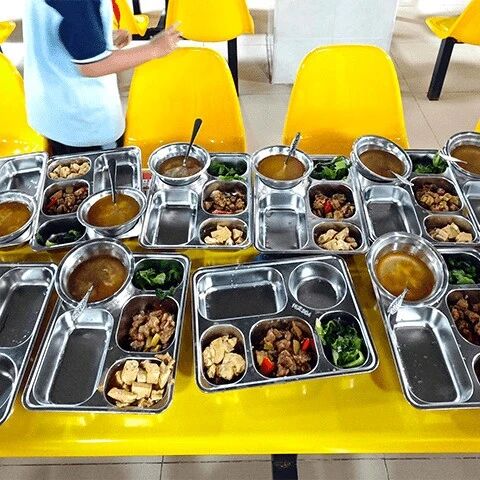
Core Viewpoint - The article discusses the controversy surrounding Shanghai Lujie, a major player in the school meal supply market, highlighting issues of food safety, quality, and the influence of capital in the education sector [6][24][34]. Group 1: Company Background - Shanghai Lujie, established in 2014, has grown to supply over 500 schools and kindergartens, providing more than 500,000 meals daily, capturing nearly 30% of the market share in Shanghai [8][24]. - The company has faced long-standing complaints from parents regarding the quality of meals, with reports of unappetizing and unhealthy food options [8][10]. Group 2: Recent Controversy - A recent incident involving spoiled shrimp served in school meals has sparked outrage among parents, leading to calls for better quality control and accountability from suppliers [6][10]. - The company was found to have concealed food safety issues, resulting in an investigation by authorities for allegedly failing to report critical safety information [10][11]. Group 3: Financial Insights - Shanghai Lujie operates on a prepayment model, allowing it to accumulate approximately 200 million yuan in funds from meal fees, which can be invested for additional returns [24]. - The company reported revenues of 560 million yuan in 2017, with a net profit margin of 15.7%, significantly higher than many competitors in the food service industry [24][27]. Group 4: Capital Influence - The ownership structure of Shanghai Lujie reveals connections to significant capital players, including the Liu Yonghao family and various offshore entities, raising concerns about accountability and transparency [19][20][22]. - The article suggests that the profit-driven motives of these capital entities may compromise food quality and safety standards in the pursuit of financial gains [6][34]. Group 5: Market Dynamics - The competitive landscape in the school meal sector is characterized by aggressive bidding and rapid expansion, with Shanghai Lujie reportedly winning over 80 contracts since January 2025, surpassing previous years' totals [30][31]. - The pricing model of 18 yuan per meal, with actual costs estimated at 6-8 yuan, pressures the company to cut corners, potentially impacting food quality [33][34].
娃哈哈改名,宗馥莉太想进步了
36氪· 2025-09-28 13:00
Core Viewpoint - Wahaha is facing significant challenges in maintaining its market position and growth, with declining sales in key products and markets, particularly in the beverage sector, indicating a need for strategic transformation and innovation [4][5][6]. Group 1: Sales Performance and Market Position - Wahaha's sales growth has slowed, with a notable decline in key products like AD calcium milk and bottled water, particularly in the East China region, where sales dropped by 37% and market share fell from 18% to 12% [5][6]. - The company's revenue has remained relatively stagnant over the past eight years, fluctuating around 50 billion, with a brief spike to 70 billion in 2024 attributed to emotional consumer spending following the founder's passing [11][12]. - In comparison to competitors like Nongfu Spring, Wahaha's growth has been lackluster, with Nongfu Spring showing faster revenue growth and innovation in product offerings [15][16]. Group 2: Market Dynamics and Competition - The bottled water market is highly competitive, with Wahaha losing market share to brands like Nongfu Spring and Master Kong, which have adopted aggressive pricing and marketing strategies [17][27]. - The overall bottled water market in China is projected to grow significantly, with a market size expected to exceed 310 billion by 2025, indicating a lucrative opportunity for brands that can effectively capture market share [25][26]. - Wahaha's market share in bottled water remains stagnant at around 9.9%, with major competitors holding a combined market share of over 80% [29]. Group 3: Strategic Initiatives and Future Outlook - Under the leadership of Zong Fuli, Wahaha is focusing on expanding its bottled water and tea product lines, with a goal to revitalize the brand and achieve a revenue target of 100 billion [20][21]. - The introduction of new products, such as sugar-free tea, has not yet gained significant traction in the market, highlighting the challenges Wahaha faces in innovating and adapting to consumer preferences [34][39]. - The launch of the new brand "Wah Xiaozong" aims to streamline decision-making and enhance market responsiveness, potentially positioning Wahaha for a more agile transformation in the beverage industry [41][42].

伊利和京东,将搭子进行到底
36氪· 2025-09-28 13:00
Core Viewpoint - The article discusses how major brands, particularly Yili, are leveraging the concept of "搭子" (partner) economics to integrate their products into consumer behavior during festive seasons, particularly focusing on the Mid-Autumn Festival [2][24]. Group 1: Consumer Behavior and Marketing Strategy - Consumer behavior during the Mid-Autumn Festival shows a trend towards simplicity, with shoppers preferring straightforward choices that minimize decision fatigue [3][7]. - Yili's strategy contrasts with other brands by positioning itself as a complementary product rather than competing for the spotlight, effectively embedding itself into the festive shopping experience [4][8]. - The collaboration between Yili and JD.com emphasizes a seamless purchasing experience, allowing consumers to add milk to their cart while selecting mooncakes, thus enhancing the overall shopping convenience [11][20]. Group 2: Event Marketing and Brand Positioning - Yili's approach during the Mid-Autumn Festival is characterized by a focus on being a "搭子" (partner) rather than a main character, which helps alleviate consumer pressure in gift selection [8][22]. - The partnership with JD.com has evolved through three significant marketing campaigns, each building on the previous one to create a more integrated consumer experience [14][20]. - The "团圆客栈" (Reunion Inn) initiative illustrates how Yili and JD.com are extending their marketing narrative from online to offline, creating a tangible connection with consumers [10][15]. Group 3: Long-term Strategy and Brand Evolution - Yili's consistent strategy over the past year reflects a commitment to long-term brand positioning rather than short-term marketing spikes, focusing on creating habitual consumer behaviors [24][26]. - The iterative nature of Yili's marketing campaigns demonstrates a shift in the dairy industry towards embedding products into everyday consumer choices rather than competing solely for attention during festive seasons [25][26]. - The success of Yili's "搭子" strategy indicates a broader trend in the industry where brands are encouraged to find their place within the consumer's shopping journey, moving away from traditional competition for visibility [22][26].