半导体芯闻

Search documents
台积电魏哲家:技术不是10个人、100个人可以偷的
半导体芯闻· 2025-08-08 10:54
Core Viewpoint - The article discusses a significant leak of confidential information related to TSMC's 2nm process, which has raised concerns about the ongoing chip competition between Taiwan and Japan. The leak was reportedly facilitated by a former TSMC engineer who used remote work to capture sensitive information [1][2]. Group 1: Incident Overview - TSMC's confidential information was leaked to Tokyo Electron (TEL), highlighting the competitive landscape in the semiconductor industry between Taiwan and Japan [1]. - The leak involved a former TSMC engineer who used a company-issued laptop to access confidential files and then photographed them with a personal phone, circumventing digital monitoring systems [2]. - TSMC's internal investigation was triggered by unusual access to confidential files, leading to the identification of the involved employees and subsequent legal action [2]. Group 2: Security Measures and Challenges - TSMC has stringent security measures in place, including restrictions on mobile phone usage within facilities and monitoring systems to detect anomalies [1]. - Despite these measures, the complexity of chip manufacturing processes, which can involve hundreds to thousands of steps, makes it challenging to fully replicate the technology even if some information is leaked [1]. - TSMC's chairman has previously stated that the current technological advancements make it extremely difficult for individuals to steal or replicate their processes [1].


英伟达探索的CoWoP封装技术是什么?
半导体芯闻· 2025-08-07 10:33
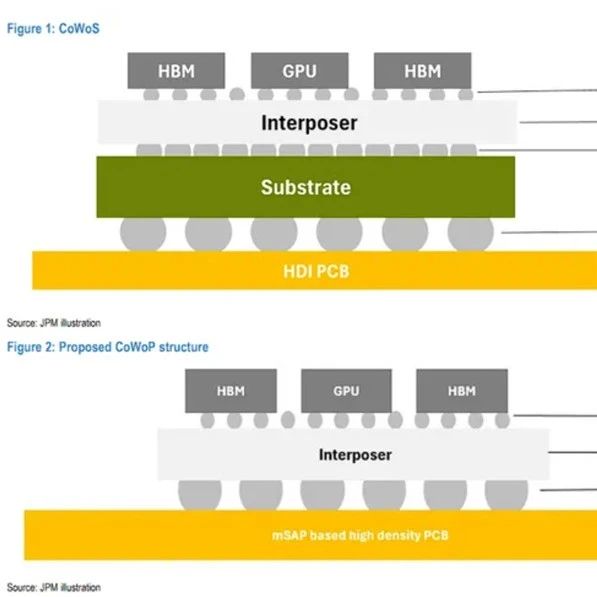
Core Viewpoint - Morgan Stanley reports that Nvidia is exploring a revolutionary chip packaging technology called CoWoP (Chip-on-Wafer-on-PCB), which is expected to replace the existing CoWoS packaging solution [2][3]. Group 1: CoWoP Technology Analysis - CoWoP utilizes advanced high-density PCB technology, eliminating the ABF substrate layer found in CoWoS packaging, and directly connecting the intermediary layer to the PCB [4]. - The potential advantages of CoWoP include simplified system structure, improved thermal management, lower power consumption, reduced substrate costs, and potential reduction in backend testing steps [10]. Group 2: Supply Chain Impact - The introduction of CoWoP is seen as negative news for ABF substrate manufacturers, as the added value of substrates may significantly decrease or disappear [8]. - Conversely, PCB manufacturers are presented with significant opportunities, particularly those with advanced mSAP capabilities and deep knowledge of substrate/packaging processes [8]. Group 3: Commercialization Challenges - Morgan Stanley analysts believe that the commercialization probability of CoWoP in the medium term is low due to multiple technical challenges [3][9]. - Current PCB technologies, even with mSAP, can only achieve line/space widths of 20-30 microns, which is still far from the desired performance levels [11]. Group 4: Nvidia's Innovation Leadership - Regardless of the success of CoWoP, Nvidia continues to lead innovations in data center AI infrastructure through a system-level approach [12]. - Nvidia's ongoing innovation capabilities are expected to maintain its leading position in the GPU sector and dominate competition with ASICs in the coming years [12].

汽车芯片正在经历怎样的巨变?
半导体芯闻· 2025-08-07 10:33
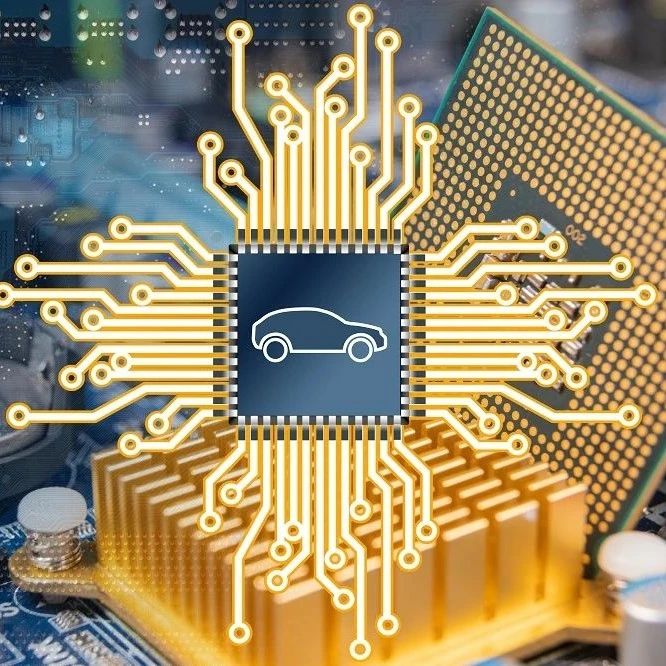
Core Viewpoint - The automotive industry is undergoing a fundamental transformation, focusing on software-defined vehicles and the integration of artificial intelligence across various design and usage scenarios [2][3][15]. Group 1: Transition to Software-Defined Vehicles - The shift to software-defined vehicles is central to the automotive ecosystem, allowing for faster product launches and updates, ensuring compliance with new protocols and standards [2]. - Traditional hardware-defined methods are less flexible and more costly, putting conventional automakers at a competitive disadvantage [2]. - The adoption of continuous integration/continuous deployment (CI/CD) and DevOps practices is crucial for integrating complex systems within a virtual platform [3]. Group 2: Challenges and Innovations - Automakers face challenges related to in-vehicle cybersecurity, supply chain security, and compliance with market access regulations as they accelerate the transition to software-defined vehicles [3][4]. - The pursuit of higher levels of automation and digitalization of the cockpit is essential for enhancing user experience [3]. - The industry is moving towards centralized system management in electric vehicles, including efficient battery management systems [3]. Group 3: AI Integration - AI is expected to play a significant role in vehicle design and operation, with a focus on predicting AI performance and enhancing automated driving systems [6][9]. - The complexity of AI systems in vehicles necessitates high efficiency, especially for Level 5 autonomous vehicles, which may have over 40 sensors and billions of lines of code [6][9]. - AI is becoming a differentiating factor for automakers, with applications in user experience and safety features, such as driver monitoring systems [10]. Group 4: Market Dynamics and Supply Chain - The automotive industry is witnessing a shift towards tighter relationships between automakers and suppliers, with a trend towards vertical integration [16]. - Smaller SoC and AI accelerator companies are gaining opportunities as automakers seek to control their ecosystems more tightly [16]. - The industry is moving back towards a model where automakers dominate their ecosystems, reminiscent of the early days of vertical integration [16].

一家GPU初创公司浮出水面,Raja Koduri创立,基于RISC-V
半导体芯闻· 2025-08-07 10:33
Core Viewpoint - Oxmiq Labs, founded by legendary GPU architect Raja Koduri, aims to revolutionize GPU architecture and software by focusing on a software-first approach and developing a new GPU IP that allows for seamless execution of CUDA applications on non-Nvidia hardware without code modification [2][4][12]. Group 1: Company Overview - Oxmiq Labs is a new GPU software and IP startup with a team of over 500 years of combined experience in GPU and AI architecture [2]. - The company aspires to become the next generation of Arm, indicating a focus on flexible and scalable GPU solutions [2]. Group 2: Technology and Innovation - Oxmiq Labs is developing a GPU architecture that integrates RISC-V cores, near-memory computing, and advanced optical transmission technologies, aiming to balance flexibility and performance for multi-modal AI workloads [6][14]. - The OxCore GPU IP integrates scalar, vector, and tensor computing engines in a modular architecture, supporting near-memory and memory computing capabilities [6][8]. Group 3: Software Strategy - The company emphasizes a software-first strategy, with a comprehensive software stack designed to abstract the complexity of heterogeneous hardware and support AI and graphics workloads across various platforms [9][10]. - OXCapsule serves as the core of Oxmiq's software ecosystem, providing a unified runtime and scheduling layer for workload management [10]. Group 4: Product Offerings - Oxmiq offers a chiplet-based system-on-chip (SoC) builder, OxQuilt, allowing customers to create integrated computing clusters tailored to specific workload requirements [8]. - OXPython, a flagship component, enables Python-based CUDA applications to run seamlessly on non-Nvidia hardware, showcasing the company's commitment to breaking hardware silos [12][13]. Group 5: Funding and Market Position - Oxmiq Labs has secured $20 million in seed funding from notable tech investors, including MediaTek, and has achieved initial software revenue [14]. - The company aims to avoid the high capital demands typically associated with chip startups by prioritizing an IP licensing model [14].

中芯国际最新财报,营收同比大增
半导体芯闻· 2025-08-07 10:33
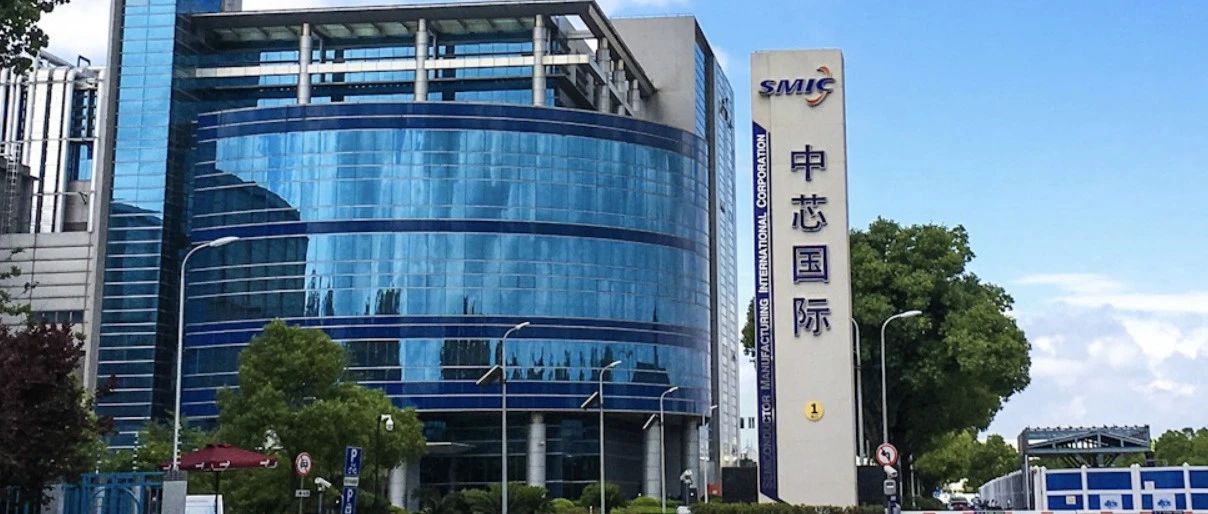
Core Viewpoint - SMIC reported a revenue of $2.209 billion for Q2 2025, representing a year-on-year growth of 16.2% and a gross margin of 20.4% [2][3]. Financial Performance - Q2 2025 revenue decreased by 1.7% compared to Q1 2025, but increased by 16.2% compared to Q2 2024 [3]. - Gross profit for Q2 2025 was $449.799 million, down 11.1% from Q1 2025, but up 69.7% from Q2 2024 [3]. - Operating profit fell by 51.3% quarter-on-quarter to $150.677 million, but increased by 72.9% year-on-year [3]. - Net profit for Q2 2025 was $146.681 million, a decrease of 54.6% from Q1 2025 and a decline of 14.9% from Q2 2024 [3]. Revenue Breakdown - In Q2 2025, revenue from the Chinese market accounted for 84.1%, slightly down from 84.3% in Q1 2025 but significantly up from 80.3% in Q2 2024 [5][6]. - The U.S. market contributed 12.9% of revenue, stable compared to Q1 2025 but down from 16.0% in Q2 2024 [5][6]. - The Eurasian market's contribution was 3.0%, slightly down from both Q1 2025 and Q2 2024 [5][6]. Product and Application Analysis - Wafer revenue constituted 94.6% of total revenue in Q2 2025, a slight decrease from 95.2% in Q1 2025 but an increase from 92.9% in Q2 2024 [5][6]. - Smartphone applications contributed 25.2% to wafer revenue, up from 24.2% in Q1 2025 but down from 32.0% in Q2 2024 [7]. - Consumer electronics applications accounted for the highest share at 41.0%, showing growth from both Q1 2025 and Q2 2024 [7]. Capacity and Utilization - The total number of wafers sold in Q2 2025 was 2,390,236, a 4.3% increase from Q1 2025 and a 13.2% increase from Q2 2024 [11]. - Capacity utilization rose to 92.5% in Q2 2025, up from 89.6% in Q1 2025 and significantly higher than 85.2% in Q2 2024 [11]. Capital Expenditure - Capital expenditure for Q2 2025 was $1.885 billion, an increase from $1.415 billion in Q1 2025 [12]. - R&D expenses rose by 22.2% quarter-on-quarter to $181.9 million, indicating a focus on innovation and development [12].

100%芯片关税?这些公司被豁免
半导体芯闻· 2025-08-07 10:33
许多行业高管原本担心会对所有芯片相关产品征收关税,这会扰乱从汽车到家用电器的所有供应 链。 川普总统表示,科技公司可以通过承诺在美国投资来避免新的芯片关税,这使得许多高管已经心知 肚明的一项安排正式化。几乎所有主要科技公司都已承诺增加在美国的业务投资,在过去七个月 里,新承诺的投资总额已超过2万亿美元。 如果您希望可以时常见面,欢迎标星收藏哦~ 来源 :内容来自 wsj & 路透社 。 川普总统表示,将对所有进入美国的芯片征收大约100%的关税,但对承诺在美国本土制造的科技 公司予以豁免。这对于担心新贸易挑战的苹果和其他电子公司来说是一个重大利好。 川普周三宣布这一消息时,正值一个庆祝苹果公司承诺投资1000亿美元的活动。苹果公司已经增 加了在美国的投资,但并未像川普希望的那样将 iPhone 生产线迁至美国。 新的关税豁免对苹果公司首席执行官蒂姆·库克(Tim Cook)来说是一次胜利,他此前曾就对中国 和印度征收关税的影响发出警告。到目前为止,苹果公司已经避免了最严厉的关税,库克在川普第 一任期内也曾获得关税豁免。 "如果你正在进行建设,就不会有任何费用,"川普说。 行业分析师和高管表示,在美国本土制造 ...

Wi-Fi 8即将到来
半导体芯闻· 2025-08-07 10:33
Core Viewpoint - Qualcomm's vision for Wi-Fi 8 focuses on reliability and aims to address issues such as packet loss and connection delays, with a projected launch in 2028 [2][9]. Group 1: Design Philosophy - Qualcomm engineers propose a structural shift in designing standards around degraded conditions rather than optimal ones, targeting a 25% improvement in actual throughput under poor signal quality, interference, or at the network edge [3]. - The approach emphasizes coordination among access points rather than treating them as isolated entities, allowing for shared scheduling of transmissions and improved coverage management [3]. Group 2: Technical Enhancements - New features include Coordinated Space Reuse (Co-SR) and Coordinated Beamforming (Co-BF), which enhance signal quality and coverage while reducing interference, potentially increasing throughput by 15% to 59% depending on deployment density [4]. - Wi-Fi 8 introduces a more refined Modulation and Coding Scheme (MCS) that smooths performance transitions, improving spectrum efficiency during coverage degradation or roaming [6]. - Non-Primary Channel Access (NPCA) allows devices to utilize secondary channels when primary channels are congested, enhancing spectrum efficiency in dense environments [7]. Group 3: Standardization Progress - The draft for Wi-Fi 8 specification 1.0 is expected to be released in Q3 2025, with the Wi-Fi Alliance certification program aiming for January 2028 and final IEEE approval anticipated by mid-2028 [9]. - Unlike previous standards, Wi-Fi 8 is designed as a single-version specification, meaning all core functionalities will be released simultaneously, including mandatory features like coordinated frameworks and seamless roaming logic [11]. - The development process has received over 6,000 technical contributions, focusing on throughput, reliability, connectivity, and future modulation technologies [11].


台积电2nm泄漏,给工程师的教训
半导体芯闻· 2025-08-07 10:33
Core Viewpoint - TSMC's recent disclosure of a leak regarding its 2nm technology has shocked the global semiconductor industry, leading to legal actions against three engineers for allegedly leaking trade secrets [2][4]. Group 1: Incident Overview - TSMC has filed a lawsuit against three engineers, who are talented young professionals with master's degrees from top universities in Taiwan, for allegedly leaking commercial secrets that may violate national security laws [2][4]. - The investigation began in late June and initially targeted a few internal engineers, but it was later discovered that confidential data had been transmitted to a former employee of Tokyo Electron (TEL), a key supplier for TSMC [4][5]. Group 2: Engineer Background - The accused engineer, who worked at TSMC for nearly eight years, was involved in improving the yield of 5nm and 3nm processes before joining TEL in 2022 as a senior marketing specialist [4][5]. - This engineer's direct supervisor is also a former TSMC employee with a prestigious academic background, highlighting the interconnectedness of talent within the industry [4]. Group 3: Nature of the Leak - The accused engineer admitted to collecting confidential data to enhance equipment performance but claimed it was for internal use only, denying any further sharing of the data [4][5]. - TSMC's legal action is a response to the discovery that the engineer had taken nearly a thousand photos of the 2nm process, an unprecedented quantity, prompting the company to take strict disciplinary and legal measures [5]. Group 4: Industry Implications - The case underscores the immense pressure within the semiconductor industry, where engineers may resort to stealing sensitive data to demonstrate their value [5].
TEL、KE、SCREEN、北方华创、盛美、拓荆等晶圆制造前沿力量集结湾芯展2025!
半导体芯闻· 2025-08-07 10:33
Core Viewpoint - The Bay Area Semiconductor Industry Ecosystem Expo (Bay Chip Expo) will take place from October 15 to 17 at the Shenzhen Convention and Exhibition Center, focusing on technological innovation and transformation trends across the entire semiconductor industry chain, featuring over 600 quality semiconductor companies globally [2]. Exhibition Overview - The expo will cover an exhibition area of 60,000 square meters, with four main exhibition zones: wafer manufacturing, compound semiconductors, IC design, and advanced packaging [2]. - The wafer manufacturing zone is highlighted as one of the largest areas, showcasing key segments such as wafer manufacturing and IDM manufacturers, manufacturing equipment, advanced materials, components, and green factory facilities [2]. Exhibits and Participants - The exhibition will feature a wide range of equipment including lithography, etching, cleaning, coating, thin film deposition, ion implantation, polishing, thermal processing, measurement, and testing equipment [3]. - Notable exhibitors include TEL, KE, SCREEN, Hitachi, and Northern Huachuang, among others, who will present their latest technologies and solutions in wafer manufacturing [2][4]. Component and Material Focus - The expo will also showcase various materials such as wafers, electronic specialty gases, chemicals, photolithography materials, polishing materials, precursors, masks, and consumables [5]. - Key exhibitors in materials include Shanghai Silicon Industry, Yiswei Materials, and Jiangfeng, among others [5]. Forums and Discussions - The event will host several forums focusing on wafer manufacturing, semiconductor core components, integrated circuit materials, and international semiconductor equipment technology [9][12][13]. - Topics of discussion will include innovations in advanced etching equipment, semiconductor core component manufacturing processes, and the application of electronic gases in wafer manufacturing [16]. Additional Information - The event will also offer opportunities for networking and collaboration among industry participants, including decision-makers, marketing leaders, and technical innovation professionals [10].

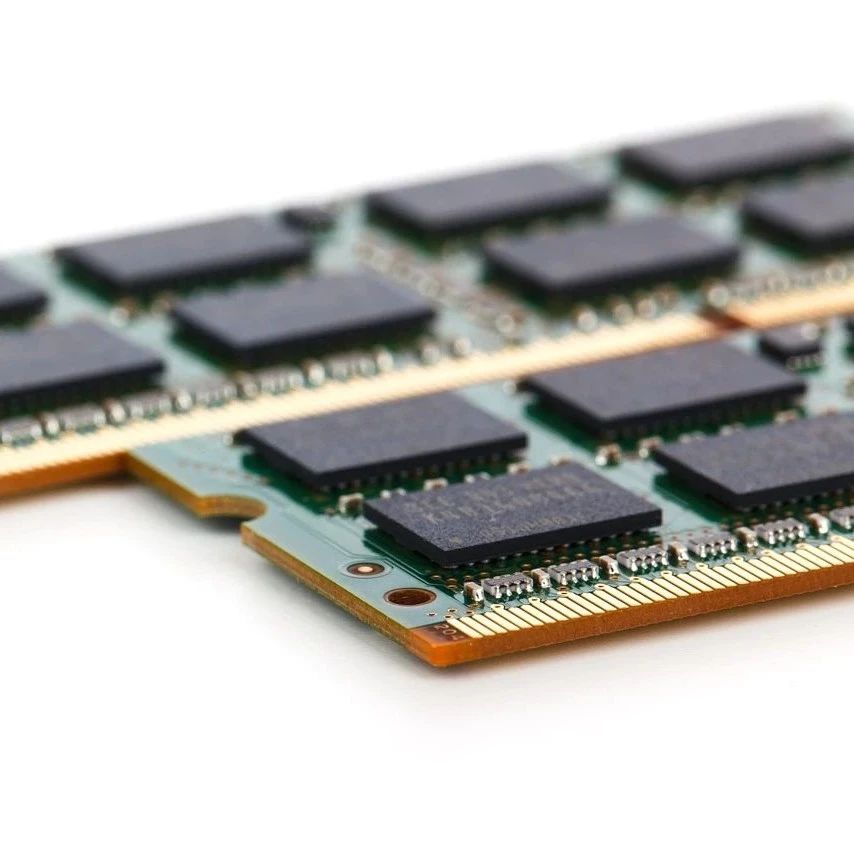
DDR 4,三星重要决定
半导体芯闻· 2025-08-06 11:22
Core Viewpoint - Samsung has decided to extend the production of DDR4 1z DRAM until December 2026, contrary to its previous plan to phase it out by the end of 2025, due to high demand and favorable cost conditions [2][3]. Group 1: Production Decisions - Samsung initially planned to stop DDR4 1z DRAM production by the end of 2025 but has now extended it to December 2026 [2]. - The decision to continue DDR4 production is influenced by the fully depreciated 1z production line, which allows for lower costs and significant contributions to profitability [2]. Group 2: Market Dynamics - Recent price surges in DDR4 DRAM are attributed to a decrease in chip supply, leading to increased short-term demand [3]. - Major DRAM manufacturers, SK Hynix and Micron, have reduced DDR4 DRAM production to boost HBM output, further tightening supply [3]. - As of late July, the price of PC-grade DDR4 8Gb chips rose by 50% to $3.9, with previous months showing significant price increases of 22.22%, 27.27%, and 23.81% [3]. Group 3: Future Implications - Samsung's decision to extend DDR4 production may alleviate current shortages, although prices are expected to stabilize rather than decrease [3]. - The extension indirectly indicates that Samsung's plans to expand HBM production are not progressing as expected [3].