半导体芯闻

Search documents
格创东智引领先进封测新世代:从自动化到自主化的演进之路
半导体芯闻· 2025-10-31 10:18
Core Insights - The article emphasizes the rapid growth of advanced packaging in the semiconductor industry, driven by applications like AI chips and high-performance computing, which present unprecedented challenges for traditional packaging technologies [2][3] - It highlights the complexity of advanced packaging processes, which require deep integration of wafer manufacturing and packaging testing, and the need for digital transformation to enhance efficiency and quality [2][3][4] Challenges in Advanced Packaging - Advanced packaging faces five major challenges: flexible manufacturing, multi-site collaboration, policy environment, integration issues, and market pressure, which are fundamentally management and strategic problems [3][4] - The increasing complexity of processes due to emerging applications like AI, IoT, and 5G is reshaping the semiconductor landscape, necessitating rapid market entry for new products [3][4] Digital Transformation Solutions - The company proposes a systematic solution for digital transformation, emphasizing the integration of technology with business to address real customer issues [6][7] - A shift from technology-driven to business-driven approaches is crucial for successful transformation, as demonstrated by TCL's intelligent manufacturing strategy [6][7] AI and Automation in Manufacturing - The introduction of a fully automated CIM solution tailored for advanced packaging, integrating AI, CIM, and AMHS, is a significant development [9][10] - The article discusses the importance of identifying suitable value scenarios for AI projects, as many fail to deliver value due to poor data quality or unclear objectives [10][11] Strategic Importance of Domestic Solutions - The company's fully domestic solution addresses security risks associated with reliance on foreign suppliers, promoting innovation and collaboration within the semiconductor industry [13][14] - The focus on system collaboration aims to eliminate data silos and enhance operational efficiency by integrating IT and OT systems [13][14] Conclusion and Future Outlook - The article concludes with four core experiences for intelligent manufacturing transformation: shifting to business-driven approaches, optimizing operational costs, integrating lean thinking, and effectively utilizing AI technology [16] - The company aims to lead in the advanced packaging sector, advocating for digital transformation to support the high-quality development of China's semiconductor industry amidst geopolitical uncertainties [16]

联发科ASIC业务,拿下大客户
半导体芯闻· 2025-10-31 10:18
Core Viewpoint - MediaTek has secured a second ASIC project expected to contribute revenue starting in 2028, with an overall market size for AI ASIC projected to reach at least $50 billion by 2028, aiming for a market share of 10% to 15% [2]. Group 1: ASIC Projects and Revenue - The first ASIC project is on track to generate approximately $1 billion in revenue by 2026, excluding NRE, and is expected to scale to several billion dollars by 2027 [2]. - The second ASIC project will begin contributing to revenue from 2028 and is anticipated to grow continuously [2]. Group 2: Technology Development and Market Outlook - MediaTek is developing key technologies and IPs, including high-speed interconnects, silicon photonics, 2nm process technology, and 3.5D packaging, which are seen as foundational for advanced chips post-2027 [3]. - The company expects smartphone shipments to increase by 1% to 3% year-on-year in the coming year, with strong sales performance from its flagship chip, Dimensity 9500, despite tight memory supply [3]. Group 3: Financial Performance and Partnerships - The median gross margin for Q4 is projected to be around 46%, slightly down from the previous quarter due to product and revenue mix impacts, with a focus on high-value products to manage cost pressures [3]. - MediaTek is collaborating closely with NVIDIA on the GB10 project and is developing a second-generation product, asserting its technological and timing advantages [3].

刚刚,安世荷兰断供中国
半导体芯闻· 2025-10-31 10:18
Core Viewpoint - Nexperia has suspended wafer supply to its Chinese assembly plant due to local management's failure to comply with contractual payment terms, raising concerns about supply chain disruptions in the automotive industry [2][3]. Group 1: Company Actions and Implications - Nexperia's suspension of wafer supply is a direct consequence of non-compliance with payment terms by the local management in Dongguan, China [2]. - The Dutch government has taken control of Nexperia from its Chinese parent company, Wingtech, amid ongoing disputes, including the replacement of Nexperia's Chinese CEO [2][4]. - Nexperia is developing alternative solutions to ensure continued wafer supply to its customers, indicating a commitment to resolving the issues without exiting the Chinese market [2]. Group 2: Industry Impact and Reactions - The suspension of supplies has raised alarms among global automotive manufacturers, with Stellantis establishing a "war room" to monitor the situation [3]. - Japanese automaker Nissan has reported sufficient chip inventory to last until the first week of November, indicating a temporary buffer against supply disruptions [3]. - Concerns have been raised about potential production interruptions in the automotive sector due to shortages of critical components, including transistors and logic chips [4]. Group 3: Governance and Legal Issues - The Dutch Ministry of Economic Affairs cited "serious governance deficiencies" as a reason for taking control of Nexperia, which has led to legal actions against its former CEO [4][5]. - Allegations have surfaced regarding the former CEO's plans to transfer equipment and patents from Europe to China, raising concerns about the integrity of Nexperia's operations [5]. - Wingtech has denied any wrongdoing, asserting that technology sharing is standard practice in the semiconductor industry and refuting claims of technology theft [5][6].


英伟达,5万亿
半导体芯闻· 2025-10-30 10:34
Core Viewpoint - Nvidia has achieved a significant milestone by becoming the first company globally to reach a market capitalization of $5 trillion, driven by the increasing demand for its chips amid the optimism surrounding artificial intelligence [1] Group 1: Nvidia's Market Performance - Nvidia's stock price surged to a historical high, reaching over $212, with a notable increase of 5.6% in one trading session, reflecting investor optimism regarding its sales prospects in China [1] - The company's market capitalization has grown rapidly, reaching $1 trillion in June 2023 and $4 trillion just three months prior to hitting the $5 trillion mark [1] - Nvidia's stock has increased by over 50% this year, despite previous declines due to geopolitical tensions and trade policies [5] Group 2: AI and Market Dynamics - The AI investment boom has significantly contributed to the overall rise in technology stocks, with 80% of the remarkable gains in the U.S. stock market this year attributed to AI-related companies [2] - Concerns about a potential AI bubble and overvaluation of tech companies are growing, with warnings issued by the Bank of England and the International Monetary Fund [2] - Nvidia's partnerships with leading AI firms like OpenAI and Oracle have solidified its position as a key player in the AI sector, further driving demand for its chips [1][2] Group 3: Strategic Moves and Future Outlook - Nvidia's CEO, Jensen Huang, announced plans for collaboration and projected that AI chip orders could reach $500 billion by next year [5] - The company has navigated challenges in the Chinese market, including a previous ban on selling advanced chips, which was lifted under a new agreement requiring Nvidia to pay 15% of its revenue from China to the U.S. government [5]

SIC大厂,股价暴跌
半导体芯闻· 2025-10-30 10:34
Core Viewpoint - Wolfspeed Inc experienced a significant stock price drop of 10.8% despite reporting better-than-expected first-quarter results, primarily due to disappointing second-quarter revenue guidance that fell short of analyst expectations [1]. Financial Performance - In the first quarter, Wolfspeed reported a non-GAAP loss per share of $0.55, which was better than the expected loss of $0.67. Revenue reached $196.8 million, slightly above the consensus estimate of $192.66 million, marking a year-over-year increase of 1.1% [1]. - The company's gross margin on a non-GAAP basis deteriorated significantly to -26%, compared to 3% in the same period last year. The costs associated with underutilization at the Mohawk Valley and Siler City plants amounted to $47 million, up from $26 million a year earlier [2]. Future Outlook - Wolfspeed's second-quarter revenue guidance is projected to be between $150 million and $190 million, which is significantly lower than the analyst expectation of $202.7 million. The midpoint of this guidance ($170 million) is 16% below the consensus estimate [1]. - The anticipated sequential revenue decline is attributed to accelerated customer procurement in the first quarter, as some clients increased inventory ahead of the planned closure of the Durham plant by year-end. Additionally, certain customers sought alternative suppliers during the company's bankruptcy proceedings [1]. Cash Position - At the end of the quarter, Wolfspeed held $926 million in cash, cash equivalents, and short-term investments. The company officially emerged from Chapter 11 bankruptcy protection on September 29, 2025, and plans to provide a comprehensive financial update in the first half of 2026 [2].

摩尔线程,IPO获批文
半导体芯闻· 2025-10-30 10:34
Core Viewpoint - The article discusses the recent approval of Moores Threads Intelligent Technology (Beijing) Co., Ltd. for its IPO on the Sci-Tech Innovation Board, highlighting its significant revenue growth and strategic focus on AI computing and GPU development [1][2]. Financial Performance - In the first half of 2025, Moores Threads achieved a revenue of 702 million yuan, surpassing the total revenue of 438 million yuan for the entire year of 2024, attributed to increased demand for large model training, inference deployment, and GPU cloud services [1]. - The net loss for the first half of 2025 was 271 million yuan, a decrease of 56.02% year-on-year and 69.07% quarter-on-quarter, indicating an improving financial situation [1]. - The company expects to achieve consolidated profitability by 2027, with government subsidies contributing approximately 20 million yuan, 200 million yuan, and 300 million yuan in 2025, 2026, and 2027, respectively [1]. Product Development and Market Position - Moores Threads focuses on full-function GPU development, with product lines including AI computing, graphics acceleration, and intelligent SoC for edge computing [2]. - The latest "Pinghu" architecture chip S5000 supports FP8 precision and has a threefold increase in inter-chip bandwidth to 800 GB/s, with a maximum memory capacity of 80 GB, compared to NVIDIA's H20 chip [2]. - AI computing products accounted for 94.85% of total revenue in the first half of 2025, up from 77.63% in 2024, with cluster and board card sales being the primary revenue sources [3]. Sales and Market Strategy - In 2025, Moores Threads plans to sell five AI computing clusters, with one being the "Pinghu" cluster, generating nearly 400 million yuan in revenue, representing 57% of total revenue for the first half of the year [4]. - The company is negotiating project contracts exceeding 1.7 billion yuan in the AI computing sector, primarily focused on the Pinghu series clusters [4]. - Despite the growth in AI computing, the graphics acceleration segment is facing challenges, with the first-generation "Sudi" GPU nearing the end of its lifecycle and the second-generation "Chunxiao" product facing competition from NVIDIA [5]. Future Outlook - Moores Threads is working on the development of a new generation of graphics chips to address the declining revenue and market share in the graphics acceleration segment [5].

AI驱动、国产破局!CSPT 2025解码半导体封测突破路径
半导体芯闻· 2025-10-30 10:34
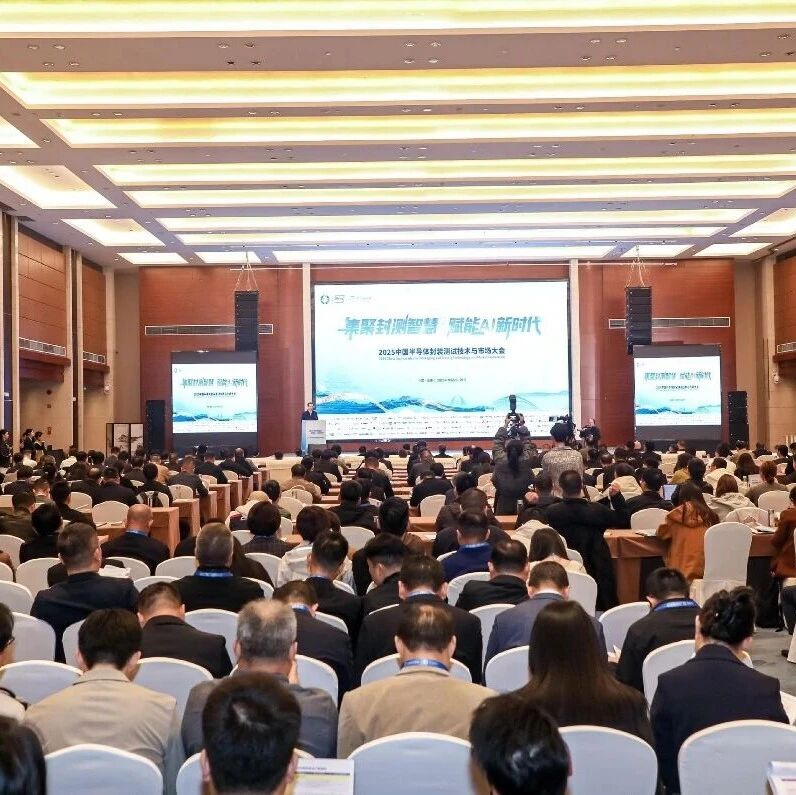
Core Viewpoint - The semiconductor packaging and testing industry is experiencing rapid growth driven by the demand for advanced packaging technologies, particularly in AI and high-performance computing (HPC) sectors. The global advanced packaging market is projected to reach $56.9 billion by 2025, with a compound annual growth rate (CAGR) of 9.6%, and is expected to grow to $78.6 billion by 2028 [1][10]. Group 1: Industry Trends and Developments - The 23rd China Semiconductor Packaging and Testing Exhibition (CSPT 2025) was held in Jiangsu, focusing on themes such as "3D IC technology iteration," "advanced packaging ecosystem collaboration," and "AI and packaging integration" [3][9]. - The advanced packaging market is anticipated to see significant growth, with the 2.5D/3D packaging market expected to grow at a CAGR of nearly 20% from 2024 to 2030, reaching $83 billion by 2030 [31][52]. - The demand for advanced packaging is driven by the need for higher performance and efficiency in AI applications, with the global advanced packaging market projected to surpass traditional packaging sales for the first time in 2025 [52][56]. Group 2: Regional Developments - Huai'an High-tech Zone is positioning itself as a new growth pole for the semiconductor industry in the Yangtze River Delta, with a comprehensive layout across the semiconductor design, manufacturing, packaging, and application sectors [4][7]. - In the first half of 2025, Huai'an's electronic information industry revenue reached 41.3 billion yuan, marking a 10.9% year-on-year increase, indicating robust industrial growth [7][8]. - The region has established a strong talent pool with 420,000 technical professionals and a favorable business environment, including financial support and incentives for semiconductor companies [8][9]. Group 3: Technological Innovations - Silicon Core Technology launched the "3Sheng Integration" platform, addressing challenges in advanced packaging EDA (Electronic Design Automation) for 2.5D/3D technologies, facilitating the integration of Chiplet and 3D IC designs [10][12]. - The platform supports a full-link toolchain from architecture design to testing and verification, enabling efficient design and integration of heterogeneous chips [12][13]. - Advanced packaging technologies such as CoWoS and hybrid bonding are becoming essential for AI chip performance, with significant advancements in interconnect technology [22][52]. Group 4: Key Players and Strategies - Rongxin Semiconductor is focusing on innovative strategies in the advanced packaging sector, leveraging its expertise in Chiplet technology and targeting AI-driven applications [20][23]. - Jiangsu Qisheng Microelectronics is emphasizing the integration of advanced packaging with display driver chips, aiming to enhance performance and reliability in high-density interconnect scenarios [24][27]. - North Huachuang is providing comprehensive equipment solutions for advanced packaging, addressing the growing demand for high-performance packaging technologies [29][31]. Group 5: Challenges and Solutions - The industry faces challenges such as thermal management and precision in advanced packaging processes, necessitating innovative solutions and collaboration across the supply chain [18][19][32]. - Companies like Aixin Semiconductor are developing advanced detection equipment to ensure quality control in packaging processes, addressing the need for high precision in defect detection [58][61]. - The focus on domestic equipment manufacturing is crucial for reducing reliance on imports and enhancing the competitiveness of the semiconductor industry in China [54][57].
安世芯片短缺,导致车厂停产
半导体芯闻· 2025-10-30 10:34
Core Viewpoint - Honda has halted car production in Mexico due to a semiconductor shortage caused by geopolitical tensions surrounding Nexperia, a semiconductor manufacturer based in the Netherlands, which has led to supply chain disruptions for global automakers [1][2]. Group 1: Honda's Production Impact - Honda announced the suspension of production at its Celaya plant in Mexico, which has an annual capacity of 200,000 vehicles, primarily producing the HR-V SUV [1]. - The company has also adjusted production in North America, where it generates 40% of its global sales, indicating potential performance declines if the production issues persist [1][2]. Group 2: Global Automotive Industry Response - Global automakers are preparing to reduce production due to the semiconductor supply chain disruptions, with Honda already cutting production in its Canadian plant by 50% [2]. - The European Automobile Manufacturers Association warned that European car manufacturers might be forced to halt production within days due to dwindling inventory [3]. - Ford's CEO highlighted the semiconductor dispute as a political issue, emphasizing the urgency of addressing the situation to mitigate production impacts [3]. Group 3: Other Automakers' Situations - General Motors' CEO indicated that the chip supply constraints could affect production, while Stellantis is working with Nexperia and other suppliers to assess potential impacts [4]. - Toyota reported limited immediate effects from the semiconductor export restrictions but acknowledged it as a risk among many challenges [4]. - Nissan stated that its current chip inventory is sufficient to last until the first week of November, although the long-term impact remains uncertain [5].


长鑫LPDDR5X发布,10667Mbps速率,一年赶超国际节奏
半导体芯闻· 2025-10-30 10:34
Core Viewpoint - Changxin Storage has officially launched its LPDDR5X products, achieving industry-leading speeds of 10667Mbps, marking a significant breakthrough for domestic memory chips [1][3]. Product Launch and Specifications - The LPDDR5X products cover speeds of 8533Mbps, 9600Mbps, and 10667Mbps, with various packaging solutions including 12GB, 16GB, 24GB, and 32GB options [1]. - The 10667Mbps speed has been successfully sampled to customers, positioning Changxin's products alongside those of international leaders like SK Hynix [3]. Market Impact and Performance - The launch addresses the increasing demand for high-speed memory due to the rise of local AI models and 8K video processing, which require higher data throughput [4]. - Changxin's LPDDR5X products have been shown to outperform previous generations, with a 30% faster response time and a 50% improvement in voice translation efficiency compared to lower-speed versions [4]. Technological Innovations - Changxin has introduced the uPoP® packaging technology, which aims to meet the demands for thinner and lighter mobile devices while enhancing performance [6]. - The ongoing development of HiTPoP packaging technology is expected to further reduce thickness and improve compatibility with existing motherboard designs, potentially achieving the industry's thinnest memory at 0.58mm [6]. Strategic Positioning - The advancements by Changxin create significant supply gaps in the domestic high-end smartphone and smart vehicle industries, countering price pressures from reduced production by Korean manufacturers [7]. - The ability to produce high-end memory in volume and the development of core technologies for integration with domestic SoCs represent a shift from "catching up" to "keeping pace" in the domestic storage market [7].

第106届中国电子展集成电路展区阵容揭晓,“半导体行业观察”独家参会福利上线
半导体芯闻· 2025-10-30 10:34
Core Insights - The 106th China Electronics Show will take place from November 5-7, 2025, at the Shanghai New International Expo Center, featuring a 25,000 square meter exhibition area and over 600 participating companies, focusing on the entire electronic industry chain [1] - The event aims to build a collaborative innovation ecosystem and serve as a core platform for the high-quality development of China's electronic information industry [1] Exhibition Highlights - The exhibition will feature dedicated areas for integrated circuits and semiconductor equipment, showcasing key players such as Huada Semiconductor, China Weapon Industry 214 Research Institute, and others, emphasizing systematic breakthroughs and collaborative innovations in advanced design and manufacturing processes [2] - The event is expected to attract around 20,000 professional visitors [1] Forums and Events - Multiple high-end forums and competitions will be held during the exhibition, gathering experts, industry leaders, and technical elites to focus on critical areas such as semiconductor equipment, integrated circuits, automotive electronics, and smart manufacturing [3] - Specific forums include the "2025 Domestic Semiconductor Equipment and Core Components New Progress Forum" and the "8th China IC Unicorn Forum," among others, scheduled across various dates and locations within the exhibition [4][9] Detailed Agenda - The agenda for the "2025 Domestic Semiconductor Equipment and Core Components New Progress Forum" includes discussions on challenges and advancements in domestic semiconductor equipment, featuring speakers from leading companies and institutions [7][8] - The "8th China IC Unicorn Forum" will cover topics such as programmable computing base chips and the future of RISC-V architecture, with presentations from various industry experts [9] - The "21st China (Yangtze River Delta) Automotive Electronics Industry Chain Summit Forum" will address the reshaping of the global automotive industry chain and advancements in automotive electronics [10]