半导体芯闻

Search documents
台积电供应商,出售10亿美元业务
半导体芯闻· 2025-10-13 10:26
Core Insights - MKS Instruments is planning to sell its specialty chemicals division, valued at approximately $1 billion, as part of a strategic shift to capitalize on the growing demand for artificial intelligence infrastructure [1] - The company aims to retain its semiconductor and circuit board manufacturing equipment business while divesting from the chemicals sector, which was acquired in 2021 for $5.1 billion [1] - The sale process is reportedly in its later stages, attracting interest from various strategic buyers and private equity firms [2] Group 1: Company Strategy - MKS Instruments is responding to the surge in semiconductor demand driven by advancements in AI and complex electronic applications [2] - The company’s semiconductor and electronics division has exceeded analyst revenue expectations in recent quarters, indicating strong market performance [2] - MKS is focused on enhancing its tools and systems to meet the increasing needs of major chip manufacturers like TSMC, Applied Materials, and Lam Research [1] Group 2: Market Context - The global AI boom is leading to increased investment in semiconductor supply chains, with companies expanding capacity to meet the demand for advanced chips [2] - The interest in MKS's chemicals division aligns with broader market trends, as evidenced by the recent acquisition of BASF's coatings division by Carlyle Group for €7.7 billion [2]

三星HBM4,责任重大
半导体芯闻· 2025-10-13 10:26
Core Viewpoint - Samsung Electronics is betting on the future of HBM4 technology, aiming to surpass competitors in performance and market share despite initial delays in sample delivery [2][3]. Group 1: HBM4 Development and Performance - NVIDIA has decided to raise the operational speed standards for the sixth-generation high bandwidth memory (HBM4), influenced by Samsung Electronics' capabilities [2]. - Samsung Electronics is confident that its HBM4 performance will exceed international semiconductor standards, despite being behind SK Hynix and Micron in initial sample deliveries [2]. - The HBM4 will utilize 10nm process technology, which is a generation ahead of competitors, with Samsung's logic chip being manufactured using a 4nm process [3]. Group 2: Market Position and Strategy - Samsung Electronics has historically ceded market share to competitors but is now focused on HBM4 to regain its position [3]. - The rapid commercialization of 1c DRAM technology is expected to create a supply-demand imbalance in the DRAM market next year, presenting an opportunity for Samsung [3]. - Samsung has established a mass production system to respond quickly to market demands, reminiscent of its previous strategies that led to dominance in the DRAM market [3]. Group 3: Risks and Challenges - The validation process for HBM4 on NVIDIA's systems may encounter unexpected quality issues, which could delay testing and impact investments [4]. - Samsung must deliver successful results with HBM4 to meet shareholder expectations after previous setbacks with HBM3E [4].
闻泰科技:坚决反对
半导体芯闻· 2025-10-12 14:35
Core Viewpoint - The article discusses the recent intervention by the Dutch government regarding Nexperia, a subsidiary of Wentech Technology, which has led to significant operational restrictions and legal actions by foreign executives within the company [1][2][3]. Group 1: Government Intervention - On September 30, 2025, the Dutch Ministry of Economic Affairs issued an order prohibiting Nexperia and its global subsidiaries from making any adjustments to their assets, intellectual property, business, or personnel for one year [2][11]. - Following this, on October 1, 2025, Nexperia's legal representatives filed an urgent request for an investigation and temporary measures with the corporate court, supported by other executives [2][12]. Group 2: Court Rulings - On October 7, 2025, the Dutch corporate court ruled to suspend Zhang Xuezheng from his roles as a non-executive director and executive director at Nexperia, effectively preventing him from fulfilling his CEO duties [3][13]. - The court appointed an independent foreign individual as a non-executive director with decisive voting rights and the authority to represent Nexperia independently [3][13]. Group 3: Operational Impact - Despite the government order and court ruling, Nexperia's daily operations continue, but the company faces temporary changes or delays in decision-making processes [4][14]. - Wentech's control over Nexperia is currently limited, although the economic benefits as a shareholder remain unaffected [4][15]. Group 4: Legal and Strategic Responses - The company is actively communicating with suppliers and customers to maintain stability and is exploring legal remedies while engaging with government departments for support [5][16]. - Wentech emphasizes its commitment to protecting shareholder rights and maintaining operational integrity amidst external pressures [26][27]. Group 5: Financial Performance and Contributions - Nexperia's revenue peaked at €2.36 billion in 2022, with a gross margin increase from 25% in 2020 to 42.4% in 2022 [24]. - The company has significantly increased its R&D investment, from €112 million in 2019 to €284 million in 2024, with a notable rise in patent applications [25][24].


特朗普宣布对华加征100%关税 限制关键软件出口
半导体芯闻· 2025-10-11 10:34
Core Viewpoint - The article discusses the escalating trade tensions between the U.S. and China, particularly focusing on Trump's announcement of a 100% additional tariff on Chinese goods and the implementation of export controls on "critical software" [1][3]. Group 1: Tariffs and Trade Policies - Trump announced that starting November 1, a 100% additional tariff will be imposed on Chinese goods, raising the average tariff on Chinese imports to over 150% from the current 57% [1]. - This tariff increase is a response to China's recent export controls on rare earth elements, which require foreign companies to obtain special approval for exporting these materials [1][2]. Group 2: Rare Earth Elements - Rare earth elements are crucial for various high-tech industries, including renewable energy, defense, and advanced manufacturing, with China controlling approximately 60% of global rare earth mining and over 85% of processing [2]. - The tightening of China's rare earth policies aims to create a "technology sovereignty" framework, enhancing its competitive position by controlling high-value rare earth products [2]. Group 3: Software Export Controls - In addition to tariffs, Trump announced restrictions on the export of critical software, where the U.S. currently leads with $649 billion in software exports, accounting for 15.3% of the global market [3]. - The restrictions may target Chinese universities and research institutions, limiting their access to essential AI algorithms and industrial control systems, which are foundational for China's smart manufacturing and semiconductor design [3][5]. Group 4: Long-term Implications - The article suggests that these actions are not merely short-term conflicts but signal the beginning of a global industrial restructuring, where control over core resources and high-end manufacturing will dictate power dynamics [5]. - China's advancements in domestic software alternatives indicate a shift towards a "de-Americanized" technology ecosystem, potentially mitigating the impact of U.S. restrictions in the long run [4][5].

高通芯片,太贵了
半导体芯闻· 2025-10-11 10:34
Core Insights - The rising costs of Qualcomm's Snapdragon chips are a significant factor driving up the prices of Android flagship smartphones, with the latest Snapdragon 8 Elite Gen 5 seeing a price increase of 27% compared to last year's model [1][3] - Companies face a dilemma of either absorbing the increased costs to maintain price competitiveness or raising prices, with many analysts predicting that upcoming Android flagship phones will likely see price hikes due to these chip cost increases [3] Pricing Dynamics - The price of Snapdragon 8 Elite Gen 5 has increased from approximately $220 to a range of $240 to $280, primarily due to rising manufacturing costs at TSMC's 3nm process [1][3] - Historical comparisons show that the price of Snapdragon 8 Elite Gen 5 has doubled compared to the Snapdragon 8 Gen 1 from four years ago, indicating a long-term trend of increasing chip prices impacting smartphone pricing [3] Competitive Strategies - Xiaomi's recent launch of the Xiaomi 17 series adopts a "more for the same price" strategy, aiming to compete directly with Apple despite the rising costs in the semiconductor market [3] - Qualcomm is reportedly considering reallocating some orders back to Samsung and evaluating Samsung's 2nm process to strengthen its negotiating position with TSMC [3]


台积电市占,首超70%
半导体芯闻· 2025-10-11 10:34
Core Insights - TSMC continues to dominate the global foundry market with a market share of 71% in Q2 2023, up from 68% in Q1 2023 and 65% year-over-year [1][3] - The overall pure foundry market sales increased by 33% year-over-year, driven by AI demand and subsidies from China, with TSMC capturing most of this growth [3] - Intel has announced the mass production of 1.8nm chips, marking a significant advancement in the competitive landscape of advanced chip manufacturing [5][6] Market Share and Competition - TSMC's market share growth is attributed to the ramp-up of 3nm production and high utilization rates of 4nm and 5nm processes to meet AI GPU demand [3] - Samsung Electronics holds the second position with an 8% market share, but has seen a decline of 1 percentage point from Q1 2023 and 2 percentage points year-over-year [3] - SMIC ranks third with a 5% market share, also down by 1 percentage point from the previous quarter, benefiting from Chinese government subsidies [3][4] Future Projections - The foundry market is expected to continue growing, with advanced process utilization and overall wafer shipments projected to rise in the second half of 2025 [4][7] - Credence Research forecasts the global foundry industry will grow from $125.56 billion in 2023 to $171.7 billion by 2032, with a CAGR of 3.99% [8][10] Technological Advancements - Intel's new Panther Lake CPU architecture, based on the 18A process node, is set to be produced in Arizona and will be branded under the Intel Core Ultra series [5] - The industry is witnessing a shift towards advanced packaging technologies, such as CoWoS, to enhance chip design efficiency and performance [8][10] Government Influence - Governments in the US, China, and EU are providing substantial subsidies to promote local semiconductor manufacturing and reduce reliance on overseas foundries [9][10] - The European Chips Act aims to strengthen semiconductor projects in Germany, France, and Italy, particularly in automotive and industrial IoT applications [9][10]

英诺赛科,募资14.5亿
半导体芯闻· 2025-10-11 10:34
Core Viewpoint - InnoScience (02577.HK) plans to raise funds through a placement of new H-shares, with a total expected amount of HKD 1.56 billion, aimed at capacity expansion, debt repayment, and working capital [1][2]. Fund Allocation - Approximately 31% of the funds (HKD 482 million, about RMB 442 million) will be used for capacity expansion and product upgrades to meet the growing demand in the GaN power device market [1][2]. - About 24% of the funds (HKD 376 million, about RMB 344 million) will be allocated to repay interest-bearing debts, optimizing the capital structure and reducing financial risk [2]. - Approximately 45% of the funds (HKD 691 million, about RMB 633 million) will be used for working capital and general corporate purposes, including human resources expenses and potential investments [2]. Company Overview - InnoScience, established in 2017, focuses on the research and manufacturing of third-generation semiconductor GaN chips, with a market share of 42.4% in the global GaN power semiconductor sector [2]. - The company is the first globally to achieve mass production of 8-inch silicon-based GaN wafers, significantly improving yield and reducing costs compared to 6-inch wafers [2]. Industry Outlook - The GaN power semiconductor market is expected to grow rapidly, reaching a market size of RMB 50.1 billion by 2028, accounting for 10.1% of the global power semiconductor market [3]. - GaN technology offers advantages over traditional silicon materials, making it suitable for applications in electric vehicles, data centers, and photovoltaic power stations [3].

德国砍芯片补贴
半导体芯闻· 2025-10-11 10:34
Core Viewpoint - The German government has announced a reduction of €3 billion ($3.6 billion) from its planned €15 billion support for the semiconductor industry from 2025 to 2028, reallocating these funds to infrastructure projects, which poses a significant setback for the German semiconductor sector [1]. Group 1 - The reduction in funding is seen as a disastrous signal for Germany's economic vitality and the government's strategic capability in supporting the semiconductor industry [1]. - The German Ministry of Economy emphasized the importance of microelectronics as a key technology for national sovereignty and stated that a long-term strategy is being developed to make Germany's microelectronics industry more attractive [1]. - The semiconductor funding plan is still available for consideration in the 2026 budget and is currently undergoing parliamentary procedures [1]. Group 2 - In March, the German Ministry of Economy indicated that they expected around 12 companies to apply for subsidies, but the actual number of applicants was three times higher than anticipated [2]. - Infineon, a major semiconductor company in Germany, stated that the reduction in subsidies would not affect its already approved or applied plans [2].


全球都在扩产先进封装
半导体芯闻· 2025-10-11 10:34
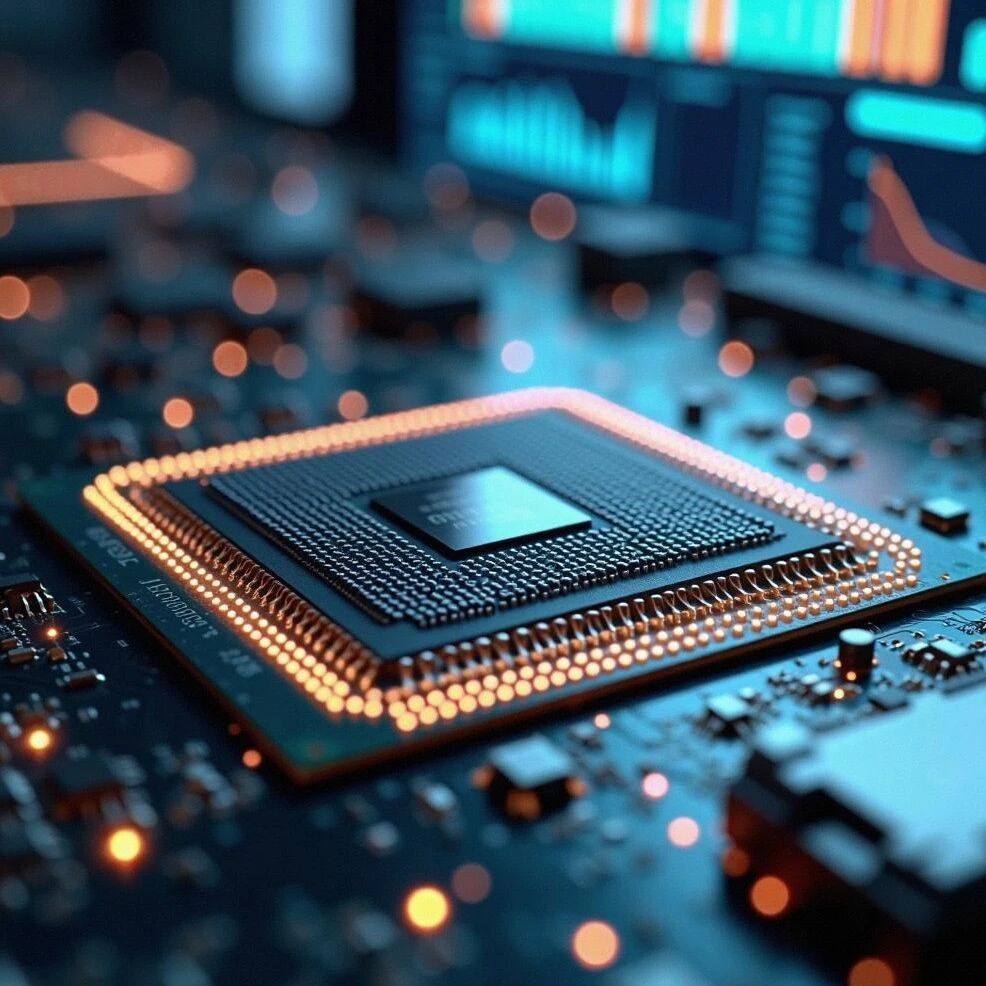
Core Viewpoint - Advanced packaging has become a critical battleground for foundries and packaging companies amid the slowdown of Moore's Law and the explosive demand for AI/HPC solutions. Major players globally, including TSMC, Samsung, ASE, and domestic firms like JCET, Tongfu Microelectronics, and Huatian Technology, are accelerating capacity expansion to seize this key industry opportunity in the coming years [1]. Group 1: Market Trends and Projections - The global advanced chip packaging market is expected to grow from $50.38 billion in 2025 to $79.85 billion by 2032, with a compound annual growth rate (CAGR) of 6.8% [1]. - The demand for high-performance, low-power packaging solutions is driven by AI large models, autonomous driving, cloud computing, and edge computing [1]. Group 2: TSMC's Strategy and Expansion - TSMC's advanced packaging revenue is projected to exceed 10% in 2024, surpassing ASE to become the largest packaging supplier globally, driven by the surge in CoWoS demand [3]. - TSMC plans to invest an additional $100 billion in the U.S., including two advanced packaging plants in Arizona, expected to start construction in the second half of next year and enter mass production by 2028 [5]. - TSMC is set to launch CoWoS-L in 2026 and SoW-X in 2027, enhancing its capabilities significantly in the AI/HPC era [6]. Group 3: Samsung's Cautious Approach - Samsung has adopted a more cautious stance compared to TSMC, previously shelving a $7 billion advanced packaging facility due to uncertain customer demand [7]. - Recent contracts with Tesla and Apple highlight the necessity for Samsung to reconsider its advanced packaging investments [7][8]. - Samsung's integrated model of "memory + foundry + packaging" positions it well for future demand once customer needs become clearer [8]. Group 4: ASE's Expansion and Technological Advancements - ASE is enhancing its advanced packaging capabilities in Kaohsiung, focusing on CoWoS, SoIC, and FOPLP technologies [9]. - ASE's new K18B factory in Kaohsiung will serve AI and HPC demands, while the K28 factory will expand CoWoS testing capacity [9][10]. - ASE's technology evolution includes advancements in 3D Advanced RDL technology, which is crucial for various applications [10][11]. Group 5: Amkor's U.S. Investment - Amkor is expanding its advanced packaging facility in Peoria, Arizona, with a total investment of $2 billion, expected to create over 2,000 jobs [13]. - The new facility will primarily support TSMC's CoWoS and InFO technologies, establishing a local closed-loop for wafer manufacturing and packaging [14]. - Amkor's expansion aligns with U.S. semiconductor policies, emphasizing the need for a complete backend capability to maintain competitiveness in AI and HPC [14]. Group 6: Domestic Players' Development - JCET, Tongfu Microelectronics, and Huatian Technology are rapidly advancing in the advanced packaging sector, each developing unique strategies [15]. - JCET is focusing on various advanced packaging technologies and plans to invest 8.5 billion yuan in 2025, targeting high-performance applications [16][17]. - Tongfu Microelectronics has deepened its partnership with AMD, becoming its largest packaging supplier, and is making significant progress in large-size FCBGA technology [18][19]. - Huatian Technology is exploring CPO technology and has achieved significant growth in revenue, indicating a shift towards system integration in advanced packaging [20][21].
济南比亚迪股份,被挂牌转让
半导体芯闻· 2025-10-11 10:34
转让公告显示,此次交易涉及评估价5.63亿元的股权资产,转让底价高于评估价,溢价超1.8亿元。 济南比亚迪半导体有限公司股权结构显示,比亚迪半导体股份有限公司为控股股东,持股比例达 77.75% , 济 南 高 新 财 金 投 资 有 限 公 司 和 济 南 产 业 发 展 投 资 集 团 有 限 公 司 分 别 持 股 13.8495% 和 8.4005%。标的企业原股东未放弃优先受让权。根据公告披露的财务数据,截至2025年8月31日, 济南比亚迪半导体有限公司资产总额达40.11亿元,负债总额为2.33亿元,营业收入为2.56亿元,净 利润-1.23亿元,处于亏损状态。 此次股权转让由济南高新财金投资有限公司发起,该公司主管部门为济南高新控股集团有限公司。 交易要求一次性支付价款,并需缴纳100万元保证金。 据了解,溢价转让股权通常发生在公司具备高成长潜力、关联企业间为深化布局而进行收购等情况 中。由于转让价格高于资产或权益的账面价值或评估价值,这可能会引发市场的乐观情绪并推动价 格上涨。对于投资者而言,溢价转让意味着他们需要支付更高的价格来购买资产或权益。然而,如 果市场继续上涨或企业业绩良好,投资者 ...