半导体行业观察

Search documents
玻璃基板,一步之遥
半导体行业观察· 2025-09-20 01:55
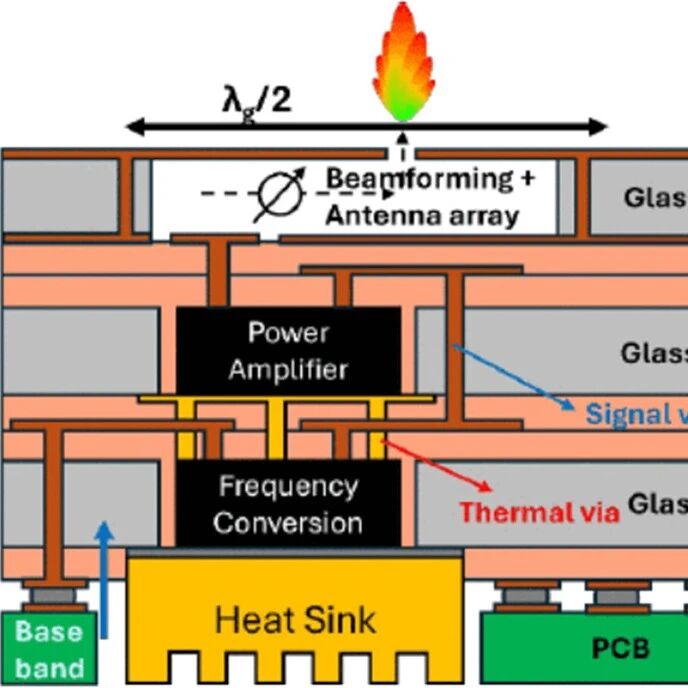
Core Viewpoint - Glass substrates are emerging as a superior alternative to organic substrates in advanced packaging due to their flatness, lower thermal expansion coefficient, and reduced warpage issues, making them ideal for high-frequency applications and 6G communications [2][3][5]. Group 1: Advantages of Glass Substrates - Glass substrates provide significant improvements in warpage reduction (50%) and positioning accuracy (35%) compared to organic substrates, facilitating the implementation of redistribution layers (RDL) with line widths and spacings below 2 micrometers [2]. - The dielectric constant of glass (2.8) is much lower than that of silicon (12), resulting in significantly lower transmission losses and enhanced signal integrity for high-frequency applications [3]. - Glass substrates are versatile and can be used as carriers, core substrates for embedded components, 3D stacking materials, or sealed cavities for sensors and MEMS [2]. Group 2: Manufacturing Challenges - Glass cutting is prone to micro-cracking, and the challenge of repeatedly manufacturing thousands of fine-pitch through-glass vias (TGV) hinders the full potential of glass substrates [3][22]. - The laser-induced deep etching (LIDE) technology is being improved to facilitate mass production of TGVs, allowing for the etching of vias as small as 3 micrometers with a spacing of 5 micrometers [10][11]. Group 3: Applications in 6G Technology - Glass substrates are ideal for 6G wireless communication networks, which require data rates exceeding 100 GHz, due to their high-frequency transmission capabilities and low loss characteristics [5]. - Heterogeneous integration in stacked glass can combine high-frequency front-end chips with low-loss interconnects, enhancing the performance of large-scale antenna arrays [5]. Group 4: Innovations in Glass Processing - The use of ABF (Ajinomoto Build-up Film) as a low-k dielectric and adhesive for glass bonding has shown promising results, achieving electrical performance up to 220 GHz with minimal loss [5][8]. - New methods for cutting glass substrates, such as embedding cut substrates in organic resin for edge protection, are being explored to minimize damage during handling [24]. Group 5: Yield Improvement Techniques - Predictive modeling and machine learning are being utilized to enhance yield rates in glass substrate manufacturing, particularly in identifying and mitigating defects early in the production process [18][19]. - The development of automated systems for wet etching and drying processes is aimed at improving the efficiency and yield of TGV manufacturing [10][11]. Group 6: Future Directions - The glass ecosystem is preparing for the continued growth in chip and substrate sizes in multi-chip advanced packaging, with significant progress being made in laser modification and high-frequency etching techniques [28]. - Ongoing research aims to further reduce micro-cracking during cutting processes and improve the compatibility of new processing techniques with stringent design rules [29].

芯片行业,风险越来越高
半导体行业观察· 2025-09-20 01:55
Core Viewpoint - The article discusses the potential risks and issues within the semiconductor industry, particularly in the context of the current artificial intelligence (AI) bubble, drawing parallels to the internet bubble of 2000 [3][4]. Group 1: AI Bubble Concerns - The AI bubble is compared to the internet bubble, with concerns that excessive spending and unclear returns on investment are beginning to show cracks [3][4]. - Malcolm Penn, CEO of Future Horizons, warns that many will incur significant losses as the AI market may not sustain its current growth [3][4]. - OpenAI's CEO Sam Altman and Chairman Brett Taylor echo these sentiments, indicating that while AI will create economic value, the current environment is fraught with risks [4][5]. Group 2: Investment and Growth Projections - Predictions indicate a growth rate of 16% this year, driven by a 21% increase in the logic market, which is influenced by AI chip demand [4][5]. - Despite the AI bubble, a projected growth rate of 12% for 2026 is anticipated, with a minimum forecast of 6% due to various uncertainties [4][5]. Group 3: Semiconductor Industry Impact - The article highlights significant investments in AI data centers, including a $200 billion investment in Norway and a £30 billion plan in the UK [5][7]. - ASML's investment of $1.3 billion in Mistral AI is noted as a sign of the bubble, as it represents a strategic partnership rather than a traditional supplier relationship [10][11]. - The semiconductor market is facing pressures from declining GPU and AI chip sales, which could lead to capacity releases and impact companies like TSMC [13]. Group 4: Future Outlook - The upcoming crisis is expected to affect semiconductor technology development, with new players like Intel and Rapidus entering the 2nm process node market [13]. - The article suggests that the semiconductor market has not yet recovered from excess inventory and long-term agreements, complicating recovery efforts [13].



英特尔不会放弃自研GPU
半导体行业观察· 2025-09-20 01:55
Core Viewpoint - Intel's collaboration with Nvidia is positioned as a supplement to its existing product roadmap, despite uncertainties surrounding the future of its Arc graphics line [2][3]. Group 1: Impact of Nvidia's Investment - Nvidia's $5 billion investment in Intel and the supply of RTX graphics chips could significantly alter Intel's mobile roadmap for laptop chips [2]. - The partnership poses a threat to the ongoing development of Intel's Arc graphics cores, including both discrete GPUs and integrated chips [2][3]. Group 2: Intel's Current Situation - Intel has faced significant changes, including layoffs and a renewed focus on profitability, leading to skepticism about its commitment to the Arc architecture [3]. - The departure of key executives and lack of updates on the Arc roadmap have raised questions about the future of the product line [3][4]. Group 3: Market Position and Future Products - Intel's market share has remained stable at 7.9%, but the introduction of RTX chipsets in mobile devices could erode this share [4]. - Upcoming products include the "Panther Lake" processor expected to debut in fall 2023 and the "Nova Lake" mobile processor anticipated for late 2026 [5]. - The collaboration with Nvidia may lead to the addition of high-end products targeting consumers, gamers, and enterprises, although specific designs remain unclear [5][6].

一颗能自供电的芯片
半导体行业观察· 2025-09-20 01:55
Core Insights - The article discusses the advancements in self-powered System on Chip (SoC) technology, particularly focusing on Everactive's PKS3000, which can operate without a stable power source by harvesting energy from the environment [5][54]. - The PKS3000 is designed for low-power applications, making it suitable for large-scale IoT deployments, especially in hard-to-reach locations [5][8]. Group 1: Self-Powered SoC Technology - Everactive's SoC can collect energy from environmental sources, eliminating the need for wiring or battery replacements, which simplifies the deployment of IoT devices [5][8]. - The PKS3000 operates at a power consumption of 12 microwatts at 5 MHz, with a base power consumption of 2.19 microwatts, showcasing significant energy efficiency [8][51]. - The SoC utilizes a 55 nm ultra-low power (ULP) process and includes an Arm Cortex M0+ microcontroller, which is one of the lowest power cores available [12][51]. Group 2: Energy Harvesting and Management - The energy harvesting power management unit (EH-PMU) in the PKS3000 can simultaneously collect energy from two sources and output power across four voltage rails [14][21]. - The EH-PMU employs maximum power point tracking (MPPT) to optimize energy collection efficiency, storing energy in capacitors to ensure operation under adverse conditions [16][21]. - The energy-aware subsystem (EAS) monitors energy collection, storage, and consumption, making power management decisions similar to Intel's power control unit [24][28]. Group 3: Communication and Connectivity - Everactive's wake-up radio (WRX) allows the SoC to maintain a low-power state while being able to quickly respond to incoming messages, significantly reducing idle power consumption [35][39]. - The WRX can achieve a sensitivity of -92 dBm while keeping average power consumption below 6 microwatts, which is notably lower than traditional Wi-Fi solutions [43][44]. - The WRX's design allows for shared antenna use with external transceivers, providing flexibility in network design [39][44]. Group 4: Comparison and Future Outlook - The PKS3000 demonstrates a significant improvement over its predecessor, the PKS2001, with idle power consumption reduced from 30 microwatts to 2.19 microwatts [51]. - The article highlights the potential for self-powered SoCs to address sustainability concerns in high-power applications, contrasting them with the energy demands of AI technologies [54]. - There is speculation about the future applicability of low-power SoCs in a broader range of use cases as technology advances [54].
这颗芯片,英伟达确认了
半导体行业观察· 2025-09-20 01:55
Core Viewpoint - Nvidia and Intel have initiated a historic collaboration to jointly develop a series of CPU and GPU products, focusing on future solutions like the "Intel x86 RTX SoC" while clarifying existing projects [2]. Group 1: Nvidia's Product Development - Nvidia has not officially released the N1/N1X SoC, but it announced Project DIGITS at CES 2025, revealing a partnership with MediaTek, which led to speculation about the GB10 "super chip" [3]. - The GB10 chip, part of Nvidia's DGX Spark series, is designed for AI workloads and can deliver supercomputer-like performance on personal computers, featuring a 20-core ARM CPU developed in collaboration with MediaTek and a powerful GPU chipset based on Blackwell [3]. Group 2: Specifications and Performance - The N1 SoC is expected to have specifications similar to the GB10, including a GPU with 6,144 CUDA cores and a 20-core CPU built on Nvidia's Grace architecture [4]. - Nvidia's CEO confirmed that the GB10 chip is essentially the same as the N1/N1X SoC, indicating that the N1 may represent a lower-end version of the GB10 aimed at mainstream markets [4]. Group 3: Market Positioning and Future Prospects - The GB10 is already in use, while the release date for the N1 remains uncertain; however, Nvidia's collaboration with Intel may lead to potential conflicts between ARM-based and x86-based product developments [5]. - The N1 SoC has been tested on Windows, suggesting its approach towards Windows-on-ARM, while the GB10 is optimized for Linux-based DGX operating systems targeting AI and data center workloads [6].
倒计时3天!期待半导体行业观察带来的产业对话
半导体行业观察· 2025-09-20 01:55
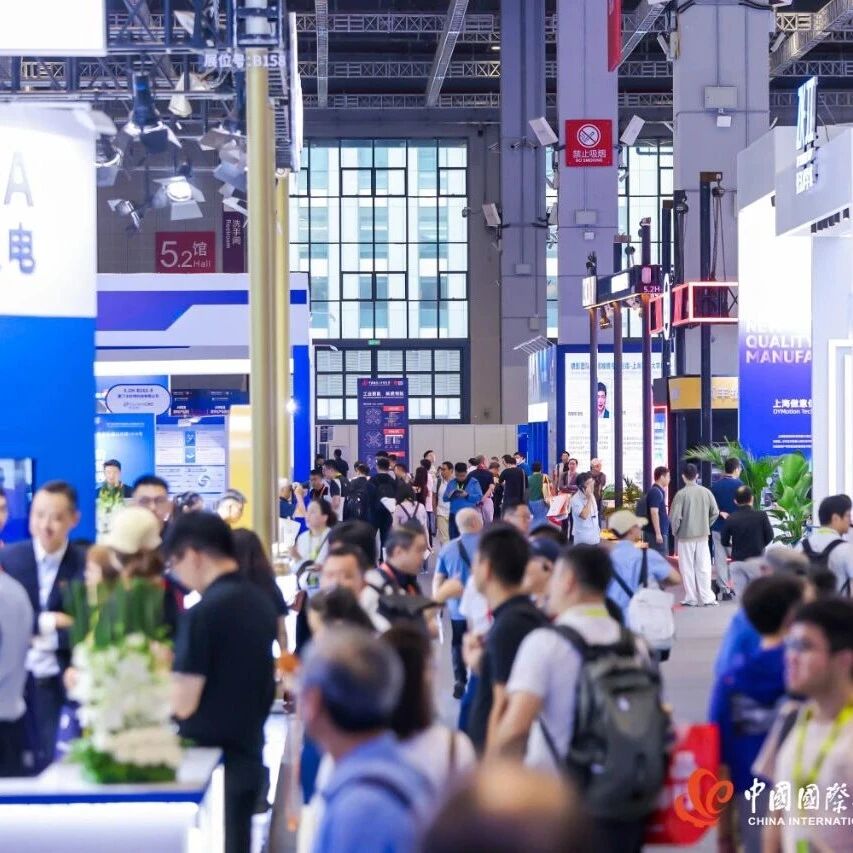
Core Viewpoint - The article emphasizes the unprecedented development opportunities for industrial computing power as the global manufacturing industry transitions towards intelligence and digitalization [1]. Group 1: Event Overview - The "Industrial Computing Power 'Core' Engine Technology Seminar" will be held on September 23, organized by Semiconductor Industry Observation in collaboration with the China Industry Fair [1]. - The seminar aims to explore the latest advancements in industrial computing power technology and promote deep communication and cooperation among upstream and downstream enterprises in the industry [1]. Group 2: Key Participants and Topics - The seminar will feature industry leaders from five cutting-edge technology fields: ion implantation equipment, FPGA chip design, RISC-V processors, semiconductor testing, and industrial big data [4]. - The agenda includes presentations on various topics, such as one-stop solutions for ion implantation, AI-enabled semiconductor technology yield improvement, and AI-driven semiconductor manufacturing data analysis [5][6]. Group 3: Notable Presentations - Zhang Changyong from Shanghai Kaishitong Semiconductor will discuss the company's achievements in ion implantation technology and its one-stop solutions for the semiconductor industry [8][9]. - Fang Liang from ChipRate Intelligent will present on how AI technology enhances chip manufacturing efficiency, achieving over 95% yield improvement [10]. - Yu Bo from Zheta Technology will focus on the challenges of yield analysis in semiconductor manufacturing and how AI can optimize processes [11]. - Yao Yang from Anlu Technology will explain how FPGA technology supports the transformation of Chinese manufacturing towards higher quality [12]. - Dr. Yao Yanbin from Sunzhan Technology will share insights on RISC-V architecture and its application in AI processor design [13][14]. - Zhu Yong from Jifeng Electronics will discuss the integration of AI in semiconductor testing equipment to enhance automation and precision [15]. Group 4: Industry Significance - The seminar serves as an important platform for promoting collaborative development within the industry, showcasing the latest technological advancements and the pursuit of independent innovation [20]. - The event highlights the ongoing transition of Chinese manufacturing towards high-end and intelligent production, reflecting the industry's commitment to technological breakthroughs [20].
都在抢HBM 4
半导体行业观察· 2025-09-20 01:55
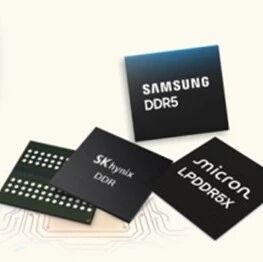
Core Viewpoint - Nvidia is pushing its memory suppliers to exceed the JEDEC official HBM4 benchmark, aiming for a stack speed of 10Gb/s to enhance GPU bandwidth beyond AMD's upcoming MI450 Helios system [2][3]. Group 1: Nvidia's Strategy and HBM4 Development - Nvidia has requested a stack speed of 10Gb/s for its 2026 Vera Rubin platform, which would increase the total transmission rate per stack to 2.56 TB/s, allowing a single GPU to achieve 15 TB/s of raw bandwidth [2]. - The Rubin CPX configuration is designed for demanding inference workloads, reportedly achieving a transmission rate of 1.7 PB per second across the NVL144 rack [2]. - However, achieving 10Gb/s HBM4 is not guaranteed, as higher I/O speeds lead to increased power consumption and stricter timing requirements, which could pressure the underlying chip [3]. Group 2: Supplier Landscape and Competition - SK Hynix remains Nvidia's primary HBM supplier and has completed HBM4 development, preparing for mass production, but has not disclosed specific chip specifications [3]. - Samsung is more aggressive in node migration, transitioning its HBM4 base chip to a 4nm FinFET process to support higher clock speeds and lower power consumption [3]. - Micron has confirmed HBM4 samples with a 2,048-bit interface and bandwidth exceeding 2 TB/s, but has not disclosed support for 10Gb/s [3]. Group 3: AMD's Position and Memory Specifications - AMD's MI450 is still in planning, but it is expected to support up to 432GB of HBM4 memory per GPU, potentially allowing AMD to catch up or surpass Nvidia in raw capacity [4]. - With the CDNA 4 architecture upgrade, AMD aims to leverage the inference advantages of Nvidia's Rubin platform [4]. Group 4: Samsung's HBM3E Certification and Future Plans - Samsung has recently received Nvidia's certification for its fifth-generation 12-layer HBM3E product, marking a significant milestone in the high-bandwidth memory sector [5][6]. - This certification comes after Samsung redesigned the HBM3E DRAM core to address thermal performance issues, which had hindered earlier versions [6]. - Samsung plans to supply HBM4 samples to Nvidia soon, with mass production expected to begin in the first half of 2026 [10].
这类芯片材料,前景光明
半导体行业观察· 2025-09-19 01:29
Core Viewpoint - Molybdenum is emerging as a promising alternative to traditional metals in semiconductor manufacturing, particularly at advanced nodes, due to its favorable properties and cost-effectiveness compared to ruthenium and other metals [2][3]. Group 1: Advantages of Molybdenum - Molybdenum has a higher resistivity than tungsten and does not require a barrier layer, making it more attractive for applications where barrier layers contribute to additional series resistance [3]. - A study demonstrated that a barrier-free molybdenum scheme can reduce total resistance by approximately 56% compared to traditional copper dual-damascene designs [3]. - Molybdenum's easier oxidation allows for simpler removal through chemical mechanical polishing (CMP) compared to ruthenium [3]. Group 2: Integration Challenges - The performance of molybdenum and other nanowires is highly dependent on the grain size and boundary structure of the deposited films, which are influenced by precursor materials and process parameters [4]. - Managing the migration interface and grain boundaries is crucial for reducing electron scattering and resistivity [5]. - Solid precursors like MoO2Cl2 and MoCl5 are increasingly common in semiconductor manufacturing, but they present challenges in thermal stability and material flux uniformity [5]. Group 3: Performance in Applications - Molybdenum shows promise in back-end power applications, where it maintains mechanical stability at high temperatures and has better adhesion to dielectrics, potentially reducing the risk of void formation [7]. - Early integration studies indicate that molybdenum's lower resistivity compared to tungsten allows for a 7.3% reduction in word line spacing and a 3.7% reduction in memory hole spacing, leading to a 16.3% increase in overall bit density [8]. - Molybdenum is well-suited for contact and word line applications, aligning well with existing integration schemes, although ruthenium may be more suitable for smaller devices in the long term [8].
2纳米,被疯抢
半导体行业观察· 2025-09-19 01:29
Core Viewpoint - Apple is securing a significant portion of TSMC's advanced 2nm production capacity, which is expected to enhance its competitive edge in the semiconductor market and solidify TSMC's position as the leading supplier of cutting-edge technology [2][3][6]. Group 1: Apple's Strategy and TSMC's Capacity - Apple has reportedly secured at least half of TSMC's 2nm production capacity for 2026, which is a strategic move to ensure access to the latest manufacturing technologies [2]. - TSMC is set to begin mass production of 2nm chips in the second half of 2025, with expectations of a ramp-up in production in 2026 [4]. - TSMC's largest customer is still Apple, contributing an estimated revenue of 624.3 billion TWD in 2024, marking a 14.2% year-on-year increase [2]. Group 2: Product Development and Technology Adoption - Apple plans to utilize TSMC's latest packaging technology, Wafer-Level Multi-Chip Module (WMCM), in several upcoming products, including the M6 chip for MacBook Pro and the Vision Pro headset [3]. - The first batch of TSMC's 2nm technology will be adopted by key clients, including Apple, NVIDIA, AMD, and MediaTek, with Apple integrating this technology into its A20 chip and M6 series processors [6]. - TSMC's 2nm production facilities are being developed in Hsinchu and Kaohsiung, with the Hsinchu site primarily supporting Apple’s flagship applications [3]. Group 3: Competitive Landscape - Intel's absence from the list of initial customers for TSMC's 2nm technology is notable, as the company is shifting its strategy towards its own manufacturing processes [7]. - Intel plans to focus on its proprietary Intel 18A process technology, which incorporates new architectures aimed at enhancing performance and efficiency [7]. - The competition between TSMC's 2nm technology and Intel's self-developed processes will be a key focus in the semiconductor industry moving forward [7].


大芯片,一夜生变
半导体行业观察· 2025-09-19 01:29
Core Viewpoint - NVIDIA and Intel have entered a partnership where NVIDIA will invest $5 billion in Intel at a price of $23.28 per share, focusing on developing custom data center and PC products to enhance applications in large-scale, enterprise, and consumer markets [2] Group 1: Partnership Benefits - The collaboration allows NVIDIA to expand its GPU dominance into the integrated graphics market, traditionally led by Intel and AMD, with Intel designing PC processors that incorporate NVIDIA GPU chips [4][5] - NVIDIA is paving the way for greater integration of its technology into Intel's Xeon platform for AI infrastructure and data center products, enhancing performance and market reach [4][5] - The integration of NVIDIA's NVLink technology into Intel's CPU designs enables NVIDIA to offer systems that combine its GPUs with Intel's Xeon processors, increasing its share in the PC graphics market [5][9] Group 2: Technical Advancements - NVIDIA's NVLink interconnect technology offers a bandwidth of 1.8 TB/s per GPU, significantly surpassing the PCIe 5.0 x16 slot bandwidth, allowing for a scalable architecture with up to 72 GPUs [8] - The collaboration marks a shift for Intel, which has historically relied on PCIe technology, as it agrees to adopt NVLink, enhancing its data center capabilities [9][10] Group 3: Market Implications - The partnership provides Intel with an opportunity to challenge AMD in the data center market, where AMD has gained significant market share in recent years [20][22] - NVIDIA's entry into the PC market through this partnership allows it to tap into a previously inaccessible segment, potentially reshaping competitive dynamics with AMD [22][23] Group 4: Future Considerations - There are speculations about NVIDIA's potential shift towards Intel for manufacturing, although both companies have not confirmed this, emphasizing that the focus is on product collaboration rather than manufacturing [14] - The partnership could impact NVIDIA's existing relationships with ARM and TSMC, raising questions about future collaborations and market strategies [12][13]