美股研究社

Search documents
AI日报丨资本狂欢!英伟达市值逼近4万亿美元大关,6月重新夺回全球市值头把交椅
美股研究社· 2025-07-03 11:08
Core Insights - The article highlights the rapid development of artificial intelligence technology and its potential investment opportunities in AI-related stocks and market trends [1] Group 1: Nvidia's Market Position - Nvidia has regained its position as the world's most valuable company with a market capitalization of $3.86 trillion as of the end of June, surpassing Microsoft's $3.69 trillion by approximately 4.3% [3][4] - Despite this, Nvidia's market cap has not yet exceeded Apple's historical high of about $3.92 trillion reached in December 2024 [5] - Analysts predict that Nvidia and Microsoft will join the $4 trillion market cap club this summer, with a focus on reaching $5 trillion in the next 18 months, driven by the AI revolution [5] Group 2: OpenAI's Clarification - OpenAI issued an urgent announcement denying any association with "OpenAI tokens" related to Robinhood, stating that any transfer of OpenAI equity requires their approval, which has not been granted [6] Group 3: Amazon's AI and Robotics Milestones - Amazon announced significant milestones in robotics and AI, including the launch of a new AI foundational model called Deep Fleet and surpassing 1 million deployed robots, which will enhance delivery efficiency by 10% [7] Group 4: Microsoft's AI Chip Development - Microsoft has postponed the release of its most powerful internal AI chips to 2028 or later, focusing on better development during this period to reduce reliance on Nvidia [9] - The release of the Maia 200 chip has been delayed from 2025 to 2026, while the third-generation AI chip Clea's release has also been pushed back to after 2028 [9]





不达预期的理想,怎么挡YU7?
美股研究社· 2025-07-03 11:08
Core Viewpoint - The launch of Xiaomi's YU7 electric vehicle has created significant market disruption, leading to strategic adjustments by competitors like Li Auto, which is preparing to face direct competition in the electric SUV segment [3][4][22]. Group 1: Xiaomi YU7 Launch Impact - Xiaomi YU7 was launched on June 26, with impressive initial sales figures: over 200,000 pre-orders in 3 minutes, 289,000 in 1 hour, and 240,000 within 18 hours, setting a new record for electric vehicle sales [3]. - The YU7's competitive pricing starts at 253,500 yuan, which overlaps with Li Auto's upcoming models, particularly the i6 [19][21]. Group 2: Li Auto's Strategic Response - In response to the YU7's success, Li Auto announced an organizational restructuring to enhance operational efficiency and competitiveness in the electric SUV market [4][8]. - Li Auto is set to launch two new electric SUVs, the i8 and i6, with the i6 directly competing with the YU7 in terms of pricing and market segment [7][23]. Group 3: Market Dynamics and Challenges - Li Auto's stock showed mixed performance following the YU7 launch, with a slight increase on the launch day but a subsequent decline, reflecting market concerns [10]. - Li Auto has adjusted its quarterly delivery expectations, now forecasting approximately 108,000 vehicles for Q2, down from previous estimates, indicating potential challenges in meeting sales targets [27][30]. Group 4: Competitive Landscape - The electric SUV market is becoming increasingly competitive, with various brands, including Leap Motor, posing threats to Li Auto's market share [34][36]. - Li Auto's average selling price has decreased, impacting revenue, while the company faces pressure from new entrants and existing competitors [33][39]. Group 5: Future Outlook - Li Auto aims to achieve a total annual sales target of 640,000 vehicles, but will need to significantly ramp up deliveries in the latter half of the year to meet this goal [28][31]. - The success of the i8 and i6 will be crucial for Li Auto to maintain its market position and counter the aggressive entry of Xiaomi into the electric vehicle space [40].


Palantir:被过度炒作且定价过高
美股研究社· 2025-07-03 11:08
Core Viewpoint - Palantir Technologies is currently overvalued, particularly when considering its price-to-sales (P/S) ratio, which stands at 110.30, while high-growth stocks typically range between 10 and 20 [1][2]. Financial Performance - The company's operating cash flow is reported at $1.335 billion [4]. - After deducting stock-based compensation (SBC) of $722 million and interest income of $203 million, the actual operating cash flow is $410 million [5][6]. - Palantir's free cash flow constitutes only about one-third of its operating cash flow due to high stock-based payments [7]. Revenue and Earnings - Since 2019, Palantir's revenue has increased by 280%, but earnings per share (EPS) have decreased by 1.5%, indicating a decline in sales performance relative to dilution [7]. - In 2019, EPS was $1.29, while in 2024, it is projected to be $1.27 [8]. - From 2023 to 2024, revenue grew by 28.7%, but the actual growth, after accounting for dilution, was only 22% [10]. Valuation Comparison - Palantir's P/S ratio is significantly higher than that of its peers, with C3.ai being a more suitable comparison due to similar business models focused on big data and AI [10][11]. - C3.ai's expected P/S ratio is approximately 7.03, while Palantir's is 79.20, indicating a substantial overvaluation [11]. - Palantir's revenue over the past 12 months was $3.115 billion, with a year-over-year growth of 33% [11]. - Using C3.ai's P/S ratio, Palantir's implied market value would be approximately $21.89 billion, contrasting sharply with its current market value of $340.42 billion, highlighting a significant premium [13]. Analyst Sentiment - Analysts believe that Palantir's high valuation may not be justified given its market position and government contracts [13]. - Potential factors that could overturn bearish views include sustained market speculation and stronger future growth, particularly with increased military spending directed towards AI [15]. - Overall, analysts rate Palantir as a sell due to its high P/S ratio and low growth rate resulting from stock dilution [15].


下半年第一天,美股“变脸”了,上半年的赢家们大跌
美股研究社· 2025-07-02 11:39
Core Viewpoint - The article discusses a significant shift in market dynamics on the first trading day of the second half of the year, with investors rotating from strong-performing tech stocks to defensive sectors like healthcare [1][5]. Market Performance - On the first trading day of the second half, the Dow Jones Industrial Average rose by 400 points, while the Nasdaq Composite Index fell by 0.82%, indicating a rotation away from tech stocks that had previously led the market [1]. - The AI-related stocks and other tech giants, including Sea Limited, Spotify, and Nvidia, experienced notable declines, with the tech giants index dropping by 1.15% [1][2]. Sector Rotation - The healthcare sector saw a strong rebound, with stocks like Amgen and UnitedHealth Group rising over 4%, and Merck increasing by more than 3% [12][13]. - The consumer discretionary sector also benefited from the rotation, particularly non-essential consumer goods, which had seen significant net selling earlier in the year [13]. Influencing Factors - The market rotation was influenced by several factors, including the start of a new quarter, comments from Federal Reserve Chairman Jerome Powell, and profit-taking ahead of the non-farm payroll data release [5][10]. - Powell's remarks indicated a cautious stance on inflation and suggested that future actions would depend on data, contributing to market volatility [11]. Trading Dynamics - The trading day was characterized as a "violent" unwinding of momentum trades, with a significant sell-off in previously high-performing stocks [10]. - High-profile stocks that had been shorted, such as American Eagle Outfitters and Abercrombie & Fitch, saw price increases, while heavily held stocks like Ralph Lauren performed poorly [14].
谷歌:Waymo 有望在 2040 年实现巨大发展,耐心终将回报
美股研究社· 2025-07-02 11:39
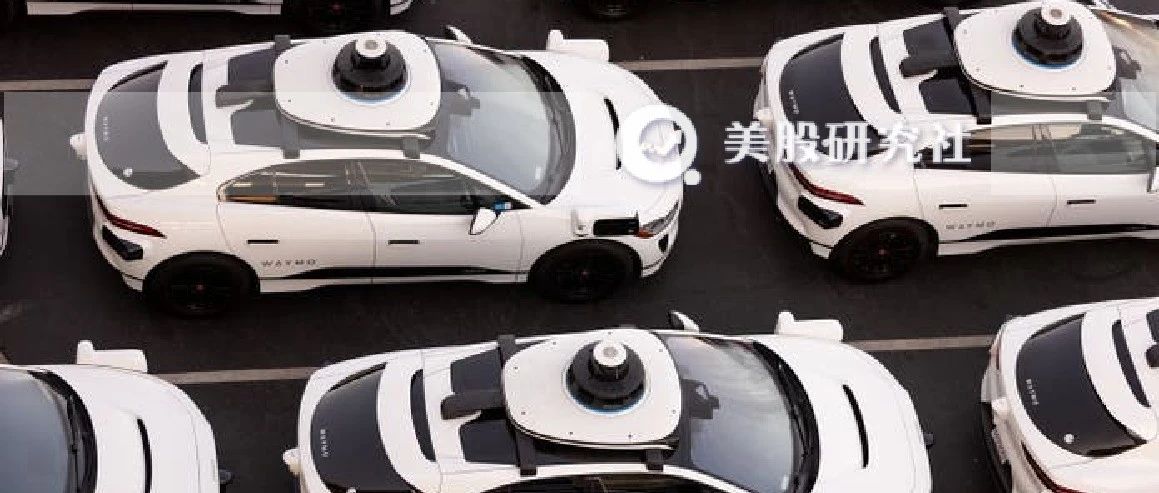
Core Viewpoint - Google's Waymo has significant long-term growth potential, with estimates suggesting a valuation of $500 billion by 2040, despite current losses and market uncertainties [1][6]. Group 1: Waymo's Current Status and Future Projections - Waymo is currently providing approximately 250,000 rides per week, but is not expected to break even until around 2030 [3]. - In a bullish scenario for 2030, Waymo's valuation could reach $200 billion, representing about 5% of Google's projected market cap of nearly $4 trillion [1][5]. - By 2040, Waymo could contribute around 10% or more to Google's total valuation, which may reach $5 trillion [1][8]. Group 2: Competitive Landscape - Waymo's technology combines lidar, radar, cameras, and high-definition maps, but its cost per vehicle is significantly higher than Tesla's, which could impact its competitive edge [2]. - Tesla's autonomous driving system is currently more cost-effective and has a larger dataset for training, which may give it a profitability advantage once scaled [2][7]. - Other competitors like Amazon's Zoox and Baidu's Apollo are also in the race, with Apollo likely to dominate the domestic market in China [2]. Group 3: Financial Outlook and Market Dynamics - Waymo's revenue is projected to reach $5 billion by 2030, with a potential for $50 billion by 2040, driven by ride-hailing and autonomous freight services [5][6]. - The operational profit margin for Waymo could reach around 40%, aligning with other software-driven businesses [3]. - The growth of autonomous vehicles is expected to be supported by government policies aimed at boosting GDP, which may facilitate Waymo's expansion [6]. Group 4: Investment Considerations - Investing in Google should consider Waymo as a high-growth potential asset, despite the competitive challenges it faces [8]. - Google's stock may not currently offer high returns, but its resilience makes it a valuable addition to certain investment portfolios [8]. - The autonomous vehicle market is anticipated to grow exponentially over the next few decades, positioning Waymo as a promising venture within Google's broader business strategy [8].

扎克伯格人工智能招聘热潮
美股研究社· 2025-07-02 11:39
Core Viewpoint - Meta's stock is considered a buy due to its significant investments in artificial intelligence, with a notable increase in stock price over the past month and year [1][10]. Investment Strategy - Meta is committing "tens of billions" to AI infrastructure, with an impressive capital expenditure plan of $60 billion to $72 billion for data centers and hardware in 2025 [1]. - The company is building a "superintelligence" team to enhance its AI capabilities, indicating a serious effort to compete with OpenAI and Google DeepMind [2][4]. Competitive Landscape - Meta's open science approach, including the open-sourcing of models like LLaMA, aims to build a good reputation and drive developer adoption [2]. - The recent price cuts by OpenAI and advancements by Google and Anthropic highlight the competitive pressures in the AI space, making Meta's strategy crucial for maintaining its AI advantage [3]. Talent Acquisition - Meta's acquisition of a 49% stake in Scale AI for $14.3 billion and the recruitment of key executives like Alexander Wang are seen as significant catalysts for its AI ambitions [4][5]. - The company is actively recruiting top AI researchers, indicating a strong commitment to enhancing its talent pool [6][9]. Financial Metrics - Meta's expected compound annual growth rate (CAGR) for earnings per share over the next five years is approximately 16.77%, significantly higher than the industry median of 11.26% [7]. - The company's projected non-GAAP price-to-earnings ratio relative to growth is 1.71, slightly above the industry median of 1.44, suggesting that its growth justifies its valuation [7]. Future Outlook - If Meta's AI research is successful, the premium on its valuation could further increase [8]. - Analysts express strong confidence in Meta's ability to navigate the AI landscape, drawing parallels to its past successes in overcoming competitive threats [10].


TSLA特斯拉二季度交付量恐暴跌!
美股研究社· 2025-07-02 11:39
Core Viewpoint - Tesla's current fundamentals are not optimistic despite the imaginative business model of Robotaxi, with analysts warning that the recent stock surge may be driven by short-term sentiment rather than sustainable growth [3][10]. Delivery Data and Sales Forecast - Tesla is facing a significant decline in sales, with a projected delivery of 394,000 vehicles in Q2 2025, representing a year-over-year decrease of over 11%, marking the second consecutive quarter of double-digit declines [3]. - The total expected deliveries for 2025 are approximately 1.65 million, down about 8% from 1.79 million in 2024 [5]. Market Challenges - Tesla's market share in China has dropped from 15% in 2020 to 7.6% currently, with local brands like Xiaomi rapidly gaining traction [8]. - In Europe, Tesla's registrations have plummeted, with a 64.4% drop in Sweden and a 61.6% decline in Denmark, alongside a 31.2% decrease in Model Y sales [8]. Political and Regulatory Risks - Tensions between Elon Musk and Donald Trump are amplifying policy risks for Tesla, particularly concerning potential scrutiny of government subsidies that Tesla receives [9]. - The expiration of certain electric vehicle tax credits by the end of 2025 could further pressure Tesla's sales [9]. Future Outlook and Robotaxi - Despite current challenges, there remains high market anticipation for Robotaxi, with some analysts viewing Tesla as two companies: a declining traditional automaker and a promising autonomous driving technology firm [10]. - The successful commercialization of Robotaxi is uncertain, with significant hurdles such as regulatory, ethical, and safety issues that could impede large-scale deployment [10].

AI日报丨领先英伟达!李斌称蔚来ET9搭载全球首颗5nm智驾芯片,量产比英伟达还早三个月
美股研究社· 2025-07-02 11:39
Group 1: AI Server Market - North American large CSPs remain the main drivers of AI Server market demand, with a forecasted shipment growth of double digits by 2025, despite a slight downward adjustment of global AI Server shipment growth to 24.3% for this year due to international circumstances [3] Group 2: AI Companies Performance - "AI unicorn" Anthropic has reached an annual revenue of $4 billion, which is approximately $333 million per month, showing a nearly fourfold increase since the beginning of the year [4] - OpenAI's CEO Sam Altman criticized Meta's aggressive talent acquisition from OpenAI, stating that while Meta has hired some good talent, they have not secured the top-tier individuals [4] Group 3: Smartphone Market Outlook - Jefferies has downgraded its smartphone sales forecast for 2025 to 2027 by 2% to 4% due to various uncertainties, including U.S. tariff policies and a lack of innovation [6] - Despite the overall instability in the smartphone market, Jefferies raised its iPhone sales forecast by 4% due to strong demand in China and extended discount activities [6][7] Group 4: Android Device Performance - During the recent 618 shopping festival, Android device sales saw minimal growth, with a year-on-year increase of only 1%, while iPhone sales grew by 19% [7] - High inventory levels for Android devices prior to the 618 festival indicate ongoing challenges, leading to a downward adjustment in global sales forecasts [7] Group 5: OpenAI's Chip Strategy - OpenAI has no immediate plans to use Google's TPU chips, focusing instead on Nvidia's GPUs and AMD's AI chips to meet its growing demands [8] - Reports suggest that OpenAI has begun early testing of Google's TPU but has not committed to large-scale deployment [9][10]


AI日报丨凌晨官宣!Meta成立「超级智能实验室」!扎克伯格挖角11位AI顶尖人才,华人占多半
美股研究社· 2025-07-01 12:19
Core Viewpoint - The rapid development of artificial intelligence (AI) technology is creating extensive opportunities in various sectors, with a focus on analyzing AI concept stocks and market trends for deeper industry insights and value analysis [1]. Group 1: AI Model Developments - On June 30, Baidu officially released the Wenxin large model 4.5 series open-source model, with Intel adapting the model for deployment on its Core Ultra platform, achieving excellent inference performance [3]. - Baidu and Intel have collaborated since 2021 to provide developers with effective AI development toolchains, with various models widely applied in finance, healthcare, and intelligent manufacturing [3]. Group 2: AI Product Innovations - Citic Securities reported that Xiaomi has launched AI glasses, which serve as a portable AI interface supporting multiple functions, indicating a significant future product in the AI sector [4]. - Meta Platforms announced a major restructuring of its AI team, focusing on developing "superintelligence" with a new team led by former Scale AI CEO Alexandr Wang [5][6]. Group 3: AI Tools and Applications - Microsoft CEO Satya Nadella introduced the latest AI open-source editor GitHub Copilot Chat, which supports automated programming tasks and allows users to interact using natural language for code explanations and optimizations [7][8]. Group 4: AI Partnerships and Strategies - Apple is considering using AI technologies from Anthropic or OpenAI to enhance Siri, indicating a potential shift from relying on internal models to external AI solutions [9][11]. - Reports suggest that Apple's interest in external AI models reflects challenges in developing its own generative AI technology, although the company has allocated significant budget for its AI initiatives [14]. Group 5: AI Infrastructure Developments - Europe is accelerating plans for AI super factories, aiming to procure at least 3 million latest-generation AI GPUs, with Nvidia and AMD being key players in this market [16][17]. - The European Commission has announced a $23 billion budget for establishing AI super factories across Europe, with further details expected by the end of the year [18].

特斯拉Robotaxi正式上线,无人驾驶出租车市场最大变量来了?
美股研究社· 2025-07-01 12:19
Core Viewpoint - Tesla's Robotaxi service has officially launched in Austin, Texas, marking a significant step in the company's autonomous vehicle strategy and its potential to reshape the transportation landscape [3][4]. Group 1: Robotaxi Launch and Features - The initial fleet consists of ten refreshed Model Y vehicles, with plans to expand the fleet with additional models like Cybercab [5]. - The Robotaxi operates within a geofenced area and is currently available only to invited users who can request rides via the Robotaxi app [6]. - The service offers personalized experiences by syncing user preferences and payment information through their Tesla accounts [7][8]. Group 2: Market Potential and Opportunities - Elon Musk views Robotaxi as a key opportunity for Tesla, predicting it could revolutionize transportation and generate significant revenue, potentially a "trillion-dollar opportunity" [9][10]. - The scalability of Tesla's Robotaxi is enhanced by its pure vision technology, which avoids the high costs associated with lidar and high-definition mapping used by competitors like Waymo [11][12]. - The operational efficiency of Robotaxi is expected to surpass traditional taxi services, with Musk estimating a utilization rate of over 40 hours per week per vehicle and a gross margin of 70-80% [15]. Group 3: Challenges and Competition - Safety and efficiency of the Full Self-Driving (FSD) technology are critical challenges for the Robotaxi service, as user acceptance hinges on these factors [18][19]. - Regulatory hurdles are also significant, with local opposition and calls for delays in the service's rollout due to new autonomous driving laws [21][22]. - Competitors like Waymo and Baidu's RoboTaxi have already made strides in the autonomous taxi market, with Waymo reporting a fivefold increase in service volume and over 1.5 million rides per week [24][26]. Group 4: Future Outlook - The market is particularly focused on how Tesla can achieve rapid scaling of its Robotaxi service while ensuring safety, which will be crucial for its valuation in the capital markets [31].