聪明投资者

Search documents
破解收益风险密码,也许你需要一个“投研乐高工厂”
聪明投资者· 2025-09-01 07:03
Core Viewpoint - The article discusses the launch of a new "All-Weather Strategy" product by Huaxia Fund, aimed at addressing the current market demand for balanced investment products that can provide both certainty and growth potential amidst market volatility [2][4]. Group 1: Market Context - The implementation of new insurance asset management regulations in 2025 will reduce the allocation of non-standard assets to below 35%, leading to a shortage of mid-range wealth management products that previously achieved annual returns of 6%-8% [2]. - The public fund product spectrum faces structural contradictions, with declining bond yields compressing returns for bond-oriented funds, while equity market fluctuations challenge the investor experience for equity-oriented products [2]. Group 2: Product Details - The "All-Weather Strategy" product targets an annual return of around 10% with a maximum drawdown of under 10%, and is designed for a broader investor base with a lower initial investment requirement compared to most specialized products [2]. - The strategy incorporates low-correlation multi-asset investments, including commodities and stock index futures, to capture absolute returns amid uncertainty [2][3]. Group 3: Research and Development Structure - Huaxia Fund has established a modular research and development system, with vertical research teams focusing on macro strategies and specific sectors, and horizontal teams dedicated to absolute return and public fund investments [5][6]. - The investment teams are structured to meet investor needs, with the absolute return team focusing on safety and absolute returns, while the public fund team aims for excess returns [6]. Group 4: Collaborative Mechanisms - The research teams engage in cross-validation of viewpoints to avoid information silos and encourage diverse perspectives, fostering innovation [7]. - The culture promotes healthy debate and does not rush to conclusions in contentious areas, enhancing comprehensive industry understanding [8]. Group 5: Talent Development - Huaxia Fund has implemented the "Qingteng Plan" for systematic talent development, ensuring that new researchers quickly transition to qualified analysts while avoiding rigid internal thinking [9][10]. - The plan emphasizes maintaining a balance of internal and external talent to inject diverse cognitive resources into the research team [9]. Group 6: Strategic Vision - The launch of the "All-Weather Strategy" product reflects Huaxia Fund's proactive approach, having built a multi-asset research system two years prior to address market changes [13]. - The firm is investing in AI tools for financial analysis to enhance efficiency and is preparing for future trends in asset management, which will likely shift towards more comprehensive wealth management solutions [13].


“科技投资大师”詹姆斯·安德森:投资里最难的部分,不是发现那些少数赢家,而是熬过它们的回撤……
聪明投资者· 2025-09-01 07:03
Core Viewpoint - True wealth creation must be viewed over decades or even an entire company lifecycle to be realized [2] Group 1: Investment Philosophy - James Anderson, a prominent figure in global growth stock investment, emphasizes long-termism and imagination in identifying great companies [4][6] - The market is not a mean-reverting world but is driven by a power law, where a few winners generate most of the returns [8][22] - The real challenge in investing is not finding these great companies but enduring the inevitable significant drawdowns they experience [9][34] Group 2: Market Dynamics - Since 1926, 57% of U.S. companies have underperformed government bonds over their lifetimes, indicating that holding stocks does not guarantee systematic returns [24][25] - From 1990, one-third of excess returns in the U.S. stock market came from just 10 companies, highlighting the concentration of market performance [20][21] - Globally, only 1% of companies have generated all excess returns since 1990, reinforcing the idea of a few companies driving market value [22] Group 3: Investment Strategy - Investors should focus on identifying and supporting a small number of truly great companies, even if it means buying at unreasonable prices [46][48] - The investment approach should prioritize long-term value creation over short-term gains, moving away from the prevalent short-termism in the industry [38][66] - Companies that are ambitious and willing to challenge boundaries are essential for long-term investment success [94] Group 4: Future Outlook - The investment landscape is becoming increasingly inefficient, and the diversity of investment thinking is diminishing [38][56] - There is a need to shift focus back to genuinely creating value rather than merely trading and financial engineering [64] - The potential for significant advancements in sectors like healthcare and renewable energy suggests that the next wave of investment opportunities may arise from companies addressing fundamental issues [78][80]
霍华德·马克斯:重要的不是发生在你身上的事,而是你对它所有的反应
聪明投资者· 2025-08-31 02:03
Group 1 - The article highlights the importance of defining a company's strategy, as illustrated by the examples of Jeff Bezos and Bill Miller, emphasizing that a precise definition can lead to strategic decisions on what to add or subtract in a business [1] - A conversation about Bill Miller's long-term investment in Amazon is recommended, showcasing the insights and details that contribute to understanding his investment philosophy [2] - Warren Buffett's recent activities, including increasing his stake in Mitsubishi and clarifying Berkshire Hathaway's position on railway acquisitions, are noted, reflecting his ongoing engagement in investment decisions [2] Group 2 - The article mentions various investment opportunities and insights from industry experts, such as the potential in Hong Kong stocks and the focus on innovation by companies like CATL [2] - Howard Marks' latest memo discusses the current market conditions in the U.S., indicating a shift towards a more concerning outlook, which investors should be aware of [2] - The article encourages readers to engage with investment wisdom through video content, promoting a deeper understanding of investment strategies [2]
如果方法已经摆在那儿,为什么没有人能复制巴菲特?
聪明投资者· 2025-08-30 02:04
Group 1 - The article highlights the extensive experience of a prominent investor who has written over 80 letters to shareholders and has spoken at Berkshire Hathaway's annual meetings 60 times, emphasizing simple investment principles that are easy to understand but difficult to implement [1]. - It questions why, despite the availability of methods and principles, no one has been able to replicate the success of this investor, suggesting a gap between knowledge and execution in investment strategies [2].

港股现在“水大鱼多”!景林资产蒋彤最新交流:红利股是基本仓,全球再平衡带来很多好机会
聪明投资者· 2025-08-28 07:34
Core Viewpoint - The article emphasizes the importance of fundamental research and analysis in investment decision-making, highlighting the insights of Jiang Tong, a partner and fund manager at Jinglin Asset Management, regarding market dynamics and emerging sectors [3][4]. Group 1: Market Dynamics - Jiang Tong believes that the stock market's fundamentals are consistently better than the average macroeconomic performance, attributing this to the capital market's ability to represent the most dynamic and error-tolerant economic units [7]. - The government is enhancing its ability to address market failures through structured interventions, which aim to create long-term competitive advantages for industries [7][8]. - The "anti-involution" policy is seen as a significant indicator of this process, promoting reasonable profit margins for enterprises and reducing irrational pricing in international competition [7][8]. Group 2: Economic Indicators - Jiang Tong suggests that investors should start considering GNP (Gross National Product) alongside GDP (Gross Domestic Product) as the economy transitions to a moderate growth phase, with GNP growth outpacing GDP [9]. - There is a growing interest from foreign investors in Chinese assets, particularly in advanced manufacturing and new consumer trends [9]. Group 3: AI and Emerging Technologies - The article discusses the transition of AI from theoretical models to practical productivity tools, enhancing labor efficiency across various sectors [11]. - Jiang Tong identifies two key trends: the peak of capital expenditure in the U.S. due to tax incentives from the "Big and Beautiful" Act, and the increasing role of AI as a productivity tool, which is expected to yield returns for AI model companies [12][13]. - The article highlights the importance of tracking advancements in quantum computing, controllable nuclear fusion, and AI applications, particularly in drug discovery and scientific research [14]. Group 4: Investment Strategies - Jiang Tong's investment strategy includes a diversified portfolio across A-shares, Hong Kong stocks, and U.S. stocks, with a focus on sectors like advanced manufacturing, new consumption, and AI-related assets [15][16]. - The article notes that high-dividend stocks are considered a stable foundation in Jiang Tong's portfolio, with a strategy to reduce holdings in stocks with declining dividend attractiveness while maintaining positions in high-dividend leaders [17]. - To capture opportunities in emerging markets, Jiang Tong emphasizes the need for curiosity, continuous learning, and a systematic approach to research and investment [18].

慢牛往事,重温“后5·19行情”
聪明投资者· 2025-08-27 09:40
Core Viewpoint - The article discusses the psychological aspects of investing, particularly the fear of missing out (FOMO) during market rallies, and emphasizes the importance of a patient, long-term investment strategy over short-term speculation [4][5][6]. Group 1: Market Behavior and Psychological Insights - The article highlights the contrast between "star investors" who seek quick gains and "ordinary investors" who focus on steady accumulation over time, suggesting that the latter may yield better long-term results [3][4]. - It references a table showing the performance of star investors versus ordinary investors over ten years, illustrating that while star investors may experience significant fluctuations, ordinary investors tend to have more stable returns [3]. - The fear of missing out can lead investors to make irrational decisions, such as investing in unfamiliar assets simply because others are profiting [4][5]. Group 2: Historical Context and Market Trends - The article draws parallels between past market behaviors and current trends, particularly referencing the "post-5.19 market" which saw significant gains following a period of economic difficulty [11][12][21]. - It emphasizes that a slow bull market is characterized by a series of ups and downs rather than a straight ascent, requiring patience and awareness of potential corrections [36]. - The article notes that the formation of a slow bull market requires not only policy support and liquidity but also alignment with economic fundamentals [37][38]. Group 3: Policy and Economic Factors - The article discusses the role of government policies in shaping market conditions, particularly the importance of regulatory frameworks that support market stability and investor confidence [21][27]. - It mentions that significant policy changes, such as the introduction of the Securities Law in 1999, were crucial in establishing a foundation for sustainable market growth [21][27]. - The article concludes that understanding historical market cycles can provide valuable insights for current investors, highlighting the cyclical nature of markets and the need for strategic patience [35][36].
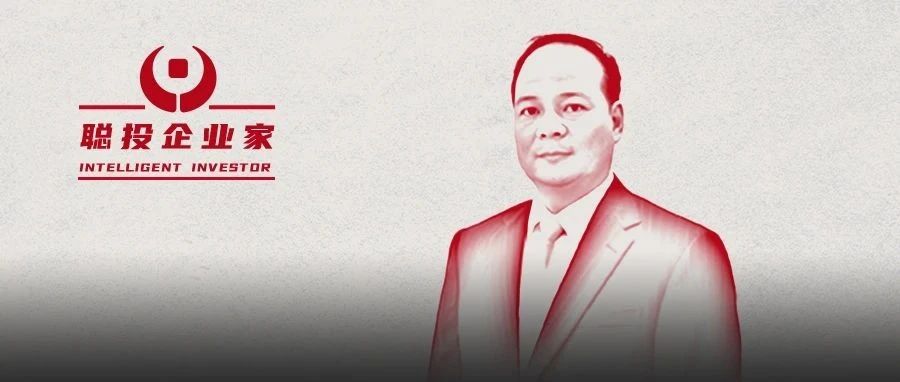
44亿分红后两度回购!宁德时代曾毓群:我们最不做的就是价格竞争,创新才是“反内卷”的解题思路
聪明投资者· 2025-08-26 07:03
Core Viewpoint - The article discusses the recent performance and strategic actions of CATL, highlighting its resilience in the face of industry challenges and its commitment to innovation and quality over price competition [2][3][14]. Group 1: Financial Performance and Actions - CATL's stock has seen fluctuations, with a significant rise of over 30% in July, while its major holding, CATL, has been relatively stable [2]. - The company announced a cash dividend of 10.07 yuan per 10 shares, totaling approximately 4.41 billion yuan, and has engaged in share buybacks totaling around 2.07 billion yuan [2]. - In the first half of 2025, CATL reported revenues of 178.9 billion yuan, a year-on-year increase of over 7.2%, and a net profit of 30.5 billion yuan, up over 33% [12]. Group 2: Industry Context and Challenges - The lithium battery industry is facing significant challenges, with 65 out of 104 listed companies projected to see a decline in net profits in 2024, and over 60 companies experiencing a drop in gross margins [3]. - The recent suspension of CATL's lithium mine operations is expected to reduce domestic lithium supply by 8% monthly, leading to a significant increase in lithium carbonate futures prices [5][6]. Group 3: Strategic Direction and Innovation - CATL emphasizes the importance of value competition over price competition, advocating for high-quality products and innovation as key drivers for sustainable growth [14][22]. - The company is focused on developing advanced technologies and materials, aiming to lead in the electric vehicle battery sector and expand into new applications such as energy storage and electric maritime transport [26][29]. - CATL's commitment to sustainability is evident in its goal to achieve carbon neutrality across all battery factories by 2025, aligning with global trends towards zero-carbon infrastructure [31][32]. Group 4: Market Position and Future Outlook - CATL maintains a leading position in the global market, with a 38.1% share in the global power battery usage from January to May 2025 [12]. - The company is actively exploring new technologies and applications, including V2G (vehicle-to-grid) technology, which enhances the economic value of batteries beyond traditional uses [26][30]. - The future of the industry is seen as reliant on innovation and collaboration, with CATL positioning itself as a key player in the transition to a sustainable energy ecosystem [28][29].
为什么比尔·米勒能够拿住亚马逊26年?一场深度对话还原很多精彩细节
聪明投资者· 2025-08-25 07:04
Core Viewpoint - The discussion focuses on Bill Miller's investment philosophy, particularly his long-term investment in Amazon, which showcases his unique approach to value investing and decision-making in the face of market skepticism [2][4][7]. Group 1: Investment Philosophy - Bill Miller's investment style is characterized as "non-typical" or "alternative" value investing, blending valuation, fundamentals, odds, and time into practical judgments [5][34]. - Miller emphasizes the importance of defining a business correctly, as the description influences perception and investment decisions [5][19]. - The ability to switch between value and growth investing is a key aspect of Miller's pragmatic investment approach, allowing him to identify mispriced opportunities [34][38]. Group 2: Decision-Making Process - Miller's decision to invest in Amazon was influenced by his understanding of its business model, which he likened to Dell's negative working capital structure, allowing for high capital returns [4][14]. - He believes that understanding the underlying cash flow and operational efficiency is crucial, as demonstrated by his analysis of Amazon's financials during its early years [25][27]. - The ability to filter out market noise and maintain a clear perspective is essential for successful investing, as highlighted by Miller's approach to learning and continuous improvement [3][20]. Group 3: Resilience and Adaptability - Miller's resilience during market downturns, particularly during the 2008 financial crisis, showcases his ability to adapt and learn from past mistakes [39][42]. - His approach to investing is informed by a blend of philosophical insights, including pragmatism and language philosophy, which help him navigate complex market dynamics [22][31]. - The importance of maintaining a long-term perspective and the psychological challenges of holding investments through volatility are emphasized as critical components of successful investing [71][75]. Group 4: Practical Insights - The discussion highlights the significance of recognizing "explosive upside opportunities" in investments, as demonstrated by Miller's bets on Amazon and Bitcoin [67][68]. - Miller's investment decisions are often based on a calculated risk approach, where he assesses the potential for significant returns against the likelihood of loss [65][66]. - The ability to remain calm and rational during market turmoil is a trait that distinguishes successful investors like Miller, allowing them to make informed decisions rather than emotional ones [51][57].

巴菲特:机会只留给有耐心的人
聪明投资者· 2025-08-24 02:05
Core Insights - Danaher co-founder Mitch Rales shares insights in a long-form interview, marking his first extensive discussion at the age of 68 [1] - The company has achieved an impressive annualized return of over 21% from 1984 to 2024, translating to a staggering 1800 times investment return [2] Summary by Sections Danaher and Mitch Rales - Danaher was co-founded by Mitch Rales and his brother Steven Rales 40 years ago, creating a compounding investment legacy that even Warren Buffett would admire [1] - The interview highlights the transition of five CEOs and the evolution of the DBS system, emphasizing the importance of hiring the right people and the continuous iteration process [2] Investment Insights - Current commentary suggests that the Chinese stock market is not in a bubble state, according to Jiang Cheng from Zhongtai Securities, indicating a need for strategic focus rather than frequent trading [2] - Value investing is considered a favorable strategy at this time, as noted by Guijiang from Xinpu Investment, who emphasizes the rarity of "dark horses" at market lows [2] - The U.S. stock market is viewed as being in the early stages of a bubble, with Howard Marks advising a more conservative investment approach rather than aggressive strategies [2]

现在还是价值投资不错的时点!信璞投资归江最新交流:最低点的“黑马”不常有,先要做的是“骑上驴”……
聪明投资者· 2025-08-22 01:50
Core Viewpoint - Emphasizing the importance of a "mindset of owning assets" in value investing, which simplifies complex issues by focusing on dividends and long-term holdings [3][7][12]. Group 1: Investment Philosophy - Value investing should focus on acquiring good companies at low costs and holding them indefinitely, which is considered the best strategy [16][17]. - The concept of "riding a donkey to watch a horse" illustrates the strategy of securing stable annual returns while waiting for special trading opportunities during market downturns [4][60]. - The approach of being a "potato investor" signifies a long-term investment strategy where assets are held for their underlying value, regardless of market conditions [3][45]. Group 2: Market Insights - Current market conditions are seen as favorable for value investing, with many high-quality assets available at reasonable prices [64][65]. - The Chinese stock market is not in a bubble state, making it suitable for value investment strategies [7][64]. - The trend of increasing dividends is expected as companies shift from capital expenditure to returning cash to shareholders [49][50]. Group 3: Risk Management - Value traps arise from poor governance, low reinvestment returns, and a focus on past performance rather than future cash flows [35][36]. - The importance of understanding the cyclical nature of markets and human behavior is highlighted, suggesting that investors should embrace cycles rather than fear them [26][22]. Group 4: Asset Allocation - Investors should assess their asset composition and adjust their portfolios based on their financial needs and risk tolerance, particularly as the demographic of wealth holders ages [52][53]. - The focus should be on dividend yield as a key metric for evaluating asset performance, especially in comparison to other investment returns [48][70]. Group 5: Practical Investment Strategies - The strategy of prioritizing dividend-paying stocks over speculative investments is recommended to ensure steady income [67][70]. - Investors are encouraged to seek opportunities in less crowded markets where high-quality assets are available [71].