虎嗅APP

Search documents
中国第二个5万亿城市,诞生
虎嗅APP· 2026-01-21 09:58
以下文章来源于国民经略 ,作者凯风 国民经略 . 在这里,读懂中国经济、城市和楼市 本文来自微信公众号: 国民经略 ,作者:凯风 城市经济,天花板仍在抬升。 刚刚,京沪发布最新经济数据,2025年上海GDP达5.67万亿,北京达5.2万亿,双双同比增长5.4%, 跑赢大盘。 这意味着,北京成为继上海之后的第二座5万亿城市,在全国遥遥领先。 5万亿的经济体量,在国内与安徽、河北省相当;在国际上堪比瑞典、比利时,放在全球可排在25位 以内。 曾几何时,广深与京沪经济齐头并进,如今京沪先行一步,大幅拉开差距,将城市GDP推向新的高 度。 京沪何以领跑?谁是未来的经济第一大市? 京沪,靠什么晋级5万亿? 5万亿GDP,堪称"富可敌国",也是大多数中西部省份难以企及的存在。 上海的5万亿,主要靠汽车、人工智能、生物医药、金融、贸易等支柱产业的共同托举。 与上海、深圳、广州都不同,北京并非工业城市,而以高端服务业著称,第三产业占比超85%。 第二大支柱产业,则是金融业,贡献超过8000亿GDP,让许多二三线城市望尘莫及。 北京虽然没有"金融中心"的名号,但作为金融监管决策中心,云集了全国几乎所有的金融监管部门和 国有金融 ...


解绑宁王,天赐底气何在?
虎嗅APP· 2026-01-21 09:58
Core Viewpoint - The dynamic balance in the lithium battery supply chain is highlighted, with a focus on the evolving relationship between Tianqi Materials and CATL, indicating a shift towards reduced dependency and increased diversification in supply contracts [2][8]. Group 1: Cooperation with CATL - Tianqi Materials established a wholly-owned subsidiary, Ningde Kaixin, in 2015 to provide close services to CATL [4]. - Revenue from CATL reached 10 billion CNY in 2018, accounting for 35.7% of Tianqi's lithium battery material sales; this increased to 122 billion CNY in 2022, representing 58.4% of sales [5]. - In 2023, revenue from CATL decreased to 81 billion CNY, making up 57.6% of Tianqi's sales, and is projected to drop further to 50 billion CNY in 2024, which would be 45.6% of total sales [5][7]. Group 2: Reducing Dependency - The supply agreement between Tianqi Materials and CATL is set to expire at the end of 2025, with no news of renewal, indicating Tianqi's increasing options [8]. - Tianqi has disclosed significant supply contracts, including a partnership with Chuangneng New Energy to supply at least 550,000 tons of electrolyte products by 2030 [10]. - Additional contracts include an agreement with Ruipulan Jun for 800,000 tons and a framework agreement with AVIC New Energy for 725,000 tons, totaling 2.945 million tons across multiple contracts [12]. Group 3: Production Capacity and Market Dynamics - Tianqi's electrolyte production capacity is expected to reach 1 million tons by 2026, with 80% of this capacity already pre-sold, leaving little room for long-term contracts with CATL [13]. - The company anticipates a tripling of production over the next three years, with secured sales channels and potentially higher prices than those offered to CATL [14]. - CATL is also diversifying its supply sources, including a contract with Enchem for 350,000 tons of electrolyte from 2026 to 2030, indicating a shift in CATL's supply strategy [15][17]. Group 4: Financial Performance - Tianqi's lithium battery material shipments increased steadily, but gross profit fluctuated significantly, with a peak gross profit of 88 billion CNY in 2022 and a drop to 24 billion CNY in 2024 [22][24]. - The gross profit margin fell from 39.6% in 2022 to 18.9% in 2024, reflecting the impact of pricing pressures in the market [24]. - Despite the challenges, Tianqi's performance remains resilient compared to other cyclical stocks, with a gross profit margin of 20% considered acceptable in the manufacturing sector [29][30]. Group 5: Industry Positioning - Tianqi Materials has transitioned into a cyclical stock, a shift that was not initially intended, but reflects a strategic adaptation to market conditions [37]. - The company has broadened its customer base to reduce reliance on a single client, demonstrating an understanding of industry trends and the importance of flexibility in supply chains [37].


我们为什么要重返县域?
虎嗅APP· 2026-01-21 09:58
Core Insights - The article emphasizes the increasing visibility and complexity of county-level markets in China, highlighting their resilience in consumer spending compared to first-tier cities, prompting many brands to target these lower-tier markets for expansion [2][4]. Group 1: County Market Overview - As of the end of 2023, there are 1,813 counties in China, including 397 county-level cities, 1,299 counties, and 117 autonomous counties [4]. - The urban population in county cities and towns accounts for approximately 32% of the total urban population in China, with around 250 million residents in county urban areas [4]. - The total economic output of county-level economies represents about 33 trillion yuan, which is a significant portion of the national economy [4]. Group 2: Consumer Behavior Changes - Between 2022 and 2025, county residents have shown a shift towards more rational consumption, moving from a focus on external identity symbols to valuing practical benefits and emotional connections [31][40]. - The demand for "gaining knowledge" has emerged as the most important consumer need, reflecting a desire for personal growth and broader perspectives [31][41]. - There is a notable increase in the importance of emotional companionship and experiences, particularly among older demographics, indicating a shift in how consumers define a "good life" [40][41]. Group 3: Spending Patterns - County residents' monthly expenditures have increased, but the allocation remains stable, with essential spending on education, healthcare, and social relationships being prioritized [58][59]. - There is a contraction in discretionary spending on personal items, while budget allocations for experiences that provide immediate pleasure and long-term health benefits are being preserved [56][60]. - The perception of spending's basic functional attributes is declining, indicating a shift towards valuing emotional and experiential aspects of consumption [60][64]. Group 4: Channel Preferences - The shopping channels for county consumers have become more stratified, with a notable increase in the use of social e-commerce and local delivery platforms, while traditional retail channels are experiencing a decline [79]. - The preference for high-value, convenient, and accessible shopping experiences is rising, aligning with trends observed in higher-tier cities [79]. Group 5: Future Outlook - Despite a stable income level, county residents are adjusting their spending priorities due to perceived economic pressures, leading to a reduction in non-essential expenditures [95]. - The overall sentiment among county residents remains cautiously optimistic regarding future income growth, with a significant portion expecting their financial situation to improve in the next 2-3 years [90][91].
腾讯掉队了?
虎嗅APP· 2026-01-20 23:56
Core Viewpoint - Tencent's CEO Ma Huateng emphasizes that AI represents a transformative opportunity comparable to the industrial revolution, but the company adopts a cautious approach, prioritizing long-term strategy over immediate competition [5][8]. Group 1: AI Strategy and Organizational Changes - Tencent's AI strategy is evolving, with a significant organizational restructuring announced on December 17, 2025, aimed at enhancing its large model development capabilities [5][6]. - The new structure includes the establishment of AI Infra, AI Data, and Data Computing Platform departments, led by top talent Yao Shunyu, who is tasked with integrating AI capabilities across the organization [6][10]. - The restructuring is seen as a response to the competitive landscape, where Tencent has been perceived as lagging behind rivals like ByteDance in AI advancements [10][11]. Group 2: Market Position and Competitive Landscape - Tencent's slower response to the AI wave is attributed to an initial misjudgment of strategic priorities, focusing more on traditional businesses like gaming and video [8][10]. - By 2025, Tencent's AI product "Yuanbao" began integrating with various applications, enhancing user experience across social, office, and consumer scenarios [9][14]. - Despite significant investments exceeding 400 billion yuan in AI since 2018, Tencent's late adjustments in organizational structure and resource allocation have raised concerns about its competitive positioning [10][11]. Group 3: AI Product Development and User Engagement - The AI product "Yuanbao" has achieved high user engagement, with features like AI summaries and intelligent recommendations integrated into popular applications [14][21]. - Tencent's AI capabilities are being embedded across its ecosystem, including WeChat and QQ, allowing for seamless user interactions without altering existing habits [21][28]. - The company is focusing on enhancing user experience through AI, with plans to introduce an AI assistant within WeChat that can understand user needs and facilitate various tasks [28][29]. Group 4: Future Outlook and Industry Trends - The AI industry is transitioning to a phase where the focus shifts from model training to task definition and system evaluation, emphasizing the importance of quantifiable metrics [13][29]. - Tencent's cloud computing division is expected to benefit from the growing demand for AI infrastructure, with projections indicating a doubling of enterprises deploying AI agents in the next two years [22][23]. - As the AI landscape evolves, Tencent's strengths in ecosystem integration, engineering capabilities, and user data feedback mechanisms position it well for future competition [25][29].


“无底薪合伙人”骗局,盯上失业找工作的人
虎嗅APP· 2026-01-20 23:56
以下文章来源于深圳微时光 ,作者山干 深圳微时光 . 寻找深圳的每一寸惊喜。 本文来自微信公众号: 深圳微时光 ,作者:山干,原文标题:《"无底薪合伙人"骗局,盯上失业找 工作的深圳人》,头图来自:AI生成 一 第一次对"合伙人"这个概念产生新认知,缘起于一年半前的一次面试经历。 2024年5月,距离从上一份工作裸辞已经近2个月,我一直没有找到合适的工作。在深圳"双休"的全 职工作仿佛是原罪,尤其是新媒体运营岗,因此我把目光转向了时间自由度更高的兼职。 我在招聘平台看到一条兼职招聘信息,薪资只有2-3k,岗位描述言辞透露着真诚。我加了老板微信, 一聊才发现是合伙人岗位。"一起赚钱分钱""一个人搞太难了,一群人才能做大做强",老板的这些话 吸引着我,心想与其没有工作,不如和老板聊聊看。 "公司"在福田区的一个共享办公室里,老板租了个工位,我们约定在那里碰面。在公共接待区,我们 聊了一个多小时。老板没什么架子,其间向我描绘了一张宏伟的蓝图。他说目前也有腾讯辞职的宝妈 在合作,已经拿到两千元的广告费分成,但没说具体分成比例。当得知我会设计,提议可以合伙,他 跑客户,我只用设计,盈利分成,到时候再签订协议。最打动我的 ...

早报|美国政府首次回应“斩杀线困境”;国足历史性闯入亚洲杯决赛;微软CEO警告:AI若不广泛落地将成泡沫;TCL电子拟与索尼成立合资公司
虎嗅APP· 2026-01-20 23:56
Group 1 - Microsoft CEO Nadella warns that AI may become a speculative bubble unless its application expands beyond large tech companies and wealthy economies, emphasizing the need for broader industry adoption and global reach [2] - Nadella expresses confidence in AI's transformative potential across various sectors, including drug development, which could ultimately drive global economic growth [2] Group 2 - TCL Electronics and Sony have reached a memorandum of understanding to potentially establish a joint venture for home entertainment business, with TCL holding 51% and Sony 49% [3] - The joint venture aims to integrate Sony's advanced technology and brand value with TCL's display technology and supply chain advantages to enhance business development [3] Group 3 - Netflix modifies its merger agreement with Warner Bros. Discovery to pay a cash-only consideration of $27.75 per share to Warner Bros. shareholders [8] - This change reflects a strategic shift in the merger structure, moving away from a cash and stock combination [8] Group 4 - The U.S. stock market experiences a significant downturn, with major indices like the Nasdaq dropping over 2%, and notable declines in large tech stocks such as Nvidia and Tesla [10] - The volatility index (VIX) rises above 20, indicating increased market fear and uncertainty [10] Group 5 - Five government departments in China announce a joint implementation of a loan interest subsidy policy for small and micro enterprises, providing a 1.5% annualized subsidy for eligible loans up to 50 million yuan [32] - Three departments extend the personal consumption loan subsidy policy until the end of 2026, removing restrictions in the consumption sector [33] Group 6 - The Dalian Commodity Exchange adjusts the trading limits and margin standards for lithium carbonate futures, increasing the price fluctuation limit to 11% and setting the speculative trading margin at 13% [34] - This adjustment aims to enhance market stability and manage trading risks in the lithium market [34] Group 7 - Deutsche Bank warns that the "honeymoon period" for the AI industry has ended, predicting that 2026 will be a challenging year marked by disillusionment and a crisis of trust [35] - The report suggests that many independent AI model companies may face significant pressure and could be acquired by larger firms due to financial constraints [35] Group 8 - OpenAI CEO Sam Altman envisions AGI becoming a foundational capability akin to electricity, proposing a closed-loop system integrating AGI, controlled nuclear fusion, and universal basic income to create a stable society [36] - This vision emphasizes the need for AGI to evolve beyond a mere tool to become a critical infrastructure for future technological advancements [36]



对话张楚:AI现在还是水浅王八多,但我想用它做部动画片
虎嗅APP· 2026-01-20 13:20
Group 1 - The article discusses the evolution of music creation in the AI era, highlighting the limitations of current AI tools in producing high-quality music compared to human creativity [4][7][20]. - Zhang Chu, a musician, expresses dissatisfaction with AI-generated music, describing it as "second-rate" and lacking the depth and complexity found in human compositions [13][17][20]. - The conversation emphasizes the importance of personal experience and emotional depth in music, which AI fails to replicate, leading to a homogenized output that lacks individuality [24][26][27]. Group 2 - Zhang Chu plans to create an animated film, aiming to explore themes of existential loneliness and the relationship between individuals and the universe, which he believes cannot be fully expressed through music alone [65][66][67]. - He appreciates the structured storytelling found in European animation, contrasting it with the emotional-driven narratives often seen in other cultures [65][66]. - The article concludes with Zhang Chu's positive experience using AI animation tools, indicating a potential shift in his creative process [71].

谁来啃下全球汽车制造业“最后15%难题”
虎嗅APP· 2026-01-20 13:20
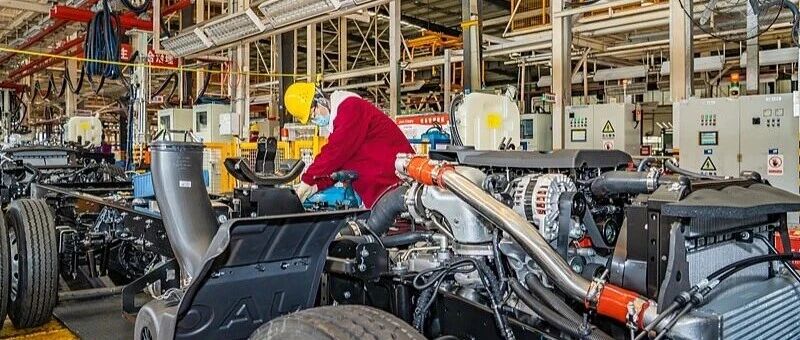
Core Viewpoint - The article discusses the challenges and opportunities in the automotive manufacturing sector, particularly focusing on the "last 15% problem" where automation rates drop significantly in assembly lines compared to other manufacturing processes. The company, Guangxiang Technology, aims to address this gap by developing embodied intelligence solutions tailored for complex tasks in automotive manufacturing [3][4][10]. Group 1: Industry Challenges - The automotive manufacturing industry faces a significant automation gap, with assembly line automation rates plummeting from nearly 99% in other processes to below 15% [3][4]. - Traditional industrial robots struggle with flexible tasks that require hand-eye coordination, such as connecting wiring harnesses and installing components, which are essential in the assembly process [4][6]. - The complexity of tasks in assembly lines presents a barrier to automation, as existing robots are not equipped to handle the variability and intricacies of these operations [10][11]. Group 2: Company Strategy - Guangxiang Technology adopts a gradual approach to embodied intelligence, similar to Tesla's strategy in autonomous driving, by focusing on specific, complex tasks within the automotive manufacturing sector rather than pursuing general-purpose humanoid robots [4][9]. - The company has developed a four-quadrant analysis framework to identify suitable environments and tasks for their robots, aiming to transition from standard environments with simple tasks to more complex operations in standard environments [6][15]. - The core of Guangxiang's strategy is the GOPS platform, which serves as a model-building system for embodied robots, enabling rapid skill acquisition and deployment across different manufacturing sites [6][10][40]. Group 3: Market Insights - The automotive manufacturing sector is deemed a more viable entry point for embodied intelligence due to its structured processes and the potential for significant automation improvements, unlike other sectors like chip manufacturing where automation is already prevalent [19][20]. - The company emphasizes the importance of understanding the specific needs and workflows within automotive manufacturing to develop effective robotic solutions, which involves extensive on-site research and collaboration with industry professionals [21][23]. - Guangxiang Technology identifies that the core skills required for assembly tasks can be distilled into a limited number of common operations, significantly reducing the complexity of developing robotic solutions [23][24]. Group 4: Technological Development - The company recognizes the necessity of integrating advanced data solutions, including synthetic data generation and real-time operational data collection, to overcome the data scarcity in industrial settings [29][31]. - Guangxiang Technology plans to leverage simulation data as a primary source for training models, given the high precision of industrial 3D models and the consistency of objects in manufacturing environments [31][32]. - The company aims to differentiate itself by combining advanced modeling capabilities with deep industry knowledge, ensuring that their robotic solutions are tailored to the specific demands of automotive manufacturing [36][34].
“无底薪合伙人”骗局,盯上失业找工作的人
虎嗅APP· 2026-01-20 13:20
以下文章来源于深圳微时光 ,作者山干 深圳微时光 . 寻找深圳的每一寸惊喜。 本文来自微信公众号: 深圳微时光 ,作者:山干,原文标题:《"无底薪合伙人"骗局,盯上失业找 工作的深圳人》,头图来自:AI生成 一 第一次对"合伙人"这个概念产生新认知,缘起于一年半前的一次面试经历。 2024年5月,距离从上一份工作裸辞已经近2个月,我一直没有找到合适的工作。在深圳"双休"的全 职工作仿佛是原罪,尤其是新媒体运营岗,因此我把目光转向了时间自由度更高的兼职。 我在招聘平台看到一条兼职招聘信息,薪资只有2-3k,岗位描述言辞透露着真诚。我加了老板微信, 一聊才发现是合伙人岗位。"一起赚钱分钱""一个人搞太难了,一群人才能做大做强",老板的这些话 吸引着我,心想与其没有工作,不如和老板聊聊看。 "公司"在福田区的一个共享办公室里,老板租了个工位,我们约定在那里碰面。在公共接待区,我们 聊了一个多小时。老板没什么架子,其间向我描绘了一张宏伟的蓝图。他说目前也有腾讯辞职的宝妈 在合作,已经拿到两千元的广告费分成,但没说具体分成比例。当得知我会设计,提议可以合伙,他 跑客户,我只用设计,盈利分成,到时候再签订协议。最打动我的 ...

“不争气”的中证A500
虎嗅APP· 2026-01-20 13:20
Core Viewpoint - The article discusses the dramatic fluctuations in the scale of the CSI A500 ETF, highlighting its rapid growth at the end of 2025 followed by a significant decline in early 2026, primarily driven by market speculation regarding the potential launch of options for the ETF [2][4]. Group 1: Scale Fluctuations - The CSI A500 ETF experienced a "historic" surge in scale in December 2025, with a net inflow of nearly 100 billion, pushing its total scale above 300 billion [2]. - After the peak, the ETF faced continuous net outflows, dropping below 300 billion, indicating that the initial inflow was not based on investment value but rather on incentives offered by fund companies [4]. - The top five A500 ETFs saw significant reductions in circulation shares during early January 2026, with losses of 22 billion, 36 billion, 21 billion, 13 billion, and 22 billion shares respectively [4]. Group 2: Competitive Landscape - The CSI A500 ETF is viewed as a potential challenger to the dominant CSI 300 ETF, but it has not yet demonstrated the ability to threaten its position, with its scale being less than one-fourth that of the CSI 300 [5][10]. - The marketing efforts for the A500 ETF were unprecedented, but despite being the second-largest broad-based index ETF, it has not shown significant competitive strength against the CSI 300 since its launch [5][6]. - The A500 ETF's performance is more growth-oriented compared to the value-stable CSI 300, which has led to its underperformance during bear markets [9][10]. Group 3: Institutional Investment Dynamics - The lack of significant purchases of the A500 ETF by state-owned funds is attributed to its timing and the established preference for the CSI 300 ETF, which has a more extensive ecosystem and familiarity among institutional investors [16][18]. - Institutional investors have not heavily allocated to the A500 ETF due to its relatively short history and the absence of comprehensive derivative tools, which are crucial for hedging and core asset allocation [18][19]. - The A500 ETF's growth potential is hindered by its current scale and liquidity limitations, making it less attractive for large institutional investments compared to the CSI 300 ETF [20][21]. Group 4: Future Outlook - In the medium to long term, the A500 ETF may have the potential to compete with the CSI 300 ETF, especially as it aligns with the government's push for new productive forces and technology-driven economic growth [22]. - The introduction of options and other derivative tools for the A500 ETF in the coming years could attract more institutional capital, enhancing its market position [22][29]. - The competitive landscape among A500 ETFs is expected to stabilize, with a "3+2" tier structure emerging among the leading products, influenced by factors such as options qualification and marketing strategies [25][29].