雷峰网

Search documents
家电「八角笼」:小米IN,谁OUT
雷峰网· 2025-06-03 00:48
Core Viewpoint - Xiaomi's rapid growth in the home appliance sector is reshaping the competitive landscape, challenging traditional giants like Midea, Gree, and Haier, and prompting a shift towards a more collaborative ecosystem in the industry [2][6][14]. Group 1: Xiaomi's Performance - In Q1 2025, Xiaomi reported revenue of 111.3 billion yuan, a year-on-year increase of 47.4%, and an adjusted net profit of 10.7 billion yuan, marking a 64.5% increase [3]. - Revenue from Xiaomi's smart home appliances grew by 113.8% year-on-year, significantly outpacing industry averages [4]. - The shipment volumes for air conditioners, refrigerators, and washing machines exceeded 1.1 million, 880,000, and 740,000 units respectively, with growth rates surpassing 65% and over 100% for washing machines [4]. Group 2: Competitive Strategy - Xiaomi's unique business model, characterized by an ODM-driven light asset operation strategy, allows for rapid market entry and product iteration, avoiding the heavy asset traps traditional giants face [4]. - The integration of internet thinking into Xiaomi's product development fosters strong brand recognition among younger consumers, enhancing its competitive edge [5]. - Xiaomi's ecosystem, with 944 million connected devices as of March 2025, creates a self-reinforcing cycle that enhances the value of its products and attracts more users [5]. Group 3: Industry Response - Traditional giants like Midea and Gree are adapting to Xiaomi's market entry by forming strategic partnerships and enhancing their own product offerings [6][8]. - Midea's chairman acknowledges the need to respect Xiaomi's tactics while maintaining confidence in their own market position, reflecting a complex sentiment towards emerging competitors [8][9]. - The market share of Midea, Gree, and Haier combined accounted for 67.79% of the online air conditioning market as of April 2025, indicating a high concentration despite Xiaomi's rapid rise [9]. Group 4: Market Dynamics - The competitive landscape is evolving, with traditional brands engaging in price wars and strategic collaborations to counter Xiaomi's influence [12][15]. - Xiaomi's challenges include a lack of offline service networks and increasing price competition from brands like Midea's sub-brand Hualing, which is undercutting Xiaomi's pricing [12]. - The overall market for home appliances is experiencing a shift, with smaller brands facing significant pressure and potential exit from the market as competition intensifies [15][16].




「L4级智驾龙头」驭势科技赴港IPO:三年亏损6.75亿元,难掩失血焦虑
雷峰网· 2025-06-03 00:48
Core Viewpoint - The article discusses the recent IPO trend among L4 autonomous driving companies, driven by underlying growth anxiety within the industry [1][16]. Group 1: Company Overview - Yushi Technology submitted its IPO application to the Hong Kong Stock Exchange, with projected revenues of approximately RMB 65.48 million, RMB 161 million, and RMB 265 million for 2022, 2023, and 2024 respectively, while incurring losses of RMB 250 million, RMB 213 million, and RMB 212 million during the same periods, totaling a cumulative loss of RMB 675 million [2]. - Yushi Technology focuses on providing autonomous driving solutions to enterprise clients, including commercial and passenger vehicle manufacturers, featuring L4-level autonomous driving capabilities [2]. Group 2: Historical Context and Partnerships - Yushi Technology was founded by Wu Gansha after he left Intel China Research Institute, alongside co-founders Zhao Yong and Jiang Yan [4]. - The company initially pursued two business paths: developing passenger vehicle solutions and L4 autonomous driving technology for specific scenarios like micro-buses and logistics [4]. - A previous collaboration with Continental Group for L2+ solutions ended unfavorably, leading Continental to choose a competitor, Huixi, for further development [5]. Group 3: Market Position and Clientele - Yushi Technology is recognized as the only global supplier of sustainable L4 autonomous driving solutions for airports, with clients including Hong Kong International Airport and Guangzhou Baiyun Airport [11]. - As of May 20, 2025, Yushi Technology has partnered with 17 Chinese airports and 3 overseas airports, indicating a strong market presence [12]. Group 4: Financial Support and Investment - Yushi Technology received significant financial backing, including over RMB 1 billion in funding in January 2021 and RMB 300 million in March 2023, with a post-investment valuation of RMB 7.3 billion [15]. - The company’s cash flow management is challenged by client payment structures similar to the AGV industry, which can impact operational liquidity [14]. Group 5: Industry Trends and Challenges - The article highlights the ongoing IPO wave among L4 autonomous driving companies, driven by pressures from existing shareholders and the need for substantial capital investment against a backdrop of long return cycles [16].

蔚来李斌:乐道人少了40%,交付量却暴涨40%;TikTok Shop印尼狂裁2500人;新势力5月战报公布丨雷峰早报
雷峰网· 2025-06-03 00:48
Group 1 - NIO's organizational adjustments have led to a 40% reduction in staff but a 40% increase in delivery volume, with May deliveries reaching 23,231 vehicles, a 13.1% year-on-year growth [4][11] - The restructuring includes a shift in management resources towards the "Lao Dao" brand to accelerate sales growth and enhance cross-department collaboration [4] - The new leadership structure involves the former head of energy business taking over as president of Lao Dao, reporting directly to NIO's president [4] Group 2 - TikTok Shop has laid off hundreds of employees in Indonesia as part of a cost-cutting measure following its acquisition of Tokopedia, reducing the workforce from approximately 5,000 to about 2,500 [6] - The layoffs affect various teams including logistics, operations, marketing, and warehousing, with further layoffs expected in July [6] Group 3 - SenseTime announced a management change with co-founder Xu Bing stepping down as executive director, while Yang Fan and Wang Zheng are set to take over [7] - Xu Bing will focus on the AI chip business after his departure, indicating a strategic shift in the company's talent deployment [7] Group 4 - Tesla's sales in Europe have significantly declined, with May sales dropping by as much as 68% in Portugal, while the overall electric vehicle market in Europe grew by nearly 25% [26] - The decline is attributed to an aging vehicle lineup and increased competition from lower-priced electric vehicles from Chinese brands [26] Group 5 - Neuralink has successfully raised $650 million in funding to advance its brain-machine interface technology, with participation from notable investors [36] - The funding aims to develop new devices that enhance the connection between biological intelligence and artificial intelligence [36]

「车圈恒大」?未免杞人忧天
雷峰网· 2025-06-01 14:35
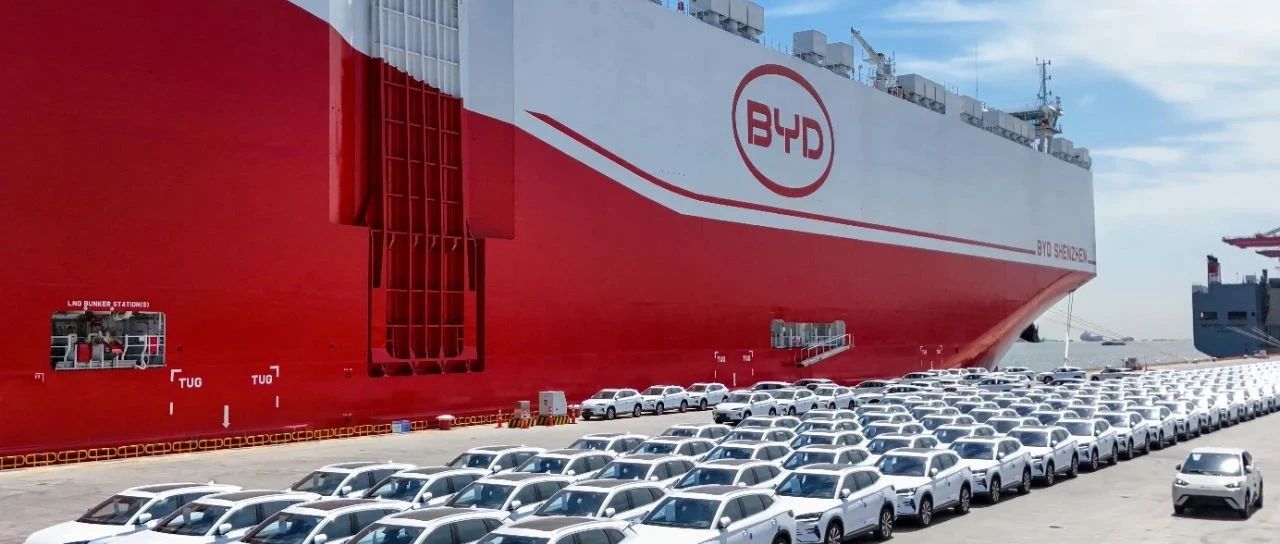
Core Viewpoint - The article argues against the notion of "Evergrande in the automotive industry," asserting that Chinese automakers, particularly BYD, are financially stable and do not face the same risks as Evergrande did in real estate [2][10][19]. Group 1: Financial Health of Chinese Automakers - BYD's total liabilities are over 580 billion, but only 28.6 billion is interest-bearing debt, which is just 5% of its total liabilities, indicating a strong financial position [12][13][18]. - In comparison, major international automakers like Ford and General Motors have significantly higher debt ratios, with Ford at 84.3% and GM at 76.5%, while BYD's debt ratio is 70.71% [12][13]. - The average accounts payable turnover days for BYD is 127 days, similar to its competitors, showing that the payment cycle is not excessively long [15][16]. Group 2: Growth and Market Position - BYD's revenue for 2024 is projected to be 777.1 billion, with a net profit of 40.3 billion, marking its best performance in 30 years [6][18]. - The penetration rate of new energy vehicles in China has surpassed 52%, and domestic brands have captured over 60% of the market share [6][10]. - Chinese automakers are expanding globally, with BYD's sales reaching 4.27 million units, placing it fifth in global sales [8][18]. Group 3: R&D and Competitive Strategy - Chinese automakers are investing heavily in R&D, with BYD's R&D expenditure at 54.2 billion, which is crucial for maintaining long-term competitiveness [18][25]. - The article emphasizes that the focus on R&D over short-term marketing strategies is essential for sustainable growth, contrasting with some international competitors who are reducing R&D investments [25][27]. - The competitive landscape is shifting, with Chinese brands increasingly recognized on the global stage, indicating a robust future for the industry [28][29].

不用GPU,大模型每2秒吃透一道高数大题!这就是华为的实力
雷峰网· 2025-05-30 09:48
Core Viewpoint - Huawei defines the benchmark for domestic large model training through technological innovation, achieving breakthroughs in computing power utilization and post-training throughput [1][4]. Group 1: Technological Innovations - Huawei's "Ascend + Pangu Ultra MoE" combination has unlocked a fully controllable training loop for domestic computing power and models, achieving industry-leading performance in cluster training systems [4][5]. - The pre-training phase saw the Ascend Atlas 800T A2 cluster's model training utilization (MFU) increase to 41%, while the post-training phase achieved a throughput of 35K Tokens/s on a single CloudMatrix 384 super node [5][36]. - Huawei disclosed key technologies in its technical report, highlighting the efficient integration of sparse MoE reinforcement learning post-training frameworks [6][7]. Group 2: Challenges in Current Training Processes - Six main challenges were identified in the current MoE pre-training and reinforcement learning post-training processes, including difficulties in parallel strategy configuration, communication bottlenecks, uneven system load distribution, excessive operator scheduling overhead, complex training process management, and limitations in large-scale expansion [10][11]. Group 3: Solutions to Enhance Training Efficiency - Huawei proposed a complete end-to-end solution to address these challenges, focusing on enhancing training cluster utilization through intelligent parallel strategy selection, deep integration of computation and communication, and global dynamic load balancing [12][14]. - The first strategy involved optimizing parallel configurations, achieving a deployment that included 16 pipeline parallelism, 8 tensor parallelism, and 32 expert parallelism [15][16]. - The second strategy focused on releasing computing power at the single-node level, doubling the micro-batch size (MBS) and optimizing operator scheduling to fully utilize Ascend node capabilities [20][21]. Group 4: Reinforcement Learning Innovations - Huawei introduced the RL Fusion training and inference co-card technology, which supports flexible deployment modes and achieves a doubling of cluster utilization in post-training [28][29]. - The design of a semi-asynchronous mechanism, StaleSync, allows different tasks to execute in parallel while maintaining model accuracy, resulting in a 50% increase in overall training throughput [30]. Group 5: Performance Metrics and Future Prospects - The Pangu Ultra MoE model, with 718 billion parameters, demonstrated high performance during training, achieving a model utilization rate of 41% and a throughput of 35K Tokens/s in post-training [35][36]. - The system is designed to support ultra-large-scale clusters and models, with expectations for future iterations to achieve even higher utilization rates [35][36].

拼多多CEO称反哺商家算长期投资,盈利能力或将持续受到影响
雷峰网· 2025-05-30 09:48
Core Viewpoint - Pinduoduo's Q1 performance significantly underperformed market expectations, with a revenue growth of only 10% year-on-year, marking the lowest quarterly growth rate in two years, leading to a sharp decline in stock price [2][5][12] Group 1: Financial Performance - Pinduoduo's Q1 revenue was approximately 487.2 billion RMB from online marketing services, a 15% increase year-on-year, while transaction service revenue was about 469.5 billion RMB, growing 6% year-on-year [5] - The company's promotional and advertising expenses surged to around 334.0 billion RMB in Q1, exceeding the 313.6 billion RMB spent during the peak marketing period in Q4 2024 [2][5] - The overall market sentiment is affected by Pinduoduo's declining stock value, which has dropped 46.5% from its historical peak in February 2021, currently valued at approximately 139 billion USD [12] Group 2: Competitive Landscape - Pinduoduo faces intensified competition during the 618 shopping festival, with rivals increasing their investments in instant retail, threatening Pinduoduo's user retention and shopping frequency [3][4] - The company is compelled to provide additional subsidies to retain users, investing 10 billion RMB in consumer coupons across all product categories [8][9] Group 3: Business Strategy and Challenges - Pinduoduo's strategy involves sacrificing short-term profits to support merchants, with a significant focus on long-term value creation, despite market skepticism regarding this approach [11][12] - The transition of Pinduoduo's overseas business, Temu, to a semi-managed model due to tariff changes has raised concerns about its pricing power and operational efficiency [15][16] - The company is experiencing increased cost pressures from both supply and demand sides, as it attempts to maintain its competitive edge while managing rising operational costs [10][11]


独家丨华为云中国区总裁一职将迎新掌舵人,张修征换岗
雷峰网· 2025-05-30 09:48
" 华为云的变动或许还只是刚刚开始。 " 作者丨胡敏 编辑丨周蕾 雷峰网独家消息,华为云内部近期正在酝酿一波组织调整,华为云中国区总裁一职将迎来新的掌舵人,张 修征将会换岗。 据公开资料显示,在担任华为云中国区总裁之前,张修征曾在华为中国区电信系统部担任副部长,主要负 责国内的电信运营商,特别是中国电信,2020年,他调任华为云业务板块,成为华为中国计算业务总裁。 据知情人士透露,该调整还未完全落地,张修征对外职务仍然是华为云中国区总裁,只不过他已经在兼任 ICT相关岗位,而这种兼任,往往是换岗前奏。关于接任者,目前已有潜在人选,如想了解更多候选人信 息,欢迎添加微信 mindy1857 交流。 // 近期热门文章 智算业务能救「独立云厂商」吗? 增速18%背后:阿里云如何讲AI盈利故事? 分析师道破阿里股价下跌之谜:云业务增长不及买方预期 ...

传京东外卖百亿补贴减少力度:商家承担比例升至70-80%;要上市?宇树回应更名「股份有限公司」;北汽蓝谷严格执行末位考核淘汰制度
雷峰网· 2025-05-30 00:31
Key Points - JD.com has adjusted its "100 billion subsidy" policy, increasing the burden on merchants to 70%-80% of the subsidy costs, which has raised concerns about profit erosion among merchants [4] - ByteDance has announced a ban on third-party AI development tools, leading to internal disputes among employees, prompting an apology and clarification from the company [7][8] - BAIC Blue Valley has positioned cost reduction and efficiency improvement as a top priority, implementing strict performance evaluations [9] - Yushutech has changed its name to include "股份" (shares), indicating potential plans for a Hong Kong IPO [10] - Honor's new management team aims to regain a top three position in the smartphone market, with a focus on improving core competencies [12][13] - Chery has established an "Intelligent Center" to integrate its related businesses, emphasizing its strategy for smart technology [14] - Neta Auto's headquarters logo has been removed as the company prepares to relocate, amidst previous claims of high costs for the logo [14] - Li Auto reported a revenue of 25.9 billion yuan for Q1 2025, maintaining its position as the leading new energy vehicle company [16] - Nvidia's CEO stated that AI development in China will continue regardless of U.S. chip export restrictions, highlighting the resilience of the Chinese AI market [19] - Meta is expanding its retail presence to challenge Apple's retail dominance, with plans for more physical stores [20] - Tesla shareholders have urged CEO Elon Musk to commit to a minimum of 40 hours of work per week, reflecting concerns over company governance [22]


Pangu Ultra准万亿MoE模型:业界一流,源自昇腾原生的长稳训练
雷峰网· 2025-05-29 11:44
Core Viewpoint - Huawei's Pangu Ultra MoE model, with a parameter scale of 718 billion, represents a significant advancement in the training of ultra-large sparse models, achieving a balance between model performance and efficiency [5][8]. Group 1: Model Architecture and Training Innovations - Pangu Ultra MoE employs a Depth-Scaled Sandwich-Norm (DSSN) architecture and TinyInit initialization method, enabling stable training of over 10 trillion tokens [9][12]. - The model utilizes an EP loss optimization method to ensure load balancing among experts while enhancing their specialization capabilities [15][19]. - The architecture integrates advanced mechanisms such as Multi-head Latent Attention (MLA) and Multi-token Prediction (MTP) to improve training efficiency and inference speed [6][23]. Group 2: Performance Metrics and Comparisons - Pangu Ultra MoE has a total parameter count of 718 billion, with 39 billion activated parameters, and demonstrates superior performance across various benchmarks compared to existing models [8][21]. - The model's training stability is enhanced by reducing gradient spike rates by 51%, which contributes to improved convergence speed and overall performance [14][12]. Group 3: Load Balancing and Expert Specialization - The EP-Group load balancing loss function allows for a more flexible routing of tokens to experts, promoting specialization without compromising computational efficiency [19][20]. - The model's architecture is designed to accommodate 256 routing experts, with each token activating 8 experts, optimizing the distribution of computational load [5][7]. Group 4: Reinforcement Learning and Multi-capability Training - The training system incorporates iterative hard example mining and a multi-capability reward system to enhance model performance across various tasks, including mathematics and coding [28][32]. - The reinforcement learning approach ensures that the model maintains high efficiency in inference while balancing the growth of different capabilities [29][32].

大卓智能将被整合,奇瑞智驾拥抱供应商
雷峰网· 2025-05-29 11:44
Core Viewpoint - Chery is restructuring its autonomous driving business, integrating Dazhuo Intelligent into its R&D center, with a focus on enhancing its smart driving capabilities and achieving ambitious production targets by 2025 [2][3][4]. Group 1: Company Restructuring - Dazhuo Intelligent will be merged into Chery's R&D center in Shanghai, with CEO Gu Junli likely to leave the company [2]. - Zhang Xiaohong, previously from Huawei and NIO, will lead the smart driving R&D efforts at Chery [2]. - Chery's autonomous driving business will be unified under Gao Jiabing, who is currently an assistant general manager at Chery [2]. Group 2: Product Development and Goals - Dazhuo Intelligent aims to create a dual product matrix of ADAS and high-level L4 solutions, targeting a million-vehicle self-driving solution [2][3]. - Chery plans to launch L2-level assisted driving products in 2023, with a goal of mass production of high-speed NOA by 2024 and full-scene smart driving by 2025 [3]. - By 2025, Chery aims to have 1 million units of smart driving technology in both domestic and international markets [3]. Group 3: Strategic Challenges - Chery's production progress for Dazhuo Intelligent appears insufficient to meet its smart driving ambitions, leading to criticism from Chairman Yin Tongyue regarding the pace of development [4]. - The company is increasingly relying on external suppliers for smart driving solutions, collaborating with firms like Huawei, Alibaba, and Horizon Robotics [5][6]. - Chery has accelerated partnerships with external suppliers, including a $100 million strategic investment in Qingzhou Zhihang for mid-to-low-end smart driving solutions [5].