经济观察报

Search documents
大P人刘靖康如何管理3000人的影石
经济观察报· 2025-07-09 11:37
Core Viewpoint - The article highlights the unique leadership style of Liu Jingkang, the founder of Insta360, emphasizing his unconventional approach to management and innovation, which has contributed to the company's rapid growth and competitive positioning in the market. Company Growth and Development - Insta360 has grown from a small team of six to over 3,000 employees in ten years, successfully listing on the Sci-Tech Innovation Board a month prior to the article's publication [3][40]. - The company has entered the action camera market in 2023, intensifying competition with DJI, which is rumored to launch a panoramic camera [4][5]. Leadership Style and Management - Liu Jingkang is described as spontaneous and unconventional, often making decisions without formal planning, which has led to a unique company culture [4][5]. - He prefers a flat organizational structure, with meetings that are brief and focused, allowing for quick decision-making [7][9]. - Liu's management style includes empowering middle managers and decentralizing decision-making, aiming to create a more agile organization [20][25]. Product Development and Innovation - The company has faced challenges in understanding user needs and market demands, particularly with its early panoramic camera models [14][16]. - The introduction of the ONE X series marked a significant shift towards developing action-oriented panoramic cameras, addressing user feedback and application scenarios [16][18]. - The success of the Ace Pro 2's street photography kit demonstrated the importance of accessory development in broadening the camera's appeal [21][23]. Organizational Structure and Culture - Insta360 has implemented a matrix organizational structure to enhance collaboration across different functions, allowing for independent product development [20][30]. - The company emphasizes the importance of user feedback and market research in product development, aiming to standardize processes and reduce reliance on individual decision-making [32][35]. Employee Development and Values - Liu Jingkang prioritizes employee development, viewing staff as the company's most valuable asset, and aims to create a culture that fosters growth and collaboration [40]. - The company's core values include user orientation, teamwork, and resilience, which are seen as essential for navigating the complexities of innovation and market demands [36].


倾听尼山2025|史蒂夫·富勒:AI是一面镜子,激发人类的创造力
经济观察报· 2025-07-09 11:37
史蒂夫·富勒表示,尽管AI是由人类通过算法和数据来编程的,算法是人类发明的,数据也是人类 输入的,但是AI所产生出的结果和回答经常令人们震惊,即人们无法区分哪些是AI所产生的结 果,哪些是人类智慧所产生的答案。 为何会出现这样的现象? 史蒂夫·富勒表示,AI正以新的方式整合人类创造的智慧成果,从而创造出人类前所未有的表达组 合,这些以新的模式重新整合的可能性此前并未被人类充分开发,这就是AI的回答常常令人们惊 诧的原因。人类似乎没有意识到,我们还有很多其他的能力,而AI恰好启发了我们。以目前已发 表的文献为例,当下约80%的文献是从未被人们引用的,而在AI的训练模型中,所有的文献被载 史蒂夫·富勒表示,AI正以新的方式整合人类创造的智慧成 果,从而创造出人类前所未有的表达组合,这些以新的模式重 新整合的可能性此前并未被人类充分开发,这就是AI的回答常 常令人们惊诧的原因。 作者: 刘颖 封图:图虫创意 2025年7月9日,第十一届尼山世界文明论坛在山东曲阜开幕。 英国社会科学院院士、英国华威大学社会学系讲席教授史蒂夫·富勒(Steve Fuller)出席开幕式并 发表演讲。他表示:"AI(人工智能)并没有剥夺 ...

全球黄金价格“高处不胜寒” 到底发生了什么?
经济观察报· 2025-07-09 11:37
近期全球黄金市场出现"央行大买家购金力度下滑,对冲基金 等中小买家逢高获利离场"的状况。但是,随着美国重启对等 关税贸易战,加之美国"大而美"法案令美国债务规模继续快速 上升,未来全球央行仍会加大黄金购买力度,作为对冲金融市 场风险与"去美元化"的重要工具。 作者: 陈植 封图:图虫创意 尽管全球央行持续加仓黄金,但它对金价上涨的推动作用正悄然减弱。 7月4日,世界黄金协会发布最新数据显示,5月份全球央行净购入20吨黄金。 7月7日,中国国家外汇管理局发布数据显示,截至6月底,中国官方黄金储备为7390万盎司,较5 月环比增加7万盎司。 但是,全球黄金价格却"不为所动",延续回调走势。在7月8日凌晨美国政府对多个国家出台新的 对等关税举措前,伦敦现货黄金价格一度跌破3300美元/盎司,较4月下旬历史高点下跌约200美 元。 "4月全球央行购金规模较3月环比减少12%,5月购金规模低于过去12个月平均值27吨,令华尔街 意识到二季度以来全球央行购金力度趋降,难以支撑黄金价格反弹,由此引发众多密切跟踪全球央 行购金动向的对冲基金对黄金获利了结。"长期参与COMEX黄金期货投资的华尔街对冲基金经理 张刚向记者分析说 ...

“台独十讲”半途叫停,以武拒统声势唬人
经济观察报· 2025-07-09 11:37
Group 1 - The Taiwanese military exercises are designed to entertain the public rather than focus on tactical analysis, with this year's highlight being a live demonstration of the M1A2T main battle tank [1][10][9] - The M1A2T tank, purchased from the U.S., is considered expensive and unsuitable for Taiwan's terrain, with a total cost of approximately $1.87 billion for 108 units, each priced at $17 million [11][13][14] - The Taiwanese military's annual "Han Guang" exercise, this year numbered 41, will take place over 10 days, featuring continuous live drills that may disrupt civilian life [7][8] Group 2 - The cancellation of a speech by Taiwan's leader Lai Ching-te, initially planned as part of a series promoting national unity, has sparked speculation about external influences, particularly from the U.S. [2][4][5] - Lai's previous speeches have faced criticism for their content, leading to suggestions from within his party to pause further presentations to avoid further embarrassment [5][6]

程序化交易新规之后 高频交易上演“变奏曲”
经济观察报· 2025-07-09 10:52
Core Viewpoint - The new regulations significantly impact high-frequency trading strategies, leading to a systematic compression of their survival space in the market [1][4]. Group 1: Regulatory Changes - The implementation of the "Procedural Trading Management Implementation Rules" marks the beginning of a strong regulatory era for algorithmic trading in China's capital markets [2]. - The new rules define high-frequency trading as submitting or withdrawing orders exceeding 300 times per second or 20,000 times per day, imposing differentiated fees for exceeding these thresholds [6][7]. - The regulations also outline four types of abnormal trading behaviors, although specific standards for triggering these behaviors have not been clearly defined [7]. Group 2: Impact on Trading Strategies - Many private equity firms have already begun modifying their trading algorithms in response to the new regulations, with one firm reducing its order submission rate from 400 to 30 per second, resulting in a potential annualized return loss of 0.8% for each frequency reduction [3][4]. - The new rules have led to a general increase in costs for day trading strategies among small and medium-sized quantitative private equity firms, with costs rising by approximately 30% [15]. - Some firms are developing new strategies that incorporate macroeconomic factors, such as low-frequency CTA strategies, which have shown a potential 40% reduction in annualized volatility during backtesting [16]. Group 3: Industry Transformation - The new regulations are expected to reshape the industry ecosystem, with high-frequency strategies being less prevalent in overall quantitative AUM but serving as a critical survival tool for smaller private equity firms [14][13]. - The tightening of regulations is anticipated to accelerate the process of industry consolidation, compelling managers to strengthen their competitive advantages [19]. - The future of the quantitative industry will likely see a shift towards more refined competition, focusing on client service capabilities, product design, and post-investment returns [18].

CPI结束连续四个月负增长 要达全年目标政策仍需加力
经济观察报· 2025-07-09 10:42
Group 1 - The core issue of low price levels in China is insufficient domestic demand, reflecting the pains of economic transformation [1][5] - The Consumer Price Index (CPI) showed a slight increase of 0.1% year-on-year in June 2025, ending four months of negative growth, but the overall CPI for the first half of the year decreased by 0.1% compared to the previous year [2][4] - Food prices have significantly contributed to the negative CPI growth, with various food items like grains, cooking oil, and fresh vegetables showing year-on-year price declines [3][5] Group 2 - The government has set a CPI growth target of around 2% for 2025, the lowest since 2004, aiming to improve supply-demand relationships through policies and reforms [4] - Future CPI growth is expected to stabilize and gradually recover, with projections of 0.2% and 0.6% for the third and fourth quarters, respectively, leading to an overall annual increase of 0.1% [6] - The low CPI levels indicate ongoing macroeconomic imbalances, suggesting the need for increased public investment to stimulate demand and improve employment and income levels [7]

消费分层时代,迪卡侬如何用“入门+专业”打造一站式差异化优势?
经济观察报· 2025-07-09 10:11
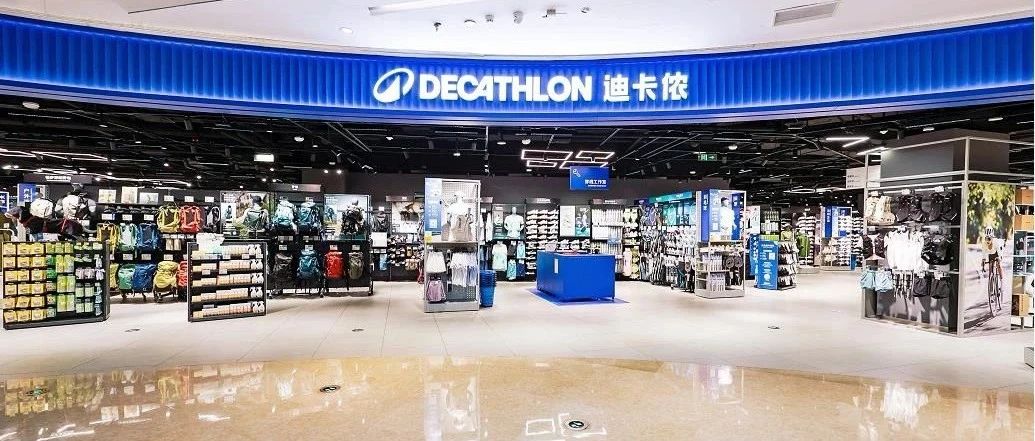
Core Viewpoint - Decathlon is uniquely establishing a "full-scenario coverage" product ecosystem, offering a complete product matrix from entry-level affordable options to high-performance gear that competes with professional sports brands [1][2]. Group 1: Product Strategy - Decathlon has adopted a "dual-track" product strategy, focusing on both entry-level and professional products, creating a comprehensive product matrix that caters to diverse consumer needs [1][5]. - The company maintains its core philosophy of providing quality, functionality, and value for money, ensuring that both entry-level and professional products coexist within the brand [2][10]. - The product structure includes nine major sports categories and four specialized brands (VAN RYSEL, KIPRUN, SIMOND, SOLOGNAC) targeting high-level professional sports [8]. Group 2: Market Trends - The adjustment in Decathlon's strategy is driven by two major trends in the Chinese sports consumption market: the diversification of sports interests and the deepening demand for professional equipment [6]. - Data from JD.com indicates significant growth in niche sports equipment, with surfing gear sales increasing by 473% and climbing gear by over 150% in the first half of 2024 [6]. Group 3: Brand Development - In 2024, Decathlon plans to accelerate brand upgrades in the Chinese market, enhancing brand strength and product ecosystem implementation [4]. - New concept stores in Shanghai, Beijing, and Nanjing will open in June 2025, transforming sales spaces into sports experience hubs [4]. Group 4: Value Proposition - Decathlon's unique value proposition lies in its ability to offer high-performance quality within a reasonable price range, addressing the dilemma consumers face between high-priced professional products and lower-quality alternatives [6][10]. - The company emphasizes its commitment to value for money, applying professional sports technology to consumer products, exemplified by the high-performance features of its popular swimming goggles [11]. Group 5: Operational Philosophy - Decathlon's operational philosophy integrates "product + service + community," transforming stores into "sports social centers" to enhance consumer experience [15]. - Employees with sports expertise serve as product advisors and community operators, fostering social interactions among consumers [16]. Group 6: Future Plans - Decathlon aims to expand its product line in China to meet refined consumer demands and fill gaps in the high-end market [19]. - The company plans to open 20 to 30 new or upgraded stores this year, focusing on locations in economically vibrant cities to provide more targeted product offerings and services [19].
香港证监会梁凤仪:人民币股票交易柜台纳入港股通进展顺利 力争近期公布细则
经济观察报· 2025-07-08 12:08
Core Viewpoint - The Hong Kong Securities and Futures Commission (SFC) is actively collaborating with mainland regulatory authorities to advance the inclusion of a Renminbi (RMB) stock trading counter into the Hong Kong Stock Connect, with technical preparations progressing smoothly and implementation details expected to be announced soon [1][3]. Group 1: Development of RMB Fixed Income Market - One of the key focuses for the SFC this year is the development of the fixed income and currency markets, particularly the RMB fixed income market [2]. - The issuance of offshore RMB bonds in Hong Kong has seen rapid growth, with the total amount surpassing 1 trillion yuan in 2024, representing a 37% year-on-year increase [3]. - The Ministry of Finance has increased the frequency and scale of issuing national bonds in Hong Kong, particularly mid- to long-term bonds, to better meet international investors' needs [3]. Group 2: Enhancing Market Liquidity - The SFC aims to enhance the liquidity of the secondary bond market, which will provide issuers with more competitive pricing conditions and a broader investor base [4]. - The development of derivative instruments is crucial for bond investors to hedge risks and manage liquidity [4]. Group 3: Infrastructure Development for Offshore RMB Products - The SFC supports financial institutions in developing more attractive and diversified derivative products, including interest rate, foreign exchange, and credit derivatives [5]. - There is an understanding of the market's expectation for the prompt launch of national bond futures, with ongoing collaboration with mainland regulatory bodies to advance preparations [5]. - The establishment of an offshore RMB-related product infrastructure, including front and back office systems, is being researched to enhance the stability of Hong Kong's financial system and provide an efficient and transparent trading platform for offshore RMB assets [5].

跨境金融强信号
经济观察报· 2025-07-08 11:54
Core Viewpoint - The recent policy announcements from the Chinese government signify a significant shift towards institutional openness in the financial sector, particularly through the promotion of measures in free trade zones that align with international high-standard economic and trade rules [2][22]. Group 1: Key Measures in Service Trade - Eight critical measures in the service trade sector have been identified, with six of them involving the People's Bank of China and the financial regulatory authority [4][5]. - The measures focus on financial technology, cross-border payments, data compliance, and optimization of financial infrastructure, indicating a direction towards rule-based, interconnected, and risk-controlled service trade [5][15]. - The first measure emphasizes the development of financial technology and international cooperation to facilitate cross-border asset management and the orderly promotion of digital RMB trials in trade scenarios [5][6]. Group 2: Cross-Border Financial Operations - The second measure optimizes the management policies for cross-border capital operations of multinational companies, encouraging them to establish global or regional capital management centers in qualified free trade zones [8][9]. - The third measure aims to enhance the functionality of free trade accounts in qualified free trade zones, simplifying account structures and improving the efficiency of cross-border capital flows [10][11]. - The fourth measure explores cross-border transfer of asset-backed securities and financing lease assets in qualified free trade zones, with a focus on RMB settlement [10][11]. Group 3: Electronic Payment and Data Management - The fifth measure encourages financial institutions and payment service providers to adopt internationally advanced standards for electronic payment systems and to develop cross-border digital identity verification [12][13]. - The sixth measure allows financial institutions to transmit necessary operational data abroad under a national framework for cross-border data transmission security management [14][15]. - These measures collectively create a systematic arrangement for foreign institutions, domestic fintech companies, and multinational companies in account management and payment scenarios, serving as a pilot for institutional openness and a guide for reshaping cross-border financial order [15][20]. Group 4: Coordination of Policies - The draft business rules for the RMB cross-border payment system (CIPS) represent an upgrade in operational standards, while the recent notification lays out a broad path for institutional openness [17][20]. - The alignment between the business rules and the notification indicates a new phase for China's cross-border financial infrastructure, with a focus on standardization and execution [18][20]. - The dual role of free trade zones as both global rule adapters and domestic institutional providers is emphasized, highlighting the importance of proactive engagement with international high-standard economic rules [21][22].

Z世代的“炒股心经”
经济观察报· 2025-07-08 11:54
Core Viewpoint - The "Z Generation" is no longer an outsider in the financial market, as they actively participate in stock trading, driven by the desire to earn their first pot of gold, while experiencing a range of emotions from joy to anxiety and disillusionment [1][5]. Group 1: Z Generation's Market Entry - In recent years, there has been a significant influx of new investors, particularly from the Z Generation, with 72% of young investors having only about a year of experience in stock trading [4][3]. - The proportion of investors under 30 has reached 30%, doubling compared to before September 2024 [4]. Group 2: Individual Experiences and Learning - Young investors like Xiao Zeng and Li Yan have faced substantial losses, with Xiao Zeng experiencing a monthly loss of 80,000 yuan and a drop in account yield from 58% to -59% [2][16]. - Li, who initially felt confident in his theoretical knowledge, faced harsh realities in the market, leading to a realization that practical experience is essential for true understanding [9][12]. Group 3: Evolving Investment Strategies - Li's investment logic evolved through three iterations, moving from traditional media to interpersonal recommendations, and finally to a cautious approach towards new media stock recommendations [10][11]. - The survey indicated that only 6% of respondents relied on social media for investment information, reflecting a shift in the Z Generation's approach to information sourcing [11]. Group 4: Emotional and Psychological Aspects - Xiao Zeng's experience illustrates the "overconfidence trap," where initial success led to reckless trading decisions, resulting in significant losses [16]. - The emotional pain of losses is noted to be 2.5 times greater than the pleasure from gains, highlighting the psychological challenges faced by young investors [16]. Group 5: Lessons Learned and Future Outlook - Li Yan learned to adapt his strategies by focusing on risk management and understanding market dynamics, achieving an annual return of around 10% [22]. - The survey revealed that 73.78% of Z Generation investors plan to increase their stock investments in the coming year, with over 72% believing that emotional regulation is the most important skill in investing [28].