傅里叶的猫

Search documents
4000点的A股和胜宏详细分析
傅里叶的猫· 2025-10-28 13:51
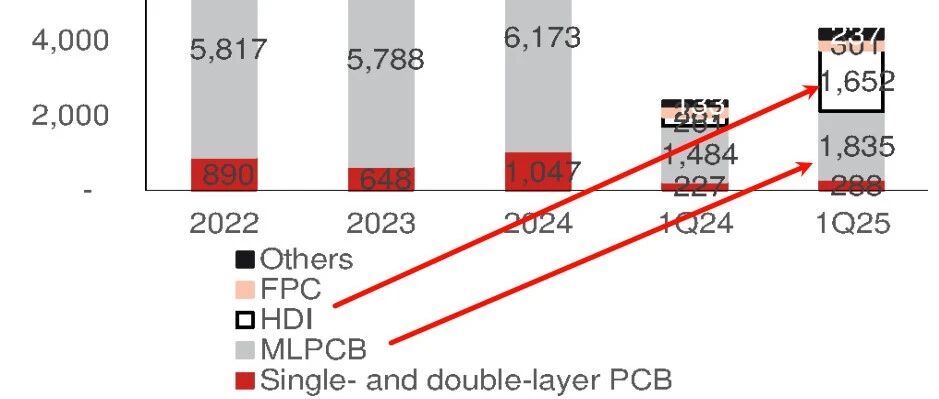
Core Viewpoint - The article discusses the recent performance of the A-share market, particularly the Shanghai Composite Index reaching the 4000-point mark for the first time in nearly a decade, and the implications of this milestone for investors [1]. Group 1: Company Performance - Victory Giant Technology (VGT) reported a significant increase in revenue and net profit for the first three quarters of 2023, with revenue reaching CNY 14.117 billion, a year-on-year increase of 83.40%, and net profit of CNY 3.245 billion, up 324.38% [2][3]. - In Q3 alone, VGT achieved revenue of CNY 5.086 billion and net profit of CNY 1.102 billion, reflecting year-on-year growth of 78.95% and 260.52%, respectively [2][3]. Group 2: Industry Trends - The company’s performance of increasing revenue but declining net profit is attributed to several factors, including production line adjustments due to product iterations, increased labor costs from factory expansions, and rising R&D expenses [3]. - Analysts, including those from Nomura, maintain a positive outlook on VGT, expecting profit margins to recover in Q4 and anticipating significant growth in new product iterations in the coming years [3]. Group 3: Product and Market Position - VGT specializes in high-precision multilayer PCBs, HDI PCBs, and flexible printed circuits, with applications in aerospace, automotive electronics, next-generation communication technologies, and medical devices [6][10]. - The company has successfully entered NVIDIA's AI server supply chain and is expanding its market share in the GB200/GB300 product series [6][21]. - VGT's production capabilities include the ability to manufacture over 100-layer high-density PCBs and has been recognized as one of the first companies to achieve mass production of 24-layer HDI+6 products [6][30]. Group 4: Future Growth and Investments - VGT is investing heavily in expanding its production capacity, with projects in Vietnam and Thailand aimed at increasing HDI and HLC production capabilities significantly by 2027 [31][13]. - The company plans to increase its HDI production capacity from 930,000 square meters in 2024 to 2.15 million square meters by 2027, and HLC capacity from 8.65 million square meters to 9.43 million square meters [31].

美国是否应该向中国出售B30A芯片?
傅里叶的猫· 2025-10-28 13:51
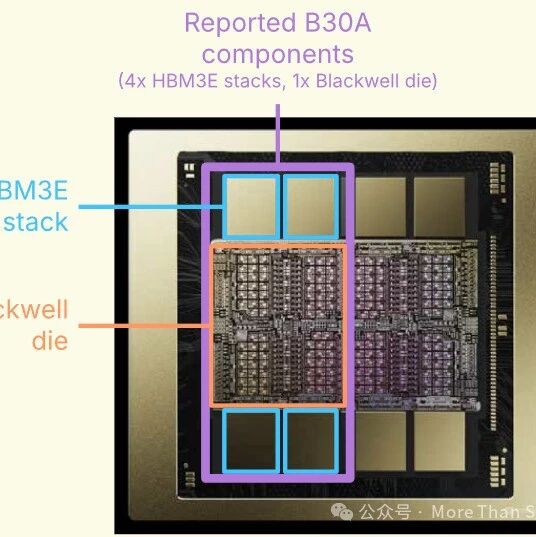
Core Viewpoint - The article discusses the potential implications of the B30A chip, designed by NVIDIA as a downgraded version of its flagship B300 chip, particularly in the context of U.S. export controls to China and the ongoing AI computing race [5][16]. Group 1: AI Computing Race and Export Controls - The U.S. government faces a complex decision regarding the export of the B30A chip to China, which could significantly enhance China's AI computing capabilities despite being a lower-performance version of the B300 [5][6]. - The Trump administration's AI action plan aims to maintain U.S. leadership in AI by restricting access to advanced AI computing resources, with the U.S. currently leading China in AI supercomputing capabilities by approximately five times [7]. Group 2: Hardware Configuration and Performance - The B30A chip has peak performance and memory bandwidth that are 50% lower than the B300, with a single B30A card priced at approximately $22,500 compared to the B300's $45,000 [8][12]. - A server with eight B30A GPUs consumes only 40% of the power of a B300 server, making it more energy-efficient [8]. Group 3: Cluster Cost Analysis - To achieve the same total computing power as a B300 cluster, a B30A cluster requires double the number of chips, leading to a 24% higher initial investment cost, although this is mitigated by Chinese government subsidies [11]. - The overall amortized cost of a B30A cluster, including server, network, and energy costs over five years, is approximately 1.24 times that of a B300 cluster, indicating a 20% higher cost [13]. Group 4: Strategic Implications of B30A Export - If the B30A is allowed for export, it could significantly narrow the AI computing gap between the U.S. and China, potentially reducing the disparity from over 31 times to below 4 times [14]. - The introduction of B30A could pressure domestic Chinese chip manufacturers, as its performance exceeds that of local alternatives while being more cost-effective [14][15]. Group 5: Global Supply Chain Impact - Allowing the export of B30A could disrupt the global chip supply chain, as NVIDIA's production capacity is limited, potentially leading to longer wait times for other markets [15]. - The B30A's established supply chain and controllable procurement costs make it an attractive option for China, representing a "low investment, high return" scenario [15]. Group 6: Technical and Geopolitical Interplay - The decision to allow B30A exports is complicated by geopolitical considerations, as it could undermine U.S. core advantages in AI while providing NVIDIA with significant revenue [16]. - The AI computing race is not solely a technological competition but also a geopolitical struggle, with the potential for U.S. market restrictions to accelerate China's domestic technology development [16].

20251027 China TMT Breakout
傅里叶的猫· 2025-10-27 11:07
Global Insights - Ongoing US-China negotiations are expected to delay certain policies [4] - Arkham Intelligence reported that SpaceX transferred a total of 1,215 bitcoins to multiple addresses [4] - Citigroup highlighted Anthropic's agreement with Google to procure up to 1 million TPUs, indicating potential benefits for TSMC, MediaTek, and KYEC due to increased TPU chip shipments [5] China Insights - Alibaba upgraded Qwen deep research with one-click webpage and podcast generation, achieving accuracy on par with Gemini, outperforming ChatGPT and Grok [7] - Goldman Sachs noted the increasing adoption of Horizon Journey 6 platform in new vehicle models, with mass production of J6P and H5D starting in EXEED models [7] - Xiaoma Zhixing announced the mass production of 300 units of the seventh-generation Robotaxi, aiming for a fleet of 1,000 by the end of 2025 [8] - Citigroup reported that GoerTek's Q3 2025 performance met expectations, with revenue growth of 4% year-on-year to 30.6 billion RMB [8] - Xiaomi is expected to announce Q3 2025 results on November 18, with a projected net profit of 1.2 billion RMB, reflecting a year-on-year increase of 64% [9] - Raycus Laser's Q3 2025 revenue grew by 10% year-on-year to 841 million RMB, with a significant net profit increase of 107% to 50 million RMB [10] - Nomura identified Shenghong Technology as a key beneficiary of Nvidia's innovation cycle, projecting a revenue and earnings CAGR of 40% and 45% respectively from FY2025 to FY2027 [11]

电力出海价值挖掘、美国的电力体制
傅里叶的猫· 2025-10-27 11:07
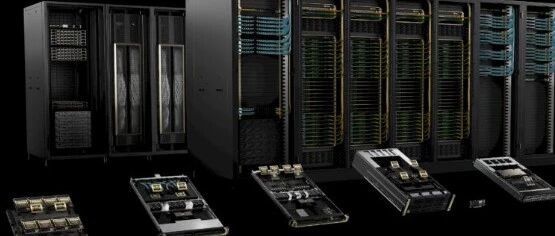
Core Viewpoint - The article discusses the market potential of Solid Oxide Fuel Cells (SOFC) in the context of the evolving electricity market in the United States, highlighting the challenges faced by data centers and the advantages of adopting new technologies like SOFC and Solid State Transformers (SST) [1][2]. Group 1: Background of U.S. Electricity Market Reform - The U.S. electricity market reform began in the 1970s due to the global energy crisis, leading to the establishment of the Department of Energy (DOE) and the Federal Energy Regulatory Commission (FERC) [3]. - The Public Utility Regulatory Policies Act (PURPA) of 1978 marked the start of market reform by encouraging non-utility companies to participate in electricity generation, breaking the monopoly of traditional utility companies [3][4]. Group 2: Key Milestones in Reform - The Energy Policy Act of 1992 allowed non-utility companies to access the grid and sell electricity in the wholesale market, establishing the initial framework for competition [4]. - FERC's orders in 1996 mandated the separation of generation and transmission businesses, introducing Independent System Operators (ISO) to ensure fair competition [4][5]. - The Energy Policy Act of 2005 further strengthened FERC's regulatory role, leading to the establishment of a wholesale market system centered around ISOs and Regional Transmission Organizations (RTOs) [5]. Group 3: Retail Market Opening - The retail side of the U.S. electricity market reform focused on breaking the monopoly of traditional utility companies, allowing competitive electricity service providers to enter the market [6]. Group 4: SST and SOFC Technologies - SST simplifies the power architecture and enhances construction efficiency by directly converting high-voltage electricity to the required output for data centers, reducing equipment and wiring complexity [8][9]. - SOFC is an efficient technology that converts fuel into electricity through electrochemical reactions, offering high efficiency and low emissions, making it suitable for data centers [10]. Group 5: Economic Viability and Reliability - SST and SOFC can significantly shorten construction cycles and reduce capital costs for data centers, which face challenges in power supply stability and grid connection [11]. - The reliability of SST and SOFC addresses the high demand for continuous power supply in data centers, mitigating risks associated with grid instability [11]. Group 6: Market Space and Valuation Outlook - The North American data center construction is projected to grow significantly from 20GW in 2026 to 53GW in 2030, indicating a substantial market opportunity for SST and SOFC [12]. - The estimated market size for SST in North America is expected to grow from 16 billion RMB in 2026 to 265 billion RMB by 2030, while SOFC's market size is projected to increase from 25 billion RMB to 198.7 billion RMB in the same period [12][13]. Group 7: Company Insights - Companies like Sifang Co. and Siyuan Electric are positioned to benefit from the growing demand for SST, with projected net profits exceeding 1.2 billion RMB and 4 billion RMB by 2027, respectively [13][14]. - Sifang Co. is estimated to achieve a market value increase of over 34 billion RMB from SST by 2027, while Siyuan Electric could see an increase of over 45.5 billion RMB [14].
中美达成贸易框架、电力出海
傅里叶的猫· 2025-10-26 14:21
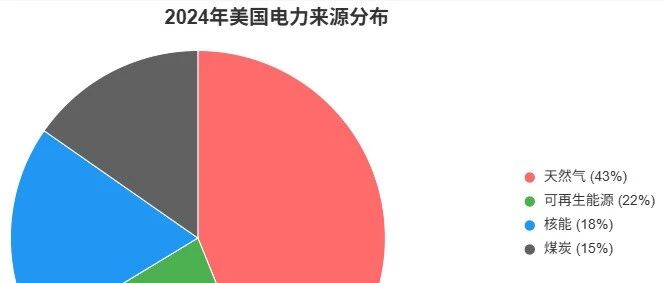
Core Viewpoint - The article discusses the recent developments in the U.S. power generation landscape, highlighting the transition towards natural gas and renewable energy sources, and the implications for the semiconductor and AI industries, particularly in relation to solid-state transformers (SST) [3][9][16]. U.S. Power Generation Status - The U.S. power generation structure is shifting towards natural gas and renewable energy, with solar and battery storage growing rapidly [9]. - As of the end of 2024, coal-fired power generation capacity is projected to be 188.95 GW, down from 314 GW in 2011, indicating a significant decline in the coal industry [10]. - Natural gas generation capacity is expected to reach 571.23 GW by 2024, constituting 43.12% of the total capacity, but new installations are limited due to supply chain issues [11]. - Nuclear power capacity stands at 103.58 GW, with a 2.9% year-on-year increase, but new nuclear plants have not been built in nearly 40 years [12][13]. - Renewable energy capacity is projected to reach 313 GW by the end of 2024, with wind and solar accounting for 80% of new installations, although their effective contribution is limited compared to traditional power sources [14][15]. SST Industry Development Trends - The demand for solid-state transformers (SST) is increasing as they address the challenges faced by data centers, particularly in reducing power consumption and space [16]. - The SST market is currently dominated by non-mainland manufacturers, with companies like Eaton and Delta leading the way [17]. - The estimated market size for SST in North America from 2026 to 2030 is projected to grow significantly, reaching 265 billion RMB by 2030 [18]. Valuation Analysis - The SST industry is expected to have a net profit margin of around 30-40% from 2026 to 2030, with projected net profits increasing from 6.4 billion RMB in 2026 to 79.5 billion RMB in 2030 [19]. - The estimated market capitalization for the SST industry could reach up to 1.59 trillion RMB by 2030, based on average valuation multiples [19]. A-Share Core Company Valuation - Companies like Jinqiao Technology and Kingpan Technology are positioned to benefit from the SST market, with projected net profits of over 8 billion RMB and 17 billion RMB respectively by 2027 [21][23].


Memory超级周期:何时退出?
傅里叶的猫· 2025-10-24 14:46
Core Insights - The memory industry is experiencing a cyclical recovery driven by increased capital expenditures from hyperscale companies and demand from AI inference, with historical data suggesting that the industry has not yet reached its peak [5][10] - UBS indicates that demand growth is outpacing supply growth, leading to a projected shortage in the coming year [7] Market Trends - The current memory cycle is reminiscent of past cycles, particularly the rise of cloud computing, with AI inference driving demand [5][7] - Memory stocks have seen an average increase of 178% this year, but to match the peak growth of 160% YoY seen in 2017, contract prices would need to rise by approximately 60% [10] Investment Strategies - Morgan Stanley suggests a more lenient approach to valuations during the upward phase of the cycle and an optimistic outlook on earnings expectations, especially during super cycles [9] - Historical data indicates that memory stocks typically peak 4 to 8 months before earnings peak, suggesting a need for cautious exit strategies [10] Demand and Supply Analysis - The demand and supply model shows that while demand is increasing, supply is not keeping pace, leading to ongoing shortages [12][14] - Inventory levels in the industry are never zero, which means that even in tight supply conditions, there will always be some inventory, affecting pricing dynamics [14]

20251024 China TMT Breakout
傅里叶的猫· 2025-10-24 14:46
Global Insights - Intel reported revenue of $13.7 billion, a 3% year-over-year increase, exceeding Wall Street's expectation of $13.1 billion. The company anticipates fourth-quarter revenue between $12.8 billion and $13.8 billion, aligning with market expectations, driven by significant investments from the Trump administration, Nvidia, and SoftBank of Japan [4]. - Anthropic has secured a major AI chip deal with Google Cloud, gaining access to 1 million Google Cloud chips for training and running its AI models. Google has invested over $3 billion in Anthropic, which will utilize custom chips (TPUs) to provide over 1 GW of AI computing power next year. Amazon is also a key cloud service provider and investor, having invested $8 billion and is building a 2.2 GW data center cluster in Indiana to support AI model training [4]. - Morgan Stanley has raised earnings forecasts for SK Hynix and Samsung for 2025-2027, citing expectations of a significant increase in commodity memory prices (including DRAM and HBM). Target prices were adjusted: SK Hynix from 480,000 KRW to 570,000 KRW, and Samsung common stock from 111,000 KRW to 120,000 KRW [7]. China Insights - Goldman Sachs reported that China has begun mass production of HBM2, while South Korea is advancing HBM3E/HBM4, indicating a potential widening gap in technology [8]. - Goldman Sachs maintained a "Buy" rating for Ruijie Networks, lowering the 12-month target price from 134 CNY to 129 CNY. The company is expected to generate 4 billion CNY in revenue in Q3 2025, a 21% year-over-year increase, despite a seasonal decline. The gross margin of 35.6% exceeded expectations, driven by an optimized product mix in SMB switches [10]. - Goldman Sachs' macroeconomic research report highlights three key themes: potential AI bubble concerns, re-emerging credit worries, and ongoing US-China tensions [12].
高密度数据中心热管理
傅里叶的猫· 2025-10-23 14:39
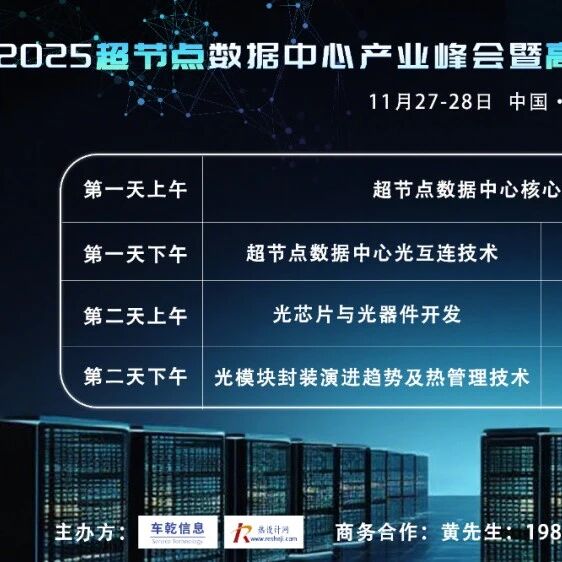
Core Points - The "2025 Super Node Data Center Industry Summit and High-Density Data Center Developer Forum" will be held from November 26-28 in Hangzhou, Zhejiang, focusing on topics such as super node data center architecture design, interconnection technology, optical module packaging trends, liquid cooling technology, and high thermal conductivity materials [2] - The forum is organized by Cheqian Information and Thermal Design Network, expecting over 40 speakers and 500 industry experts to attend [2] - The event will feature a main conference and two specialized sessions for in-depth discussions [2] Group 1: Main Conference Topics - Core technologies and challenges of super node data centers will be discussed, including new product releases from companies like H3C Group and Intel [3][14] - A key presentation will cover ultra-high-density AI cluster liquid cooling technologies by Sugon Data Infrastructure Innovation Technology [3][14] - Innovations in AI chip interconnection protocols and the evolution of super node optical interconnection will be presented by China Mobile Communication Group Design Institute [4][14] Group 2: Specialized Session 1 - Optical Interconnection and Module Technology - Discussions will include topics from companies like Zhongji Xuchuang and Fenghuo Communication Technology on optical interconnection and module technologies [5][6] - The session will also cover the opportunities and challenges posed by AI computing on optical interconnection by HiSilicon [5][16] - Presentations will address the trends and opportunities in super node optical interconnection technology by H3C Technology and Fudan University [5][16] Group 3: Specialized Session 2 - Chip-Server-Data Center Thermal Management Technology - Key topics will include GPU packaging heat dissipation and interconnection technologies, with insights from Advanced Electronic Materials International Innovation Research Institute [16] - The session will also explore the thermal challenges and countermeasures for high-speed optical modules in the AI era by Harman (China) Investment [6][16] - Liquid cooling solutions and AI energy-saving technologies will be discussed by Fenghuo Communication Technology [21]





PCB的M9材料替换M8材料对设备和钻针影响
傅里叶的猫· 2025-10-23 14:39
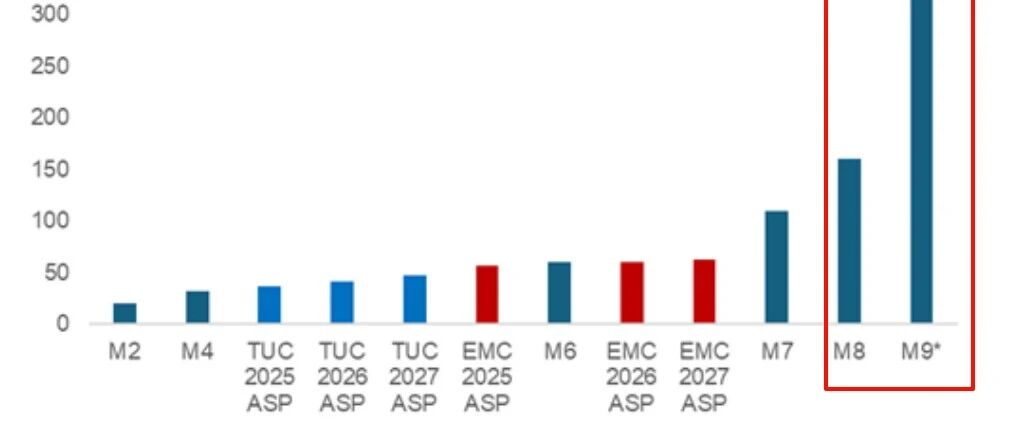
Group 1: PCB Material Solutions - The report from Nomura summarizes various PCB materials used by major companies like nVidia, AWS, Google, and Meta, detailing their respective generations, structures, and suppliers [1] - nVidia's H100 and B200 generations utilize M7 and M8+M4 CCL materials, with suppliers including EMC and Unimicron [1] - AWS's Trainium 2 and Google’s TPU v6p are also highlighted, with specific CCL materials and suppliers listed, indicating a trend towards advanced PCB structures [1] Group 2: Comparison of M8 and M9 - M9 CCL offers significant improvements over M8, including a lower loss factor (Df) of ≤0.0007 compared to M8's 0.001, representing a 30% reduction [7][8] - The dielectric constant (Dk) for M9 is also lower at 2.6-2.8, compared to M8's 2.8-3.1, indicating a 10% decrease [8] - M9 supports higher bandwidth capabilities, enabling 2.4T+ switches and servers, which is a 50% increase in bandwidth compared to M8 [8] Group 3: Impact on Upstream Equipment - The transition to M9 necessitates upgrades in CO2 drilling technology due to the higher melting point of Q-Glass, requiring new equipment development [9] - The wear on drilling needles has increased significantly, with a single needle now only able to drill 100-200 holes for M9, compared to 500 for M8 and 1000 for M7 [9] - The cost of new ultra-fast laser drilling equipment is estimated to exceed 5 million, indicating a substantial investment requirement for manufacturers [9]
20251022 China TMT Breakout
傅里叶的猫· 2025-10-22 11:05
Core Viewpoint - The article discusses the recent trends and analyses in the Chinese stock market, particularly focusing on the recovery since late 2022 and the factors driving this growth, including policy support, growth acceleration, valuation attractiveness, and increased capital inflow [5]. Group 1: Market Analysis - Chinese stocks have rebounded approximately 81% since the low point at the end of 2022, with an expected appreciation of about 30% by the end of 2027, driven by a 12% trend profit growth and a 5-10% re-rating potential [5]. - The report highlights four main factors supporting the bullish outlook: policy support, growth acceleration, attractive valuations, and capital inflows [5]. Group 2: Policy Support - Policy support includes downward protection, targeted stimulus for demand, and regulatory easing favorable to private enterprises [5]. Group 3: Growth Drivers - Growth acceleration is driven by AI-induced profit growth, recovery from internal competition pressures, and China's increasing global competitiveness [5]. Group 4: Valuation and Capital Inflow - Chinese stocks are relatively cheap compared to historical averages and international peers, with the MSCI China Index showing significant discounts compared to developed and emerging markets [5]. - The equity risk premium is higher than bond yields and real estate rents, indicating a favorable environment for stock investments [5]. - There has been a record inflow of capital into stocks, with increased participation from retail and institutional investors, as well as a gradual return of foreign investors to the Chinese stock market [5].