
财富FORTUNE

Search documents
企业该如何部署AI?要注意这三大趋势
财富FORTUNE· 2025-12-21 13:11
Core Insights - The article discusses three recurring trends in AI strategies across various companies and industries, highlighting what leads to success or failure in AI adoption [1][2]. Group 1: AI Application Trends - The application of AI in backend tasks is thriving, indicating that impactful results often come from "mundane" work rather than flashy projects [2][7]. - Companies that focus on solving specific problems rather than pursuing AI for its own sake tend to succeed, while those that chase AI technology without a clear purpose often fail [3][5]. Group 2: Human-Centric Approach - The treatment of employees is crucial for the success of AI applications, with a strong emphasis on change management to ensure smooth transitions and acceptance of AI tools [10][11]. - Leaders must manage expectations regarding AI capabilities, as unrealistic demands can lead to frustration among developers and employees [11]. Group 3: Case Studies - BigRentz exemplifies a company that successfully transformed its business by focusing on the problems to be solved rather than the technology itself, utilizing traditional machine learning techniques effectively [5][6]. - Honeywell has established a detailed framework for AI development and deployment, resulting in multiple generative AI projects being implemented across its business units [6]. Group 4: Efficiency Gains - AI applications in backend administrative tasks have shown significant efficiency improvements, such as a law firm saving approximately $200,000 in time costs by automating resume updates for new hires [7][8]. - In healthcare, AI tools are being deployed in backend processes to assist doctors in documentation and data management, enhancing patient interaction and reducing administrative burdens [8][9].


水星家纺李来斌:当时代追问“做大”,我们以效率回答“做久”
财富FORTUNE· 2025-12-20 14:03
Core Viewpoint - The article emphasizes the strategic shift of Mercury Home Textiles from focusing on diverse bedding products to standardizing core items like pillows and comforters, aiming to enhance inventory turnover and meet consumer needs for better sleep quality [1][4][5]. Group 1: Company Background - Mercury Home Textiles, established in 1987, has evolved into a modern enterprise integrating R&D, design, production, and sales, with a goal of serving 30 million households and achieving annual sales of 10 billion yuan [1]. - The company was recognized as a high-tech enterprise in Shanghai in 2009 and successfully went public on the Shanghai Stock Exchange in 2017 [1]. Group 2: Inventory Management - Inventory turnover is identified as a critical performance indicator in the home textile industry, with a focus on efficiency as a competitive advantage [2][4]. - The challenge of maintaining a large SKU (Stock Keeping Unit) count leads to lower inventory turnover rates, creating a difficult cycle for companies [4]. Group 3: Strategic Shift - The company is shifting its focus from complex bedding sets to standardized products, which allows for better inventory control and higher turnover rates [4][5]. - A challenging target has been set for the team: to double sales while keeping inventory levels unchanged, thereby minimizing capital tied up in stock [5]. Group 4: Management Philosophy - The balance between change and stability is highlighted as a key management philosophy, with a consistent mission to ensure families sleep well, a commitment to product quality, and a long-term vision of building a century-old brand [7]. - The company has shown adaptability by entering e-commerce early and investing in product innovation and technology, such as AI design models [7]. Group 5: Brand Storytelling - The company acknowledges a long-term challenge in effectively communicating its brand story, which limits consumer perception to merely "good quality" rather than creating a compelling reason to purchase [8][12]. - There is an ongoing effort to enhance brand narrative and emotional connection with consumers, recognizing that product quality alone is insufficient for brand loyalty [12]. Group 6: Competitive Strategy - The company’s focus on core competencies and refusal to diversify into unrelated sectors has strengthened its resilience through various economic cycles [13]. - The strategy of concentrating on the main business is seen as essential for long-term survival and growth, aligning with the goal of establishing a lasting brand [13].

全球商界领袖的“黄埔军校”,如何应对AI时代的考验?
财富FORTUNE· 2025-12-20 14:03
Core Insights - The article discusses the influence of McKinsey & Company in shaping leaders within the corporate world, particularly highlighting the success of its alumni in attaining CEO positions in Fortune 500 companies. It emphasizes the skills and experiences gained at McKinsey that contribute to effective leadership and decision-making in complex business environments [2][4][35]. Group 1: Leadership Development at McKinsey - Jane Fraser, CEO of Citigroup, attributes her leadership skills to her time at McKinsey, where she learned to structure problems and coordinate cross-functional teams [3][4]. - McKinsey has produced a significant number of CEOs, with at least 18 alumni currently leading Fortune 500 companies, showcasing its role as a "CEO factory" [4][8]. - The firm maintains strong connections with its alumni, fostering a powerful network that benefits both former employees and the company itself [6][26]. Group 2: Evolving Challenges and Opportunities - The rise of artificial intelligence is reshaping the consulting industry, prompting McKinsey to reassess its talent strategy and the skills required for future leaders [7][30]. - There is a growing demand for executives with technical expertise and experience in digital transformation, which may challenge the traditional McKinsey leadership model [8][9]. - Despite these challenges, McKinsey's historical resilience and ability to adapt to changes in the business landscape are highlighted, suggesting that its influence on leadership development may continue [11][12]. Group 3: Alumni Experiences and Insights - Alumni from McKinsey emphasize the importance of problem-solving skills, confidence, and communication abilities gained during their tenure, which are crucial for effective leadership [35][36]. - Many former consultants believe that while McKinsey provided a strong foundation, real-world operational experience was essential for their success in executive roles [16][21]. - The article notes that McKinsey's alumni network remains a vital resource for collaboration and support among leaders in various industries [26][29]. Group 4: Future Directions and Adaptations - McKinsey is actively integrating artificial intelligence into its operations, aiming to enhance the capabilities of its consultants rather than replace them [31][32]. - The firm is shifting its focus to developing skills that complement AI, ensuring that its consultants can tackle complex, non-routine problems effectively [32][33]. - The ongoing evolution of McKinsey's training and development programs reflects its commitment to maintaining its status as a leader in cultivating future executives [30][34].

人工智能引发的裁员潮才刚刚开始
财富FORTUNE· 2025-12-19 13:05
Core Insights - The article discusses the impact of AI on employment, highlighting a significant reduction in job vacancies in the U.S. from approximately 12.1 million to about 7.7 million, a decline of about 36% since early 2022, coinciding with a 48% total return of the S&P 500 index [1] - It suggests that companies are beginning to view AI not just as a productivity tool but as a strategic lever for workforce restructuring, with a report indicating that by 2026, large enterprises will increasingly adopt this perspective [1] Employment Trends - Major companies like UPS, Amazon, and Verizon have announced significant layoffs, with UPS cutting 48,000 jobs, Amazon reducing 14,000 positions, and Verizon planning to lay off 15,000 employees, indicating that AI is becoming a factor in these decisions [2] - A World Economic Forum survey found that 41% of global companies expect to reduce their workforce due to the rise of AI in the next five years, with layoffs also being justified by slower hiring practices [2] Post-Pandemic Adjustments - Not all layoffs or hiring slowdowns are driven by AI; some reflect broader economic cooling after a post-pandemic hiring surge, while others aim to create a more flexible workforce [4] - Companies are increasingly using layoffs as a means to accelerate employee adaptation to AI rather than solely focusing on employee retraining [4] Future Trends - By 2026, organizations are expected to adopt a more skills-based approach, with high "skills readiness" companies being 12 times more likely to offer training and 6 times more likely to categorize employee skills [5] - Companies are shifting their focus from "how many employees do we need?" to "what work needs to be done and who (or what) is capable of doing it?" [5] AI as a Collaborative Partner - The concept of personal AI "digital twins" is anticipated to become common, where professionals have digital counterparts trained on their workflows and communication styles [6] - This evolution will require new governance, leadership development, and a shift in mindset regarding the relationship between AI and humans, emphasizing trust and collaboration [6] Workforce Flexibility - Leading companies will have more fluid and modular workforces, equipped with systems to match emerging work demands with available capabilities, akin to managing a supply chain [6] - Successful organizations will embrace a dynamic workforce, viewing skills as the operational backbone and AI as a trusted collaborator, ensuring that human elements driving growth and innovation are not sacrificed [7]




高通高管称未来五年技术巨变在即,这个领域首当其冲
财富FORTUNE· 2025-12-19 13:05
Core Viewpoint - Qualcomm is entering the AI chip market, aiming to compete with Nvidia and AMD, and is focusing on integrating AI into automotive technology, which is expected to revolutionize robotics and driving assistance systems [2][3]. Group 1: AI Integration in Automotive - Qualcomm's AI chips will be implemented in vehicles across 100 countries by the end of next year, indicating a significant expansion in their automotive technology offerings [2][5]. - The company has developed driving assistance systems for major automakers like Mercedes-Benz, Volvo, and General Motors, which include features such as lane keeping and automatic parking [3]. - Qualcomm's first driving assistance system solution, developed in collaboration with BMW, has been rolled out to 60 countries after three and a half years of development [3]. Group 2: Future of Autonomous Driving - The development and adoption of autonomous driving technology typically take about ten years, but the pace of innovation is expected to accelerate in the next five years [5]. - A recent survey indicated that 43% of drivers planning to purchase a new car in the next three years are interested in using hands-free semi-autonomous driving features, reflecting a growing demand for such technologies [5]. Group 3: Safety and Regulation - The development of safe and regulated driving technologies requires a clear, rule-based protective framework, which will be enhanced by the integration of AI [6][7].


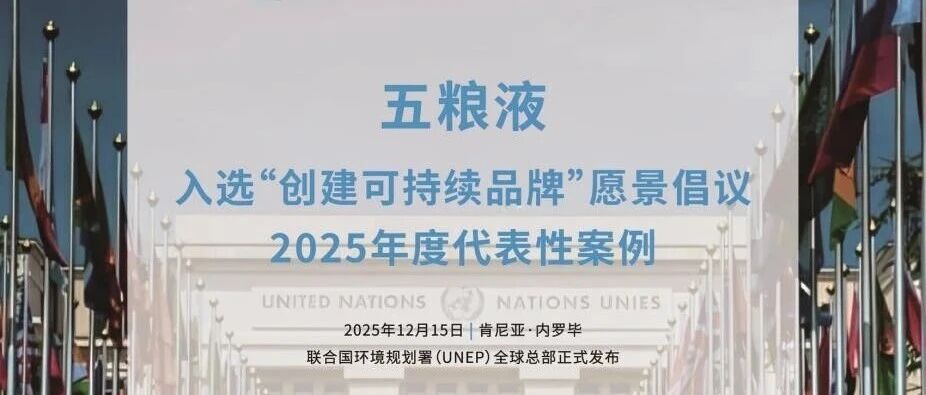
将生态责任转化为高质量发展动能,五粮液入选“创建可持续品牌”愿景倡议2025年度代表性案例
财富FORTUNE· 2025-12-19 13:05
Core Viewpoint - Wuliangye has showcased its sustainable development practices at international forums, marking its transition from a product exporter to a leader in sustainable business concepts and development models [1][4][10]. Group 1: Sustainable Development Initiatives - Wuliangye's sustainable development practices were recognized at the "Creating Sustainable Business and Brand High-Level Dialogue" and were presented as a representative case for the "Creating Sustainable Brands" initiative [4][10]. - The company has developed a green development system centered around the "four cycles" of soil, heat, electricity, and water, creating an ecological agriculture closed loop that transforms waste into clean energy and purifies water [6][10]. Group 2: International Recognition and Participation - Wuliangye has been acknowledged as a leader in sustainable practices, being the only liquor company to be selected as a best practice case for three consecutive years and receiving the highest "Seven Diamonds" certification from the EFQM Global Award [10]. - The company participated as a strategic partner in the "Sustainable Entrepreneurs Forum 2025," emphasizing its commitment to global sustainability agendas and promoting the idea of "Earth-friendly" as a value baseline [6][10]. Group 3: Cultural Integration and Brand Promotion - The themed dinner event served as a cultural platform for Wuliangye, showcasing its products and promoting interaction between Eastern and Western cultures through creative cocktails and traditional flavors [8][10]. - Wuliangye's participation in the event reinforced its brand image as a leader in sustainable business concepts and development models, enhancing its visibility on the international stage [8][10].

一个被特朗普带货的中国品牌,如何穿越多重风暴?
财富FORTUNE· 2025-12-19 13:05
Core Viewpoint - Anker Innovations, a Chinese company known for its charging products, is facing challenges in its efforts to diversify beyond its core business of power banks, especially in light of geopolitical tensions and recent product recalls [3][4][6]. Group 1: Company Background and Market Position - Anker Innovations was founded by Yang Meng, who aimed to create high-quality, cost-effective products using Chinese supply chains, establishing the Anker brand in the U.S. [5]. - The company has maintained a strong market position, being the largest independent mobile charging brand in both global and North American markets by retail sales [4]. - Over the past three years, Anker's overseas revenue has consistently exceeded 96%, with North America and Europe contributing 95.05 billion yuan and 56.45 billion yuan respectively in the first three quarters of this year, accounting for over 70% of total revenue [3]. Group 2: Recent Developments and Financial Performance - Anker Innovations submitted a prospectus for a secondary listing on the Hong Kong Stock Exchange, aiming to enhance its global strategy and brand image [3][8]. - The company recently completed a convertible bond financing of approximately 1.1 billion yuan and reported a revenue of 81.52 billion yuan in Q3, a year-on-year increase of 19.88%, although the growth rate has declined to the lowest since Q1 2023 [7][8]. - Despite the revenue growth, the company faced significant challenges, including a product recall of over 2.3 million power banks due to quality issues, leading to an estimated liability of 130 million yuan and asset impairment of 238 million yuan [4][6]. Group 3: Strategic Challenges and Future Outlook - Anker is navigating a complex international market with increased competition and regulatory challenges, particularly in the U.S., where it is under investigation for tax evasion and product safety issues [6][7]. - The company is attempting to reduce its reliance on Amazon, which has historically contributed over half of its revenue, by expanding into offline retail and investing in its own e-commerce platform [7]. - Yang Meng aspires for Anker to evolve into a company that integrates multiple product lines successfully, aiming to avoid the pitfalls faced by many consumer electronics firms that struggle to survive long-term [5][8].

竞争CEO职位要注意:这些细微失误可以让你出局
财富FORTUNE· 2025-12-18 13:06
图片来源:iStock / Getty Images Plus 在通往最高管理层的竞争中,推动领导者前进的因素——如战略视野、执行力、行业专长——已广为人 知。而那些悄然令他们出局的因素,则隐蔽得多。最终获任者与止步者之间的区别,往往与能力关系不 大。真正起淘汰作用的,是那些细微、行为层面且大多无意识的特质。它们不在高光时刻显露,而是在 层层审视下,通过领导者不经意流露的细节呈现出来。 高管猎头几乎置身于每一次重大CEO继任的中心,他们比任何人都更清晰地看到这些模式。罗盛咨询 (Russell Reynolds Associates)CEO康斯坦丁·亚历山德拉基斯(Constantine Alexandrakis)日常工作便 是为董事会提供建议并评估全球顶尖高管。他目睹过优秀的候选人在最后阶段失去势头,也见过一些人 仅仅因为避开了同行踩中的陷阱而成功上位。在他看来,让CEO候选人在后期功亏一篑的失误,几乎都 与能力无关,而是源于候选人在自我展示时无意中传递出的信号。 最常见的警示信号是对"我"字的过度执着。有些高管将成就完全归功于个人胜利而非团队合作,这无意 中向董事会传递出一种信号:他们可能不愿分享荣誉与权 ...

埃森哲:中国消费市场的新主张和新机遇
财富FORTUNE· 2025-12-18 13:06
Core Insights - The article discusses the evolving landscape of consumer behavior in China, emphasizing the shift from passive acceptance to active engagement in the market, driven by changing values, emotional connections, and technological advancements [1][2]. Group 1: Changes in Consumer Preferences - Domestic brands are gaining popularity, with consumers prioritizing local products over international ones. For instance, the percentage of consumers preferring domestic beauty and skincare brands rose from 12% in 2021 to 43% in 2025, while preference for domestic 3C digital products increased from 23% to 55%, and for home appliances from 33% to 69% [3]. - Consumers are re-evaluating their life priorities, focusing more on health and financial stability. The proportion of consumers valuing health increased by 9 percentage points to 87%, and those valuing wealth rose by 12 percentage points to 47% [8]. Group 2: Shifts in Information Channels and Brand Loyalty - The channels through which consumers obtain shopping information are diversifying, with traditional marketing methods becoming less effective. E-commerce platforms remain the primary source for 60% of consumers, but video platforms like Douyin and Kuaishou have become significant, with usage rising to about 50% [9]. - Brand loyalty is diminishing, with 55% of consumers frequently comparing multiple brands even if they have a favorite, an increase of 13 percentage points since 2021. Nearly 70% of consumers feel indifferent or resistant to marketing content [10]. Group 3: The Role of AI in Consumer Behavior - AI is becoming a crucial factor in consumer decision-making, with nearly 80% of Chinese consumers using AI weekly or daily. About 37% have utilized AI tools in shopping, primarily for assistance in unfamiliar categories or for quick comparisons [10][21]. - Brands must adapt to interact with AI as a representative of consumers, providing structured and accurate content to influence AI-generated recommendations, which will affect brand visibility and conversion rates [18][21]. Group 4: Brand Strategies in a Changing Landscape - Brands are encouraged to demonstrate tangible value to consumers, moving beyond just price to emphasize visible and verifiable product benefits. This shift is evident in the focus on quantifiable effects and scientific backing in product descriptions [12][15]. - Creating integrated experiences that resonate emotionally with consumers is essential. Brands should aim for a multi-channel ecosystem that combines online and offline experiences, enhancing consumer engagement and satisfaction [16]. Group 5: Consumer Expectations and Brand Accountability - Consumers are increasingly seeking stability and meaningful engagement from brands, evaluating their relevance, consistency, and ability to fulfill promises. This reflects a deeper human need for trust and connection [22]. - Companies aiming to capture the Chinese consumer market face challenges from outdated growth models but also have opportunities to respond effectively to these profound changes with courage and adaptability [22].


黄金不仅输给了白银,还输给了它
财富FORTUNE· 2025-12-18 13:06
Core Insights - The article highlights the rising importance of platinum in the hydrogen energy revolution, particularly in fuel cell technology and green hydrogen production [1][3][4]. Group 1: Platinum Market Dynamics - Platinum prices have surged nearly 100% this year, rising from approximately $900 to $1800 per ounce, making it the second-best performing precious metal after silver [3]. - The World Platinum Investment Council (WPIC) forecasts a supply deficit of 26.4 to 30 tons in the global platinum market by 2025, marking the third consecutive year of shortage [3][4]. - Approximately 70% of global platinum production comes from South Africa, which faces structural challenges such as unstable electricity supply and rising mining costs, limiting production capacity [4]. Group 2: Industrial Demand for Platinum - The automotive sector remains the largest industrial consumer of platinum, primarily for diesel vehicle emissions control [5]. - Recent changes proposed by the European Commission to relax carbon emission standards for new vehicles could provide additional support for platinum demand [5]. - Platinum is also a critical material in the hydrogen energy sector, with growing government commitments to net-zero emissions driving the development of hydrogen projects [5][6]. Group 3: Technological Developments and Market Sentiment - Efforts are underway in China, Japan, and Europe to reduce platinum usage in fuel cells or find alternatives, which presents a dual impact on demand [6]. - The current market pricing reflects optimism about industry expansion, with increased investment interest in platinum as a relatively undervalued asset compared to gold [6][7]. - The narrative surrounding platinum has shifted from being an auxiliary material for traditional combustion engines to becoming a core component of future energy infrastructure, positioning it as a "technology metal" and "energy metal" [7][8]. Group 4: Price Predictions and Future Outlook - Analysts have differing predictions for platinum prices in 2026, ranging from $1550 to $2300 per ounce, indicating uncertainty in future market conditions [8]. - The practical application of hydrogen technology, as evidenced by the use of Toyota's Mirai at the G20 summit, suggests that the revaluation of platinum's worth is underway [8].
