美股IPO

Search documents
甲骨文等再贷380亿美元,“OpenAI链”数据中心圈子累计负债已达1000亿美元!
美股IPO· 2025-11-28 09:40
Core Insights - OpenAI's partners have accumulated nearly $100 billion in debt to support the AI infrastructure, while OpenAI itself has minimal debt, effectively transferring financial risks [1][4][5] - A new round of financing is underway, with a bank consortium negotiating a $38 billion loan for Oracle and Vantage to build new sites for OpenAI [3][4] - OpenAI has signed contracts for $1.4 trillion in computing power over the next eight years, significantly exceeding its projected annual revenue of $20 billion [5] Debt Accumulation - The total debt related to OpenAI is approaching $100 billion, comparable to the net debt of the world's largest companies [4] - Partners like SoftBank and CoreWeave have borrowed at least $30 billion for investments related to OpenAI, with additional loans tied to OpenAI agreements [3][4] Financial Strategy - OpenAI's strategy involves leveraging the balance sheets of its partners to minimize its own financial exposure [3][4] - The company has a clean balance sheet, having only secured a $4 billion credit line last year, which remains unused [3][4] Procurement Commitments - OpenAI's long-term procurement contracts serve as a credit foundation for its partners to secure loans [5] - Oracle has issued $18 billion in bonds to fulfill its commitments to OpenAI, with projections indicating it may need to borrow $100 billion over the next four years [5] Risk Isolation Mechanisms - Special Purpose Vehicles (SPVs) are being used to isolate risks associated with data center loans, protecting investors and developers from potential defaults [6][7] - These SPVs allow for non-recourse loans, meaning lenders can only claim the project assets without pursuing the parent companies for additional recovery [6][7]



调整近40%!能否抄底泡泡玛特?排面拉满!泡泡玛特首次亮相美国感恩节大游行,Labubu跻身全球顶级IP阵营54/64
美股IPO· 2025-11-28 09:40
Core Viewpoint - The article highlights the successful global recognition of the Chinese IP Labubu, which debuted at the Macy's Thanksgiving Day Parade, replacing the classic character Popeye, symbolizing a significant cultural export achievement for China [1][3]. Group 1: Cultural Impact - Labubu's appearance at the parade has sparked widespread social media discussions, indicating its status as a cultural phenomenon that transcends age groups and serves as a collectible and fashion accessory [1]. - The event marks a shift in cultural symbols, with Labubu representing a new generation of IP, moving away from traditional characters like Popeye [5][7]. Group 2: Market Performance and Analyst Insights - Bank of America reiterated a "buy" rating for Pop Mart, maintaining a target price of 400 HKD, viewing the U.S. market as a new growth engine for the company [3]. - Despite a recent 35% decline from its peak, the company's fundamentals remain strong, particularly in overseas IP operations, presenting a compelling buying opportunity [4]. Group 3: IP Operations and Strategy - The report counters concerns about the unpredictability of the IP business model, asserting that Labubu's popularity is a result of sustained and effective IP management [8]. - Pop Mart's U.S. IP operations have been upgraded, with strategic offline initiatives and collaborations, validating the company's operational capabilities in international markets [9]. Group 4: Financial Projections - Financial models predict that Pop Mart will achieve revenues of 37.08 billion RMB and a net profit of 13.06 billion RMB in 2025, with further growth expected in 2026 [10]. - The target price of 400 HKD is based on a valuation method that combines P/E and DCF, indicating a high value proposition with a PEG ratio below 1, suggesting strong investment potential [10].

惨烈!美团三年来首度报亏,核心本地商业Q3巨亏141亿元,预计Q4延续经营亏损
美股IPO· 2025-11-28 09:40
Core Viewpoint - Meituan reported its first quarterly loss in nearly three years, with an adjusted net loss of 16 billion RMB in Q3, compared to a profit of 12.8 billion RMB in the same period last year. The core local commerce business shifted from profit to loss, recording an operating loss of 14.1 billion RMB, down from a profit of 14.6 billion RMB year-on-year [1][3][6]. Financial Performance - In Q3, Meituan's revenue reached 95.5 billion RMB, a year-on-year increase of 2.0%, but below the estimated 97.5 billion RMB [6]. - The core local commerce segment's revenue decreased by 2.8% to 67.4 billion RMB, with an operating profit margin plummeting from 21.0% to -20.9% [7][10]. - The adjusted EBITDA for Q3 was a loss of 14.8 billion RMB, reflecting the financial strain on the company [5]. Market Competition - The company attributed its losses to intensified competition in the food delivery sector, leading to a 90.9% increase in sales and marketing expenses to 34.3 billion RMB, which now accounts for 35.9% of total revenue [9]. - Meituan anticipates that the trend of operating losses will continue into Q4 due to ongoing fierce competition with Alibaba and JD.com, both of which are heavily investing in discounts and subsidies [4][9]. New Business Growth - In contrast to the core business struggles, Meituan's new business segment saw a revenue increase of 15.9% to 28 billion RMB, driven by grocery retail and international expansion [10]. - Despite the growth, the new business segment reported an operating loss of 1.3 billion RMB, widening from 1 billion RMB the previous year, but the loss margin improved from 7.1% to 4.6% quarter-on-quarter [10]. Strategic Investments - The company is increasing its investment in artificial intelligence, with R&D expenses rising by 31.0% to 6.9 billion RMB, focusing on AI tools for merchants and user experience enhancements [12]. - Meituan is exploring entry into the Indian market, which is characterized by intense competition, indicating a strategic shift towards international markets [11][14]. Financial Position - As of the end of the quarter, Meituan held approximately 141.3 billion RMB in cash and cash equivalents, indicating a strong capital position despite the operational losses [13].

华尔街日报:查理芒格最后的岁月,99岁仍在大胆投资,扶持年轻邻居打造地产帝国
美股IPO· 2025-11-28 01:09
Core Insights - Charlie Munger's final years were marked by active investment decisions and new challenges, rather than a quiet retirement [3][4] - Munger made significant investments in the coal industry, an area he had avoided for 60 years, resulting in over $50 million in paper gains [5][6] - He also played a crucial role in real estate investments, helping to build a $3 billion apartment empire [8] Investment in Coal Industry - Munger's unexpected investment in coal came as many investors were bearish on the sector due to declining usage [5] - He believed that global energy demand would keep coal necessary, and many producers remained profitable with undervalued stock prices [5] - His investments in Consol Energy and Alpha Metallurgical Resources led to substantial gains, with Consol's stock price doubling by the time of his passing [6] Real Estate Ventures - Munger mentored a young neighbor, Avi Mayer, leading to a partnership in real estate that acquired nearly 10,000 low-rise apartments in Southern California [7] - Under Munger's guidance, their company, Afton Properties, adopted long-term loans to secure favorable rates, resulting in a portfolio valued at approximately $3 billion [8] Health Challenges and Social Engagement - Munger faced significant health issues, including vision problems, but maintained a humorous outlook and engaged socially to combat loneliness [9] - He continued to share investment wisdom and life philosophy with peers during regular breakfast meetings [9] Final Farewell to Buffett - Munger maintained a close friendship with Warren Buffett, communicating regularly despite challenges due to hearing issues [10][11] - In his final days, Munger requested privacy to make a last call to Buffett, marking a poignant farewell between the two legendary investors [11]

英伟达全员“AI化”,内部有人要求“少用AI”,黄仁勋直接发飙:“你疯了吗?”
美股IPO· 2025-11-28 01:09
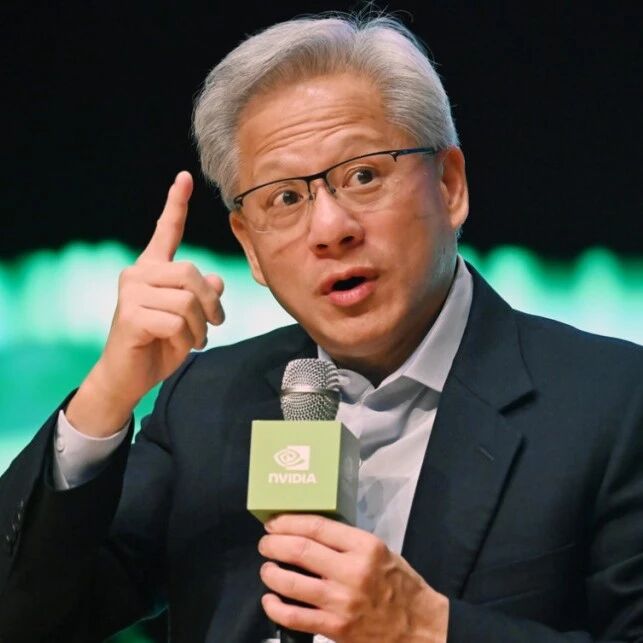
Core Viewpoint - The company is aggressively promoting a comprehensive "AI transformation" across all levels, with CEO Jensen Huang emphasizing the necessity of automating tasks using AI and reassuring employees about job security despite industry layoffs [1][5][8]. Group 1: AI Implementation - Jensen Huang expressed strong dissatisfaction with managers advising employees to reduce AI usage, insisting that every task that can be automated should be [2][3]. - Huang encouraged employees to use AI tools even if they are not fully capable yet, stating that they should contribute to improving these tools [4][6]. Group 2: Recruitment and Expansion - Despite widespread concerns about job losses due to AI, the company has been actively hiring thousands of employees, leading to a shortage of parking spaces at their offices [4][6]. - The workforce has grown from 29,600 at the end of fiscal year 2024 to 36,000 by the end of fiscal year 2025, indicating a significant expansion [6]. Group 3: Financial Performance - The company's aggressive strategy is supported by strong financial performance, with a reported revenue of $57.01 billion for the last quarter, a 62% increase year-over-year [8]. - The company has become the highest-valued firm globally, with a market capitalization exceeding $4 trillion [8]. Group 4: Industry Context - The company's approach reflects a broader trend among tech giants, with competitors like Microsoft and Meta also integrating AI into their operations and performance evaluations [2][8]. - There are ongoing debates about the sustainability of the AI boom, with some investors expressing skepticism about the long-term viability of the current AI trends [8].

Puma股价暴涨超14%,报道:安踏、李宁等巨头正考虑竞购
美股IPO· 2025-11-28 01:09
Core Viewpoint - Anta Sports is evaluating a potential acquisition of Puma, which is currently facing significant operational challenges, including a more than 50% decline in stock price this year and a downward revision of its 2025 guidance, anticipating operational losses [1][2][9]. Group 1: Acquisition Interest - Multiple Asian sports brands, including Anta Sports, Li Ning, and Asics, are showing interest in acquiring Puma, reflecting their ambition for international expansion [4][7]. - Anta's potential acquisition of Puma could serve as a gateway to the Western market, given Anta's strong track record in revitalizing underperforming assets [7]. - Li Ning has stated that it has not engaged in any substantial negotiations regarding the acquisition of Puma as mentioned in the news [7]. Group 2: Puma's Operational Challenges - Puma is undergoing a "reset period" due to a sharp decline in sales post-pandemic, weakened brand appeal, and high inventory levels, compounded by increasing competition in the sports apparel market and tariff impacts [6][9]. - The company reported a double-digit decline in quarterly sales, acknowledging challenges such as weak brand momentum and high inventory levels [9]. - In July, Puma revised its 2025 guidance, now expecting a low double-digit percentage decline in sales, a significant shift from previous expectations of low to mid-single-digit growth [9]. - The new CEO, Arthur Hoeld, has initiated a turnaround plan that includes layoffs, narrowing the product range, and improving marketing operations [9][11].


Gemini如何逆风翻盘?谷歌首席AI架构师:从承认落后开始,找回自己的节奏
美股IPO· 2025-11-28 01:09
Core Insights - Acknowledging setbacks is the first step for Google to restart its AI journey, leading to a restructuring of its foundational architecture and a focus on multi-modal understanding as a core advantage [1][6] - The release of Gemini 3 marks a significant turnaround for Google, demonstrating its ability to not only catch up but also redefine its organizational methodology and technological path [4][8] Group 1: Acknowledgment of Challenges - Google’s AI chief openly admitted that the company had fallen behind, particularly in the wake of ChatGPT's rise, which shifted industry focus towards OpenAI [3][4] - The internal consensus shifted, recognizing that traditional long-term research alone could not keep pace with the rapid evolution of AI technology [5][6] Group 2: Multi-Modal Understanding - Multi-modal capabilities are essential for understanding the complexities of the real world, as they integrate text, images, audio, and video into a unified model [7][8] - Google’s approach involves restructuring at the architectural level to allow different modalities to be trained together, enhancing the model's ability to comprehend the world rather than just generating aesthetically pleasing outputs [7][8] Group 3: Organizational Restructuring - The transformation of Google’s organizational structure from a serial pipeline to a parallel system has significantly accelerated the development and deployment of Gemini [8][9] - This restructuring allows for real-time collaboration among product managers, engineering teams, and safety protocols, leading to a more cohesive and efficient development process [8][10] Group 4: Enhanced Usability and Functionality - The improvements in Gemini's user experience are attributed to a focus on usability, including enhanced instruction comprehension and internationalization capabilities [11][12] - The model's ability to execute tasks rather than merely respond to queries marks a shift towards more actionable intelligence [13][14] Group 5: Competitive Advantages - Google’s competitive edge lies not just in model capabilities but also in its robust infrastructure, including TPU, global data centers, and a mature security system [15][16] - The activation of this infrastructure has been pivotal in Google’s rapid recovery from being perceived as a laggard in the AI space [16] Group 6: Future Directions - The next phase of AI competition will focus on action-oriented intelligence rather than just conversational capabilities, with an emphasis on automating workflows and enhancing developer tools [17][18] - The distinction between dialogue models as products and action models as platforms highlights the greater commercial value of the latter [19] Group 7: Broader Implications - The real measure of progress is the application of models in real-world scenarios across various fields, indicating a shift towards practical utility in AI development [20][21] - The journey from research to product integration reflects a significant evolution in Google’s approach to AI, emphasizing the importance of user feedback and real-world applicability [44][59]


大摩:AI不仅“缺电”,还“缺水”!
美股IPO· 2025-11-27 10:28
Core Insights - The report from Morgan Stanley reveals that the water consumption of AI data centers is expected to exceed 100 billion liters by 2028, highlighting a significant risk due to the inability to transport water across regions like electricity [1][9][10] - The focus on energy consumption overlooks the critical issue of water scarcity, which is becoming a local project killer for data centers [6][12] Water Consumption Projections - By 2028, the direct cooling and electricity production consumption of AI data centers is projected to reach 106.8 billion liters [9] - In an optimistic scenario, this figure could rise to 148.5 billion liters, while even in a pessimistic scenario, it would still be 63.7 billion liters [10][11] Localized Water Resource Risks - The real bottleneck is not the total water consumption but the localized availability of water resources, which cannot be easily transported [12][14] - Recent examples include Amazon's "Project Blue" being rejected in Tucson, Arizona, due to high water and electricity demands, and opposition to AI data center plans in North Lincolnshire, UK, due to existing water supply issues [14][15] Technological Adaptation - Tech giants are being forced to innovate to survive in a water-scarce environment, focusing on technologies that significantly reduce Water Usage Efficiency (WUE) [16] - Examples of emerging technologies include microchannel cooling plates and the use of natural cooling sources, such as Google's project in Finland utilizing seawater [17][18] Regulatory Landscape - Regulatory bodies are increasingly focused on water usage standards for data centers, with regions like Singapore and Malaysia setting strict WUE targets, and the EU planning mandatory minimum performance standards by 2026 [19][20][21] Beneficiaries of Water Solutions - Companies specializing in water treatment solutions, such as Ecolab, Toray Industries, Veolia, and DuPont, are expected to benefit from the rising demand for water resource management as data center operators strive for water sustainability [22]

“金价2026年最高触及5000美元,白银和铂族金属将跟随补涨”!德银大幅上调明年金价预测
美股IPO· 2025-11-27 10:28
德银表示,黄金刚性的官方需求正在取代价格敏感型的消费需求,预计2026年官方需求将回升至1053吨/年,同时黄金ETF资金流入的正常化,将2026 年平均价格目标从此前的4000美元/盎司大幅上调至4450美元/盎司。白银、铂金和钯金共同迎来上涨利好,德银预计明年白银和铂金的供需将持续处于 赤字状态,白银2026年目标价高至55美元/盎司。 据追风交易台,德银在最新报告中大幅上调预期, 将2026年平均价格目标从此前的4000美元/盎司上调至4450美元/盎司,年度价格区间预计为3950- 4950美元/盎司, 最高可能触及4950美元/盎司意味着金价或冲击5000美元大关。 德银指出,这种结构性牛市的驱动力已发生根本转变,刚性的官方购买正在取代价格敏感型的消费需求。正如报告所强调的: 缺乏价格弹性的央行购买和ETF投资需求,正在取代对价格敏感的珠宝消费需求,成为黄金市场的主导力量。同时,总体需求增长超过供应增长,这种供需错配 为金价提供了坚实的底部支撑。 尽管看多逻辑坚实,德银也提示了潜在的下行风险。若股市出现深度回调,或美联储2026年宽松力度不及市场预期(德银预测降息50个基点,低于市 场预期的93个基 ...

三日连涨7.7%!大摩:3nm提前落地、DRAM需求爆发,阿斯麦盈利大反转来了?
美股IPO· 2025-11-27 10:28
Core Viewpoint - Morgan Stanley believes that the strong DRAM technology upgrade cycle, the potential early rollout of TSMC's 3nm process, and the indirect demand from NVIDIA's AI chips are key catalysts driving ASML's profit growth in 2026-2027. The firm has raised ASML's target price from €975 to €1000 [1][2][11]. Group 1: DRAM Market Dynamics - The demand in the DRAM market is robust, with ASML maintaining solid demand during the transition from 1a and 1b nodes to 1γ/1c nodes. Each technology node evolution increases the number of EUV lithography layers required, with the 1c node needing 5-6 layers [3][4]. - Samsung and SK Hynix's demand for DRAM in FY2026 is expected to be clear, supported by strong price increases in the commodity DRAM market [3]. Group 2: TSMC's 3nm Process - TSMC is reportedly testing the original graphic performance of its 3nm process, with potential adoption at its Arizona facility occurring earlier than the initially planned 2028 [4]. - ASML benefits from TSMC's 3nm technology, as it relies on ASML's EUV lithography machines to produce more powerful, energy-efficient, and smaller chips [4]. Group 3: AI Demand and Market Recovery - The growth of AI is indirectly creating demand for ASML, with NVIDIA's record quarterly revenue indicating strong market interest in its Blackwell series GPUs. This demand is expected to support ASML's wafer fabrication equipment supply in FY2026/27 [6][9]. - ASML is emerging from a prolonged 14-month downturn, with signs of new growth momentum as evidenced by rising commodity DRAM prices and advancements in Samsung's HBM3e/HBM4 [9]. Group 4: Profitability and Challenges - Despite an optimistic outlook, ASML faces challenges, particularly in its DUV business, which is expected to see a 15% year-over-year sales decline due to weakened demand in a key Asian market [10]. - ASML's profit margins are expected to remain resilient, supported by higher EUV sales and contributions from its installed base management business. The projected gross margin for FY2026 is 52.3%, only slightly down from 52.7% in FY2025 [11].