GEELY AUTO(00175)

Search documents
港股异动 | 汽车股涨幅居前 龙头比亚迪率先牵引行业预期回暖 终端需求有望加速修复
智通财经网· 2026-03-11 02:57
Core Viewpoint - The automotive sector is experiencing significant stock price increases, driven by technological advancements and improving market conditions, particularly for leading companies like BYD and NIO [1] Group 1: Stock Performance - NIO-SW (09866) increased by 16.68%, reaching HKD 44.5 [1] - Geely Automobile (00175) rose by 9.96%, priced at HKD 17.67 [1] - Xpeng Motors-W (09868) saw a 6.78% increase, trading at HKD 77.2 [1] - BYD Company (01211) grew by 2.37%, with a share price of HKD 99.25 [1] Group 2: Technological Advancements - On March 5, BYD officially launched its second-generation blade battery and fast-charging technology, setting a new global record for mass production charging speed [1] - According to a report from Founder Securities, BYD is leading the industry's technological upgrade, with a combination of policy support and new vehicle cycles initiating a sector recovery [1] Group 3: Market Demand and Outlook - A report from Guolian Minsheng Securities indicated that the terminal demand for passenger vehicles was weak in January and February due to delayed subsidy policies and a lack of new model launches [1] - Improvements in both policy and supply factors have been noted since February, with expectations for a stabilization and recovery in automotive demand as local subsidies are implemented [1] - The automotive industry is anticipated to see a smoother cyclical fluctuation, supported by strong export performance and a recovery in terminal demand [1]



吉利汽车早盘涨逾8% 银河M7预计上半年正式上市销售
Xin Lang Cai Jing· 2026-03-11 02:40
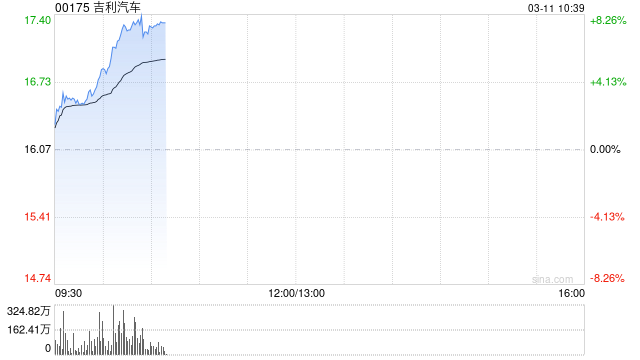
热点栏目 自选股 数据中心 行情中心 资金流向 模拟交易 客户端 吉利汽车(00175)盘中涨超8%,截至发稿,股价上涨7.78%,报17.32港元,成交额11.91亿港元。 热点栏目 自选股 数据中心 行情中心 资金流向 模拟交易 客户端 吉利汽车(00175)盘中涨超8%,截至发稿,股价上涨7.78%,报17.32港元,成交额11.91亿港元。 据ITBEAR科技资讯报道,近日,吉利汽车正式宣布,旗下银河系列迎来全新力作——银河M7,这款定 位家用的中级电混SUV现已陆续抵达全国266座城市的474家授权经销商门店。消费者可随时前往门店近 距离体验实车,新车将于3月13日在吉曜通行衢州基地正式亮相,预计上半年正式上市销售。 责任编辑:卢昱君 据ITBEAR科技资讯报道,近日,吉利汽车正式宣布,旗下银河系列迎来全新力作——银河M7,这款定 位家用的中级电混SUV现已陆续抵达全国266座城市的474家授权经销商门店。消费者可随时前往门店近 距离体验实车,新车将于3月13日在吉曜通行衢州基地正式亮相,预计上半年正式上市销售。 责任编辑:卢昱君 ...

港股异动 | 吉利汽车(00175)盘中涨超8% 银河M7预计上半年正式上市销售
智通财经网· 2026-03-11 02:37
Core Viewpoint - Geely Automobile's stock price increased by over 8% during trading, currently up 7.15% at HKD 17.22, with a trading volume of HKD 1.11 billion [1] Group 1: Product Launch - Geely Automobile has officially announced the launch of its new model, the Galaxy M7, which is positioned as a mid-level hybrid SUV for family use [1] - The Galaxy M7 is now arriving at 474 authorized dealerships across 266 cities in China, allowing consumers to experience the vehicle in person [1] - The official unveiling of the new vehicle is scheduled for March 13 at the Jiayao Tongxing base in Quzhou, with expectations for it to be officially launched and available for sale in the first half of the year [1]
吉利汽车盘中涨超8% 银河M7预计上半年正式上市销售
Zhi Tong Cai Jing· 2026-03-11 02:36
吉利汽车(00175)盘中涨超8%,截至发稿,涨7.15%,报17.22港元,成交额11.1亿港元。 消息面上,据ITBEAR科技资讯报道,近日,吉利汽车正式宣布,旗下银河系列迎来全新力作——银河 M7,这款定位家用的中级电混SUV现已陆续抵达全国266座城市的474家授权经销商门店。消费者可随 时前往门店近距离体验实车,新车将于3月13日在吉曜通行衢州基地正式亮相,预计上半年正式上市销 售。 ...
港股汽车板块拉升,蔚来汽车涨超15%,吉利汽车涨超7%
Mei Ri Jing Ji Xin Wen· 2026-03-11 02:27
(文章来源:每日经济新闻) 每经AI快讯,3月11日,港股汽车板块拉升,蔚来汽车涨超15%,吉利汽车涨超7%,小鹏汽车涨超 4%,零跑汽车、广汽集团、赛力斯均涨超3%。 ...
港股汽车股集体上扬,吉利汽车等纷纷上涨
Xin Lang Cai Jing· 2026-03-11 02:22
港股汽车股集体上扬,蔚来-SW涨超15%,吉利汽车涨超7%,小鹏汽车-W、五菱汽车、广汽集团纷纷 上涨。 ...
卖车不赚钱,车企改卖电
汽车商业评论· 2026-03-10 23:05
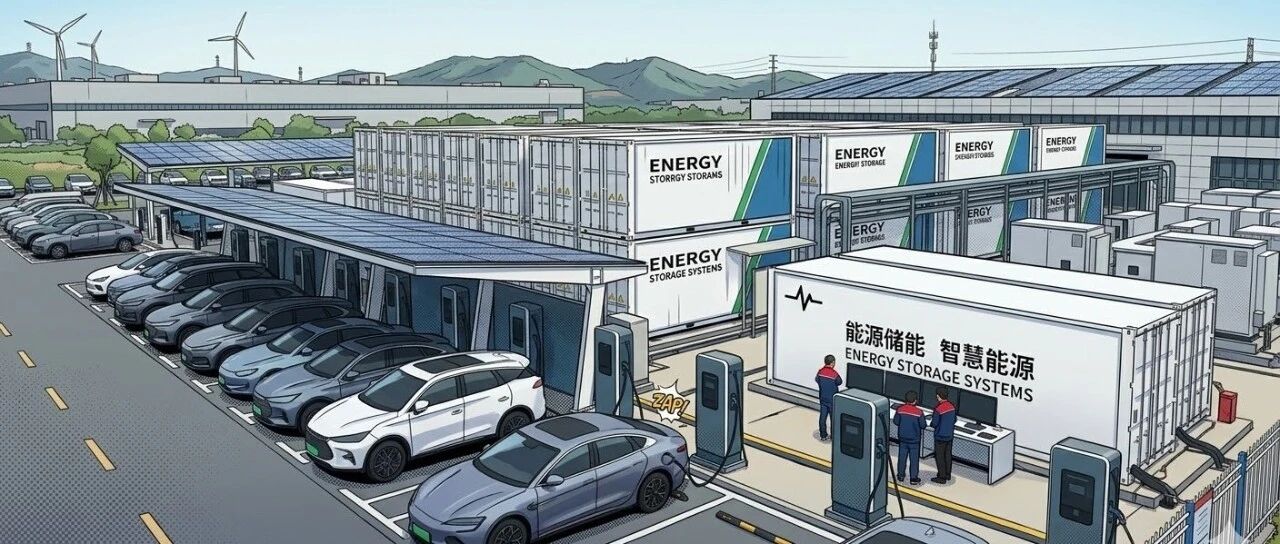
Core Viewpoint - The automotive industry is shifting its focus towards energy storage solutions as electric vehicle sales growth slows, with companies investing heavily in this new profitable sector that is closely tied to the future of energy [4][10]. Group 1: Industry Trends - By 2026, the trend of automotive companies entering the energy storage market is expected to accelerate, with significant investments and projects being launched globally [5]. - Major automotive companies like NIO, Ford, and Volkswagen are establishing energy storage facilities and partnerships to enhance their capabilities in this sector [6][7][8]. Group 2: Market Demand and Growth - According to BloombergNEF, the global energy storage market is projected to add 92GW/247GWh of new capacity in 2025, a 23% increase from 2024, indicating a shift from optional to essential energy storage systems [10][11]. - China and the U.S. are leading the way, with China accounting for over 50% of new installations and the U.S. following with 14% [12]. Group 3: Technological Advantages - Automotive companies have a natural advantage in entering the energy storage market due to their existing expertise in battery technology, which is similar for both electric vehicles and battery energy storage systems (BESS) [17][20]. - The production processes for electric vehicle batteries and storage batteries are largely compatible, allowing companies to repurpose existing manufacturing lines for energy storage [20]. Group 4: Financial Performance - Energy storage business models are proving to be more profitable than traditional automotive sales, with Tesla's energy storage gross margin reaching 31.4%, nearly double that of its automotive business [23]. - As electric vehicle sales face price wars and reduced margins, energy storage presents a lucrative alternative for companies like Tesla, Geely, and Volkswagen [24]. Group 5: Strategic Positioning - Automotive companies are leveraging their battery technology to create a dual market presence in both household and grid-side energy storage, with Tesla's Powerwall and BYD's Battery-Box being prominent examples [27][29]. - The shift towards energy storage allows companies to transform their business models from merely selling vehicles to providing energy services, enhancing customer engagement and loyalty [30][31]. Group 6: Challenges and Market Dynamics - The energy storage market is becoming increasingly competitive, with traditional energy companies and battery manufacturers posing significant challenges to automotive firms [55][56]. - Companies must navigate complex market dynamics, including user-side battery anxiety and the need for stable energy pricing mechanisms, to successfully implement vehicle-to-grid (V2G) solutions [60][61]. Group 7: Regulatory Environment - In China, government policies are increasingly supportive of integrating electric vehicles into the energy system, providing a favorable regulatory environment for automotive companies to expand their energy storage initiatives [62][66]. - In the U.S., market mechanisms and incentives are being developed to encourage user participation in energy storage programs, further driving the growth of this sector [67].


整车主线周报:本周SW乘用车表现较好,原材料及汇兑压力依然明显-20260309
Soochow Securities· 2026-03-09 14:48
Investment Rating - The industry investment rating is "Overweight," indicating an expected outperformance of the industry index relative to the benchmark by more than 5% over the next six months [42]. Core Insights - The report highlights a recovery in passenger vehicle demand due to the implementation of subsidy policies, with a positive outlook for the passenger vehicle sector in Q1 2026. It emphasizes the importance of selecting resilient domestic companies and those with strong export capabilities [32][33]. - For heavy trucks, the report anticipates a sales volume of 800,000 to 850,000 units in 2026, reflecting a year-on-year increase of 3%. It recommends leading companies in the heavy truck sector [35]. - The bus sector is expected to see a growth in sales to 40,000 units in 2026, driven by the continuation of subsidy policies and the need for fleet renewal [36]. - The motorcycle market is projected to grow by 14% in total sales, with a significant increase in large-displacement motorcycles, particularly in export markets [33]. Summary by Sections Passenger Vehicles - The report expects a recovery in passenger vehicle demand in Q1 2026 due to subsidy policies, with a focus on high-end electric vehicle manufacturers such as Jianghuai Automobile, Geely, Great Wall, and others [32][33]. - The report suggests prioritizing companies with proven execution capabilities in overseas markets, recommending BYD, Great Wall, and Chery for export [32]. Heavy Trucks - In 2025, the wholesale volume reached 1.144 million units, a year-on-year increase of 26.8%. The report forecasts a sales volume of 800,000 to 850,000 units for 2026, a 3% increase year-on-year [35]. - Recommended companies include China National Heavy Duty Truck Group, Weichai Power, and others [35]. Buses - The report indicates that the bus subsidy policy has exceeded expectations, with a projected sales increase to 40,000 units in 2026, a 40% year-on-year growth [36]. - Key recommendations include Yutong Bus and King Long [36]. Motorcycles - The motorcycle industry is expected to achieve total sales of 19.38 million units in 2026, a 14% increase, with large-displacement motorcycles projected to grow by 31% [33]. - Recommended companies include Chunfeng Power and Longxin General [33].



汽车行业新车跟踪报告:3月重点关注智界V9及极氪8X
Huachuang Securities· 2026-03-09 14:29
Investment Rating - The report maintains a "Recommendation" rating for the automotive industry, expecting the industry index to outperform the benchmark index by over 5% in the next 3-6 months [37]. Core Insights - The report highlights the upcoming launch of seven significant new models in March 2026, including the Chery iCAR V27, Zhijie V9, and Zeekr 8X, which are expected to have a substantial impact on the market and related stock prices [6][8]. - The focus for March is on the Chery Zhijie V9 and Zeekr 8X, both of which are anticipated to achieve monthly sales of 5,000 to 8,000 units [10][19]. - Investment opportunities are identified in the automotive sector, particularly in companies like Geely, JAC Motors, and Leap Motor, which are expected to exceed market expectations in terms of sales and profitability [6][8]. Summary by Sections Industry Basic Data - The automotive industry comprises 225 listed companies with a total market capitalization of approximately 30,810.37 billion yuan and a circulating market capitalization of about 23,623.17 billion yuan [3]. Relative Index Performance - The absolute performance of the automotive sector has seen declines of -3.5% over the past month, -4.3% over six months, and -9.1% over the past year, while relative performance shows a slight outperformance of 1.3% over six months and 3.2% over twelve months [4]. Upcoming New Models - The report outlines seven key new models expected to launch in March 2026, including: 1. Chery iCAR V27: C-class hard-core extended-range SUV 2. Zhijie V9: C-class extended-range MPV 3. Zeekr 8X: C-class high-performance plug-in hybrid SUV 4. Other models from various manufacturers [8][9]. Investment Recommendations - The report suggests focusing on the new product launches in March as potential catalysts for investment in the automotive sector, particularly recommending Geely (Zeekr 8X) and Chery (Zhijie V9) [6][8]. - Specific recommendations include: 1. Geely: Positioned as a top choice for rebound due to low valuation 2. JAC Motors: Expected to benefit from a favorable competitive landscape 3. Leap Motor: Potential investment opportunity if sales expectations improve [6][8].


车市上演“三国杀”:谁将登上2026年“一哥”宝座?
经济观察报· 2026-03-09 10:30
Core Viewpoint - The competition among leading Chinese automakers has entered a new phase, with BYD defending its position while SAIC and Geely are aggressively pursuing market share, creating a suspenseful race for the title of the top seller in the domestic market [2][14]. Group 1: Market Dynamics - In early 2026, both SAIC and Geely surpassed BYD in monthly sales for January and February, breaking the previous two-year trend where BYD led the market [2]. - SAIC's sales in 2025 reached 4.387 million units, narrowly losing to BYD's 4.602 million units, indicating a strong competitive resurgence [2]. - Geely's sales in January and February 2026 were 27,000 and 20,600 units respectively, outpacing BYD's 21,000 and 19,000 units, showing a significant recovery in its market position [4]. Group 2: Geely's Performance - Geely's growth is attributed to its strong performance in the new energy vehicle (NEV) sector, with a 19% year-on-year increase in February sales, reaching 117,000 units [4]. - The company's NEV penetration rate exceeded 50% in the first two months of 2026, marking a transition to a "NEV-led" phase [4]. - Geely's overseas exports also surged, with a 138% increase in February, highlighting its strategic expansion in international markets [5]. Group 3: SAIC's Recovery - After a significant decline in 2024, SAIC implemented comprehensive reforms, including restructuring and launching new models, which led to a recovery in sales [8][9]. - In January and February 2026, SAIC sold 32,700 and 26,900 units respectively, achieving a total of 59,700 units, a 6.8% increase year-on-year [9]. - The company aims to regain its position as the market leader through a combination of domestic and international growth strategies [9]. Group 4: BYD's Challenges - BYD, which transitioned to an all-electric model in 2022, has seen its growth rate slow, with a 7.7% increase in 2025 compared to previous years [11]. - In early 2026, BYD faced declining sales, prompting the need for strategic adjustments to maintain its market position [11][12]. - The introduction of new technologies, such as the second-generation blade battery and fast-charging technology, is part of BYD's strategy to counteract competitive pressures [12]. Group 5: Competitive Landscape - The competition among BYD, SAIC, and Geely is characterized by aggressive product launches and international expansion plans, with each company setting ambitious overseas sales targets for 2026 [14]. - BYD aims for 1.3 million units in overseas sales with a growth rate of 24.3%, while SAIC targets 1.5 million units with a 40% growth rate [14]. - Despite their strengths, each company faces challenges, such as BYD's reliance on low-end models and Geely's high-end market struggles, which could impact their competitive positions [15].