
GEELY AUTO(00175)

Search documents
Factbox-EU tariffs on imports of China-made EVs
Yahoo Finance· 2026-02-11 11:53
Group 1 - The European Commission has imposed additional duties on imported electric vehicles from China starting in 2024, but allows carmakers to negotiate tariff exemptions for specific models [1] - Volkswagen's Cupra brand received approval for its Tavascan SUV coupe to be exempt from import tariffs in exchange for a minimum price and annual quota model [1][8] - Chinese automakers are seeking similar tariff exemption deals for their electric vehicle models intended for the European market [2] Group 2 - The EU has reduced proposed final tariffs on China-made Tesla cars and slightly adjusted rates for other manufacturers following submissions during its anti-subsidy investigation [2] - The additional tariffs are in addition to the EU's standard 10% import duty on cars [2] - Specific countervailing duties have been set for various Chinese automakers, with rates such as 18.8% for Geely Group and 17% for BYD Auto [3][4]




吉利银河全系车型远征北欧,引领中国新能源测试标准升级
Xin Lang Cai Jing· 2026-02-11 09:28
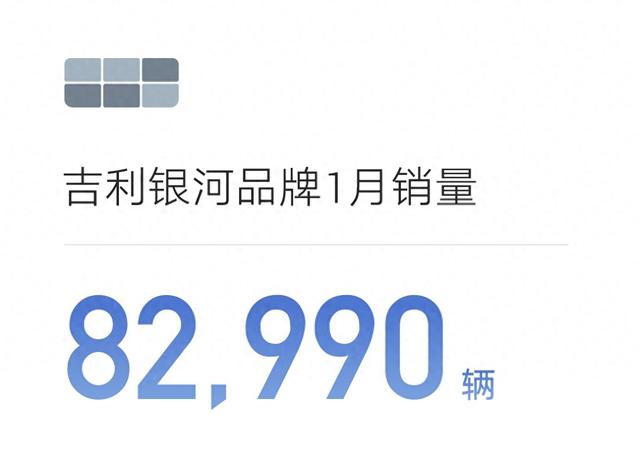
Core Insights - The article highlights the significant milestone of China's new energy vehicle (NEV) market, with penetration rates expected to exceed 50% by 2025, led by domestic brands like Geely Galaxy, which achieved over 1.23 million annual sales, marking it as the fastest NEV brand to reach this milestone [1][3] - Geely Galaxy's sales momentum continued into January 2026, with a monthly sales figure of 82,000 units, contributing to Geely's total sales of 270,200 units in the same month, indicating a strong start for the year [1][11] Group 1 - Geely Galaxy's ambition extends beyond sales figures, as it undertook a comprehensive winter testing expedition in Northern Europe, featuring 25 models across various conditions, marking a first for a single brand to conduct such extensive testing [3][5] - The winter testing in Northern Europe serves as a rigorous evaluation of vehicle performance under extreme conditions, showcasing Geely Galaxy's commitment to quality and reliability, which is crucial for entering global markets [5][10] - The testing environment in Northern Europe, characterized by extreme cold and high humidity, poses unique challenges that Geely Galaxy successfully addressed, enhancing its product's adaptability to global standards [7][10] Group 2 - Geely Galaxy's winter testing aligns with national policies aimed at elevating the quality standards of the automotive industry, transitioning from volume-driven growth to quality-focused development [7][8] - The company has established a global research and validation system, with extensive testing capabilities across various climates and terrains, ensuring that its products meet international regulatory requirements [11][13] - The successful completion of the winter tests not only demonstrates Geely Galaxy's technological prowess but also reinforces its strategy of integrating user feedback into product development, thereby enhancing market competitiveness [11][14]


吉利汽车(00175.HK)2月11日耗资2030.42万港元回购120.1万股
Ge Long Hui· 2026-02-11 08:49
格隆汇2月11日丨吉利汽车(00175.HK)发布公告,2026年2月11日耗资2030.42万港元回购120.1万股,回 购价格每股16.67-17.08港元。 ...
吉利汽车(00175) - 翌日披露报表
2026-02-11 08:36
表格類別: 股票 狀態: 新提交 公司名稱: 吉利汽車控股有限公司 呈交日期: 2026年2月11日 如上市發行人的已發行股份或庫存股份出現變動而須根據《香港聯合交易所有限公司(「香港聯交所」)證券上市規則》(「《主板上市規則》」)第13.25A條 / 《香港聯合交易所有限公司GEM證券 上市規則》(「《GEM上市規則》」)第17.27A條作出披露,必須填妥第一章節 。 | 第一章節 | | | | | | | | | | --- | --- | --- | --- | --- | --- | --- | --- | --- | | 1. 股份分類 | 普通股 | 股份類別 | 不適用 | | 於香港聯交所上市 | 是 | | | | 證券代號 (如上市) | 00175 | 說明 | | | | | | | | 多櫃檯證券代號 | 80175 | RMB 說明 | | | | | | | | A. 已發行股份或庫存股份變動 | | | | | | | | | | | | | 已發行股份(不包括庫存股份)變動 | | 庫存股份變動 | | | | | | 事件 | 已發行股份(不包括庫存股份)數 目 | | ...
曹操出行:Robotaxi车队规模已达100辆,开启无人化、规模化、商业化探索
Xin Lang Cai Jing· 2026-02-11 08:01
Core Insights - The company, Cao Cao Mobility, has announced the deployment of 100 Robotaxis in the Binjiang District of Hangzhou, supported by the "Green Intelligent Passage Island" [1][2] - The company has outlined a "three-step" strategy for the commercialization of Robotaxis, which includes initial technology validation and small-scale testing, transitioning to unmanned operations, and eventually launching fully customized Robotaxis globally [1][2] - The deployment of 100 Robotaxis marks a significant milestone in the Robotaxi 2.0 phase for the company, which also features the world's first "Green Intelligent Passage Island" with capabilities such as automatic battery swapping, cleaning, vehicle interior organization, intelligent scheduling, and automatic settlement [1][2] Domestic and International Expansion - In addition to strengthening its domestic presence, the company is actively pursuing international collaborations, having signed a memorandum of cooperation with the Abu Dhabi Investment Office (ADIO) to establish a local office and promote autonomous driving and green travel technology trials [1][2] - The company is also collaborating with Geely and other partners to develop fully customized Robotaxi models equipped with dedicated autonomous driving components and applications, with plans to unveil the model this year and aim for a total deployment of 100,000 units by 2030 [1][2]
吉利在沈阳成立新公司,注册资本1亿元
Qi Cha Cha· 2026-02-11 06:36
(原标题:吉利在沈阳成立新公司,注册资本1亿元) 企查查APP显示,近日,沈阳吉利汽车有限公司成立,法定代表人为王全心,注册资本1亿人民币,经 营范围包括汽车零部件及配件制造、汽车零配件零售、汽车零部件研发、信息技术咨询服务等。企查查 股权穿透显示,该公司由浙江吉润汽车有限公司全资持股。 ...
神秘AI模型在海外爆火,知情人士:系智谱即将发布的GLM-5;福特汽车全球销量首次落后于比亚迪;传百度临近春节秘密启动“O计划”丨邦早报
创业邦· 2026-02-11 00:07
Group 1 - BYD has filed a lawsuit against the U.S. government to reclaim tariffs imposed on imported materials, claiming significant costs for its operations in the U.S. [2] - Over 1,000 companies, including major players like Costco and Toyota, have initiated similar lawsuits against the U.S. government regarding tariffs [2]. - NIO's CEO Li Bin emphasized the importance of optimizing the CBU mechanism to maximize efficiency and minimize costs in the company's operations [6]. Group 2 - Ford's global sales fell by approximately 2% to around 4.4 million units, while BYD's sales reached 4.6 million units, marking a significant shift in the automotive market [6]. - BYD aims to increase its export volume to 1.3 million units in 2025, following a successful year of expansion in Europe, South America, and Asia [6]. - NIO plans to implement a "store partner" program to enhance operational efficiency and market responsiveness, allowing store managers greater decision-making power [6]. Group 3 - The European Union has approved Google's acquisition of cybersecurity startup Wiz for $32 billion, marking Google's largest acquisition to date [9]. - Apollo Global Management is nearing a $3.4 billion loan agreement to finance the purchase of NVIDIA chips for Elon Musk's xAI [10]. - Alibaba's DAMO Academy has released an open-source foundational model for embodied intelligence, RynnBrain, enhancing its AI capabilities [10]. Group 4 - The Shanghai government has opened over 5,200 kilometers of autonomous driving test roads, with plans to expand the testing area further [17]. - Toyota and Nissan reported sales increases in China for January, while Honda's sales continued to decline due to delays in new electric vehicle launches [17]. - The launch of the Robotaxi ride-hailing service by Alipay indicates a growing trend towards automated transportation solutions in urban areas [15].



中国车企,要接受新车销量“仅微涨”的新常态
虎嗅APP· 2026-02-10 14:12
Core Viewpoint - The Chinese automotive market is experiencing a downturn in new car sales, with significant declines reported for major brands, while the used car market is thriving, indicating a shift in consumer preferences and market dynamics [2][3][24]. Group 1: New Car Market Trends - In January 2026, BYD's sales dropped by 30%, and Li Auto's sales fell by 7.55%, with Geely only seeing a slight increase of 1% due to strong overseas performance [2]. - The overall passenger car sales in China are projected to reach 24 million in 2026, with a growth rate slowing to 1% [2]. - The decline in consumer confidence, exacerbated by reduced subsidies and macroeconomic factors, is expected to keep consumer sentiment below the breakeven line [2]. Group 2: Used Car Market Dynamics - The used car market in China is booming, with a transaction volume of 20.1 million units in 2025, marking a year-on-year growth of 2.52% and a total transaction value of 1.28979 trillion yuan [3]. - The demand for used electric vehicles is expected to grow by over 50% [3]. - The trend of purchasing used cars is driven by practical needs, such as commuting and returning home during holidays, with a notable increase in cross-regional vehicle registrations [6][8]. Group 3: Consumer Preferences and Behavior - Consumers are increasingly opting for used cars due to price advantages, allowing them to afford better models compared to new cars [10]. - The introduction of new policies has increased the variety of available used car models, enhancing consumer choice [11]. - The demand for used cars is becoming more personalized, with consumers selecting vehicles based on specific needs such as fuel efficiency and durability [14]. Group 4: Implications for Automotive Companies - The rise in used car sales may negatively impact new car sales in the short term, as each additional used car sold could equate to one less new car sold [17]. - In the long term, a healthy used car market can stabilize the residual values of new cars, encouraging new car purchases [20]. - The growing interest in used cars among younger consumers may lead to future brand loyalty and new car purchases from the same manufacturers [21]. Group 5: Market Evolution and Future Outlook - The automotive market in China is maturing, with new car sales growth plateauing, while the used car market is expected to continue expanding [24]. - The automotive industry must adapt to this new normal by focusing on vehicle durability and reliability, rather than solely on sales volume [24]. - The overall automotive market is projected to exceed 10 trillion yuan in 2025, with significant implications for the aftermarket services sector [22].


中国汽车强势“登陆”巴西,或改写南美汽车版图
Jin Tou Wang· 2026-02-10 13:11
Group 1 - In January, Chinese automotive exports to Brazil reached 16,800 units, surpassing Argentina's 13,400 units, marking the first time Argentina's long-standing dominance in exports to Brazil has been broken [3] - The export value of Chinese automobiles to Brazil skyrocketed to $375 million in January, over ten times the amount from the same period last year, accounting for approximately 65% of Brazil's total automotive imports for the month [3] - Chinese automakers are expanding in Brazil by investing in local production facilities, exemplified by BYD's investment of 5.5 billion reais (approximately $1.06 billion) to upgrade a Ford plant, and Geely's joint venture with Renault to invest 3.8 billion reais in developing electric vehicles [3] Group 2 - The Brazilian automotive market is experiencing a dual scenario, with rising local interest rates and credit tightening leading to declines in both production and sales in January [4] - Despite the challenges, electric vehicle sales in Brazil reached a record share of 16.8%, indicating a rapid increase in consumer acceptance of new energy vehicles [4] - While Brazil ranks fifth globally for Chinese automotive exports, behind Mexico, Russia, the UK, and the UAE, its market growth is a crucial part of China's global expansion strategy [6]

政策东风来 吉利迎甲醇产业发展新机遇
Zhong Guo Qi Che Bao Wang· 2026-02-10 09:09
Core Viewpoint - The green low-carbon transition is a central development theme in China's 14th Five-Year Plan, with methanol emerging as a key energy carrier due to its environmental, economic, and safety advantages, positioning it for significant industry growth [1] Group 1: Policy Framework - A comprehensive policy framework has been established to support the methanol industry, with over 70 policy documents issued by national and local governments to promote methanol vehicles [2] - Local governments in resource-rich areas like Gansu, Qinghai, and Guizhou are implementing special policies to enhance methanol fuel pricing mechanisms and infrastructure development [2] - Initiatives in cities like Shanghai aim to establish green fuel refueling centers for methanol in the shipping sector, indicating a multi-layered policy support system that solidifies methanol's role in the new energy landscape [2] Group 2: Technological and Economic Advantages - Methanol's diverse production pathways address energy security challenges in China, aligning with the country's carbon neutrality goals through various production methods, including renewable energy sources [3] - Methanol fuel demonstrates practical advantages in cold weather, with a freezing point of -97.6°C, ensuring reliable operation in harsh conditions, unlike electric vehicles [3] - The economic benefits of methanol fuel are significant, with its combustion producing fewer pollutants compared to traditional fuels, thus supporting the dual carbon goals in the transportation sector [3] Group 3: Industry Leadership and Infrastructure - Geely has developed a comprehensive green methanol industry chain, covering production, transportation, refueling, and vehicle manufacturing, with over 400 patents in methanol electric technology [4] - The company has deployed over 50,000 methanol electric vehicles, accumulating over 23 billion kilometers in total mileage, showcasing the scalability of its methanol ecosystem [4] - Geely plans to expand its methanol refueling stations from over 900 to 4,000 by the end of 2027, enhancing the convenience of methanol refueling across the country [4] Group 4: Future Outlook - Geely's long-term commitment to methanol has positioned it as a leader in the industry, contributing to the evolution of the methanol sector from breakthrough to advancement [5] - The ongoing release of policy incentives, technological advancements, and expanding application scenarios are expected to further strengthen Geely's role in building a new energy system and achieving carbon reduction goals in transportation [5]