
GEELY AUTO(00175)

Search documents
掘金CES 2026:AI全域渗透加速,应用端投资机会将至?
智通财经网· 2026-01-09 00:55
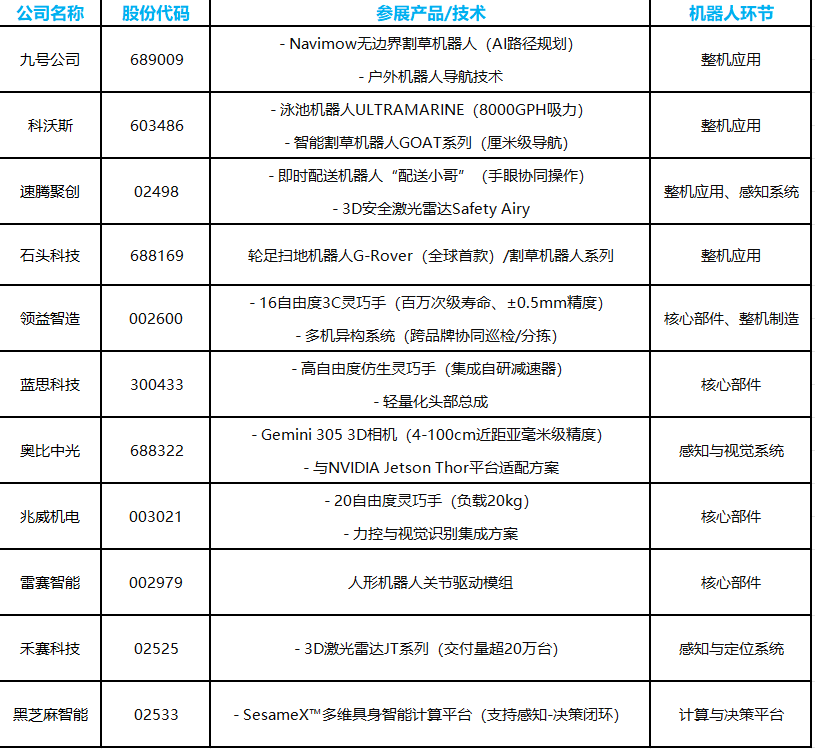
Group 1: CES 2026 Overview - CES 2026, known as the "Spring Festival Gala" of the tech industry, commenced on January 6 in Las Vegas, focusing on "defining the physical boundaries of AI" [1] - The event featured 207 Chinese companies across various cutting-edge fields, including AI, smart wearables, and smart home technologies, showcasing over 120 small and medium-sized tech firms [1] - The technologies presented by leading Chinese companies reflect the country's technological strengths and outline key directions for global industry evolution [1] Group 2: Robotics and AI Technologies - AI and robotics technologies were a major highlight at CES 2026, with global leaders showcasing various robots and core components [2] - NVIDIA's CEO announced that the robotics sector has entered its "ChatGPT moment," introducing world models to enhance robots' understanding of physical properties and spatial relationships [2] - Chinese companies, including Yushu Technology and Fourier, presented a wide range of innovative products, covering industrial applications, daily life, medical assistance, and emergency rescue [2][3] Group 3: Key Exhibitors and Innovations - Notable exhibitors included Ninebot, Ecovacs, and SUTENG, showcasing advanced robotic solutions such as AI path-planning lawn mowers and delivery robots capable of complex tasks [4][5] - Companies like Lingyi Zhi Zao and Zhaowei Electric displayed high-freedom dexterous hands and collaborative systems, indicating significant advancements in robotics [5] - The emergence of a cohesive display of robotics indicates a breakthrough in China's robotics industry, transitioning from fragmented to integrated solutions [5] Group 4: Automotive Innovations - The automotive sector at CES 2026 emphasized the transformation of vehicles into "smart partners" with emotional resonance and autonomous capabilities [6] - NVIDIA introduced the world's first open-source autonomous driving model, aiming to address challenges in extreme weather and construction detours [6] - Chinese automakers, including Great Wall Motors and Geely, showcased innovative models and technologies, highlighting the integration of smart features and collaboration with supply chain partners [6][7] Group 5: Wearable Devices and AI Glasses - Wearable devices, particularly AI glasses, gained significant attention at CES 2026, with over 60% of the showcased products coming from Chinese brands [10][11] - Innovations included independent communication-capable AR glasses and various health monitoring devices, indicating a shift towards mass production and consumer adoption [10][11] - The advancements in display and optical technologies for AI glasses reflect a robust ecosystem supporting the transition from concept to widespread use [12][13] Group 6: Industry Trends and Future Outlook - The CES 2026 event signaled a clear shift in AI's role from mere technology demonstration to deep integration within industry value chains [14] - The trend of AI becoming a physical entity is accelerating, with applications in robotics, smart driving, and wearable devices becoming observable realities [14] - Investors are encouraged to focus on the transition from technology validation to commercial scale, marking a critical window for capturing scene-based opportunities in 2026 [14]





汽车早报|小鹏开年发布四款新车 吉利汽车获L3级自动驾驶道路测试牌照
Xin Lang Cai Jing· 2026-01-09 00:37
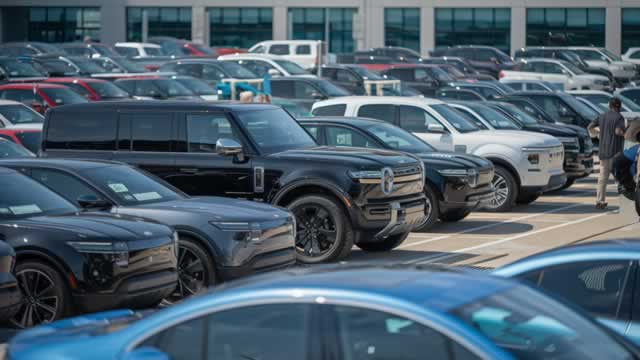
Industry Regulation and Market Dynamics - The Ministry of Industry and Information Technology, along with other departments, held a meeting to regulate the competition order in the power and energy storage battery industry, highlighting rapid development and competitive advantages but also irrational behaviors like blind construction and price competition that need to be addressed [1] - The Secretary-General of the Passenger Car Association stated that by 2025, promotions and price reductions in the passenger car industry will return to rationality, with a notable improvement in market order, as the number of price reductions for various vehicle types has decreased compared to the previous year [1] Automotive Innovations and Developments - XPeng Motors launched four new models, including the new XPeng G6 and G9 electric versions, and plans to scale production of humanoid robots and flying cars this year [2] - Geely Auto received an L3 autonomous driving road test license for its Zeekr 9X model, covering an area of 9,224 square kilometers in Hangzhou, including over 1,500 kilometers of dual-direction expressways [3] - BYD introduced new models of the Qin L DM-i, with a starting price of 116,800 yuan and a pure electric range of 210 kilometers, along with a limited-time tax exemption for new energy vehicle purchases [4] Strategic Partnerships and Financial Support - The Taizhou Municipal Government signed a strategic cooperation framework agreement with Geely Holding Group to enhance investment and industrial layout, aiming to establish Taizhou as a high-end new energy vehicle manufacturing base [5] - XPeng Motors secured a 10 billion yuan financing support commitment from the Industrial and Commercial Bank of China, Guangdong Branch, for the next five years [6] Sales Performance and Market Trends - Jianghuai Automobile reported a total sales volume of 384,100 vehicles for 2025, reflecting a year-on-year decline of 4.72%, while December sales showed a significant increase of 42.24% [7] - Tesla announced the production of its 5 millionth electric drive system at its Shanghai Gigafactory, marking a significant milestone in its manufacturing capabilities [8]

CES 2026,中国车来定义“AI+出行”丨品牌新事
吴晓波频道· 2026-01-09 00:30
Core Viewpoint - The article emphasizes that artificial intelligence (AI) is fundamentally reshaping the automotive industry, with Chinese automakers leading this transformation at the 2026 CES [4]. Group 1: AI's Impact on the Automotive Industry - AI is expected to influence the purchasing decisions of 40 to 50 million vehicles globally by 2030, with automakers that successfully implement AI at scale potentially increasing their sales by 20% [4]. - The transition from traditional automotive functions to AI-driven capabilities is likened to the shift from feature phones to smartphones, highlighting the need for vehicles to understand user states rather than just execute commands [9][10]. - Current AI applications in vehicles are often fragmented, lacking integration across systems like driving, cabin, and chassis, which leads to a disjointed user experience [11][12]. Group 2: Challenges in AI Integration - The automotive industry faces significant technical challenges, including the need for a cohesive ecosystem that integrates chips, software, cloud services, and mapping data [15]. - AI's evolution requires vast amounts of driving data and must be built on a foundation of safety [16]. - The gap between experimental AI technologies and their real-world application remains a major hurdle, compounded by the long development cycles of vehicles compared to the rapid pace of AI advancements [17]. Group 3: Geely's AI Strategy - Geely has made significant strides in AI integration, achieving a sales volume of 3.025 million vehicles in 2025, a 39% increase year-on-year, with 1.688 million being new energy vehicles, marking a 90% growth [21]. - The company introduced its "Full-Field AI 2.0" technology at CES 2026, which enhances the integration of AI across various vehicle domains, allowing for continuous evolution and improved decision-making capabilities [22][26]. - Geely's approach combines extensive R&D investment, a comprehensive AI ecosystem, and a large dataset from over 8.5 million assisted driving vehicles, which supports ongoing optimization of its AI systems [31]. Group 4: Competitive Landscape - The article notes that different global automakers are pursuing varied technological paths, with Chinese companies like Geely adopting a systematic approach that leverages a complete supply chain for rapid AI integration [35]. - The unique "Chinese speed" allows for quick iterations of AI algorithms and vehicle products, creating a feedback loop that enhances innovation and market responsiveness [35]. - As competition in the automotive industry shifts from isolated technological advancements to a comprehensive ecosystem approach, the advantages of Chinese automakers become increasingly apparent [36].

陆家嘴财经早餐2026年1月9日星期五



Sou Hu Cai Jing· 2026-01-08 23:41
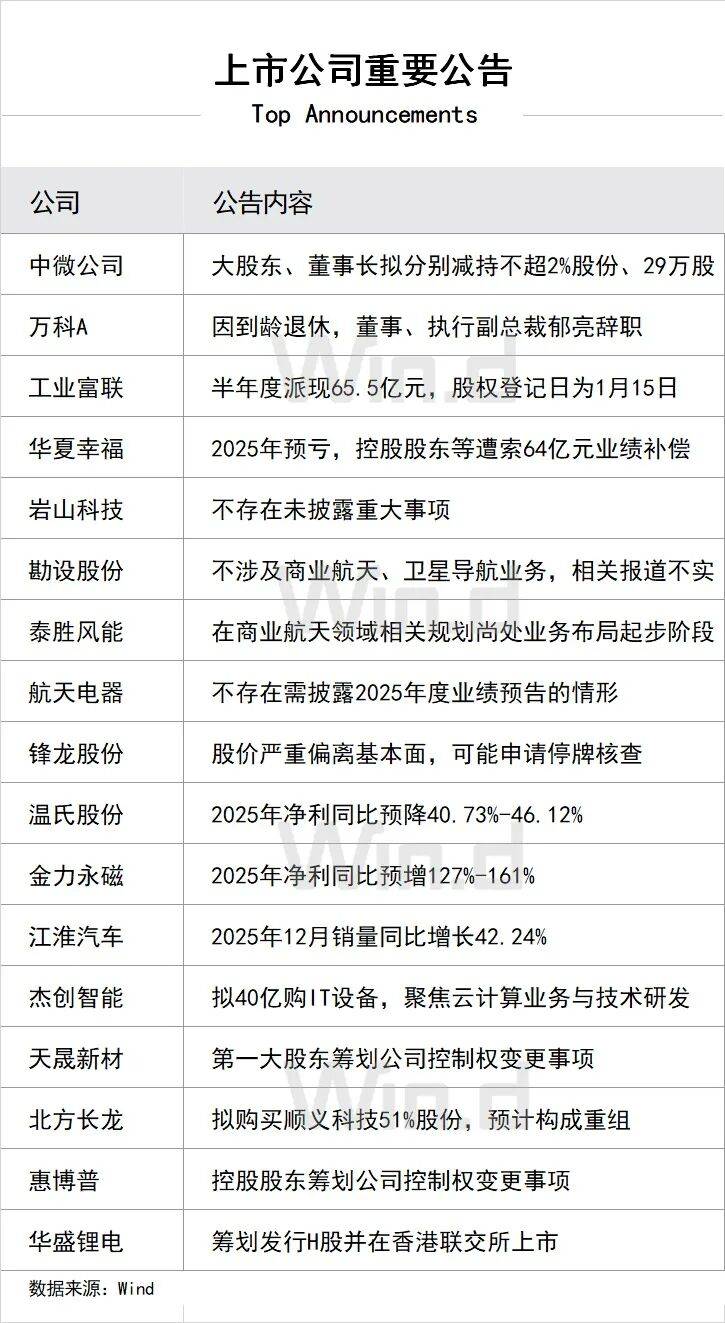
Group 1 - Two major energy state-owned enterprises, China Petroleum & Chemical Corporation and China Aviation Oil Group, announced a merger approved by the State Council, aiming to leverage advantages in refining integration and aviation fuel supply systems to reduce costs and promote high-quality development of the industry [1] - Vanke A announced that Yu Liang, a representative figure in the real estate sector, has retired after 35 years with the company, holding 739,490 shares valued at over 36 million yuan as of January 8 [1] - Gold has officially surpassed U.S. Treasury bonds for the first time in 30 years, becoming the largest reserve asset globally, with a value of $3.93 trillion compared to $3.88 trillion for U.S. Treasury bonds [1] Group 2 - The Ministry of Commerce held a press conference addressing recent hot topics, including the evaluation of Meta's $2 billion acquisition of AI platform Manus, which must comply with Chinese laws and regulations [2] - The Ministry of Finance expressed confidence in China's economic stability and invited the London Stock Exchange Group to deepen cooperation [2] - The U.S. government is pushing a bill to strengthen sanctions against Russia, which may affect countries like China, India, and Brazil in purchasing cheap Russian oil [2] Group 3 - Guangzhou has introduced a plan to build a strong advanced manufacturing city, focusing on five strategic industries including AI, semiconductors, and new energy [3] - The A-share market saw a slight decline, with the Shanghai Composite Index down 0.07% and the Shenzhen Component Index down 0.51%, while the total market turnover reached 2.83 trillion yuan [3] - The Hong Kong stock market experienced a drop, with the Hang Seng Index down 1.17%, while the "first global large model stock" Zhiyuan surged over 13% on its debut [3] Group 4 - The margin financing balance in the A-share market reached a historical high of 2.6047 trillion yuan, marking a significant increase of approximately 248 billion yuan in a single day [4] - Ping An Life announced its fourth stake increase in China Merchants Bank H-shares, holding 20% of the total share capital [4] - HSBC and Hang Seng Bank announced the approval of HSBC's proposal to privatize Hang Seng Bank, with shares expected to be delisted on January 27 [4] Group 5 - Bawang Tea Princess is considering an IPO in Hong Kong, with preliminary discussions with investment banks for a potential fundraising of several hundred million dollars [5] - Major announcements from listed companies include Vanke A's announcement of Yu Liang's resignation due to retirement and Industrial Fulian's semi-annual dividend distribution of 6.55 billion yuan [6] Group 6 - The market regulatory authority has warned major polysilicon companies against monopolistic practices, emphasizing the need for compliance in capacity management and pricing [7] - The Ministry of Industry and Information Technology held a meeting addressing irrational competition in the battery industry, calling for better capacity management [7] - The Chinese automotive market is experiencing a promotional wave at the start of the year, with several companies offering discounts to counteract the impact of new taxes on electric vehicles [7]
千里智驾“上桌”,“高含模量”角逐智驾牌局
汽车商业评论· 2026-01-08 23:05
Core Viewpoint - The article discusses the rapid commercialization of L3-level intelligent driving and the increasing competition among domestic smart driving suppliers, highlighting the shift from chaotic growth to a concentration of power among leading companies [3] Group 1: G-ASD Launch and Features - Qianli Zhijia and Geely announced the launch of a new smart driving brand, G-ASD, at CES 2026, which will cover L2 to L4 levels of intelligent driving capabilities [6][14] - The first version of the G-ASD system has been installed in 16 models under the Zeekr and Lynk & Co brands, covering over 300,000 vehicles, with plans to exceed 1 million vehicles by the end of the year [6][10] - G-ASD is positioned as a software brand that integrates hardware configurations, serving as the "soul" of Geely's intelligent driving solutions [14] Group 2: Concept of "Content Modulus" - The term "content modulus" refers to the proportion of AI models in the entire intelligent driving system, indicating the system's reliance on artificial rules and high-precision maps [7][12] - A higher content modulus means greater AI autonomy in decision-making, which is essential for user safety and interaction [9][12] - Qianli Zhijia aims to enhance the content modulus to create a more user-friendly and efficient intelligent driving experience [12][19] Group 3: Strategic Partnerships and Market Positioning - Qianli Zhijia has formed a strategic partnership with Mercedes-Benz, which acquired a 3% stake for 1.34 billion yuan, marking a significant collaboration in AI technology and intelligent driving [16] - The company plans to serve 6-7 top-tier OEMs globally, focusing on deep service rather than rapid expansion to ensure quality and efficiency [17][19] - The strategy emphasizes building a platform-level intelligent driving capability that meets the needs of major OEMs, thus reducing development costs through standardization [17] Group 4: Future Outlook and Challenges - By the end of 2026, Qianli Zhijia aims to achieve core capabilities that may surpass Tesla's current level, driven by technological innovation and a strong engineering foundation [21] - The company recognizes that the biggest challenge will be multi-line delivery capabilities to various OEMs, which they are preparing for [21] - The ultimate goal is to integrate intelligent driving with smart cockpit technology to enhance user experience and trust, transforming vehicles into "mobile intelligent spaces" [25]

陆家嘴财经早餐2026年1月9日星期五
Wind万得· 2026-01-08 22:37
Group 1 - The restructuring of two major energy state-owned enterprises, China Petroleum & Chemical Corporation and China Aviation Oil Group, has been approved by the State Council, aiming to enhance supply chain efficiency and reduce costs [3] - Vanke A announced the retirement of its representative manager Yu Liang after 35 years, with the board set to complete the director replacement process soon [3] - Gold has officially surpassed U.S. Treasury bonds to become the largest reserve asset globally for the first time in 30 years, with a value of $3.93 trillion compared to $3.88 trillion for U.S. bonds [3] Group 2 - The Ministry of Commerce held a press conference addressing recent hot topics, including the evaluation of Meta's $2 billion acquisition of AI platform Manus, which must comply with Chinese laws [4] - The Vice Minister of Finance expressed confidence in China's economic growth, welcoming deeper cooperation with the London Stock Exchange Group [4] - The U.S. President has agreed to promote a bill aimed at strengthening sanctions against Russia, impacting countries like China and India regarding cheap Russian oil purchases [4] Group 3 - Guangzhou has introduced a plan to build a strong advanced manufacturing city, focusing on five strategic industries including AI, semiconductors, and new energy [5] Group 4 - The A-share market showed slight fluctuations, with the Shanghai Composite Index down 0.07% and the Shenzhen Component down 0.51%, while the total market turnover reached 2.83 trillion yuan [6] - The Hong Kong stock market experienced a decline, with the Hang Seng Index down 1.17% [6] - The margin financing balance in the A-share market reached a historical high of 2.6047 trillion yuan, marking a significant increase [6] Group 5 - Ping An Life announced its fourth stake increase in China Merchants Bank H-shares, holding 20% of the total share capital [7] - HSBC and Hang Seng Bank announced the approval of HSBC's proposal to privatize Hang Seng Bank, with shares expected to be delisted [7] - There are reports that Bawang Tea Princess is considering an IPO in Hong Kong, potentially raising several hundred million dollars [7] Group 6 - The market regulator has warned major polysilicon companies against monopolistic practices, emphasizing the need for fair competition [9] - The Ministry of Industry and Information Technology held a meeting addressing irrational competition in the battery industry, calling for better capacity management [9] - The Chinese automotive market has seen a wave of promotions from various manufacturers, indicating a positive growth outlook for 2026 [9] Group 7 - The Sichuan Provincial Medical Insurance Bureau has set the costs for invasive brain-computer interface procedures at various public medical institutions [10] - The AI search market is undergoing significant changes, with Google Gemini's daily web visits increasing by 24% while ChatGPT's visits decreased by 9% [10] Group 8 - Tether has launched a new unit called Scudo, representing one-thousandth of a gold ounce, aimed at lowering transaction barriers [11] Group 9 - NVIDIA has requested full prepayment for its H200 AI chips from overseas customers amid regulatory uncertainties, with orders exceeding 2 million units [12] - Apple announced that CEO Tim Cook's total compensation for 2025 will be $74.3 million, and JPMorgan will replace Goldman Sachs as the issuer of Apple's credit card [12] - Glencore confirmed discussions with Rio Tinto regarding a potential business merger, which may involve a full stock merger [12] Group 10 - Geopolitical tensions have led to a significant increase in Venezuelan assets following a U.S. military raid, with the Caracas stock index soaring by approximately 124% [18] - Samsung Electronics reported a 208.2% year-on-year increase in operating profit for Q4 2025, driven by rising storage chip prices [18]


Chinese Carmaker Geely Looks at Expanding in the U.S.
WSJ· 2026-01-08 17:00
The automaker, which expects to make an announcement within 24 to 36 months, could make the first major moves selling Chinese brands in the U.S. ...
【重磅深度】乘用车全球化策略:从全面扩张走向分市场/分主体的结构性出海
东吴汽车黄细里团队· 2026-01-08 14:45
Group 1 - The article predicts that Europe, Latin America, and Southeast Asia will continue to contribute significantly to the growth of new energy vehicle (NEV) penetration rates, with Europe expected to exceed previous forecasts due to the release of affordable models and the reintroduction of some subsidies [2][18] - In Southeast Asia, the NEV penetration rate is projected to reach 19% by 2026, driven by contributions from Chinese automakers and local firms like VinFast, despite tightening import incentives [2][18] - Latin America's NEV penetration is expected to increase to 5% by 2026, but the growth will be limited due to a focus on local industrial protection and tax adjustments rather than direct demand stimulation [3][18] Group 2 - The article outlines that the total market size accessible to Chinese automakers is approximately 27 million vehicles, with an export potential market of about 9.08 million vehicles [5][20] - The export market analysis indicates that the share of NEV exports in total exports is expected to rise to 42% by 2025, with BYD being a major contributor to this growth [5][20] - The methodology for assessing market entry potential includes filtering based on trade barriers, bilateral relations, and external uncertainties, leading to the exclusion of markets like North America, Japan, and India [6][22] Group 3 - The article discusses the competitive landscape for Chinese automakers, highlighting that regions like Oceania, the Middle East, Central Asia, and Africa are more favorable for vehicle exports due to less stringent regulatory environments [8][25] - It emphasizes the importance of local production and supply chain investments in Southeast Asia and Latin America, where local market conditions are evolving [8][25] - The analysis of company strategies reveals that BYD has developed a replicable global operation model, while Chery and Great Wall have adopted different approaches to expand their market presence [9][24][27] Group 4 - The article concludes that companies with a strong overseas presence and proven execution capabilities, such as BYD, Great Wall, and Chery, should be prioritized for investment [12][13] - It highlights the need for companies to adapt to local market conditions and regulatory frameworks to ensure sustainable growth in international markets [12][13] - The overall export volume for Chinese automakers is projected to increase significantly, with NEV exports expected to reach 362,000 units by 2026 [30][37]



台州市政府与吉利控股集团签订战略合作框架协议
Xin Lang Cai Jing· 2026-01-08 14:30
Core Viewpoint - The strategic cooperation framework agreement signed between Taizhou Municipal Government and Geely Holding Group aims to enhance investment and industrial layout in Taizhou, focusing on establishing it as a high-end brand manufacturing base for new energy vehicles [1] Group 1: Investment and Industrial Development - Geely Group is encouraged to increase investment in Taizhou and enhance its industrial layout [1] - The goal is to promote the landing of high-end new energy vehicle models in Taizhou [1] - The initiative aims to accelerate the overall high-end transformation of Taizhou's traditional automotive parts industry [1] Group 2: New Energy Vehicle Ecosystem - The collaboration seeks to build a competitive and influential new energy vehicle industry ecosystem in the region [1] - There is a focus on creating a first-class low-altitude economy industrial highland by further developing the low-altitude satellite industry chain in Taizhou [1]
CES 2026 | 从“功能模块”到“整车智能中枢” 车企携“AI整车大脑”竞逐CES
Zhong Guo Jing Ying Bao· 2026-01-08 14:01
Group 1: Core Insights - The automotive industry is shifting its focus from hardware to software-defined vehicles with continuous evolution capabilities, as highlighted by the advancements in AI technology at CES 2026 [1][2][3] - Geely Auto Group introduced its AI technology system, including the WAM model and the G-ASD platform for advanced driving assistance, showcasing its commitment to integrating AI across various vehicle domains [2][3] - The competition in the automotive sector is increasingly centered around the development of intelligent systems that can learn and adapt, moving beyond traditional functionalities [1][3] Group 2: Geely's Innovations - Geely's WAM (World Action Model) represents a significant upgrade to its AI technology, enabling cross-domain integration and the development of a vehicle's "brain" with judgment capabilities [2][3] - The introduction of the Eva super-human emotional intelligence system marks a transition from functional modules to a comprehensive vehicle intelligence hub [3] - Geely's new generation of the G-ASD driving assistance system features high data capacity and advanced hardware, enhancing the overall driving experience [3] Group 3: Other Automotive Players - Great Wall Motors showcased multiple global strategic models and advanced engine technologies, emphasizing its strength in vehicle intelligence and core power technologies [1][4] - Leap Motor announced the world's first cross-domain integration solution featuring Qualcomm's Snapdragon cockpit platform, with its flagship model D19 set to debut this technology [4] Group 4: Supply Chain Innovations - Bosch presented its new AI smart cockpit platform, which integrates personalized features and advanced sensor technologies, enhancing user interaction and driving assistance capabilities [6] - The seventh-generation millimeter-wave radar, launched by Bosch, offers enhanced precision and long-range detection, improving safety in complex traffic environments [6] - Hesai showcased its new L3 automotive-grade lidar solutions, which are set to double production capacity by 2026, reflecting the growing demand for advanced driver-assistance systems [7][8]