CHINA RES BEER(00291)

Search documents
中国消费品7月价格报告:多数白酒批价回归平稳,液奶与啤酒折扣降低
Haitong Securities International· 2025-08-01 13:32
Investment Rating - The report assigns an "Outperform" rating to multiple companies in the consumer staples sector, including Guizhou Moutai, Wuliangye, Luzhou Laojiao, and others [1]. Core Insights - The report highlights that most baijiu wholesale prices have stabilized, with specific price changes noted for various brands. For instance, the price of Feitian Moutai (case) is 1915 yuan, down by 35 yuan from the previous month, and down 665 yuan year-on-year [3][9]. - Discounts on liquid milk and beer have decreased compared to previous months, indicating a shift in pricing strategies within the consumer goods market [5][22]. Summary by Sections Baijiu Pricing - Guizhou Moutai's prices for different products have shown a decline, with Feitian Moutai (case) at 1915 yuan, down 35 yuan month-on-month and 665 yuan year-on-year [3][9]. - Wuliangye's eighth-generation price is 930 yuan, stable compared to last month and unchanged year-on-year [4][9]. - Luzhou Laojiao's Guojiao 1573 remains at 860 yuan, unchanged from last month and down 40 yuan year-on-year [4][9]. Consumer Goods Discounts - The average discount rate for liquid milk has decreased to 79.1% from 73.8% at the end of June, while the median discount rate increased to 80.3% [5][22]. - Beer discounts have also seen a slight increase, with average and median rates at 83.6% and 87.0%, respectively, compared to 81.1% and 84.6% in late June [5][22]. - Discounts for infant formula and instant foods have remained stable, with average rates at 93.0% and 94.3%, respectively [7][22].





华润啤酒(00291) - 截至2025年7月31日止月份的月报表
2025-08-01 09:05
股份發行人及根據《上市規則》第十九B章上市的香港預託證券發行人的證券變動月報表 | 截至月份: | 2025年7月31日 | 狀態: 新提交 | | --- | --- | --- | | 致:香港交易及結算所有限公司 | | | | 公司名稱: | 華潤啤酒(控股)有限公司 | | | 呈交日期: | 2025年8月1日 | | | I. 法定/註冊股本變動 不適用 | | | FF301 第 1 頁 共 10 頁 v 1.1.1 FF301 II. 已發行股份及/或庫存股份變動 | 1. 股份分類 | 普通股 | | 股份類別 | 不適用 | | 於香港聯交所上市 (註1) | 是 | | | --- | --- | --- | --- | --- | --- | --- | --- | --- | | 證券代號 (如上市) | 00291 | | 說明 | | | | | | | 多櫃檯證券代號 | 80291 | RMB 說明 | | | | | | | | | | 已發行股份(不包括庫存股份)數目 | | | 庫存股份數目 | | 已發行股份總數 | | | 上月底結存 | | | | 3,244, ...
果然财经|华润啤酒拟再转让多个工厂资产,已关停啤酒厂36家
Qi Lu Wan Bao· 2025-07-31 14:16
Core Viewpoint - China Resources Beer is planning to transfer multiple factory assets, having already shut down 36 breweries in recent years [1] Group 1: Company Actions - China Resources Beer has announced the disposal of several factory assets, including those from the Snow Beer brand located in Zhumadian, Shantou, and Dazhou [1] - As of the 2024 annual report, the company operates 62 breweries, a decrease from 65 breweries at the end of 2021, indicating the closure of 3 breweries over the past three years [1] - In 2021, the company had already ceased operations at 5 breweries to optimize its production capacity layout [1]

港股异动 | 啤酒股午后跌幅扩大 啤酒6月产量同比下降 机构称政策有望修复旺季表现预期
智通财经网· 2025-07-31 07:05
Core Viewpoint - The beer stocks have experienced a significant decline, with Budweiser APAC down 5.47%, Qingdao Beer down 5.06%, and China Resources Beer down 4.04% as of the report time. The decline is attributed to a decrease in beer production and external consumption pressures, including a recent ban on alcohol sales [1]. Industry Summary - As of June 2025, the beer production volume of large-scale enterprises in China reached 4.12 million kiloliters, showing a year-on-year decrease of 0.2%. For the first half of the year, the cumulative beer production was 19.04 million kiloliters, down 0.3% year-on-year [1]. - The market sentiment has been affected by the alcohol ban, but there are signs of recovery as the beer consumption season approaches, coupled with positive consumer policy adjustments in China, which may lead to marginal improvements in beer demand [1]. Policy Impact - The Central Political Bureau held a meeting on July 30, emphasizing the expansion of domestic demand with a focus on improving livelihoods. This consumption stimulus policy is expected to alleviate the pressure on beer sales and sales expectations that have been impacted by external consumption environments and the alcohol ban [1].

啤酒股午后跌幅扩大 啤酒6月产量同比下降 机构称政策有望修复旺季表现预期
Zhi Tong Cai Jing· 2025-07-31 07:03
此外,7月30日中央政治局召开会议,方正证券指出,本次政治局会议着力强调扩大内需,以民生为抓 手。此前啤酒行业受外部消费环境+禁酒令等影响,销量&销量预期承压。此次消费刺激政策有望修复 对啤酒板块旺季表现的预期。 消息面上,2025年6月,我国规模以上企业啤酒产量412.0万千升,同比下降0.2%。1-6月,中国规模以 上企业累计啤酒产量1904.4万千升,同比下降0.3%。东莞证券指出,禁酒令发布后,短期市场情绪放 大,啤酒亦受到一定扰动。纠偏后,近期市场情绪有所回暖。目前,属于啤酒消费旺季,叠加我国消费 政策定调积极,预计啤酒需求或边际改善。 啤酒股午后跌幅扩大,截至发稿,百威亚太(01876)跌5.47%,报8.29港元;青岛啤酒(600600)股份 (00168)跌5.06%,报49.7港元;华润啤酒(00291)跌4.04%,报26.15港元。 ...

7月30日【港股Podcast】恆指、中石油、華潤啤酒、騰訊、美團、人壽
Ge Long Hui· 2025-07-31 02:09
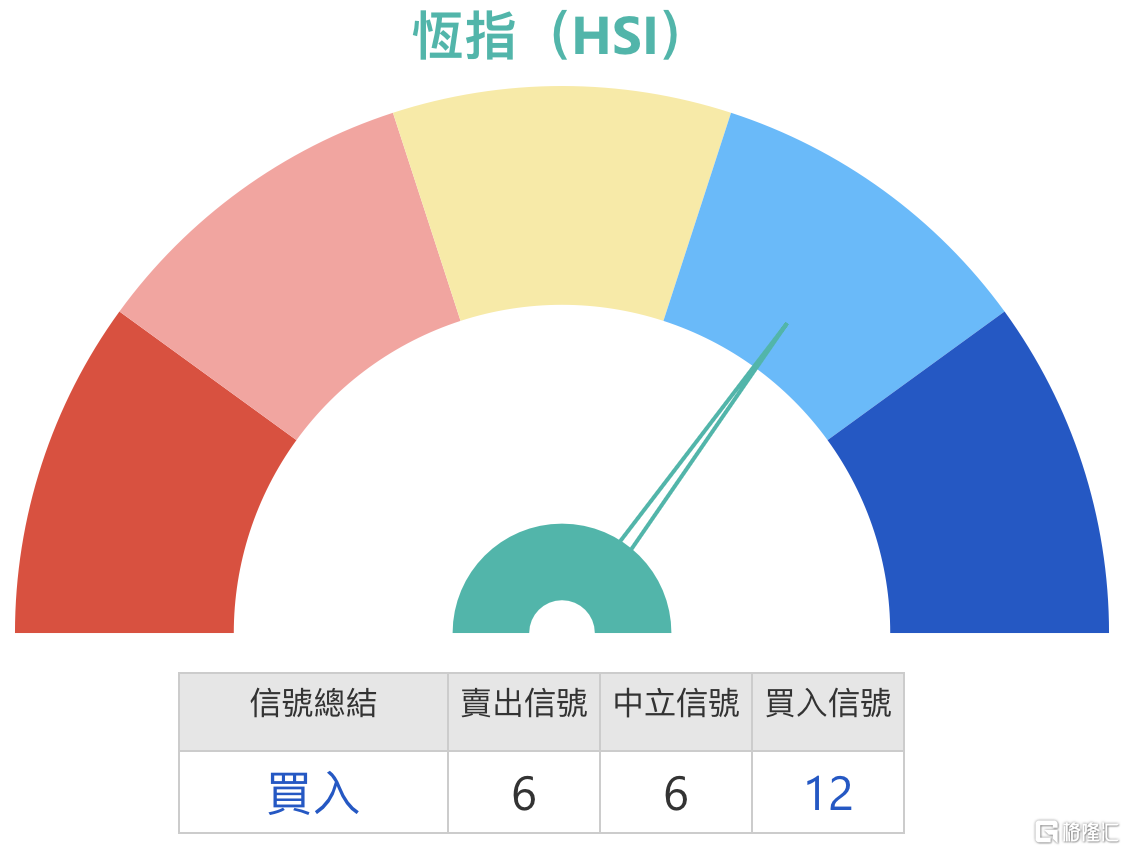
Group 1: Market Sentiment and Technical Analysis - The Hang Seng Index (HSI) shows a mixed sentiment with bullish investors expecting a rebound and bearish investors anticipating a drop to the 24,900 heavy load area [1] - Technical analysis indicates a primary buy signal for HSI, with a resistance level at 25,748 and a suggested recovery price for bearish options at 25,688, which is close to the resistance level [1] - For China Petroleum (00857.HK), a strong buy signal is noted, with the first resistance level at 8.18, indicating potential for further upward movement [3] Group 2: Individual Stock Analysis - China Resources Beer (00291.HK) is showing a buy signal with a closing price of 27.25, and resistance at 28.1, suggesting potential for a rebound [6] - Tencent Holdings (00700.HK) has a buy signal with 14 buy and 5 sell signals, and a resistance level at 560, with support levels at 529 and 510 for potential low-price entry [9] - Meituan-W (03690.HK) has a short-term buy signal with a closing price of 127.4, and support levels at 122.1 and 116.1 [11] - China Life Insurance (02628.HK) is on a strong upward trend with a buy signal, resistance levels at 24.6 and 27, both below the 30 mark [13]




270天5家上市公司人事调整 啤酒行业或迎产品、渠道新变化
Bei Jing Shang Bao· 2025-07-29 11:29
Core Insights - The Chinese beer industry is undergoing a significant leadership transition, with major companies experiencing management changes over the past nine months, reflecting challenges in performance growth and strategic transformation [1][2][4] Group 1: Leadership Changes - Zhang Yong has been appointed as the new general manager of Zhujiang Beer, marking a shift in leadership as part of a broader trend affecting major beer companies in China [1] - In 2024, Qingdao Beer and Lanzhou Yellow River also saw significant management changes, with new leadership taking over after the retirement of long-standing executives [2] - International beer companies are also adjusting their leadership in China, with Budweiser China appointing Fabio Sala as the new China president, ending a three-year vacancy in the position [2] Group 2: Industry Challenges - The beer industry is facing a transition from volume growth to a new phase where both volume and profit are stagnating or only slightly increasing, prompting companies to seek new growth avenues [3] - A significant number of beer companies are reporting declining revenues, with four out of seven major listed companies experiencing revenue drops, including Budweiser Asia Pacific and China Resources Beer, with declines of -8.9% and -0.76% respectively [4][5] - The overall beer production in China decreased by 0.6% in 2024, with major companies like China Resources Beer and Budweiser Asia Pacific also reporting declines in sales volume [5] Group 3: Market Dynamics - The beer market is witnessing a shift in consumer demand, with challenges in high-end product growth and a decline in immediate consumption channels, leading to a need for strategic adjustments [6][7] - The competition in the beer sector is evolving from channel acquisition to exploring consumer scenarios, particularly in the high-end beer segment [6] - The online penetration rate in the alcohol industry has reached 35%, with the beer instant retail market experiencing significant growth, indicating a shift towards more diverse and health-oriented products [7]


食品饮料行业 2025 年中报前瞻:白酒出清探底,食品亮点频现
Huachuang Securities· 2025-07-22 09:25
Investment Rating - The report maintains a "Recommended" rating for the food and beverage industry, particularly highlighting opportunities in the liquor sector and food products [1] Core Insights - The liquor industry is undergoing extreme pressure testing, with a significant focus on inventory clearance and bottoming out of financial reports. The second quarter has shown weak demand due to seasonal factors and regulatory impacts, leading to a notable decline in sales and pricing pressures [5][10] - High-end liquor brands like Moutai are expected to maintain growth, while mid-tier brands face challenges with declining revenues and profits. The overall industry is in a deep clearance phase, with potential for recovery as regulations stabilize [5][12] - The consumer goods sector shows mixed performance, with snacks and beverages remaining strong, while other segments like frozen foods and chain restaurants face ongoing demand pressures [20][25] Summary by Sections 1. Liquor Sector - The liquor industry is experiencing extreme pressure, with weak demand in the second quarter and significant inventory levels. Major brands like Moutai and Wuliangye are expected to show modest growth, while others like Yanghe and Luzhou Laojiao are facing declines [5][11][12] - Moutai's revenue is projected to grow by 7% in Q2, while Wuliangye is expected to see a 1% increase. In contrast, brands like Yanghe and Luzhou Laojiao are forecasted to decline by 35% and 8% respectively [11][12] 2. Consumer Goods - The overall demand for consumer goods remains weak, but segments like snacks and beverages are performing well. For instance, East Peak is expected to see a 33% increase in revenue, while other snack brands are also showing positive trends [20][25] - The beverage sector is projected to see positive growth, with major brands like Qingdao Beer and Yanjing expected to report increases in revenue and profit [25][26] 3. Investment Recommendations - The report suggests focusing on high-performing stocks in the short term while considering long-term investments in liquor brands that are currently at their bottom. Brands like Moutai and Gujing are recommended for their lower risk profiles [7][8] - For consumer goods, companies like Anqi and East Peak are highlighted for their growth potential, while traditional dairy brands like Yili and Mengniu are suggested for a bundled investment approach [7][8]



《Brand Finance 2025年全球酒精饮料品牌价值榜》发布
Jing Ji Guan Cha Wang· 2025-07-21 13:29
Core Insights - The report from Brand Finance reveals that Chinese alcoholic beverage brands continue to dominate the global market, with the industry valued at $123.38 billion, reflecting a 5.2% increase from 2024 [1] Beer Segment - Snow Beer is recognized as the most valuable beer brand in China, with a brand value of $4.66 billion, marking an 8.6% year-on-year growth and ranking sixth globally [1] - Tsingtao Beer saw a significant brand value increase of 42.3%, reaching $3.63 billion, and rose three positions to ninth in the global beer brand ranking [2] - Yanjing Beer experienced a 21.5% growth in brand value, reaching $640 million, and improved its ranking by seven places to 38th [2] Spirits Segment - Six Chinese liquor brands made it to the top ten in the global spirits brand value ranking, with Moutai, Wuliangye, Luzhou Laojiao, and Fenjiu maintaining the top four positions [3] Wine Segment - Zhangyu is the only Chinese wine brand listed, with a brand value increase of 16.1% to $820 million, solidifying its position among the top five global wine brands [4] Global Brand Leaders - Corona Extra retained its title as the most valuable beer brand globally, valued at $13.36 billion [5] - Jack Daniel's remains the most valuable whiskey brand with a value of $4.44 billion [5] - Crown Vodka's brand value grew by 33.3% to $2.93 billion, maintaining its leading position in the vodka category [5] Industry Trends - The Chinese alcoholic beverage industry is experiencing four key development trends: accelerated premiumization, deepened internationalization, innovation-driven competition, and cultural empowerment reshaping brand value [5]


链博会上的“舌尖革命”:科技重构田间到餐桌价值链
Zheng Quan Shi Bao· 2025-07-18 17:11
Group 1: Technological Empowerment - Technological advancements are transforming agriculture into a more resilient and greener industry, focusing on the entire agricultural supply chain from "field to table" [1] - The global agricultural sector faces dual challenges of resource constraints and environmental pressures, leading to a consensus on the need for green, low-carbon, and sustainable agriculture [2] - Syngenta Group has developed a series of bio-agents derived from natural active ingredients extracted from Norwegian seaweed, which enhance crop photosynthesis and improve yield and quality [2] - Over 12 million acres of bio-agent products based on Norwegian seaweed have been promoted in China [2] - The introduction of lightweight packaging in the food and beverage industry is a key pathway to achieving carbon reduction goals, with a potential reduction of approximately 54,600 tons of CO2 emissions if all beer bottles are switched to lightweight versions [2] Group 2: Supply Chain Resilience - Recent geopolitical conflicts, extreme weather events, and rising trade protectionism have highlighted the vulnerabilities in global food supply chains, making the security and stability of key agricultural product supply chains crucial [3] - China imports over 90% of its beer barley, making it vulnerable to global trade disputes, emphasizing the need for self-sufficiency in key agricultural inputs [3] - The Chinese government is implementing a series of policies to support stable production and supply of food, enhancing the capacity to guarantee food security [3] - Companies are leveraging technology to strengthen the agricultural supply chain, with examples like China Resources Group collaborating with national barley systems to enhance the entire value chain from breeding to brewing [3] Group 3: Open Cooperation - China is a major player in global agricultural trade, being the world's largest importer and fifth-largest exporter of agricultural products, with trade relations established with over 220 countries [6] - The Chain Expo showcased 11 suppliers from McDonald's supply chain, highlighting the collaboration between local and international companies [6] - The Chinese government is focused on improving food security mechanisms, which will create new opportunities for international agricultural trade cooperation [6]