
TENCENT(00700)

Search documents
港股13日跌1.72% 收报26567.12点
Xin Hua She· 2026-02-13 12:58
Market Overview - The Hang Seng Index fell by 465.42 points, a decrease of 1.72%, closing at 26,567.12 points [1] - The total turnover on the main board was HKD 257.578 billion [1] - The Hang Seng China Enterprises Index dropped by 142.47 points, closing at 9,032.71 points, a decline of 1.55% [1] - The Hang Seng Tech Index decreased by 48.56 points, closing at 5,360.42 points, down by 0.9% [1] Blue-Chip Stocks - Tencent Holdings fell by 0.65%, closing at HKD 532 [1] - Hong Kong Exchanges and Clearing decreased by 2.13%, closing at HKD 405.2 [1] - China Mobile remained unchanged, closing at HKD 78.2 [1] - HSBC Holdings dropped by 2.72%, closing at HKD 135.7 [1] Local Hong Kong Stocks - Cheung Kong Holdings decreased by 0.59%, closing at HKD 46.9 [1] - Sun Hung Kai Properties increased by 0.15%, closing at HKD 133.7 [1] - Henderson Land Development fell by 1.04%, closing at HKD 32.4 [1] Chinese Financial Stocks - Bank of China decreased by 1.48%, closing at HKD 4.65 [1] - China Construction Bank fell by 1.49%, closing at HKD 7.96 [1] - Industrial and Commercial Bank of China dropped by 1.38%, closing at HKD 6.41 [1] - Ping An Insurance decreased by 2.16%, closing at HKD 70.35 [1] - China Life Insurance fell by 3.67%, closing at HKD 33.08 [1] Oil and Petrochemical Stocks - China Petroleum & Chemical Corporation dropped by 5.12%, closing at HKD 5.37 [1] - China National Petroleum Corporation fell by 4.33%, closing at HKD 9.05 [1] - CNOOC Limited decreased by 3.5%, closing at HKD 24.24 [1]






东华软件:公司与腾讯在技术创新领域拥有超过十年的合作历史,腾讯是公司重要股东之一
Zheng Quan Ri Bao Zhi Sheng· 2026-02-13 12:40
Group 1 - The company, Donghua Software, has over ten years of collaboration history with Tencent in the field of technological innovation [1] - Tencent is also a significant shareholder of the company [1] - Multiple industry application software developed by the company has been adapted and successfully delivered on various Tencent platforms to several clients [1] Group 2 - The company plans to deepen its cooperation with Tencent to advance the construction of domestic computing infrastructure and open-source operating system ecosystems [1] - Future business developments will be announced through company announcements [1]

激活新春消费活力 微信支付“乐购新春”系列活动助力实体经济回暖
Zheng Quan Ri Bao Wang· 2026-02-13 12:17
Group 1 - WeChat Pay has launched a series of promotional activities for the Spring Festival, including "Shake for Discounts," aiming to stimulate consumer spending with over 10 billion yuan in discounts [1] - The "Shake for Discounts" activity allows users to receive high-value merchant coupons and bank discounts after completing a payment, enhancing user engagement [1] - WeChat Pay is collaborating with banks to offer cash discounts ranging from 0.5 yuan to 10 yuan per transaction, with users able to claim multiple discounts [1] Group 2 - WeChat Pay is enhancing the payment experience for foreign visitors by allowing them to bind international credit cards like VISA and Mastercard directly to the platform, facilitating easier transactions in China [2] - A fee waiver for transactions of 200 yuan or less has been introduced to further improve the user experience for foreign users [2] - WeChat Pay supports 29 foreign wallets from 12 countries, enabling foreign users to make payments using their wallet apps while in China [2] Group 3 - During the Spring Festival, WeChat Pay is participating in a "Lucky Invoice" pilot program in collaboration with government departments, allowing users to win prizes through the WeChat payment interface [3] - The "Lucky Spring Festival" themed red envelope covers will be launched in limited quantities to enhance the festive atmosphere and encourage consumer spending [3]

商家必看:微信私域运营从0到1落地指南,低成本实现复购翻倍
Sou Hu Cai Jing· 2026-02-13 11:22
Core Insights - The article emphasizes the importance of private domain operations on WeChat as a crucial strategy for businesses to retain users and navigate through challenging market conditions, especially as public domain traffic costs rise and user acquisition becomes more expensive [1][2]. Group 1: Why WeChat Private Domain is Essential for Businesses - Significant cost reduction and efficiency improvement can be achieved through private domain operations, with the cost of maintaining existing customers being only 1/7 of acquiring new customers, leading to a 30% reduction in marketing costs and a 12 percentage point increase in overall profit margins for some businesses [2][3]. - Private domain operations can enhance customer lifetime value (LTV), with core users' repurchase rates increasing by 40% and average transaction values growing by 25%, resulting in lifetime contributions exceeding ten times a single purchase [3][4]. - User data and interaction records in WeChat's private domain are owned by businesses, allowing for better decision-making in product selection and marketing strategies, thus improving operational precision [4]. Group 2: Practical Guide to WeChat Private Domain Operations - The core of WeChat private domain operations is a closed loop of "attracting traffic - segmentation - nurturing - conversion," with each step having clear objectives [5]. - Precise traffic attraction is essential, focusing on quality over quantity, with strategies such as offering incentives for adding business WeChat accounts, which can significantly increase conversion rates [6][7][8]. - Segmentation should avoid a "scattergun" approach; instead, businesses should use a tagging system to categorize users based on attributes, behaviors, and values, leading to a 40% increase in conversion rates through targeted content [9][10]. - Value cultivation is crucial for building trust, with content that addresses user pain points and offers exclusive benefits, enhancing user engagement and loyalty [11][12]. - Conversion strategies should focus on encouraging user spending and referrals through well-designed activities, with examples showing that referral programs can reduce acquisition costs by 80% compared to public domain methods [13]. Group 3: Common Pitfalls in Private Domain Operations - Many businesses focus excessively on acquiring new users while neglecting retention, leading to over 60% user churn; the core value of private domain lies in retention and repurchase rather than just the number of friends added [15]. - Over-commercialization, such as sending advertisements immediately after adding friends, can lead to users blocking accounts; a recommended ratio of value content to advertisements is 4:1 [16]. - Ignoring data analysis can hinder optimization; businesses should utilize WeChat's backend to monitor key metrics like new user acquisition and engagement rates for dynamic strategy adjustments [17]. Group 4: Long-term Commitment in Private Domain Operations - Successful private domain operations require a long-term relationship-building approach, similar to maintaining customer relationships in physical stores, rather than seeking immediate results [18]. - Case studies demonstrate that businesses leveraging WeChat private domain can achieve significant revenue growth and user base expansion, proving its effectiveness as a stabilizing force during market fluctuations [19].

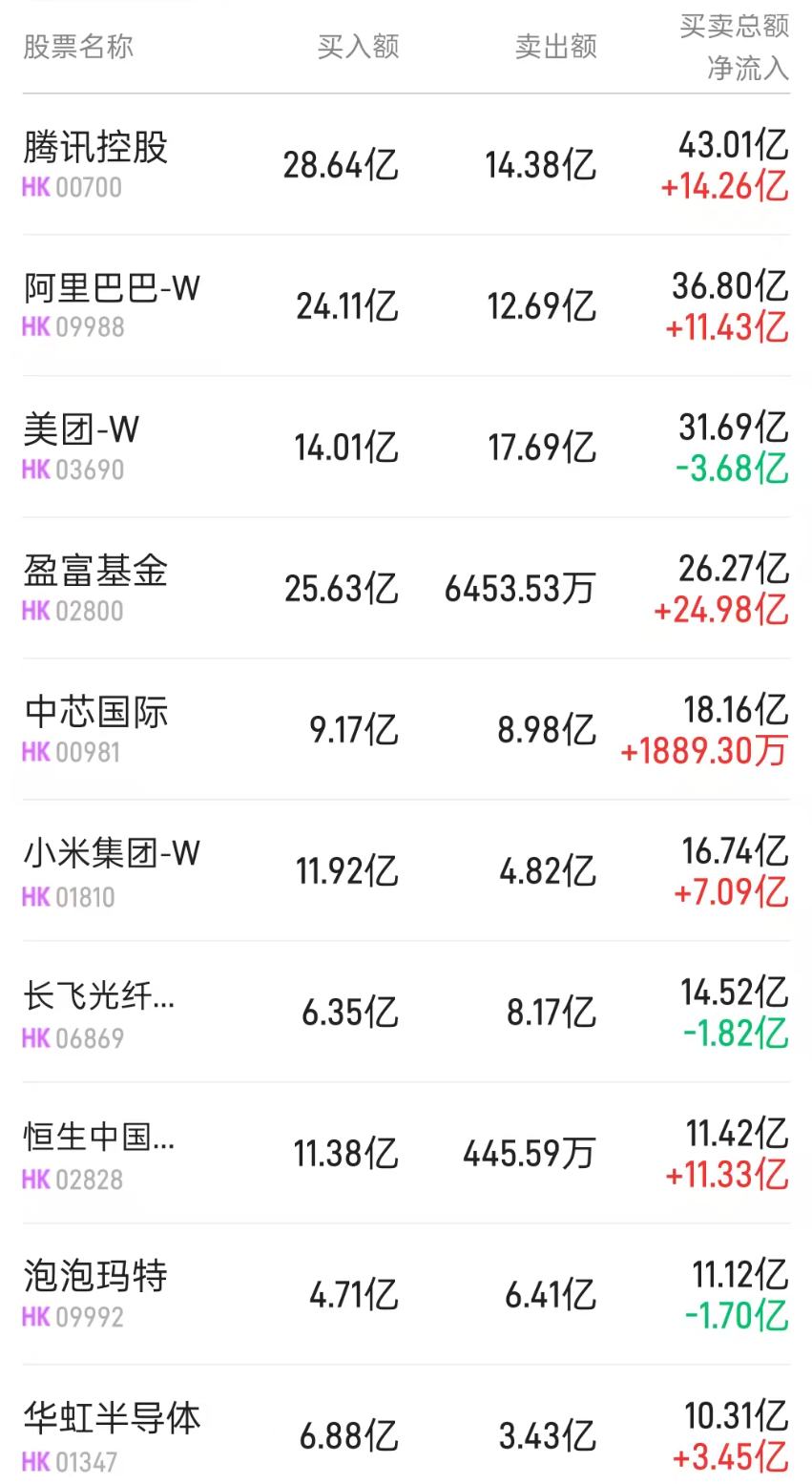
智通港股通活跃成交|2月13日





智通财经网· 2026-02-13 11:02
Group 1 - Tencent Holdings (00700), Alibaba-W (09988), and Meituan-W (03690) ranked as the top three companies in terms of trading volume on the Hong Kong Stock Connect (southbound) on February 13, 2026, with transaction amounts of 4.301 billion, 3.680 billion, and 3.169 billion respectively [1] - Tencent Holdings (00700), Alibaba-W (09988), and Meituan-W (03690) also led the trading volume on the Shenzhen-Hong Kong Stock Connect (southbound) with transaction amounts of 3.563 billion, 2.870 billion, and 1.460 billion respectively [1] Group 2 - The top ten active companies on the Hong Kong Stock Connect (southbound) included Tencent Holdings (00700) with a net buy of 1.426 billion, Alibaba-W (09988) with a net buy of 1.143 billion, and Meituan-W (03690) with a net sell of 0.368 billion [2] - On the Shenzhen-Hong Kong Stock Connect (southbound), Tencent Holdings (00700) had a net buy of 0.837 billion, Alibaba-W (09988) had a net buy of 1.156 billion, and Meituan-W (03690) had a net buy of 0.611 billion [2]
蒸发1.43万亿,跌出了黄金坑?
3 6 Ke· 2026-02-13 10:08
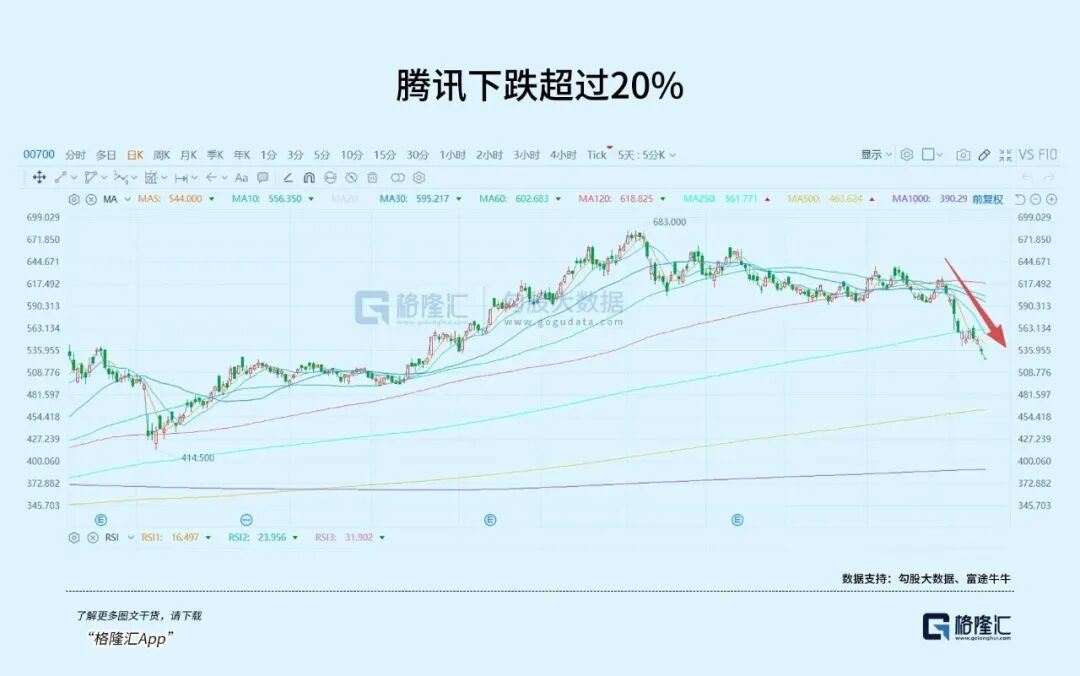
Group 1 - The last trading day before the Spring Festival saw A-shares close in the green, influenced by a significant drop in the US stock market and pre-holiday sentiment [1] - Investors may feel disappointed for missing the last market gains before the holiday, but the market will reopen in two weeks, providing an opportunity for reflection and strategy [2][3] Group 2 - Tencent's recent performance has been concerning, with a 23% decline from its peak in October 2025, resulting in a market cap loss of 1.43 trillion yuan [4] - The main factors for the decline include tax rumors and internal product competition, but the fundamental business remains unchanged, with a forward PE of approximately 15-16 times for 2026 [7] - Tencent's core business PE, excluding external investments, is around 13 times, aligning with an expected EPS growth of 12%-15% for 2026 [7] Group 3 - Tencent's valuation is supported by share buybacks and a stable dividend yield of 4-5%, making it attractive compared to high valuations of similar US tech stocks [8] - The recent strengthening of the RMB may accelerate the rebalancing of foreign investments into Tencent and similar companies [9][10] - Even if negative rumors materialize, they may only affect valuations rather than the underlying logic, with recent declines potentially setting the stage for a technical rebound [11] Group 4 - The AI industry is expected to undergo a fundamental shift by 2026, with a focus on application commercialization rather than just computational power [15][16] - Microsoft's Copilot has reached 52 million enterprise users, demonstrating a willingness to pay for AI solutions, which could serve as a benchmark for AI application commercialization [18] - In contrast to the US, China's AI application sector is at a critical point of penetration and valuation, with a significant increase in active users and usage time [22] Group 5 - The shift from linear to exponential revenue models in AI applications is a key driver for valuation restructuring, but A-shares have yet to fully account for this premium [25] - Institutional investors have been overweight in US AI applications for three consecutive years, while Hong Kong and A-shares remain underweight [26] - A potential "expectation gap" could lead to rapid valuation adjustments once it begins [27] Group 6 - Concerns are rising regarding the capital expenditure of major AI cloud computing firms, which have announced a total of $650 billion in spending, exceeding market expectations [30][31] - The market is worried that these high expenditures may impact profits and cash flow, leading to significant stock price declines [32] - The current environment is highly selective, with a shift from broad market optimism to a focus on substantial earnings growth, which could lead to sharp sell-offs if expectations are not met [36][38] Group 7 - The AI technology landscape in 2026 is expected to be volatile, with significant shifts in market dynamics [39] - Stability is considered a prudent strategy, focusing on fundamental and valuation factors to avoid poor investment decisions [40]
北水动向|北水成交净买入202.19亿 北水抢筹港股ETF及科技股 全天加仓盈富基金(02800)超36亿港元
智通财经网· 2026-02-13 09:57
Group 1 - The Hong Kong stock market saw a net inflow of 202.19 billion HKD from northbound trading, with 114.77 billion HKD from Shanghai and 87.43 billion HKD from Shenzhen [1] - The most bought stocks included the Tracker Fund of Hong Kong (02800), Alibaba-W (09988), and Tencent (00700) [1] - The most sold stocks were Changfei Optical Fiber (06869) and CNOOC (00883) [1] Group 2 - Tencent Holdings received a net inflow of 28.64 billion HKD, with a total buy amount of 43.01 billion HKD and sell amount of 14.38 billion HKD [2] - Alibaba-W had a net inflow of 24.11 billion HKD, with total buys of 36.80 billion HKD and sells of 12.69 billion HKD [2] - Meituan-W saw a net inflow of 14.01 billion HKD, with total sells of 17.69 billion HKD [2] Group 3 - The Tracker Fund of Hong Kong (02800) had a net inflow of 25.63 billion HKD, with total buys of 26.27 billion HKD and sells of 645.53 million HKD [2] - Semiconductor stocks like Huahong Semiconductor (01347) and SMIC (00981) received net inflows of 8.46 billion HKD and 5.73 billion HKD respectively [6] - CNOOC experienced a net outflow of 1.43 billion HKD amid geopolitical tensions affecting oil prices [6] Group 4 - Xiaomi Group-W received a net inflow of 12.11 billion HKD, with a notable sales performance in January [5] - The Tracker Fund of Hong Kong, Hang Seng China Enterprises (02828), and Southern Hang Seng Technology (03033) saw significant net inflows of 36.75 billion HKD, 11.33 billion HKD, and 11.23 billion HKD respectively [4] - Changfei Optical Fiber (06869) faced a net outflow of 1.48 billion HKD [7]
蒸发1.43万亿!跌出了黄金坑?
格隆汇APP· 2026-02-13 08:17
Core Viewpoint - The article discusses the current state of the Hong Kong stock market, particularly focusing on Tencent, highlighting its valuation and potential investment opportunities amidst recent market fluctuations [7][9][10]. Group 1: Market Performance and Valuation - The Hong Kong stock market has seen a significant decline, with Tencent's stock dropping 23% from its peak in October 2025, resulting in a market value loss of 1.43 trillion HKD [7]. - Despite the recent downturn, Tencent's valuation appears reasonable, with a forward PE of approximately 15-16 times for 2026, and a core business PE of around 13 times, aligning with an expected EPS growth of 12%-15% [9][10]. - Tencent's stock buyback program, averaging several hundred million HKD daily, and a stable dividend yield of 4-5% provide additional support for its valuation [10]. Group 2: Investment Sentiment and Future Outlook - The article suggests that foreign investors are beginning to view Hong Kong tech stocks, including Tencent, as undervalued compared to their U.S. counterparts, creating a potential "rebalancing" opportunity [11][12]. - The strengthening of the RMB may further accelerate this rebalancing trend, with domestic capital flowing into Tencent and similar companies [12]. - The article emphasizes that while Tencent is perceived as a "public utility" tech stock, its role in the AI growth sector remains significant, although its investment in AI is currently more conservative compared to other tech giants [14]. Group 3: AI Market Dynamics - By 2026, the global AI industry is expected to shift from a focus on "computing power arms race" to "application commercialization," with Microsoft’s Copilot as a key reference point [16][17]. - In contrast to the U.S., China's AI application sector is experiencing a breakthrough in penetration rates, with active users reaching 320 million, a 78% year-on-year increase [21]. - The article notes that the current valuation of A-shares does not fully account for the commercial value brought by AI, indicating a potential for significant upward adjustment once the market recognizes this [23][25]. Group 4: Risks and Market Behavior - The article warns of potential volatility in the market due to aggressive capital spending by major AI cloud computing firms, which could lead to profit and cash flow concerns [27][30]. - The market is transitioning from a "broad rally" to a "survival of the fittest" mentality, where companies must demonstrate substantial earnings growth to maintain their valuations [33]. - The article concludes that investors should focus on fundamental and valuation factors to avoid being caught in market fluctuations, emphasizing the importance of ensuring that created value translates into tangible returns [39][40].

一财社论:红包过度营销过犹不及
第一财经· 2026-02-13 07:44
Core Viewpoint - The article discusses the rise of red envelope marketing as a unique strategy for market promotion and customer engagement during the Chinese New Year, particularly highlighting its effectiveness in the context of AI applications and consumer behavior [2][3]. Group 1: Red Envelope Marketing - Red envelope marketing has become a common phenomenon among companies during the Spring Festival, creating numerous successful business cases [3]. - The high recognition of red envelopes in China makes them a valuable marketing tool, helping to stimulate consumer activity and enhance the festive market atmosphere [2][4]. Group 2: Consumer Behavior and Market Dynamics - Red envelopes may not provide true consumer surplus but rather represent a discount from merchants or third parties, potentially confusing the relationship between consumers and products/services [4]. - Overuse of red envelope marketing can obscure market price signals and disrupt the genuine expression of consumer preferences, leading to unnecessary purchases [4]. Group 3: Innovation and Market Competition - As the market enters a new phase dominated by AI, the traditional first-mover advantage may become a burden, necessitating rapid innovation to meet changing consumer preferences [5]. - Resources allocated to red envelope promotions may be better spent on enhancing product quality and service scarcity, which could more effectively stimulate consumer activity [5].



通信行业月报:北美云厂商资本开支强劲,CPO商业化应用拐点临近-20260213
Zhongyuan Securities· 2026-02-13 07:38
Investment Rating - The report maintains an "Outperform" investment rating for the communication industry [4][7]. Core Insights - In January 2026, the communication industry index increased by 5.47%, outperforming the Shanghai Composite Index (+3.76%), CSI 300 Index (+1.65%), Shenzhen Component Index (+5.03%), and ChiNext Index (+4.47%) [3][13]. - The capital expenditure of the four major North American cloud providers is expected to grow significantly, with a projected increase of over 60% in 2026 [6][24]. - The procurement results for special optical cables by China Mobile indicate that eight manufacturers, including Tongding Interconnection and Yangtze Optical Fibre and Cable, have been selected, highlighting the focus on key sectors such as industrial manufacturing and digital government [6][7]. Summary by Sections Industry Performance - The communication industry index showed a strong performance in January 2026, with a 5.47% increase, outperforming major indices [3][13]. - Sub-sectors within the communication industry saw varied performance, with cable, other communication equipment, and system equipment rising by 19.70%, 10.72%, and 7.85% respectively [16]. Telecommunications Sector - In 2025, the telecommunications business revenue reached CNY 1.75 trillion, a year-on-year increase of 0.7% [6][45]. - By December 2025, 5G mobile phone users accounted for 65.9% of total mobile phone users, with a monthly data usage (DOU) of 23.04GB per user, reflecting a 17.0% year-on-year increase [6][45]. Cloud Infrastructure Investment - The combined capital expenditure of the four major North American cloud providers in Q4 2025 was USD 126 billion, marking a 62.0% year-on-year increase [24][25]. - For 2026, the total capital expenditure guidance for these providers exceeds USD 660 billion, with an expected growth of 61.0% [24][25]. AI and Smartphone Market - The retail sales of communication equipment in China increased by 20.9% year-on-year in December 2025, driven by the demand for smartphones [44]. - The global smartphone shipment is projected to grow by 2% in 2025, reaching 1.25 billion units, with AI smartphones expected to penetrate 34% of the market by 2025 [6][44]. Investment Recommendations - The report suggests focusing on companies involved in optical devices, optical chips, optical modules, and AI smartphones, including Tianfu Communication, ZTE, and China Mobile [7][6].




