
BYD(01211)

Search documents
破局与引领:比亚迪在电动化领域实现新突破
Huan Qiu Shi Bao· 2026-03-09 02:52
Core Viewpoint - BYD's recent launch event emphasized the need for electric vehicles (EVs) to effectively replace traditional gasoline cars, addressing public concerns about range anxiety and charging experiences [1][3]. Group 1: Charging Technology - BYD introduced its second-generation blade battery and flash charging technology, which aims to resolve the "last mile" issue of charging convenience, a significant barrier to EV adoption [3][4]. - The flash charging technology allows for a remarkable charging speed, enabling vehicles to achieve a range of 400 kilometers with just 5 minutes of charging under normal conditions [4][5]. - This technology also addresses charging difficulties in low-temperature environments, ensuring high-power charging capabilities even in extreme cold [4][7]. Group 2: Market Impact - The flash charging technology positions BYD as a global leader in charging power, energy conversion efficiency, and safety, providing a cost-effective and efficient solution for the EV market [7]. - The advancement in charging technology is expected to drive upgrades in global supply chains and technical standards, encouraging faster iterations among battery manufacturers and charging infrastructure providers [7]. - BYD's technology offers new possibilities for EV adoption in underdeveloped regions, where slow charging and unstable power grids have hindered growth [7]. Group 3: National Strategy and Energy Security - The flash charging technology aligns with national strategies for energy security and carbon reduction, supporting the transition from oil dependency to a diversified energy supply system [8]. - By enhancing charging efficiency, BYD's technology accelerates the replacement of gasoline vehicles with electric ones, contributing to the optimization of the energy structure [8][10]. - The company's commitment to using technology to solve industry challenges is seen as a pathway to a cleaner, safer, and more efficient global transportation future [10].


比亚迪第二代刀片电池+闪充技术“颠覆”了什么|说商道市
Chang Sha Wan Bao· 2026-03-09 02:44
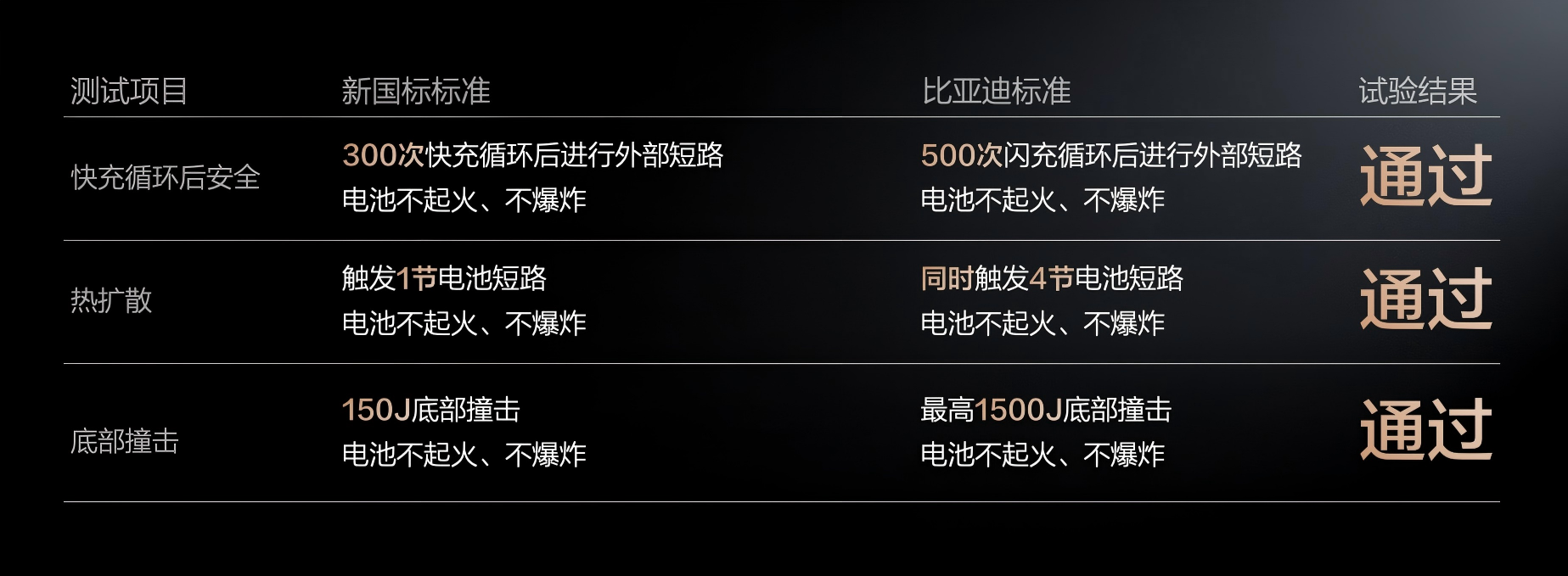
Core Viewpoint - BYD's launch of the second-generation blade battery and fast-charging technology is seen as a disruptive innovation that significantly impacts the global automotive industry and capital markets, transforming marketing language into tangible, scalable realities [1][2]. Group 1: Technology Breakthrough - The second-generation blade battery features a composite cathode of lithium manganese iron phosphate and silicon-carbon anode, addressing the long-standing industry paradox of fast charging and high energy density [1]. - Charging from 10% to 70% takes only 5 minutes, and from 10% to 97% takes 9 minutes, even in extreme cold conditions, demonstrating a significant improvement in charging efficiency [1]. - The battery maintains safety standards, passing rigorous tests after 500 fast charge cycles, and offers lifetime warranty and improved capacity retention [1]. Group 2: Market Impact - This technology is expected to reshape the Chinese automotive industry by eliminating major barriers to electric vehicle adoption, such as slow charging and range anxiety, particularly in colder regions and long-distance travel scenarios [2]. - The competitive landscape will shift from price wars to a focus on battery technology, fast charging, and vehicle integration, accelerating the transition to high-efficiency solutions [2]. - The "Fast Charging China" strategy will enhance the charging network, creating a closed-loop system that evolves electric vehicles from mere transportation to energy terminals [2]. Group 3: Global Market Expansion - The breakthrough positions Chinese electric vehicles to gain a stronger foothold in the global market, particularly in high-end segments where they previously lacked influence [3]. - BYD's advancements in battery technology will facilitate the export of a complete ecosystem, including batteries, electric drives, and fast-charging equipment, enhancing China's technological and standard-setting capabilities globally [3]. - The transition from the first-generation blade battery to the second generation signifies a shift in competitive dynamics, emphasizing the importance of foundational technology in the electric vehicle sector [3]. Group 4: Industry Insights - The technological transformation serves as a reminder for the automotive industry in Changsha and Hunan that focusing on cutting-edge research and development is crucial for maintaining a competitive edge [4]. - The advent of fast charging technology marks a shift in the Chinese automotive industry from following to leading in global innovation [4].
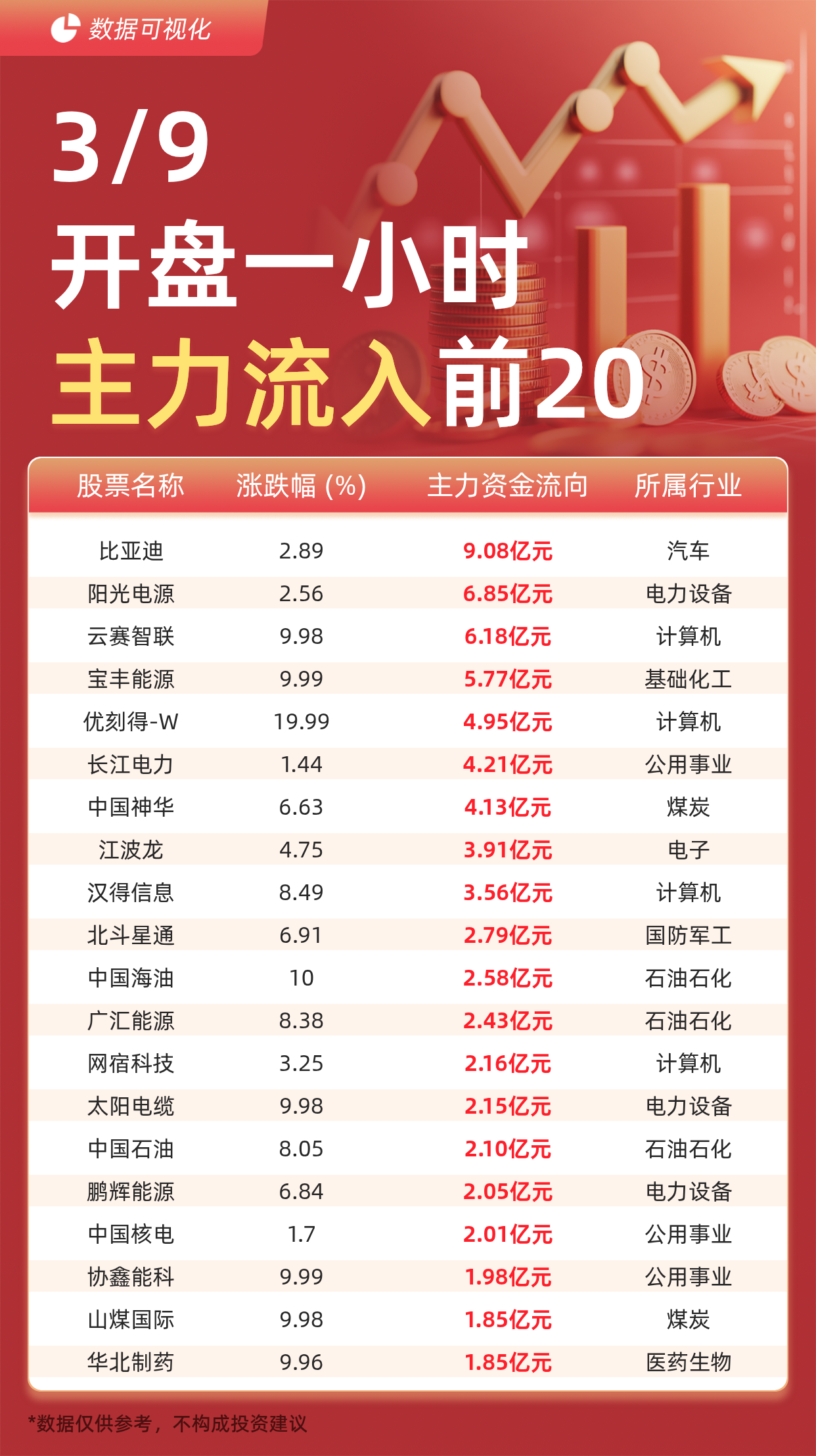
主力资金流入前20:比亚迪流入9.08亿元、阳光电源流入6.85亿元
Jin Rong Jie· 2026-03-09 02:41
Group 1 - The main stocks with significant capital inflow include BYD (9.08 billion), Sungrow Power (6.85 billion), and YunSai ZhiLian (6.18 billion) [1] - The top performing stocks by percentage increase are Baofeng Energy (9.99%), YK Technology-W (19.99%), and YunSai ZhiLian (9.98%) [2][3] - The sectors represented in the top inflow stocks include automotive, power equipment, computer, and coal [2][3] Group 2 - BYD leads with a capital inflow of 9.08 billion and a price increase of 2.89% [2] - Sungrow Power has a capital inflow of 6.85 billion with a price increase of 2.56% [2] - The total capital inflow for the top 20 stocks reflects strong investor interest across various sectors [1]



比亚迪股份(01211):第二代刀片电池和兆瓦闪充2.0发布,定义补能效率新基准
BOCOM International· 2026-03-09 02:39
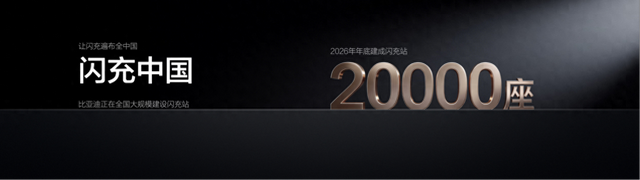
Investment Rating - The report maintains a "Buy" rating for BYD Company Limited (1211 HK) with a target price of HKD 133.00, indicating a potential upside of 43.63% from the current price [6][7]. Core Insights - BYD has made significant technological advancements with the launch of the second-generation blade battery and the MW Flash Charge 2.0, setting new benchmarks for charging efficiency. The second-generation blade battery has a 5% increase in energy density and allows for rapid charging, achieving 70% charge in just 5 minutes at room temperature [1]. - The company is expanding its electric vehicle lineup with 11 new models across its brands, including the Tengshi Z9GT, which boasts a pure electric range exceeding 1000 kilometers and a 0-100 km/h acceleration time of just 2.7 seconds [1]. - Despite facing sales pressure in the domestic market, BYD's overseas sales have shown robust growth, particularly in Southeast Asia, Latin America, and Europe, with a 41.4% year-on-year increase in overseas sales in February 2026 [1]. Summary by Sections Technological Advancements - The second-generation blade battery improves energy density by 5% and enhances charging speed, allowing for a 10% to 70% charge in 5 minutes and 20% to 97% in 12 minutes at -20 degrees Celsius [1]. - The MW Flash Charge 2.0 system supports charging power up to 1500 kW, with plans to establish 20,000 flash charging stations across China by the end of 2026 [1]. New Vehicle Launches - BYD introduced 11 new vehicles featuring the second-generation blade battery and flash charging technology, covering its entire brand matrix [1]. - Notable models include the Tengshi Z9GT with a range of 1036 kilometers and the D-class SUV, Datang, with a length of 5.3 meters and a range of 950 kilometers [1]. Market Performance - BYD's overseas sales reached 100,100 units in February 2026, marking a 41.4% increase year-on-year and surpassing 50% of total sales for the first time [1]. - The report anticipates that as overseas sales continue to grow, the company's profit margins are expected to improve [1].

比亚迪股份:第二代刀片电池和兆瓦闪充2.0发布,定义补能效率新基准-20260309
BOCOM International· 2026-03-09 02:24
Investment Rating - The report maintains a "Buy" rating for BYD Company Limited (1211 HK) with a target price of HKD 133.00, indicating a potential upside of 43.63% [6][7]. Core Insights - BYD has launched its second-generation blade battery and MW flash charging 2.0 technology, setting a new benchmark for charging efficiency. The second-generation blade battery has a 5% increase in energy density and allows for rapid charging, achieving 70% charge in just 5 minutes at room temperature [1]. - The company aims to establish a comprehensive flash charging ecosystem with a target of building 20,000 flash charging stations across China by the end of 2026, including 18,000 mid-level and 2,000 high-speed stations [1]. - BYD's new vehicle lineup includes 11 models across its five brands, with the Tengshi Z9GT offering a pure electric range exceeding 1,000 kilometers and a 0-100 km/h acceleration time of just 2.7 seconds [1]. - Despite facing some sales pressure in the domestic market, BYD's overseas sales have shown robust growth, particularly in Southeast Asia, Latin America, and Europe, with a 41.4% year-on-year increase in overseas sales in February 2026 [1]. Summary by Relevant Sections Technology Advancements - The second-generation blade battery improves charging efficiency and safety, with a lifetime warranty on battery cells. The MW flash charging technology allows for significant reductions in charging time, addressing key pain points in the electric vehicle market [1]. New Vehicle Launches - The report details the specifications of new models, including the BYD Song UltraEV, BYD Datang, and BYD Haibao 08, highlighting their dimensions, power outputs, and electric ranges [2][3]. Market Performance - BYD's overseas sales have surpassed 50% of total sales for the first time, indicating a successful expansion strategy. The report anticipates that increasing overseas sales will enhance the company's profit margins [1].
“像加油一样充电”?比亚迪铺设补能“新基建”
Xin Hua Cai Jing· 2026-03-09 00:57
Core Insights - BYD focuses on battery technology, launching the second-generation blade battery and fast-charging technology to address challenges in electric vehicle (EV) usage [1][2] Group 1: Market Trends - The retail penetration rate of new energy vehicles (NEVs) has increased from 6% in 2020 to nearly 60% by 2025, representing a tenfold growth over five years [1] - However, in January 2026, the retail penetration rate dropped to 38.6%, attributed to increased long-distance travel demand during the Spring Festival, leading consumers to prefer fuel vehicles due to range anxiety [1] Group 2: Consumer Pain Points - Wang Chuanfu, Chairman of BYD, highlighted two main issues in the EV industry: consumer inconvenience and societal resource waste [3] - Consumers are still concerned about range anxiety despite many EVs having longer ranges than fuel vehicles, leading to additional costs and weight for extended range [3] - The societal cost to alleviate range anxiety could amount to several hundred billion yuan annually, given the current NEV ownership of approximately 45 million vehicles [3] Group 3: Charging Infrastructure Challenges - Wang criticized the inefficiency of charging infrastructure, noting that a gas pump serves about 50 vehicles daily, while a public charging station serves only about 5 [4] - The low utilization rate of electric grid resources, with only 5.6% of the capacity being used for charging, leads to significant waste [4] Group 4: Technological Innovations - BYD's second-generation blade battery aims to achieve charging speeds comparable to refueling a gasoline vehicle, with a charging time of 5 minutes to reach 70% and 9 minutes to 97% [6][9] - The battery has undergone rigorous safety testing, exceeding national standards, and offers a warranty with a higher capacity retention rate compared to the first generation [7] Group 5: Charging Station Development - BYD has developed a 1500 kW fast-charging station that can serve 50 vehicles daily, improving power utilization by tenfold [9] - The company plans to build 20,000 fast-charging stations, with 18,000 being "fast-charging stations within stations" to optimize land use [11] Group 6: Future Vision - BYD's "technology equity" concept aims to make advanced battery and charging technologies widely available across various vehicle models, enhancing accessibility [10] - The company plans to establish a comprehensive fast-charging network, with 2,000 stations by the end of 2026, to alleviate travel anxiety during holidays [10][11]
有人上门安装龙虾几天赚26万!马化腾:没想到能火成这样;伊朗客户失联了!价值6000万的500台中国车被困海上;路虎揽胜回应魏建军致歉
雷峰网· 2026-03-09 00:35
Group 1 - The AI open-source agent OpenClaw, nicknamed "Little Lobster," has gained immense popularity, leading to a surge in installation services, with some individuals reportedly earning 260,000 yuan in just a few days [4][5] - Tencent has launched a free installation service for OpenClaw, attracting a large number of participants, indicating strong market interest [4] - There are security risks associated with OpenClaw, as improper configurations can lead to network attacks and information leaks, prompting warnings from the Ministry of Industry and Information Technology [5] Group 2 - A shipment of 500 Chinese cars worth approximately 60 million yuan is stranded at sea due to geopolitical tensions, with the trade merchant unable to contact the Iranian client [8][9] - The ongoing Middle Eastern conflicts have severely impacted international shipping logistics, with vessel traffic in the Strait of Hormuz dropping significantly [9][10] Group 3 - The AI short drama "Huo Qubing" has garnered over 500 million views, but the director clarified that the production costs and team size were misrepresented in media reports [10][11] - The production team consisted of nearly 20 members, and the reported cost of 3,000 yuan only covered computational expenses, excluding labor [11] Group 4 - Xiaomi's former executive Wang Teng expressed concerns about potential layoffs in the smartphone industry due to rising memory prices, predicting significant impacts on major brands [13][14] - The smartphone industry is facing its largest price adjustment in five years, driven by increased costs of storage chips, which could affect future production plans [13][14] Group 5 - Lei Jun, founder of Xiaomi, emphasized that while advancements in intelligent driving technology have been rapid, current systems are still at Level 2, requiring driver engagement [15][16] - The importance of driver responsibility in the context of Level 2 autonomous driving systems was highlighted, with academic support for maintaining driver attention [15][16] Group 6 - Wei Jianjun, chairman of Great Wall Motors, publicly apologized for plagiarism allegations regarding the design of a new vehicle, acknowledging the issue and committing to prevent future occurrences [18][19] - The controversy arose after comparisons were made between promotional materials for Great Wall's new model and those of the Land Rover [18][19] Group 7 - Qi Junyuan, former product head at ByteDance's Doubao PC, has launched a new venture focused on developing GUI Agent smartphones, aiming to create next-generation smart devices [21][22] - The startup has secured investment from various institutions and is positioned to leverage large model technology for its products [21][22] Group 8 - Liu Xuan, head of R&D at Lifeng, has left the company to potentially pursue entrepreneurship in the smart ring sector, following a significant career at Apple [24][25] - Liu's experience includes leading key product designs at Apple, indicating a strong background for her new venture [24][25] Group 9 - The CEO of Gao Xin Retail has been replaced following an extended absence, with the new CEO having a strong background in private equity and investment [26][27] - The company has faced financial challenges, reporting a significant drop in revenue and a net loss in its latest financial results [26][27] Group 10 - ByteDance and Tencent have both announced significant recruitment plans for 2026, aiming to hire over 17,000 AI talents, reflecting the industry's focus on technology and AI development [32][33] - The recruitment initiatives are part of a broader trend among major tech companies to strengthen their capabilities in AI and related fields [32][33] Group 11 - BYD's management has addressed the ongoing debate between fast charging and battery swapping technologies, emphasizing that both approaches aim to enhance user convenience [34][35] - The company has introduced a new generation of blade batteries capable of rapid charging, setting a new standard in the industry [34][35] Group 12 - The CEO of Intel is facing a lawsuit from shareholders over the company's stock sale to the U.S. government, which allegedly violated trust laws [41] - The lawsuit claims that the shares were sold at a significant discount, raising concerns about corporate governance and accountability [41] Group 13 - Apple is expected to release a new MacBook Pro model with a touchscreen and OLED display by the end of the year, marking a significant upgrade in its product line [42][43] - This new model will feature advanced hardware and is part of Apple's strategy to enhance its competitive position in the market [42][43] Group 14 - Samsung is seeking strategic partnerships with AI companies to integrate multiple AI models into its smartphones, aiming to compete more effectively with Apple [48][49] - The company has announced plans to incorporate AI capabilities into its upcoming Galaxy S26 series, reflecting a shift towards a more integrated AI ecosystem [48][49]





8点1氪:哈梅内伊次子当选伊朗最高领袖;最高补贴200万,深圳一区支持免费“养龙虾”;寿司郎回应消费者吃出金枪鱼寄生虫卵
36氪· 2026-03-09 00:11
Group 1 - The new Supreme Leader of Iran is Mojtaba Khamenei, the son of the late Supreme Leader Ali Khamenei, as confirmed by the Assembly of Experts [3][5] - The Assembly of Experts is the highest authority responsible for electing, supervising, and dismissing the Supreme Leader in Iran [5] Group 2 - International oil prices have surpassed $100 per barrel for the first time since 2022, with U.S. crude futures rising by 14.7% and Brent crude by 12.63% [7] - Following the outbreak of conflict in Iran on February 28, the average price of regular gasoline in the U.S. increased to $3.45 per gallon, a rise of approximately 16% from the previous week [7] Group 3 - OpenAI's annual revenue has exceeded $25 billion, marking a 17% increase from the end of last year [17] - Anthropic's annual revenue has recently surpassed $19 billion, doubling from the previous year and growing by 36% in the last two weeks [17]


大四学生获陈天桥3000万投资,其AI项目登GitHub榜首;“王兴兴相亲帖”被发现,平台客服回应;小米入局车载光伏丨邦早报
创业邦· 2026-03-09 00:06
Core Insights - Xiaomi is entering the vehicle-mounted photovoltaic market in collaboration with former executive Li Chuangqi's startup, indicating a strategic shift towards renewable energy solutions in the automotive sector [2] - Kimi's subscription user payment orders surged by 80 times, with a remarkable growth of 8280% in January and 123.8% in February, positioning it among the top 10 in Stripe's global payment rankings [6] - OpenAI's robotics department head resigned due to concerns over military negotiations, highlighting ethical dilemmas in AI applications for national security [10] Group 1: Company Developments - Xiaomi's collaboration with Li Chuangqi focuses on vehicle-mounted photovoltaic technology, which is expected to integrate solar energy solutions into automotive engineering, creating a high barrier to entry and significant market potential [2] - Kimi's explosive growth in user subscriptions reflects a strong demand for its AI-driven services, with its revenue surpassing previous records in a short time frame [6] - Tesla's electric truck, Semi, is undergoing winter testing in Alaska, signaling advancements in electric vehicle technology and preparation for large-scale production [8] Group 2: Industry Trends - The rise of AI applications, such as OpenClaw, has prompted government support in Shenzhen, aiming to foster innovation in AI development with zero-cost startup initiatives [18][19] - The global electric vehicle battery installation volume increased by 10.7% in January 2026, with CATL and BYD maintaining their positions as market leaders, while Korean manufacturers faced declines [20] - Sony is facing a collective lawsuit in the UK for allegedly overcharging PlayStation users, which could impact its competitive standing in the gaming market [10]



电力设备及新能源周报20260308:美国750亿美元电网扩建,光储成发电装机核心驱动力-20260309
Guolian Minsheng Securities· 2026-03-08 23:30
Investment Rating - The report maintains a "Buy" rating for key companies in the electric equipment and new energy sectors, including Ningde Times, Keda Li, and others [6][7]. Core Insights - The electric equipment and new energy sector saw a weekly increase of 0.55%, outperforming the Shanghai Composite Index, with lithium battery indices showing the highest growth at 2.07% [1]. - In February 2026, the overall car market showed signs of fatigue, but some new energy vehicle manufacturers, such as Zeekr and NIO, reported significant year-on-year growth in deliveries [2][15]. - The U.S. plans to invest 86 GW in new utility-scale power generation capacity in 2026, marking the largest annual increase in over two decades, driven primarily by solar and battery storage [3][38]. - A $75 billion investment in transmission expansion projects in the U.S. aims to build 765 kV ultra-high voltage lines to meet rising electricity demand, with significant contracts awarded to various companies [4][56]. Summary by Sections New Energy Vehicles - February 2026 saw a general decline in new energy vehicle deliveries due to the dual impact of the Spring Festival holiday and changes in new energy vehicle purchase tax policies, although some brands like Zeekr and NIO achieved positive growth [2][15][23]. New Energy Generation - The U.S. is set for a historic increase in utility-scale power generation capacity in 2026, with solar and battery storage accounting for 79% of the planned new projects, including 43.4 GW of solar capacity [3][38][40]. Electric Equipment and Automation - The U.S. has approved $75 billion for transmission expansion projects, focusing on building ultra-high voltage lines to address increasing electricity demand, with significant contracts awarded to companies like Shanghai Siyuan High Voltage Switchgear [4][56][59]. Commercial Aerospace - The government has positioned the aerospace industry as a new pillar industry, emphasizing the accelerated development of satellite internet, indicating a strategic shift in national priorities [5]. Weekly Sector Performance - The electric equipment and new energy sector outperformed the Shanghai Composite Index, with lithium battery indices leading the gains, while new energy vehicle indices experienced declines [1].


