BYD(01211)

Search documents
吉利磷酸铁锂布局落下关键一子
高工锂电· 2026-02-27 12:29
Core Viewpoint - Geely is moving beyond the competition of complete vehicle products and entering the competition at the industrial chain level [3] Group 1: Geely's New Energy Strategy - Jiangxi Yiyuan New Energy Technology Co., Ltd. has officially completed the production of its lithium iron phosphate cathode material project, with a total investment of 2.5 billion yuan and an annual recycling capacity of 40,000 tons of lithium iron phosphate batteries [4] - The successful production of Yiyuan New Energy marks a key breakthrough for Geely in the core material segment of power batteries, facilitating cost control and supporting technological self-iteration [5] - The establishment of the lithium iron phosphate factory signifies Geely's transition from vehicle competition to industrial chain competition [5] Group 2: Competitive Landscape - Geely is not the first automaker to invest in upstream cathode materials, with BYD being the most advanced competitor, having established a closed-loop system from lithium resources to complete vehicles [6] - BYD has invested in various upstream lithium resources and has built multiple battery production bases, creating a controllable system from raw materials to complete vehicles [7] - In 2025, Geely's annual sales are projected to reach 3.02 million vehicles, a significant increase of 39% year-on-year, while BYD's retail sales are expected to decline by 6.3%, narrowing the sales gap between the two companies [8] Group 3: Sales Performance and Product Strategy - In January 2026, Geely surpassed BYD in total sales, reclaiming the title of sales champion [9] - Among Geely's projected sales of 3.02 million vehicles in 2025, 1.687 million will be new energy vehicles, with the Galaxy series accounting for 73.5% of new energy sales [10] - The Galaxy series, particularly the Xingyuan model, is a key player in the market, with sales of 460,000 units, making it the best-selling passenger car in China for 2025 [10] Group 4: Supply Chain and Material Strategy - The launch of the Yiyuan New Energy lithium iron phosphate project is a strategic move by Geely to enhance its supply chain and address its shortcomings in cathode materials [11] - The project aims to achieve comprehensive utilization of 40,000 tons of waste lithium iron phosphate batteries annually, ensuring local supply of raw materials and improving supply chain stability [13] - Geely's battery business is structured into three core segments, with significant production capacity planned across various bases [14] Group 5: Resource Acquisition and Future Outlook - Geely has systematically laid out its lithium resource strategy through equity cooperation and strategic investments, securing key raw materials for lithium iron phosphate production [15] - The completion of the Yiyuan project allows Geely to continue upgrading its material strategies, particularly in lithium iron phosphate and manganese lithium phosphate [16] - Geely's vertical integration strategy from vehicle manufacturing to battery production and material sourcing aims to create a robust competitive advantage in the face of rising raw material costs [16]


2026全球锂电行业十大发展趋势
起点锂电· 2026-02-27 11:19
Core Viewpoint - The global lithium battery market is projected to reach a total shipment of 2.5 TWh by 2026, driven by both energy storage and power batteries, with significant growth in both domestic and overseas markets [3][4]. Market Size - Global lithium battery shipments are expected to reach 2.5 TWh in 2026, a year-on-year increase of 25%. Energy storage batteries will account for 0.8 TWh (+40%), while power batteries will reach 1.5 TWh (+20%) [3]. - In China, total shipments are projected at 1.8 TWh (+30%), with energy storage at 600 GWh (+50%) and new energy vehicle sales at 12 million units, achieving a penetration rate of 55% [3]. - Overseas markets are becoming a core growth driver, with China exporting 4 million new energy vehicles and overseas energy storage demand accounting for 52% of global needs [3]. Domestic Market - The domestic market is seeing structural optimization, with energy storage becoming the primary growth engine, growing at over 50%, surpassing power batteries [4]. - Large-scale energy storage, commercial, and household applications are all increasing, with large capacity (314Ah+) batteries making up over 70% of the market [4]. Overseas Market - The U.S. IRA and the EU's new battery regulations are promoting localization, with Chinese companies' overseas production capacity rising to 25% [4]. - Emerging markets in Southeast Asia, the Middle East, and Latin America are experiencing significant growth, accounting for over 12% of global demand [4]. New Technologies - Solid-state batteries are expected to enter mass production in 2026, with global shipments projected at 50 GWh [4]. - Sodium-ion batteries are also set for large-scale application, with shipments of 27 GWh, primarily in energy storage and commercial vehicles [4]. - High-density LFP batteries are seeing accelerated penetration, with a 30% improvement in cycle life [4]. Capital Operations - Hong Kong IPOs are becoming mainstream, with accelerated mergers and acquisitions in the industry [5]. - Financing is increasingly directed towards technology, globalization, and energy storage projects [6]. Competitive Landscape - The global market for power batteries is highly concentrated, with the top five companies holding an 85% market share [5]. - The second-tier companies are focusing on niche segments, while cross-industry players are entering the market, intensifying competition [5]. Product Prices - Material prices are showing a clear upward trend, with increases of 15% to 30%, leading to a stabilization and recovery in product prices [5]. Upstream Materials - The lithium carbonate price is expected to stabilize around 120,000 to 300,000 yuan per ton, with a supply gap of 200,000 tons anticipated for the year [7]. - The production capacity for phosphoric acid lithium is set to expand by 3 million tons per year from 2025 to 2026 [7]. Equipment and Manufacturing - The industry is moving towards smart, green manufacturing, with domestic equipment replacement rates exceeding 90% [8]. - AI is enhancing production efficiency, reducing research and development cycles by 30% and improving yield rates by over 5% [8].

2026出海人必备的一站式地图
3 6 Ke· 2026-02-27 10:56
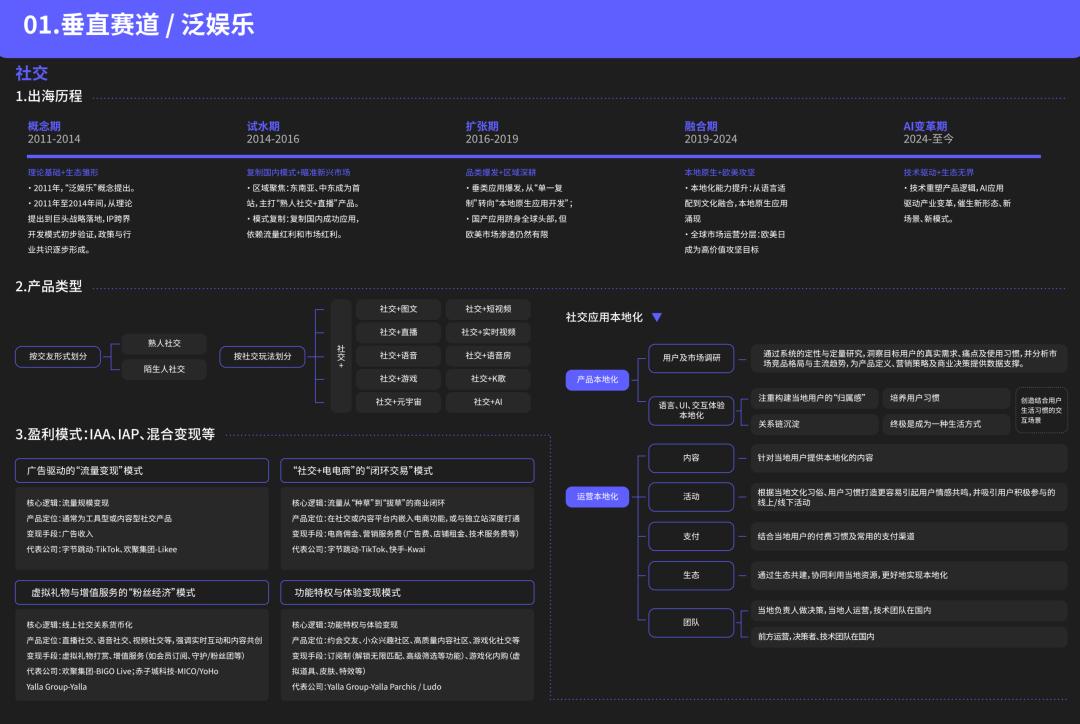
Core Insights - The global industrial system is undergoing reconstruction, and the map for Chinese companies going abroad is being redrawn, marking a significant shift in the global migration of "Chinese capabilities" [1] Industry Insights - The core driving force for the outbound entertainment industry has shifted from simple business model export to deep empowerment through "AI + culture," with the domestic market expected to reach 67.79 billion yuan by 2025, growing 34.4%, while the overseas market is projected to reach 21.07 billion USD, growing 145.7% [12] - In the cross-border e-commerce sector, the era of "barbaric growth" is ending, with a focus on localization and brand strength. By 2025, global e-commerce growth is expected to slow to 8.8%, prompting a shift towards "regional focus" and "brand cultivation" [15] - The artificial intelligence sector is characterized by a dual drive of "hardware-driven" and "application landing," with significant advancements in AI hardware and software leading to a rapid commercialization of AI applications [21] - The new energy sector is transitioning from "product output" to "ecological co-construction," with China's new energy vehicle exports expected to surge to 3.43 million units by 2025, a 70% year-on-year increase [28] Market Insights - North America remains a strategic high ground for outbound enterprises, characterized by high barriers and high returns, with a focus on compliance and localization due to ongoing tariff adjustments [29] - Europe presents a "quality competition arena" under green barriers, where compliance with stringent environmental regulations is essential for market entry [35] - Southeast Asia has evolved from simple trade to comprehensive investment and localized operations, becoming the largest destination for Chinese outbound investment [38] - The Middle East offers opportunities driven by economic diversification initiatives, with significant growth in exports of vehicles and electrical equipment from China [41] - Latin America is characterized by a demand for high-cost performance products, with a focus on affordable smart hardware and the rapid growth of e-commerce platforms [43] Strategy Insights - The approach to selecting target markets and entry paths is shifting from blind expansion to precise coupling, focusing on infrastructure capacity and user ecosystem maturity [45] - The product channel layout and marketing strategies are evolving towards "AI reconstruction and regional differentiation," emphasizing multi-channel integration and technology empowerment [48] - Compliance with regulations and risk avoidance is becoming critical, with a need for systematic compliance frameworks to navigate complex regulatory environments [53] - Organizational and talent development is essential for building agile global teams, with a focus on creating a unified global skills framework to address capability gaps [55] - The transformation of Chinese enterprises going abroad is moving from "product output" to "systemic rooting," emphasizing supply chain resilience and local integration [56]
世界首次五百强断崖:日本149家,美国151家,中国3家,现在呢
Sou Hu Cai Jing· 2026-02-27 09:13
Group 1 - The World’s 500 Strong list reflects the shifts in global economic power, showcasing the rise of China and the decline of Japan over the past three decades [1][3][31] - In 1995, the list was dominated by the US and Japan, with 151 and 149 companies respectively, accounting for nearly 60% of the total [5][9] - By 2026, Japan's representation has drastically decreased to about 40 companies, while China has surged to 133, nearly matching the US's 139 [9][19] Group 2 - The decline of Japan's economic power can be traced back to the Plaza Accord in 1985, which led to a significant appreciation of the yen, adversely affecting Japan's export-driven economy [11][15] - Following the economic bubble burst in 1991, Japan entered a prolonged period of stagnation, with many companies failing to adapt to new technological trends [15][17] - In contrast, China's economic trajectory has been upward since joining the WTO in 2001, becoming a global manufacturing hub and investing heavily in infrastructure [19][22] Group 3 - The rise of Chinese companies is marked by significant advancements in technology and manufacturing, with firms like BYD leading in electric vehicles and Huawei excelling in smartphones [24][26] - The US maintains a strong corporate presence, exemplified by Walmart's annual revenue exceeding $640 billion, but faces challenges such as rising national debt and trade restrictions [26][27] - The global industrial landscape is undergoing a complex reshuffling, with competition now focusing on addressing future challenges like aging populations and technological advancements [27][31]


高额关税下,中国车企2025年啃下欧洲多少份额?
Sou Hu Cai Jing· 2026-02-27 06:29
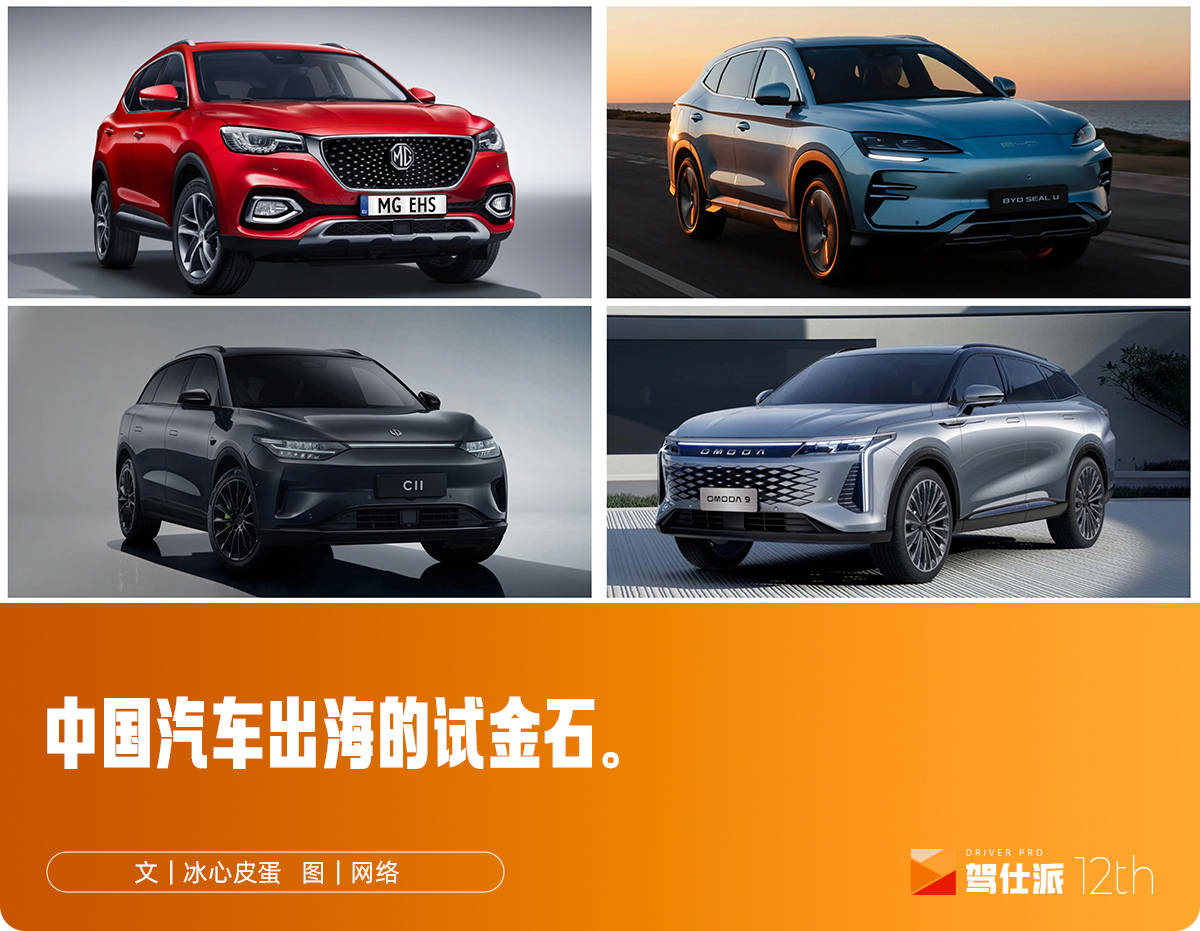
Core Insights - Chinese automotive brands are experiencing growth in Europe, with a total market share of 5.53% in 2025, despite facing high tariffs and trade barriers [8][10][32] - The overall European car market is projected to reach 13.27 million units in 2025, showing a year-on-year growth of 2.4% [3] - Major Chinese brands like MG and BYD are leading the sales, with MG achieving 307,282 units sold, representing 2.32% of the market share [9][10] European Market Overview - The European market includes 32 countries, with a high economic and industrial standard [3] - In 2025, the total new car sales in Europe are expected to reach 13.27 million units, marking a 2.4% increase from the previous year [3] Top Brands in Europe - Volkswagen leads the market with 1.44 million units sold, capturing 10.88% of the market share, followed by Toyota and Skoda [4][5] - Among the top 10 brands, 8 are European, with only Toyota and Hyundai being non-European brands [4] Chinese Brands Performance - Chinese brands collectively sold 734,492 units in Europe in 2025, achieving a market share of 5.53% [10] - MG is the top-selling Chinese brand in Europe, with a sales increase of 26.4% [9][10] - BYD's sales surged by 276.2%, reaching 186,568 units [9][10] Tariff Impact - The EU has imposed temporary anti-subsidy tariffs on Chinese cars, ranging from 17.4% to 37.6%, which significantly affects market entry [7] - The total tax rate for some brands can reach as high as 45.3% when combined with the basic tariff [7] Sales by Country - In Germany, Chinese brands sold 63,603 units, with MG and BYD leading the sales [21][22] - In France, total sales for Chinese brands reached 55,700 units, with MG again being the top performer [26][27] - The UK market saw a total of 196,762 units sold by Chinese brands, with MG achieving a market share of 4.2% [30][31] Model Performance - The best-selling Chinese model in Europe is the MG ZS, with sales of 124,512 units [17] - BYD Seal U also performed well, selling 79,407 units, marking a significant increase [18] Future Outlook - The European market presents both challenges and opportunities for Chinese automotive brands, with potential for rapid growth if trade barriers are reduced [32]

SPIR:2026全球锂电池行业发展白皮书发布!

起点锂电· 2026-02-27 06:25
Core Insights - The article discusses the growth and trends in the global lithium battery industry, highlighting significant increases in battery shipments and the evolving demand structure across various applications [2][3][9]. Group 1: Global Lithium Battery Market Overview - In 2025, global lithium battery shipments reached 2042.7 GWh, marking a year-on-year growth of 46.8% [2]. - The demand structure for lithium batteries in 2025 was dominated by power batteries at 62.2%, followed by energy storage batteries, 3C batteries, and small power batteries [2]. - By 2030, the total demand for lithium batteries is projected to reach 5333.6 GWh, with a decrease in the proportion of power batteries and an increase in energy storage batteries [2]. Group 2: Electric Vehicle (EV) Battery Segment - In 2025, global sales of new energy vehicles (NEVs) reached 24.04 million units, a year-on-year increase of 31.8%, driving EV power battery shipments to 1271 GWh, up 39.9% [2][9]. - The growth in NEV sales is primarily attributed to the rapid increase in plug-in hybrid electric vehicle (PHEV) models [2]. Group 3: Energy Storage Battery Segment - Energy storage batteries have become essential for global energy transition, with 2025 shipments reaching 637 GWh, a significant year-on-year increase of 78.9% [3][13]. - The growth is driven by policy changes and economic factors, allowing energy storage to participate in electricity markets, creating diverse revenue models [3]. Group 4: 3C Battery Segment - The 3C battery segment saw shipments of 70.8 GWh in 2025, with a modest year-on-year growth of 5.8% [4][17]. - The demand is primarily driven by device replacements and hardware upgrades, with emerging markets in AI PCs and AR/VR devices [4]. Group 5: Battery Material Trends - In 2025, the global market for lithium battery cathode materials is expected to reach 479.8 million tons, with lithium iron phosphate (LFP) accounting for 78% of shipments [20]. - The demand for anode materials is projected to reach 272.3 million tons, with artificial graphite dominating the market [25][26]. Group 6: Future Trends and Projections - The lithium battery industry is expected to focus on energy storage, international expansion, and commercial vehicles as core growth engines [45]. - Technological advancements will lead to diverse battery chemistries, including sodium-ion batteries and silicon-based anodes, while the industry will see increased concentration and competition based on technology and compliance [45].

比亚迪:南宁弗迪电池项目规划调整 全球最大单体电池工厂加速扩产
Zhong Guo Qi Che Bao Wang· 2026-02-27 05:55
Group 1 - The core viewpoint of the news is that BYD is accelerating the construction and expansion of its battery production capacity, particularly through the Guangxi Fudi Battery project, which has a total investment of 14 billion yuan and aims for an annual production capacity of 45GWh [1] - The project is part of BYD's strategic focus in the battery sector, showcasing significant investment and rapid construction, with the Nanning base becoming the largest battery production facility globally [1] - BYD's total battery production capacity is expected to increase to 810GWh in the next 1-2 years to meet the growing demand in the new energy vehicle and energy storage markets [1] Group 2 - Despite the lithium battery industry facing a transition from supply shortages to overcapacity and declining prices, BYD is choosing to expand, indicating its confidence in its technology and cost control capabilities [2] - BYD's battery installation volume is projected to reach 194.8GWh by 2025, a year-on-year increase of 27.7%, maintaining its position as the second-largest globally [2] - The company is also advancing in next-generation battery technologies, including solid-state and sodium batteries, which are expected to support its capacity expansion and enhance its competitive edge in the industry [3] Group 3 - The adjustment of the Nanning Fudi Battery project reflects BYD's strategic shift from quantity accumulation to quality enhancement in the battery sector [3] - BYD's significant investment in capacity and early positioning in next-generation battery technologies are creating formidable competitive barriers [3] - The Nanning "super battery factory" symbolizes BYD's ability to transform technological innovation into industrial advantages, crucial for long-term success in a rationalizing market [3]
王力宏现身比亚迪高层饭局,外界猜测或有代言合作
Xin Lang Cai Jing· 2026-02-27 05:09
Group 1 - Wang Leehom recently attended a high-level dinner with BYD executives, including Vice President Li Ke and General Manager of Brand and Public Relations Li Yunfei [1][3] - On February 25, Wang Leehom visited BYD's headquarters in Shenzhen, where he toured the core technology exhibition and experienced the Yangwang U9 and Fangcheng Leopard models [1][3] - There is speculation that the recent interactions between Wang Leehom and BYD may indicate a potential endorsement collaboration, although BYD has not officially announced any related news [4]

2026年1月海外新能源汽车销量排行
数说新能源· 2026-02-27 03:02
Core Insights - The article discusses the sales performance of electric and hybrid vehicles in overseas markets for January 2026, highlighting key brands and their respective sales figures [4][5]. Group 1: Electric Vehicle Sales - Tesla leads the overseas pure electric vehicle sales with 4.0 million units sold in January 2026 [5]. - BYD follows Tesla with 2.0 million units, while Volkswagen ranks third with 1.6 million units sold [5]. - Other notable brands include Renault (1.4 million), BMW (1.3 million), and KIA (1.2 million) [5]. Group 2: Hybrid Vehicle Sales - BYD also dominates the hybrid vehicle market with 2.17 million units sold in January 2026 [5]. - Volkswagen and BMW follow with sales of 1.13 million and 1.04 million units, respectively [5]. - Mercedes and Audi both sold 0.95 million units, showcasing strong competition in the hybrid segment [5]. Group 3: Regional Sales Performance - Germany leads the sales of plug-in hybrid vehicles with 2.2 million units, followed closely by the UK with 2.0 million units [4]. - Italy and Israel each recorded 1.0 million units, while Spain and the Netherlands had sales of 0.9 million and 0.8 million units, respectively [4]. - Other countries like Brazil, Ireland, and Australia also contributed to the overall sales figures, indicating a growing market for hybrid vehicles in these regions [4].

比亚迪日本研究(上)急于开店
日经中文网· 2026-02-27 02:53
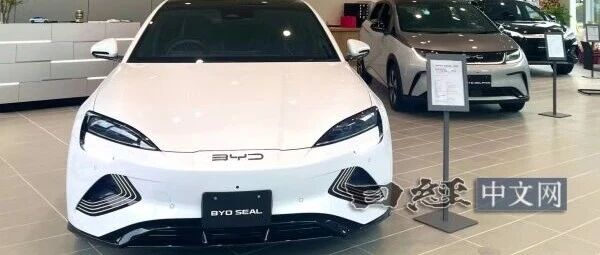
比亚迪汽车港北新城店店内 比亚迪于2023年涉足日本乘用车市场。消费者对中国品牌眼光苛刻。为了提高知名度并得到消费者的信 赖,增开专卖店从一开始就是重要课题。 比亚迪正在日本加快开店速度。比亚迪2025年在日本EV销量增长7成,达到3731辆。按厂商排名位居第 五,但销量增长未达预期。主要原因在于消费者对中国汽车的疑虑仍未消除。比亚迪在日本正迎来关键 时刻…… 中国纯电动汽车(EV)大型企业比亚迪(BYD)正在日本全国加快开店速度。比亚迪从2026年开始在 日本的地方城市开设小型门店,以较低的成本来扩大门店网络。比亚迪将在2026年夏季投放作为日本独 有规格的轻型EV,在EV领域全面展开价格竞争。目前比亚迪的日本销量并未像预期的那样增长,危机 感十分强烈。能否通过扩大门店网络来扭转局面,比亚迪在日本正迎来关键时刻。 "为了销售轻型EV,将覆盖地方的小规模商圈",比亚迪日本法人的社长东福寺厚树如此强调。 仅展示1至2辆汽车 比亚迪在日本一直以主要城市及县厅所在地为中心开设销售店。为了加快开店速度,比亚迪决定开设汽 车销售行业中较为罕见的小型门店。 这些门店将开设在人口低于50万人的日本核心地方城市。仅展示1至2 ...