LI AUTO-W(02015)

Search documents
神车停产,又一汽车巨头扛不住了!
阿尔法工场研究院· 2025-09-04 00:06
Core Viewpoint - The discontinuation of the Nissan GT-R marks the end of an era for traditional high-performance gasoline vehicles, highlighting the shift towards electric vehicles and the challenges faced by Japanese automakers in the current market landscape [5][10][18]. Group 1: Nissan GT-R and Its Legacy - The last Nissan GT-R rolled off the production line after 18 years, symbolizing the end of a legendary model that achieved significant acclaim in motorsports and popular culture [5][14]. - The GT-R, known as the "East Japan War God," had a production volume of nearly 48,000 units, showcasing its popularity and performance over its lifespan [18]. - The discontinuation of the GT-R reflects broader trends in the automotive industry, where traditional gasoline vehicles are being overshadowed by the rise of electric vehicles [7][10][18]. Group 2: Chinese Automotive Market Growth - In contrast to the decline of traditional Japanese automakers, China's new energy vehicle sales grew by 35.5% year-on-year, reaching 12.866 million units, maintaining its position as the world's largest market for ten consecutive years [9]. - From January to July 2025, sales of Chinese brand passenger cars reached 10.873 million units, a 24.4% increase, with a market share of 68.6% [9]. - The rapid growth of domestic brands in China indicates a significant shift in consumer preferences and market dynamics, as traditional Japanese brands struggle to maintain their foothold [22][24]. Group 3: Challenges for Japanese Automakers - Japanese automakers, including Nissan, are facing severe financial difficulties, with Nissan reporting a net loss of 115.76 billion yen and a 10% decline in global sales [21][23]. - The overall profitability of Japanese car manufacturers is declining, with projections indicating a loss of approximately 2.7 trillion yen for the fiscal year 2025 [21]. - The shift towards electric vehicles and the inability to adapt quickly enough to market changes have led to a "mid-life crisis" for Japanese brands, as they lose market share to more agile domestic competitors [24][22]. Group 4: The Future of the Automotive Industry - The automotive industry is undergoing a significant transformation, with a focus on technology and ecosystem development as key strategies for survival [26]. - The rise of new energy vehicles is prompting traditional manufacturers to reconsider their strategies, as evidenced by the recent shifts in direction from companies like Volvo, Mercedes, and Audi [27][28]. - The competition in the electric vehicle sector is intensifying, with new entrants focusing on quality and profitability rather than merely scaling production [34][33].





关税政策悬了!特朗普放狠话:输官司就废协议
Feng Huang Wang Cai Jing· 2025-09-03 22:49
Group 1: Market Performance - The U.S. stock market showed mixed results with the Nasdaq rising by 1.02% and the S&P 500 increasing by 0.51%, while the Dow Jones fell by 0.05% [1] - Major tech stocks had varied performances, with Google up over 9%, Apple up over 3%, and Tesla up over 1%, while Nvidia, Intel, and AMD experienced slight declines [1] - The Nasdaq Golden Dragon China Index decreased by 0.19%, with mixed performances among popular Chinese stocks [1] Group 2: Trade Policy Uncertainty - President Trump indicated that if U.S. courts rule his global tariff policy illegal, trade agreements with the EU, Japan, and South Korea may be nullified [2] - Trump emphasized that his tariff policy has provided leverage in negotiations with trade partners, which he believes is crucial for U.S. economic prosperity [2][3] - The legal uncertainty surrounding the tariff agenda could impact trillions of dollars in global trade, raising questions about Trump's authority to unilaterally set tariffs [3] Group 3: Economic Conditions - The Federal Reserve's latest Beige Book report indicated that economic activity across most regions of the U.S. has remained stable with little change [4] - The report highlighted that consumer spending has stagnated or declined due to wages not keeping pace with rising prices, with most regions reporting price increases [5] - The transmission of tariffs into the economy has led businesses to raise prices to offset rising costs, while employment levels showed little net change across most districts [6]





“蔚小理零”二季报出炉 理想汽车核心财务指标持续领先
Mei Ri Jing Ji Xin Wen· 2025-09-03 19:34
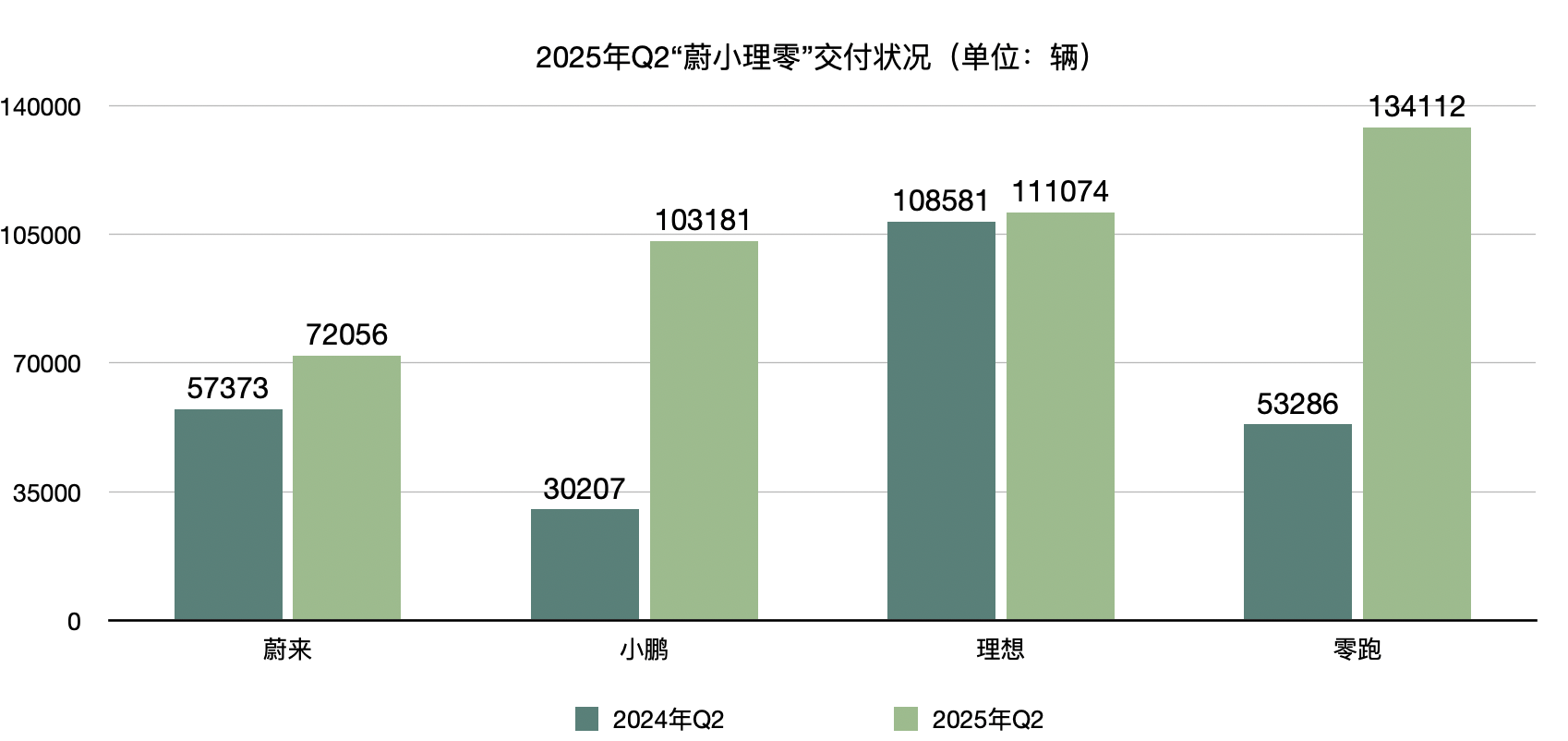
Core Viewpoint - The financial performance of the new energy vehicle manufacturers, particularly Li Auto, NIO, Xpeng, and Leap Motor, shows a competitive landscape with Li Auto leading in revenue and profitability, while Leap Motor achieved the highest delivery volume in Q2 2023 [1][2][4]. Group 1: Delivery and Revenue Performance - In Q2 2023, the delivery volumes for the four companies were 72,056 for NIO, 103,181 for Xpeng, 111,074 for Li Auto, and 134,112 for Leap Motor, with Leap Motor being the delivery champion [2]. - Revenue figures for Q2 2023 were as follows: NIO at 19.01 billion, Xpeng at 18.27 billion, Li Auto at 30.246 billion, and Leap Motor at 14.23 billion, indicating Li Auto's significant lead in revenue [2]. - Despite Leap Motor's delivery lead, its lower vehicle prices resulted in the lowest revenue among the four companies [2]. Group 2: Profitability and Margins - Li Auto maintained a gross margin above 20%, while the gross margins for NIO, Xpeng, and Leap Motor were 10.0%, 17.3%, and 13.6% respectively [3]. - Li Auto's net profit for Q2 2023 reached 1.1 billion, a 69.6% increase from the previous quarter, while Leap Motor also achieved profitability with a net profit of 160 million [4]. - NIO and Xpeng reported losses of 4.99 billion and 480 million respectively, although both companies narrowed their losses compared to previous quarters [4]. Group 3: R&D Investments - NIO's R&D expenses for Q2 2023 were 3 billion, while Xpeng's were 2.21 billion, a 50.4% year-on-year increase [5]. - Li Auto's R&D expenses were 2.81 billion, showing a quarter-on-quarter increase, while Leap Motor's R&D expenses were 1.09 billion, a 55.5% increase year-on-year [5]. Group 4: Future Guidance and Market Outlook - Li Auto provided a conservative Q3 guidance with expected deliveries of 90,000 to 95,000 units, a year-on-year decrease of 41.1% to 37.8% [7]. - In contrast, NIO projected deliveries of 87,000 to 91,000 units for Q3, while Xpeng expected a year-on-year delivery growth of 142.8% to 153.6% [8]. - Leap Motor raised its annual sales target, indicating confidence in its upcoming product launches [10]. Group 5: Product Launches and Competitive Landscape - Xpeng plans to launch several new models, including the new P7 and the X9, which is positioned in the 400,000 yuan price range [9]. - NIO is set to introduce three new large SUV models next year, while Leap Motor is also preparing to unveil new models, intensifying competition among the four manufacturers [11]. - The competitive dynamics are shifting as all four companies prepare to launch new products, potentially leading to increased market rivalry [11].


美股异动 | 新能源汽车中概股普跌 理想汽车(LI.US)跌逾3%
智通财经网· 2025-09-03 14:13
Core Viewpoint - The news highlights a significant decline in the performance of Chinese electric vehicle (EV) stocks, particularly for Li Auto and Xpeng Motors, with both companies experiencing a drop of over 3% in their stock prices. Li Auto's August delivery figures show a decrease, marking the lowest monthly delivery volume of the year, excluding February, indicating a concerning trend in sales performance [1]. Company Performance - Li Auto delivered 28,529 vehicles in August, representing a month-over-month decline of 7.2% [1]. - This marks the third consecutive month of declining delivery volumes for Li Auto [1]. - The launch of Li Auto's first pure electric SUV, the Li i8, on August 20 did not reverse the overall downward trend in sales [1]. Industry Trends - The overall performance of Chinese EV stocks is declining, reflecting broader challenges within the industry [1].
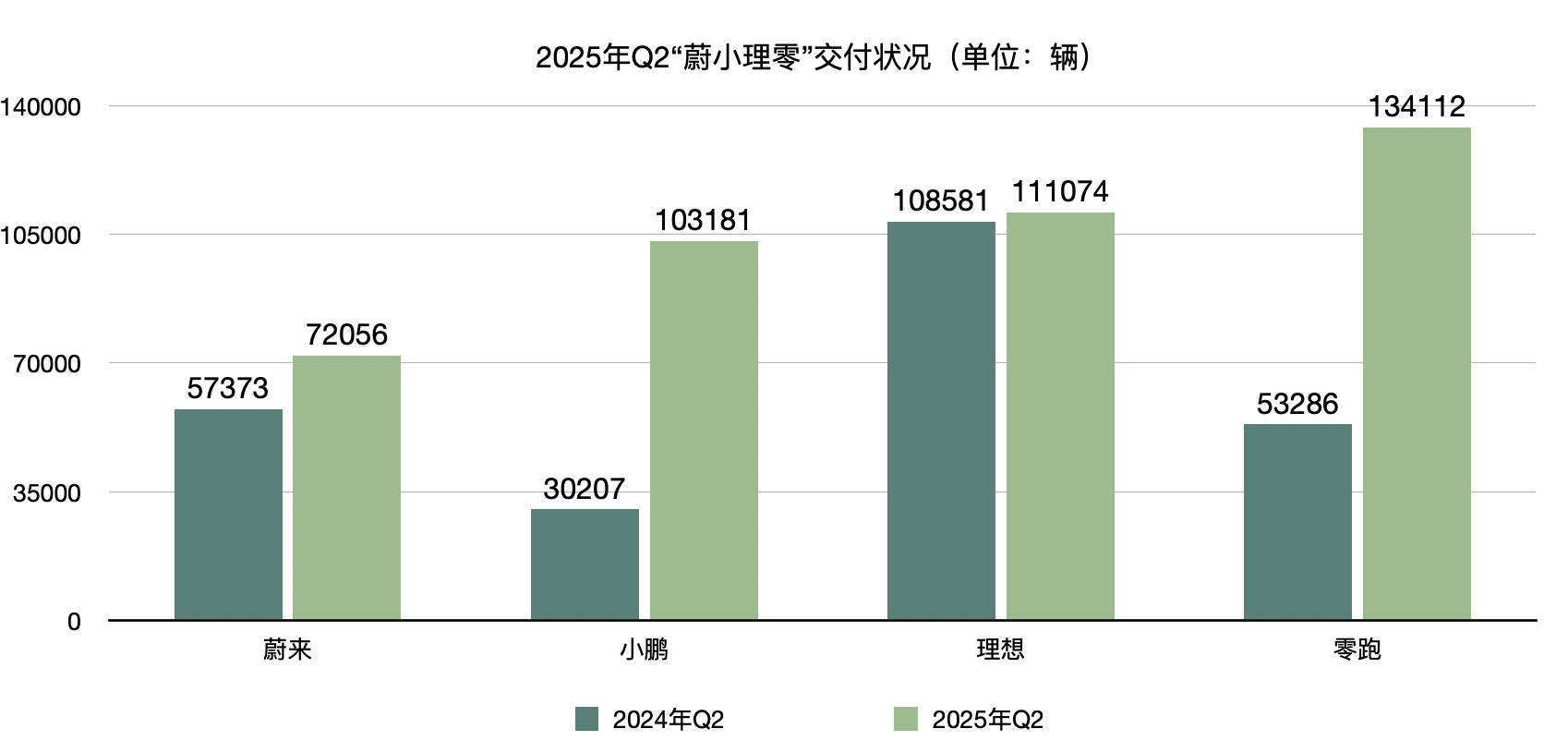
“蔚小理零”二季报出炉:理想营收“遥遥领先”,零跑实现盈利,蔚来、小鹏期待四季度扭亏
Mei Ri Jing Ji Xin Wen· 2025-09-03 10:38
Core Viewpoint - The financial performance of the new energy vehicle manufacturers, particularly Li Auto, NIO, Xpeng Motors, and Leap Motor, shows a competitive landscape with Li Auto leading in revenue and profitability despite a decline in delivery volume compared to Leap Motor, which achieved the highest delivery numbers in Q2 2023 [1][2][5]. Group 1: Financial Performance - In Q2 2023, the delivery volumes for the four companies were 72,056 for NIO, 103,181 for Xpeng Motors, 111,074 for Li Auto, and 134,112 for Leap Motor, with Leap Motor being the delivery champion [2]. - Revenue figures for Q2 2023 were reported as follows: NIO at 19.01 billion, Xpeng Motors at 18.27 billion, Li Auto at 30.246 billion, and Leap Motor at 14.23 billion, indicating Li Auto's significant lead in revenue [5][8]. - Li Auto maintained a gross margin above 20%, while the gross margins for the four companies were 10.0% for NIO, 17.3% for Xpeng Motors, 20.1% for Li Auto, and 13.6% for Leap Motor [8][11]. - Li Auto's net profit for Q2 reached 1.1 billion, a 69.6% increase from the previous quarter, while Leap Motor also achieved profitability with a net profit of 160 million [11]. Group 2: R&D Investments - NIO's R&D expenses for Q2 were 3 billion, Xpeng Motors at 2.21 billion (up 50.4% year-on-year), Li Auto at 2.81 billion, and Leap Motor at 1.09 billion (up 55.5% year-on-year) [12]. Group 3: Future Outlook - Li Auto projected Q3 delivery volumes between 90,000 and 95,000, a year-on-year decrease of 41.1% to 37.8%, with expected revenue between 24.8 billion and 26.2 billion, reflecting a decline of 42.1% to 38.8% [13]. - NIO expects Q3 deliveries of 87,000 to 91,000, with revenue projections of 21.81 billion to 22.88 billion, both setting historical highs [13]. - Xpeng Motors anticipates a year-on-year delivery increase of 142.8% to 153.6% and revenue growth of 94.0% to 107.9% [13]. - Leap Motor has raised its annual sales target, supported by the launch of multiple new models in the second half of the year [15].
财报横评丨“蔚小理零”二季报出炉:理想营收“遥遥领先”,零跑实现盈利,蔚来、小鹏期待四季度扭亏
Mei Ri Jing Ji Xin Wen· 2025-09-03 10:36
Core Viewpoint - The financial performance of the new energy vehicle manufacturers, particularly Li Auto, NIO, Xpeng, and Leap Motor, shows a competitive landscape with Li Auto leading in revenue and profitability despite a decline in delivery volume compared to Leap Motor, which achieved the highest delivery numbers in Q2 2023 [1][2][5]. Group 1: Financial Performance - In Q2 2023, the delivery volumes for the four companies were 72,056 for NIO, 103,181 for Xpeng, 111,074 for Li Auto, and 134,112 for Leap Motor, with Leap Motor being the delivery champion [2]. - Revenue figures for Q2 2023 were reported as follows: NIO at 19.01 billion, Xpeng at 18.27 billion, Li Auto at 30.246 billion, and Leap Motor at 14.23 billion, indicating Li Auto's significant lead in revenue [5][7]. - Li Auto maintained a gross margin above 20%, while the gross margins for the other companies were 10.0% for NIO, 17.3% for Xpeng, and 13.6% for Leap Motor [7][11]. Group 2: Profitability - Li Auto achieved a net profit of 1.1 billion in Q2 2023, marking a 69.6% increase from the previous quarter, while Leap Motor also reported a profit of 160 million [11]. - NIO and Xpeng continued to operate at a loss, with losses of 4.99 billion and 480 million respectively, although both companies reported a reduction in losses compared to previous quarters [11][12]. Group 3: R&D Investments - NIO's R&D expenses for Q2 2023 were 3 billion, while Xpeng's were 2.21 billion, reflecting a year-on-year increase of 50.4% [12]. - Li Auto's R&D expenses were 2.81 billion, showing a decrease compared to the previous year, while Leap Motor's R&D expenses were 1.09 billion, up 55.5% year-on-year [12]. Group 4: Future Outlook - Li Auto provided a Q3 delivery guidance of 90,000 to 95,000 units, indicating a year-on-year decline of 41.1% to 37.8%, along with expected revenue of 24.8 billion to 26.2 billion, a decrease of 42.1% to 38.8% [13]. - NIO projected Q3 deliveries of 87,000 to 91,000 units, with revenue expectations of 21.81 billion to 22.88 billion, both setting historical highs [13]. - Xpeng anticipated a year-on-year delivery growth of 142.8% to 153.6% and a revenue increase of 94.0% to 107.9% for Q3 [13].
8月车市观察:竞争格局变化不居,价格战转向产品战
Guan Cha Zhe Wang· 2025-09-03 09:04
Core Insights - The article highlights the evolving strategies of Chinese automotive companies focusing on product value and international expansion to create new growth opportunities [1][2]. Group 1: New Energy Vehicle Sales Performance - NIO achieved a record high delivery of over 31,000 vehicles in August, marking a year-on-year increase of 55.2% and a month-on-month increase of 49% [5]. - Li Auto experienced its first monthly decline of the year, with deliveries dropping below 30,000 units, a decrease of over 20% [3][6]. - Leap Motor and Xpeng Motors maintained strong growth, with Leap's deliveries exceeding 50,000 units and Xpeng's surpassing 30,000 units, marking significant year-on-year increases of 88.3% and 169% respectively [6][8]. Group 2: Traditional Automakers' Performance - BYD's August sales reached 373,626 units, showing a slight year-on-year increase of 0.15% but a domestic sales decline of 14.3% [8]. - Geely's total vehicle sales in August were 250,167 units, with a remarkable 95% year-on-year increase in new energy vehicle sales, reaching a historical high [8]. - Other traditional automakers like SAIC, Great Wall, and Chery also reported sales increases, indicating a general upward trend in the market [8]. Group 3: Market Trends and Competitive Landscape - The article notes a shift in market competition from price wars to a focus on product value, with consumers increasingly seeking high-quality, affordable electric vehicles [9][10]. - Six-seat SUVs have become a focal point for automakers, catering to family needs and comfort, with Geely's Galaxy M9 targeting this segment [9][10]. - The article emphasizes that no single automaker can dominate the market consistently, as competition remains dynamic and fluid [4]. Group 4: International Expansion - China's automotive exports reached 3.083 million units in the first half of the year, with a significant increase in new energy vehicle exports, which totaled 1.06 million units, up 75.2% [11]. - BYD's overseas sales of new energy vehicles in August reached 80,800 units, a year-on-year increase of 146.4%, highlighting the importance of international markets for growth [12]. - Other companies like Chery and Great Wall also reported substantial export growth, indicating a collective trend among Chinese automakers to leverage international markets to offset domestic competition [12].
德赛西威:已获得理想汽车新项目订单
Zheng Quan Ri Bao· 2025-09-03 08:40
Core Viewpoint - Desay SV's fifth-generation intelligent cockpit aims to redefine performance benchmarks in the AI era, enhancing travel experiences and accelerating automotive intelligence [2] Group 1: Company Developments - Desay SV has received new project orders from Ideal Automotive, indicating strong market demand for its products [2] - The company has garnered significant attention from several top global OEMs, highlighting its competitive position in the industry [2] Group 2: Industry Trends - The shift towards AI-driven solutions in automotive technology is expected to create new dimensions in travel experiences [2] - The intelligent cockpit is positioned as a key driver for the acceleration of automotive intelligence in the AI era [2]
零跑5.71万再破纪录,乐道助力蔚来反超理想,8月新势力江湖再洗牌
Guo Ji Jin Rong Bao· 2025-09-03 07:56
Core Insights - The electric vehicle (EV) market continues to show growth, with leading brands like Leap Motor and NIO achieving significant delivery milestones in August [2][6][9] Group 1: Company Performance - Leap Motor achieved a record monthly delivery of 57,100 units in August, marking an 88% year-on-year increase and maintaining its position as the top new energy vehicle brand [3][6] - NIO delivered 31,300 vehicles in August, a 55.2% increase year-on-year, with the L90 model contributing significantly to this growth [9][10] - Ideal Auto's deliveries fell to 28,500 units, a decline of 40.72% year-on-year, indicating challenges in maintaining market share [9][10] Group 2: Cumulative Sales and Market Trends - From January to August 2023, NIO's cumulative deliveries reached 166,500 units, while Ideal Auto's total was 263,200 units, showing a contrasting market trajectory [10] - Zeekr delivered 44,800 units in August, an 11% increase year-on-year, but needs to accelerate delivery rates to meet annual targets [12] - Xiaopeng Motors saw a significant increase in deliveries, reaching 37,700 units in August, a 169% year-on-year growth, driven by the launch of the new P7 model [14] Group 3: Strategic Developments - Leap Motor's management has set an ambitious sales target of 580,000 to 650,000 units for 2025, reflecting confidence in their strategic execution [6] - Xiaomi Motors is expanding its market presence with over 370 stores across 105 cities and plans to initiate exports to Europe by 2027 [14]
理想汽车李想放话:目标年底高端纯电赛道“保五争三”,销量稳定在18000-20000辆/月【附新能源汽车行业市场分析】
Qian Zhan Wang· 2025-09-03 07:43
Core Viewpoint - Li Auto aims to enter the pure electric SUV market in 2025, targeting monthly sales of 18,000 to 20,000 units across its electric models by the end of the year [2][6]. Group 1: Company Goals and Targets - Li Auto's CEO, Li Xiang, expressed confidence in achieving the goal of "maintaining fifth and striving for third" in the high-end pure electric vehicle segment by the end of 2025 [2]. - The specific targets for Li Auto's models include stabilizing sales at 6,000 units per month for the Li i8 and 9,000 to 10,000 units per month for the Li i6 [2]. Group 2: Market Context - The Chinese new energy vehicle market continues to grow rapidly, with a cumulative production of 11.26 million units from January to November 2024, representing a year-on-year increase of 35.6% [3]. - In the same period, the production of pure electric vehicles reached 6.8 million units, accounting for 60.4% of the total new energy vehicle production [5]. Group 3: Competitive Landscape - The high-end market (vehicles priced above 300,000 yuan) is notably concentrated, with Tesla's Model Y leading with a market share of 41.3%, followed by NIO's ES6 at 18.7% and Zeekr 001 at 15.2% [5]. - To achieve its sales targets, Li Auto must navigate and overcome the existing competitive landscape [6]. Group 4: Industry Trends - The advancement of technology and market maturity indicates that pure electric technology will become the mainstream direction for future automotive development [9].