
LI AUTO-W(02015)

Search documents
蔚小理盘前走弱 1月交付环比均降超30%
Xin Lang Cai Jing· 2026-02-02 14:11
Core Viewpoint - The three major electric vehicle manufacturers, NIO, Xpeng, and Li Auto, experienced a decline in January delivery numbers compared to the previous month, indicating potential challenges in the market [1] Group 1: Company Performance - Li Auto delivered 27,668 vehicles in January, representing a year-on-year increase of 7.55% but a month-on-month decrease of 37.47% [1] - NIO delivered 27,182 vehicles in January, showing a significant year-on-year increase of 96.08%, yet a month-on-month decline of 43.53% [1] - Xpeng delivered 20,011 vehicles in January, which reflects a year-on-year decrease of 34.07% and a month-on-month decline of 46.65% [1]


开年就迎“大逆转”:小米反超零跑,蔚来快追平理想,新造车1月环比暴跌
3 6 Ke· 2026-02-02 13:02
Core Insights - The automotive industry faced a significant downturn at the beginning of 2026, with many companies reporting disappointing sales figures compared to December 2025, despite some year-on-year growth due to low bases from the previous year [1][4][6] - The market is experiencing a reshuffling, with new entrants like AITO and Xiaomi gaining traction while established players like Li Auto and Xpeng are struggling [3][12][20] Group 1: Market Performance - January 2026 saw a 28% year-on-year decline in retail sales of passenger vehicles, with a 37% drop compared to December 2025 [6] - The new energy vehicle (NEV) market specifically experienced a 16% year-on-year decline and a 52% month-on-month decline [6] - AITO led the new energy vehicle segment with a delivery of 40,016 units, marking a significant year-on-year increase of 83% [13] Group 2: Company-Specific Performance - Xiaomi and AITO both reported over 39,000 units delivered in January, while Li Auto and Xpeng fell below the 30,000 mark [3][15] - Li Auto's deliveries were 27,668 units, showing a 37% month-on-month decline and an 8% year-on-year decline due to battery supply issues [20][22] - NIO delivered 27,182 units, a 96.1% year-on-year increase but a 43% month-on-month decline, with the new ES8 model being a key contributor [22][23] Group 3: Competitive Strategies - Companies are responding to market pressures by adjusting pricing strategies, with BMW reducing prices on 31 models and some brands offering zero-interest loans [6][7] - AITO and Xiaomi are launching new financial purchase plans to stimulate sales, including low-interest financing options [11][23] - The competitive landscape is intensifying, with companies like Geely and BYD also adjusting their strategies to maintain market share [26][28] Group 4: Traditional Automakers - Geely emerged as the top-selling automaker in January 2026 with 270,000 units sold, surpassing BYD's 210,000 units [26][28] - BYD's sales dropped by 30.11% year-on-year, with a significant 50.04% decline from December 2025 [28][30] - Chery and Great Wall Motors also reported declines, with Chery's sales at 200,269 units and Great Wall's at 90,312 units, reflecting broader market challenges [33][35]



车企低息战火力全开
Zhong Guo Qi Che Bao Wang· 2026-02-02 12:29
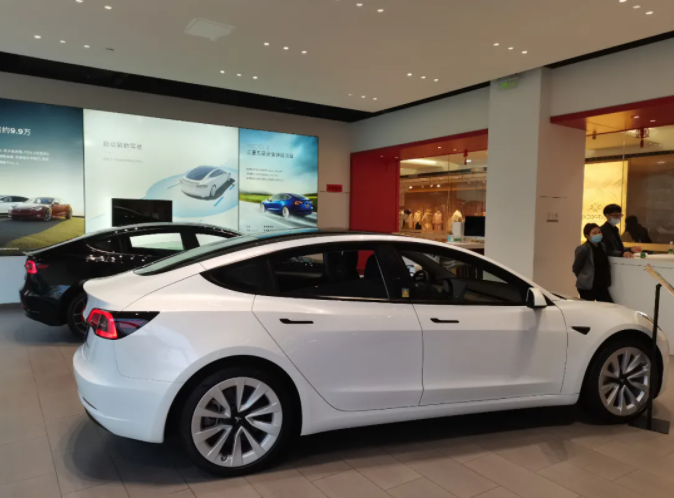
Group 1 - The core strategy of automakers has shifted to offering 7-year ultra-low interest loans, marking a new phase in market competition [2][4] - Tesla initiated this trend with a unique 7-year loan plan, offering monthly payments as low as 1,800 yuan for the Model 3 and 2,200 yuan for the Model Y, significantly easing the financial burden on families [3][4] - Other automakers like Xiaomi, Li Auto, and Xpeng quickly followed suit, introducing similar financing options, which has intensified the competition in the market [4][5] Group 2 - Traditional brands are also participating in this financial strategy, with companies like Dongfeng and Geely launching their own 7-year low-interest plans to attract consumers [5][8] - The aggressive reduction of monthly payments aims to stimulate sales, although the effectiveness of this approach remains uncertain [5][8] - The financial strategies employed by leading automakers leverage their strong cash reserves and profitability, allowing them to offer such low-interest loans [7][8] Group 3 - The competitive landscape is shifting, with larger companies able to absorb the costs of low-interest loans, while smaller firms may struggle to keep up without incurring losses [8][9] - The financial tactics being used are seen as a response to market pressures and technological advancements, with a potential shift from price competition to a focus on technology [9][10] - The long-term implications of these financing strategies could lead to market saturation and affect the second-hand car market, as consumers perceive new cars as more affordable [8][9]

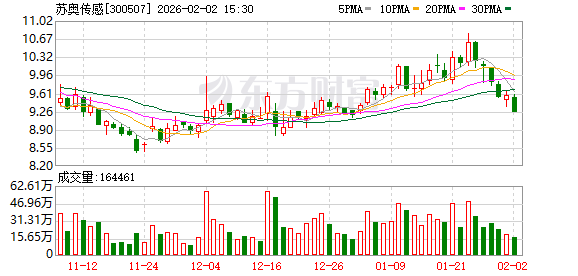
苏奥传感:公司目前与比亚迪、蔚来、小鹏、理想等多家新能源汽车企业建立了长期战略合作伙伴关系
Zheng Quan Ri Bao· 2026-02-02 12:16
Group 1 - The company, Suoao Sensor, has established long-term strategic partnerships with several major electric vehicle manufacturers, including BYD, NIO, Xpeng, and Li Auto [2] - The company is also engaged in project collaborations with the first-tier supply chain market [2]


汽车股股价悉数受挫 小鹏汽车-W(09868)跌9.21% 机构指1月新能源车销量承压
Xin Lang Cai Jing· 2026-02-02 11:01
Group 1 - The automotive stocks have faced significant declines, with Xpeng Motors down 9.21%, NIO down 6.47%, and BYD down 4.86% as of the report date [1] - A report from Kaiyuan Securities indicates that the domestic passenger car market is expected to remain flat year-on-year but will see a month-on-month decline in January 2026, with new energy vehicle sales under pressure and penetration rate dropping to approximately 44.4% [1] - The market is experiencing structural differentiation, with brands like AITO and Xiaomi achieving high growth through popular models, while pure electric brands like BYD are facing sales pressure [1] Group 2 - January is projected to be the last complete sales month before the Spring Festival, with retail sales expected to reach 1.8 million units, showing a year-on-year stability but a significant month-on-month decline [2] - The first week of January saw weak market performance with an average daily retail of 30,000 units, while the second week showed slight recovery with 50,000 units [2] - By the fourth week of January, retail sales are expected to peak at 120,000 units per day, driven by the implementation of subsidy policies and increased pre-holiday purchasing demand [2]
2026车圈反思开局:我们犯了大错误
汽车商业评论· 2026-02-02 04:03
Group 1 - The automotive industry is reflecting on its challenges and opportunities as leaders like Li Shufu of Geely emphasize the importance of core values and technological innovation in navigating critical moments [9][10] - Oliver Blume, former CEO of Porsche, admits to significant strategic errors, particularly regarding the decision to fully electrify the Macan model, which has led to a product gap and financial losses for shareholders [14][15] - Xiaomi's CEO Lei Jun acknowledges the industry's issues with marketing practices and emphasizes the need for transparency and accountability in communications with consumers [17][19] Group 2 - NIO's founder Li Bin celebrates the production of the company's one millionth electric vehicle and outlines ambitious plans for expanding battery swap stations, while maintaining a focus on long-term growth and profitability [22][24] - Elon Musk expresses confidence in China's rapid advancements in AI and energy infrastructure, predicting that China will surpass the U.S. in power generation by three times by 2026 [26][27] - Zhu Hao, founder of Zhi Mi Technology, boldly claims that his company will create the world's first trillion-dollar ecosystem, aiming for a significant increase in market valuation over the next two decades [30][31] Group 3 - Renault's CEO François Provost advocates for a shift from volume-driven strategies to value-driven approaches in the Chinese automotive market, criticizing the detrimental effects of price wars [41] - Li Xiang of Li Auto announces a strategic pivot towards humanoid robotics and AI, emphasizing the need for innovation in product development and collaboration within the industry [44][46] - Huawei's executive Yu Chengdong expresses dissatisfaction with the current capabilities of the HarmonyOS cockpit, calling for improvements to meet user expectations [36][37]


理想汽车1月交付新车2.77万辆,累计交付突破156万辆
Ju Chao Zi Xun· 2026-02-02 03:04
Core Insights - In January 2026, Li Auto delivered 27,668 new vehicles, bringing the total cumulative deliveries to 1,567,883 vehicles as of January 31, 2026 [2] Group 1: Product and Technology Updates - The company released the OTA 8.2 system update in January, introducing 40 new features and 25 experience optimizations, enhancing driver assistance, smart space, and electric driving experiences [2] - The upgraded VLA driver model significantly improved its understanding of the physical world, making it better at handling complex urban driving conditions [2] - New features such as the pet mode and AI art frame have been well received by users, with many creating and sharing AI pet screensavers [2] Group 2: Sales and Service Network - As of January 31, 2026, Li Auto has established 547 retail centers across 159 cities, along with 547 after-sales service and authorized service centers covering 221 cities [2] - The company has also made progress in its charging network, with 3,966 Li Auto supercharging stations and 21,945 charging piles now in operation nationwide [2]

1月车企销量排行
数说新能源· 2026-02-02 02:37
根据2026年2月1-2日各大车企发布的最新数据,2026年1月中国汽车市场销量排行如下: 车企集团销量排行(TOP 5) | 排名 | 车企集团 | 1月销量 | 同比变化 | 主要亮点 | | --- | --- | --- | --- | --- | | 1 | 吉利汽车集团 | 270,167辆 | +1% | 海外出口60,506辆,同比翻倍;新能源124,252辆 | | 2 | 比亚迪 | 210,051辆 | -30.11% | 出口100,482辆,同比+51.47%,蝉联新能源冠军 | | 3 | 奇瑞集团 | 200,269辆 | -10.72% | 出口11.96万辆,同比+48.1%,出口占比近60% | | 4 | 广汽集团 | 116,622辆 | +18.47% | 自主品牌超4.9万辆,同比+87.58% | | 5 | 长城汽车 | 90,312辆 | +11.59% | 海外销量40,278辆,同比+43.77% | | | 🚀 造车新势力销量排行(TOP 10) | | | | 排名 品牌 1月销量 同比变化 备注 1 问界(AITO) 40,016辆 +83% 鸿蒙智 ...


港股异动丨汽车股集体下挫,蔚来跌超6%
Ge Long Hui· 2026-02-02 02:07
Group 1 - The Hong Kong stock market saw a collective decline in automotive stocks, with Xpeng Motors dropping over 8%, NIO down over 6%, and Li Auto, Great Wall Motors, and others also experiencing declines [1] - Major Chinese automakers reported January vehicle delivery data, with BYD's January new energy vehicle sales at 210,051 units, a year-on-year decrease of 30.11%, while Li Auto delivered 27,668 units, down 7.55%, and Xpeng delivered 20,011 units, a decline of 34.07% [1] Group 2 - Specific stock performance included Xpeng Motors at -8.58% with a latest price of 65.500 and a market cap of 125.09 billion, NIO at -6.53% with a price of 36.100 and a market cap of 88.96 billion, and BYD at -4.60% with a price of 93.250 and a market cap of 850.18 billion [2] - Other notable declines included Li Auto at -3.03%, Great Wall Motors at -3.09%, and Geely Auto at -2.11%, with respective market caps of 129.09 billion, 109.88 billion, and 171.66 billion [2]
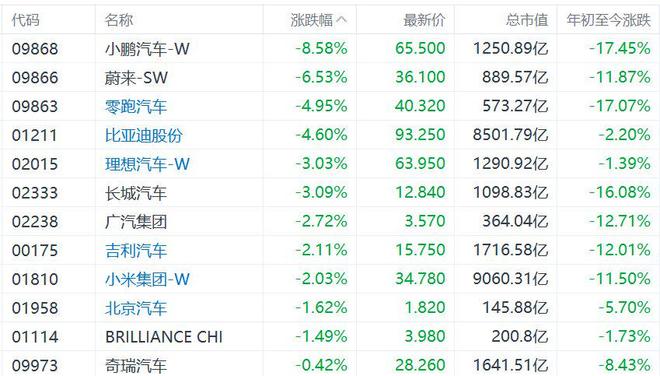
汽车股普遍下挫 小鹏汽车-W大跌超9% 1月车企销量分化特征明显
Zhi Tong Cai Jing· 2026-02-02 02:01
乘联分会方面分析称,2026年春节时间较晚,1月为春节前最后一个完整销售月,工作日数量多于去年 同期,随着首购需求随返乡潮开始释放,全月市场预计可实现同比微增。目前,国家报废补贴已经落 实,但购置税补贴退坡产生了一定的透支效应,各省份以旧换新补贴仍在逐步落实中,导致消费者观望 情绪较为浓重,终端市场仍存不确定性。 汽车股普遍下挫,截至发稿,小鹏汽车-W(09868)跌9.14%,报65.1港元;长城汽车(601633)(02333)跌 3.47%,报12.79港元;理想汽车-W(02015)跌3.26%,报63.8港元;赛力斯(601127)(09927)逆势涨 1.2%,报96.95港元。 消息面上,2月1日,多家车企公布了2026年1月份的销量情况,绝大多数实现销量同比增长,不过分化 特征明显。小鹏汽车1月交付新车20011辆,同比下降34.07%,环比下降46.65%;理想汽车1月交付新车 27668辆,同比增长7.55%,环比下降37.47%;蔚来方面,其1月交付量为2.72万辆,同比增长96.1%;赛 力斯1月汽车销量合计4.59万辆,同比增长104.85%。 ...

