GWMOTOR(02333)

Search documents
长城汽车(02333) - 海外监管公告
2026-01-23 09:29
香港交易及結算所有限公司及香港聯合交易所有限公司對本公告的內容概不負責,對其準確性或完整性亦不發表任何 聲明,並明確表示,概不對因本公告全部或任何部份內容而產生或因倚賴該等內容而引致的任何損失承擔任何責任。 承董事會命 長城汽車股份有限公司 公司秘書 李紅栓 李紅栓 公司秘書 中國河北省保定市,2026 年 1 月23日 長 城 汽 車 股 份 有 限 公 司 GREAT WALL MOTOR COMPANY LIMITED* (於中華人民共和國註冊成立的股份有限公司) 股份代號:02333(港幣櫃台)及82333(人民幣櫃台) 海外監管公告 此海外監管公告是根據香港聯合交易所有限公司證券上市規則第 13.10B 條發出。以下為長城汽 車股份有限公司於上海證券交易所網站(www.sse.com.cn)所刊發之「長城汽車股份有限公司關 於不向下修正"長汽轉債"轉股價格的公告」。 本公司董事会及全体董事保证本公告内容不存在任何虚假记载、误导性陈述或者重 大遗漏,并对其内容的真实性、准确性和完整性承担法律责任。 重要内容提示: 於本公告日期,董事會成員如下: 非執行董事:何平先生。 獨立非執行董事: 樂英女士、 輝 ...
长城汽车(02333) - 海外监管公告
2026-01-23 09:29
香港交易及結算所有限公司及香港聯合交易所有限公司對本公告的內容概不負責,對其準確性或完整性亦不發表任何 聲明,並明確表示,概不對因本公告全部或任何部份內容而產生或因倚賴該等內容而引致的任何損失承擔任何責任。 長 城 汽 車 股 份 有 限 公 司 GREAT WALL MOTOR COMPANY LIMITED* (於中華人民共和國註冊成立的股份有限公司) 股份代號:02333(港幣櫃台)及82333(人民幣櫃台) 中國河北省保定市,2026 年 1 月23日 於本公告日期,董事會成員如下: 執行董事: 魏建軍先生、趙國慶先生及李紅栓女士。 职工董事:盧彩娟女士。 非執行董事:何平先生。 獨立非執行董事: 樂英女士、 輝先生及鄒兆麟先生。 海外監管公告 此海外監管公告是根據香港聯合交易所有限公司證券上市規則第 13.10B 條發出。以下為長城汽 車股份有限公司於上海證券交易所網站(www.sse.com.cn)所刊發之「長城汽車股份有限公司第 八屆董事會第四十六次會議決議公告」。 承董事會命 長城汽車股份有限公司 公司秘書 李紅栓 李紅栓 公司秘書 (详见《长城汽车股份有限公司关于不向下修正"长汽转债"转股价 ...
汽车响应市场速度“以月计”,魏建军对效率下狠手
阿尔法工场研究院· 2026-01-23 04:09
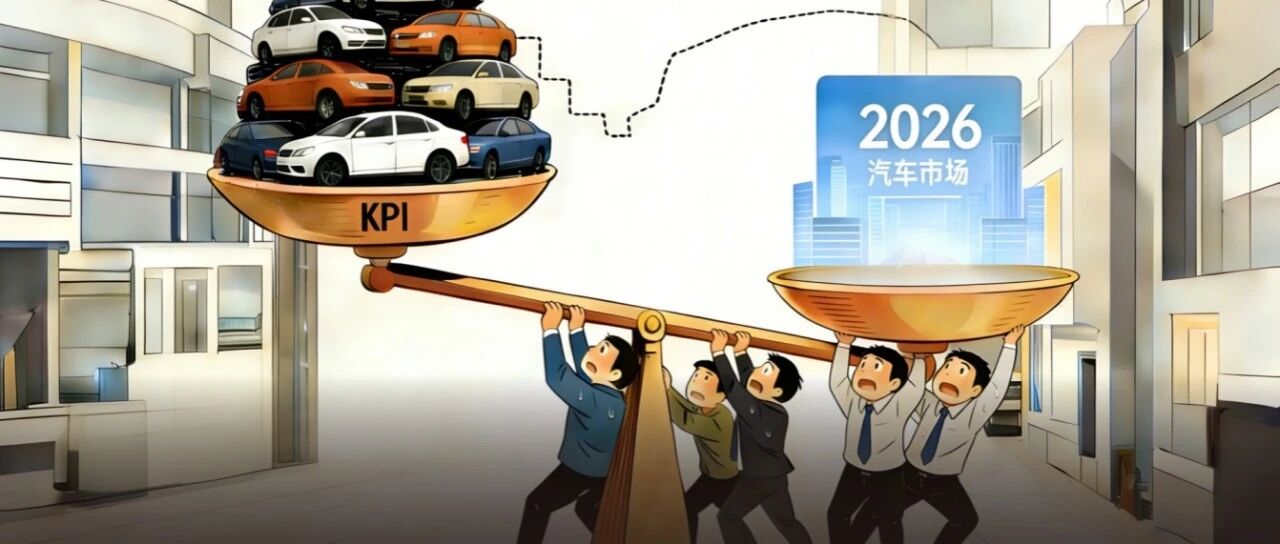
Core Viewpoint - The automotive production paradigm is undergoing a significant transformation, with Great Wall Motors launching the "Guiyuan Platform," which is defined as the world's first native AI all-powertrain automotive platform, aiming to produce 51 models across five powertrain types and seven categories [4][5]. Group 1: Platform Features - The Guiyuan Platform emphasizes extreme modularity and full powertrain compatibility, breaking down the vehicle structure into 49 core modules and 329 common components, allowing for versatile vehicle configurations like sedans, SUVs, MPVs, and pickups [5][6]. - The platform achieves an 80% commonality rate for vehicle parts and reduces the R&D cycle by approximately 30%, significantly lowering costs across vehicle development, production, and ownership [4][5]. Group 2: Market Strategy - Great Wall Motors is shifting its strategy from scale dependency to seeking higher profit margins with a reduced sales target for 2026, lowering the employee stock plan's sales target from 2.49 million to 1.8 million units while maintaining a net profit goal of 10 billion yuan [7]. - The company plans to launch high-end products priced between 200,000 to 400,000 yuan, with the average domestic product price already reaching 200,000 yuan compared to competitors at around 130,000 yuan [8]. Group 3: Competitive Landscape - The automotive industry is expected to transition from a price war to a competition based on quality, configuration, brand, functionality, technology, and innovation, as highlighted by industry experts [8][10]. - Great Wall Motors is focusing on its Hi4-PHEV system, which features an 800V high-voltage architecture and aims to establish a technological barrier against low-threshold competitors, particularly in the high-end and multi-purpose market segments [9][10]. Group 4: Future Outlook - The competition in the automotive sector post-2026 is anticipated to prioritize efficiency and ecological balance over single-dimensional price competition, leading to a more resilient manufacturing system [10][11]. - The Guiyuan Platform represents Great Wall's strategy to simplify complexities in the market and enhance production efficiency, addressing the fragmented market demands and future sales volatility [11].


自动驾驶行业遭遇剧烈洗牌,车路云一体化面临“四道坎”
Xin Hua Cai Jing· 2026-01-23 01:36
Core Insights - The autonomous driving industry is undergoing significant upheaval, highlighted by the suspension of operations at the unicorn company Haomo Technology, which had previously achieved a valuation exceeding $1 billion [1] - Safety concerns are intensifying public distrust in autonomous driving, with notable incidents such as a fatal accident involving Tesla's Autopilot and a pedestrian collision involving a Robotaxi in China [1] - The current landscape features nearly 500 domestic autonomous driving companies, indicating a seemingly thriving sector, yet underlying challenges such as capital withdrawal, technological bottlenecks, and safety anxieties persist [1] Group 1: Technology and Safety - The debate over the technical route of intelligent driving centers on how to safely advance towards full autonomy, with Tesla's pure vision approach contrasting with the multi-sensor fusion strategies of companies like Huawei and Momenta [1][2] - Tesla's data collection capabilities from mass-produced vehicles support algorithm iteration, but its reliance on cameras presents limitations in recognizing static objects and performing in low-visibility conditions [2] - Multi-sensor fusion solutions, while addressing some of Tesla's shortcomings, face challenges such as complex data calibration between different devices [2] Group 2: Levels of Automation - The "Automated Driving Classification" standard categorizes driving automation from L0 to L5, with L3 being a critical threshold for human intervention and system dominance [3] - Companies are cautious in their claims about automation levels, with Huawei referring to its system as "L2.9999," while some Robotaxis boldly claim L4 capabilities despite ongoing safety concerns [3] - The rapid expansion of low-speed autonomous vehicles in urban areas raises significant safety issues, as these vehicles often violate traffic regulations and create hazards [3] Group 3: Vehicle-Road-Cloud Integration - The industry is recognizing the need for vehicle-road-cloud integration to address coordination gaps that lead to safety issues, such as blind spots and outdated traffic signals [5] - This integration aims to enhance the capabilities of autonomous systems by providing superior perception and decision-making through real-time data sharing [5] - Successful implementation of this integration has been demonstrated in Wuxi, where a vehicle-road-cloud system has improved traffic efficiency by approximately 15%-20% [6][7] Group 4: Challenges Ahead - Despite the promise of vehicle-road-cloud integration, challenges remain, including the need for standardized data governance and the alignment of investment returns with operational costs [8] - The collaboration among various stakeholders, including government, automotive companies, and tech firms, is essential to avoid fragmented efforts in the development of intelligent transportation systems [8] - The diverse conditions across Chinese cities complicate the scalability of successful models, necessitating tailored approaches for different urban environments [9]

注定悲剧的2026,还有多少车企不信邪?
汽车商业评论· 2026-01-22 23:07
Core Viewpoint - The article discusses the challenges and strategies of the Chinese automotive industry as it faces declining domestic sales and increasing pressure to transition towards higher-value and technology-intensive vehicles. The focus is on the 2026 sales targets set by various automakers amidst a backdrop of changing government policies and market dynamics [3][6][8]. Group 1: Market Overview - In 2025, China's automotive production and sales reached 34.4 million units, a 9.4% increase year-on-year, maintaining its position as the world's largest market for the 17th consecutive year [3]. - Domestic sales, excluding exports, were 27.3 million units, up 6.7%, with passenger vehicles accounting for approximately 24.1 million units, growing by 8.0% [5]. - However, December 2025 saw a significant decline in domestic sales, with only 2.519 million units sold, marking a 6.7% month-on-month drop and a 15.6% year-on-year decrease [5]. Group 2: Industry Challenges - The average profit margin in the Chinese automotive industry has fallen to 4.4%, only slightly above the historical low of 4.3% in 2024, indicating extremely thin profit margins [6]. - The new vehicle replacement subsidy policy, shifting from fixed subsidies to percentage-based subsidies, targets higher-priced vehicles, which may pressure companies that rely heavily on low-cost models [8]. Group 3: Sales Targets and Strategies - Major automakers have set ambitious sales targets for 2026, with a combined goal of approximately 35 to 36 million passenger vehicles, reflecting a year-on-year increase of 12% to 15% [5]. - Traditional automakers are focusing on stability and efficiency improvements, while new entrants are experiencing significant divergence in their growth strategies [10][30]. - For instance, Changan aims for a total sales target of 3.3 million units in 2026, with a strong emphasis on new energy vehicles, projecting 1.43 million units from this segment [12][15]. Group 4: New Energy Vehicle Focus - The article highlights the increasing importance of new energy vehicles (NEVs) in the sales strategies of various automakers, with companies like Dongfeng targeting 1.7 million NEVs in 2026, representing a significant portion of their overall sales goals [15][26]. - Geely plans to launch over ten new models in 2026, focusing on a comprehensive product matrix to drive sales growth [23]. Group 5: Export Market Dynamics - The export market for Chinese vehicles is thriving, with exports reaching 7 million units in 2025, a 21% increase year-on-year, and NEV exports doubling to 2.6 million units [49]. - Automakers are increasingly prioritizing overseas markets, with many setting aggressive export targets that significantly exceed their overall sales growth targets [51][54]. - For example, Changan's overseas sales target for 2026 is set at 750,000 units, accounting for nearly a quarter of its total sales goal [52].




长城汽车发布归元平台 为企业全球化战略筑牢根基
Zhong Guo Zhi Liang Xin Wen Wang· 2026-01-22 06:03
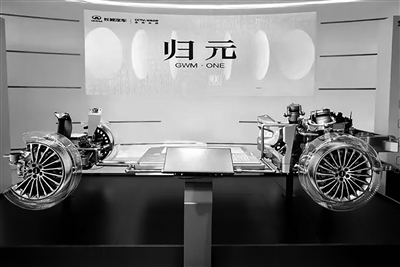
Core Insights - Great Wall Motors has officially launched a new vehicle platform named "Guiyuan," which emphasizes a return to the essence of serving people through vehicles, breaking traditional automotive thinking and creating a new model that integrates hardware modularity, software adaptability, and AI understanding [1][2] Group 1: Platform Features - The Guiyuan platform is the only one in the industry compatible with five powertrain types: plug-in hybrid, hybrid, pure electric, efficient fuel, and hydrogen energy, allowing for "one vehicle with multiple power options" to adapt to global scenarios [1] - The platform incorporates 49 core modules and 329 standardized shared components, enabling flexible combinations through hardware atomization and software labeling [1] Group 2: Technological Innovations - The platform utilizes a native AI system that integrates the fourth-generation electronic architecture, AI OS vehicle system, the world's first dual VLA (Visual Language Action Model) large model, and a bionic motion control system to achieve human-like perception, decision-making, and execution [2] - Guiyuan is built on the T-Safety safety concept, meeting the highest global collision standards with five industry-first body protection technologies, including a 2200 MPa high-strength skeleton and semi-solid magnesium alloy components [2] Group 3: Market Strategy and Goals - In a competitive global automotive market, the ability to enhance scale effects through technological universality will be a key variable for future profitability [3] - Great Wall Motors aims for a total sales volume of 1.324 million units in 2025, representing a year-on-year growth of 7.33%, with a target of 1.8 million units in 2026, indicating a growth rate of 36% [3] - The high compatibility of the Guiyuan platform is expected to help the company reduce R&D and production costs and cycles, while accurately adapting to global market energy structures and road conditions, thereby strengthening its globalization strategy [3]
张坤等知名基金经理罕见发声!
天天基金网· 2026-01-22 05:20
Group 1 - The core viewpoint of the article highlights the strategic adjustments made by prominent fund managers at E Fund in their investment portfolios for Q4 2025, focusing on sectors like AI, healthcare, consumer goods, and technology [2][4][6][10] Group 2 - Zhang Kun adjusted the structure of investments in the healthcare, consumer, and technology sectors while maintaining a stable position in top holdings, which include Tencent Holdings, Kweichow Moutai, and Alibaba-W [4][5] - Zhang Kun expressed confidence in the improvement of living standards and social security in China over the next decade, suggesting a narrowing gap with developed countries [4] - The AI wave is seen as a significant driver for innovation, with strong domestic demand expected to attract global resources and talent [4][5] Group 3 - Chen Hao focused heavily on AI-related sectors, increasing allocations in power equipment, new energy, non-bank financials, and chemicals, which yielded positive returns [7][8] - Chen Hao anticipates a transition of the AI industry from an acceleration phase in 2025 to a stable growth phase in 2026, emphasizing the importance of structural opportunities and the integration of AI with local applications [7][8] Group 4 - Xiao Nan reduced allocations in high-end and sub-high-end liquor sectors while increasing investments in the livestock industry, anticipating inflation-driven cost increases over the next two years [10] - The top holdings in Xiao Nan's consumer sector fund remained unchanged, including Kweichow Moutai and Midea Group [10]






长城汽车“超级母体”落地 50余款新车将覆盖全球市场
Zhong Guo Jing Ying Bao· 2026-01-22 01:40
Core Insights - The core concept of the news revolves around the launch of Great Wall Motors' new platform named "Guiyuan," which emphasizes a return to the essence of car manufacturing and aims to reconstruct technological logic [1][7]. Group 1: Platform Overview - The "Guiyuan" platform is described as a "super mother body" that supports multiple powertrains including PHEV, HEV, BEV, FCEV, and ICE, covering seven vehicle categories and expected to launch over 50 global models [1][4]. - The platform's modular design allows for flexible combinations, breaking the traditional model where one platform corresponds to one power type, thus reducing costs and development cycles [2][3]. Group 2: Global Strategy - Great Wall Motors aims to adapt to different market demands and energy structures through its "one car, multiple power" strategy, which is essential for its global operations [2][5]. - The company targets to achieve overseas sales of 600,000 units by 2026, accounting for one-third of total sales, with a projected growth rate of 11.68% in overseas markets by 2025 [5][6]. Group 3: Technological Innovations - The "Guiyuan" platform features three core innovations: hardware modularization, software experience labeling, and AI-native scheduling, allowing for a comprehensive energy type coverage [3][4]. - The platform's design enables a reduction in R&D costs by 30%, manufacturing costs by 15%, and maintenance costs by 28%, ultimately lowering user costs [5][6]. Group 4: Strategic Shift - The launch of the "Guiyuan" platform signifies a strategic shift for Great Wall Motors, moving away from resource accumulation towards focusing on value creation and profitability [6][7]. - The company has adjusted its sales target for 2026 from 2.49 million to 1.8 million units while maintaining a net profit goal of 10 billion yuan, reflecting a commitment to quality over quantity [6][7].
长城归元平台全球首发
Mei Ri Shang Bao· 2026-01-21 22:17
Core Viewpoint - The launch of Great Wall's original AI all-powerful vehicle platform, the Guiyuan platform, emphasizes a design philosophy that simplifies complexity and returns to authenticity, aiming to create independent "technical movable types" for flexible combinations and scalable development [2] Group 1: Platform Features - The Guiyuan platform is built on three major breakthroughs: power revolution, original intelligent transformation, and safety innovation [2] - The power layer supports five different power forms, with diesel hybrid models achieving a 9% reduction in fuel consumption and a 40% improvement in acceleration, suitable for diverse global scenarios [2] - The intelligent aspect utilizes original AI as a foundation, breaking down over 300 functional units for dynamic scene-based responses [2] - In safety, the platform introduces a continuous working condition verification dummy, establishing a full-loop closed system of "prediction-intervention-protection" [2] Group 2: Product and Market Strategy - Leveraging Great Wall's 30 years of "forest ecosystem" full-stack self-research system, the Guiyuan platform can cover seven product categories and plans to launch over 50 global vehicle models [2] - The event showcased the integration of ancient craftsmanship with modern vehicle manufacturing technology, symbolized by the printing of "Great Wall Guiyuan" on rice paper [2] - Great Wall aims to use this platform as a "super mother body" to convey the strength of Chinese manufacturing and tailor high-quality vehicles for global users [2]
乘联分会:1月1-18日全国乘用车市场零售67.9万辆 同比下降28%
智通财经网· 2026-01-21 11:23
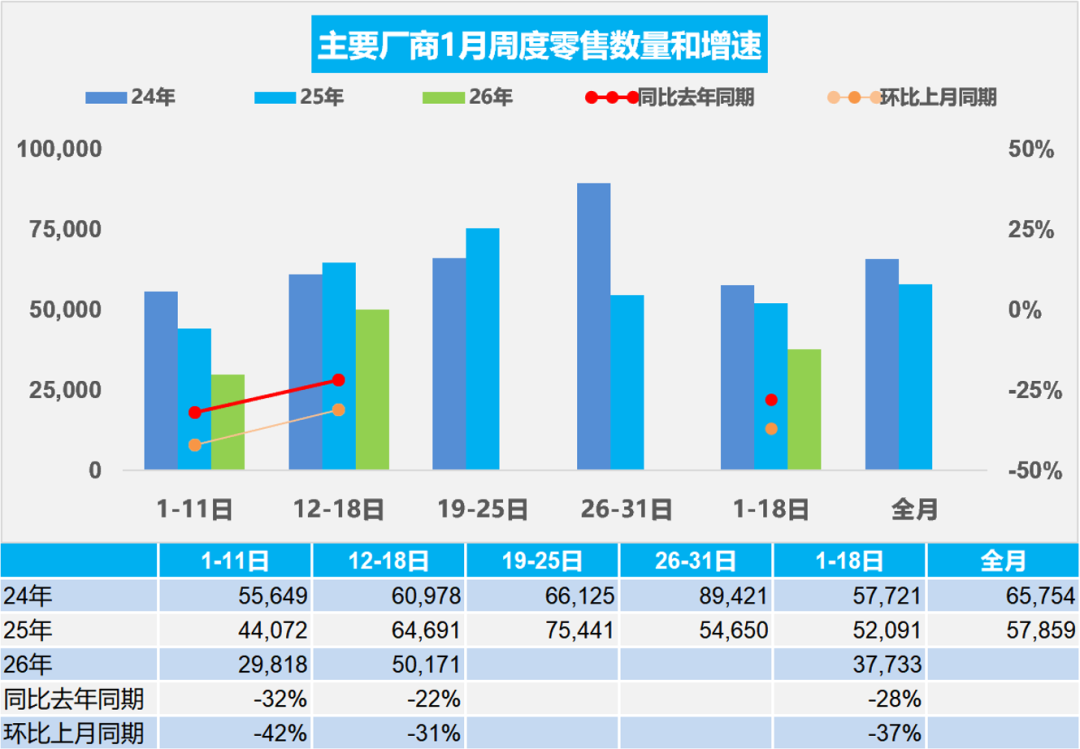
Group 1: Market Performance - From January 1 to 18, the national passenger car retail sales reached 679,000 units, a year-on-year decrease of 28% and a month-on-month decrease of 37% [1][5] - During the same period, the wholesale volume of passenger cars was 740,000 units, down 35% year-on-year and 30% month-on-month [1][9] - The retail sales of new energy vehicles (NEVs) in the same timeframe were 312,000 units, reflecting a 16% year-on-year decline and a 52% month-on-month decline [1][5] Group 2: Production Trends - In the first two weeks of January, the production of pure fuel light vehicles was 91,000 units, down 85% year-on-year and 77% month-on-month [1] - The production of hybrid and plug-in hybrid vehicles totaled 139,000 units, a year-on-year decrease of 65% and a month-on-month decrease of 75% [1] Group 3: Policy Impact - The National Development and Reform Commission announced a policy to implement large-scale equipment updates and a trade-in program, which is expected to boost domestic car consumption [5] - The subsidy for passenger car trade-ins is projected to decrease by 20% to 30% compared to 2025, indicating a structural adjustment in the policy [5][11] Group 4: Future Outlook - The market is expected to improve as local subsidy details and channels are fully launched, along with the gradual release of purchasing power before the Spring Festival [5] - The first month of the year typically sees a "New Year sales boost," and despite the current weak performance, there is an anticipation of a slight increase in year-on-year sales due to pre-orders and market dynamics [9][11]