MEITUAN(03690)

Search documents
智通ADR统计 | 11月21日
智通财经网· 2025-11-20 22:39
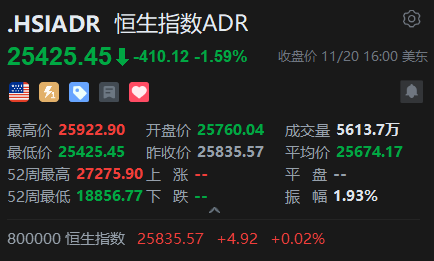
Core Viewpoint - The Hang Seng Index (HSI) experienced a decline, closing at 25,425.45, down 410.12 points or 1.59% from the previous close, indicating a bearish trend in the market [1]. Group 1: Market Performance - The Hang Seng Index (HSI) closed at 25,425.45, reflecting a decrease of 410.12 points or 1.59% [1]. - The index opened at 25,760.04 and reached a high of 25,922.90 during the trading session, with a trading volume of 56.137 million shares [1]. - The 52-week high for the index is 27,275.90, while the 52-week low is 18,856.77, showing significant volatility [1]. Group 2: Major Stock Movements - Major blue-chip stocks, including HSBC Holdings and Tencent Holdings, saw declines, with HSBC closing at 105.18 HKD, down 2.25%, and Tencent at 605.843 HKD, down 2.44% [2]. - Tencent Holdings reported a slight decrease of 1.5 HKD or 0.24%, while Alibaba fell by 1.6 HKD or 1.02% [3]. - Other notable declines included Xiaomi Group, which dropped 1.12 HKD or 2.89%, and Ctrip Group, which fell 20.5 HKD or 3.57% [3].






中国即时零售服务行业销售现状及未来前景分析报告2025-2031年
Sou Hu Cai Jing· 2025-11-20 11:59
Group 1 - The core viewpoint of the report is to analyze the current sales status and future prospects of the instant retail service industry in China from 2025 to 2031 [1] - The report provides a comprehensive overview of the instant retail service market, including product definitions, statistical scope, and categorization by product types and applications [3][4] - It highlights the growth trends of different product types in the instant retail service sector from 2019 to 2031, indicating significant market expansion [3][4] Group 2 - The report forecasts the global and Chinese market sizes for instant retail services from 2019 to 2031, emphasizing China's increasing share in the global market [4][10] - It analyzes the competitive landscape of the industry, detailing revenue analysis and market share of major global players from 2019 to 2025 [4][5] - The report includes a SWOT analysis of Chinese companies in the instant retail service sector, providing insights into their strengths, weaknesses, opportunities, and threats [5][10] Group 3 - The report discusses the development opportunities and driving factors for the instant retail service industry, including consumer behavior changes and technological advancements [6][10] - It examines the supply chain dynamics within the instant retail service industry, detailing the procurement, production, and sales models [6][10] - The report also profiles major companies in the instant retail service market, including Meituan, Alibaba, and JD, providing insights into their business models and market positions [8][9]



华金证券:双11全网电商销售额稳增长 零售生态与技术融合深度变革
智通财经网· 2025-11-20 08:40
Core Insights - The 2025 Double 11 shopping festival is set to start earlier, showcasing a long-cycle normalization trend, with e-commerce platforms simplifying promotional rules to boost user engagement in October [1][2] - The overall retail sales during the Double 11 period are projected to reach nearly 1.8 trillion yuan, marking a year-on-year growth of over 10%, and a staggering increase of approximately 35,000 times since the inaugural event in 2009 [1] Group 1: E-commerce Growth and User Engagement - The early launch of the Double 11 marketing campaign has led to a synchronized increase in user scale across platforms, with significant growth in monthly active users for major apps like Taobao, Douyin, Pinduoduo, and JD [2] - As of October 2025, the monthly active user counts for these platforms reached 1 billion for Taobao, 948 million for Douyin, 720 million for Pinduoduo, and 648 million for JD, indicating robust user engagement [2] Group 2: Strategic Shifts and AI Integration - E-commerce platforms are transitioning towards a comprehensive ecosystem, integrating AI technologies throughout the consumer journey, with Taobao launching six AI shopping applications and JD implementing advanced logistics solutions [3] - JD's user orders increased by over 117% year-on-year, while the overall order volume grew by more than 125%, reflecting the effectiveness of their new strategies [3] Group 3: Instant Retail and New Consumption Drivers - Platforms are exploring instant retail strategies to drive new consumption growth, with Meituan reporting an average daily order volume of 14 million for its flash purchase service [4] - Taobao's flash purchase initiative has already attracted over 1 million new users during the Double 11 period, with significant sales growth in non-food brands [4] Group 4: Investment Opportunities - Companies to watch include BlueFocus Communication Group, InGravity Media, Tianyu Digital Technology, Chinese Online, Tianxia Show, and Zhidema, indicating potential investment opportunities in the evolving e-commerce landscape [5]


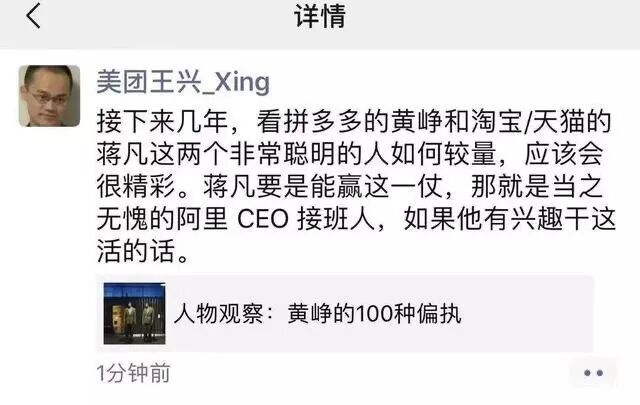
蒋凡重整「旧阿里」
3 6 Ke· 2025-11-20 08:24
Core Insights - The article discusses the strategic shift within Alibaba, particularly focusing on the integration of Ele.me into the Taobao ecosystem, reflecting a broader trend of consolidation in the face of competition from Meituan and Douyin e-commerce [3][11][19] Group 1: Company Strategy - Alibaba is restructuring its operations under the leadership of Jiang Fan, who is tasked with ensuring the stability of the "old Alibaba" while supporting the "new Alibaba" focused on cloud and AI [5][11] - The integration of Ele.me into Taobao reflects a shift in strategy, where the brand is being downplayed in favor of Taobao's established presence, indicating a belief that the Ele.me brand has limited utility [3][17] - The decision to rebrand Ele.me as "Taobao Flash Purchase" signifies a move towards a more unified platform aimed at enhancing user engagement and driving sales [11][19] Group 2: Market Dynamics - The competitive landscape has shifted, with Meituan establishing a stronghold in the local delivery market, making it difficult for Ele.me to gain market share despite Alibaba's resources [15][19] - The article highlights the challenges faced by Alibaba in adapting its e-commerce model to the realities of local delivery, where operational efficiency and supply chain management are critical [9][15] - The rise of Douyin e-commerce has further complicated Alibaba's position, as it has drawn users away from Taobao, increasing customer acquisition costs significantly [10][19] Group 3: Financial Implications - Alibaba's investments in the "new retail" concept have not yielded the expected returns, leading to significant financial losses, particularly with Ele.me, which has become a financial burden rather than an asset [9][12] - The article notes that Alibaba has engaged in asset divestitures, including the sale of Intime Retail and Gome Retail, to streamline operations and reduce losses [12][19] - The financial performance of Taobao Flash Purchase is under scrutiny, with projections indicating that its contribution to revenue may fall short of the substantial investments made [19]
投入4700万后再加码!美团新一轮“不闯红灯”安全激励覆盖百万骑手
Ge Long Hui A P P· 2025-11-20 03:54
Core Viewpoint - Meituan has launched a nationwide "No Running Red Lights" safety incentive program for its delivery riders, aiming to enhance traffic safety and reduce violations across nearly 200 cities in China [1] Group 1: Program Details - The new incentive program will start on December 2, coinciding with National Traffic Safety Day, and will reward riders who maintain a zero red-light violation record with cash incentives [1] - The program has expanded its scope from major cities to nearly 200 cities, including both dedicated delivery and crowd-sourced riders, with an expected participation of 1 million riders during the activity period [1] - Riders maintaining a zero red-light record will receive cash rewards based on their delivery volume, with top performers eligible for additional prizes such as helmets and winter gear [1] Group 2: Historical Context and Impact - Since the launch of the "No Running Red Lights" initiative in April, Meituan has invested 47 million yuan, with over 400,000 riders voluntarily participating in the commitment to avoid running red lights [1] - The platform has fully disbursed cash rewards directly to riders' accounts, and data indicates a significant decrease in the red-light violation rate among Meituan riders since the beginning of the year [1]
骑手不闯红灯、平台就发奖,美团交通安全激励拓展至全国近200城
智通财经网· 2025-11-20 03:40
Core Viewpoint - Meituan has launched a nationwide "no running red lights" safety incentive program for its delivery riders, expanding from major cities to nearly 200 cities across the country, with an expected participation of 1 million riders [1] Group 1: Program Details - The program starts on December 2, coinciding with National Traffic Safety Day [1] - Riders who maintain a zero red-light running record will receive daily cash rewards [1] - The initiative includes both dedicated delivery and crowdsourced riders [1] Group 2: Financial Commitment and Participation - Since the launch of the "no running red lights" safety incentive series in April, Meituan has invested a total of 47 million yuan [1] - Over 400,000 riders have voluntarily signed up for the "I promise not to run red lights" campaign [1] - All cash rewards from the platform have been fully disbursed directly to the riders' personal accounts [1]
新型马路判官上路,无人物流车狂奔
3 6 Ke· 2025-11-20 01:53
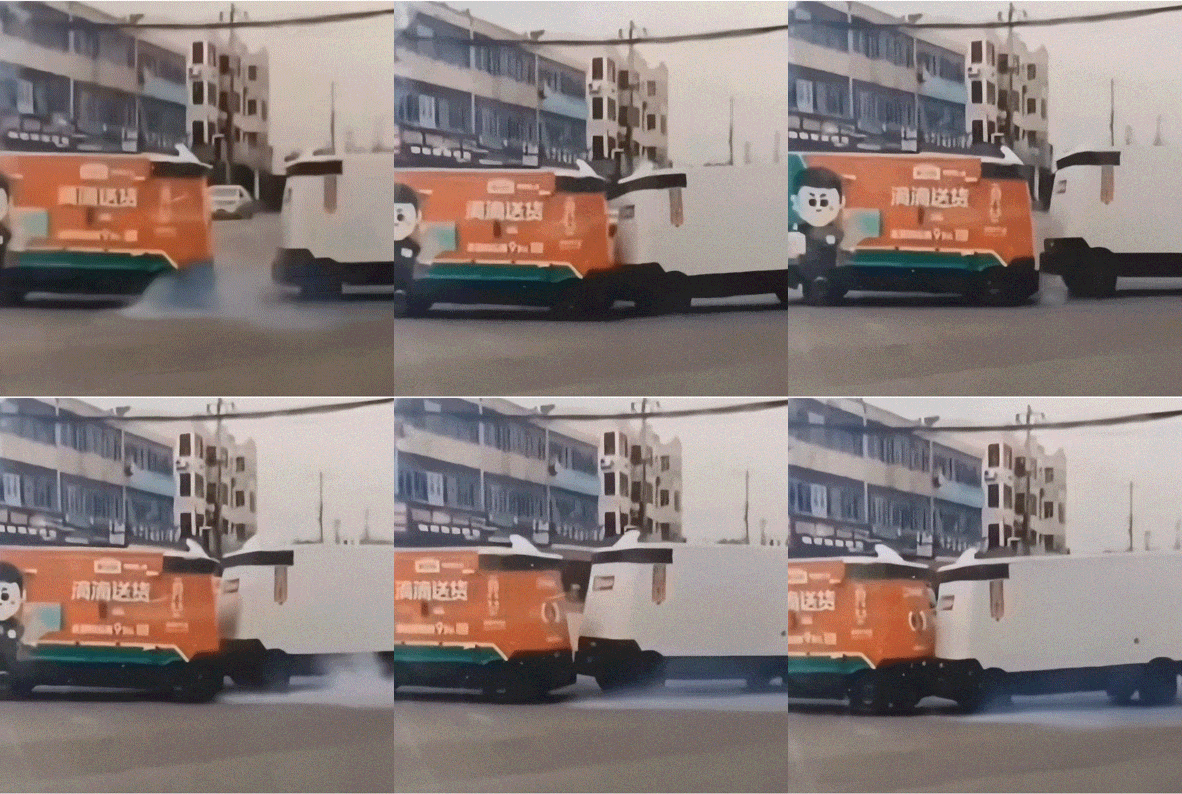
Core Insights - The rise of unmanned logistics vehicles is transforming the delivery landscape, showcasing a clash between advanced technology and traditional agricultural practices [1] - The demand for unmanned logistics vehicles has surged, driven by technological advancements and the need for contactless delivery solutions during the pandemic [8][13] - Major logistics companies are heavily investing in unmanned logistics vehicles, indicating a significant market potential estimated to be worth hundreds of billions [15][18] Demand Explosion - Unmanned logistics vehicles are not new; they have evolved from early tests by companies like JD.com and Suning, which began in 2016 [8][11] - The pandemic accelerated the adoption of unmanned logistics vehicles, as companies like Meituan and SF Express adapted to new delivery challenges [13] - The technology has matured, with L4-level autonomous delivery vehicles being deployed in urban environments, expanding their operational scope [11][19] Industry Growth - The unmanned logistics vehicle market is projected to be a trillion-yuan industry by 2025, driven by increasing demand and technological advancements [15][20] - Major logistics firms are ramping up their investments, with China Post planning to procure 7,000 unmanned vehicles and JD Logistics aiming for 1 million units in five years [18] - The operational model of logistics is shifting from traditional methods to a more efficient system utilizing unmanned vehicles for direct delivery [19] Technological and Policy Support - The Chinese government has been supportive of unmanned logistics vehicle development, issuing guidelines to promote their use in various environments [17] - The cost of producing unmanned logistics vehicles has significantly decreased, making them more accessible for logistics companies [28] - The industry is witnessing a surge in investment, with leading companies securing substantial funding to enhance their capabilities [21][23] Future Outlook - The commercial application of unmanned logistics vehicles is expected to expand beyond delivery services, integrating into a broader autonomous transportation network [30] - The successful trials of unmanned heavy-duty trains and mining vehicles indicate the potential for widespread adoption across various sectors [32][35] - The development of unmanned logistics vehicles is seen as a critical component of China's strategic goals in industrial modernization and technological advancement [39]

智通港股沽空统计|11月20日
智通财经网· 2025-11-20 00:24
Core Insights - The article highlights the top short-selling stocks in the market, indicating significant investor sentiment and potential market movements [1][2]. Short Selling Ratios - AIA Group (81299), Li Ning (82331), and JD Health (86618) have the highest short-selling ratios at 100.00% each [1][2]. - JD Group (89618) follows closely with a short-selling ratio of 98.73%, while Tencent Holdings (80700) has a ratio of 94.71% [2]. Short Selling Amounts - Xiaomi Group (01810) leads in short-selling amount with 2.524 billion, followed by Alibaba (09988) at 2.305 billion and Tencent Holdings (00700) at 1.140 billion [1][2]. - Other notable mentions include Pop Mart (09992) with 1.016 billion and Lenovo Group (00992) at 676 million [2]. Deviation Values - Zhongyuan Bank (01216) has the highest deviation value at 62.66%, indicating a significant difference from its average short-selling ratio over the past 30 days [1][2]. - East Asia Bank (00023) and Autohome (02518) follow with deviation values of 38.85% and 38.65%, respectively [2].


两个月回撤超15%!恒科指数长期逻辑不改,市场关注AI落地效果
Zheng Quan Shi Bao· 2025-11-19 23:48
Core Viewpoint - Since 2025, the Hong Kong stock market, led by technology and innovative pharmaceuticals, has experienced a bull market, with the Hang Seng Index rising over 30% and the Hang Seng Tech Index exceeding 50%. However, since October, the Hang Seng Tech Index has seen a significant pullback of over 15% in less than two months, with a recent streak of four consecutive declines. Analysts believe that this short-term adjustment does not alter the long-term investment logic for leading tech stocks in Hong Kong, especially with the gradual implementation of AI technologies by companies like Tencent and Alibaba, which is expected to drive a second growth phase for internet enterprises. The long-term investment value of the Hang Seng Tech Index remains promising due to valuation advantages, funding support, and AI-driven industrial upgrades [1][3][4]. Group 1: Market Performance - Before October, Hong Kong tech stocks were performing well, with 9 out of 30 constituents of the Hang Seng Tech Index rising over 100%, and the top performer, Hua Hong Semiconductor, increasing nearly 270%. Other notable stocks like Tencent, Baidu, and Xiaomi also saw gains exceeding 50%, while only Meituan and Haier Smart Home experienced declines, with Meituan dropping over 30% [1][2]. - After October, the situation changed dramatically, with only 4 stocks rising, while 7 stocks fell over 20%, including Li Auto and Sunny Optical Technology, which both dropped over 27%. Tencent and Meituan also saw declines of around 5% [2]. Group 2: Fund Flows and Market Sentiment - There has been a noticeable outflow of southbound funds from certain Hang Seng Tech constituents, with Alibaba experiencing the highest net sell-off of 2.5 billion HKD, followed by Li Auto and Sunny Optical Technology with net sell-offs of 1.2 billion HKD and several hundred million HKD, respectively [2]. - The recent downturn in the Hang Seng Tech Index is attributed to three main factors: excessive prior gains leading to profit-taking, the U.S. imposing tariffs and tightening software export controls, and a mini-crash in U.S. AI stocks resulting in a significant drop in global tech risk appetite [2][3]. Group 3: Long-term Investment Logic - Despite short-term volatility, the long-term investment logic for the Hang Seng Tech Index remains intact, as it comprises internet giants and companies in semiconductors and electric vehicles that are considered scarce assets for both domestic and global investors [3][4]. - Analysts suggest that the current valuation of the Hang Seng Index and Hang Seng Tech Index is still significantly lower than their peaks in 2021, indicating potential for recovery and growth in the coming years [3]. Group 4: AI and Market Revaluation - The market is increasingly focused on the tangible effects of AI implementation, moving from a narrative-driven approach to one that emphasizes financial performance. Companies like Tencent and Alibaba are seeing revenue growth attributed to AI applications, with Tencent reporting a 15% year-on-year revenue increase and Alibaba planning substantial investments in AI and cloud infrastructure [5][6]. - The structural revaluation driven by AI and robotics is expected to benefit comprehensive platforms like Tencent, Alibaba, and Baidu, while smaller companies lacking their own ecosystems may face marginalization during the global de-bubble process [6].
弱势盘整,恒生科技跌幅居前,消费、医疗、银行等紧随其后
Ge Long Hui· 2025-11-19 20:35
Group 1 - The Hang Seng Index experienced a slight decline of 0.38% after a narrow consolidation period, with the Hang Seng Technology sector leading the drop [1] - The Hang Seng Technology Index opened high but fell throughout the day, closing down 0.66%. Notable declines included Xiaomi Group down 4.81%, Kuaishou down 1.78%, and SMIC down 1.35% [3] - The banking sector also saw a decline, closing down 0.44%, with HSBC Holdings down 1.64%, Standard Chartered down 1.43%, and Dah Sing Bank down 1.33% [3] Group 2 - The Hang Seng Internet sector showed relative resilience, closing flat after opening high and then declining. Notable movements included Horizon Robotics down 1.83%, while Alibaba managed to rise 1.16% [3] - Other companies like JD Group and Meituan also experienced slight declines, with their stock prices falling by over 1% [3]