MEITUAN(03690)

Search documents
智通港股沽空统计|11月20日
智通财经网· 2025-11-20 00:24
Core Insights - The article highlights the top short-selling stocks in the market, indicating significant investor sentiment and potential market movements [1][2]. Short Selling Ratios - AIA Group (81299), Li Ning (82331), and JD Health (86618) have the highest short-selling ratios at 100.00% each [1][2]. - JD Group (89618) follows closely with a short-selling ratio of 98.73%, while Tencent Holdings (80700) has a ratio of 94.71% [2]. Short Selling Amounts - Xiaomi Group (01810) leads in short-selling amount with 2.524 billion, followed by Alibaba (09988) at 2.305 billion and Tencent Holdings (00700) at 1.140 billion [1][2]. - Other notable mentions include Pop Mart (09992) with 1.016 billion and Lenovo Group (00992) at 676 million [2]. Deviation Values - Zhongyuan Bank (01216) has the highest deviation value at 62.66%, indicating a significant difference from its average short-selling ratio over the past 30 days [1][2]. - East Asia Bank (00023) and Autohome (02518) follow with deviation values of 38.85% and 38.65%, respectively [2].




两个月回撤超15%!恒科指数长期逻辑不改,市场关注AI落地效果
Zheng Quan Shi Bao· 2025-11-19 23:48
Core Viewpoint - Since 2025, the Hong Kong stock market, led by technology and innovative pharmaceuticals, has experienced a bull market, with the Hang Seng Index rising over 30% and the Hang Seng Tech Index exceeding 50%. However, since October, the Hang Seng Tech Index has seen a significant pullback of over 15% in less than two months, with a recent streak of four consecutive declines. Analysts believe that this short-term adjustment does not alter the long-term investment logic for leading tech stocks in Hong Kong, especially with the gradual implementation of AI technologies by companies like Tencent and Alibaba, which is expected to drive a second growth phase for internet enterprises. The long-term investment value of the Hang Seng Tech Index remains promising due to valuation advantages, funding support, and AI-driven industrial upgrades [1][3][4]. Group 1: Market Performance - Before October, Hong Kong tech stocks were performing well, with 9 out of 30 constituents of the Hang Seng Tech Index rising over 100%, and the top performer, Hua Hong Semiconductor, increasing nearly 270%. Other notable stocks like Tencent, Baidu, and Xiaomi also saw gains exceeding 50%, while only Meituan and Haier Smart Home experienced declines, with Meituan dropping over 30% [1][2]. - After October, the situation changed dramatically, with only 4 stocks rising, while 7 stocks fell over 20%, including Li Auto and Sunny Optical Technology, which both dropped over 27%. Tencent and Meituan also saw declines of around 5% [2]. Group 2: Fund Flows and Market Sentiment - There has been a noticeable outflow of southbound funds from certain Hang Seng Tech constituents, with Alibaba experiencing the highest net sell-off of 2.5 billion HKD, followed by Li Auto and Sunny Optical Technology with net sell-offs of 1.2 billion HKD and several hundred million HKD, respectively [2]. - The recent downturn in the Hang Seng Tech Index is attributed to three main factors: excessive prior gains leading to profit-taking, the U.S. imposing tariffs and tightening software export controls, and a mini-crash in U.S. AI stocks resulting in a significant drop in global tech risk appetite [2][3]. Group 3: Long-term Investment Logic - Despite short-term volatility, the long-term investment logic for the Hang Seng Tech Index remains intact, as it comprises internet giants and companies in semiconductors and electric vehicles that are considered scarce assets for both domestic and global investors [3][4]. - Analysts suggest that the current valuation of the Hang Seng Index and Hang Seng Tech Index is still significantly lower than their peaks in 2021, indicating potential for recovery and growth in the coming years [3]. Group 4: AI and Market Revaluation - The market is increasingly focused on the tangible effects of AI implementation, moving from a narrative-driven approach to one that emphasizes financial performance. Companies like Tencent and Alibaba are seeing revenue growth attributed to AI applications, with Tencent reporting a 15% year-on-year revenue increase and Alibaba planning substantial investments in AI and cloud infrastructure [5][6]. - The structural revaluation driven by AI and robotics is expected to benefit comprehensive platforms like Tencent, Alibaba, and Baidu, while smaller companies lacking their own ecosystems may face marginalization during the global de-bubble process [6].


弱势盘整,恒生科技跌幅居前,消费、医疗、银行等紧随其后
Ge Long Hui· 2025-11-19 20:35
Group 1 - The Hang Seng Index experienced a slight decline of 0.38% after a narrow consolidation period, with the Hang Seng Technology sector leading the drop [1] - The Hang Seng Technology Index opened high but fell throughout the day, closing down 0.66%. Notable declines included Xiaomi Group down 4.81%, Kuaishou down 1.78%, and SMIC down 1.35% [3] - The banking sector also saw a decline, closing down 0.44%, with HSBC Holdings down 1.64%, Standard Chartered down 1.43%, and Dah Sing Bank down 1.33% [3] Group 2 - The Hang Seng Internet sector showed relative resilience, closing flat after opening high and then declining. Notable movements included Horizon Robotics down 1.83%, while Alibaba managed to rise 1.16% [3] - Other companies like JD Group and Meituan also experienced slight declines, with their stock prices falling by over 1% [3]





恒生科技指数10月以来回撤超15% 长期逻辑不改 市场关注AI落地效果
Zheng Quan Shi Bao· 2025-11-19 18:01
Core Viewpoint - The current valuation of the Hang Seng Index and the Hang Seng Tech Index remains significantly lower than their peaks in 2021, indicating potential investment opportunities in Hong Kong tech stocks driven by AI and globalization [1][4]. Valuation Analysis - As of late September, the price-to-earnings ratios for the Hang Seng Index and Hang Seng Tech Index were approximately 11.8 times and 23.7 times, respectively, compared to their peak values of 17.6 times and 70 times in 2021 [1][5]. - The Hang Seng Tech Index has experienced a significant bull market since 2025, with gains exceeding 30% for the Hang Seng Index and over 50% for the Hang Seng Tech Index [1]. Recent Market Trends - Since October, the Hang Seng Tech Index has faced a sharp decline, with a maximum drawdown exceeding 15% and a series of four consecutive trading days of losses [1][2]. - Prior to October, nine out of thirty constituent stocks in the Hang Seng Tech Index had gains exceeding 100%, with the top performer, Hua Hong Semiconductor, rising nearly 270% [2]. Fund Flow and Investor Behavior - There has been a noticeable outflow of southbound funds from certain Hang Seng Tech constituents, with Alibaba experiencing a net sell-off of 2.5 billion HKD and Li Auto seeing 1.2 billion HKD in net sales [2][3]. - Investors are increasingly shifting their focus towards dividend-paying assets like banks and non-bank financials as the year-end approaches, leading to a rotation away from high-volatility tech stocks [3]. Long-term Investment Logic - Despite short-term fluctuations, the long-term investment logic for the Hang Seng Tech Index remains intact, as it includes internet giants and companies in semiconductors and new energy vehicles that are considered scarce assets for both domestic and global investors [4][5]. - Analysts believe that the adjustment in the Hang Seng Tech Index is a short-term phenomenon, with expectations of a sustained bull market over the next two to three years [5]. AI and Market Dynamics - The focus has shifted from speculative narratives to tangible financial performance, with companies like Tencent and Alibaba demonstrating significant revenue growth attributed to AI applications [6][7]. - The market is now prioritizing companies that can translate AI advancements into profits, indicating a structural revaluation where only those with solid ecosystems will thrive [7]. Policy Support and Future Outlook - The Chinese government's emphasis on technology innovation in its 14th Five-Year Plan is expected to translate into actual performance over the next few years, providing a more sustainable growth trajectory for tech stocks [7].
走,去滑雪!“18会员惊喜日”美团旅行推滑雪专场,黑钻黑金会员可享专属雪场休息室
Zhong Guo Jin Rong Xin Xi Wang· 2025-11-19 09:54
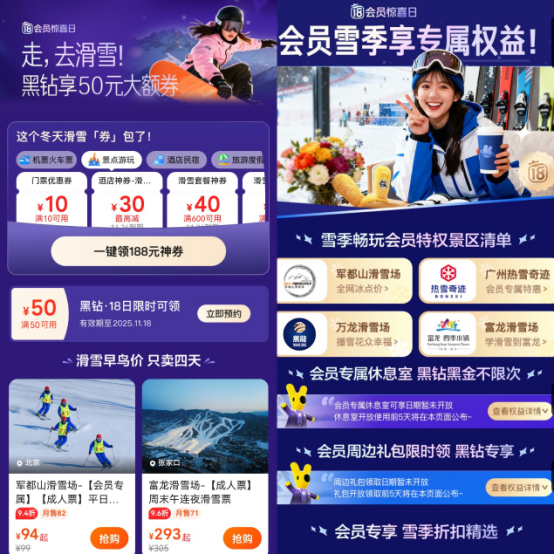
Core Insights - The central theme of the articles revolves around the surge in winter sports activities, particularly skiing, driven by a significant drop in temperatures across central and eastern China, leading to increased interest and participation in ice and snow tourism [1][4]. Group 1: Weather Impact and Tourism Trends - The Central Meteorological Observatory issued a blue alert for a cold wave, predicting a temperature drop of 6-10°C in central and eastern China from November 16 to 18, with local areas experiencing drops exceeding 14°C [1]. - Following the cold wave, there has been a notable increase in skiing-related searches, with "Chongli skiing" searches up by 169% year-on-year, and tourism bookings in Zhangjiakou increasing by 25% [1]. Group 2: Promotional Activities and Membership Benefits - Meituan Travel launched promotional activities on November 18, offering a 188 yuan ski coupon package and early bird prices for ski tickets, with additional benefits for black diamond members [3]. - The collaboration between popular ski resorts and Meituan Travel aims to enhance the skiing experience for members, including exclusive access to free rest areas at ski resorts [5]. Group 3: Regional Participation and Market Growth - Indoor ski resorts are breaking geographical barriers, making skiing a high-frequency activity accessible to both northern and southern regions of China, with cities like Beijing, Shanghai, and Guangzhou emerging as top search locations for indoor skiing [4]. - The Guangzhou Hot Snow Miracle indoor ski resort has quickly become one of the fastest to surpass one million visitors, highlighting the potential of the southern market [5]. Group 4: Increased Interest in Zhangjiakou - Zhangjiakou is experiencing a surge in tourism interest, with searches for "Chongli hotels" up by 198%, "Chongli food" by over 1000%, and "Chongli ski equipment rental" by 116% [5]. - The marketing director of Wanlong Ski Resort reported a 61% increase in search volume and a 151% increase in ticket sales since mid-November, with a significant portion of visitors being younger demographics [7]. Group 5: Strategic Partnerships and Promotions - Major hotel and travel brands, including Marriott and Disney, are partnering with Meituan Travel to enhance member benefits during the ski season, tapping into a user base of 770 million [9]. - Meituan Travel is promoting an "Ice and Snow Hot Spring Season" campaign, offering discounts on ski and hot spring tickets across over 1500 quality ski resorts and hot spring attractions nationwide [9].
烧掉百亿,给全国骑手社保补贴,美团值吗?
Jin Tou Wang· 2025-11-19 09:42
Core Viewpoint - Meituan has initiated a significant milestone by providing social security subsidies to all delivery riders starting in November, including those in the crowdsourcing model, which has not been done by any other food delivery platform in the industry before [1] Summary by Sections Policy Implementation - Riders can voluntarily participate in the social security program, with no restrictions on the payment location, allowing them to choose either their employment location or registered residence [1] - Both full-time and part-time riders are eligible to apply for the subsidy, provided their monthly income meets the local payment base minimum and they have met this condition for three out of the last six months [1] Financial Implications - The number of delivery riders in the industry has surpassed 10 million, with Meituan accounting for over 7.4 million riders, indicating a substantial financial burden for the company [1] - Meituan's estimated monthly cost for each rider's social security subsidy is around 800 yuan, which translates to an additional cost of nearly 1 yuan per order [5] - If only 200,000 riders opt for the social security program, the annual subsidy could exceed 10 billion yuan, significantly impacting Meituan's profitability, which was reported at 10.4 billion yuan in the first half of the year [5] Industry Impact - This initiative is expected to stabilize the rider workforce, enhancing employee loyalty and brand reputation, which are invaluable assets for the company [5] - The move signifies a shift in the industry from aggressive competition based on subsidies and growth to a focus on responsibility and sustainability, marking a new phase for the food delivery sector [5][6] - Meituan's actions may encourage other platforms to follow suit, potentially transforming the social security landscape for gig economy workers, including ride-hailing drivers and couriers [6] Future Considerations - The initiative raises questions about how to provide more precise and comprehensive protections for riders, including seamless social security transitions across provinces and addressing the diverse needs of riders based on age and region [6] - The long-standing issue of rider social security has been addressed, providing a sense of stability for workers who previously felt unanchored in their roles [7]
美团:将在洗浴品类投入上亿补贴,周末请你“半价洗浴”
智通财经网· 2025-11-19 09:36
Core Insights - Meituan has launched a "Half-Price Bathing" campaign, investing over 100 million in subsidies to stimulate winter bathing consumption [1] - The campaign runs from November 19 to November 23, offering various discount coupons for consumers [1] - The initiative covers over 2,000 bathing centers nationwide, enhancing the value proposition for consumers [1] Summary by Categories Campaign Details - The "Half-Price Bathing" activity allows consumers to access discounts of 400-200 yuan, 200-100 yuan, 100-50 yuan, and 40-20 yuan [1] - Consumers can find the campaign on Meituan and Dazhongdianping apps [1] Market Impact - Following the release of the bathing guide in Shenyang, the average daily transaction volume of listed merchants increased by 65% year-on-year and 54% week-on-week [1] - The guide includes 174 featured bathing centers across 28 cities [1]
美团:将在洗浴品类投入上亿补贴
Ge Long Hui A P P· 2025-11-19 09:19
Core Insights - Meituan has launched a "Half-Price Bathing" campaign, investing over 100 million yuan in subsidies to stimulate winter bathing consumption [1] - The campaign runs from now until November 23, offering various discount coupons for consumers [1] - The initiative covers over 2,000 bathing centers nationwide, including popular locations such as Shui Guo·Tang Quan and Jin Se Hu Pan [1] Campaign Details - Consumers can access the "Half-Price Bathing" section through Meituan and Dazhong Dianping apps, with discounts ranging from 400-200 yuan to 40-20 yuan [1] - The campaign aims to enhance the cost-effectiveness of bathing services starting this Saturday [1] Performance Metrics - Following the release of the 2026 Bathing Guide in Shenyang, the average daily transaction volume of listed merchants increased by 65% year-on-year and 54% week-on-week [1] - The top 10 cities for bathing consumption include Beijing, Shenyang, Shanghai, Tianjin, Shenzhen, Harbin, Dalian, Changchun, Hangzhou, and Suzhou [1]
美团AI应用战略提速 刘炯接掌GN06团队直接向李树斌汇报
Xi Niu Cai Jing· 2025-11-19 09:17
Group 1 - Meituan has made organizational adjustments in its AI division, with the GN06 team now led by Liu Jiong, reporting directly to Li Shubin, indicating a significant focus on AI applications within the company's "retail + technology" strategy [2] - The GN06 team, consisting of several dozen members, is concentrating on cutting-edge AI applications such as entertainment and intelligent agents, having previously launched the AI creation tool "Miaoshu," which gained traction among creators [2] - Since 2025, the GN06 team has largely halted external recruitment, suggesting that its core structure is taking shape, and Liu Jiong's appointment fills a leadership gap in application implementation [2] Group 2 - The personnel changes coincide with a critical phase in Meituan's AI strategy, as founder Wang Xing announced a proactive approach, asserting that "AI will disrupt all industries" during a financial report meeting in March 2025 [3] - Meituan's AI strategy has developed a clear three-tier structure: AI at work (internal efficiency enhancement), AI in products (product service transformation), and Building LLM (large model foundation construction) [3] - Since September 2025, Meituan has actively released several large language models, including LongCat-Flash-Chat, LongCat-Video, and LongCat-Flash-Omni, with the next challenge being how to scale these models into commercial applications, a mission that the GN06 team is expected to lead [3]

港股收评:三大指数齐跌!黄金股逆势领涨,新能源车企、芯片股低迷
Ge Long Hui A P P· 2025-11-19 08:57
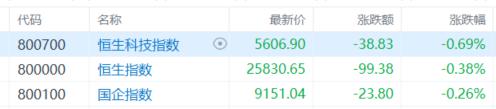
Market Overview - The Hong Kong stock market indices experienced declines, with the Hang Seng Tech Index falling by 0.69%, reaching a new low since early September. The Hang Seng Index and the Hang Seng China Enterprises Index decreased by 0.38% and 0.26%, respectively [1][2]. Technology Sector - Major technology stocks mostly declined, with Xiaomi dropping nearly 5%, Kuaishou down over 1%, and slight declines in JD.com, Meituan, Baidu, and Tencent. Alibaba saw an increase of over 1% [2][4][5]. New Energy Vehicle Sector - Stocks in the new energy vehicle sector fell, including Li Auto, NIO, Chery, Beijing Automotive, BYD, and Leap Motor [6]. Semiconductor Sector - Semiconductor stocks experienced declines, with companies like Shanghai Fudan, Jingmen Semiconductor, and Zhongxing Communications reporting losses [7][8]. Gold Sector - Gold stocks led the market gains, with China Gold International rising over 8%. Other gold-related stocks also saw increases, driven by expectations of significant gold purchases by global central banks [9][10]. Military Industry - Military stocks performed well, with China Shipbuilding Industry rising over 9%. Analysts expect the military industry to enter an upward cycle, supported by recent quarterly reports indicating a narrowing decline in performance [11][12]. Oil Sector - Oil stocks saw an uptick, with China Petroleum & Chemical Corporation increasing nearly 3%. This rise is attributed to recent increases in crude oil futures prices [13]. Lithium Battery Sector - Lithium battery stocks gained, with Tianqi Lithium rising nearly 3%. The market for lithium carbonate has shown significant recovery, with prices expected to rise further due to increasing demand [15][16]. Market Sentiment - The market sentiment remains cautious, with expectations of continued adjustments in the Hong Kong stock market due to weak macro liquidity and corporate earnings forecasts. Investors are advised to wait for clearer signals from U.S. monetary policy and mainland economic data before seeking rebound opportunities [21].