JD(09618)

Search documents
8点1氪丨周生生再发声明,回应足金挂坠检测出含铁银钯;大润发母公司辟谣CEO被警方带走;极氪8X信息遭提前泄露
3 6 Ke· 2026-02-04 00:26
Group 1 - Guotou Ruijin Fund announced an adjustment to the valuation method of its silver LOF, leading to a significant drop of over 31% in the net asset value of its silver futures A shares on the same day [8] - The adjustment sparked controversy among investors, particularly regarding the timing of the announcement, which was made after trading hours [8] - The fund stated that prior notice could have led to panic and potential runs on the fund, hence the decision to announce post-trading [8] Group 2 - The stock price of Cambrian Technology plummeted by 12.88%, resulting in a market value loss of nearly 700 billion yuan, marking its largest single-day drop since September 2025 [9] - Cambrian responded to the market concerns by stating it was unaware of the specific reasons for the stock decline and emphasized that its operations were progressing smoothly [9] - Analysts suggested that high valuations and increased competition in the AI chip sector may have contributed to the sell-off [9] Group 3 - Tencent and other internet companies faced a significant drop in stock prices due to rumors of an increase in value-added tax, which were later debunked as false [10] - Tax experts clarified that the current VAT rates for these companies remain unchanged at 6%, alleviating concerns over potential tax hikes [10] Group 4 - Adobe announced it will discontinue its 2D animation software, Adobe Animate, by March 1, 2026, citing advancements in technology and changing user needs as reasons for the decision [11] - The software has been in use for over 25 years and has played a significant role in the animation ecosystem [11] Group 5 - JD.com announced it will invest over 1.3 billion yuan in benefits for frontline employees during the Spring Festival, including bonuses and subsidies [7] - The initiative aims to provide support and a sense of community for employees working during the holiday season [7] Group 6 - Red Star Capital completed the global acquisition of the antibiotic Moxifloxacin, establishing a new biopharmaceutical company focused on infection and respiratory diseases [11] - The acquisition includes essential assets such as drug registration certificates and intellectual property rights [11]



8点1氪:周生生再发声明,回应足金挂坠检测出含铁银钯;大润发母公司辟谣CEO被警方带走;极氪8X信息遭提前泄露
36氪· 2026-02-04 00:18
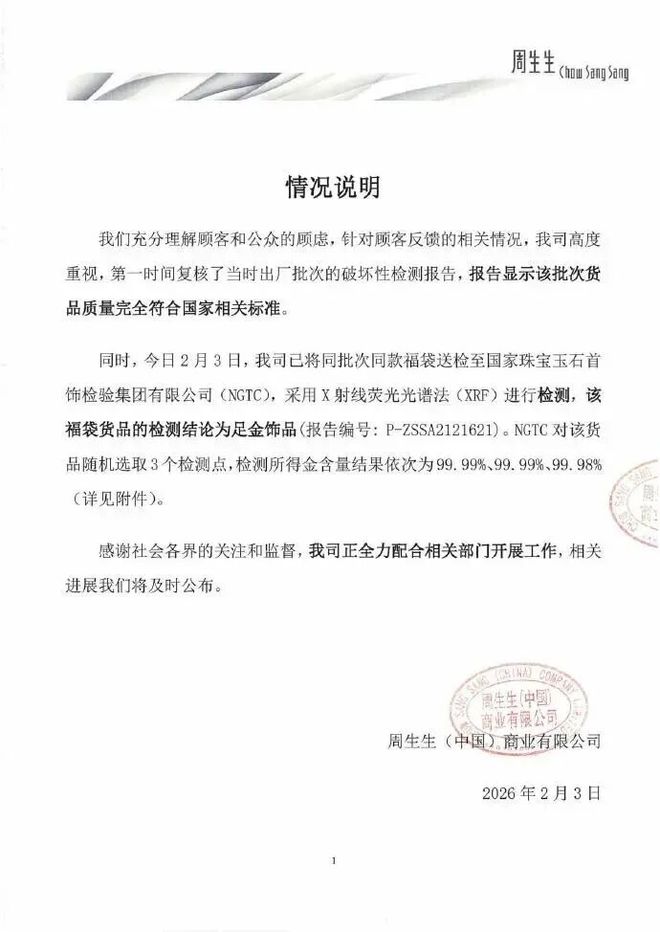
Group 1 - The core issue revolves around the quality concerns of Chow Sang Sang's gold pendants, which were found to have varying gold content levels, with the highest at 99.99% and the lowest at 64.37%, showing a difference of 35.62% [3][5] - Chow Sang Sang's official response emphasized that all their gold products meet national standards, with a gold content of no less than 990‰, and they are taking the matter seriously by conducting further tests [5][3] - The company has sent the same batch of products for testing to the National Gemstone and Jewelry Testing Center, which confirmed the gold content as 99.99% in multiple tests [5][3] Group 2 - The market is experiencing significant volatility, with various sectors, including precious metals, facing sharp declines due to panic selling and high leverage [17][12] - The domestic automotive market is showing a clear divide, with traditional brands like SAIC and Geely seeing over 20% growth, while new energy vehicle startups are facing collective declines [17] - The gaming industry is under scrutiny for potential tax adjustments, with rumors causing stock price drops among major companies like Tencent, although these rumors have been deemed unreliable [14][12]


京东:春节9天发超13亿元给一线员工;蜜雪冰城招聘多个乐园岗位;零跑董事长朱江明回应员工吐槽年会丨邦早报
创业邦· 2026-02-04 00:09
Group 1 - JD announced an investment of over 1.3 billion yuan in employee benefits during the Spring Festival, including overtime pay and bonuses for frontline workers [3] - OpenAI is shifting its focus towards the commercialization of ChatGPT, reallocating resources from long-term research, which has led to the departure of several executives [4] - Xpeng Motors has merged its autonomous driving and smart cockpit centers into a new General Intelligence Center, aimed at enhancing AI capabilities across various applications [7] Group 2 - Porsche's global deliveries are expected to decline by 10% in 2025, with a significant drop of 26% in the Chinese market, reflecting a strategic focus on maintaining brand value over sheer sales volume [11] - PepsiCo plans to reduce the prices of certain snack products by up to 15% in response to consumer feedback regarding high prices [12] - Douyin will stop the paid collection feature starting February 5, 2026, as part of a regular product iteration, which will not affect creators' monetization efforts [12] Group 3 - The AI Coding Plan service launched by Moore Thread aims to integrate domestic chips and models in the AI programming tool sector, offering various subscription plans [12] - The first AI percutaneous navigation robot in China has been approved for market release, enhancing the precision of minimally invasive surgeries [19] - QuestMobile reported that the monthly active user base reached 1.276 billion, with an average usage time of 186.2 hours, driven by the growth of AI applications [19]

盘前必读丨“十五五”首个中央一号文件来了;美股收跌贵金属逆势大涨
Di Yi Cai Jing Zi Xun· 2026-02-04 00:01
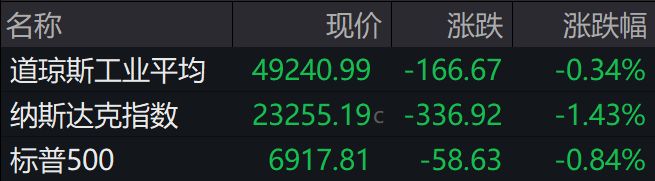
Group 1 - The Chinese central bank announced a reverse repurchase operation of 800 billion yuan to maintain liquidity in the banking system, with a term of 3 months [2] - The Shanghai Stock Exchange reported a significant increase in new A-share accounts, with 4.9158 million new accounts opened in January 2026, a month-on-month increase of approximately 89% and a year-on-year increase of about 213% [2] - The Paris prosecutor's office conducted a search of the office of the social media platform X, owned by Elon Musk, as part of an investigation into cybercrime [3] Group 2 - Major U.S. stock indices experienced declines, with the Dow Jones down 0.34%, S&P 500 down 0.84%, and Nasdaq down 1.43%, nearly erasing gains made since the beginning of the year [3][4] - Large technology stocks faced pressure, with Nvidia down 2.84%, Microsoft down 2.87%, and Amazon down 1.79% [4] - The Nasdaq Golden Dragon China Index fell by 0.94%, with Alibaba down 2.81% and Tencent Holdings ADR down 3.33% [4] Group 3 - Commodity markets saw a rebound in gold and silver prices after two days of significant declines, with spot gold rising 5.2% to $4,906.82 per ounce [5] - Crude oil prices slightly rebounded, with WTI crude oil futures increasing by 1.72% to $63.21 per barrel [5] - Several companies announced significant developments, including a change in controlling shareholder for Jiatang and a fundraising plan for Xuguang Electronics [5]


被京东狠狠拿捏了!春节砸13亿给一线员工发红包
Sou Hu Cai Jing· 2026-02-03 23:18
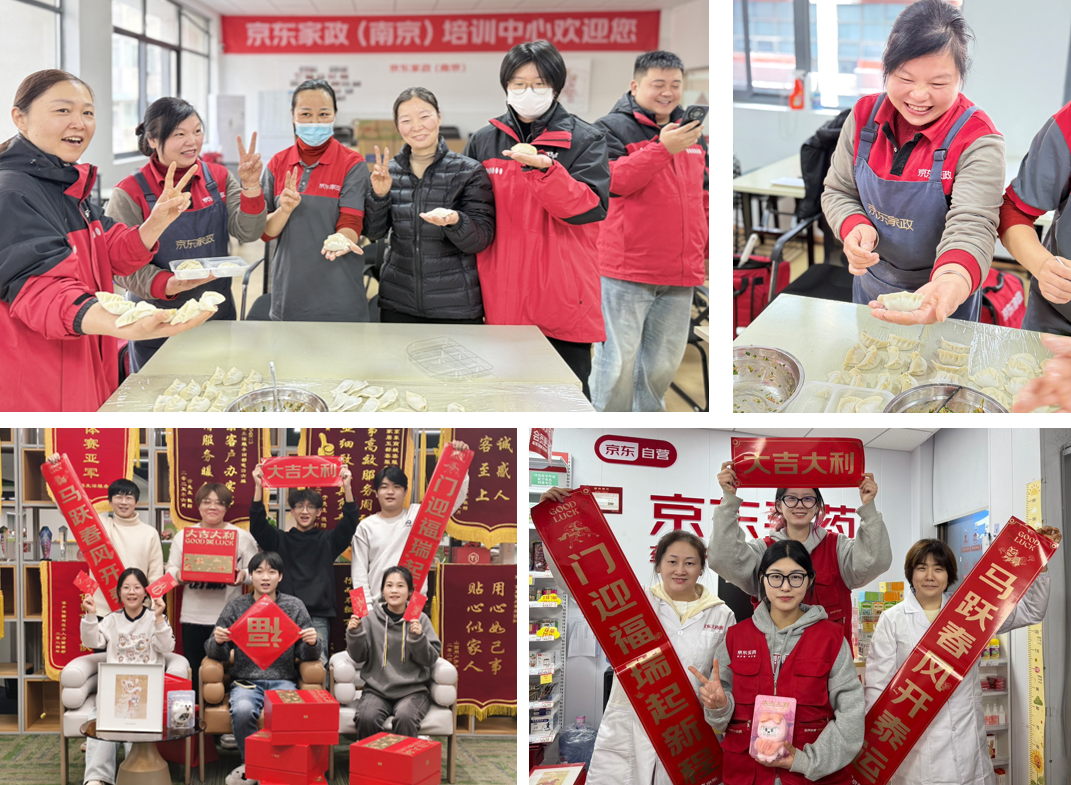
Core Viewpoint - JD.com announced an investment of over 1.3 billion yuan during the Spring Festival to provide substantial benefits to frontline employees, including delivery personnel, full-time riders, customer service staff, and store clerks, exceeding national legal standards [1][2]. Group 1: Employee Benefits - The 1.3 billion yuan will be distributed over nine days during the Spring Festival, covering a wide range of employees without any hidden conditions [2]. - The benefits include overtime pay, New Year bonuses, and subsidies for family reunions, addressing the needs of employees who work during the holiday [2][5]. - JD.com has organized various festive activities at logistics sites and stores to create a warm atmosphere for employees who are working during the holiday [5][7]. Group 2: Company Culture and Industry Impact - JD.com’s approach to employee welfare sets a benchmark for the industry, emphasizing the importance of frontline workers and their contributions to the company's operations [7]. - The company has a history of investing in employee benefits during the Spring Festival, with previous years seeing significant financial commitments, such as over 700 million yuan in 2025 and nearly 400 million yuan in 2022 [5][7]. - By prioritizing employee welfare, JD.com aims to foster a supportive work environment, encouraging other companies to adopt similar practices and reduce insincerity in employee relations [7][8].
2026网上年货节有“新”意 尽显新春消费活力
Zhong Guo Zheng Quan Bao· 2026-02-03 20:27
Group 1 - The "2026 National Online New Year Goods Festival" has shown a vibrant online consumption market since its launch on January 19, highlighting the integration of AI technology and the rise of emotional consumption as new characteristics of this year's festival [1] - AI technology has been deeply integrated into the entire process of the festival, including product selection, user matching, supply chain fulfillment, and live sales, allowing platforms to adopt differentiated innovation paths [1] - Alibaba's marketing department has utilized AI for deep demand matching, enabling brands to achieve a closed loop from external promotion to internal conversion, with data indicating that 100 precise promotions can lead to over 31 effective search conversions [1] Group 2 - JD.com has focused on supply chain optimization by launching the industry's first "AI New Year Goods Map," which enhances delivery efficiency by predicting sales and helping merchants with inventory management [2] - JD.com has also extended AI technology to live sales, introducing AI-native digital personas for brand executives to enhance consumer experience during the festival [2] - The shift in consumer behavior among younger generations (90s and 00s) has moved from traditional bulk purchasing to experience-oriented and self-appreciation consumption, as evidenced by a 50% increase in trophy search volume on Taobao [2] Group 3 - Young consumers are increasingly seeking emotional resonance in their purchases, favoring products with emotional warmth and fun attributes over traditional auspicious items during the festival [3] - Popular products include the "Full Throttle" series from Pop Mart and the "One Horse Ahead" toy from Wentongzi, which have seen significant sales, indicating a trend towards playful and culturally infused items [3] - New types of food and beverages, such as creative pastries and themed products, are gaining popularity among young consumers, reflecting their desire to express emotions and create festive atmospheres [3]
京东家政百城招募20万家政师守护万家洁净
Xin Lang Cai Jing· 2026-02-03 19:46
Core Insights - The home service market is experiencing a surge in demand as the Spring Festival approaches, leading to a significant increase in orders for cleaning services, with some cities facing a shortage of workers [1][2] - JD Home Services has launched a recruitment plan to hire 100,000 cleaners and 100,000 appliance cleaning specialists across 180 cities to address the labor shortage and provide professional training [1][2] Demand Surge for Home Services - The demand for home cleaning services has skyrocketed, with core service orders increasing by over 10 times during peak periods before the Spring Festival [2] - Popular services such as oil stove cleaning and deep cleaning of entire homes are fully booked a week in advance, reflecting a shift in consumer behavior towards professional cleaning services [2] - Some areas are experiencing a labor shortage exceeding 50%, despite existing staff working overtime to meet demand [2] Comprehensive Free Training Program - JD Home Services has established a "recruitment-training-certification-advancement" talent development system to improve the skill levels and job stability of workers [3] - The training program includes both theoretical knowledge and practical skills, covering cleaning processes, appliance disassembly, and service etiquette [3] - Training bases have been set up in Chongqing Wanzhou and Inner Mongolia Chifeng, with a focus on providing free accommodation for trainees [3] Stringent Recruitment Standards - All workers must pass health checks, psychological assessments, and background investigations before being hired [4] - The service process is broken down into 144 standardized steps, and new hires can be certified and start working within five days [4] Job Stability and Income Growth - Workers in the home service sector are experiencing stable income, with some earning between 8,000 to 10,000 yuan per month [5] - The platform aims to enhance the job satisfaction of workers by providing awards and recognition, as well as customized gifts for their well-being [6] - JD Home Services is committed to making the home service industry a respected and promising career path, with ongoing efforts to expand recruitment and improve training systems [6]
演员李亚男携京东超市探访母婴用品生产一线 全链路溯源 严把品质关
Zhong Jin Zai Xian· 2026-02-03 14:27
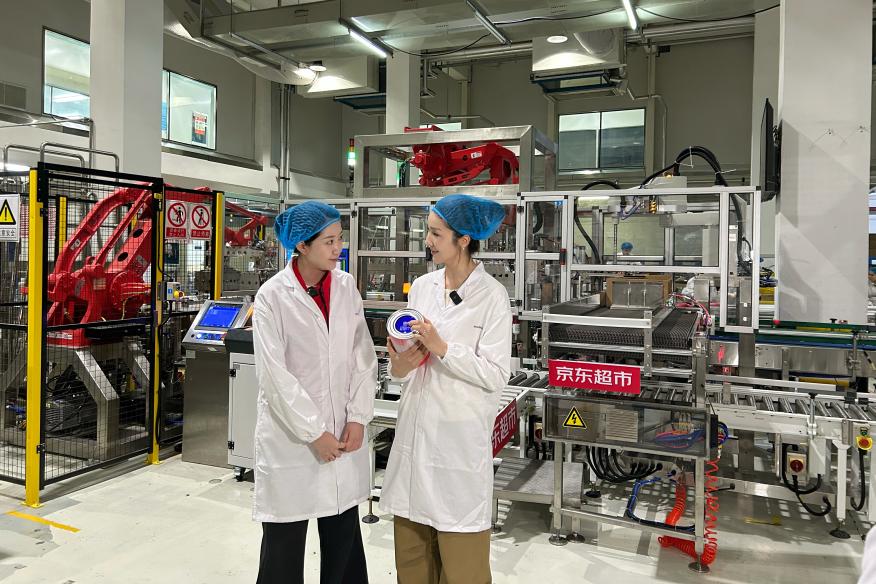
Core Insights - The article highlights the importance of quality in maternal and infant products, emphasizing the challenges faced by new parents in selecting safe and reliable options [1] - Actress Li Yanan collaborates with JD Supermarket to ensure stringent quality control in maternal and infant products, acting as a "quality assurance officer" [1][3] Group 1: Quality Assurance Initiatives - JD Supermarket has established a comprehensive quality assurance system for maternal and infant products, incorporating a full traceability system and seven quality control measures [1][5] - The traceability system allows consumers to track each can of milk powder from production to transportation through a unique code [3] - The production process for milk powder includes 77 quality checks and aims to preserve "fresh nutrition" by ensuring rapid processing within 18 minutes [3] Group 2: Production Standards - The Pampers factory, recognized as a world-class lighthouse factory, adheres to over 500 stringent standards for raw material audits and supplier traceability [3][4] - Pampers employs fully automated, enclosed, and zero-touch production processes, utilizing a 4K electronic detection system to identify contaminants at a millimeter level [3] Group 3: Consumer Engagement and Feedback - JD Supermarket emphasizes the importance of customer feedback and has established a rapid response mechanism for complaints [7] - The company offers specific after-sales services, such as "Red Bottom Worry-Free" for diaper issues and flexible size exchanges, addressing parents' concerns [7] Group 4: Promotional Activities - From now until February 18, consumers can access specially selected maternal and infant products through the JD app, featuring promotional offers [7]
AI打开2026年新春消费新空间
Xin Hua She· 2026-02-03 13:50
Group 1 - Alibaba's Qianwen App has launched a "Spring Festival Treat Plan" with an investment of 3 billion yuan, collaborating with various Alibaba ecosystem businesses to distribute cash red envelopes and offer free order opportunities [1] - The initiative aims to cultivate a habit among users to rely on AI for their needs, streamlining the consumer experience by allowing users to express their intentions to AI without switching between multiple apps [1] - Competing platforms like Tencent and Baidu have also initiated similar promotional activities, indicating a trend among internet companies to leverage AI for consumer engagement during the Spring Festival [1] Group 2 - AI technology is awakening demand in the consumer sector by providing personalized recommendations and reminders based on real-time data, enhancing the understanding of consumer needs [2] - The integration of AI in decision-making processes is exemplified by new functionalities in AI glasses, enabling users to make purchases with simple commands, showcasing the evolution of AI from intent understanding to service execution [3] - The growth of AI-related consumer electronics is projected, with a significant increase in sales expected by 2025, highlighting the potential for AI to drive new consumption trends [3] Group 3 - The surge in AI-driven consumer activities is supported by robust computing power, with Alibaba Cloud preparing for high traffic during the Spring Festival to ensure stable operations for Qianwen [4] - The demand for AI services during peak consumption periods is increasing, necessitating enhancements in AI computing capabilities to improve consumer experiences and reduce operational costs for businesses [4][5]
《连续9天,日均新增投入1.5亿!京东升级一线员工春节福利保障》
Zhong Jin Zai Xian· 2026-02-03 13:27
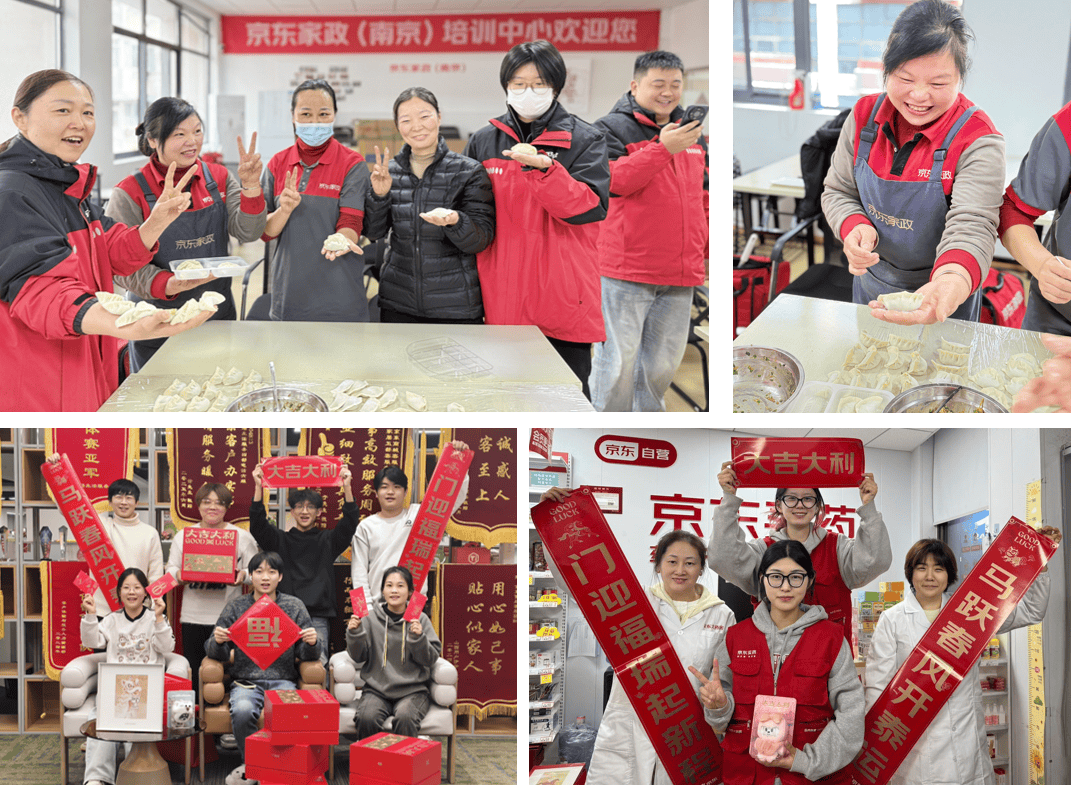
Group 1 - The company will invest over 1.3 billion yuan during the Spring Festival to provide enhanced welfare subsidies and various guarantees for frontline employees, including delivery personnel and customer service staff [1] - A series of cultural care initiatives have been launched across various locations, including activities such as distributing lucky characters, making dumplings, and providing winter gift packages to create a festive atmosphere [1] - The company has established "Xiao Ge's Home" in cities like Beijing and Wuhan, allowing delivery personnel to reunite with their families during the holiday [1] Group 2 - This Spring Festival marks the first for full-time delivery riders at the company, who will receive triple overtime pay and additional subsidies, with some riders potentially earning over 6,000 yuan during the holiday [3] - The company offers a child reunion subsidy, enabling employees to bring their children to their work locations, enhancing family togetherness during the holiday [3] - Flexible scheduling allows employees to balance work and family time, enabling them to earn extra income while spending time with their children [3] Group 3 - The company emphasizes the importance of community and family during the holiday, with employees planning to celebrate together and share meals, reinforcing a sense of belonging [5] - Service providers, such as housekeepers, have developed strong relationships with clients, highlighting the personal connections formed through their work [5] - The company's New Year shopping festival has commenced, ensuring reliable and quality service for consumers during the festive season [7]