BABA(09988)

Search documents
千问元宝红包口令在微信已可复制,二手平台惊现奶茶6元起售
21世纪经济报道· 2026-02-08 05:44
Core Viewpoint - The competition among major internet companies, particularly in AI applications, is intensifying, leading to significant impacts on various industries, including the new tea beverage sector, which is benefiting from promotional activities and increased consumer engagement [4][5]. Group 1: Promotional Activities and Market Impact - Alibaba's Qianwen launched a "Spring Festival 3 billion free order" campaign, resulting in a surge of 10 million orders within 9 hours of its launch [4]. - Participating tea brands experienced order volumes that increased nearly tenfold compared to the previous day, causing system crashes due to overwhelming traffic [4]. - The validity of the free order cards was extended from February 23 to February 28, allowing consumers to use them for various food items, not just tea [4]. Group 2: User Behavior and Market Dynamics - Users began reselling Qianwen's tea vouchers on second-hand platforms for prices ranging from 6 to 10 yuan, despite the company's policy against transferring or reselling these virtual benefits [4]. - The competition among platform enterprises is evolving into a long-term confrontation, with significant implications for profitability and market strategies [5]. - Analysts suggest that while the current AI application competition may pressure short-term profits, the long-term winners will be those with strong foundational models and effective product designs [5].




千问元宝红包口令在微信内已可复制
Xin Lang Cai Jing· 2026-02-08 05:05
Core Viewpoint - The article discusses the recent developments regarding the sharing of red envelope codes for Alibaba's Qianwen APP and Tencent's Yuanbao within WeChat, highlighting a temporary ban on these codes by WeChat [1] Group 1 - The red envelope codes for Alibaba's Qianwen APP and Tencent's Yuanbao can now be copied within WeChat [1] - WeChat had previously "banned" the Qianwen activity codes on February 6, preventing users from copying them [1] - Users experienced issues where even selecting the codes did not display the copy button on WeChat [1]
千问、元宝红包口令在微信内已可复制
第一财经· 2026-02-08 04:32
Group 1 - The article highlights that the Alibaba Qianwen APP and Tencent Yuanbao's red envelope commands can now be copied within WeChat as of February 8 [1] - It mentions that WeChat had previously "banned" the Qianwen activity command on February 6, preventing users from copying the command even if selected [4] - The Yuanbao command also faced a temporary ban, indicating a fluctuating regulatory environment for these digital red envelope features [4]
AI春节红包雨下了1/3,效果如何?
3 6 Ke· 2026-02-08 03:51
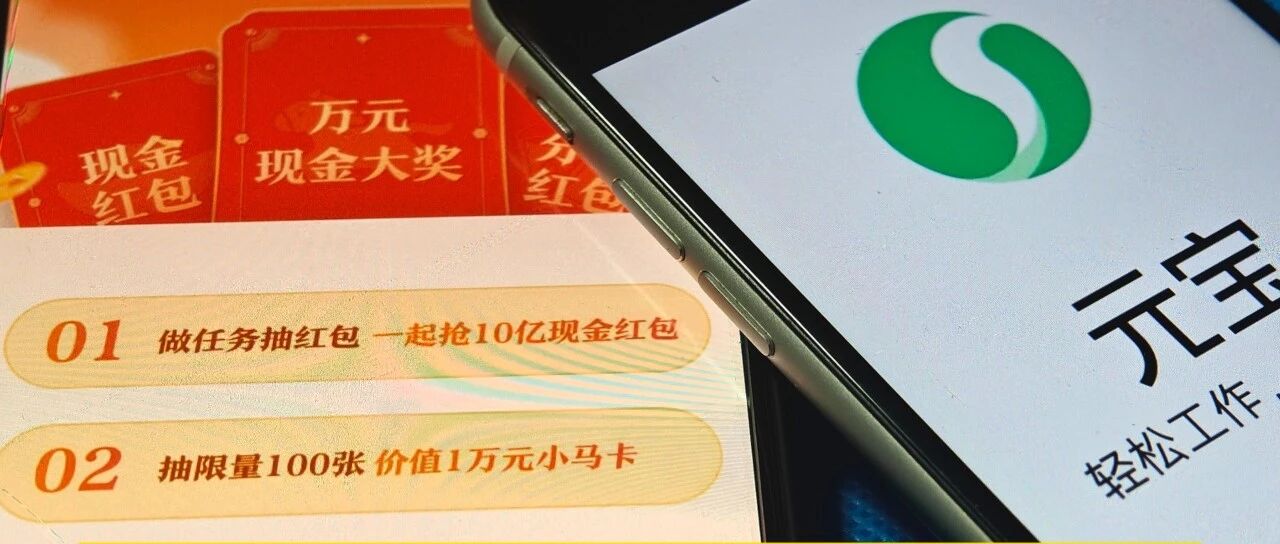
Core Insights - The article discusses the competitive landscape of AI chatbot applications during the Chinese New Year, highlighting the aggressive marketing strategies employed by major tech companies like Tencent and Alibaba to capture user attention and engagement through cash red envelope campaigns. Group 1: Red Envelope Campaigns - Yuanbao launched a "10 billion cash red envelope" campaign on February 1, coinciding with the start of the Spring Festival travel rush, leading to a surge in user engagement on WeChat and QQ [2] - The campaign revitalized dormant user groups, demonstrating the effectiveness of social sharing in driving new user acquisition [2] - Despite the initial success, WeChat imposed restrictions on sharing Yuanbao's red envelope links, limiting them to copy-paste methods, which dampened the campaign's momentum [3][5] Group 2: Competitive Dynamics - The competition intensified as Alibaba's Qianwen app also launched a significant red envelope initiative, offering 30 billion yuan in rewards, which faced similar sharing restrictions from WeChat [3][10] - The article notes that the red envelope campaigns are part of a broader strategy by major tech firms to leverage the high traffic and engagement during the Chinese New Year, a peak time for user interaction [11][12] Group 3: AI Application Growth - The article highlights the growth anxiety among major tech companies regarding their AI applications, with Yuanbao, Qianwen, and Doubao vying for user acquisition and retention [13] - Yuanbao's advertising spend reached 15 billion yuan in 2025, significantly boosting its user base, but it still lagged behind Doubao in user engagement metrics [13][14] - The focus is shifting from merely acquiring users to retaining them, as companies recognize the importance of user quality over quantity [16][17] Group 4: Strategic Implications - The article emphasizes that the red envelope campaigns serve as a magnifying glass for the transition of AI applications from user acquisition to user retention strategies [17] - The competition among AI chatbots reflects a consensus among major tech firms on the importance of establishing a strong foothold in the AI space, particularly during high-traffic periods like the Spring Festival [8][9]
科技周报|苹果CEO库克谈退休、马云现身阿里千问春节项目组
第一财经网· 2026-02-08 03:36
Group 1 - Apple CEO Tim Cook discussed retirement and succession planning, emphasizing the importance of leadership in preparing for the future [2] - Cook's comments come amid speculation about his retirement as he turns 65, with the company needing a leader who can innovate or manage effectively [2] - The competition among Tencent, Alibaba, and Baidu has intensified with a combined investment of over 4.5 billion yuan in AI-driven red envelope campaigns for the upcoming Spring Festival [2][3] Group 2 - Panasonic announced potential layoffs of up to 12,000 employees as part of a structural reform, with a significant drop in sales and net profit reported [5] - The company aims to restructure its organization and focus on customer value creation while transitioning to a sustainable business model [5] Group 3 - Meituan completed the acquisition of Dingdong Maicai for approximately 7.17 billion yuan, reinforcing its commitment to the grocery retail sector [8] - This acquisition is part of Meituan's strategy to enhance its presence in the instant retail market, competing against Alibaba and JD.com [8] Group 4 - Amazon reported a net sales increase of 24% for its AWS segment, with a projected capital expenditure of $200 billion for 2026, driven by strong demand and opportunities in AI and other advanced technologies [9] - The company anticipates robust long-term investment returns from this significant capital allocation [9] Group 5 - Alibaba's founder Jack Ma was seen at the company's Spring Festival project team, indicating the high stakes of the ongoing AI competition [10] - Alibaba's investment of 3 billion yuan in its Spring Festival campaign marks the largest in its history, highlighting its commitment to leveraging AI as a key entry point [10] Group 6 - MiHoYo issued a new anti-fraud notice, revealing multiple internal cases and a blacklist of suppliers, reflecting a growing trend of transparency in the gaming industry [14] - The company has previously reported similar cases, indicating a focus on addressing corruption within its supply chain and marketing operations [14] Group 7 - Haier Group reported a global revenue of 426.8 billion yuan for 2025, with a focus on AI applications and the establishment of various ecological platforms [15] - The company is prioritizing new business areas such as robotics, renewable energy, and automotive ecosystems alongside its traditional smart home and health sectors [15]


比外卖大战还疯的AI商战,把喜茶们又干冒烟了?
创业邦· 2026-02-08 03:32
Core Viewpoint - Alibaba's AI assistant, Qianwen, has initiated a new wave of competition in the milk tea market by launching a "Spring Festival 3 billion big free order" campaign, allowing users to purchase milk tea for just 1 cent, leading to overwhelming demand and system crashes [7][12][20]. Group 1: Campaign Overview - The campaign was launched on February 6, allowing users to get a 25 yuan milk tea for only 1 cent by using the Qianwen app [7][12]. - Within 9 hours, users made over 30 million requests for milk tea, resulting in more than 10 million orders processed by Qianwen [7][9]. - The campaign's popularity led to system overloads, with many users unable to place orders due to app crashes and high demand [9][20]. Group 2: User Engagement and Reactions - Users expressed frustration as the app frequently failed to respond, leading to humorous comments about the app's performance [10][21]. - The campaign sparked a frenzy on social media, with users sharing their experiences and strategies for obtaining milk tea [25][28]. - Despite the chaos, many users remained determined to participate, showcasing the strong appeal of the promotion [38]. Group 3: Marketing Strategy and Implications - Alibaba's strategy appears to focus on attracting new users to the Qianwen app, with the milk tea promotion serving as a gateway to broader engagement with Alibaba's ecosystem [44][51]. - The campaign is part of a larger trend where major tech companies leverage significant marketing budgets to capture user attention during peak seasons, reminiscent of past promotional tactics [53][59]. - The initiative is expected to enhance Qianwen's user base, with a target of reaching over 100 million monthly active users by early 2026 [52].

AI入口激战正酣,腾讯、阿里、字节影子股曝光
Xin Lang Cai Jing· 2026-02-07 23:38
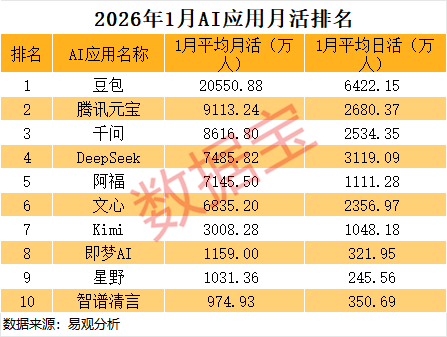
Core Viewpoint - The competition among major internet giants like Tencent, Baidu, and Alibaba for the "AI super entrance" is intensifying, with significant investments aimed at shaping the future internet ecosystem over the next decade [1][10]. Group 1: Differentiated Strategic Layouts - Alibaba is focusing on a "infrastructure + service" strategy, integrating its commercial ecosystem into the Tongyi Qianwen app, which has expanded beyond traditional chatbot functions to offer diverse services [2][11]. - ByteDance is leveraging its global traffic pool from Douyin, with its AI product Doubao achieving over 100 million monthly active users, positioning itself as a content distribution hub [3][12]. - Tencent is adopting a "social penetration + latecomer" strategy, investing 1 billion yuan in cash subsidies to enhance the WeChat ecosystem and embed AI deeply into social interactions [3][12]. Group 2: AI Application Rankings - As of January 2026, Doubao leads the AI application rankings with over 20.55 million average monthly active users, followed by Tencent's Yuanbao with approximately 9.11 million, and Alibaba's Qianwen with about 8.62 million [4][13]. Group 3: Investment Perspectives - The essence of the competition is the "intention economy," where the winner will be the player with the most complete ecosystem capable of converting dialogue into service delivery [4][12]. - Investors are advised to focus on AI e-commerce, vertical applications, and foundational infrastructure, particularly companies with equity ties to the three giants [5][14]. Group 4: A-Share Market Holdings - In the A-share market, 11 companies have "Tencent" as a keyword among their top ten shareholders, with notable companies like China Unicom and Century Huatong exceeding a market value of 100 billion yuan [6][17]. - Similarly, 11 companies have "Alibaba" or "Taobao" in their top ten shareholders, indicating significant investments in the A-share market [6][17]. - ByteDance holds shares in Zhangyue Technology through Beijing Quantum Leap Technology Co., while Baidu holds shares in Yuxin Technology [6][17]. Group 5: Potential Beneficiary Stocks - The competition for the AI entrance among Tencent, Baidu, Alibaba, and ByteDance is expected to benefit various companies, particularly those involved in AI applications and computing power resources [5][18]. - A total of 25 stocks related to the "East Data West Computing" concept have received institutional ratings, with a focus on areas like CPO, liquid cooling, AI computing power, and servers [8][19].
系统挤崩、门店爆单!你抢到免费奶茶了吗?
Xin Lang Cai Jing· 2026-02-07 15:37
Core Insights - The article discusses the launch of the "30 billion free order" campaign by the Qianwen app, which allows users to order milk tea for free using AI, quickly trending on social media [3][6] - The campaign has led to over 5 million orders within 5 hours, showcasing its popularity among users [6] - The app offers users 21 no-threshold 25 yuan free order cards, totaling 525 yuan, and a chance to win a 10,000 yuan AI life card [7] - The campaign has caused significant traffic, leading to server issues and delays in order fulfillment at various milk tea shops [7][18] Company and Industry Summary - The Qianwen app is collaborating with over 300,000 milk tea and coffee shops, including popular brands like Mixue Ice City and Luckin Coffee, to facilitate the free order campaign [7] - The campaign is part of a broader trend among major tech companies, including Alibaba, ByteDance, Tencent, and Baidu, to engage users with AI applications during the Spring Festival, with a total of 4.5 billion yuan in red envelopes prepared for users [20] - The overwhelming response to the campaign has led to a repeat of previous incidents where promotional activities resulted in overwhelming demand, causing operational challenges for participating stores [20]

壹快评|AI红包大战,打不出“从0到1”的创新
第一财经· 2026-02-07 13:42
Core Viewpoint - The article discusses the rapid advancements in artificial intelligence (AI) and the intense competition between domestic and international companies, highlighting the differences in focus between the two markets [3][4]. Group 1: Recent Developments in AI - Meta has released a new model codenamed "Avocado," improving computational efficiency by 10 to 100 times [3]. - Google has opened its world model Genie 3, allowing users to create and explore 3D virtual worlds through natural language descriptions [3]. - Domestic companies like Alibaba and ByteDance are also making significant strides, with Alibaba launching a model with over one trillion parameters [3]. Group 2: Competition Dynamics - The competition in AI has reached a fever pitch, with major tech companies investing heavily, including a reported total capital expenditure of approximately $650 billion from the four major U.S. tech giants for 2026 [3]. - The "AI red envelope war" in China has seen tech giants invest over 4 billion yuan to capture the "AI super entrance" [4]. Group 3: Differences in Focus - International companies prioritize breakthroughs in underlying technology and model capabilities, while domestic firms are more focused on application and commercial realization [4][5]. - Domestic companies excel at transforming new technologies into commercial successes but often lag in original innovation [5][6]. Group 4: Challenges and Opportunities - The disparity in innovation focus is linked to differences in market foundations, technological reserves, and business environments between China and the U.S. [6]. - Despite significant investments in foundational technologies, domestic firms still face challenges in original innovation and product iteration speed compared to their international counterparts [6]. Group 5: Vision for the Future - The article emphasizes the need for Chinese tech companies to shift their focus towards original innovation to avoid being outpaced by international competitors [7]. - It calls for a cultural shift towards innovation and greater support for foundational research from leading tech firms to achieve the national goal of technological self-reliance [7].

2026 AI年度展望:关于「大公司、独角兽、创业者」的十条趋势判断
36氪· 2026-02-07 13:34
Core Viewpoint - The article discusses the competitive landscape of the AI market in China, particularly focusing on the year 2026 as a critical period for major players like Alibaba, Tencent, and ByteDance to solidify their positions in the AI To C market. The competition is expected to be intense, akin to previous battles in ride-hailing, payments, and food delivery sectors [6][8]. Group 1: Major Players and Strategies - In 2026, Alibaba's strategic investment in "Qianwen" will be significant, with plans to spend 3 billion yuan to attract users [6]. - ByteDance is positioned as a formidable competitor in the AI To C space, leveraging its substantial user base and exploring new product avenues like the "Doubao" phone [7][18]. - Tencent is focusing on enhancing its AI applications and models, with a particular emphasis on integrating AI capabilities into its existing services [27][32]. Group 2: Market Dynamics and Challenges - The AI market is still in its infancy regarding commercial models, with no mature business models currently established. Companies are exploring various approaches, including subscription services, API sales, and customized solutions [10][54]. - The competition among major players is expected to intensify as they strive to differentiate their AI products and capture user demand [25][26]. - The article highlights the importance of organizational agility and the need for companies to adapt quickly to market changes, particularly in the context of AI product development [26][72]. Group 3: Investment and IPO Trends - The article notes that recent IPOs, such as those of Zhiyun and MiniMax, signal a more favorable environment for tech companies in the public market, which could enhance funding opportunities for AI firms [67][68]. - However, there is a cautionary note regarding the pressure to commercialize quickly post-IPO, as companies may face scrutiny from investors regarding their performance [69]. Group 4: Future Directions and Innovations - The article emphasizes the need for companies to innovate in AI model capabilities, particularly in areas like memory and contextual understanding, which are seen as critical for future success [83][84]. - There is a growing interest in developing decentralized models that can leverage localized data for better performance in specific industries [85]. - The potential for AI to transform various sectors is highlighted, with a focus on creating personalized and efficient user experiences through advanced AI applications [34][38].