BABA(09988)

Search documents
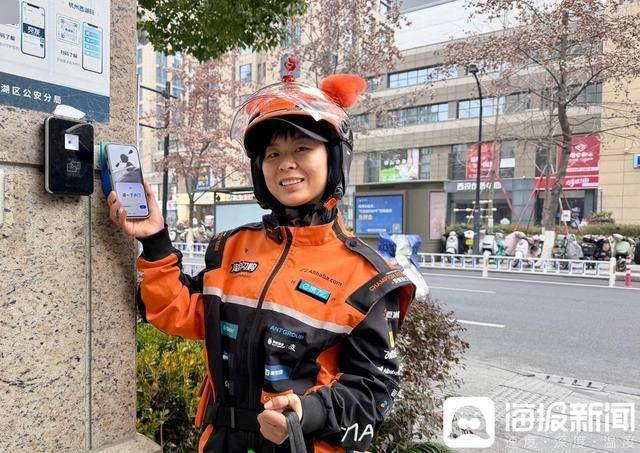
海量财经丨1.5万小区外卖订单有了“碰一下开门”标签 淘宝闪购让城市骑士送单更快更省心
Sou Hu Cai Jing· 2026-02-07 13:21
Core Insights - The "Tap to Open" service by Taobao Flash Purchase has been launched in over 200 cities and nearly 15,000 residential communities across China, significantly improving delivery efficiency for couriers [1][3] Group 1: Service Overview - The "Tap to Open" service allows couriers to enter residential areas in just 3 seconds, saving an average of 1 minute per delivery compared to previous methods that required registration [1][3] - This service is a collaboration between Taobao Flash Purchase, Alipay, and community property management, utilizing digital capabilities to streamline access and real-time order management [1][3] Group 2: User Experience and Safety - The service enhances safety by ensuring that only couriers with active delivery orders can access the residential areas, thus addressing security concerns [3] - The implementation of the "Tap to Open" label on delivery orders helps couriers identify eligible deliveries quickly, reducing communication costs and improving customer satisfaction [3] Group 3: Additional Features - Taobao Flash Purchase has introduced smart lockers for free storage and established delivery relay stations in various cities to facilitate the last mile of delivery [3] - The AI assistant for couriers has been launched, providing support for order matching, route recommendations, and problem-solving, having served over 3 billion requests since its inception [4]


AI红包大战,打不出“从0到1”的创新
Di Yi Cai Jing· 2026-02-07 12:11
Core Insights - The rapid development of artificial intelligence (AI) is highlighted by significant advancements and investments from major tech companies both domestically and internationally [1][2][3] Group 1: International Developments - Meta has released a new model codenamed "Avocado," achieving a 10 to 100 times improvement in computational efficiency [1] - Google has opened its world model Genie 3, allowing users to create and explore 3D virtual worlds through natural language descriptions [1] - Major US tech companies have announced a capital expenditure plan totaling approximately $650 billion by 2026 [1] Group 2: Domestic Developments - Alibaba has launched the Qwen3-Max-Thinking model with over one trillion parameters and plans to release Qwen 3.5 soon [1] - The domestic AI landscape is characterized by significant investments, with companies like Alibaba, Tencent, and ByteDance revealing substantial AI investment plans [1][2] - The competition for the "AI super entrance" has led to a "red envelope war," with over 4 billion yuan being invested [2] Group 3: Competitive Landscape - The competition in AI has reached a fever pitch, with differences in focus between the US and Chinese markets; the US emphasizes foundational technology breakthroughs, while China prioritizes application and commercialization [2][3] - Domestic companies excel in transforming new technologies into commercial success but often lag in original innovation compared to their international counterparts [3][4] Group 4: Innovation and Future Directions - There is a recognized gap in original innovation and product iteration speed between domestic and international companies, raising concerns about the long-term sustainability of current business models [4] - The need for a shift in focus towards original innovation is emphasized, as merely pursuing commercial success may lead to vulnerabilities in the face of global competition [4][5] - The call for tech giants to support foundational research and foster an innovative culture is crucial for achieving technological self-reliance and competing with international leaders [5]

壹快评|AI红包大战,打不出“从0到1”的创新
Di Yi Cai Jing· 2026-02-07 11:52
Core Insights - The article emphasizes the importance of original innovation alongside commercial success in the tech industry, particularly in the context of rapid advancements in artificial intelligence (AI) [1][5]. Group 1: AI Developments - Major tech companies are making significant strides in AI, with Meta's new model improving computational efficiency by 10 to 100 times, and Google's Genie 3 enabling the creation of 3D virtual worlds through natural language [1]. - Domestic companies like Alibaba and Tencent are also heavily investing in AI, with Alibaba releasing a model with over one trillion parameters and Tencent planning substantial AI investments [1][2]. Group 2: Competitive Landscape - The competition in AI has intensified, with a notable "AI red envelope war" in China, where tech giants are investing over 4 billion yuan to capture the "AI super entrance" [2]. - The article contrasts the focus of U.S. companies on foundational technology breakthroughs with Chinese firms' emphasis on application and commercialization [2][3]. Group 3: Innovation and Market Dynamics - There is a notable difference in innovation strategies, with Chinese companies excelling in commercial success but lagging in original innovation compared to their foreign counterparts [3][4]. - The article suggests that the current focus on immediate commercial success may hinder long-term innovation capabilities, warning that neglecting original innovation could lead to vulnerabilities in the future [4][5]. Group 4: Call for Change - The article calls for Chinese tech companies to prioritize foundational research and innovation, highlighting that the lack of ambition and mission-driven focus may be a significant barrier to achieving technological independence [5]. - It stresses the need for a cultural shift towards innovation and the role of government in guiding and supporting these efforts to realize the dream of technological self-reliance [5].
1000万单!补贴大战热闹又熟悉,但AI应用究竟应该比什么?
Sou Hu Cai Jing· 2026-02-07 11:14
Core Viewpoint - The article discusses the ongoing competition among major Chinese tech companies in the AI sector, particularly during the Spring Festival, highlighting the aggressive marketing strategies, including substantial subsidies, to attract users and establish AI as a core component of the next-generation internet [4][8]. Group 1: AI Competition and User Acquisition - The Spring Festival has sparked a significant "AI battle" among companies, with Alibaba's Qianwen App launching a "30 billion yuan free order" campaign, resulting in over 10 million orders within hours [1][2]. - Major players like ByteDance's Doubao and Tencent's Yuanbao are also competing fiercely, indicating a highly competitive environment in the AI application market [8]. - The article notes that the current strategies focus on user acquisition through subsidies, which may detract from long-term technological innovation [9][12]. Group 2: Market Dynamics and Implications - The competition is characterized by a "subsidy war," where companies are using financial incentives to rapidly grow their user base, reflecting a deep-rooted culture of subsidies in the Chinese internet sector [9][12]. - The article warns that this approach could lead to significant market distortions and resource wastage, as evidenced by the operational challenges faced by some tea shops overwhelmed by demand [9][10]. - There is a concern that prioritizing short-term user growth over foundational research could undermine China's long-term competitiveness in AI [12][13]. Group 3: Future Directions and Challenges - The article emphasizes the need for a shift in focus from mere marketing tactics to integrating technological innovation with user engagement strategies [12][13]. - It calls for patience and a commitment to long-term goals, suggesting that true success in AI will come from solving real user problems rather than relying on promotional tactics [13].
做不到“绝对公正”与“全网比价”的AI购物助理,都不会成功
虎嗅APP· 2026-02-07 10:10
Core Viewpoint - The article discusses the impact of AI development on e-commerce platforms, particularly focusing on the competitive dynamics between companies like Amazon, Alibaba, and Pinduoduo, emphasizing the importance of consumer trust and value delivery in the retail sector [6][29]. Group 1: AI and E-commerce Dynamics - The daily token consumption in China is projected to increase from 100 billion at the beginning of 2024 to 40 trillion by September 2025, representing a growth of over 400 times [7]. - Major US tech companies are significantly increasing their capital expenditures for AI infrastructure, with Google estimating its 2026 CapEx to be between $175 billion and $185 billion, nearly double its 2025 spending [8]. - Amazon's projected capital expenditure for 2026 is $200 billion, primarily focused on AWS AI infrastructure, while Microsoft anticipates around $150 billion in spending [9]. Group 2: Competitive Analysis of E-commerce Platforms - Amazon's 2025 GMV is estimated at approximately $700 billion, with AI assistant Rufus contributing $12 billion in annual transaction volume, accounting for 1.67% of total GMV [11][12]. - The article critiques the effectiveness of AI assistants in enhancing user experience, suggesting that they often serve as high-level customer service rather than providing significant incremental value [17]. - Pinduoduo's business model emphasizes "lowest price" as a prerequisite for advertising, contrasting with Amazon and Alibaba, which rely on advertising revenue from brand merchants [20][21]. Group 3: Consumer Trust and Value Proposition - The article argues that platforms like Costco succeed because they prioritize consumer trust and value, contrasting with Amazon and Alibaba, which may not always align with consumer needs [22]. - The effectiveness of AI shopping assistants is questioned, particularly in their ability to deliver on consumer expectations for price and quality, with the assertion that they cannot change the underlying business models of platforms like Alibaba [22][23]. - The article concludes that the future of AI in e-commerce will likely favor companies that can maintain consumer trust and deliver genuine value, with Apple and WeChat identified as potential leaders in this space due to their business models [27][28].






千问App投入30亿开启春节攻势;SpaceX收购xAI,马斯克整合商业帝国丨AI周报
创业邦· 2026-02-07 10:09
Core Insights - The article highlights significant developments in the AI industry, including mergers, funding rounds, and technological advancements, reflecting the rapid growth and competitive landscape of AI companies globally. Group 1: Mergers and Acquisitions - SpaceX has acquired xAI, marking a strategic move by Elon Musk to integrate AI into its aerospace operations [7] - OpenAI is prioritizing the commercialization of ChatGPT, leading to the departure of several executives amid a shift in focus from long-term research to immediate product development [9] Group 2: Funding and Investments - A total of 34 AI financing events were disclosed globally, with a total funding amount of 169.13 billion RMB, averaging 8.05 billion RMB per event [42] - The highest funding in the domestic AI sector was achieved by Zhijidongli, which completed a 14.01 billion RMB A++ round of financing [49] Group 3: Technological Advancements - The first AI percutaneous navigation robot has been approved for market release in China, enhancing precision in medical procedures [9] - Tencent's HPC-Ops has improved inference throughput by 30%, showcasing advancements in AI model performance [23] Group 4: Market Trends and Predictions - The domestic transformer market is expected to grow over 20% year-on-year by 2025, driven by the increasing demand for AI computing power [40] - The CEO of Xiaopeng Motors predicts that AI will be a central theme in technology for the next 30 to 50 years, emphasizing its integration into the automotive industry [38] Group 5: Company Strategies and Developments - Ant Group's CEO announced an "AI Credit" incentive program to encourage innovative contributions in AI [29] - Meitu's CEO discussed the competitive landscape between general AI models and specialized applications, emphasizing the importance of niche markets [19]

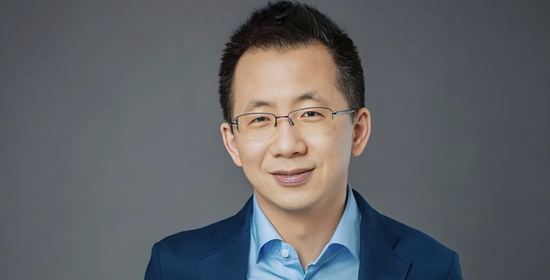
张一鸣登顶中国首富
Xin Lang Cai Jing· 2026-02-07 08:52
Group 1 - Zhang Yiming, founder of ByteDance, tops the Forbes 2026 China Rich List with a net worth of $69.3 billion, surpassing Zhong Shanshan for the first time [2][5] - The list reflects a significant reshuffling, with many traditional industries being disrupted by the rise of internet and hard technology sectors [2][5] - The top ten includes major figures from technology, new energy, and manufacturing, indicating a shift in wealth towards hard tech [6] Group 2 - Lei Jun of Xiaomi makes a notable comeback, ranking tenth with a net worth of $30.4 billion, surpassing Jack Ma, who is now ranked eleventh with $29.6 billion [2][5] - ByteDance's investments in AI, including a $160 billion budget for AI development, are key to Zhang Yiming's wealth increase [5] - The real estate tycoons have seen a decline, with internet billionaires now making up less than 40% of the list, highlighting a trend towards AI, new energy, and high-end manufacturing [6]




腾讯阿里单日蒸发两千亿:AI豪赌为何遭遇市场冷眼?
Sou Hu Cai Jing· 2026-02-07 07:47
市场耐心的临界点 华尔街用真金白银投票表达的态度很明确:可以容忍亏损,但不能接受没有清晰路径的烧钱。元宝红包10亿补贴换来80%的使用时长增长,这种赔本赚吆喝 的模式像极了十年前的网约车大战。但区别在于,当年补贴能培养用户习惯,今天AI产品的同质化却让补贴成了无底洞。 二级市场的恐慌性抛售更像是个导火索。当恒生科技指数跌破5900点关键支撑位,程序化交易的止损指令形成死亡螺旋。但穿透技术面看本质,反映的是资 本对"投入-回报"周期拉长的集体焦虑。一位重仓科技股的老牌投资人感叹:"我们见过互联网泡沫,但没见过这么贵的泡沫。" 细究财报数据会发现,腾讯2023年研发投入同比增长18%达789亿元,阿里云智能集团经调整EBITA利润率仅2%,都指向同一个事实:巨头们正把移动互联 网时代积累的利润,不计成本地砸向AI这个"黑洞"。当韩国存储芯片巨头因AI算力需求市值暴涨至1.14万亿美元时,中国互联网公司的"全栈生态"故事突然 失了效。 战略协同的致命短板 春节红包封链风波像面照妖镜,照出了巨头们的战略失调。腾讯一面高喊"去中心化",一面用元宝强推社交裂变;阿里既要做基础设施,又要下场做应用, 结果云业务与达摩院的技 ...

微信杀疯了!千问/元宝红包口令均已无法复制
程序员的那些事· 2026-02-07 07:47
Group 1 - WeChat implemented a ban on sharing links for red packets from Qianwen and Tencent Yuanbao starting February 4, citing reasons such as "inducing sharing, high-frequency spamming, and numerous user complaints" [3] - Following the initial ban, Qianwen and Yuanbao attempted to circumvent the restrictions by switching to password-based red packets, but on February 6, the ability to copy these passwords was also restricted [2][3] - WeChat's official response emphasized a commitment to user experience and stated that all platforms would be treated equally in the enforcement of these restrictions [5] Group 2 - As a workaround, users were advised to use SMS or other apps like QQ to send the password, which could then be copied into the Qianwen or Yuanbao apps, or to take screenshots of the password for recognition [6] - Another method suggested was generating an activity code through the Qianwen or Yuanbao app and using WeChat to scan the QR code for access [6]


千问宣布免单卡延期,9小时订单破1000万,奶茶店员:要疯了,根本做不完
2 1 Shi Ji Jing Ji Bao Dao· 2026-02-07 07:39
Group 1 - The core event is the launch of Alibaba's "Spring Festival 3 Billion Free Orders" campaign, which generated significant consumer interest and led to a surge in orders, reaching 10 million within 9 hours of launch [1] - The campaign's free order cards were initially set to expire on February 23 but were extended to February 28 to accommodate consumer demand, allowing purchases not only for milk tea but also for various food items [1] - The campaign caused operational chaos in many tea beverage stores across the country, with reports of overwhelmed staff and systems crashing due to the high volume of orders [1][2] Group 2 - The sudden spike in demand positively impacted the stock performance of tea beverage companies, with notable increases in share prices for brands like Cha Bai Dao (up 6.08%) and Gu Ming (up 3.58%) on February 6 [2] - The new tea beverage market has seen a slowdown in growth, with projections indicating a market size exceeding 300 billion yuan by 2025, but growth rates have dropped from over 20% to single digits [3] - External support from major platforms like Alibaba provides a significant boost to tea brands, enhancing brand visibility and customer acquisition at a low cost, which is seen as a profitable opportunity for these companies [4] Group 3 - The promotional activity is part of a broader trend of competition among internet giants for user acquisition, which has implications for the tea beverage industry as it benefits from increased consumer engagement [6][8] - The immediate impact of the subsidy campaign was evident, with over 1 million orders placed through the app within 3 hours of launch [7] - Despite the short-term stock price declines for Alibaba due to the costs associated with the subsidy, analysts suggest that such investments are crucial for long-term user retention and market positioning [9]