BABA(09988)

Search documents
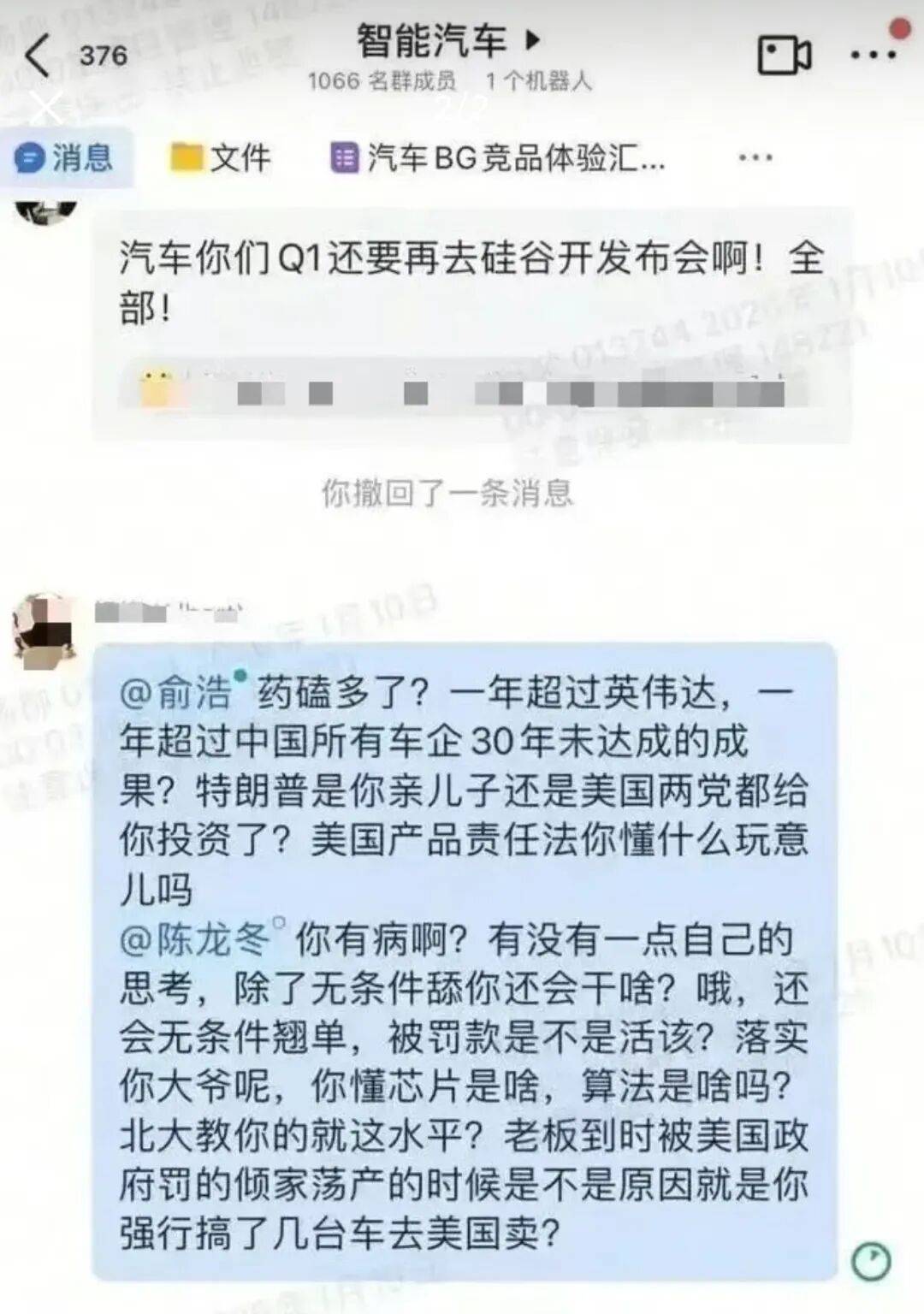
员工公开群“怒怼”追觅CEO?俞浩发声:专项整改!携程回应被立案调查;“死了么”APP征新名:谐音梗玩脱了?| Q资讯
Sou Hu Cai Jing· 2026-01-18 07:16
Group 1: Company Developments - The CEO of Chasing Technology, Yu Hao, aims to create the world's first company valued at one trillion dollars, expressing that this goal is not expected to be achieved within a year [1][2] - Ctrip announced it is under investigation by the State Administration for Market Regulation for suspected monopolistic behavior, stating that it will cooperate fully with the investigation while maintaining normal business operations [5] - Elon Musk is suing OpenAI and Microsoft for damages ranging from $79 billion to $134 billion, claiming that OpenAI has deviated from its non-profit mission and engaged in fraudulent activities [7] Group 2: Industry Trends - Google has filed an appeal against a court ruling that found it guilty of illegal monopoly in the search and search advertising sectors, which could delay regulatory measures requiring changes to its business model [9] - The "Dead or Alive" app is seeking a new Chinese name, inviting users to contribute ideas and offering a cash reward for the best suggestion [8][9] - OpenAI plans to test targeted advertising within the ChatGPT application, marking a significant shift in its revenue strategy ahead of a potential IPO [11] Group 3: Technological Innovations - The upcoming Spring Festival Gala will feature advanced AI technologies, including real-time scene adaptation and immersive experiences, showcasing the country's technological progress [10] - ByteDance is developing a new generation of AI headphones, which will be manufactured by GoerTek, indicating a strategic shift in its hardware approach [12] - Qianwen App has integrated with Alibaba's ecosystem, allowing users to perform various tasks through AI, highlighting the competitive landscape for AI service platforms [13]




数码家电行业周度市场观察-20260118
Ai Rui Zi Xun· 2026-01-18 05:08
Investment Rating - The report does not explicitly provide an investment rating for the digital home appliance industry Core Insights - The digital home appliance industry is undergoing a transformation driven by data quality and AI integration, with a focus on high-end market growth and consumer emotional value [2][5] - The report highlights significant trends in various sectors, including the rise of AI in logistics, healthcare, and retail, emphasizing the importance of data-driven decision-making and technological innovation [5][8] Industry Environment - Data quality is more critical than algorithms in determining the effectiveness of AI, with successful companies maintaining clean and unified data [2] - The 2025 report on China's high-end home appliance market indicates a 10.2% year-on-year growth in retail sales, driven by consumer demand for emotional value and quality [2] - The healthcare AI market is projected to reach 16.4 billion yuan in 2024, with significant advancements in efficiency and precision in medical applications [5] - The logistics sector is expected to grow to 965.5 billion yuan by 2025, transitioning from scale competition to value-driven strategies [5] - The smartphone market is experiencing a shift towards AI integration, with AI smartphones expected to account for 15% of global shipments by 2024 [5] - The retail industry is facing challenges in data integration and supply chain efficiency, with AI technologies being pivotal for transformation [5] Top Brand News - Honor aims to regain market share through AI smartphones and overseas expansion, facing competition from established players [19] - Ant Group is enhancing its C-end applications with AI health solutions, targeting the underserved market [20] - Xiaomi's flagship model features advanced AI capabilities, aiming to strengthen its hardware ecosystem [21] - DingTalk is expanding into AI hardware, marking a strategic shift in its offerings [21] - ByteDance is significantly increasing salaries to attract AI talent, reflecting the competitive landscape in the AI sector [23]


【数智周报】 谷歌DeepMind CEO:中国的AI模型仅落后美国几个月;DeepSeek开源相关记忆模块Engram;微软在人工智能上的支出将达到5...
Tai Mei Ti A P P· 2026-01-18 02:38
Group 1 - Keda Xunfei's Chairman Liu Qingfeng stated that the domestic AI infrastructure has taken initial shape, with domestic large models matching international standards despite having half the parameters [2] - Michael Burry warned that the era of tech giants earning huge profits with minimal investment is ending, primarily due to AI, and investors should focus on Return on Invested Capital (ROIC) rather than revenue growth [3] - A BlackRock survey revealed that while investors are optimistic about AI, they are shifting their investment focus towards energy and infrastructure suppliers, with only one-fifth considering large US tech companies as attractive investment opportunities [4] Group 2 - Demis Hassabis, CEO of Google DeepMind, indicated that Chinese AI models are only a few months behind those in the US and Western countries, with significant advancements made by Chinese developers [5] - DeepSeek released a new paper on conditional memory, significantly improving model performance in various tasks, and has open-sourced a related memory module [6] - Wang Xiaochuan, CEO of Baichuan Intelligent, mentioned that the company has 3 billion yuan on hand and may initiate an IPO plan in 2027 [7] Group 3 - Zhiyu and Huawei launched the first domestically trained multimodal SOTA model on local chips, achieving a full training process on the Ascend Atlas 800T A2 device [8] - Kuaishou announced that Keling AI's revenue exceeded $20 million in December 2025, with an annual recurring revenue (ARR) of $240 million [9] - Yongyou Network projected a net loss of 1.3 to 1.39 billion yuan for 2025, although it expects to reduce losses compared to the previous year [10] Group 4 - JD.com and Lenovo deepened their "hybrid AI" cooperation, launching new products at CES 2026, with a focus on strategic collaboration around smart devices and services [11] - Alibaba's Qianwen app integrated with various services, allowing users to order food and book flights through AI, marking a significant upgrade in functionality [12] - Alipay and partners released China's first AI commercial agreement, aimed at creating a universal language for AI tasks across platforms [13] Group 5 - Yunhai Medical launched the "YunJian AI Spirit," a product that reduces long-term costs for users by offering unlimited access to traditional Chinese medicine infrared algorithms [14] - Zhiyuan purchased thousands of hours of robot training data for various tasks [15] - Meituan released the open-source "ReThink" model, achieving state-of-the-art performance in several benchmarks [16] Group 6 - Teslian introduced the upgraded T-Cluster 512 super node architecture, designed for high-performance AI model training, with a total computing power exceeding 500 PFlops [17] - Keda Xunfei launched a marketing AI platform based on the "SuperAgent" framework, enhancing efficiency in marketing strategies [18] - The first domestically trained text-to-image model was released by Zhiyu and Huawei, completing the entire training process on local chips [19] Group 7 - Tencent Cloud ADP launched the first "AI-native Widget," enhancing task delivery experiences through natural language interaction [20] - Anthropic implemented stricter measures to prevent third-party tools from bypassing rate limits, affecting several developer projects [21] - Google announced a partnership with Walmart to expand AI model shopping capabilities, allowing direct transactions through its AI application [22] Group 8 - Mark Zuckerberg initiated the "Meta Compute" project, aiming to build substantial AI infrastructure by 2030, with a focus on collaboration with governments [23] - Meta plans to lay off hundreds of employees in its Reality Labs department, shifting focus from the metaverse to AI [24] - Alphabet's market value surpassed $4 trillion for the first time, joining a select group of companies [24] Group 9 - Nvidia and Eli Lilly will jointly invest $1 billion to establish an AI drug laboratory over the next five years [26] - The US relaxed export controls on Nvidia's H200 chips to China, potentially impacting the AI hardware market [27] - Microsoft announced a plan to limit the impact of data center energy costs and water usage on local communities [29] Group 10 - OpenAI is reportedly seeking US hardware suppliers for its planned consumer devices and cloud data center expansion [32] - Elon Musk's lawsuit against OpenAI is set to go to trial in late April [33] - OpenAI and Cerebras announced a partnership worth over $10 billion to deploy a large-scale AI inference platform [34] Group 11 - Zivariable Robotics completed a 1 billion yuan A++ round of financing, backed by major investors including ByteDance and Meituan [35] - Qiangnao Technology submitted a confidential IPO application in Hong Kong [36] - OpenAI agreed to acquire the AI health application Torch for approximately $100 million [37] Group 12 - K2 Lab, founded by a former DingTalk executive, secured tens of millions in seed funding to develop an AI-driven content e-commerce agent [38] - Alibaba Cloud completed a strategic investment in ZStack, achieving a controlling stake [39] - Skild AI raised nearly $1.4 billion in funding, reaching a valuation of over $14 billion [40] Group 13 - WeLab completed a $220 million D-round strategic financing, the largest single round since its inception [41] - Merge Labs, a brain-machine interface startup, raised $252 million in seed funding, with OpenAI as a major investor [42] Group 14 - A report indicated that by 2026, the Chinese tech giants index is expected to surpass the US tech giants in profitability growth for the first time since 2022 [43] - China is accelerating the establishment of a data property registration system to enhance data circulation and value [44] - Storage prices are expected to surge by 40%-50% in Q4 2025 and again in Q1 2026 due to increased demand from AI and server capacity [45] Group 15 - A new AI model developed by US researchers can predict the risk of approximately 130 diseases based on sleep data [46] - Foreign investment firms are increasingly incorporating AI into their research processes in the Chinese market [47] - UBS believes the probability of an AI bubble in China is low, with monetization relying on cloud services and advertising [48] Group 16 - The number of AI companies in China has exceeded 6,200, with applications expanding across various industries [49]



千问抢先跑通“跨App智能体”:一次阿里的降维打击时刻
Sou Hu Cai Jing· 2026-01-17 05:14
Core Insights - The core focus of the article is on Alibaba's launch of the Qianwen App, which signifies a major advancement in AI capabilities, allowing it to perform tasks across multiple applications seamlessly [2][3][5]. Group 1: AI Capabilities - The transition from "being able to answer" to "being able to execute tasks" is highlighted as the core value of AI agents, emphasizing the importance of understanding complex needs, breaking down task processes, and delivering real-world services [3][5]. - Qianwen can now assist users with over 400 real-life tasks, covering areas such as consumption, travel, local services, and government services, indicating that AI is moving beyond mere suggestions to actual execution [5][10]. Group 2: Technical Integration - Qianwen's breakthrough lies in its integration method, functioning as an agent that completes tasks in the background without requiring users to switch between different apps [3][6]. - The success of Qianwen is attributed to Alibaba's comprehensive ecosystem, which includes a unified technology platform and data standards that facilitate protocol conversion and data synchronization among its various applications [6][8]. Group 3: Competitive Landscape - The article discusses the competitive landscape, noting that while cross-app AI agents are not a new concept, few have successfully implemented them due to challenges such as device, application, and interface barriers [6][10]. - Alibaba's ecosystem provides a significant advantage over competitors like Tencent and ByteDance, which lack the same level of integration across payment, e-commerce, and government services [10][11]. Group 4: Market Implications - The deep integration of Qianwen within Alibaba's ecosystem raises concerns about creating a closed environment, potentially limiting external collaboration and competitive motivation [10][11]. - However, this approach may serve as a pragmatic shortcut in the commercialization of AI, as the ability to deliver tangible results is currently more critical than openness [10][11].
千问接入淘宝,AI购物成为新趋势
Sou Hu Cai Jing· 2026-01-17 04:45
Core Insights - The article discusses Alibaba's launch of the "dialogue-based transaction" model through its Qianwen App, which integrates various services like food delivery, shopping, and travel booking into a seamless user experience [3][9][10] - This innovation marks a significant shift in retail e-commerce, reducing transaction friction and enhancing user engagement in high-frequency consumption scenarios [3][22] Group 1: AI Shopping and Market Trends - AI shopping is becoming a global trend, with major companies like OpenAI, Microsoft, and Google introducing features that allow users to make purchases directly through chat interfaces [4][5] - Alibaba's unique position combines advanced AI models with a comprehensive service ecosystem, giving it a competitive edge in the AI shopping landscape [8][9] - The shift towards AI shopping is expected to generate substantial revenue, with predictions suggesting that the U.S. B2C retail market could see up to $1 trillion in collaborative revenue by 2030 [22] Group 2: Alibaba's Strategic Position - Alibaba's Qianwen App has integrated with various Alibaba ecosystem services, positioning it as a central hub for consumer transactions [3][10] - The app's ability to understand user intent and provide tailored recommendations represents a significant advancement over traditional e-commerce models [12][26] - Alibaba's extensive consumer base and established infrastructure provide a solid foundation for leveraging AI in shopping, making it difficult for competitors to replicate [10][27] Group 3: Future of E-commerce - The article emphasizes a fundamental restructuring of commercial logic, moving from traditional search and recommendation models to a three-dimensional approach based on intent understanding and scene demand [26] - The emergence of "super app" ecosystems is highlighted, where various AI applications could serve as shopping entry points, but success will depend on robust e-commerce support [27][28] - The rise of specialized AI shopping advisors in niche markets is anticipated, which could lead to new business models and service standards in the AI-driven retail landscape [28]

1月17日隔夜要闻:美股收低 金价下跌 OpenAI将为ChatGPT引入广告 哈塞特出局 降息押注降温
Xin Lang Cai Jing· 2026-01-16 22:32
Company - OpenAI will begin testing advertisements in ChatGPT to seek new revenue sources [5] - Google has requested a U.S. judge to postpone the order to share data during its appeal [5] - JPMorgan has surpassed Dimensional to become the world's largest active ETF company [6] - Fannie Mae and Freddie Mac continue to decline, raising concerns about their IPO prospects [6] - Spotify plans to generate significant profits through another price increase [6] Industry - The U.S. housing builder confidence index has dropped to 37 in January, marking the first decline in five months and falling below all estimates [5] - The U.S. manufacturing output is expected to grow in the last few months of 2025 [5] - The job market remains a concern, with the Federal Reserve advised to prepare for potential rate cuts [6] - The artificial intelligence sector is accelerating job reductions in key global industries [6] - Oil prices have slightly recovered, but traders remain cautious about risks related to Iran [6]


阿里巴巴-W(9988.HK):千问焕新 AI赋能大消费的协同初现
Ge Long Hui· 2026-01-16 20:21
Core Viewpoint - Alibaba's "Qianwen" app aims to transition the AI industry from "chat dialogue" to "task execution," integrating various services within Alibaba's ecosystem to enhance user experience and capture new commercial opportunities [1][2]. Group 1: Product Development and User Engagement - The "Qianwen" app has surpassed 100 million monthly active users within two months of launch, exceeding management expectations and indicating significant user engagement [2]. - The app supports over 400 task types, including application development, office work, and data analysis, and collaborates with various professional databases to ensure authoritative and timely outputs [2]. - "Qianwen" is designed as a general-purpose agent to assist users in managing repetitive tasks, enhancing efficiency across various life scenarios [2]. Group 2: Ecosystem and Market Position - Alibaba has built a comprehensive consumer ecosystem over nearly 30 years, covering various needs such as clothing, food, travel, and entertainment, which positions the company favorably for long-term growth [3]. - The introduction of transaction subsidies in the "Qianwen" app has created price advantages in food delivery and flight booking compared to competitors, indicating a strategic move to attract more users [3]. Group 3: Financial Projections and Valuation - The company maintains its non-GAAP net profit forecasts for FY26-28 at 94 billion, 109.7 billion, and 138.1 billion yuan respectively, reflecting confidence in its financial performance [3]. - The target price based on SOTP valuation remains at $180.0 for US stocks and HK$175.3 for Hong Kong stocks, corresponding to 27.5x and 21.9x FY27-28 non-GAAP projected PE [4].
Alibaba Qwen Upgrade: The Market Can No Longer Ignore This AI Catalyst
Seeking Alpha· 2026-01-16 17:00
Group 1 - Alibaba Group Holding Limited is attempting to regain its former prominence in the Chinese AI sector with a highly anticipated AI launch [1] - The company is one of the largest cloud providers in China, indicating its significant role in the technology landscape [1] - The launch is seen as a strategic move to recapture market share and investor confidence following a period of challenges in the tech industry [1]

头部厂商争夺AI“超级入口” 生态协同能力成胜负手
Zheng Quan Ri Bao· 2026-01-16 16:48
Core Insights - AI technology is transitioning from a validation phase to a commercialization phase, with a focus on how to effectively utilize it in business applications [1] - A competitive landscape is emerging among tech giants for the "super entry point" in AI applications, with companies like Alibaba, ByteDance, and Tencent vying for dominance [1][3] Group 1: AI Integration and Competition - Alibaba has integrated its Qianwen App with core services such as Taobao, Gaode, and Alipay, allowing users to complete the entire shopping process within a single app using natural language commands [1] - Other major players are also enhancing their AI capabilities; for instance, ByteDance's "Doubao" focuses on cross-platform product comparison and recommendations within the Douyin ecosystem [3] - The competition is not just about software but also hardware, with companies like ByteDance and Xiaomi entering the AI hardware space, indicating a trend towards integrated software and hardware solutions [4] Group 2: User Experience and Trust - The shift from app-centric to task-centric user experiences is crucial, as companies aim to create AI assistants that users rely on for various tasks [3] - Trust and security are becoming critical factors as AI systems take on more responsibilities, such as making decisions and managing payments, highlighting the need for robust data privacy measures [5] - The future of AI competition may hinge on the ability to build user trust while providing convenience, rather than solely on technological advancements [5]
谁才是中国民企真龙头?两份榜单背后,藏着两套生存哲学
Sou Hu Cai Jing· 2026-01-16 15:59
Core Insights - The contrasting rankings of JD.com and Tencent/Alibaba highlight two distinct business philosophies in China's private sector, focusing on current revenue versus future growth potential [1][2] Group 1: Rankings and Evaluation Standards - JD.com topped the "2025 China Private Enterprises 500" list with a revenue of 1.16 trillion RMB, surpassing Alibaba and Huawei, based on a revenue-centric evaluation of 6,379 companies [4][5] - Goldman Sachs' report ranked Tencent, Alibaba, and BYD as the "Top Ten Private Enterprises," emphasizing investment value and growth potential rather than current size [7] Group 2: Business Models - JD.com adopted a heavy asset model, investing significantly in logistics and self-operated goods, which has created substantial competitive barriers despite initial losses [8][6] - In contrast, Tencent and Alibaba utilize a light asset model, focusing on technology, data, and user relationships, allowing for high profitability with lower operational costs [10][12] Group 3: Manufacturing Sector Growth - The manufacturing sector is a significant contributor to the private economy, with 66.4% of the top 500 companies being manufacturers, accounting for 68.84% of revenue and 53.21% of net profit [13][14] - Companies like BYD and CATL are leading in innovation and R&D, with substantial investments in new energy technologies [16][17] Group 4: Future Directions - The diversity in business models among private enterprises is a strength, with companies like JD.com and Tencent exploring synergies between heavy and light asset strategies [18][19] - The implementation of the "Private Economy Promotion Law" in May 2025 is expected to provide a more supportive legal environment for private enterprises [19][20] - A significant portion of the top 500 companies is focusing on digital transformation and green initiatives, with international revenue growth indicating a push towards global expansion [20]