CJS(600176)

Search documents
建材还能买什么
2026-01-26 02:49
Summary of Key Points from Conference Call Industry Overview - The construction materials industry is significantly impacted by fluctuations in the real estate market, with intensified competition in segments such as waterproofing, coatings, and glass. Leading companies are aggressively expanding, facing pressure on payment terms. Market concentration is increasing, with the top three waterproofing companies holding 60%-70% market share [1][2][5]. Core Insights and Arguments - **Waterproofing and Coatings**: The waterproofing sector is under pressure due to demand fluctuations closely tied to new construction and project initiation. The coatings sector faces challenges in the TOB (business-to-business) segment but shows strong performance in the TOC (business-to-consumer) segment, exemplified by companies like Sanke Tree achieving growth through strategic transformation [1][2][5]. - **Glass Industry**: The continuous production nature of the glass industry leads to cash flow losses during periods of low demand, resulting in capacity reductions. Current daily melting capacity is at 150,000 tons, putting significant survival pressure on many companies [1][2][5]. - **Cement Industry**: The cement sector may achieve supply-side adjustments through the reduction of clinker capacity, potentially increasing utilization rates. Optimistic estimates suggest a reduction from 2.1-2.2 billion tons to 1.6-1.7 billion tons over the next two to three years [3][5]. Emerging Opportunities - **Chemical Midstream Sector**: The midstream chemical sector benefits from increased domestic capital expenditure, the exit of overseas capacity, and carbon neutrality policies, indicating a clear upward trend. Despite significant prior gains, valuations remain reasonable, with core assets like fiberglass warranting attention [4][8]. - **International Expansion**: Companies like Huaxin are seeing significant growth from international operations, with overseas profits exceeding 50%, driven by demand in emerging markets and competitive advantages [6][9][10]. Specific Areas of Interest - **Waterproofing Materials**: The waterproofing sector is poised for growth, with rapid market share increases and expectations of price hikes due to rising asphalt costs and strong profit demands from leading companies [11]. - **North New Materials**: As a state-owned enterprise, North New Materials has a strong position in the branded building materials sector, with stable profits from gypsum board and active expansion in waterproofing and coatings through acquisitions [12][15][16]. - **Consumer Building Materials**: Companies with alpha characteristics such as Sanke Tree, North New Materials, and others are highlighted for their strong performance and long-term growth potential [13]. Market Dynamics - **Fiberglass Industry**: The fiberglass sector is characterized by a rigid cost structure, with production costs largely independent of oil prices. Demand is expected to grow steadily, with leading companies like China Jushi increasing their global market share [7][19][20]. - **Comparison with Chemical Industry**: The construction materials sector lacks the grand narratives seen in the chemical industry, making it challenging to assess company elasticity due to price volatility. However, branded building materials exhibit strong valuation elasticity [18]. Company-Specific Insights - **San Ke Tree and Hanco**: These leading companies in their respective segments are expected to achieve growth despite market pressures, with San Ke Tree leveraging new community store initiatives to drive profit growth [17]. - **Subote's Transition**: Subote is currently at a low point but is exploring transformation opportunities in high polymer materials, which may enhance its future prospects as cement demand stabilizes [21]. This summary encapsulates the key insights and developments within the construction materials and related sectors, highlighting both challenges and opportunities for investment.


继续均衡配置顺周期和科技出海链
HTSC· 2026-01-26 02:45
Investment Rating - The report maintains a "Buy" rating for the construction and building materials sectors, with specific recommendations for several companies [9]. Core Insights - The report emphasizes a balanced allocation between traditional cyclical sectors and emerging growth industries, particularly in the context of improving real estate transaction data and liquidity in the market [12][19]. - The construction materials sector has shown resilience, with price increases observed in waterproofing materials, aluminum formwork, and engineering pipe materials since Q3 2025, indicating a strengthening self-repair capability within the sector [12][14]. - The report highlights the ongoing demand for high-end materials in commercial aerospace, including high-temperature fiber materials and perovskite materials in solar wing energy systems [12]. Summary by Sections Industry Overview - The construction materials sector has been leading the market, driven by improved real estate transaction data and expectations of a spring rally in cyclical sectors [12]. - The report notes that from January to December 2025, the new construction area in real estate decreased by 20.4% year-on-year, but there are signs of recovery in major cities [12][19]. Key Companies and Developments - Zhejiang Weixing New Materials announced plans to acquire an 88.26% stake in Beijing Songtian Cheng for approximately 111 million yuan, aiming to enhance its product chain in municipal pipeline systems [3]. - The report recommends several companies for investment, including Yaxiang Integration, Zhongcai International, China Chemical, Qibin Group, and others, with target prices and expected earnings per share provided [9][38]. Market Dynamics - The report indicates that the cement price remained stable at 353 yuan per ton, with a significant drop in the average shipment rate to 29.5% due to seasonal factors [29]. - The glass market has shown stability, with the average price of float glass holding steady at 61 yuan per weight box, despite a year-on-year decline of 18.5% [2][29]. Emerging Trends - The report identifies a potential recovery in investment in Q1 2026, supported by government policies aimed at stimulating the economy, which may benefit cyclical sectors [17]. - The demand for electronic fabrics and cleanroom materials is expected to remain high, driven by advancements in AI and increased PCB investments [13][27]. Recommendations - The report suggests focusing on waterproofing and engineering pipe materials as key opportunities in the construction sector, with a positive outlook for these segments due to expected price increases and improved market conditions [20][21].


建筑材料行业周报:新一轮城市更新开启,关注消费建材底部向上的弹性-20260125
East Money Securities· 2026-01-25 14:49
Investment Rating - The report maintains an "Outperform" rating for the construction materials sector, indicating a positive outlook compared to the broader market [2] Core Views - A new round of urban renewal is beginning, which is expected to provide significant opportunities in the consumer building materials sector, effectively countering the decline in new housing market demand [8] - The report highlights that after a prolonged downturn in the real estate sector, profitability in various segments of the construction supply chain is starting to recover, particularly for leading companies that have undergone strategic adjustments [8] - The report emphasizes the potential for price increases in certain segments, such as waterproofing and coatings, as companies respond to improved market conditions [8] Summary by Sections Cement - The cement market is entering a seasonal downturn, with demand expected to decline. The average shipment rate for major regions has dropped to 29%, a decrease of approximately 10 percentage points [27][34] - The national average price for cement remains stable at around 353 RMB per ton, with minor fluctuations observed in specific regions [28][34] - The report suggests that after the Spring Festival, demand may recover as new key projects are expected to commence, potentially stabilizing prices [34] Glass - The glass market is also experiencing a decline in demand, with production capacity decreasing to approximately 14.95 million tons, the lowest in recent years [53] - The average price for float glass has increased slightly to 1,139 RMB per ton, with inventory levels decreasing [38] - The report indicates that the glass industry is facing profitability challenges, leading to accelerated production line cold repairs, which may help stabilize the market [53] Fiberglass - The fiberglass market is seeing stable pricing for both roving and electronic fabrics, with the price of 7628 electronic fabric currently at approximately 4.4-4.85 RMB per meter [55] - The report anticipates continued high demand for electronic fabrics, supported by structural adjustments and a shortage of high-end products [55] - Key recommendations include focusing on leading companies like China Jushi, with additional attention on International Composite Materials and Zhongcai Technology [55] Carbon Fiber - Carbon fiber prices are expected to remain stable in the short term, with the rapid development of commercial aerospace potentially driving new demand [55] - The report notes that the current price stability is a necessary step for increased market penetration, with significant growth expected in the aerospace sector [55] Consumer Building Materials - The report highlights the resilience of consumer building materials, with leading companies like Sanke Tree and Rabbit Baby showing strong growth potential as they emerge from profitability challenges [8] - The urban renewal initiative is expected to create substantial market opportunities, particularly for high-quality consumer building materials [8]


非金属建材行业周报:继续推荐中国巨石、防水、utg玻璃、cte布-20260125
SINOLINK SECURITIES· 2026-01-25 12:52
Investment Rating - The report maintains a positive outlook on the price increase chain, particularly for traditional electronic fabrics, indicating a bullish sentiment for the sector [1][13]. Core Insights - The report highlights a significant price increase in 7628 electronic fabrics, rising from 4.15 CNY/m to 4.75 CNY/m since late September 2025, driven by supply constraints due to AI demand and copper price fluctuations [1][13]. - The waterproof coating sector is also experiencing price hikes, with a 5-10% increase announced by Keshun for certain products starting February 2026, reflecting a trend of consolidation and structural demand in non-real estate sectors [2][14]. - The report emphasizes the potential of UTG and TCO glass in the space photovoltaic sector, with SpaceX and Tesla aiming for an annual solar manufacturing capacity of 100GW within three years [3][15]. - In the AI-PCB upstream materials segment, there is a positive outlook for substrate materials driven by CPU shortages and price increases, with a notable 30% price hike planned by a leading Japanese company [4][16]. Summary by Sections Weekly Discussion - The report anticipates the continuation of the price increase chain through Q1 2026, particularly for traditional electronic fabrics, with a notable price increase observed since Q4 2025 [1][13]. - The electronic fabric market is transitioning to a supply-demand gap pricing model, with low inventory levels and bullish expectations for future prices [1][13]. Price Changes in Construction Materials - The report notes that the national average price for cement remains stable at 348 CNY/ton, with a significant drop in average shipment rates to 29.5% [5][17]. - The average price for float glass is reported at 1138.82 CNY/ton, with a slight increase observed, while the inventory levels are decreasing [5][17]. Market Performance - The construction materials index showed a strong performance with an 8.82% increase, outperforming the Shanghai Composite Index [20][23]. - Specific sectors such as glass manufacturing and fiberglass also reported significant gains, indicating robust market conditions [20][23]. Important Developments - The waterproof coating sector is seeing price increases, with Keshun announcing a price hike for certain products [6][14]. - The report highlights the ongoing expansion in solar energy production capabilities by major companies, indicating a shift towards renewable energy solutions [6][15].
中国巨石20260122
2026-01-23 15:35
Summary of China Jushi Conference Call Industry Overview - The fiberglass industry is currently in an upward phase from the bottom but has not yet reached the peak of the cycle. The price of 2,400 tex roving has shown some recovery but remains volatile. The net profit for China Jushi's roving is approximately 900 RMB/ton, slightly above the previous cycle's bottom but still far from historical highs [2][5]. - The expected increase in roving production in 2026 is about 500,000 to 600,000 tons, with a supply growth rate of approximately 5.8%, which is considered manageable. New production lines from China Jushi and Inner Mongolia Tianhao will contribute to this increase, but overall supply and demand are expected to remain balanced [2][5]. Company Insights - China Jushi is actively expanding into AI electronic fabric products, enhancing valuation flexibility and performance certainty. The company has potential for significant achievements in traditional fiberglass roving, electronic yarn, and AI electronic fabric [2][6]. - The competitive landscape of the fiberglass industry has changed, with the new management adopting a more moderate pricing attitude, which has helped drive price recovery. Although the net profit for China Jushi's roving remains low, the gradual price recovery is expected to solidify performance support for 2026 [2][7][8]. Production and Demand Forecast - The demand growth rate for fiberglass roving in 2026 is projected to be 4-5%, slightly lower than in 2025, but overall demand remains stable. The demand growth for electronic yarn is expected to exceed 6%, indicating a tighter supply-demand balance [4][10]. - The inventory levels for 7,628 electronic fabric are low, reflecting strong real demand. The price trend is expected to be upward in the first half of the year, with further observation needed in the second half as new production lines come online [10][11]. Financial Performance and Pricing Trends - In 2024, only leading companies like China Jushi, Taibo, and Changhai achieved profitability, while smaller firms generally faced losses. By the third quarter of 2025, leading companies continued to earn excess profits, while smaller firms were at breakeven or slightly losing [12]. - For 2026, China Jushi's roving sales are expected to reach 3.3 to 3.4 million tons, with a net profit of around 900 RMB/ton. Structural price increases in wind power and thermoplastics could push this to 1,000 RMB/ton, leading to total profits of approximately 3.3 to 3.4 billion RMB. The sales of 7,628 electronic fabric are projected at 1.1 billion meters, with net profit per meter increasing from 1.2 RMB to 1.5 RMB, contributing an additional 1.65 billion RMB in profits [12]. Competitive Advantages - China Jushi maintains significant cost advantages in raw material procurement, energy consumption, depreciation, and labor costs, allowing it to sustain and expand its profitability gap with peers. The company benefits from low raw material prices due to local resources and efficient processing capabilities [15][17]. - The company has a low financial cost due to a debt ratio of about 45%, which contributes to lower financing costs. Management and R&D expenses have shown variability due to profit-sharing schemes, but overall, management costs are competitive [16]. Future Outlook - Overall, China Jushi's future development prospects are strong due to its cost advantages and continuous technological advancements. The company is well-positioned to maintain a favorable alignment between its stock price and fundamentals, making it a recommended investment target in the current chemical midstream supply context [17].
如何看待电子布提价持续性-如何看待消费建材投资机会
2026-01-23 15:35
Summary of Conference Call Records Industry Overview - The conference call discusses the construction materials industry, particularly focusing on the demand for consumer building materials and the electronic cloth sector. The demand structure is shifting, with significant growth in the renovation of second-hand homes, indicating potential stability in the industry. The expected transaction area for second-hand homes in 2025 is projected to reach 600-700 million square meters, nearing the scale of the new housing market, suggesting substantial potential in the existing market [1][2]. Key Insights and Arguments - **Supply-Side Dynamics**: The construction materials industry has experienced a supply-side contraction, with most categories seeing a cumulative decline in production and sales of about 30% since 2021, while prices have only dropped by 15%. Leading companies like Oriental Yuhong have consolidated their market positions through economies of scale [1][4]. - **Performance of Leading Companies**: Companies such as Oriental Yuhong, Sankeshu, and others have shown strong performance, emerging from operational lows and demonstrating clear growth inflection points. For instance, Oriental Yuhong is expected to see significant cash flow improvement starting in 2024, with a projected revenue turnaround in Q3 2025 and an anticipated growth of over 30% in 2026 [5][6]. - **Electronic Cloth Market**: The electronic cloth segment is highlighted as having the highest probability of price increases within the fiberglass sector. The year 2026 is anticipated to be a pivotal year for Q cloth applications, with large-scale applications of second-generation cloth expected. Companies like China National Materials possess comprehensive technology that will enhance their performance amid industry upgrades [10][14]. - **Profitability Trends in Fiberglass Industry**: The fiberglass industry is currently at a historical low in unit profitability, with leading companies still profitable while smaller firms struggle. Demand growth is expected to be around 4-5% in 2026, with supply growth below 4%, indicating a potential upward trend in raw sand prices [9]. Additional Important Points - **Investment Opportunities**: The call emphasizes the importance of focusing on companies that have emerged from operational lows and show clear growth potential, particularly in the waterproof materials segment, which is expected to yield better investment returns [7]. - **Market Supply Constraints**: The supply of weaving machines is limited, with the only global supplier, Toyota, experiencing a significant reduction in production efficiency for thin cloth. This constraint is expected to impact the ordinary electronic cloth market, leading to a sustained price increase trend [12][13]. - **Future Projections**: The ordinary electronic cloth market is projected to experience a supply-demand gap in 2026, with inventory levels dropping significantly, indicating a potential for continued price increases. The PCB market is also expected to see slight growth, further supporting price increases in ordinary electronic cloth [11]. - **Recommended Companies**: The call suggests focusing on companies like China National Materials, China Jushi, and International Composites, which are positioned well to benefit from the anticipated market dynamics and price increases [14].

中国巨石:已建立国内和海外两个财务共享中心
Zheng Quan Ri Bao Wang· 2026-01-23 14:14
Group 1 - The company has established a comprehensive financial management system and framework [1] - The financial management work is conducted according to a financial shared service center model [1] - The company has set up both domestic and overseas financial shared service centers [1]
中国巨石:目前公司在欧洲地区(含欧盟成员国)销量占总销量的比例不到10%
Zheng Quan Ri Bao Wang· 2026-01-23 12:44
Group 1 - The core viewpoint of the article is that China Jushi (600176) has a limited market presence in Europe, with sales in the region accounting for less than 10% of total sales [1] - The company primarily sells its products in Europe through direct sales and overseas subsidiaries [1]
玻璃玻纤板块1月23日跌0.56%,国际复材领跌,主力资金净流出10.27亿元
Zheng Xing Xing Ye Ri Bao· 2026-01-23 09:04
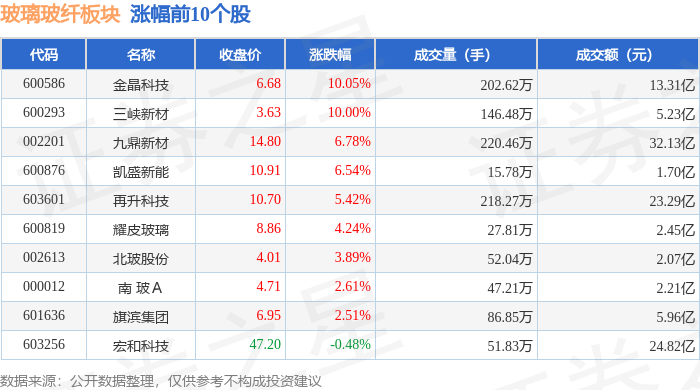
Market Overview - The glass and fiberglass sector experienced a decline of 0.56% on January 23, with International Composite Materials leading the drop [1] - The Shanghai Composite Index closed at 4136.16, up 0.33%, while the Shenzhen Component Index closed at 14439.66, up 0.79% [1] Stock Performance - Notable gainers in the glass and fiberglass sector included: - Jinjing Technology (600586) with a closing price of 6.68, up 10.05% and a trading volume of 2.0262 million shares, totaling 1.331 billion yuan [1] - Sanxia New Materials (600293) closed at 3.63, up 10.00% with a trading volume of 1.4648 million shares, totaling 523 million yuan [1] - Jiuding New Materials (002201) closed at 14.80, up 6.78% with a trading volume of 2.2046 million shares, totaling 3.213 billion yuan [1] Fund Flow Analysis - The glass and fiberglass sector saw a net outflow of 1.027 billion yuan from institutional investors, while retail investors contributed a net inflow of 691 million yuan [2] - The main fund flow for key stocks included: - Jinjing Technology had a net inflow of 1.821 billion yuan from institutional investors, but a net outflow of 940.533 million yuan from speculative funds [3] - Sanxia New Materials experienced a net inflow of 880.962 million yuan from institutional investors, with a net outflow of 278.971 million yuan from speculative funds [3] - Flag Group (601636) had a net inflow of 434.656 million yuan from institutional investors, while speculative funds saw a net outflow of 325.892 million yuan [3]




记者手记丨“热泉”边的中埃经贸合作有多热
Xin Hua Wang· 2026-01-23 01:58
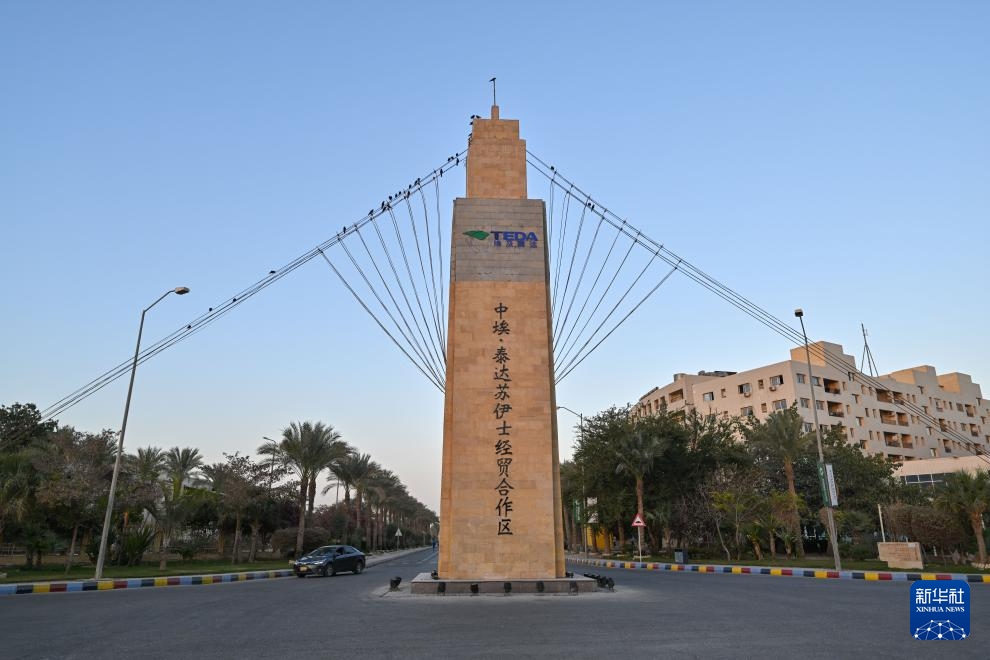
Core Insights - The China-Egypt Tianjin Suez Economic and Trade Cooperation Zone (Tianjin Cooperation Zone) has seen significant growth since its establishment in January 2016, with plans to host over 500 business delegations by 2025 [3][5] - The cooperation zone has attracted nearly 200 enterprises and has generated over $3.8 billion in actual investment, creating approximately 10,000 jobs locally by the end of 2025 [8] - The zone has developed a diverse industrial cluster including bonded logistics, new building materials, oil equipment, high and low voltage equipment, machinery manufacturing, textiles, chemicals, new energy, and white goods [10] Company Developments - Midea Egypt Kitchen and Water Heater Co. has established the first smart dishwasher production line in Egypt, achieving an annual capacity of 350,000 units with 80% of products aimed for export [10][12] - The cooperation zone has attracted world-class companies such as Giant Egypt Fiberglass Co. and Xidian-EGEMAC, which have contributed to local manufacturing and filled technological gaps in Egypt [12] - The CEO of the Egypt Tianjin Special Zone Development Company highlighted the importance of the Chinese industrial park model and the supportive role of the Egyptian government in fostering a cooperative corporate culture [12][14] Economic Impact - The cooperation zone is positioned as a key platform for China-Egypt economic cooperation, reflecting the deepening bilateral relations and mutual trust between the two governments [14] - The transformation of the area from a desert to a modern industrial hub illustrates the potential for further development and investment opportunities in the region [14]