
PING AN OF CHINA(601318)

Search documents
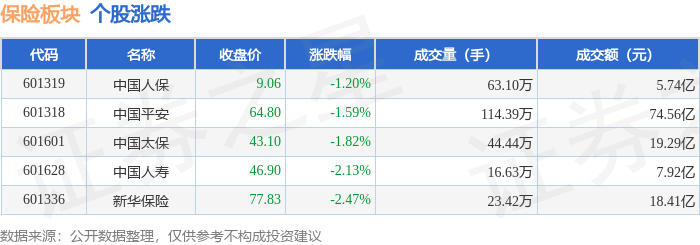
保险板块1月22日跌1.84%,新华保险领跌,主力资金净流出2.12亿元
Zheng Xing Xing Ye Ri Bao· 2026-01-22 09:01
证券之星消息,1月22日保险板块较上一交易日下跌1.84%,新华保险领跌。当日上证指数报收于 4122.58,上涨0.14%。深证成指报收于14327.05,上涨0.5%。保险板块个股涨跌见下表: | 代码 | 名称 | 收盘价 | 涨跌幅 | 成交量(手) | 成交额(元) | | | --- | --- | --- | --- | --- | --- | --- | | 616109 | 中国人保 | 9.06 | -1.20% | 63.10万 | | 5.74亿 | | 601318 | 中国平安 | 64.80 | -1.59% | 114.39万 | | 74.56 Z | | 601601 | 中国太保 | 43.10 | -1.82% | 44.44万 | | 19.29亿 | | 601628 | 中国人寿 | 46.90 | -2.13% | 16.63万 | | 7.92 Z | | 601336 | 新华保险 | 77.83 | -2.47% | 23.42万 | | 18.41亿 | 从资金流向上来看,当日保险板块主力资金净流出2.12亿元,游资资金净流出5.17亿元,散户资金净流入 ...






迎接ESG大考,险企数据中心碳排高
2 1 Shi Ji Jing Ji Bao Dao· 2026-01-22 06:44
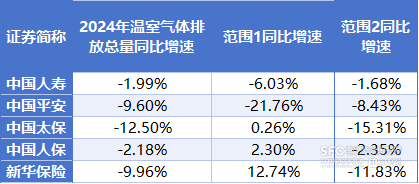
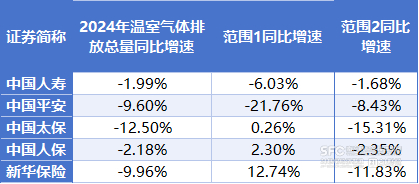
Core Viewpoint - The upcoming ESG evaluation for A-share listed insurance companies is drawing significant market attention, with a focus on their carbon emissions and customer service complaints as they prepare for mandatory disclosures by January 2026 [2][3]. Group 1: ESG Reporting and Carbon Emissions - All five major A-share listed insurance companies, including China Life, Ping An, China Pacific, PICC, and New China Life, are required to disclose their latest annual ESG reports within three months [2]. - The first national standard for financial ESG evaluation has been released, providing a clear scoring framework for the insurance industry [2]. - The total carbon emissions of these five companies show a downward trend, with the highest reduction reaching 12.5% [2][6]. - China Life has the highest total carbon emissions at 67.61 thousand tons, while PICC has the lowest at 1.76 thousand tons, indicating significant disparities in emissions across the industry [6]. Group 2: Green Investments - The total scale of green investments by the five insurance companies exceeds 1 trillion yuan, with China Life leading at nearly 535 billion yuan [11][12]. - Green insurance products are also being developed, with significant coverage amounts reported by various companies, such as China Life providing risk coverage exceeding 18 trillion yuan [11][12]. Group 3: Customer Complaints - New China Life has seen a dramatic increase in customer complaints, with a year-on-year rise of 71.52%, totaling 134,293 complaints [15][16]. - The complaint volume per billion yuan of premium for New China Life is 0.87, which is relatively high compared to other companies [15][16]. - The insurance industry is facing scrutiny regarding customer service quality, which is a critical aspect of the social dimension of ESG [15][17].
中国平安入选Brand Finance 2026全球品牌价值500强
Cai Jing Wang· 2026-01-22 06:30
1月21日,国际权威品牌评估机构Brand Finance发布《2026年全球品牌价值500强榜单》。中国平安以 488.39亿美元的品牌价值十度蝉联中国最具价值保险品牌,位列全球第32位,较2025年提升3位,排名 中国第10位,品牌价值同比增长13%。榜单方认为,中国平安在复杂多变的外部环境中,依然保持稳健 经营与持续增长,展现出突出的品牌韧性和长期价值。 ...
成交额超82亿!A500ETF基金(512050)红盘向上,超600家上市公司预告2025年业绩
Xin Lang Cai Jing· 2026-01-22 03:25
Core Viewpoint - The A500 index and related ETF are showing positive performance, with significant growth in specific sectors such as semiconductors, new energy vehicles, and artificial intelligence, driven by technological innovation and favorable commodity prices [1][2]. Group 1: A500 Index and ETF Performance - As of January 22, 2026, the A500 index rose by 0.04%, with notable increases in individual stocks such as Gotion High-tech (12.39%) and Deepin Technology (10.54%) [1]. - The A500 ETF (512050) increased by 0.08%, with a latest price of 1.24 yuan, and a trading volume of 82.86 billion yuan, indicating active market participation [1]. - Over the past month, the A500 ETF's scale grew by 90.21 billion yuan, reflecting significant growth [1]. Group 2: Market Trends and Company Performance - As of January 21, 2026, 578 A-share listed companies released earnings forecasts, with 29 companies providing earnings reports, indicating a solid growth trend and structural optimization in the industry [1]. - Emerging sectors such as semiconductors, new energy vehicles, and AI are performing well, with companies attributing their growth to the acceleration of AI implementation and the improved outlook of the new energy vehicle supply chain [1]. - The performance of companies in the non-ferrous metals sector has improved due to rising prices of commodities like gold and copper, while breakthroughs in overseas business have also contributed to earnings growth [1]. Group 3: Regulatory Environment and Market Outlook - Short-term market consolidation is expected after reaching new highs, with recent regulatory policies likely to stabilize market sentiment [2]. - In the medium term, the market is anticipated to maintain an upward trajectory, supported by the active guidance of long-term capital into the market and macroeconomic factors [2]. - As the annual earnings forecast disclosure period intensifies, market sentiment is expected to heat up, shifting focus from macro liquidity to micro performance verification [2].





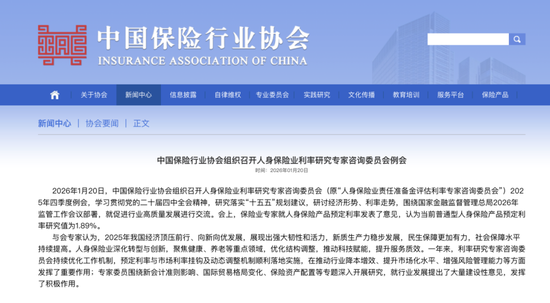
Q4预定利率研究值为1.89%,产品预定利率保持稳定
GF SECURITIES· 2026-01-21 23:30
Investment Rating - The industry investment rating is "Buy" [3] Core Insights - The Q4 predetermined interest rate research value is 1.89%, indicating that product predetermined rates remain stable [6] - The insurance industry is expected to see a marginal improvement in the "interest and expense difference" due to regulatory guidance aimed at reducing liability costs and potential increases in asset yields [6] - The dynamic adjustment mechanism for predetermined rates and the transformation of participating insurance are expected to drive down the rigid liability costs of new policies, leading to a turning point for existing liability costs [6] - The report suggests focusing on the insurance sector, with specific stock recommendations including China Ping An, China Life, China Taiping, and others [6] Summary by Sections Industry Overview - The Q4 predetermined interest rate research value is 1.89%, which does not meet the conditions for a rate reduction, as it is only 11 basis points lower than the current traditional insurance predetermined rate of 2.0% [6] - The expected stability of the predetermined interest rate is projected to continue into Q1 2026, with an estimated value of around 1.9% [6] Regulatory Environment - The China Insurance Industry Association has set guidelines for adjusting predetermined rates, which require a 25 basis point difference over two consecutive quarters to trigger a reduction [6] - The report highlights the importance of the 10-year government bond yield as a key indicator influencing the research value [6] Investment Recommendations - The report recommends focusing on the insurance sector, particularly companies such as China Ping An (A/H), China Life (A/H), China Taiping (H), and others, due to expected improvements in profitability margins [6][7]

人身险预定利率不再下调?最新研究值降幅显著收窄,“存款大搬家”最不需要担心的或许就是保费
Xin Lang Cai Jing· 2026-01-21 13:55
Core Viewpoint - The core indicator for pricing life insurance products, the predetermined interest rate research value, has been updated to 1.89%, marking a continuous decline over four quarters since the dynamic adjustment mechanism was implemented in January 2025, with the rate decreasing from 2.34% to 2.13%, 1.99%, and 1.90%, with the latest adjustment being a minor drop of 1 basis point, indicating a shift from rapid decline to moderate stabilization [1][2][11]. Group 1: Predetermined Interest Rate Dynamics - The current predetermined interest rate research value is 1.89%, and the upper limit for ordinary life insurance has been reduced from 2.5% to 2% [3][12]. - The adjustment mechanism stipulates that a reduction in the predetermined interest rate is only necessary if the upper limit exceeds the research value by 25 basis points for two consecutive quarters; currently, the difference is only 11 basis points, not triggering a reduction [1][2][12]. - If the research value remains below 1.75% for the first two quarters of 2026, the earliest adjustment could occur in the third quarter of 2026, making the first half of 2026 a critical observation period [1][2][12]. Group 2: Market and Economic Context - The macroeconomic environment shows a continued decline in interest rates, with the 10-year government bond yield rising by 25 basis points to 1.85% in 2025, ending a four-year downward trend, although this level remains historically low [3][12]. - The 5-year LPR has remained stable at 3.5% for eight consecutive months, while some banks have lowered their 5-year fixed deposit rates to between 1.3% and 1.8%, further reducing the yield of similar savings products [4][12]. - Recent structural interest rate cuts by the central bank, including a 0.25 percentage point reduction in various lending rates, signal a potential easing of monetary policy, although it may not immediately affect the LPR [4][13]. Group 3: Industry Growth and Trends - The life insurance sector is experiencing a robust start to 2026, with many companies reporting double-digit growth in new premium income, driven by a shift in consumer preference towards stable, low-risk investment options amid a low-interest-rate environment [6][16][17]. - Major insurers like China Life and Ping An have reported new premium income growth exceeding 70%, with China Life's new premium income increasing by 76% from New Year's Day to mid-January [17]. - The insurance industry is transitioning from merely being a financial product to becoming a core component of family wealth planning and lifelong social security, emphasizing the integration of long-term returns and protection features in product offerings [8][16][17].


【21日资金路线图】电子板块净流入逾240亿元居首 龙虎榜机构抢筹多股
证券时报· 2026-01-21 11:53
Market Overview - The A-share market saw an overall increase on January 21, with the Shanghai Composite Index closing at 4116.94 points, up 0.08%, the Shenzhen Component Index at 14255.13 points, up 0.7%, and the ChiNext Index at 3295.52 points, up 0.54% [2]. Capital Flow - The net inflow of main funds in the A-share market was 56.08 billion yuan, with an opening net outflow of 41.97 billion yuan and a tail-end net inflow of 6.26 billion yuan [3]. - The CSI 300 index experienced a net inflow of 154.35 billion yuan, while the ChiNext and STAR Market saw net outflows of 61.61 billion yuan and 17.06 billion yuan, respectively [5]. Sector Performance - The electronics sector led with a net inflow of 240.76 billion yuan, followed by non-ferrous metals with 103.65 billion yuan and machinery equipment with 92.59 billion yuan [7]. - The banking sector had the highest net outflow at -104.20 billion yuan, followed by non-bank financials at -84.79 billion yuan and electric power equipment at -76.06 billion yuan [8]. Stock Highlights - China Great Wall had the highest net inflow of main funds at 14.27 billion yuan [9]. - Institutions showed significant interest in stocks such as Zhongtung High-tech, which saw a net purchase of 30.50 million yuan, and Dazhu CNC with a net purchase of 27.86 million yuan [12]. Institutional Focus - Recent institutional ratings include China Railway with a target price of 8.15 yuan, indicating a potential upside of 48.72%, and Hikvision with a target price of 45.00 yuan, suggesting a 38.04% upside [13].





迎接ESG大考,险企数据中心碳排高丨ESG强信披来了
2 1 Shi Ji Jing Ji Bao Dao· 2026-01-21 11:26
Core Viewpoint - The upcoming ESG assessment for A-share listed insurance companies is drawing significant market attention, with a deadline of January 21, 2026, for the disclosure of their latest annual ESG reports [1] Group 1: ESG Reporting and Standards - Five major A-share listed insurance companies, including China Life, Ping An, China Pacific, China Property, and New China Life, are required to disclose their ESG reports within three months [1] - The release of China's first financial ESG evaluation national standard provides a clear scoring framework for the insurance industry [1][2] Group 2: Carbon Emissions and Green Investments - All five insurance companies have shown a downward trend in annual total carbon emissions, with the highest reduction reaching 12.5% [1][3] - The total scale of green investments by these five companies has reached 1 trillion yuan [1] - China Life leads in total carbon emissions at 67.61 thousand tons, significantly higher than the lowest emitter, China Property, at 1.76 thousand tons [4] Group 3: Customer Service and Complaints - New China Life has experienced a significant increase in complaints, with a year-on-year surge of 71.52%, totaling 134,293 complaints [1][15] - The complaint volume per billion yuan of premium for New China Life is 0.87, which is relatively high compared to other companies [14][15] - The insurance industry is facing scrutiny regarding customer service quality as part of its ESG social dimension [14]
《Brand Finance 2026年全球品牌价值500强》榜单发布:7家中国保险业品牌上榜,中国平安位列第32名
Xin Lang Cai Jing· 2026-01-21 10:54
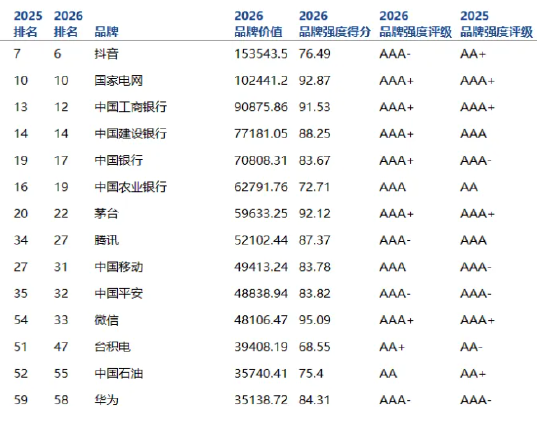
Core Insights - The Brand Finance 2026 Global Brand Value 500 report was released on January 20, 2026, in Davos, Switzerland, highlighting the performance of various brands globally [1][5]. Group 1: Chinese Brands Performance - A total of 68 Chinese brands made it to the list, with the insurance sector showing strong performance, featuring 7 insurance companies [1][5]. - The top Chinese insurance brands included Ping An (32nd), China Life Insurance (104th), and China People's Insurance (145th) [1][5]. - Among the 7 insurance brands, 6 experienced an increase in brand value, with China People's Insurance seeing a significant growth of 12%, reaching a brand value of $16.82 billion and moving up 5 places to rank 145th globally [1][5]. Group 2: Brand Rankings and Values - Notable rankings include Douyin at 6th with a brand value of $153.54 billion, State Grid at 10th with $102.44 billion, and ICBC at 12th with $90.88 billion [2][6]. - Other significant brands include China Construction Bank (14th), Bank of China (17th), and Agricultural Bank of China (19th), all maintaining strong brand values and ratings [2][6]. - The report indicates that the brand strength scores and ratings for these companies reflect their competitive positioning in the market, with many achieving AAA or AA ratings [2][6].
纽梅隆:在中国平安的持股比例升至5.75%
Ge Long Hui· 2026-01-21 09:48
Group 1 - The core point of the article is that Bank of New York Mellon has increased its stake in China Ping An's H-shares from 4.30% to 5.75% as of January 19 [1] Group 2 - The increase in ownership indicates a growing confidence from institutional investors in China Ping An [1] - The change in shareholding may reflect broader trends in investment strategies within the financial sector [1] - This adjustment in stake could potentially influence market perceptions and valuations of China Ping An [1]
