
CGS(601881)

Search documents
近22天连续"吸金"超72亿,券商ETF(512000)调整蓄势,机构:券商板块估值处于历史中枢偏下区间
Xin Lang Cai Jing· 2025-09-29 02:09
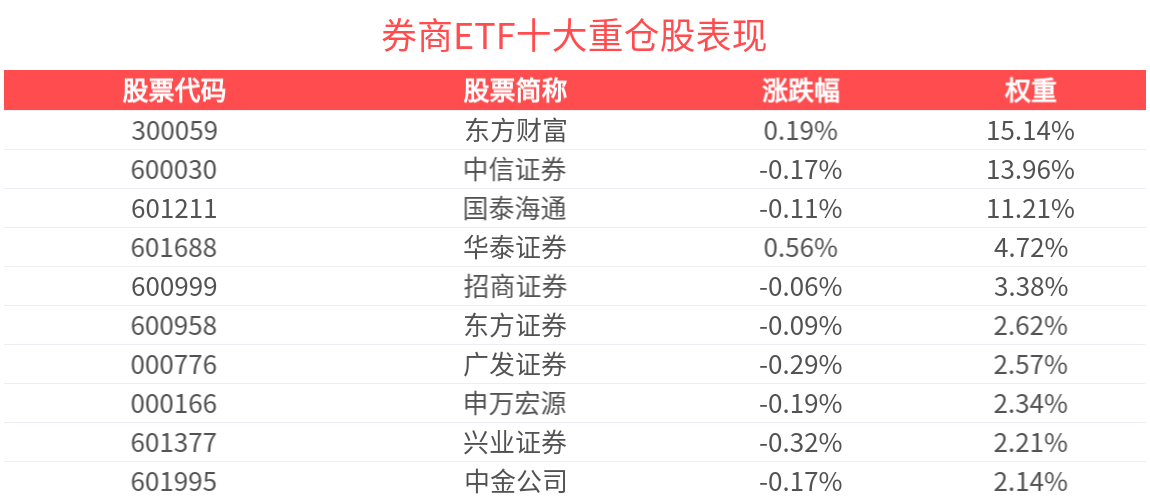
Core Insights - The overall sentiment in the securities industry remains optimistic, with expectations for continued profit growth in the third quarter driven by sustained demand for wealth management services [3][4]. Market Performance - As of September 29, 2025, the CSI All Share Securities Company Index experienced fluctuations, with Huayin Securities leading gains at 0.56% [1]. - The broker ETF (512000) saw a significant increase in scale, growing by 336 million yuan over the past week, ranking second among comparable funds [2]. - The broker ETF's latest share count reached 60.7 billion, marking a one-year high and leading among comparable funds [2]. Trading Activity - The broker ETF recorded a turnover of 0.04% during the trading session, with a total transaction value of 14.93 million yuan [2]. - Over the past 22 days, the broker ETF has experienced continuous net inflows, with a peak single-day inflow of 1.262 billion yuan, totaling 7.274 billion yuan in net inflows [2]. Profitability and Valuation - The securities industry is expected to maintain a double-digit profit growth rate year-on-year in the first half of 2025, reflecting a robust fundamental outlook [3]. - Despite a strong equity market performance year-to-date, the broker sector's index has lagged behind the broader market, indicating potential value in large broker valuations [4]. Investor Sentiment - As holidays approach, the topic of "holding cash or stocks" becomes crucial for investors, with many brokerages recommending "holding stocks through the holiday" based on optimistic market outlooks [2].







每周研选丨十大机构展望后市:“红十月” 在望建议持股过节
Shang Hai Zheng Quan Bao· 2025-09-29 01:36
Group 1 - The market is expected to maintain a positive trend despite short-term fluctuations, with October A-shares likely entering a critical window period for risk appetite recovery [1][2][4] - Historical data suggests that the market typically performs well after the National Day holiday, with current valuations remaining reasonable and not overly stretched [1][3] - The technology sector is highlighted as a key area for investment, with opportunities for "high-low cut" strategies within this sector [6][7] Group 2 - The liquidity in the market is anticipated to remain favorable, supported by factors such as the upward trend in margin financing and potential seasonal inflows from foreign capital [1][4][5] - The focus on cyclical industries is expected to yield better performance in the fourth quarter, with over 65% probability of these sectors outperforming the CSI 300 index [3] - Areas with improving earnings or sustained high growth are projected to generate excess returns, particularly in mid-to-high-end manufacturing and the AI industry chain [7]


中国银河证券:是即便人民银行在四季度再次实施降息 人民币依然将在年内保持升值方向
Xin Lang Cai Jing· 2025-09-29 00:39
Group 1 - The central bank is expected to implement a 10-20 basis points interest rate cut in the fourth quarter [1] - A potential interest rate cut may deepen the inversion of the China-US interest rate differential, leading to capital outflows and depreciation pressure on the RMB [1] - Despite previous expectations, the interest rate differential has narrowed this year, and the RMB has appreciated following the central bank's easing measures [1] Group 2 - Even with a potential interest rate cut in the fourth quarter, the RMB is expected to maintain an appreciation trend for the year [1] - Under the baseline scenario, the USD/CNY exchange rate is projected to approach 7.0 by year-end [1] - In an optimistic scenario, where extraordinary counter-cyclical policies stimulate the economy or tariffs on Chinese imports are reduced by an additional 20%, the new equilibrium for the USD/CNY exchange rate is estimated to be around 6.7 [1]
券商开启 秋季“抢人”大战
Zhong Guo Ji Jin Bao· 2025-09-28 23:34
Core Insights - The securities industry is experiencing a surge in talent demand due to the digital transformation and wealth management evolution, prompting major firms to initiate campus recruitment for the 2026 class [1][2] Group 1: Recruitment Trends - Over 20 domestic securities firms, including CITIC Securities and China International Capital Corporation, have announced campus recruitment for 2026, alongside international firms like Goldman Sachs and Morgan Stanley [1] - Leading firms are focusing on wealth management and financial technology, with a significant emphasis on expanding their tech talent pool [1][2] Group 2: Selection Criteria - Compared to previous years, top firms are increasing recruitment numbers, with CICC and Huatai Securities looking to fill over 100 positions each, and China Galaxy Securities nearly 90 [2] - Financial technology roles are prioritized, with CITIC Securities highlighting AI, QUANT, and FinTech as key areas, alongside traditional roles in sales and investment banking [2] Group 3: Skills and Experience Requirements - The requirements for financial technology positions have been raised, with roles demanding familiarity with AI technologies and data modeling for quantitative investment [2][3] - Firms like China Galaxy Securities require candidates to be proficient in mainstream deep learning frameworks and algorithms, indicating a shift towards more technical skill sets [3] Group 4: Salary and Competition - Starting salaries for quantitative roles at leading firms begin at 500,000 yuan, with potential for over 1 million yuan for those who can quickly contribute [4] - Smaller regional firms face challenges in attracting talent, often offering salaries comparable to state-owned banks but lacking the appeal of larger tech firms [4] Group 5: Educational Gaps - A report indicates that 66.4% of financial institutions urgently need AI talent, while 84.2% cite a lack of relevant work experience as a major hiring challenge [5] - Educational institutions are encouraged to adapt curricula to produce graduates who are proficient in both finance and programming, addressing the industry's need for hybrid talent [5]


行情催生“补血”需求 年内券商发债规模超万亿元
Zhong Guo Ji Jin Bao· 2025-09-28 23:34
Core Viewpoint - The surge in bond issuance by securities firms in China reflects a strong demand for capital, driven by increased market activity, expansion of capital-intensive businesses, and favorable financing conditions in a low-interest-rate environment [1][4]. Group 1: Bond Issuance Scale - As of September 28, 2023, the total bond issuance by securities firms has exceeded 1.18 trillion yuan, marking an 83.27% year-on-year increase, with 616 bonds issued compared to 366 in the same period last year [2]. - Monthly issuance saw a significant increase, with July reaching 142.99 billion yuan and August further rising to 275.5 billion yuan, setting new records for both volume and scale [2]. - Leading firms dominate the issuance, with seven firms surpassing 50 billion yuan in bond issuance, including China Galaxy, which issued over 100 billion yuan [2]. Group 2: Use of Funds - The bond issuance is characterized by a diverse allocation of funds, including debt repayment, liquidity support, and targeted investments, particularly in margin trading and derivatives [3]. - A significant portion of the funds is used for refinancing high-interest debt, optimizing debt structures, and enhancing operational capital for business expansion [3]. Group 3: Factors Driving Demand - The increase in bond issuance is attributed to multiple factors, including a strong A-share market, lower financing costs, and a supportive regulatory environment [4]. - The A-share market's performance, particularly the Shanghai Composite Index surpassing key thresholds, has led to a surge in trading activity, boosting demand for capital [4]. Group 4: Issuance Costs - The average interest rates for bond issuance have decreased compared to the previous year, with company bonds averaging 1.89%, subordinate bonds at 2.25%, and short-term financing bonds at 1.77% [5]. - Debt financing is favored over equity financing due to its larger funding capacity, lower costs in the current environment, and flexibility in meeting different business funding cycles without diluting equity [5]. Group 5: Future Outlook - The demand for capital among securities firms is expected to remain strong, with projections indicating continued high bond issuance in the fourth quarter [6]. - Leading firms are likely to strengthen their competitive positions due to capital and cost advantages, potentially intensifying the "Matthew Effect" in the industry [6].

2025年三季报前瞻:景气度持续提升
HUAXI Securities· 2025-09-28 11:02
Investment Rating - Industry Rating: Recommended [6] Core Insights - The securities market indicators for Q3 2025 are becoming clearer, with a significant increase in trading activity and capital market engagement expected [2][3][4] - The report anticipates that the revenue for 45 listed securities firms will reach approximately 3,987 billion yuan for the first three quarters of 2025, reflecting a year-on-year increase of about 44% [5][7] Summary by Sections 1. Securities Market Indicators for Q3 2025 - Trading activity continues to rise, with A-share transaction amounts reaching 132.63 trillion yuan in the first 63 trading days of Q3 2025, showing a year-on-year increase of 212% [2][15] - The average daily trading volume for Q1, Q2, and Q3 (to date) is 15,225 billion, 12,619 billion, and 21,053 billion yuan respectively, indicating significant growth [2][15] - Margin trading balances as of September 25, 2025, are at 24,443 billion yuan, with a year-on-year increase of 48% [2][16] 2. Capital Intermediary Activities - The report highlights a positive trend in capital intermediary activities, with a notable increase in leverage funds entering the market [2][16] - The ratio of self-operated equity securities to fixed-income securities among 45 listed securities firms is approximately 1:11.36, indicating a strong focus on fixed-income investments [3][29] 3. Equity Financing Recovery - There has been a resurgence in equity financing, with a total of 1,232 billion yuan raised through IPOs, placements, and convertible bonds in Q3 2025, marking a year-on-year increase of 145% [4][31][32] - The number of IPOs and placements has also increased significantly compared to the previous year [4][31] 4. Revenue Projections - The report projects that the 45 listed securities firms will achieve an adjusted revenue of 1,581 billion yuan in Q3 2025, representing a year-on-year increase of 50% [7][35] - The anticipated revenue for the first three quarters of 2025 is 3,987 billion yuan, with contributions from brokerage, investment banking, asset management, interest income, and proprietary trading [5][35] 5. Investment Recommendations - The report expresses optimism regarding the securities industry's role in capital market financing and the increasing allocation of residents' assets to equity [8][36] - Key beneficiaries identified include firms like Dongfang Caifu, Zhina Zhen, and Guangfa Securities, among others, due to their active roles in brokerage and investment banking [8][36]

非银金融周报:央行例会释放信号,维护资本市场稳定-20250928
HUAXI Securities· 2025-09-28 09:06
Investment Rating - The industry rating is "Recommended" [5] Core Insights - The average daily trading volume of A-shares for the week (September 21-27, 2025) was 23,132 million yuan, a decrease of 8.1% week-on-week but an increase of 17.5% year-on-year. The average trading volume for the third quarter of 2025 to date is 21,062 million yuan, up 212.2% compared to the same period in 2024. Year-to-date average trading volume in 2025 is 16,423 million yuan, an increase of 89.0% compared to 2024 [1][16] - The People's Bank of China held its monetary policy committee meeting on September 23, 2025, emphasizing the need to maintain stability in the capital market and exploring regular institutional arrangements for stock repurchase and increase loans [3][14] - The insurance sector saw a significant increase in premium income, with life insurance premiums rising by 47.25% year-on-year in August 2025, driven by strong market demand and a reduction in the preset interest rate [4][15] Summary by Sections Market and Sector Performance - The non-bank financial Shenwan index decreased by 0.09%, underperforming the CSI 300 index by 1.16 percentage points, ranking 9th among all primary industries. The securities sector fell by 0.18%, while the insurance sector rose by 0.46% [2][13] Securities - The average daily trading volume of A-shares was 23,132 million yuan, with a total of 2 new stock issuances raising 370 million yuan during the week. Year-to-date, there have been 76 IPOs in A-shares, raising 749.58 billion yuan [1][16] Insurance - The insurance industry reported original premium income of 4.8 trillion yuan for the first eight months of 2025, with life insurance premiums at 3.8 trillion yuan, reflecting a year-on-year growth of 11.32% [4][15] Industry News - Major state-owned banks announced they would no longer establish supervisory boards, which is expected to enhance governance efficiency [38] - The total scale of public funds in China has surpassed 36 trillion yuan for the first time, marking a significant milestone in the industry [39]

中国银河员工收警示函 委托证券经纪人以外的个人揽客
Zhong Guo Jing Ji Wang· 2025-09-26 03:05
Core Points - The China Securities Regulatory Commission (CSRC) Guizhou Regulatory Bureau issued a warning letter to Zou Wenjin for violating regulations by engaging individuals outside of licensed securities brokers for client solicitation activities [1][3] - This action is in accordance with Article 8, Item 7 of the Securities Brokerage Business Management Measures, which prohibits such practices [1][2] - Zou is required to submit a written rectification report within 15 working days and is advised to learn from this incident to prevent future violations [3] Company Overview - China Galaxy Securities Co., Ltd. (stock codes: 601881.SH, 06881.HK) was established in 2007 and is based in Beijing, focusing on capital market services [1] - The company has a registered capital of approximately 1,093.44 million RMB and a paid-in capital of 600.1 million RMB [1]
中国银河证券:卫星互联网出海进程加速 相关产业链发展喜人
智通财经网· 2025-09-26 01:49
Group 1 - Tongyu Communication has signed a bulk procurement agreement for Macro WiFi products with an Australian client, with an order quantity of 1,000 units, marking a significant step in the company's overseas expansion [1] - The Macro WiFi product is designed for remote areas, featuring high-gain dual-beam antenna arrays and built-in out-of-band filters, enabling effective signal interference reduction and supporting over 200 simultaneous users [1] - The successful overseas commercialization of Macro WiFi products validates their competitiveness and feasibility in international markets, laying a solid foundation for future deployments in regions like Africa and Southeast Asia [1] Group 2 - The low Earth orbit (LEO) satellite internet sector is rapidly developing, with a clear trend towards globalization, addressing the limitations of traditional terrestrial networks [2] - Major players in the LEO satellite internet market are primarily from China and the United States, with the U.S. leading in satellite deployment and coverage through StarLink [2] - China's satellite internet industry has a well-structured supply chain and strong global layout capabilities, as evidenced by various international collaborations and commercial deployments [2] Group 3 - The global market for satellite internet has significant potential, particularly in low-income countries where 4G coverage remains low, providing an opportunity for rapid signal coverage solutions [3] - China's LEO satellite constellations, such as China Star Network and G60 constellation, are in large-scale networking construction, primarily serving countries along the Belt and Road Initiative [3] - As the completeness of China's satellite internet network improves, the global market is expected to grow rapidly, with substantial development potential for related manufacturers [3]

中国银河:Agent驱动要素进入“量价齐升”阶段 AI产业投资遵循四大主线
智通财经网· 2025-09-25 13:00
Core Insights - The end of the visual dividend has led to a simultaneous downward shift in both the supply and payment curves, resulting in a decline in cloud computing SaaS valuations. The narrative around AI has transitioned from "model innovation" in the Internet+ era to "factor monetization," creating space for a "value reassessment" in the 14th Five-Year Plan [1][2] Group 1: AI Industry Transformations - During the 14th Five-Year Plan, the AI industry has undergone five significant qualitative changes, establishing a foundation for "factorization." These changes include a shift from "technology" to "factors," driven by global and domestic transformations alongside the fourth industrial revolution [2] - Key qualitative changes in the AI industry include: 1) Technological transformation with the end of visual dividends and the emergence of the Transformer architecture as a unified engine for AIGC, establishing a foundation for general intelligence [2] 2) Computational transformation with domestic AI chips gradually closing the efficiency gap with foreign counterparts, and a shift in data center forms from IDC to AIDC [2] 3) Data transformation with public data becoming a tradable fiscal element, filling the gap left by land revenue [2] 4) Policy transformation with AI being integrated into social governance, elevating its role from an "industrial tool" to a "transformation engine" [2] 5) Market transformation with a decline in cloud computing SaaS valuations and a shift in AI narratives towards "factor monetization" [2] Group 2: Future Outlook and Investment Opportunities - The 15th Five-Year Plan is expected to see AI factorization manifest through "price discovery, scale trading, and cross-border output," with Agents as the core vehicle [3] - Key aspects of this outlook include: 1) Product dimension changes where interaction paradigms shift to CUI, and Agents evolve from "passive execution" to "autonomous collaboration," marking the first market-based price discovery for factors [3] 2) Supply dimension with a complete domestic closed-loop system for Agents, enabling the definition of "Agent instruction sets" and achieving factor pricing power [3] 3) Demand-side expansion into global southern markets, with a significant population and a projected 9.2% annual growth rate in the digital economy [3] 4) Expansion of five key scenarios over the next five years, with a shift from "project-based" to "subscription-based" consumption frequency [3] Group 3: Investment Recommendations - Investment in the AI industry can follow four main lines: 1) Computational infrastructure, including domestic AI chips, AI servers, intelligent computing centers, and green computing facilities [4] 2) AI Agents and MaaS services, covering vertical industry software, low-code platforms, and system integrators [4] 3) Intelligent terminals and embodied intelligent robots, including smart connected vehicles, AI smartphones/PCs, AR/VR, and the associated industry chain [4] 4) AI and green low-carbon initiatives, involving smart grids, industrial energy conservation, carbon management software, and system integration [4]