CCB(601939)

Search documents
信用卡市场持续收缩,三年累计减少1亿张
Di Yi Cai Jing· 2025-12-07 04:11
Core Insights - The credit card market in China is experiencing a significant contraction, with a total issuance of 707 million cards as of Q3 2025, down from 715 million in Q2 2025 and a peak of 807 million in Q3 2022, marking a decline of approximately 100 million cards over three years [2][3] - The non-performing loan (NPL) rate for credit cards has risen to 2.40% as of mid-2025, indicating increasing pressure on asset quality within the banking sector [5][6] Credit Card Issuance Trends - The total number of credit cards has been on a downward trend for 12 consecutive quarters, with a notable reduction of 800 million cards in Q3 2025 compared to the previous quarter [2] - Major banks have reported a significant decrease in credit card loan balances, with a reduction of nearly 600 billion yuan in the first half of 2025 compared to the end of 2024 [3] - Credit card transaction volumes have also declined, with an overall decrease of approximately 8% year-on-year, particularly affecting banks like China Merchants Bank and Bank of Communications [3] Factors Influencing Market Contraction - The contraction in the credit card market is attributed to multiple factors, including regulatory policies that encourage banks to move away from aggressive card issuance and the rise of mobile payments and internet credit tools that are replacing traditional credit card usage [4] - Banks are shifting their focus from merely expanding card issuance to more refined management and risk control strategies [4] Asset Quality Concerns - The total amount of overdue credit card loans has increased from 842.85 billion yuan in Q2 2022 to 1,239.64 billion yuan by the end of 2024, indicating a growing concern over asset quality [5] - The average NPL rate for credit card overdrafts among 12 domestic banks has risen from 2.33% at the end of 2024 to 2.40% by mid-2025, with specific banks like ICBC and CCB reporting even higher rates [5] Risk Management and Asset Disposal - In response to rising NPLs, banks are accelerating the disposal of non-performing assets, with over 260 billion yuan in personal loan asset packages being transferred in November alone [6] - Notable cases include large asset packages from banks like Minsheng Bank and SPDB, indicating a proactive approach to managing credit risk [6] Operational Adjustments in Banking - Banks are implementing cost-cutting measures, including the closure of credit card centers and integrating credit card operations into broader retail banking strategies [7] - The future of credit card services is expected to focus on providing safer and more value-added financial services rather than merely promoting overspending [7] - The competitive landscape is likely to favor larger banks with strong risk management capabilities, while smaller banks will need to find ways to attract and retain customers without compromising on risk [7]



告别躺赚时代:大额存单退场,你的钱该去哪儿?
Sou Hu Cai Jing· 2025-12-06 20:45
Core Viewpoint - The long-term large-denomination certificates of deposit (CDs) are disappearing from banks, leading to a significant shift in savings habits among depositors as interest rates decline sharply [1][3][5]. Group 1: Product Supply - Major state-owned banks, including Industrial and Commercial Bank of China, Agricultural Bank of China, Bank of China, and China Construction Bank, have stopped selling 5-year large-denomination CDs [3]. - Some banks have also ceased offering 3-year large-denomination CDs, with no clear timeline for their return [3]. - Local banks are following suit, with announcements of the cancellation of 5-year fixed-term deposits [3]. Group 2: Interest Rate Decline - The interest rates for large-denomination CDs have dropped to the "1" range, with 3-year CDs at 1.55% for major banks [5]. - In contrast, prior to 2020, 3-year and 5-year CDs had yields above 3%, with some smaller banks offering rates close to 4% [5]. - The traditional practice of higher interest rates for larger deposit amounts has been disrupted, as the rates for different deposit amounts are now the same [5]. Group 3: Banking Strategy - The collective withdrawal of long-term large-denomination CDs is a response to the ongoing pressure on banks' net interest margins, which fell to 1.42% by Q3 2025 [7]. - Banks aim to lower liability costs and stabilize net interest margins by reducing the supply of long-term deposits [7]. - The current low net interest margin environment compels banks to avoid high-cost long-term deposits to maintain profitability [7]. Group 4: Shift in Depositor Behavior - With the discontinuation of long-term large-denomination CDs, depositors are seeking alternative investment products, such as savings insurance, government bonds, or structured deposits [9]. - However, these alternatives come with their own limitations, such as lower liquidity for savings insurance and limited issuance for government bonds [9]. - A survey indicates an increase in residents inclined to invest more, rising by 5.6 percentage points to 18.5% [9]. Group 5: New Investment Preferences - Non-principal guaranteed bank wealth management products have become a preferred investment method among residents, with the market size reaching 32.13 trillion yuan, a 9.42% year-on-year increase [11]. - Financial advisors are recommending a diversified asset allocation strategy to improve returns and liquidity, moving away from excessive reliance on long-term deposits [11]. - Low-risk bank wealth management products are suggested as alternatives that may offer better returns than traditional deposits [11]. Group 6: Future Trends - The banking sector is expected to shift towards shorter-term products, emphasizing flexibility and a diverse range of financial products [13]. - Banks need to enhance their wealth management capabilities to maintain customer relationships and ensure stable returns [13]. - Depositors are encouraged to prioritize liquidity in their investments during a declining interest rate environment, allowing for better opportunities in the future [13].







固收点评 20251206:二级资本债周度数据跟踪(20251201-20251205)-20251206
Soochow Securities· 2025-12-06 07:18
证券研究报告·固定收益·固收点评 固收点评 20251206 二级资本债周度数据跟踪 (20251201-20251205) [Table_Tag] [Table_Summary] 观点 ◼ 一级市场发行情况: 本周(20251201-20251205)银行间市场及交易所市场共新发行二级资本 债 3 只,发行规模为 500.00 亿元。发行年限为 10Y;发行人性质为地方 国有企业、中央金融企业;主体评级为 AAA;发行人地域为安徽省、北 京市、四川省。 ◼ 二级市场成交情况: 本周(20251201-20251205)二级资本债周成交量合计约 1949 亿元,较 上周增加 164 亿元,成交量前三个券分别为 25 中行二级资本债 02BC (118.26 亿元)、25 工行二级资本债 02BC(87.73 亿元)和 25 长沙银 行二级资本债 01(85.56 亿元)。 分发行主体地域来看,成交量前三为北京市、上海市和湖南省,分别约 为 1410 亿元、100 亿元和 88 亿元。 从到期收益率角度来看,截至 12 月 5 日,5Y 二级资本债中评级 AAA-、 AA+、AA 级到期收益率较上周涨跌幅分别为 ...

周大福、周大生等品牌足金价格稳定在1328元/克
Ge Long Hui· 2025-12-06 00:45
Group 1 - The price of physical gold remains stable at 1328 CNY per gram for brands such as Chow Tai Fook and Chow Sang Sang [1] - There is a price differentiation in bank investment gold bars, with China Construction Bank quoting 969.60 CNY per gram and Industrial and Commercial Bank of China quoting 979.15 CNY per gram [1]

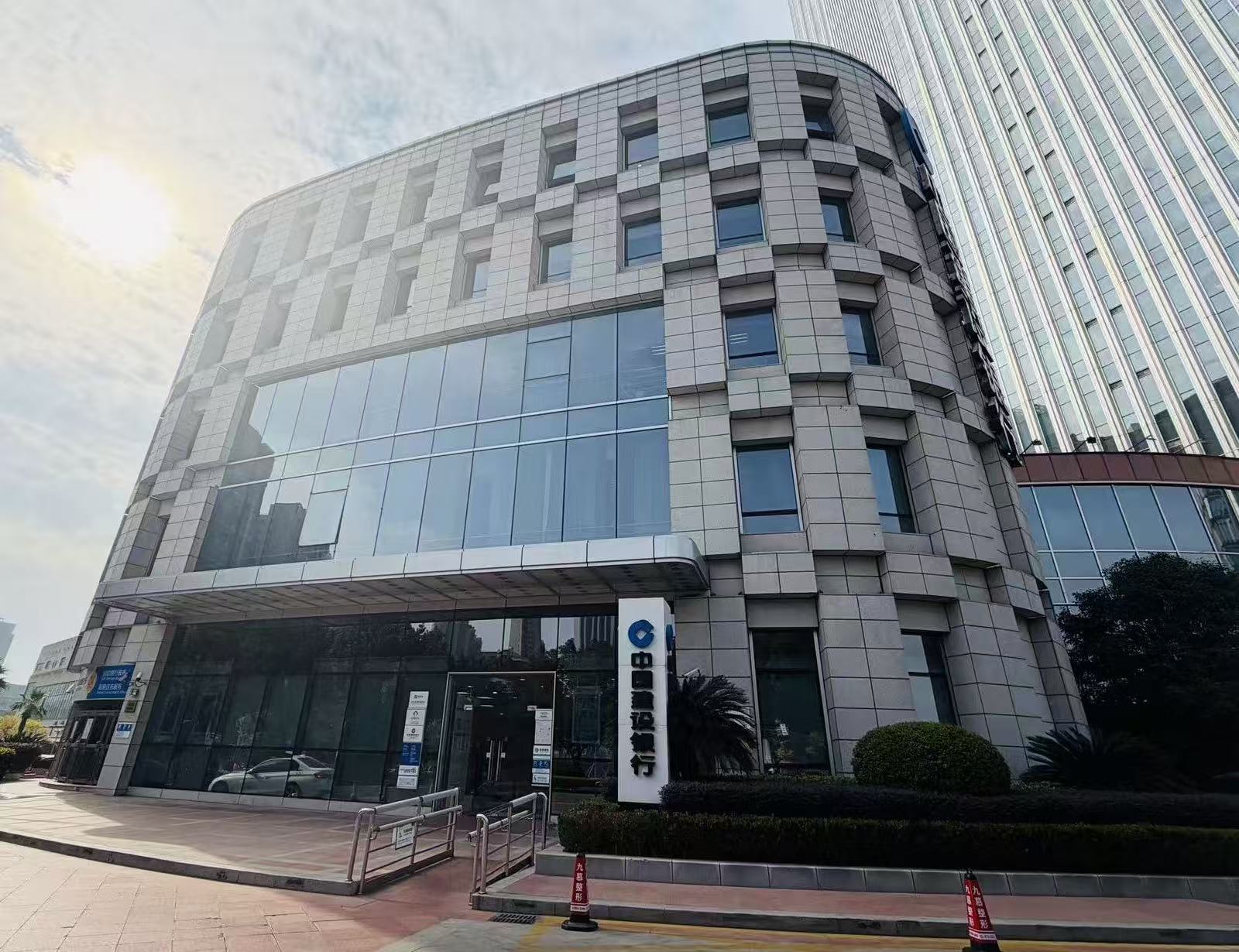
建行上海市分行落地FT升级账户业务,助力企业跨境资金高效融通
Zhong Guo Jin Rong Xin Xi Wang· 2025-12-05 13:41
Group 1 - The implementation of the upgraded Free Trade Account (FTA) in Shanghai marks a new phase in financial openness, providing a new account system for cross-border fund transfers and convenient financing for quality enterprises in the free trade zone [1] - The Bank of China Shanghai Branch has actively responded to the policy by successfully processing FTA upgrade account services for several key enterprises on the first day of implementation, enhancing global operations for these companies [1] - The upgraded FTA allows enterprises to freely transfer funds to and from offshore accounts, significantly improving fund turnover efficiency and supporting overseas project financing [1] Group 2 - The Bank of China Shanghai Branch has simplified cross-border investment and financing processes, enabling companies to quickly complete fund transfers without being restricted by overseas loan quotas, thus supporting their overseas project operations [2] - The FTA upgrade account service is designed to support energy companies in their global expansion and green transformation, facilitating direct investment in overseas renewable energy projects [2] - The Bank of China Shanghai Branch has tailored FTA account functions for foreign trade enterprises, enhancing cross-border fund payment efficiency and supporting their "going out" strategy [3] Group 3 - As one of the first banks to implement FTA upgrade account services, the Bank of China Shanghai Branch has provided services to over 10,000 clients and has issued FTA loans exceeding 600 billion yuan [3] - The bank plans to continue expanding the coverage of FTA upgrade account services, leveraging its dual advantages of "one-line free transfer and two-line macro-prudential management" to enhance global fund management capabilities for enterprises [3]
从“就近可办”到“全能通办”,建行上海市分行打造公积金服务新样本
Zhong Guo Jin Rong Xin Xi Wang· 2025-12-05 13:41
Core Insights - The collaboration between China Construction Bank (CCB) Shanghai Branch and the Shanghai Housing Provident Fund Management Center has enhanced public service convenience by expanding the range of housing provident fund services [1][3] - The service model has transitioned from "nearby service" to "comprehensive service," achieving a significant upgrade in service capabilities [1][6] Group 1: Service Expansion - CCB's branches now offer an increased total of 3 collection and 15 withdrawal services, significantly enhancing the volume of services available [1][3] - The expanded services cover personal account management, collection transfer, and various withdrawal scenarios, forming a comprehensive service system to meet diverse citizen needs [3][6] Group 2: Strategic Alignment - The new services align closely with urban renewal and the Yangtze River Delta integration strategy, supporting initiatives such as "withdrawal for purchasing renovated housing" and "withdrawal for transitional rental during project construction" [3][6] - The service framework includes a multi-tiered withdrawal system for various housing types, specifically addressing the needs of new citizens and young renters [3][6] Group 3: Operational Collaboration - Prior to the official launch, CCB organized practical training for staff to ensure smooth implementation and standardization of the new services [5][6] - The partnership has achieved a 95% coverage rate for business processing through system integration, process restructuring, and joint training of personnel [6] Group 4: Future Development - Looking ahead, both parties plan to continue exploring advancements in smart services and data empowerment to enhance the experience of citizens using housing provident fund services [7]
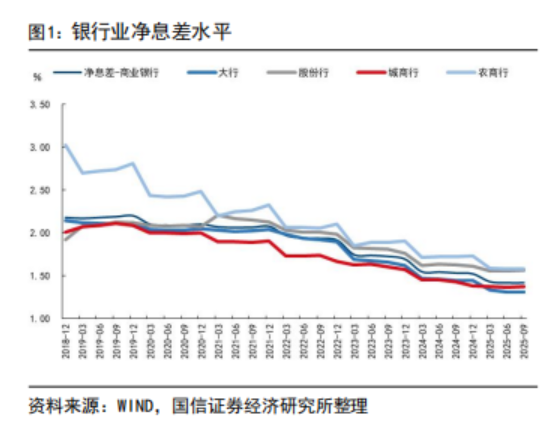
【国信银行·深度】银行业2026年经营展望之价格篇:货币政策相机抉择,净息差下降尾声
Xin Lang Cai Jing· 2025-12-05 12:56
Group 1: Core Insights - The current bottom line for the net interest margin (NIM) of major banks is approximately 1.2% to 1.3%, indicating limited room for further significant declines [1][6][84] - Maintaining a reasonable level of NIM is essential for economic growth and financial stability, as it relates to capital balance, breakeven points, and risk pricing mechanisms [6][20][21] Group 2: NIM Bottom Line Calculation - The projected nominal GDP growth during the "14th Five-Year Plan" period is estimated to be between 6.0% and 6.9%, which necessitates an M2 growth rate of about 7.0% to 8.0% [1][23][28] - The bottom line for NIM is calculated based on a required return on equity (ROE) of 7% to 8%, leading to a NIM bottom line of approximately 1.2% to 1.3% [36][84] Group 3: 2026 NIM Projections - If the Loan Prime Rate (LPR) decreases by 10 basis points (bps) and deposit rates remain unchanged, the NIM is expected to decline by approximately 5 to 8 bps in 2026 [2][85] - Without considering further interest rate cuts, the model predicts a decrease in loan rates by about 24 bps and deposit rates by 14 to 17 bps, resulting in a net interest margin contraction of about 2 to 5 bps [2][39][59] Group 4: Monetary Policy Outlook for 2026 - The monetary policy for 2026 is expected to be characterized by a "reasonable and ample" approach, with a likely LPR decrease of 10 bps and a reserve requirement ratio (RRR) cut of 50 bps [3][86] - The central bank's strategy will focus on balancing short-term and long-term goals, supporting economic growth while maintaining the health of the banking system [60][61] Group 5: Economic Recovery and Regulatory Impact - Economic recovery may not meet expectations, and regulatory changes could temporarily impact the banking sector's fundamentals [4][80] - The banking sector is under strong regulatory oversight, and any adverse policies could affect short-term valuations [80]

沪市公司今年前11月已实际派发现金分红1.81万亿元
Zhong Guo Xin Wen Wang· 2025-12-05 11:40
Group 1 - The total amount of cash dividends distributed by listed companies in Shanghai reached 1.81 trillion yuan from January to November 2025, representing a 2% year-on-year increase [1] - A total of 193 companies in the Shanghai market distributed more than 1 billion yuan in dividends, with 28 companies exceeding 10 billion yuan in actual cash payouts, including major players like Industrial and Commercial Bank of China, China Mobile, and China Construction Bank, each distributing over 100 billion yuan [1] - The number of companies on the Sci-Tech Innovation Board that increased their cash dividend payouts reached 164, indicating a growing trend in shareholder returns [1] Group 2 - As of the end of November 2025, the overall dividend yield for Shanghai-listed companies was 2.25%, with 28 companies yielding over 2.5%, and 11 companies exceeding 4% [2] - Over the past three years, 342 companies in the Shanghai market maintained a cash dividend payout ratio of over 40%, with 199 companies achieving a payout ratio exceeding 50% consistently [2]




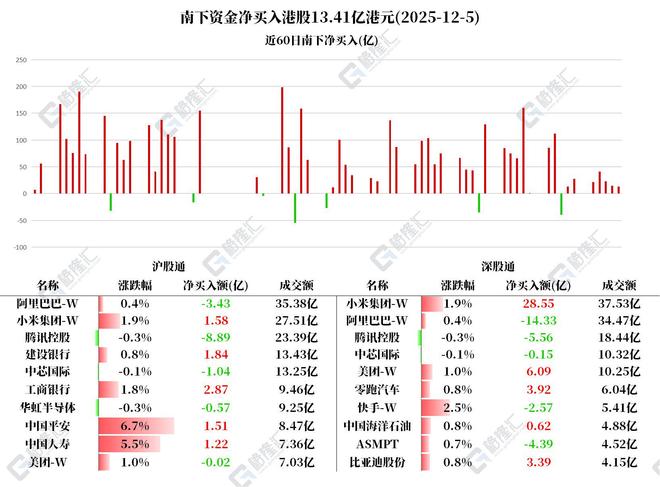
图解丨南下资金大幅加仓小米超30亿港元,减持阿里
Xin Lang Cai Jing· 2025-12-05 09:57
Group 1 - Southbound funds recorded a net purchase of HKD 1.341 billion in Hong Kong stocks today [1] - Notable net purchases included Xiaomi Group-W at HKD 3.013 billion, Tracker Fund at HKD 2.606 billion, and Meituan-W at HKD 607 million [1] - Continuous net buying trends were observed for Meituan over the past 7 days totaling HKD 2.89598 billion and for Xiaomi over the past 6 days totaling HKD 5.0656 billion [1] Group 2 - Significant net selling was noted for Alibaba-W at HKD 1.776 billion and Tencent Holdings at HKD 1.445 billion [1] - Semiconductor company ASMPT experienced a net sell of HKD 439 million, while Kuaishou-W and SMIC also saw net selling [1] - The trend of net selling for SMIC has persisted for 12 consecutive days, amounting to HKD 3.56848 billion [1]



金融行业双周报(2025、11、21-2025、12、4)-20251205
Dongguan Securities· 2025-12-05 08:49
Investment Ratings - Banking: Overweight (Maintain) [1] - Securities: Market Weight (Maintain) [1] - Insurance: Overweight (Maintain) [1] Core Insights - The Financial Stability Board (FSB) released the 2025 Global Systemically Important Banks (G-SIBs) list, with the Industrial and Commercial Bank of China (ICBC) moving from the second group to the third group, marking a historic breakthrough for Chinese banks in global importance assessments [1][44] - The upward adjustment in ranking will subject ICBC to stricter capital regulatory requirements, with additional capital requirements increasing from 1.5% to 2% effective from 2027 [1][44] - The banking sector is expected to attract funds due to the ongoing low-interest-rate environment and the "asset shortage" issue, leading to sustained demand for high-dividend, low-valuation bank stocks [1][44] - The insurance sector is transitioning from reliance on sales expenses to refined management and cost control, with policies encouraging a return to the core of insurance protection and supporting increased equity investment by insurance funds [1][49] Summary by Sections Market Review - As of December 4, 2025, the banking, securities, and insurance indices experienced declines of -2.18%, -4.12%, and -2.74% respectively, while the CSI 300 index fell by -0.40% [10] - Xiamen Bank (+4.94%), CITIC Securities (+1.15%), and China Pacific Insurance (-0.96%) were the best performers among sub-sectors [10] Valuation Situation - As of December 4, 2025, the PB ratio for the banking sector was 0.77, with state-owned banks, joint-stock banks, city commercial banks, and rural commercial banks having PB ratios of 0.83, 0.62, 0.73, and 0.65 respectively [19] - The securities sector's PB ratio was 1.44, indicating potential for valuation recovery [22] Recent Market Indicators - The one-year Medium-term Lending Facility (MLF) rate was 2.0%, with the one-year and five-year Loan Prime Rates (LPR) at 3.0% and 3.50% respectively [27] - The average daily trading volume of A-shares was 17142.93 billion, showing a slight decrease of 0.65% [33] Industry News - The China Actuarial Society issued guidelines on the allocation of costs for life insurance products, aiming to clarify cost definitions and management [40][47] - The number of new A-share accounts opened in November 2025 was 2.38 million, a 3% increase from October, indicating a recovery in market sentiment [46] Company Announcements - New China Life announced a cash dividend of 0.67 yuan per share for the first half of 2025, totaling approximately 2.09 billion yuan [42] - Changsha Bank issued 60 billion yuan in secondary capital bonds, while Industrial Bank successfully issued 20 billion yuan in financial bonds [42]