BIOKIN PHARMACEUTICAL(688506)

Search documents
龙头企业寄语:科创板改革显著提升对科创企业支持力度
2 1 Shi Ji Jing Ji Bao Dao· 2025-07-22 02:12
Core Insights - The Sci-Tech Innovation Board (STAR Market) has become a significant platform for technology innovation and capital market reform in China, celebrating its sixth anniversary with 589 listed companies as of July 22, 2025 [1] Group 1: STAR Market Development - The STAR Market has continuously promoted institutional innovation and industrial upgrading, attracting global attention as a hub for "hard technology" enterprises [1] - Since its launch on July 22, 2019, the STAR Market has supported the listing of 25 initial companies, marking the beginning of its journey [1] Group 2: Company Perspectives - Haiguang Information has made significant progress in governance, innovation, competition, and operations, focusing on high-end processor business and increasing R&D investment [2] - The company has independently developed multiple generations of general-purpose CPUs and AI accelerators, achieving a leading market share in domestic high-end computing and intelligent computing sectors [2] - Baili Tianheng has benefited from the STAR Market's support for high-quality development of unprofitable enterprises, focusing on innovative drug development in oncology [4] - The company has initiated a fundraising plan for innovative drug R&D, aiming to expand its product pipeline and commercialize more products [4] - Tuojing Technology has experienced accelerated growth post-listing, achieving profitability in its first year and expanding its production scale in semiconductor equipment [6] - Zhongkong Technology has leveraged capital market support for R&D in AI and robotics, enhancing its governance structure and operational efficiency [7] - Zexin Pharmaceutical has successfully launched three new drug products and established a competitive product pipeline, benefiting from STAR Market policies [9] - Hehui Optoelectronics has recognized the STAR Market's reforms as a significant boost to its innovation capabilities and market adaptability [10] Group 3: Policy Impact - The introduction of the "1+6" policy measures aims to enhance the STAR Market's support for technology innovation enterprises, addressing core pain points and growth patterns [10][12] - The establishment of the Sci-Tech Growth Layer provides a dedicated capital channel for high-potential, non-profitable enterprises, facilitating their transition through the "valley of death" [11] - The reforms emphasize long-term value assessment based on technological advancement and market potential, rather than short-term profitability [12] - The STAR Market is expected to cultivate globally competitive technology leaders, contributing to high-quality economic development in China [12][14]



科创板,真6!上市公司、券商高管齐齐“点赞”
Zheng Quan Shi Bao· 2025-07-21 14:03
Group 1 - The Sci-Tech Innovation Board (STAR Market) has achieved significant milestones in its six years of operation, serving as a "testing ground" for capital market reforms and supporting the development of hard technology enterprises [2][4][11] - The recent implementation of the "1+6" reform measures, including the establishment of a growth tier and the reintroduction of the fifth listing standard, aims to enhance inclusivity for unprofitable tech companies and optimize the review process [2][3][11] - The STAR Market has successfully attracted a diverse range of companies, with over 589 listed firms, primarily in emerging industries such as information technology, biomedicine, and high-end equipment manufacturing [6][10] Group 2 - The STAR Market's inclusive system design has lowered the barriers for hard technology companies to access capital markets, allowing for a more flexible listing standard [3][6][12] - The introduction of strategic and professional institutional investors has improved the value discovery capabilities of the capital market, further supporting the growth of innovative companies [3][6] - Companies like Haiguang Information and Zhongkong Technology have reported significant advancements in governance, innovation, and market presence, attributing their success to the supportive environment provided by the STAR Market [7][8] Group 3 - The STAR Market is expected to continue evolving, with a focus on fostering high-quality development and supporting the transformation of the economy through technological innovation [4][5][11] - The board's reforms are anticipated to create a more favorable environment for long-term research and development investments, particularly for companies in the pharmaceutical and semiconductor sectors [10][12] - The STAR Market's role as a platform for showcasing innovation has enhanced the visibility and international influence of listed companies, contributing to their growth and market share expansion [8][10]
八连涨后首度回调,药ETF盘中下探2%,百利天恒领跌!医疗ETF溢价走阔!“政策加码+业绩转暖”逻辑或仍在
Xin Lang Ji Jin· 2025-07-21 05:54
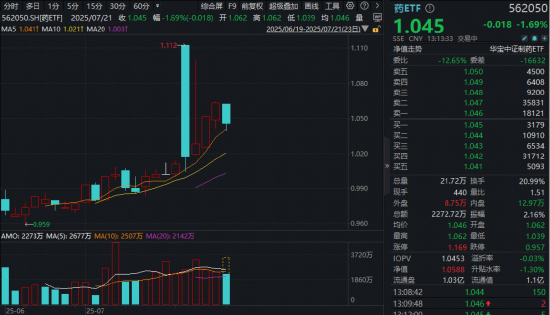
7月21日,"吃药"行情暂歇,百利天恒、百济神州、信立泰等创新药热门股大幅回调,聚焦龙头药企的 药ETF(562050)盘中一度跌逾2%,止步"八连升"! 消息面上,近日国家医保局召开医保支持创新药械系列座谈会第一场,20余家医药企业、高校科研院 所、医疗机构的代表参与。会议围绕"对创新药械开展医保综合价值评价"议题深入交流,提出意见建 议。 分析指出,国家医保局年内首次构建起"基本医保保基本+商保目录覆盖高值创新药"的双轨支付体系, 为高价创新药和创新医疗器械提供支付支持。政策支持加码叠加业绩转暖逻辑,医疗、制药等板块值得 持续关注。 把握中国龙头药企价值重估机遇,配置工具关注国内首只药ETF(562050)。聚焦A股50大龙头药企, 重仓创新药,兼顾中药,且完全不含医疗和CXO。 同时看好医疗器械、CXO,则可以关注A股最大医疗ETF(512170)。聚焦"医疗器械+医疗服务",与 AI医疗高相关,覆盖6只CXO龙头股。场外联接基金(A类 162412 / C类 012323)。 MACD金叉信号形成,这些股涨势不错! 医疗板块行情亦平淡,CXO概念股跌幅靠前,凯莱英、昭衍新药跌逾2%。A股最大医疗ETF ...

科创板平均股价31.78元,41股股价超百元
Zheng Quan Shi Bao Wang· 2025-07-18 11:32
Group 1 - The average stock price of the Sci-Tech Innovation Board is 31.78 yuan, with 41 stocks priced over 100 yuan, and the highest priced stock is Cambricon at 582.62 yuan [1][2] - Among the stocks priced over 100 yuan, 324 stocks increased in price today, while 257 stocks decreased, with an average increase of 0.22% for the hundred-yuan stocks [1][2] - The average premium of the hundred-yuan stocks relative to their issue price is 339.86%, with the highest premiums from Baili Tianheng, Anji Technology, and Hotgen Biotech at 1199.76%, 1071.45%, and 961.08% respectively [1] Group 2 - The net outflow of main funds for hundred-yuan stocks today is 1.29 billion yuan, with the highest net inflows in stocks like Tuojing Technology and Cambricon [2] - The total margin balance for hundred-yuan stocks is 25.811 billion yuan, with Cambricon having the highest margin balance at 3.712 billion yuan [2] - The electronic, pharmaceutical, and computer industries have the highest concentration of hundred-yuan stocks, with 18, 9, and 6 stocks respectively [1]

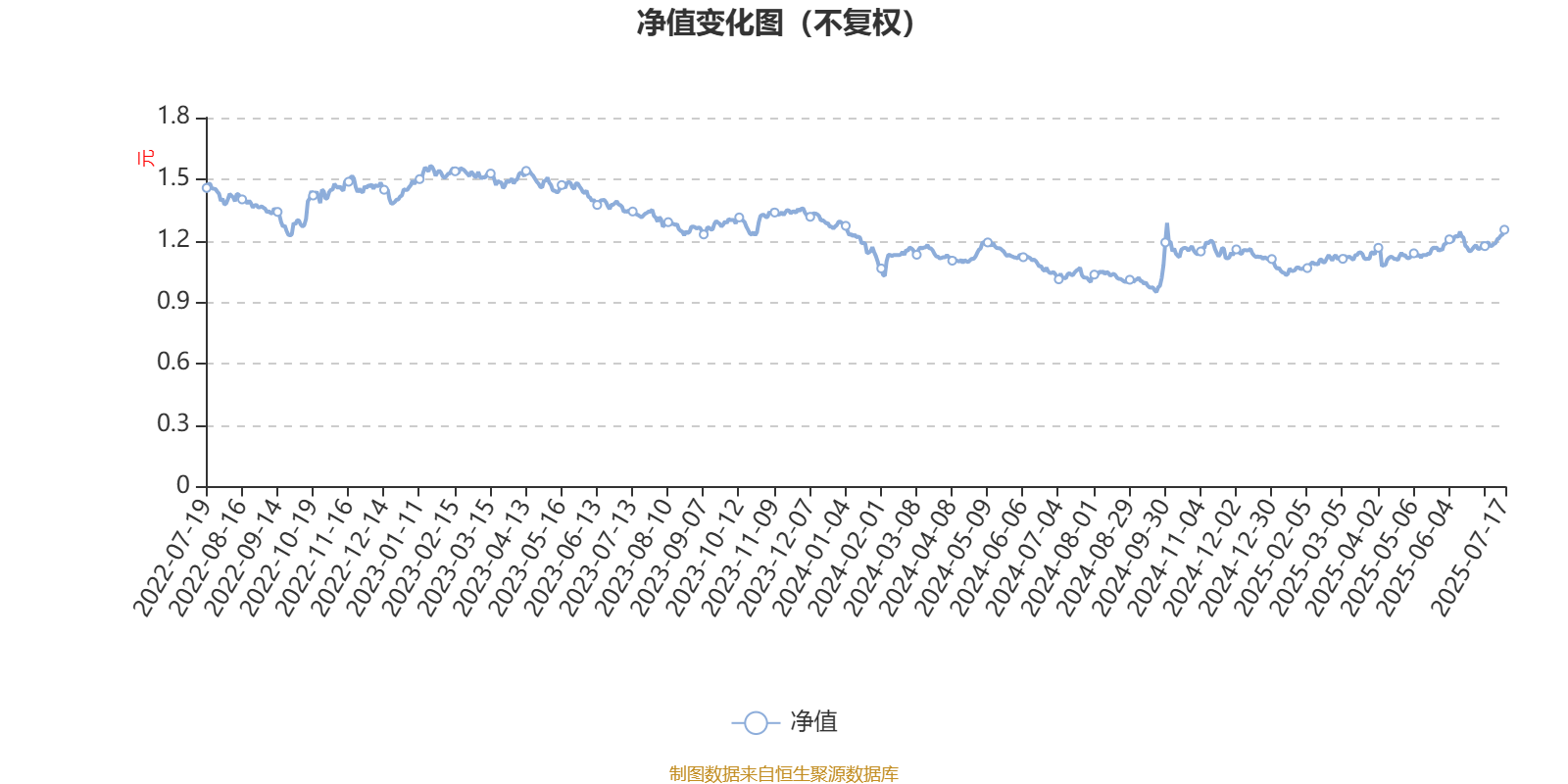
交银医疗健康混合发起A:2025年第二季度利润294.79万元 净值增长率17.76%
Sou Hu Cai Jing· 2025-07-18 11:11
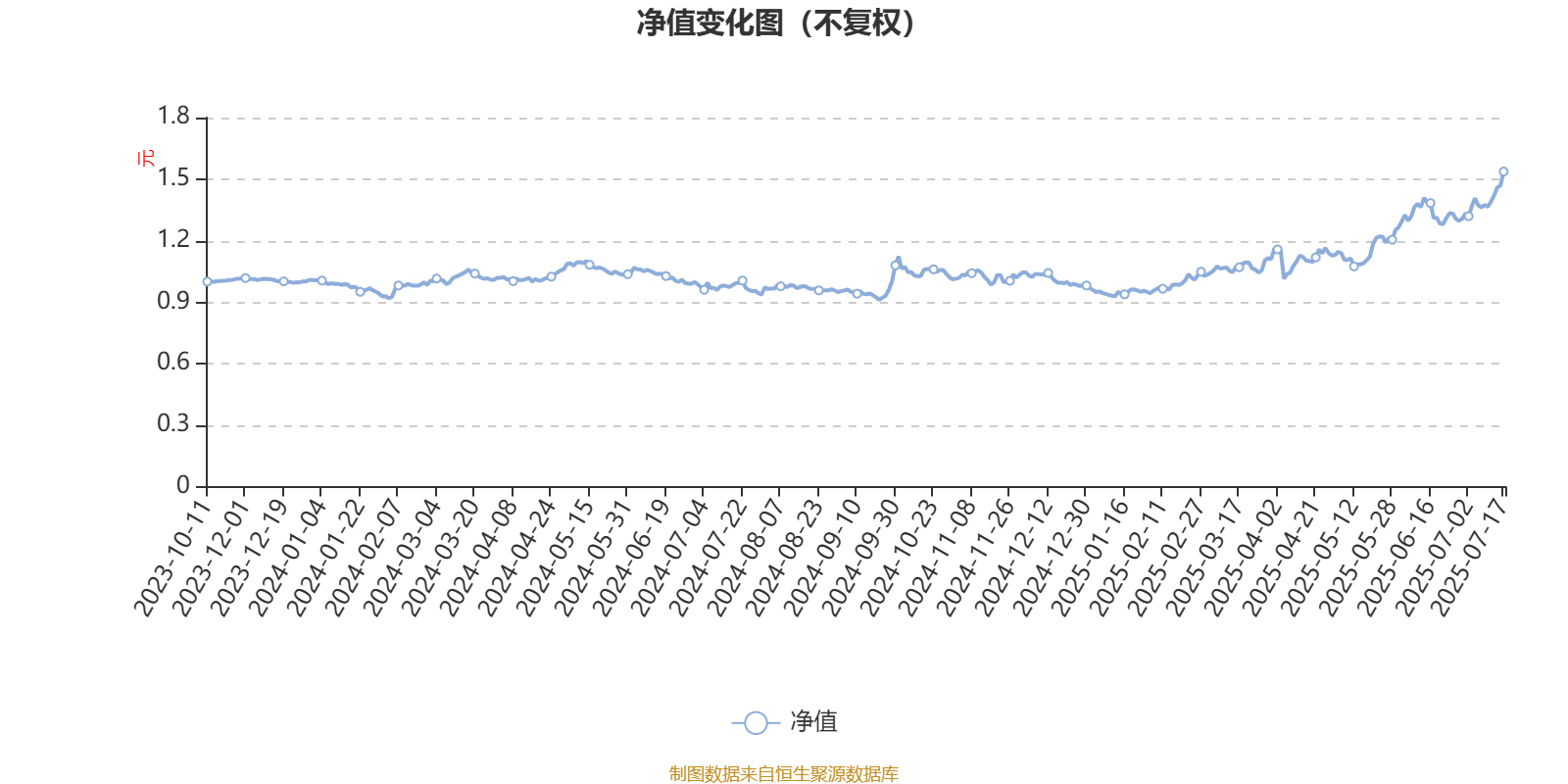
Core Viewpoint - The AI Fund, Jiaoyin Healthcare Mixed Fund A, reported a profit of 2.9479 million yuan for Q2 2025, with a weighted average profit per fund share of 0.1684 yuan, and a net value growth rate of 17.76% for the period [2] Fund Performance - As of July 17, 2025, the fund's unit net value was 1.537 yuan, with a fund size of 31.8706 million yuan [2][14] - The fund's net value growth rates over different periods are as follows: 39.70% over the last three months (ranked 19 out of 138), 61.76% over the last six months (ranked 27 out of 138), and 56.19% over the last year (ranked 33 out of 133) [2] Investment Strategy - The fund manager anticipates that the innovative drug market will continue to thrive, citing the absence of negative factors that could undermine industry trends and the lack of significant valuation bubbles among leading companies [2] - The strategy will focus on maintaining a core position in innovative drugs while also considering sectors and stocks expected to show performance inflection points in the second half of the year [2] Fund Metrics - The fund's Sharpe ratio since inception is 0.9484 [7] - The maximum drawdown since inception is 17.28%, with the largest quarterly drawdown occurring in Q4 2024 at 13.72% [9] - The average stock position since inception is 78.84%, with a peak of 90.79% at the end of H1 2025 and a low of 37.61% at the end of 2023 [12] Top Holdings - As of Q2 2025, the fund's top ten holdings include companies such as Innovent Biologics, Kelun-Biotech, Zai Lab, Hengrui Medicine, and others [17]

银华医疗健康量化股票发起式A:2025年第二季度利润70.42万元 净值增长率3.25%
Sou Hu Cai Jing· 2025-07-18 08:53
Core Viewpoint - The AI Fund Yinhua Medical Health Quantitative Stock Initiation A (005237) reported a profit of 704,200 yuan in Q2 2025, with a net value growth rate of 3.25% for the period, indicating a positive performance in the medical and healthcare sector [2]. Fund Performance - As of the end of Q2 2025, the fund's scale was 22.77 million yuan [13]. - The fund's unit net value as of July 17 was 1.253 yuan [2]. - The fund's performance over various time frames includes: - 3-month net value growth rate: 12.97%, ranking 47 out of 54 comparable funds [2]. - 6-month net value growth rate: 18.70%, ranking 47 out of 54 comparable funds [2]. - 1-year net value growth rate: 19.99%, ranking 45 out of 53 comparable funds [2]. - 3-year net value growth rate: -15.15%, ranking 29 out of 46 comparable funds [2]. Risk Metrics - The fund's Sharpe ratio over the past three years was -0.1083, ranking 30 out of 46 comparable funds [7]. - The maximum drawdown over the past three years was 39.37%, ranking 24 out of 46 comparable funds, with the largest single-quarter drawdown occurring in Q1 2021 at 25.15% [8]. Investment Strategy - The fund focuses on long-term investments in pharmaceutical and healthcare stocks, with a strong emphasis on the innovative drug industry [2]. - The average stock position over the past three years was 89.19%, with a peak of 92.5% at the end of H1 2025 and a low of 85.16% at the end of H1 2024 [11]. Top Holdings - As of the end of Q2 2025, the fund's top ten holdings included: - Heng Rui Medicine - WuXi AppTec - Mindray Medical - BeiGene - East China Pharmaceutical - Kelun Pharmaceutical - Baillie Gifford - Betta Pharmaceuticals - Zai Lab - Kailai Ying [16].


深度:创新药的前世今生,热点题材全揭密
Sou Hu Cai Jing· 2025-07-17 03:59
Core Viewpoint - The rise of innovative drug themes is driven by a combination of policy, technology, and capital, marking a significant transition in China's pharmaceutical industry from generics to innovation [1] Historical Context of Innovative Drugs - Before 2015, China's pharmaceutical industry was dominated by generics, with long drug approval cycles (averaging 3-5 years) and low R&D investment (less than 5% of revenue) [2] - Key players like Hengrui Medicine and BeiGene began to focus on innovative drug development, with Hengrui launching the first domestic PD-1 inhibitor in 2014 [3] Current Landscape and Policy Support - By 2025, the National Medical Products Administration (NMPA) aims to significantly reduce clinical trial review times from 60 days to 30 days, with pilot projects averaging only 23.8 working days [5] - In the first half of 2025, 43 innovative drugs were approved, with over 90% being domestic products, particularly in oncology [5] - New policies in Beijing allow for direct hospital admission of innovative drugs without the need for a drug committee meeting, enhancing access [5] Technological Advancements and Internationalization - Chinese pharmaceutical companies are increasingly competitive globally, with significant advancements in areas like ADC and bispecific antibodies [5] - In the first half of 2025, over 70 overseas licensing transactions were recorded, with total transaction amounts reaching $48 billion, including a record $1.25 billion upfront payment for a PD-1/VEGF bispecific collaboration [6] Market Dynamics and Investment Trends - The innovative drug sector is expected to enter a three-year upward cycle driven by frequent major business development (BD) transactions and improving profitability for leading companies [7] - The innovative drug index in Hong Kong has seen a year-to-date increase of over 34%, reflecting strong market recognition of long-term value [9] Key Players and Financial Performance - Hengrui Medicine, with a market cap of approximately 379.78 billion yuan, leads in R&D investment and has a robust pipeline, including a PD-1 inhibitor with cumulative sales exceeding 20 billion yuan [10] - BeiGene, with a market cap of around 369.47 billion yuan, has achieved significant international sales, with its drug Zanubrutinib generating over 8 billion yuan in global sales in the first half of 2024 [11] Emerging Trends and Future Outlook - The integration of AI in drug development is expected to enhance efficiency, with projections indicating the AI pharmaceutical market could exceed $3 billion by 2030 [16] - The innovative drug market in China is anticipated to reach approximately 2.3 trillion yuan by 2030, with a compound annual growth rate of 24.1% [16]


双抗ADC只是开胃菜!百利天恒的“创新家底”有多厚?
Ge Long Hui· 2025-07-16 02:38
Group 1 - The core viewpoint is that BaiLi Tianheng's dual-target ADC, Iza-bren (BL-B01D1), has successfully reached the primary endpoint in its Phase III clinical trial for nasopharyngeal carcinoma, marking it as the world's first dual-target ADC to complete Phase III clinical validation [1][2][16] - The collaboration between BaiLi Tianheng and Bristol-Myers Squibb (BMS) for BL-B01D1 amounts to a total of $8.4 billion, indicating the significant potential of this innovative drug [2][7] - BL-B01D1 is not limited to nasopharyngeal carcinoma; it is also undergoing Phase III trials for multiple other cancers, including non-small cell lung cancer (NSCLC), small cell lung cancer (SCLC), breast cancer, and more, with 10 ongoing Phase III studies [2][5] Group 2 - In 2022, China accounted for 47% of the global new cases of nasopharyngeal carcinoma, with 51,000 new cases and 28,000 deaths reported [3] - The objective response rate (ORR) for BL-B01D1 in a Phase I trial for nasopharyngeal carcinoma was 45.8%, with a disease control rate (DCR) of 100% [3][6] Group 3 - BaiLi Tianheng has a rich pipeline of nearly 10 ADC candidates based on its HIRE-ADC platform, including BL-M07D1 (HER2 ADC) and BL-M11D1 (CD33 ADC) [7][12] - The ADC pipeline includes various indications, with BL-M07D1 currently in 11 clinical trials, covering multiple cancer types [9][10] - The company is also developing multi-specific antibodies and has established platforms for innovative drug development, including GNC and SEBA platforms [12][15] Group 4 - The success of BL-B01D1 represents a significant milestone for BaiLi Tianheng and reflects China's growing role in global drug development [16] - The company is well-positioned for future business development opportunities due to its innovative pipeline and successful clinical outcomes [16]
百利天恒20250715
2025-07-16 00:55
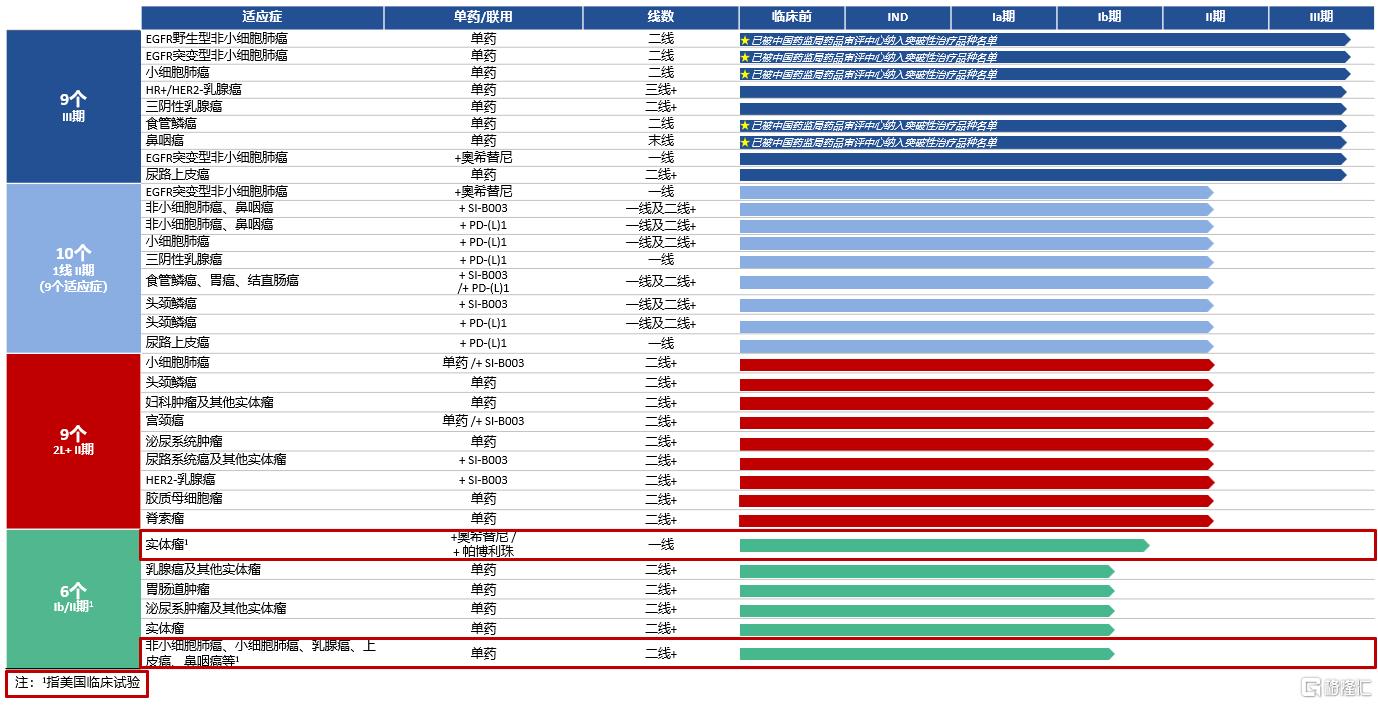
Summary of the Conference Call for 百利天恒 Company Overview - 百利天恒 was established in 1996, initially engaged in textile pharmaceuticals, and began innovative drug development in 2010. The company has R&D centers in China and the USA, with over 200 patents filed globally as of 2022, supporting its international market entry [7][9]. Core Product: BLB01D1 - BLB01D1 is the world's first EGFR-HER3 dual antibody ADC, expected to launch in mid-2026. It is designed to target EGFR-dependent tumors while mitigating HER3-induced resistance. Currently, 18 dual antibody ADCs are in clinical trials globally [2][8]. - The drug has shown clinical potential in non-small cell lung cancer (NSCLC) with a progression-free survival (PFS) of approximately 6-7 months and an objective response rate (ORR) of 52.5%. In triple-negative breast cancer (TNBC), PFS is 8.3 months, indicating best-in-class potential, although there are manageable chemotherapy-related hematologic toxicities [2][12][13]. Strategic Partnerships - 百利天恒 has entered an exclusive licensing agreement with BMS worth $8.4 billion, which includes an upfront payment of $800 million. BMS has initiated head-to-head chemotherapy trials for BLB01D1 in TNBC patients unsuitable for PD-1 therapy and plans to start additional Phase III trials [2][14][5]. Clinical Development and Pipeline - The company has over 40 clinical studies for BLB01D1, including 9 Phase III trials across various indications such as NSCLC, small cell lung cancer, breast cancer, and more. The drug is also in Phase III trials for first-line treatment of EGFR-mutant NSCLC [3][6]. - Besides BLB01D1, 百利天恒 is developing other ADCs, including HER2 ADC and CD33 ADC, with 8 ADC products currently in clinical stages. The HER2 ADC is in Phase III trials, while the CD33 ADC is nearing the end of Phase IB [6][16]. Market Potential - The domestic peak sales for Herstory Dxd (BLB01D1) are projected to reach 15 billion RMB, while the overseas market potential is estimated at $8 billion, potentially contributing nearly 150 billion RMB in market value to the company [3][15]. Future Outlook - With the ongoing validation of BLB01D1 and other drug development projects, 百利天恒 is positioned to evolve from a biotech firm to a globally competitive biopharma company. Numerous catalyst events are expected in the second half of the year, warranting close monitoring of the company's developments [9][10].
百利天恒定增计划获批
Guo Ji Jin Rong Bao· 2025-07-15 15:05
Core Viewpoint - Baili Tianheng has experienced a significant financial downturn, transitioning from a profit of 3.7 billion yuan to a loss of 530 million yuan, while simultaneously pursuing financing through a public offering [2][3]. Group 1: Financial Performance - In Q1 2025, Baili Tianheng's revenue plummeted by 99.7% to 67 million yuan, with a net loss of 531 million yuan [3]. - The company reported a net profit of 3.7 billion yuan in 2024, a dramatic increase of 580% from a loss of 780 million yuan in the previous year, primarily due to an 800 million USD upfront payment from Bristol-Myers Squibb [3]. - The revenue sources for 2024 included 5.332 billion yuan from intellectual property licensing, 322 million yuan from chemical drug formulations, and 164 million yuan from traditional Chinese medicine formulations [3]. Group 2: Financing and Capital Needs - Baili Tianheng's funding gap for the next three years is estimated at 4.819 billion yuan, indicating a significant need for capital [3]. - The company has received approval for a private placement to raise up to 3.764 billion yuan, with plans to issue no more than 20.05 million shares to specific investors [2][3]. - In addition to the A-share private placement, Baili Tianheng is also pursuing a listing on the Hong Kong Stock Exchange to enhance its international business and financing capabilities [3][4]. Group 3: Product Pipeline and Market Position - The company has secured an 8.4 billion USD collaboration agreement for its innovative drug BL-B01D1, which is a dual-target antibody-drug conjugate (ADC) aimed at treating non-small cell lung cancer and breast cancer [4]. - Baili Tianheng has 14 drug candidates in clinical trials, with 6 ADC innovative drugs, including BL-B01D1, currently in clinical stages [4]. - The company faces intense competition in the ADC market, and its ability to maintain market position may be jeopardized if it cannot secure necessary funding to expedite product launches [4].