Midea Group(000333)

Search documents
畅想十五五:提振内需将与生产并重
2025-10-14 14:44
Summary of Key Points from Conference Call Records Industry Overview - The conference call discusses the **Chinese consumer market** and its various segments, including traditional, emerging, and technology-driven consumption trends [1][3][6][41]. Core Insights and Arguments - **Government Initiatives**: The Chinese government is prioritizing consumption stimulation through policies such as a subsidy program for replacing old products, with a budget of **300 billion** yuan for 2025, up from **150 billion** yuan in 2024 [3][4][41]. - **Consumer Trends**: Traditional consumption faces challenges due to declining birth rates and changing consumer attitudes, while emerging consumption benefits from demographic shifts and a focus on cost-effectiveness [6][41]. - **Technology Consumption Growth**: The technology sector is rapidly expanding, particularly in electronics and AI, with brands like **Roborock** and **Ecovacs** establishing a high-end presence in Western markets [6][8][41]. - **Globalization of Chinese Brands**: Chinese companies are effectively responding to tariff fluctuations by relocating production to Southeast Asia and enhancing global supply chains, with brands like **Midea**, **Haier**, and **TCL** achieving significant international market penetration [9][10][41]. - **Fast Fashion Competitiveness**: Chinese fast fashion brands are leveraging digital technologies in supply chains to enhance responsiveness, surpassing traditional Western competitors like **Zara** and **H&M** [11][41]. - **Cultural and Entertainment Products**: The international competitiveness of Chinese lifestyle and entertainment brands is increasing, exemplified by **Anta's** acquisition of **Amer Sports** and the success of **Pop Mart** in overseas markets [12][41]. Additional Important Insights - **Service Consumer Development**: The growth of service-oriented consumers is linked to open-mindedness rather than mere supply issues, with potential future support from government policies [7][41]. - **Outdoor Apparel Market**: The outdoor apparel market is experiencing rapid growth post-pandemic, driven by increased demand for outdoor activities and a shift towards health-conscious lifestyles [13][41]. - **Running as a New Consumption Trend**: The running segment is gaining popularity, particularly among the 35-45 age group, with brands like **HOKA** and **Asics** showing strong growth [14][15][41]. - **Textile Industry Dynamics**: The textile and apparel sector is seeing varied performance, with retail growth dependent on seasonal weather conditions and consumer demand [17][41]. - **Pet Food Industry Internationalization**: Chinese pet food companies are transitioning from product exports to capacity and brand exports, with significant investments in overseas production facilities [30][31][32][41]. - **Future of the Alcohol Industry**: The liquor industry may face short-term adjustments but is expected to recover in the long term, particularly with potential government support for service-oriented policies [36][41]. Investment Opportunities - **Consumer Sector**: Companies with low valuations and strong supply chains, such as **Qingdao Beer** and **Poly Food**, are highlighted as potential investment opportunities [39][41]. - **New Consumption Brands**: Brands in the new consumption space, particularly in beverages and innovative food products, are expected to perform well in the upcoming fiscal year [40][41]. - **Service Consumption Growth**: The new tea beverage sector is identified as a high-potential area, with expected double-digit growth in the coming years [24][25][41]. This summary encapsulates the key points discussed in the conference call, providing insights into the current state and future outlook of the Chinese consumer market and related industries.


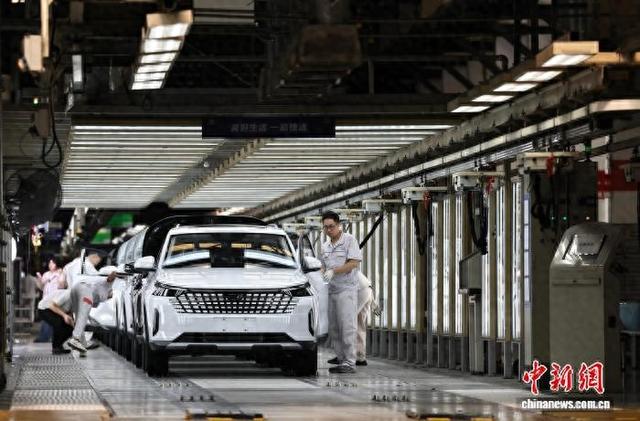
最快56秒下线一辆新车 成都汽车工厂拥抱智能制造
Zhong Guo Xin Wen Wang· 2025-10-14 14:09
Core Insights - The automotive industry is a pillar of Chengdu's economy, with significant growth in revenue and production in 2025 [2] - FAW-Volkswagen Chengdu is undergoing a major smart upgrade, focusing on automation and quality control improvements [1][3] Industry Overview - Chengdu's automotive sector includes major manufacturers like FAW-Toyota and Volvo, along with over 560 parts suppliers [2] - From January to May 2025, Chengdu's automotive industry achieved a revenue of 62.67 billion yuan, a year-on-year increase of 21.1%, and a total production of 340,000 vehicles, up 29.4% [2] Company Developments - FAW-Volkswagen Chengdu is investing in new industrial robots and machine vision systems to enhance production efficiency and product quality [3] - The company aims to fully upgrade its manufacturing system towards smart, digital, and flexible production [3] - Significant investments in equipment updates are expected to yield immediate improvements in production efficiency and quality control [3] Strategic Initiatives - In August, a cooperation agreement was signed among Chengdu Economic Development Zone, FAW Group, and Volkswagen Group (China) to promote smart and electric transformation in the automotive industry [2] - Chengdu has attracted 573 major industrial projects from January to August this year, leading in foreign direct investment among central and western cities [3]

今年以来上市公司回购总额超1000亿元 回购增持再贷款提供低成本资金
Sou Hu Cai Jing· 2025-10-14 10:49
Core Insights - A-share listed companies are experiencing a surge in stock buybacks, with 17 companies announcing buyback progress on October 14 alone [1] - From January 1 to October 14, 2023, 1,374 A-share companies have executed buybacks, totaling over 11.25 billion yuan in repurchased shares [1] - The trend of "cancellation buybacks" is gaining attention, driven by policy guidance and market logic [2] Group 1: Buyback Trends - 1374 A-share listed companies have repurchased over 11.25 billion shares, amounting to 112.596 billion yuan [1] - 13 companies have repurchased over 1 billion yuan, with Midea Group leading at 6.769 billion yuan [1] - The number of companies disclosing buyback plans and implementing them is increasing, indicating a growing trend [1] Group 2: Policy Support - The People's Bank of China has optimized stock buyback financing policies, reducing the self-funding ratio from 30% to 10% and extending loan terms from 1 year to 3 years [2] - A total of 750 companies or major shareholders have accessed buyback financing, amounting to approximately 151.854 billion yuan [3] - The merger of financing tools aims to enhance flexibility and efficiency in utilizing policy funds [3] Group 3: Market Impact - The stock buyback financing has provided low-cost capital to companies, boosting investor confidence and market attention [3] - The ongoing support for buybacks is expected to evolve from a temporary measure to a more permanent mechanism, stabilizing the market [3]



海尔、美的、TCL、松下…家电巨头们正掀起一场AI联姻潮
Guan Cha Zhe Wang· 2025-10-14 10:08
Core Insights - The home appliance market in China is undergoing a transformation as companies partner with AI technology firms to explore new paths for growth following the end of government subsidies [1][3] - Major players like Haier, TCL, and Midea are actively engaging in AI collaborations, indicating a shift towards integrating AI into their product offerings and operational strategies [1][4] Group 1: AI Collaborations - Haier has signed a comprehensive strategic cooperation agreement with Alibaba, marking a significant step in the ongoing trend of home appliance and AI partnerships [1] - TCL is working with Alibaba Cloud to develop a specialized AI model focused on semiconductor display technology, enhancing smart terminal image quality and interaction [3] - Midea is collaborating with Huawei to create a smart home ecosystem, aiming for seamless interconnectivity across devices and brands [4] Group 2: Marketing and Global Expansion - The partnership between Haier and Alibaba will also focus on deepening cooperation in e-commerce, leveraging Haier's industrial strengths and Alibaba's overseas e-commerce framework to build a digital ecosystem [7] - International brands like Panasonic are also entering AI collaborations, with plans to develop smart home solutions for Southeast Asia and the Middle East in partnership with Alibaba Cloud [7]



美的集团(00300)10月14日斥资2.05亿元回购282.99万股A股
Zhi Tong Cai Jing· 2025-10-14 09:41
Core Viewpoint - Midea Group announced a share buyback plan, investing 205 million RMB to repurchase approximately 2.8299 million A-shares at a price range of 71.71 to 73.15 RMB per share [1] Summary by Categories Company Actions - Midea Group is executing a share buyback, indicating confidence in its stock value and commitment to returning capital to shareholders [1] Financial Details - The total amount allocated for the buyback is 205 million RMB [1] - The number of shares to be repurchased is approximately 2.8299 million [1] - The buyback price per share ranges from 71.71 to 73.15 RMB [1]
美的集团(00300.HK)10月14日耗资2.05亿元回购282.99万股A股
Ge Long Hui· 2025-10-14 09:30
格隆汇10月14日丨美的集团(00300.HK)发布公告,2025年10月14日耗资人民币2.05亿元回购282.99万股 A股,回购价格每股71.71-73.15元。 ...
高股息精选概念涨0.82%,主力资金净流入这些股
Zheng Quan Shi Bao Wang· 2025-10-14 09:13
Core Insights - The high dividend selection concept index rose by 0.82%, ranking 9th among concept sectors, with 181 stocks increasing in value, including notable gainers such as Rabbit Baby, Chongqing Bank, and Luolai Life, which rose by 8.05%, 6.68%, and 5.99% respectively [1][2] - The sector experienced a net inflow of 1.783 billion yuan, with 114 stocks receiving net inflows, and 13 stocks exceeding 100 million yuan in net inflows, led by Industrial and Commercial Bank of China with 719.36 million yuan [2][3] Sector Performance - The top-performing concept sectors included Cultivated Diamonds (+3.74%), Baijiu Concept (+1.64%), and Coal Concept (+1.17%), while sectors with declines included National Big Fund Holdings (-5.47%) and AI PC (-3.94%) [2] - The high dividend selection sector was among the top 10 in terms of net inflow, indicating strong investor interest [2][3] Stock Performance - Key stocks in the high dividend selection sector included: - Industrial and Commercial Bank of China: +3.16%, net inflow of 719.36 million yuan, net inflow ratio of 14.00% [3] - Agricultural Bank of China: +3.18%, net inflow of 649.59 million yuan, net inflow ratio of 15.38% [3] - Midea Group: +1.10%, net inflow of 245.67 million yuan, net inflow ratio of 6.52% [3] - Stocks with significant declines included Pudong Construction (-7.01%) and Western Mining (-3.80%) [1][2]


美的集团10月29日举行董事会会议审议及批准第三季度业绩
Ge Long Hui· 2025-10-14 09:10
格隆汇10月14日丨美的集团(00300.HK)宣布,董事会会议将于2025年10月29日(星期三)举行,藉以(其中 包括)审议及批准公司及其附属公司截至2025年9月30日止九个月的第三季度业绩及其发布。 ...
美的集团(00300.HK)10月29日举行董事会会议审议及批准第三季度业绩
Ge Long Hui· 2025-10-14 08:52
格隆汇10月14日丨美的集团(00300.HK)宣布,董事会会议将于2025年10月29日(星期三)举行,藉以(其中 包括)审议及批准公司及其附属公司截至2025年9月30日止九个月的第三季度业绩及其发布。 ...
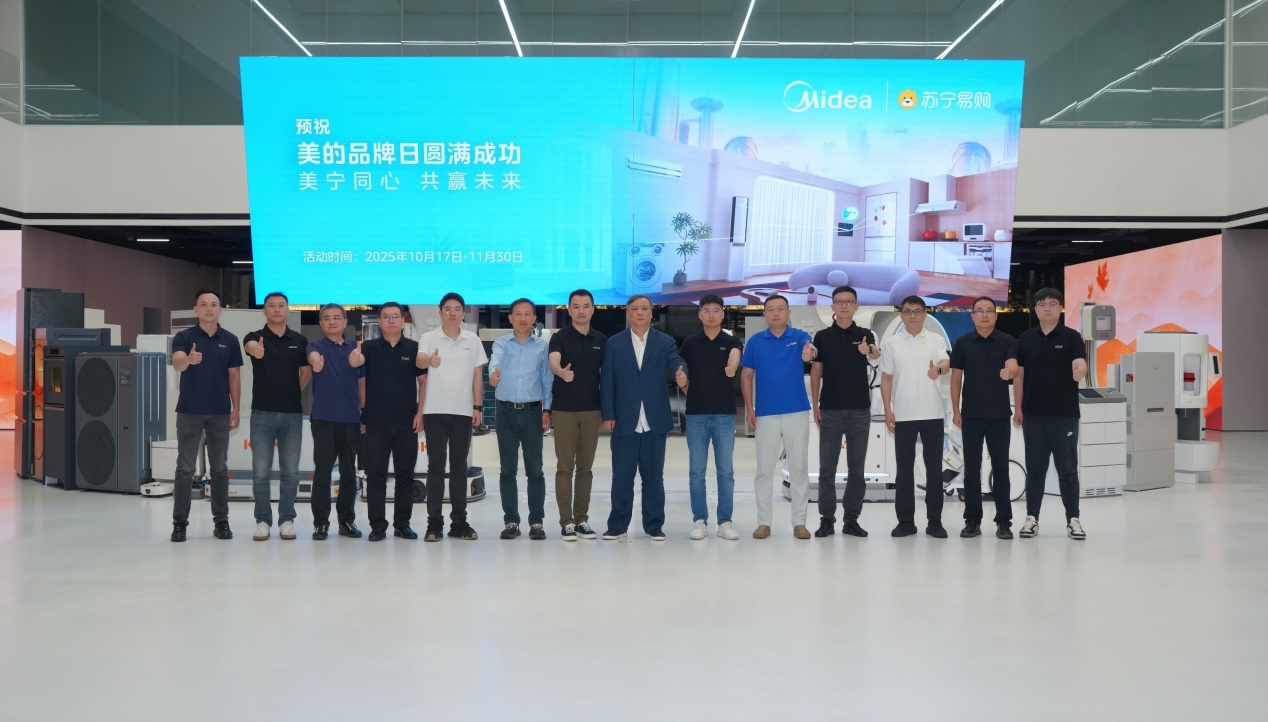
双11定制美好生活,苏宁易购美的启动超级品牌日
Zhong Jin Zai Xian· 2025-10-14 04:26
Core Insights - Su Ning and Midea have launched a Super Brand Day event to boost sales during the Double 11 shopping festival, focusing on health upgrades and smart home products [1][3] - The event features a comprehensive customization plan that includes personalized products, subsidies, experiential scenarios, and exclusive services [1][5] Group 1: Promotional Strategies - The Super Brand Day will leverage Su Ning's consumer data and Midea's insights to offer deep customization across various channels, including innovative products like the Midea Ningjing FS1 air conditioner and the Little Swan Ningmeng 3.0 washing and drying set [3][5] - Midea will provide subsidies of 10%, 15%, and 20% for essential, trending, and home decoration scenarios, enhancing affordability for consumers [5][6] Group 2: Product Offerings - The event will showcase a range of Midea's products, including the industry-first 600L large-capacity refrigerator and a compact water purification system with low maintenance costs [3][5] - Consumers can access significant discounts, such as dishwashers starting at 3199 yuan and French-style refrigerators at 3999 yuan [6] Group 3: Consumer Engagement - The collaboration will enhance consumer experience through offline exclusive brand experience zones and online platforms like live streaming and social media for virtual shopping [6][8] - The focus is on meeting diverse consumer needs by providing tailored solutions that align with the shift from basic functionality to multi-dimensional, scenario-based demands [8]