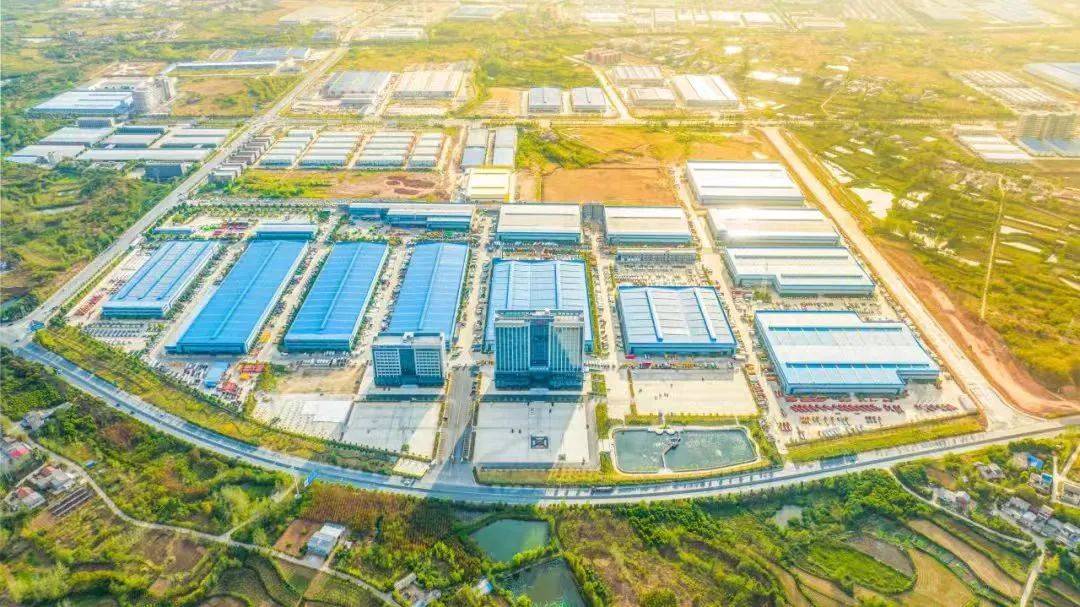
Midea Group(000333)

Search documents
探访美的首个智能体工厂:看见机器人与人的相处
Jing Ji Guan Cha Wang· 2025-08-29 07:48
Core Insights - Midea Group's intelligent factory in Jingzhou is the first of its kind globally, integrating humanoid robots and AI technologies to enhance production efficiency and quality control [3][7][12] - The introduction of robots like "Mei Luo" and "Yutu" has significantly improved operational efficiency, achieving an average productivity increase of over 80% and a 90% improvement in production scheduling response time [5][6][12] Group 1: Intelligent Factory Overview - The Jingzhou factory is recognized as Midea's first "intelligent body" factory, featuring 14 intelligent bodies covering 38 core production scenarios [3][7] - The factory operates as a connected ecosystem where various intelligent devices, including humanoid robots and autonomous mobile robots (AMRs), work collaboratively under a central "brain" for task scheduling and execution [6][8] Group 2: Robot Functionality and Impact - "Mei Luo" has been effectively performing tasks such as quality inspections and equipment checks, demonstrating its proficiency after three months of operation [3][4] - "Yutu" is responsible for reliability testing of washing machines, replacing human labor and enhancing accuracy and efficiency in inspections [5][11] Group 3: Future Developments and Innovations - Midea plans to further develop "Yutu Pro," which will include additional functionalities for autonomous operation and fault diagnosis, creating a closed-loop system for inspection and maintenance [5][10] - The intelligent factory is seen as a living entity capable of self-evolution, with data continuously feeding into the factory's central brain to improve processes and decision-making [10][12] Group 4: Strategic Vision and Industry Positioning - Midea aims to set new standards for Chinese manufacturing through the development of intelligent factories, positioning itself as a leader in the integration of AI and automation in production [13][14] - The transition to an intelligent factory model reflects a significant shift in manufacturing paradigms, moving from traditional automation to a more autonomous and adaptive system [12][14]




美的集团推出“多面手”人形机器人,三到五年会看到翻天覆地变化
2 1 Shi Ji Jing Ji Bao Dao· 2025-08-29 07:45
Core Insights - Midea Group has launched its first multi-scenario smart factory globally, aiming for a fully automated "dark factory" through the collaboration of smart agents and humanoid robots [1][6] - The humanoid robot "Mei Luo" has been deployed in various applications within the factory, significantly improving efficiency by over 80% in traditional tasks [1][2] Group 1: Humanoid Robot Development - "Mei Luo" is designed as a versatile humanoid robot, capable of performing multiple tasks such as transporting components and conducting inspections [2][3] - The robot operates under a unified factory brain, coordinating with various smart agents to execute high-frequency tasks autonomously [3][6] - The development of humanoid robots is expected to transition from industrial to commercial and eventually to household applications, with a focus on enhancing existing home appliances [1][7] Group 2: Efficiency and Automation - The deployment of humanoid robots has led to a 100% increase in inspection frequency compared to manual processes, reducing errors and improving operational efficiency [3][4] - Autonomous mobile robots (AMRs) are utilized for logistics, capable of real-time reporting and dynamic pathfinding, enhancing the overall efficiency of the factory [4][5] - The factory aims to replace repetitive labor with intelligent operations, transforming the roles of human workers into data analysis and robot maintenance positions [7][8] Group 3: Challenges and Future Outlook - Despite advancements, challenges remain in terms of cost, efficiency, and the need for improved battery life and data processing capabilities [5][8] - The humanoid robot industry is expected to see significant changes in the next 3 to 5 years, with Midea's dual approach of focusing on both humanoid and appliance robotics [6][9] - The company emphasizes a more immediate strategy of "appliance robotization," aiming to enhance traditional appliances with intelligent features [9][10]
空调营销挡不住市场现实,新华网一锤定音,老牌企业站稳前三
Sou Hu Cai Jing· 2025-08-29 06:31
Core Viewpoint - The domestic air conditioning market is experiencing a competitive shift, with Haier gaining market share while other leading brands face slight declines in their market positions [3][5]. Market Share Summary - In July, the top three air conditioning brands in China were Midea, Gree, and Haier, with market shares of 29%, 17%, and 15% respectively. The fourth brand, Xiaomi, had a market share of 10%, indicating a significant gap between the top three and the fourth [3][5]. - Haier's market share increased from 11% in the same period last year to 15%, moving up from fourth to third place, while Gree dropped from third to fourth with a decrease from 19% to 17% [3][5]. Competitive Landscape - The market dynamics show that three of the top four air conditioning brands experienced slight declines in market share, while only Haier saw an increase, highlighting a potential shift in consumer preference [3][5]. - The fifth-ranked brand, Aux, maintained its market share at 8%, which is notable given the declines of the top competitors, suggesting a relatively stable performance [5]. Industry Insights - The air conditioning industry is characterized by significant manufacturing and after-sales service requirements, with traditional brands having established advantages in quality control and service networks [7]. - The long lifespan of air conditioning units (over 10 years) emphasizes the importance of brand reputation and service quality over initial pricing, favoring established brands [7]. - The experience in the television industry suggests that low pricing strategies may lead to hidden costs and consumer dissatisfaction, reinforcing the value of quality and service in the air conditioning market [9].



迈瑞等多家仪器公司上榜2025中国民营企业500强
仪器信息网· 2025-08-29 03:59
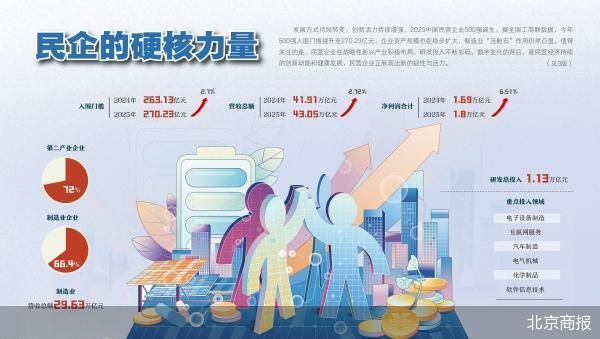
Core Insights - The 2025 China Private Enterprises Top 500 list has been released, with the entry threshold rising to 27.023 billion yuan, and total operating revenue reaching 4.305 trillion yuan [2][3] - Notable companies in the scientific instruments sector include Midea Group, GoerTek, Sunny Optical, and Mindray [3] Group 1: Financial Performance - The total operating revenue of the top 500 private enterprises reached 4.305 trillion yuan, with total assets amounting to 5.115 trillion yuan and net profits totaling 180 billion yuan [3][4] - The top three companies in the list are JD Group, Alibaba (China) Co., Ltd., and Hengli Group Co., Ltd. [4][7] Group 2: Industry Trends - The top 500 private enterprises are actively investing in strategic emerging industries, with 309 companies reporting investments in 627 projects across sectors such as new materials, new energy, and high-end equipment manufacturing [4] - 64.20% of these enterprises have developed digital transformation strategies, while 83.00% are advancing green and low-carbon transformations [4] Group 3: Research and Development - The total R&D expenditure of the reporting companies is 1.13 trillion yuan, with an average R&D investment intensity of 2.77% [5] - There are 171 companies with R&D expenses exceeding 1 billion yuan, and 19 companies with R&D expenses over 10 billion yuan, primarily in sectors like computer and communication equipment manufacturing [5] Group 4: Intellectual Property - The top 500 private enterprises hold 721,600 valid patents, with a growth rate of 8.23%, and have participated in the formulation of 9,948 national standards and 7,568 industry standards [5]



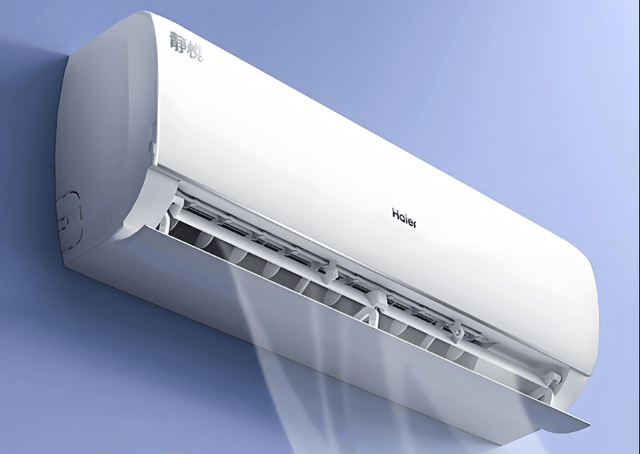
AI成中高端空调标配,美的海尔TCL入局,是真香还是智商税?
3 6 Ke· 2025-08-29 02:31
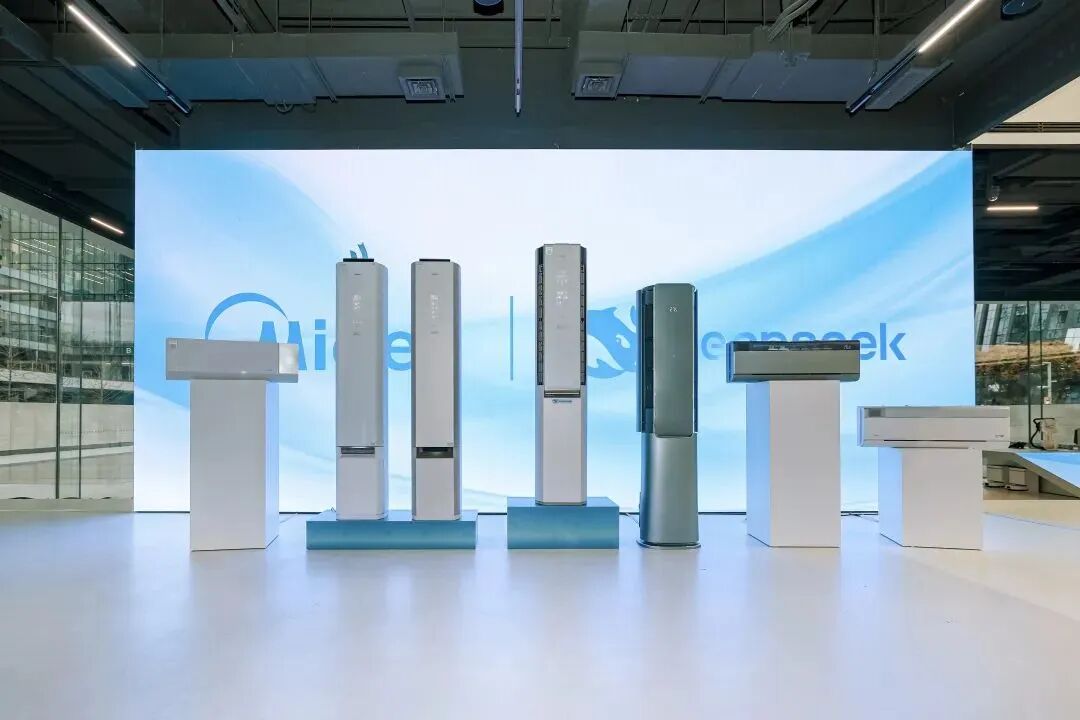
Core Insights - The integration of AI in home appliances, particularly in mid-to-high-end air conditioning units, has become ubiquitous, with major brands like Midea, Haier, and TCL leading the charge [1][12] - AI air conditioners are designed to enhance user experience by automating temperature and humidity control, as well as improving energy efficiency [2][6][12] Group 1: AI Air Conditioner Features - Midea's "air machine" combines multiple functions such as air conditioning, humidification, and air purification, showcasing the versatility of AI in home appliances [2] - The deployment of localized AI models allows Midea's air machine to learn user habits and adjust settings accordingly, providing a more personalized experience [4] - Haier's "washing air" series features an AI voice system capable of recognizing various dialects, enhancing user interaction [6] Group 2: Energy Efficiency and Cost - Haier's "net energy-saving" series claims to improve energy efficiency by approximately 45% compared to standard models, with an average daily consumption of only 2 kWh under specific conditions [6][8] - The price of AI-enabled air conditioners is becoming more competitive, making them an attractive option compared to traditional models [8][12] Group 3: User Experience and Market Perception - User feedback on AI air conditioners is mixed, with some praising their convenience and comfort, while others criticize the marketing hype surrounding AI features [11][12] - Many consumers are beginning to differentiate between genuine AI capabilities and basic automated functions, leading to a more informed purchasing decision [11][12] - The market for AI air conditioners is rapidly expanding, with traditional models becoming less common as new products emphasize AI features [12][13] Group 4: Future Trends - The competition among manufacturers will likely focus on optimizing AI functionalities, with established brands enhancing energy-saving algorithms and newer companies exploring AI's potential for device interconnectivity [13]

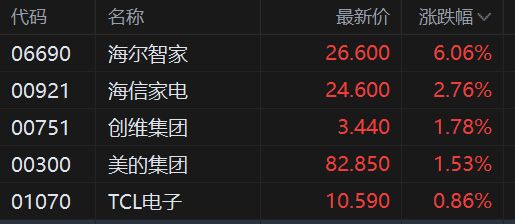
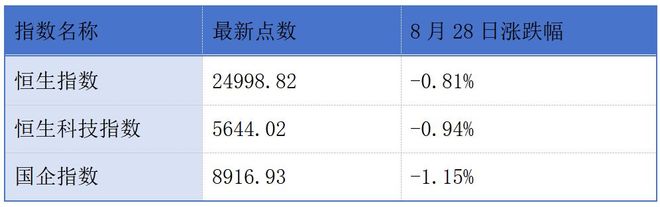
港股异动丨家电股拉升 海尔智家涨超6% TCL电子涨约1%
Ge Long Hui· 2025-08-29 02:17
Group 1 - The core viewpoint of the article highlights the significant rise in Hong Kong's home appliance stocks, particularly Haier Smart Home, which increased by over 6% following the release of its strong half-year report for 2025 [1] - Haier Smart Home reported a revenue of 156.49 billion yuan for the first half of the year, representing a year-on-year growth of 10.2%, and a net profit of 12.03 billion yuan, up 15.6%, marking a historical high [1] - In the second quarter alone, Haier Smart Home achieved a net profit of 6.55 billion yuan, reflecting a year-on-year increase of 16.14% [1] Group 2 - Haier Smart Home plans to distribute a cash dividend of 2.69 yuan per 10 shares (including tax), with a total payout amounting to 2.507 billion yuan, which constitutes 20.83% of its net profit [1] - The third batch of government funds for the "old-for-new" appliance replacement program has been allocated, with Taobao and Tmall starting to offer subsidies from August 26 [1] - Consumers can receive up to 20% subsidies for purchasing energy-efficient products, 15% for secondary efficiency products, and up to 30% for home modification products aimed at elderly care [1]
解码2025中国民企500强“硬核实力”
Bei Jing Shang Bao· 2025-08-28 17:17
Core Insights - The "2025 China Top 500 Private Enterprises" list was released, with JD Group, Alibaba (China) Co., Ltd., and Hengli Group Co., Ltd. taking the top three spots [1][3] - The threshold for entry increased from 26.313 billion yuan to 27.023 billion yuan compared to the previous year [3] - Total revenue of the listed companies reached 4.305 trillion yuan, with an average revenue of 86.102 billion yuan, reflecting a year-on-year growth of 2.72% [3][4] - The total assets of the top 500 private enterprises amounted to 51.15 trillion yuan, with an average asset value of 102.309 billion yuan, showing a 2.62% increase year-on-year [3][4] - The net profit of these enterprises collectively reached 1.8 trillion yuan, with an average net profit growth of 6.48% year-on-year [4] Group 1: Overall Scale and Performance - The total revenue of the top 500 private enterprises reached 4.305 trillion yuan, marking a historical high [3] - The number of enterprises with revenue exceeding 100 billion yuan increased by 8 to a total of 105 [3] - The total assets surpassed 51 trillion yuan, with 97 enterprises having assets over 1 billion yuan, an increase of 8 from the previous year [3][4] Group 2: Profitability and Efficiency - The net profit of the top 500 private enterprises was 1.8 trillion yuan, with manufacturing enterprises leading the profit increase [4] - BYD reduced costs by nearly 30% through blade battery technology, enhancing its gross margin [4] - 92% of the top 500 private enterprises have initiated digital transformation, with 65% achieving full-chain intelligent management [4][7] Group 3: Innovation and R&D - The total R&D expenditure of the reporting enterprises was 1.13 trillion yuan, with an average R&D investment intensity of 2.77% [8] - 171 enterprises reported R&D expenses exceeding 1 billion yuan, while 19 enterprises exceeded 10 billion yuan [8] - The number of valid patents held by the top 500 private enterprises reached 721,600, reflecting an 8.23% increase [8] Group 4: Strategic Focus and Future Directions - The top 500 private enterprises are actively investing in strategic emerging industries, with 64.2% having established digital transformation strategies [7] - 83% of these enterprises are advancing green and low-carbon transformations through various measures [7] - The role of private enterprises in fostering new quality productivity is emphasized, highlighting their importance in China's economic development [9]
佳鑫国际资源正式登陆港股;美的集团旗下安得智联递表港交所丨港交所早参
Mei Ri Jing Ji Xin Wen· 2025-08-28 17:01
Group 1 - Jiexin International Resources officially listed on the Hong Kong Stock Exchange on August 28, becoming the first company to be listed simultaneously on both the Hong Kong Stock Exchange and the Astana International Exchange in Kazakhstan, showcasing a new model of financial cooperation between China and Kazakhstan [1] - On its first trading day, Jiexin International Resources saw its stock price surge by 177.84%, closing at HKD 30.34 per share, indicating strong market confidence [1] Group 2 - Anke Intelligent, a subsidiary of Midea Group, has submitted a listing application to the Hong Kong Stock Exchange, reporting a revenue of CNY 18.7 billion and a net profit of CNY 380 million for 2024, with compound annual growth rates of 14.8% and 33.0% respectively since 2022 [2] - As of June 2025, Anke Intelligent has covered over 9,000 enterprise clients and managed warehouse space exceeding 11 million square meters, with a vehicle capacity of 586,000 and over 3,500 active delivery points nationwide [2] Group 3 - Haiwei Electronics has submitted a prospectus for a proposed listing on the Hong Kong Stock Exchange, being the second-largest manufacturer of capacitor films in China, with a 10.9% market share in the capacitor base film market in 2024 [3] - The company is the only one in China with the capability to independently design and develop production lines for capacitor base films, which are essential components in various applications including electric vehicles and renewable energy systems [3] Group 4 - First Capital Securities, listed on A-shares, plans to issue H-shares and apply for a listing on the Hong Kong Stock Exchange, having received preliminary approval from the Beijing State-owned Assets Supervision and Administration Commission [4] - Established in February 2000, First Capital Securities aims to expand its capital base and enhance its international influence through this listing, following a successful performance since its A-share listing [4]

美的打造全球首个智能体工厂,人形机器人进厂“擦出火花”
Di Yi Cai Jing· 2025-08-28 13:52
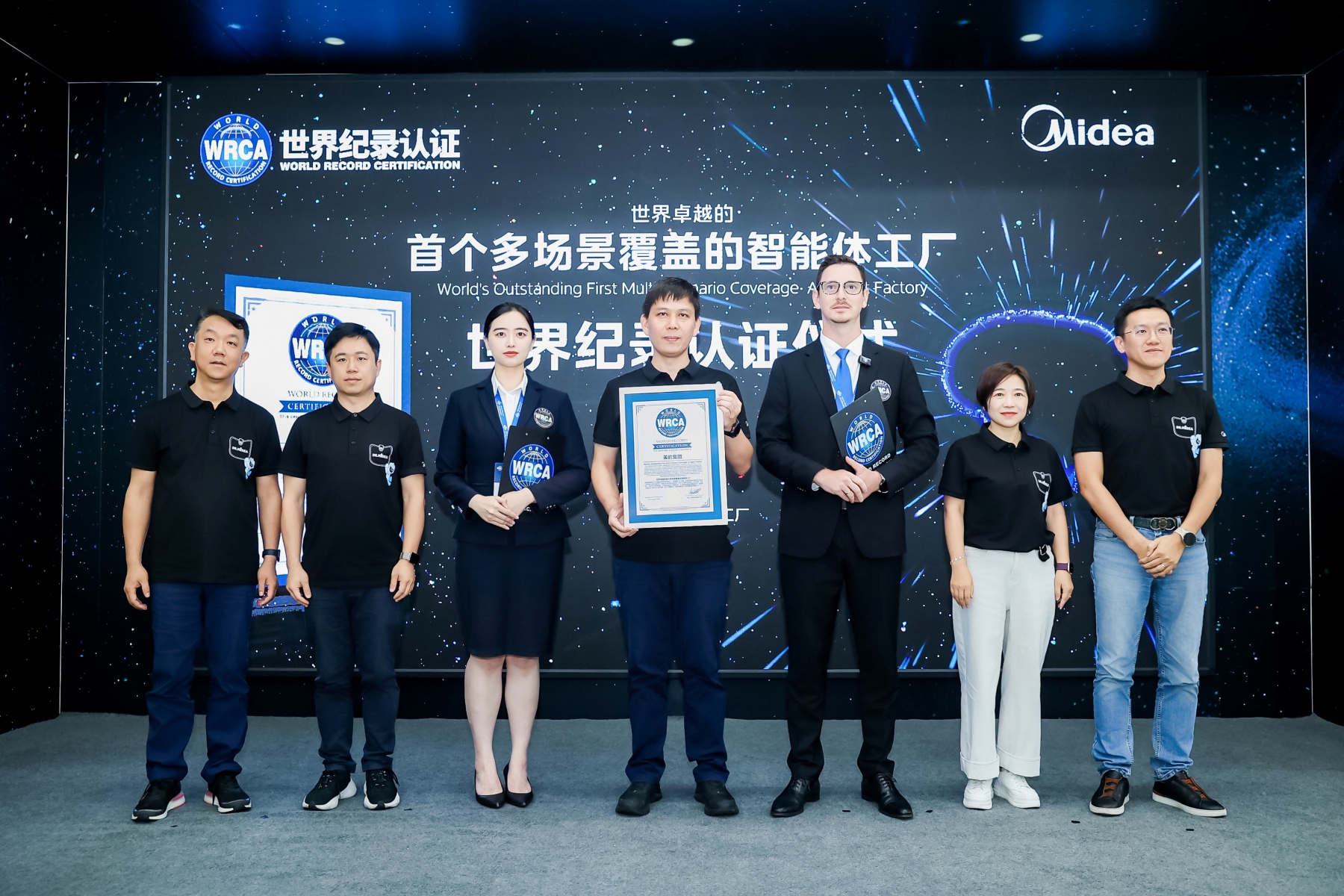
Core Insights - Midea Group's first intelligent body factory, located in Jingzhou, Hubei, has been certified by WRCA as the world's first intelligent body factory, representing an advanced version of smart manufacturing [1][23] - The factory integrates various innovative technologies such as 5G, AI, big data, and blockchain, making it a testing ground for Midea's intelligent factory upgrades [6][23] Group 1: Intelligent Robotics - Midea's humanoid robot, Meiro, has transitioned from laboratory testing to operational tasks in the factory, demonstrating capabilities in handling and quality inspection [3][6] - Meiro utilizes advanced technologies including a lightweight bionic arm and AI vision systems to perform tasks with high precision and efficiency [3][15] - The factory employs 14 different intelligent agents to meet 38 core smart manufacturing scenarios, enhancing operational efficiency [6][23] Group 2: AI and Automation - The factory's AI brain coordinates various intelligent agents, enabling autonomous decision-making and real-time monitoring of equipment and safety [6][12] - The introduction of AI inspection robots has significantly increased inspection frequency and reduced error rates compared to manual inspections [8][12] - Midea's investment in AI algorithms and computing power has led to substantial cost savings, with an estimated reduction of approximately 280 million yuan in the first half of 2025 [17] Group 3: Operational Efficiency - The intelligent body factory has achieved over 50% efficiency improvement in core business scenarios, with inspection efficiency increasing by 80% [16] - Real-time data connectivity has transformed response times from hours to seconds, enhancing overall operational agility [16] - The factory's model is expected to be gradually replicated across Midea's other facilities, contingent on the maturation and cost reduction of relevant technologies [18][20] Group 4: Future Developments - Midea aims to achieve full scenario coverage with intelligent agents and enhance the intelligence of its factory brain for better coordination [18][21] - The transition of human roles in the factory will evolve, with traditional positions being replaced by data analysis and AI training roles [20][21] - Midea emphasizes the importance of foundational elements like lean manufacturing and logistics planning before implementing digital tools for intelligent factories [21]
2025民营企业500强揭晓!曾都这家企业榜上有名
Sou Hu Cai Jing· 2025-08-28 12:12
Group 1 - The "2025 China Top 500 Private Enterprises" list was released by the All-China Federation of Industry and Commerce on August 28, with 14 companies from Hubei province making the list [1] - JD Group ranked first with a total revenue of 115,881,900 million yuan, followed by Alibaba (98,176,700 million yuan) and Hengli Group (87,152,079 million yuan) [3][4] - The list includes major companies such as Huawei, BYD, and Tencent, indicating a strong presence of technology and manufacturing sectors among the top private enterprises [3][4] Group 2 - The ranking shows a significant representation of companies from Zhejiang province, with multiple entries including Zhejiang Rongsheng Holding Group and Zhejiang Geely Holding Group [3][4] - Hubei province's notable entries include Chery Automobile Group and Zhuoyue Group, highlighting the province's growing industrial capabilities [1][4] - The list reflects the overall economic landscape of China, showcasing the resilience and growth of private enterprises in various sectors [1][3]